


Creatine Beverages Market Size and Overview
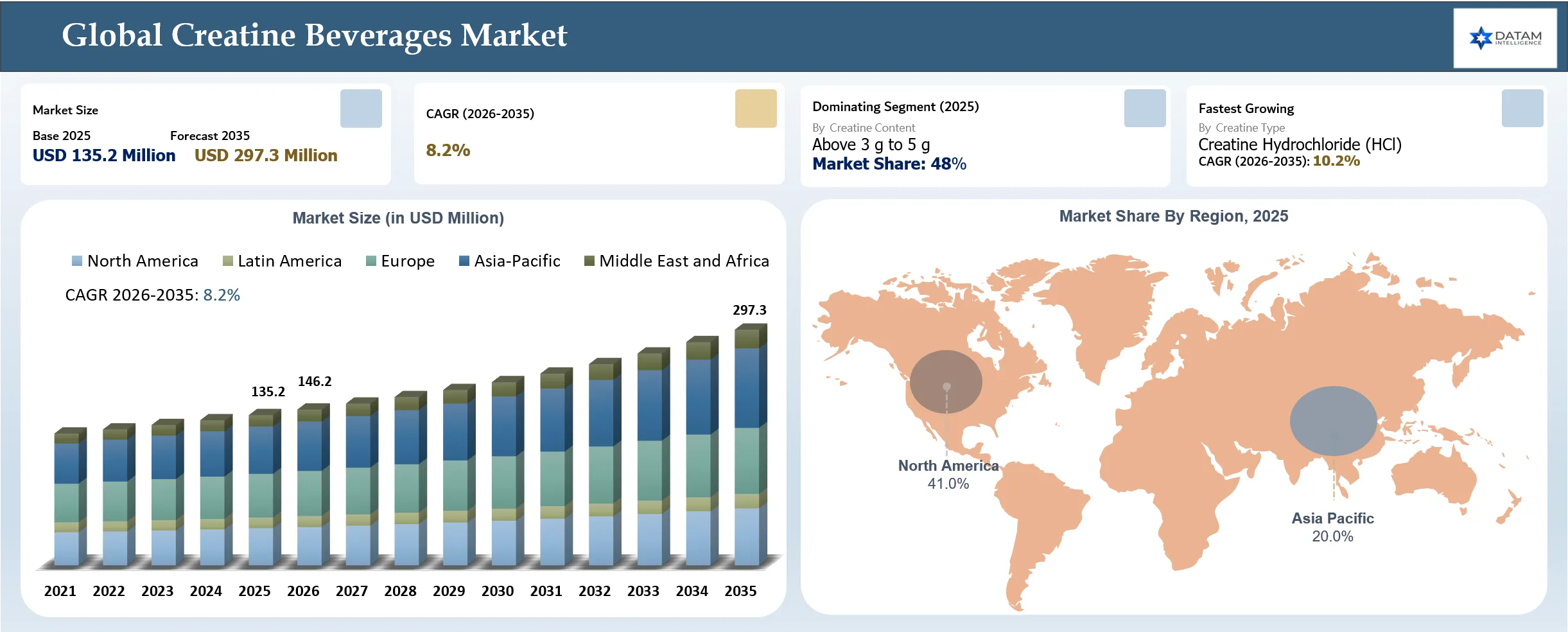
The global creatine beverages market was valued at US$135.2 million in 2025 and is projected to reach US$297.3 million by 2035, growing at a CAGR of 8.2% during 2026-2035. This creatine beverages market is driven by the increasing demand for easy-to-consume and convenient creatine supplementation, growing consumption of RTD beverages, increasing demand for multifunctional beverages with creatine and electrolytes and caffeine, and increasing availability of low or no sugar options of creatine beverages.
The popularity of creatine continues to shift from an obscure bodybuilding supplement to a popular sports nutritional and health supplement. A 2026 ConsumerLab survey of over 8,850 supplement users revealed that out of 200 supplements monitored, the one that experienced the largest popularity gain was creatine with an increase of 17.1 percentage points.
Innovations in creatine drinks is expanding beyond conventional sports nutrition drinks, as brands are using creatine that is microencapsulated along with ingredients which boost energy and cognitive functionality. For instance, in October 2025, CREATEA launched Mighty Mango, a 12-oz RTD beverage containing 1.5 g of microencapsulated creatine in addition to cognitive and energy ingredients. The launch highlights the use of creatine in multifunctional drinks that have various functions related to performance, cognition and energy.
Advancements in Creatine Formulation Technology Enabling Stable RTD Beverages
Advances in creatine formulation technology are creating opportunities to overcome stability and processing challenges associated with incorporating creatine into beverages. Glanbia’s CreaBev uses encapsulation technology to improve creatine stability, with 30% stability after 12 months at pH 2.8, 42% under cold-fill at pH 4.5, and 73% under UHT processing at pH 7.0, supporting its use in a wider range of RTD beverage applications.
Utilization of CreaBev in commercial products proves the ability of the substance to ensure stable creatine drink formulas. For instance, in April 2024, LIFEAID introduced FITAID RX, incorporating CreaBev encapsulated creatine into low-calorie and zero-sugar RTD recovery beverages. The launch shows that better creatine stability can allow for the creation of beverage formulations.
Creatine Beverage Market Key Takeaways
- North America held the largest regional market share, accounting for approximately 41.0% of the global creatine beverages market in 2025, supported by high consumer awareness of sports nutrition and functional beverages, widespread participation in fitness and recreational sports, established supplement and beverage brands, and strong distribution through specialty nutrition stores, mass retailers, and e-commerce platforms.
- Creatine content of above 3 g to 5 g per serving held the largest dosage share, accounting for approximately 48% of the global creatine beverages market in 2025, supported by consumer preference for established daily creatine dosages, increasing availability of performance-oriented RTD beverages, and the growing use of 3-5 g creatine formulations in convenient drink formats.
- Creatine Hydrochloride (HCl) is projected to be the fastest-growing creatine-type segment, registering an estimated CAGR of approximately 10.2% during 2026-2035, exceeding the overall market CAGR of 8.2%. Growth is supported by interest in alternative creatine forms, formulation considerations for liquid products, and continued innovation in creatine-based functional beverages.
- Product innovation is accelerating in the creatine beverage category, with manufacturers introducing RTD drinks, sparkling creatine beverages, higher-dose formulations, and combination products containing electrolytes, amino acids, and other functional ingredients. For instance, in April 2026, KA-EX launched its Creatine EAA+ Booster, an RTD beverage containing 3 g of Creapure creatine, with its patented VICAP push-cap keeping the creatine separate from the liquid until consumption to address stability concerns.
- Creatine beverages are expanding sports-nutrition delivery beyond traditional powders and capsules, offering consumers a convenient ready-to-drink format that eliminates the need for scooping and mixing. Product developers are increasingly addressing the technical challenge of maintaining creatine stability in liquid formulations, with newer technologies separating creatine from the liquid until consumption.
Creatine Beverages Market Industry Trends and Strategic Insight
- Creatine beverage manufacturers are increasing creatine content per serving, with formulations increasingly targeting the commonly used 3-5 g daily dosage while maintaining drinkability and convenient single-serving consumption.
- Product development is shifting toward multifunctional creatine beverages, combining creatine with electrolytes, amino acids, caffeine, vitamins, minerals, and other functional ingredients to support hydration, energy, exercise performance, recovery, and overall wellness.
- Ready-to-drink and highly portable formats are gaining attention as consumers seek alternatives to creatine powders that require measuring and mixing. Bottled drinks, cans, and other single-serve formats provide convenient consumption before, during, or after exercise.
- Creatine supplementation is expanding beyond traditional sports nutrition, with beverage brands increasingly positioning products for daily wellness, active lifestyles, strength training, hydration, and healthy aging, broadening the potential consumer base.
- Manufacturers are focusing on flavor, solubility, mouthfeel, and formulation stability, as creatine can create challenges related to taste, sedimentation, and stability when incorporated into ready-to-drink beverages.
- Sugar-free, low-sugar, and low-calorie creatine beverages are gaining attention as brands seek to combine supplementation with consumer preferences for healthier beverage profiles and reduced added-sugar intake.
- Product differentiation is increasingly centered on creatine dosage, functional ingredients, beverage type, and consumption occasion, with brands offering products positioned for pre-workout, hydration, recovery, energy, and everyday supplementation.
- Manufacturers are emphasizing ingredient transparency and formulation credibility, including clearly disclosed creatine content, ingredient sourcing, testing, and quality standards, as the category expands beyond specialist sports-nutrition consumers.
Creatine beverages Market Scope
| Metrics | Details | |
| 2025 Market Size | USD 135.2 Million | |
| 2035 Projected Market Size | USD 297.3 Million | |
| CAGR (2026-2035) | 8.2% | |
| Largest Market | North America | |
| Fastest Growing Market | Asia-Pacific | |
| By Creatine Type | Creatine Monohydrate, Creatine Hydrochloride (HCl), Blended Creatine Formulations | |
| By Product Format | Ready-to-Drink Beverages, Ready-to-Mix Beverages, Liquid Shots and Concentrates | |
| By Creatine Content per Serving | Up to 3 g, above 3 g to 5 g, above 5 g | |
| By Sugar Content | Regular / Sugar-Containing, Sugar-Free | |
| By Formulation | Creatine-Only, Creatine and Electrolyte, Creatine and Caffeine, Creatine and Protein, Creatine and Amino Acid, Creatine and Other Functional Ingredients | |
| By Consumer Group | Athletes & Competitive Sports Participants, Fitness & Gym Users, General Wellness Consumers, Others | |
| By Distribution Channel | E-Commerce, Specialty Sports Nutrition Stores, Supermarkets & Hypermarkets, Pharmacies & Health Stores, Other Retail Channels | |
| By Region | North America | U.S., Canada, Mexico |
| Europe | Germany, United Kingdom, France, Italy, Spain, Netherlands, Switzerland, Sweden, Norway, Denmark, Belgium, Poland, Austria, Ireland, Portugal, Greece, Finland, and Rest of Europe. | |
| Asia-Pacific | China, Japan, India, South Korea, Australia, New Zealand, Singapore, Malaysia, Thailand, Indonesia, Vietnam, Philippines, Taiwan, and Rest of Asia Pacific. | |
| Latin America | Brazil, Argentina, Rest of Latin America | |
| Middle East and Africa | UAE, Saudi Arabia, South Africa, Israel, Türkiye, Rest of Middle East and Africa | |
| Report Insights Covered | Competitive Landscape Analysis, Company Profile Analysis, Market Size, Share, Growth | |
Creatine beverages Market Disruption Analysis
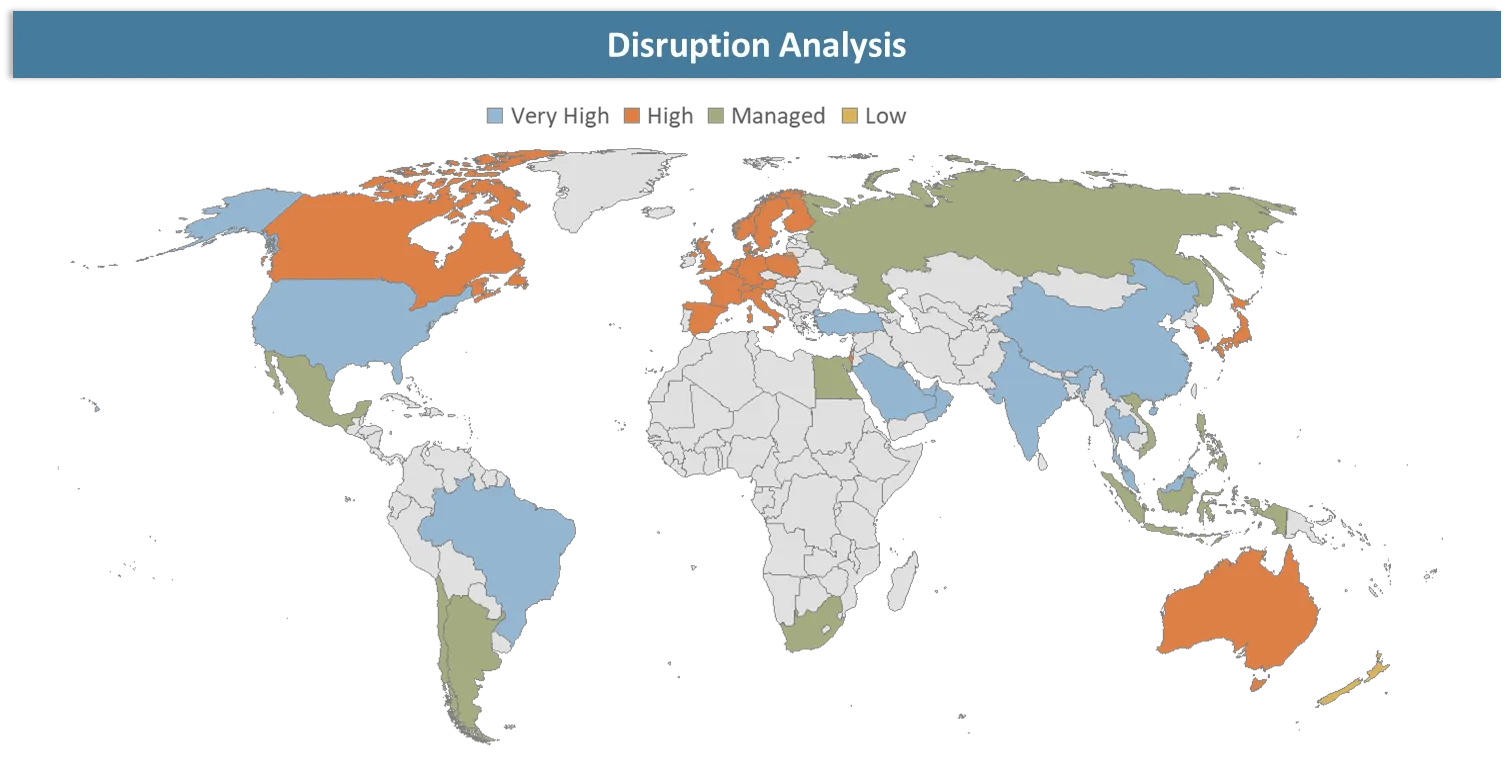
Creatine Blends Expanding Beyond Traditional Sports Nutrition
Innovations in the form of multifunctional drinks that feature a blend of creatine with protein, electrolytes, caffeine, amino acids, and other ingredients in one drink are disrupting the creatine drinks market. For instance, in August 2026, USANA launched Clear Protein + Creatine Mix which features 5 g of micronized creatine monohydrate and 10 g of clear whey protein isolate and more than 600 mg of electrolytes per serving. Such innovations are an illustration of how creatine is being used in broader formulations of functional beverages, rather than being presented as a sports supplement.
Multifunctional beverages may disrupt single-component creatine products due to consumers’ desire for consolidation of the supplementation. Further innovations related to protein-creatine, electrolyte-creatine, energy-creatine and recovery formulations would expand the consumer pool for such a product.
Creatine beverages Market BCG Matrix: Company Evaluation
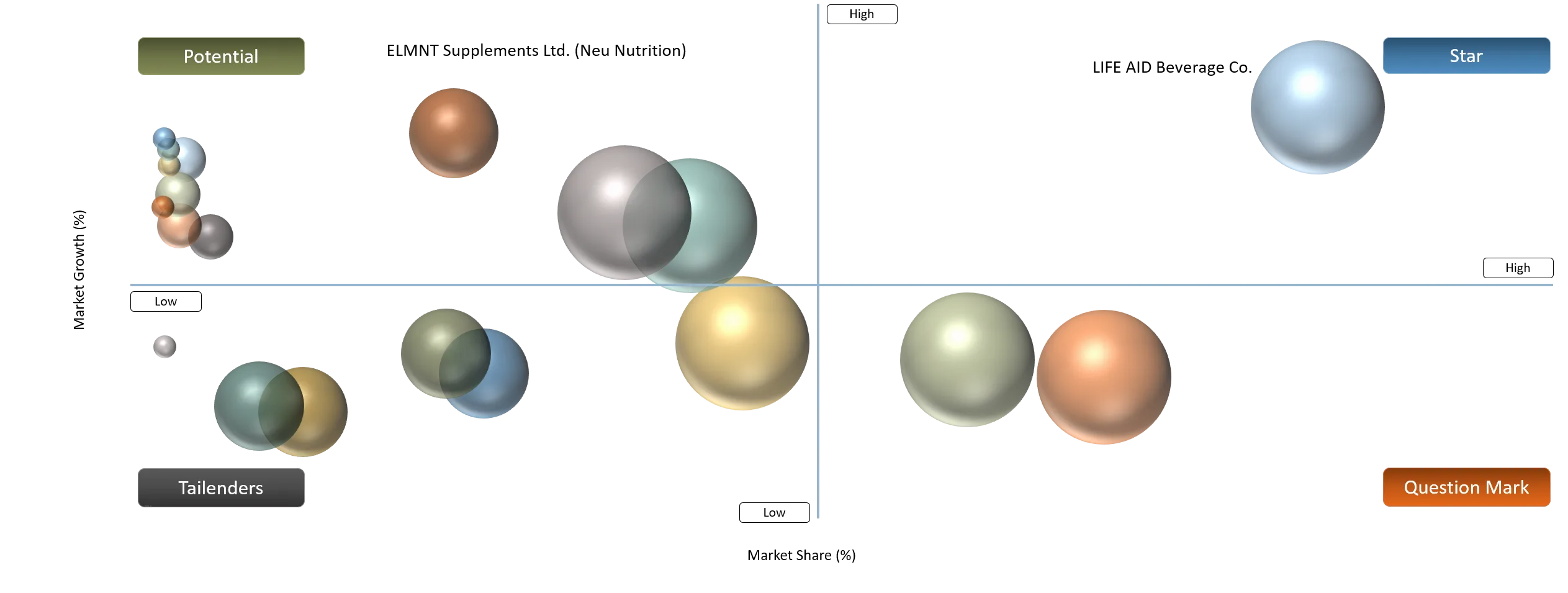
LIFE AID Beverage Co., KA-EX LLC, PRIME Hydration, LLC, and My Muscle Chef Pty Ltd are positioned as Stars, supported by established sports-nutrition and functional beverage portfolios, strong consumer recognition, broad distribution capabilities, and growing adoption of creatine in convenient beverage formats. C-Tine Drinks ApS, ELMNT Supplements Ltd. (Neu Nutrition), and ION18 ApS are positioned as Potential Stars, supported by differentiated RTD creatine formulations, creatine-focused beverage offerings, and product formats designed around convenience, hydration, and performance.
Rello Corporation, Biovitt, and Konsoom are positioned as Question Marks, reflecting participation in the emerging creatine beverage category with comparatively narrower brand scale, distribution reach, or category penetration. CZM Brands, LLC (SOLO) is positioned as a Tailender, reflecting a comparatively focused market position and limited presence in the global creatine beverages segment.
Creatine beverages Market Dynamics
Driver Impact Analysis
| Driver | Market Growth Impact (%) | Demand Concentration | Impacted Areas | Strategic Impact |
Growing Consumer Preference for Convenient and Ready-to-Consume Creatine Supplementation | 30% | Strong demand across the U.S., Canada, U.K., Germany, Australia, Japan, and other developed sports-nutrition markets, supported by growing preference for convenient and portable functional beverages. | Daily creatine supplementation, sports nutrition, fitness, recovery, travel, and on-the-go consumption | Encourages manufacturers to develop RTD creatine beverages that eliminate preparation and provide convenient consumption, supporting adoption among consumers seeking simpler supplementation routines. |
Rising Adoption of Creatine Among Athletes, Fitness Enthusiasts, and General Consumers | 24% | Concentrated in North America and Europe, with increasing adoption across Asia Pacific as fitness participation and awareness of creatine supplementation increase. | Strength training, bodybuilding, recreational fitness, sports performance, and general wellness | Expands the potential consumer base beyond traditional bodybuilding users and encourages brands to position creatine beverages for broader fitness and wellness applications. |
Growing Demand for Multifunctional Creatine Beverages | 20% | Strongest across developed sports nutrition and functional beverage markets, particularly the U.S. and Europe. | Creatine + electrolytes, creatine + caffeine, creatine + protein, recovery, hydration, energy, and cognitive performance | Supports product differentiation through multiple functional benefits and encourages manufacturers to integrate creatine with established sports, energy, hydration, and recovery beverage formats. |
Increasing Demand for Low-Sugar, Sugar-Free, and Clean-Label Creatine Beverages | 14% | Strong demand across North America and Europe, where consumers increasingly seek reduced-sugar and functional beverage options. | Zero-sugar RTD drinks, low-calorie beverages, natural flavors, clean-label formulations, and functional hydration | Drives manufacturers toward low-sugar and sugar-free formulations while maintaining flavor, stability, and consumer appeal, creating opportunities for premium creatine beverage products. |
Advances in Creatine Formulation and Beverage Stability Technologies | 12% | Concentrated among beverage and sports-nutrition manufacturers with access to advanced ingredient and formulation technologies. | Shelf-stable RTD beverages, acidic and neutral-pH beverages, cold-fill and UHT processing, solubility, and creatine stability | Enables manufacturers to overcome conventional creatine stability and processing limitations, supporting the development of commercially viable RTD formats and expanding creatine's application across beverage categories. |
Growing Demand for Multifunctional Creatine Beverages
The growing integration of creatine with electrolytes, caffeine, protein, amino acids, and cognitive ingredients is enabling manufacturers to develop multifunctional RTD beverages that address multiple consumer needs in a single product. This supports product differentiation and allows creatine to be incorporated into established sports, energy, hydration, recovery, and wellness beverage categories.
Protein and creatine have complementary positioning in sports nutrition because both are associated with muscle performance and recovery. This creates an opportunity for RTD protein beverages to incorporate creatine rather than requiring consumers to consume separate products. For instance, SOLO offers an RTD formulation containing 31 g of protein and 5 g of creatine, alongside 725 mg of electrolytes, 11 g of collagen and 100 mg of CoQ10.
Restraint Impact Analysis
| Restraint | Drag on Market Growth (%) | Primary Impact Area | Impacted Use Case | Strategic Impact |
Creatine Stability Challenges in Beverage Formulations | 25% | Creatine stability, pH, processing conditions and shelf life | Acidic RTD beverages, shelf-stable drinks and long-shelf-life formulations | Creatine can degrade to creatinine under certain beverage conditions, particularly in acidic environments, creating challenges in maintaining active potency throughout processing and shelf life. |
Taste and Solubility Challenges at Higher Creatine Concentrations | 20% | Flavor profile, solubility, sedimentation and mouthfeel | High-dose RTD creatine beverages and daily-use products | Higher creatine concentrations can create formulation and sensory challenges, requiring manufacturers to optimize solubility, flavor masking and mouthfeel while maintaining the desired creatine dose. |
Higher Manufacturing and Formulation Costs for Creatine RTD Beverages | 20% | Encapsulation, processing, packaging, stability testing and ingredient costs | Premium RTD creatine beverages and functional beverages | Additional formulation and processing requirements can increase production costs, potentially resulting in higher retail prices compared with conventional creatine supplementation formats. |
Limited Compatibility of Creatine with Certain Beverage Processing Conditions | 15% | Heat processing, pH, filling methods and formulation compatibility | UHT, hot-fill, cold-fill and shelf-stable RTD beverages | Heat, acidity and other processing conditions can affect creatine stability, requiring specialized formulation approaches and processing controls that increase technical complexity for manufacturers. |
| Sugar, Sweetener and Flavor Formulation Trade-Offs | 10% | Sugar content, sweetener selection, calories and flavor masking | Low-sugar, sugar-free and flavored creatine beverages | Reducing sugar while maintaining palatability can require alternative sweeteners and flavor systems, while creatine-related taste characteristics can increase the complexity of developing consumer-friendly formulations. |
Creatine Degradation Risks in Ready-to-Drink Beverages
Creatine stability in liquid formulations remains a key restraint for the creatine beverages market, as creatine can degrade during storage and reduce the active content available to consumers. The challenge is particularly relevant for conventional RTD beverages, where creatine remains in the liquid throughout processing and shelf life.
The issue has also affected commercial products. Bio-Synergy’s Sub Zero, a creatine-based ready-to-drink (RTD) beverage containing 2 g of creatine monohydrate alongside glutamine and green tea was discontinued after creatine levels were found to degrade over six months of storage, illustrating the formulation and shelf-life challenges associated with maintaining creatine stability in RTD beverages. More recent solutions, such as KA-EX’s patented VICAP push-cap technology, keep 3 g of Creapure creatine separate from the liquid until consumption, helping address stability challenges in ready-to-drink creatine beverages.
Creatine beverages Market Segment Analysis
The global creatine beverages market is segmented based on product format, creatine type, formulation, creatine content per serving, sugar content, flavor, consumer group, distribution channel, and region.
Dominance of Above 3 g to 5 g Creatine Content per Serving in Creatine beverages
The above 3 g to 5 g segment holds a significant share of the creatine beverages market, supported by demand for products providing a higher creatine dose in a single serving. The 3-5 g range aligns with commonly used daily creatine supplementation levels, making it relevant for athletes, strength-training consumers and fitness enthusiasts seeking convenient daily supplementation.
Additionally, product innovation is also supporting this segment, with manufacturers developing creatine-based beverages containing 3-5 g of creatine per serving and incorporating technologies to improve stability in liquid formulations. For instance, in March 2026, PRIME introduced Shake + Creatine, a shelf-stable protein shake containing 3 g of creatine and 32 g of protein per serving. The product uses the company’s CreaShield technology to maintain creatine stability in liquid formulations and is available in Vanilla, Cookies + Cream, and Chocolate flavours.
Creatine beverages Market Geographical Penetration
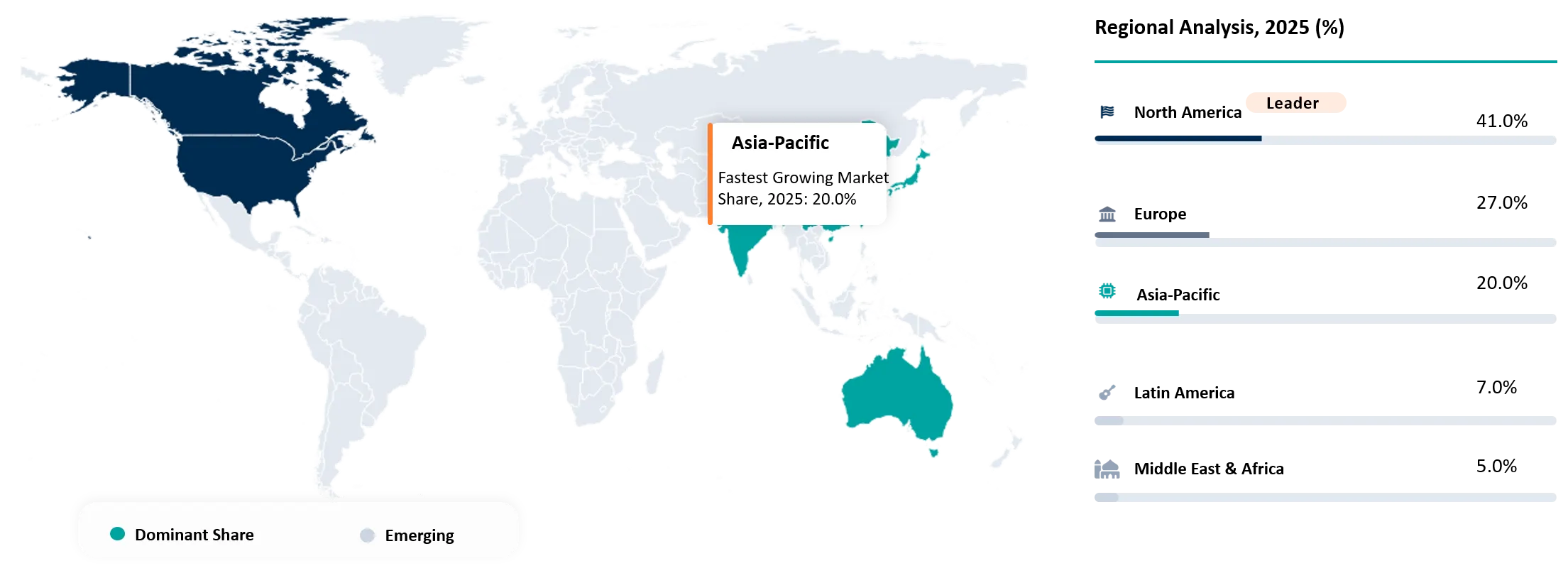
Growing Fitness Participation and Multifunctional Beverage Innovation Driving North America’s Creatine Beverages Market
North America's creatine beverages market is supported by a strong fitness and sports-nutrition ecosystem, established daily creatine supplementation habits, and increasing availability of convenient, high-dose gummy formats. In Canada, fitness and recreational sports centres generated approximately USD$4.24 billion in operating revenue in 2024, up 14.9% from 2023, indicating stronger participation and spending across organized fitness facilities.
Product development in Canada’s creatine beverages market is extending into flavoured sodas, sparkling functional drinks, and other carbonated beverage formats that combine creatine with electrolytes and sugar-free formulations. For instance, in August 2026, Joyburst introduced a creatine-infused soda containing 2 g of creatine, 340 mg of electrolytes, and zero sugar per serving. Available in Cotton Candy, Icy Pop, and Orange Cream Crush flavours, the beverage is sold through Costco, Sam’s Club, Aldi, and the company’s website.
U.S. Creatine Beverages Market Trends
The U.S. is one of the major markets for creatine drinks, owing to higher usage of sports nutrition drinks and functional beverages, a sizable number of athletes and fitness drinkers, and increasing interest from the consumer base regarding creatine. The year-over-year growth of the creatine category in the U.S. was recorded at 53% in 2024, while the number consumers using creatine increased by 36%, indicating strong consumer adoption and expanding demand for creatine-based products.
The market is gaining popularity from the creation of multiple function creatine drinks. combining performance, energy and hydration ingredients. For instance, in May 2026, KA-EX introduced Creatine EAA + Booster drink which has 3 g of Creapure creatine, 3.5 g of essential amino acids, 105 mg of caffeine, electrolytes, L-citrulline, and many more functional components. The beverage uses a push-cap technology that holds the creatine powder separate until consumption to help prevent degradation.
Expanding Sports Nutrition Adoption and High-Dose Creatine Beverage Innovation in Asia Pacific
Asia Pacific emerges as one of the regions having high potential for the development of creatine drinks due to increased adoption of creatine products among the sports nutrition consumers, increased involvement in fitness, and increased demand for convenience in supplement products. There is an increase in the adoption of creatine products in the region where 37% of the sports nutrition consumers adopt creatine products. Australia, South Korea, China, and Japan are some of the countries contributing towards the adoption.
Countries like Japan, China, South Korea and Australia have a particularly established sports-nutrition ecosystem and strong acceptance of creatine among performance-focused consumers. Australian brands are increasingly incorporating creatine into multifunctional RTD beverages, combining performance supplementation with protein, hydration and other functional benefits. For instance, My Muscle Chef’s RTD Protein Shake combines 35 g of whey protein isolate with 3 g of creatine per bottle, while Body Armour Hydrate+ RTD contains 1,485 mg of creatine per 330 ml can, alongside electrolytes, vitamins, amino acids and zero sugar.
China Creatine Beverages Market Trends
China represents a high-potential market for creatine beverages, supported by a large and increasingly active fitness population and rising sports consumption. According to China’s General Administration of Sport, 38.52% of the population regularly participated in physical exercise in 2025, while 96.8% of surveyed residents had participated in at least one sports activity.
Furthermore, emerging RTD products are incorporating innovative delivery systems to combine higher creatine doses with convenience and improved stability. Manufacturers such as C-Tine has developed an RTD creatine beverage featuring a push-cap system that stores 5 g of creatine monohydrate and electrolytes separately from the liquid, releasing them into the beverage immediately before consumption. The formulation approach addresses creatine stability challenges while combining higher-dose supplementation with the convenience of a ready-to-drink format.
Japan Creatine Beverages Market Trends
Japan's creatine beverages market is supported by a sizeable and active fitness and sports consumer base. The 2024 SSF National Sports-Life Survey reported that 16.0% of Japanese respondents participated in weight training, equivalent to approximately 16.75 million people. The opportunity for creatine beverages is further supported by Japan's strong convenience-store and functional-drink culture. Sports-nutrition products are increasingly being purchased through convenience-oriented channels, while brands are developing smaller, portable and ready-to-consume formats.
Japan's functional-food market provides an established environment for supplements and food-based products with specific health positioning. The Consumer Affairs Agency received 1,176 new Foods with Function Claims notifications in FY2025, covering formats ranging from conventional supplements to beverages and snacks. This supports a broader consumer environment for functional, convenient nutrition formats.
Creatine Beverages Market Competitive Landscape
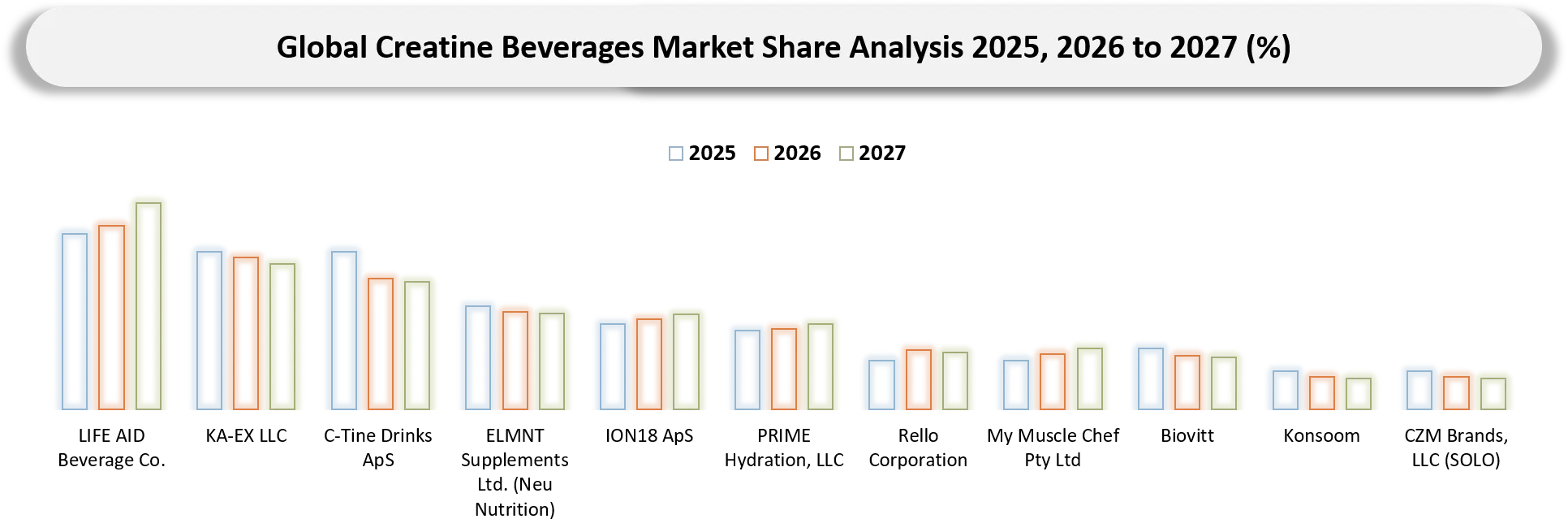
- The global creatine beverages market comprises manufacturers and brands offering ready-to-drink creatine beverages, creatine-enhanced functional drinks, performance beverages, hydration products, and creatine beverage formulations. Key participants include LIFE AID Beverage Co., KA-EX LLC, C-Tine Drinks ApS, ELMNT Supplements Ltd. (Neu Nutrition), ION18 ApS, PRIME Hydration, LLC, Rello Corporation, My Muscle Chef Pty Ltd, Biovitt, Konsoom, and CZM Brands, LLC (SOLO).
- LIFE AID Beverage Co. (United States), KA-EX LLC (United States), C-Tine Drinks ApS (Denmark), ELMNT Supplements Ltd. (United Kingdom), ION18 ApS (Denmark), PRIME Hydration, LLC (United States), Rello Corporation (United States), My Muscle Chef Pty Ltd (Australia), Biovitt (United States), Konsoom (United Kingdom), and CZM Brands, LLC (SOLO) (United States) represent key participants across the global Creatine Beverages market.
Key Developments
- October 2026: Ritual launched Creatine Greens, a 3-in-1 daily drink combining Creavitalis creatine monohydrate with spirulina, chlorella, and leafy greens to support muscle strength, healthy weight management, and metabolic health. The launch expands creatine beyond traditional sports-performance products into daily wellness and healthy-aging applications, particularly for women. The sugar-free, vegan formula is priced at $58 and is available through Ritual.com.
- April 2026: KA-EX launched Creatine EAA+ Booster, a ready-to-drink creatine beverage containing 3 g of Creapure creatine, essential amino acids, L-citrulline, caffeine, electrolytes, and other performance ingredients. Powered by patented VICAP dual-chamber technology, the product keeps creatine separated from the liquid until consumption to minimize degradation and deliver a full clinical dose.
- April 2024: LIFEAID launched FITAID RX, incorporating CreaBev encapsulated creatine into low-calorie and zero-sugar RTD recovery beverages. The launch demonstrates how improved creatine stability can enable functional, low-sugar and performance-oriented beverage formats.
- August 2026: USANA Health Sciences launched Clear Protein + Creatine Mix, a 3-in-1 drink combining 10 g of clear whey protein isolate, 5 g of micronized creatine monohydrate, and more than 600 mg of electrolytes in a 50-calorie serving. The launch consolidates protein, creatine, and hydration into a single sugar-free drink mix, providing an alternative to traditional protein shakes for active adults.
Key Procurement Priorities and Buyer Evaluation Criteria
- Consumers who purchase creatine beverages care about how much creatine per serving, creatine forms, dosing, stability of creatine in the beverage, taste, flavor, solubility, ingredient quality, sugar levels, calorie level, dietary fitness, serving size, and convenience of consumption.
- The assessment will be carried out in relation to some criteria such as creatine dose, creatine monohydrate or any other forms of creatine, solubility of creatine, stability of the active ingredient, sedimentation, precipitation, pH compatibility, flavor system, sweetener system, electrolyte, carbonation, sugar level, and calorie level.
- Sports nutrition firms, supplement firms, beverage manufacturers, contract manufacturers, retailers, e-commerce firms, and private label firms consider formulation costs, minimum order amounts, beverage manufacturing capabilities, filling capability, processing needs, packaging forms, shelf life, regulatory requirements, testing requirements, lead times, cold-chain requirements where necessary, and overall product costs.
- Favorable characteristics include a creatine beverage manufacturer with validated formulation capability, stable creatine delivery system, high solubility formulation technology, consistent active-ingredient dosing, pH and temperature stability, flavor development capability, varied beverage processing capability, sugar-free and low calorie formulation capability, quality control capability, third party testing capability, and scalable manufacturing capability.
Why Choose DataM?
- Examines Creatine Beverage Technology & Formulation Analysis: Examines developments across creatine monohydrate, micronized creatine, creatine HCl, buffered creatine, and other creatine formulations used in beverages, along with RTD, powder-to-mix, concentrated, and functional beverage formats. The analysis evaluates how formulation technologies, pH, solubility, processing conditions, packaging, and storage affect creatine stability, potency, taste, and product scalability.
- Application & Consumer Analysis: Evaluates creatine beverage demand across sports performance, muscle growth and body composition, exercise recovery, hydration, daily wellness, healthy aging, and cognitive and mental performance. The analysis identifies requirements according to consumer group, dosage preference, workout timing, consumption occasion, dietary requirements, and functional benefits.
- Real-World Industry Evidence: Tracks creatine beverage launches, RTD product introductions, powder-to-mix formulations, high-dose creatine beverages, sugar-free and low-calorie products, electrolyte and protein combinations, multifunctional formulations, beverage stabilization technologies, contract manufacturing developments, ingredient innovations, scientific evidence, testing initiatives, and distribution expansion across major markets. The analysis incorporates developments from sports nutrition brands, beverage companies, ingredient suppliers, and contract manufacturers.
- Competitive Landscape & Manufacturer Strategies: Analyzes how leading creatine beverage companies strengthen their positions through higher-dose formulations, alternative creatine forms, improved solubility and stability, RTD formats, sugar-free and low-calorie products, electrolyte and protein combinations, multifunctional formulations, proprietary delivery technologies, specialized packaging, flavor development, third-party testing, and expanded retail and e-commerce distribution.
- Pricing & Procurement Analysis: Evaluates creatine beverage pricing based on creatine dosage, creatine form, beverage format, serving size, formulation complexity, additional functional ingredients, sweetener system, packaging format, production scale, processing requirements, testing requirements, and distribution channel. The analysis also considers creatine ingredient costs, beverage formulation costs, packaging, filling, quality testing, transportation, and total cost per effective creatine dose.
- Market Entry & Growth Opportunities: Identifies opportunities arising from the shift toward convenient supplementation, expansion of creatine into RTD beverages, demand for high-dose and stable creatine formulations, sugar-free and low-calorie product development, multifunctional protein-electrolyte-creatine beverages, hydration products, expansion into wellness and healthy aging, women's wellness, on-the-go nutrition, e-commerce distribution, and broader consumer adoption beyond traditional sports nutrition.
Target Audience 2026
- Sports Sports Nutrition and Dietary Supplement Manufacturers
- Creatine and Sports Supplement Brands
- Ready-to-Drink Beverage Manufacturers
- Functional Beverage and Performance Drink Companies
- Beverage Contract Manufacturers and Co-Packers
- Ingredient Suppliers and Creatine Manufacturers
- Private-Label Supplement and Beverage Companies
- Sports Nutrition Retailers and Specialty Supplement Stores
- E-Commerce and Online Health & Wellness Platforms
- Pharmacies and Health & Wellness Retailers
- Fitness Centers, Gyms and Sports Performance Facilities
- Functional Food and Nutraceutical Companies
- Beverage Packaging and Filling Service Providers


























































