


Commercial Juicer Market Overview
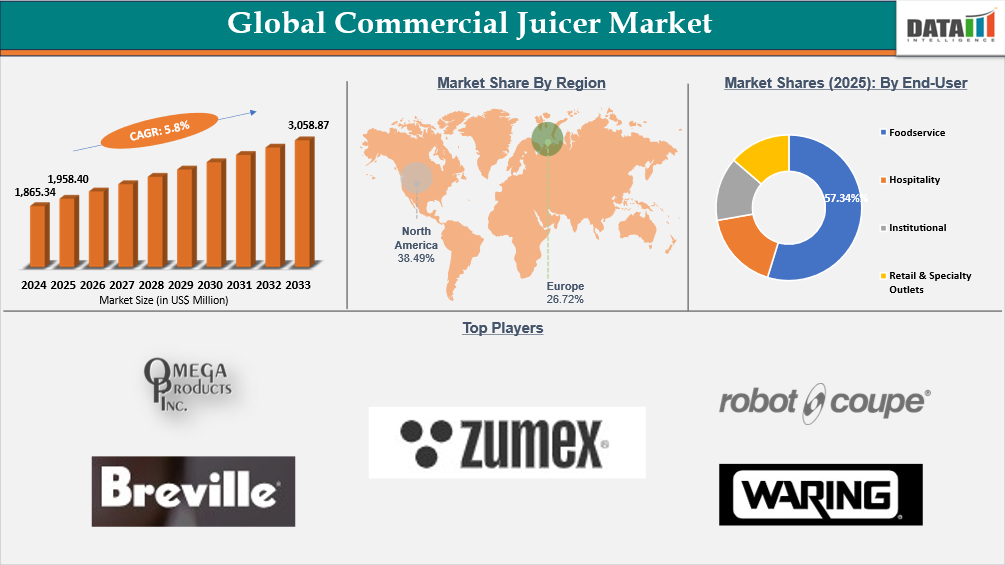
According to DMI analysis, the global commercial juicer market reached US$ 1,865.34 Million in 2024, rising to US$ 1,958.40 Million in 2025 and is expected to reach US$ 3,058.87 Million by 2033, growing at a strong CAGR of 5.8% during the forecast period from 2026 to 2033.
The commercial juicer market is driven by the increased awareness of health and well-being, and the increased demand for healthy and natural beverages in coffee shops, juice bars, hotels, and fast-food chains. Even though guidelines for 100% fruit juices vary worldwide, from allowing for the U.S. to prohibiting the World Health Organization and Health Canada, excluding free sugars, consumption of juices is very high, and almost half of children and adolescents consume at least one serving of juice per day.
The market is experiencing steady global growth, fueled by increased development in the food service and hospitality markets, along with changing consumer demand for nutrient-rich cold-pressed juices. The market is further bolstered by advancements in technology, such as HUROM’s H70 Easy Clean Slow Juicer Outbid April 2024, featuring its 70 RPM Slow Squeeze Technology along with an enhanced easy clean design, promoting elevated juice yield and increased user friendliness. The market in North America and Europe is well established, whereas the market in Asia Pacific is growing significantly due to its rising disposable income levels and changing lifestyles.
Commercial Juicer Industry Trends and Strategic Insights
- North America leads the global commercial juicer market, capturing the largest revenue share of 38.49% in 2025, driven by a well-established foodservice industry, high adoption of advanced kitchen equipment, strong presence of key manufacturers, and growing consumer demand for fresh and cold-pressed juices.
- By end-user, the food service segment led the global commercial juicer market, capturing the largest revenue share of 57.34% in 2025, driven by rising demand from restaurants, cafés, hotels, and juice bars for high-capacity and efficient juicing equipment to meet increasing consumer preference for fresh beverages.
Global Commercial Juicer Market Size and Future Outlook
- 2025 Market Size: US$1,958.40 Million
- 2033 Projected Market Size: US$ 3,058.87 Million
- CAGR (2026–2033): 5.8%
- Dominating Market: North America
- Fastest Growing Market: Asia-Pacific
Market Scope
| Metrics | Details | |
| By Product | Centrifugal Juicers, Masticating (Cold-Press) Juicers, Citrus Juicers, Twin-Gear Juicers, Juicer–Blender Hybrid Units | |
| By Power Source | Electric Commercial Juicers, Manual Commercial Juicers | |
| By Capacity | Low-Capacity Juicers, Medium-Capacity Juicers, High-Capacity Juicers | |
| By Operation Mode | Fully Automatic Juicers, Semi-Automatic Juicers, Manual / Lever-Assisted, Continuous Vs Batch Operation | |
| By Distribution Channel | Dealers & Distributors, E-Commerce | |
| By Installation | Countertop, Floor-Standing, Built-In / Under-Counter | |
| By Output & Use Case | Juice-Only Extraction, Juice + Pulp Control / Adjustable Yield, Multi-Ingredient, Citrus-Only Programs | |
| By Price | Entry, Mid-Range, Premium / High-Performance | |
| By End-User | Foodservice, Hospitality, Institutional, Retail & Specialty Outlets | |
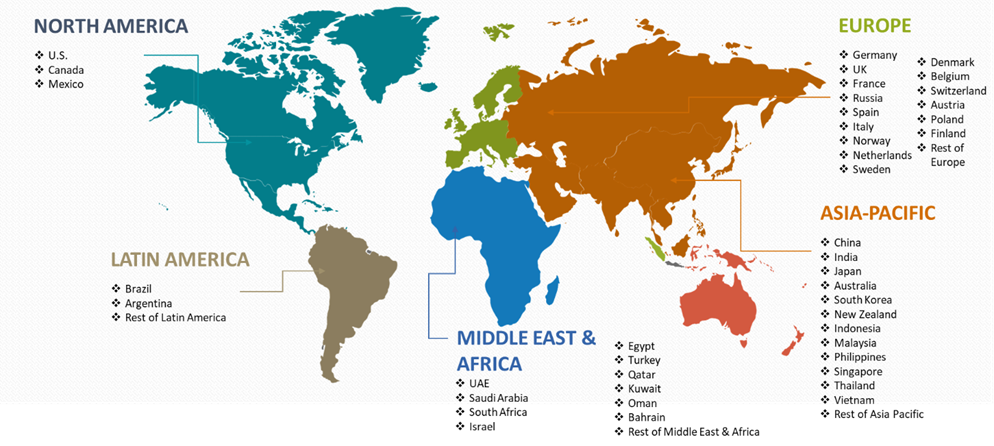
| By Region | North America | U.S., Canada, Mexico |
| Europe | Germany, UK, France, Spain, Italy, Norway, Netherlands, Sweden, Denmark, Belgium, Switzerland, Austria, Poland, Finland | |
| Asia-Pacific | China, India, Japan, Australia, South Korea, New Zealand, Indonesia, Malaysia, Philippines, Singapore, Thailand, Vietnam | |
| Latin America | Brazil, Argentina | |
| Middle East and Africa | UAE, Saudi Arabia, South Africa, Israel, Egypt, Turkey, Qatar, Kuwait, Oman, Bahrain | |
| Report Insights Covered | Competitive Landscape Analysis, Company Profile Analysis, Market Size, Market Share, Market Growth | |
Market Dynamics
Shift Toward On-Demand Nutrient Extraction Over Pre-Processed Beverages
The growing trend of on-demand nutrient extraction is thus fueling the commercial juicers market, as more consumers are opting for freshly prepared juices as opposed to ready-to-drink prepared juices. Even though the consumption of prepared juice drinks is high, the production capacity for them is growing at a slow rate. According to the USDA FAS, the production of orange juice globally is increasing by less than 1%, i.e., up to 1.54 million short tons, making foodservice outlets look positively towards preparing fresh juices in-house to meet the demand.
In the case where the international production, including Brazil's anticipated 1.10 million short tons, is expected to grow marginally, companies are differentiating based on freshness as well as customization. On-demand juicing helps cafes, hotels, as well as fitness centers, promote transparent and nutrient-rich drinks that match the needs of their customers, promoting more investment in innovation for high-performance commercial juicers that are characterized by efficiency. For this reason, manufacturers are nowadays reaping from the need for reliable juicers used for foodservice.
Segmentation Analysis
The global Commercial Juicer market is segmented based on Product, power source, capacity, operation mode, distribution channel, installation, output & use case, price, end-user and region.
Food Service Segment Dominated the Commercial Juicer Market Due to Strong Demand from Restaurants and Juice Bars
The food service end-user segment has the highest market share in the commercial juicer market, primarily because this market is in constant need of high-volume, revenue-building beverage equipment. Restaurants, hotels, food service establishments, and juice bars use commercial juicers that have to be efficient enough to match the existing daily customer demands. These establishments rely on commercial juicer equipment, and it is essential to note that different from other end-users in the market, food service establishments reward performance.
Supporting this position, on October 16th, 2025, JBT Marel showcased their Fresh’n Squeeze 1800 Citrus Juicer, a product specifically designed to meet the needs of foodservice operators during the IFPA Global Produce and Floral Show. The compact juicer is designed to extract up to 50% more juice from each orange using industrial-grade whole fruit extraction technology, contributing positively to the profit margin of restaurants, hotels, and cafes. Such unveiling of products further supports the position that foodservice indeed accounts for the greatest share of the commercial juicers market.
Geographical Penetration
DOMINATING MARKET:
North America’s Significant Share in the Global Juicers Market Supported by Rising Health Consciousness and Strong Fitness Trends
North America makes a significant contribution to the global juicers market due to its high rate of health and wellness awareness among its inhabitants. According to fresh data released by the IHRSA-Health Fitness Association, U.S. gym membership has reached its all-time high record of 77 million as of 2024, recording a 20% growth from 2019, which leads to increased consumption of fresh juices, thereby fueling the acquisition of high-end juicer appliance. In addition to this, high disposable income levels and an extremely well-developed retail infrastructure can be considered to be driving factors. Besides this, the presence of branded companies like Breville, Omega, Hamilton Beach, and Cuisinart add to the competitive analysis of this particular region.
U.S. Commercial Juicer Market Outlook
U.S. commercial juicer industry is leading and advancing with high demand from restaurants, cafes, juice bars, and hotels with the increase in economy and consumer interest in healthy juices. Potential customers are looking at the efficiency, durability, and ease of maintenance, thus boosting growth with well-developed distribution systems and technology advancements in the industry. Since only 23% of children and 15% of adults are consuming the recommended amount of total fruit, which includes juice, further growth is foreseen for the commercial juicer industry.
Canada Commercial Juicer Market Trends
Canada currently has a significant position in the North America commercial juicer market, attributed to a consistent demand from consumers for fresh and healthy juices and beverages. The demand is further boosted by existing installations by a well-developed food service industry. The demand comes as a result of investments made in new and modern technologies of processing, such as the addition by the government of US$ 6.3 Million to Greenhouse Juice Company based in Mississauga, Canada. The investment saw the company incorporate a new technology in Canada, which involves pasteurization to increase the longevity of juices to be consumed by health-conscious consumers without compromising nutritional value.
Regulatory Analysis
The major regulations that have an impact on the commercial juicers market are related to food safety regulations, electrical safety regulations, and regulations pertaining to the use of materials. As far as the regulations applied to the commercial juicers market are concerned, it has been seen that food contact material regulations approved by the FDA, NSF/ANSI sanitation standards, and electrical safety standards approved by UL are the key regulations that are currently being implemented for electrical and kitchen appliances within U.S.
On the other hand, the regulations pertaining to commercial juicers within the European Union would include regulations related to the use of electrical equipment, directives related to the use of low voltage, electrical equipment, electromagnetic compatibility, and food contact regulations approved under EC 1935/2004. In addition to the regulations that are applied to electrical and kitchen appliances, it has been seen that hygiene regulations approved under HACCP would need to be addressed by the manufacturer.
Globally, there is an increased focus on regulatory requirements related to sustainability, noise emissions, and energy consumption, especially with respect to products that find applications in hotels, restaurants, and institutional catering. The market in Asia Pacific as well as the Middle East tends to involve a combination of local certification requirements along with global standards such as ISO and IEC norms. Various import regulations, customs clearances, and testing requirements act as an impediment to market entry for international brands. Moreover, liability requirements and labor safety regulations affect various design features such as emergency stop devices and overload devices.
Competitive Landscape
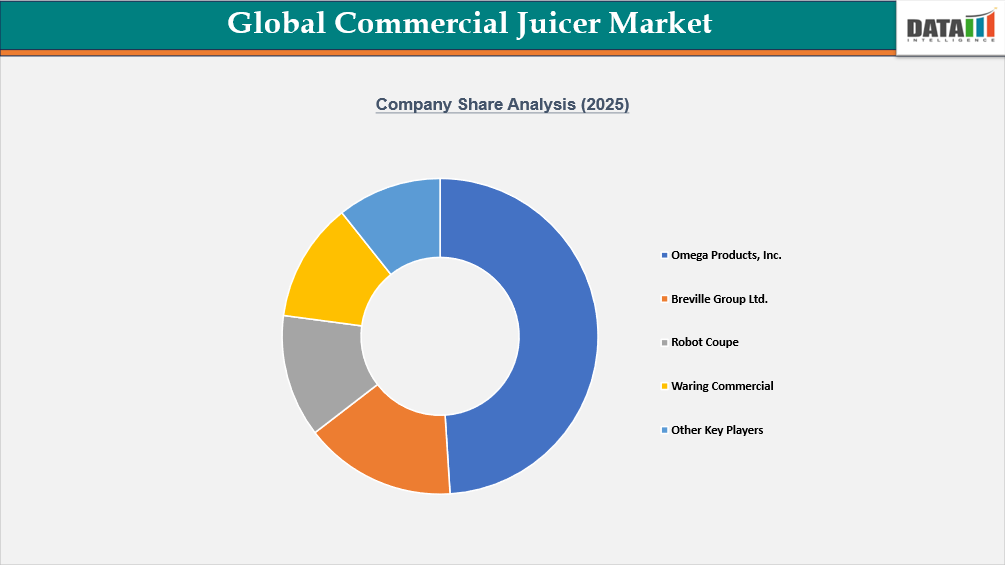
- The commercial juicer industry is moderately competitive with a presence of both global key manufacturers as well as regional players serving the foodservice, hospitality, as well as institutional sectors.
- Major companies include Omega Products, Inc., Breville Group Ltd., Robot Coupe, Santos, Waring Commercial, Hamilton Beach Brands, Inc., Nutrifaster, Inc., Zumex Group, Zummo, Philips N.V., Panasonic Corporation, Hurom Co., Ltd., Kuvings Co., Ltd., Cuisinart (Conair Corporation), Goodnature.
- The competition is fueled by product durability, product output capability, cleanability, and efficiency, given that products must be able to meet continuous demand for use in commercial environments. Technology, including automation, efficiency, noise reduction, and multifunction, plays a significant role as a differentiator from competition.
Key Developments
- In February 2026, Kuvings launched the hands-free slow juicers AUTO10S and AUTO10 Plus at Ambiente 2026 in Frankfurt. The juicers employ cold press technology, which works at a speed of less than 50 RPM to protect nutrients and natural flavor while cutting down on prep work with auto capacity.
- In September 2025, iBoozee, introduced Asia’s first Smart Robotic Mixed Fruit Juice and Apple Machines in Singapore, which can be seen as the clearest expansion of healthy and convenient beverage options. Dual Fruit Dispensing Technology will be used, offering customers options like pure apple juice, orange juice, or a customized mix of both, extracted from 3-4 fruits every time with no added sugar or preservatives.
- In July 2025, Dasin Machinery Co., Ltd. unveiled its latest JP1000 Industrial Citrus Juicer, which will help counter problems resulting from thicker peels of citrus fruits caused by climate change. The upgraded model is fitted with a reinforced pressing structure, a cutterhead designed with changes in mind, and a machine that has the capacity to extract juice without the need to pre-peel or sort materials for long-time continuous working with less risk of clogging, for smooth production lines.
- In October 2025, JBT Marel introduced its Fresh'n Squeeze 1800 Citrus Juicer at IFPA’s Global Produce and Floral Show in Florida. The new compact countertop model employs JBT Marel’s industrial whole fruit extraction technology to extract up to 50% more juice per orange than cut and press systems, producing 50 ounces per minute.
- In September 2022, Magic Bullet announced the launch of its Mini Juicer under the brand’s rebranded logo as it rolled out its first-ever entirely new product under the brand’s refreshed identity. The product was made with the objective of making juicing more accessible by incorporating a compact juicer with a single serving capacity that includes a 400-watt motor, 2-inch feed chute, 52-oz pulp bin, and a 16-oz twist-on lid to-go cup.
What Sets This Global Commercial Juicer Market Intelligence Report Apart
- Latest Data & Forecasts – Comprehensive, up-to-date insights and projections through 2033. Coverage includes global value by Product, power source, capacity, operation mode, distribution channel, installation, output & use case, price, end-user and region. Scenario forecasts with region-level splits (North America, Europe, Asia-Pacific, Latin America, Middle East and Africa) and sensitivity to factors such as regulatory reclassification and raw-material costs.
- Regulatory Intelligence – Actionable analysis of regulatory frameworks that materially affect Commercial Juicer commercialization, revenue by country, allowable label claims, permitted doses, import/export controls and advertising restrictions.
- Competitive Benchmarking – Standardized profiling and benchmarking of leading pharma and nutraceutical players, contract manufacturers and e-commerce specialists active in the market.
- Geographic & Emerging Market Coverage – Region-by-region market sizing, growth drivers, reimbursement dynamics, cultural/consumer behavior and market access considerations. Focus on high-growth or regulatory-uncertain markets.
- Actionable Strategies – Identify opportunities for launching innovative products, while leveraging strategic partnerships and supply chain integration for maximum ROI.
- Pricing & Cost Analysis – In-depth assessment of price trends, raw material costs and sustainability-driven cost efficiencies across regional markets.
- Expert Analysis – Insights from industry experts such as product specialists, regulatory affairs professionals and key manufacturing companies.
Target Audience 2026
- Foodservice Operators (HORECA Sector)– Hotels, restaurants, cafés, juice bars, smoothie chains, quick-service restaurants (QSRs), catering companies, and cloud kitchens requiring high-performance juicers for fresh juice and beverage preparation.
- Quick-Service & Fast-Casual Restaurant Chains– Global and regional F&B chains integrating fresh juice, cold-pressed beverages, and wellness drinks into their menus to meet growing health-conscious consumer demand.
- Juice & Smoothie Bar Chains - Dedicated juice brands and franchise operators seeking commercial-grade centrifugal, cold-press, or masticating juicers for high-volume operations.
- Supermarkets & Retail Chains – Hypermarkets, grocery stores, and organic food retailers offering in-store fresh juice stations and self-serve juice solutions.
- Commercial Kitchen Equipment Distributors & Dealers – Regional and international distributors, wholesalers, and foodservice equipment suppliers handling procurement and resale of commercial juicing equipment.
- Food & Beverage Processing Companies – Organizations involved in vehicle testing, crash analysis, NVH testing, durability validation, emissions testing, and functional safety certification.
- E-commerce & B2B Platforms – Automotive R&D hubs, innovation labs, and technology centers conducting advanced research in vehicle dynamics, lightweight materials, electrification, connectivity, and software-defined vehicles.
- Investors & Private Equity Firms – Venture capitalists, institutional investors, and strategic buyers investing in foodservice equipment manufacturers, juice brands, and healthy beverage ecosystems.


























































