


Cold Chain Monitoring Market Size and Overview
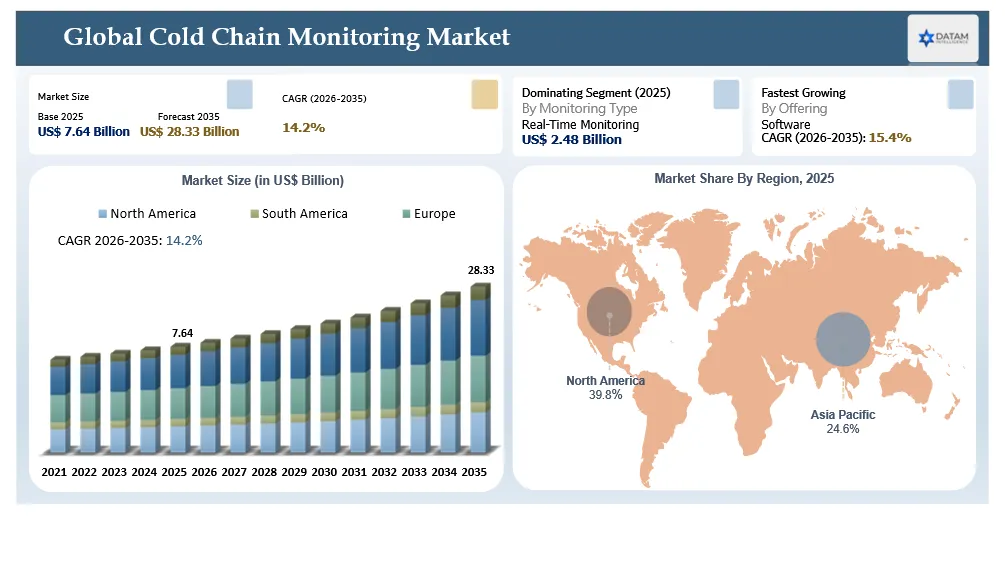
The global cold chain monitoring market reached US$ 7.64 billion in 2025 and is expected to reach US$ 28.33 billion by 2035, growing with a CAGR of 14.2% during the forecast period 2026-2035.
Market growth is being fueled by increasing demand for pharmaceuticals, vaccines, biologics and food items that require temperature control. The pharmaceutical industry had a global valuation of US$ 1,770 billion in 2025, making huge demands for innovative technology in temperature monitoring. Biologics make up 40% of the pharmaceutical portfolio with a large proportion of it needing refrigeration and freezing conditions in transport, leading to the need for constant temperature monitoring. Increasing use of connected monitoring technology in the pharmaceutical logistic field is helping to boost investments in cold chain management systems.
Pharmaceuticals comprise the biggest share of cold chain monitoring since temperature-sensitive products are subject to strict regulations. In terms of operations, in 2025 the Global Top 25 refrigerated warehouse and logistics companies operated 207 million cubic meters of temperature-controlled storage space. The Asia-Pacific region is projected to be among the fastest-growing markets during the analyzed period thanks to the growth of the pharmaceutical industry, increase in food export and investment in digital supply chain technologies. The use of technologies such as AI-powered predictive monitoring tools, cloud-based visibility solutions and low-power wireless connectivity devices will produce large opportunities for the cold chain management sector.
Cold Chain Monitoring Market Key Takeaways
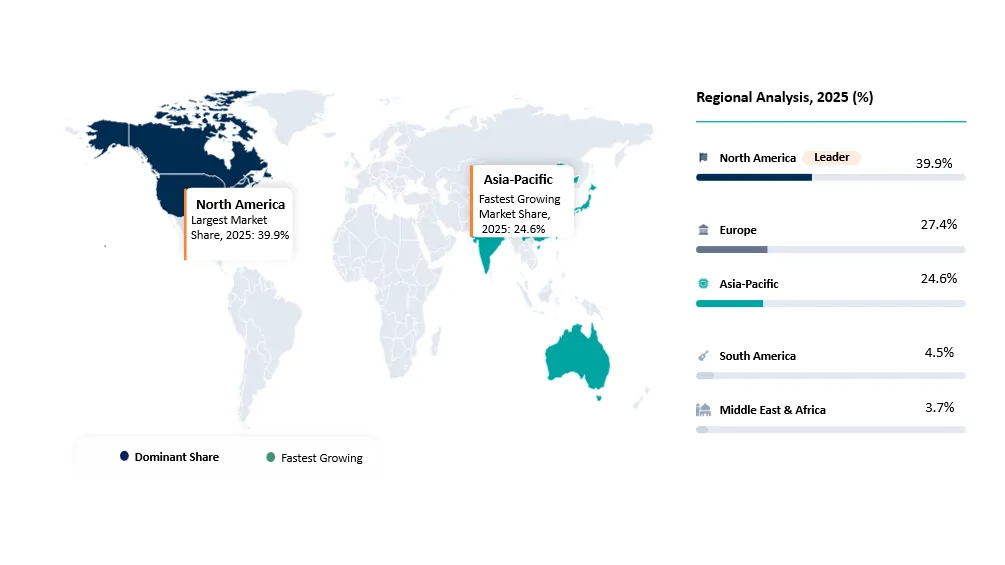
- In terms of market share, North America covered 39.8% of the world Cold Chain Monitoring in 2025 due to its modern cold chain infrastructure in pharmaceuticals, along with extensive use of real-time technologies.
- Commercially, Asia-Pacific is expected to be the region growing the fastest from 2026 to 2035 due to increasing pharmaceutical production capacity, growing investments into cold storage and advancements in supply chain digitalization.
- The market for Real-Time Monitoring reached US$2.48 billion in 2025 as temperature monitoring is of great importance since companies need to ensure continuous temperature monitoring, notification and compliance with regulations.
- In terms of growth rate, the Software market is anticipated to grow at a CAGR of 15.4% between 2026 and 2035, backed by rising adoption of cloud-based solutions, predictive analytics, Digital Twin and subscription-based monitoring solutions.
- The refrigerated warehouse space rose from 719 million cubic meters in 2020 to 901 million cubic meters in 2024, reflecting the consistent efforts being made towards developing temperature controlled logistical assets in order to implement cold chain tracking solutions.
Cold Chain Monitoring Industry Trends and Strategic Insights
- Increasing Use of Real-Time IoT Tracking: Businesses are relying more and more on sensors that can track temperatures, location and humidity in real-time by using IoT and cloud technology platforms.
- Expansion in Ultra-Cold Temperature Transportation: With increasing requirements of cell and gene therapies, biologics and specialty drugs, there will be an increasing adoption of systems that can monitor temperatures even lower than -80°C.
- Growing Use of Multi-Parameter Sensors: Cold chain participants are adopting sensors capable of measuring multiple parameters like temperature, shock, lighting and humidity to ensure improved product integrity and reduce spoilage risks.
- Use of Predictive Analytics: Predictive analytics technology is being used in cold chains for predicting temperature excursion and planning the best transportation route.
- Towards Complete Supply Chain Visibility: Enterprises are increasingly relying on comprehensive monitoring systems for monitoring their entire supply chain in real time, automatic reporting and analytics.
Cold Chain Monitoring Market Scope
| Metrics | Details | |
| 2025 Market Size | US$ 7.64 Billion | |
| 2035 Projected Market Size | US$ 28.33 Billion | |
| CAGR (2026-2035) | 14.2% | |
| Largest Market | North America | |
| Fastest Growing Market | Asia-Pacific | |
| By Offering | Hardware, Software and Services | |
| By Temperature Type | Frozen Cold Chain (-18°C and Below), Refrigerated Cold Chain (2°C to 8°C), Controlled Room Temperature (15°C to 25°C) and Cryogenic Cold Chain (Below -150°C) | |
| By Monitoring Type | Real-Time Monitoring and Non-Real-Time Monitoring (Data Logger-Based) | |
| By Connectivity | Wi-Fi, Bluetooth/Bluetooth Low Energy (BLE), Cellular Networks (2G/3G/4G/5G), RFID, Satellite Communication, LPWAN Technologies (LoRaWAN, NB-IoT and Sigfox),Zigbee, Near Field Communication (NFC), Ethernet/Wired Connectivity, Hybrid Connectivity Solutions and Others | |
| By Deployment Mode | Cloud-Based, On-Premise and Hybrid Deployment | |
| By Application | Pharmaceutical and Biopharmaceutical Products, Food and Beverages, Medical Devices, Diagnostic Samples and Reagents, Laboratory and Research Materials, Chemicals and Specialty Chemicals, Floral Products, Agriculture and Horticulture Products, Cosmetics and Personal Care Products and Others | |
| By Supply Chain Stage | Production and Manufacturing Facilities, Cold Storage Warehouses, Transportation and Logistics, Distribution Centers, Retail & Pharmacies and Last-Mile Delivery | |
| By End-User | Pharmaceutical and Biotechnology Companies, Food and Beverage Manufacturers, Third-Party Logistics (3PL) Providers, Cold Storage Companies, Hospitals and Healthcare Facilities, Retail Chains and Supermarkets, E-Commerce Grocery Platforms, Chemical Manufacturers and Government and Public Health Organizations | |
| By Transportation Mode | Road Transportation, Air Freight, Sea Freight and Rail Transportation | |
| By Enterprise Size | Large Enterprises, Small and Medium-Sized Enterprises (SMEs) | |
| By Region | North America | U.S., Canada, Mexico |
| Europe | Germany, UK, France, Spain, Italy, Poland | |
| Asia-Pacific | China, India, Japan, Australia, South Korea, Indonesia, Malaysia, Singapore, Vietnam, Thailand, Philippines, Taiwan | |
| South America | Brazil, Argentina | |
| Middle East and Africa | UAE, Saudi Arabia, South Africa, Israel, Turkiye | |
| Report Insights Covered | Competitive Landscape Analysis, Company Profile Analysis, Market Size, Share, Growth | |
Why does this report matter in 2026?
2026 will be a game-changing year for the Cold Chain Monitoring Market as the industries are placing emphasis on visibility of the supply chain, integrity of the products and regulatory compliances. With the rapid increase in the production of medicines, biologics, specialty drugs and perishable foods, there is a need for constant monitoring of the environment. Real-time monitoring systems are now being used by the organizations to reduce product losses.
Also, advancements in technologies such as Internet of Things (IoT) enabled sensors, cloud computing-based analytics and predictive monitoring technologies are revolutionizing cold chain logistics across the globe. The increase in the investment towards cold storage infrastructure, commercialization of ultra-low temperature therapies and rise in the demand for end-to-end visibility in the supply chain are some of the key factors leading to growth opportunities in the market. This report gives an in-depth knowledge of growth trends, driving forces, competition and opportunities in the Cold Chain Monitoring Market.
Cold Chain Monitoring Market White Space & Investment Opportunities
- Ultra-Low Temperature Monitoring Technologies: The rising commercialization of cell & gene therapies is generating opportunities in monitoring technologies that can work in ultra-low temperatures (-80°C to -196°C).
- Cold Chain Platforms Using Artificial Intelligence to Predict Temperature Deviations: Investments in cold chain platforms that use artificial intelligence to predict temperature deviations, plan shipping routes and issue automated risks are still largely untapped.
- Cold Chain Infrastructure for Emerging Markets: There is considerable scope in the development of cold chain infrastructure in countries from Asia-Pacific, Latin America and Africa for pharmaceutical and food products.
- Reusuable Smart Labels, Sensors and Connected Packaging Solutions: The need is growing for reusable smart labels, Bluetooth sensors and connected packaging solutions to lower costs and increase transparency of shipments.
- End-to-End Visibility Platforms for Supply Chains: There are numerous opportunities in this area for the development of platforms which can offer temperature monitoring, regulatory compliance, GPS tracking and supply chain analytics capabilities all in one package for pharma & food logistics companies.
Cold Chain Monitoring Future Market Transformation
The future of the Cold Chain Monitoring market would be characterized by its transformation from traditional temperature monitoring systems into smart, predictive and interconnected supply chain visibility systems over the next decade. The future of monitoring systems is going to be characterized by the adoption of advanced AI and analytics tools alongside IoT sensors and cloud-based technologies to deliver real-time risk assessment, automatic compliance management and preventive temperature excursions. The increasing adoption of ultra-cold temperature logistics in advanced therapeutic areas alongside multi-parameter monitoring is expected to set new standards in pharmaceuticals and food cold chains. The adoption of sustainable and reusable monitoring systems alongside the full digitalization of the cold chain would contribute significantly to this transformation.
Cold Chain Monitoring Market Buyer Decision-Making Criteria
One of the key measures through which solutions can be assessed when it comes to cold chain management is whether the solutions can ensure real-time and precise tracking of temperature sensitive shipments while still meeting the regulatory guidelines. Buyers today look for solutions that not only ensure visibility but also offer alert notifications.
Major Purchase Criteria
- Sensor Accuracy and Reliability
- Regulatory Compliance Capabilities
- Real-Time Monitoring and Alert Systems
- End-to-End Supply Chain Visibility
- System Integration and Cloud Scalability
- Total Cost of Ownership (Hardware, Software and Services)
- Multi-Parameter Monitoring Capabilities
- Battery Life and Connectivity Performance
Moreover, procurement is affected by factors like the total cost of ownership in terms of spending on hardware, software, connectivity and maintenance. Businesses are now looking for platforms that can offer predictive analytics, multi-parameter monitoring features and smooth integration with existing SCM systems in addition to performing well under different conditions, including ultra-cold conditions. Cloud scalability and visibility of the entire cold chain supply process have also become an essential part of the decision making process.
Cold Chain Monitoring Market Economic & Investment Analysis
Market players are making heavy investments in the Cold Chain Monitoring market due to the rapid development of pharmaceutical cold chain networks and biological drug distribution networks as well as temperature-controlled food logistics. These investments are mainly focused on IoT-based monitoring devices, cloud visibility solutions and AI predictive analytics solutions, which increase the resiliency of the supply chain and help reduce any losses. The players are now providing more managed services in order to cope with the increasing demand for end-to-end shipment visibility and compliance with regulations.
The growing number of investment cases in cold chain management technologies are increasingly being validated by virtue of the cost savings from spoilages, efficient operations and regulatory compliance of such technologies. There is massive investment being seen in emerging markets for infrastructure and logistics that can be temperature controlled, thus providing new revenue streams for companies offering monitoring solutions. Collaboration between technology partners, logistics operators and pharmaceutical companies will continue to drive innovations and growth in areas such as ultra-cold temperature monitoring and real-time tracking.
Cold Chain Monitoring Investment Trends in the Market
- The growing investments in IoT-based real-time monitoring platforms are allowing continuous monitoring of temperature, location and humidity throughout the pharma and food cold chains.
- Increasing capital spending on ultra-low temperature monitoring solutions is helping to accelerate the development and commercialization of cell and gene therapies, biologics and specialty drugs that need cryogenic storage.
- The rising investments in cloud-based cold chain visibility solutions are contributing to the deployment of centralized monitoring systems with automatic reporting and predictive capabilities.
- Partnerships between technology suppliers and logistics firms are driving the adoption of end-to-end monitoring systems in temperature-controlled logistics.
- Cold storage capacity growth in developing nations is presenting lucrative investment opportunities to sensor makers, connectivity service providers and cold chain monitoring service providers.
Strategic Indicators For Cold Chain Monitoring Market
High Regulation Impact
The key characteristic of the Cold Chain Monitoring market is a very high level of regulatory influence since there are strict requirements concerning temperature and traceability of products from pharmaceutical, biotechnological and food supply chains. Requirements for Good Distribution Practice (GDP), transportation of temperature-sensitive drugs and food safety are pushing companies to implement real-time monitoring systems, automated reporting and environmental monitoring systems. Non-compliance with conditions of storing and transporting leads to product recall, losses and fines; thus, implementation of cold chain monitoring systems becomes essential for business.
High Investment Activity
High investments are being witnessed in the Cold Chain Monitoring market owing to the swift growth in pharmaceutical cold chains, biologics logistics and temperature controlled food chains. Increasing investments are being made in Internet-of-things enabled monitoring systems, predictive analytics through AI and cloud-based logistics visibility systems. Moreover, increasing spending on cold storage systems, ultra-cold temperature logistics and integrated monitoring ecosystems are offering huge potential for technology vendors and logistics players across the globe.
Supply Chain Disruption
The Cold Chain Monitoring Market is extremely vulnerable to the challenges faced due to supply chain disruption caused by transportation delays, network issues and deviations in temperature during transport. The growing demand for temperature-sensitive pharmaceuticals and other perishables has created the need for robust and reliable monitoring techniques. Thus, businesses are adopting solutions such as predictive monitoring systems, multi-carrier visibility solutions and contingency management solutions.
Pricing Volatility
Cold Chain Monitoring market witnesses price volatility on account of fluctuations in prices of components used in sensors, prices for connectivity services and investment made in cold chain infrastructure. Price of one-time use temperature monitoring data loggers varies from US$ 15-50 per unit, whereas IoT enabled monitoring devices having connectivity and monitoring features vary from US$ 100-500 per unit. Moreover, cloud based cold chain monitoring solutions subscription cost varies from US$ 10-50 per shipment per month, adding to price volatility in the market. Fluctuations in prices of semiconductors globally and rise in logistics costs have also impacted the price dynamics in the market.
Procurement Pressure
There exists moderately high to high procurement pressure in the market for cold chain monitoring. The need for accuracy in real-time monitoring, capability to meet regulatory requirements and inter-operability with already existing systems in the supply chain have become key factors in buyer demands. In addition to this, buyers have been putting more emphasis on the cost-effectiveness of the systems in terms of battery life, connectivity within multimodal transport networks and scalable cloud monitoring services.
New Technology Adoption
Advanced technology solutions such as Internet-of-Things (IoT)-enabled sensors, predictive analytics based on artificial intelligence, cloud computing and low-power wireless connections are rapidly being adopted by the Cold Chain Monitoring market. Real-time multi-parameter monitoring solutions that monitor parameters such as temperature, humidity, shock and location are being extensively used by firms. Digital twin, automatic compliance reporting solutions and end-to-end visibility solutions are among other solutions that are boosting the shift towards smart cold chain monitoring solutions.
Regional Expansion Opportunity
For the Cold Chain Monitoring Market, Asia-Pacific, South America and the Middle East & Africa regions represent the best growth possibilities owing to an increasing trend of investment in pharmaceutical production, cold chain infrastructure and temperature controlled transportation in these regions. Nations like India, China, Brazil and Saudi Arabia are developing themselves in the areas of healthcare and food export, thus resulting in significant growth potential in terms of requirements for cold chain monitoring technology.
Government Policy Support
Government policies promoting integrity in pharmaceutical supply chains, food safety measures and temperature controlled logistics are increasingly encouraging the use of technology for monitoring the cold chain process. Government regulations such as Good Distribution Practices, pharmaceutical serialization policies and food safety regulations require the ongoing tracking and documenting of conditions for the transport and storage of temperature sensitive products. In addition, investments in healthcare infrastructure, vaccine delivery programs and cold storage facilities within emerging economies are creating positive conditions for growth.
Pricing Intelligence
The pricing of Cold Chain Monitoring is gradually moving to value-based pricing and subscription-based pricing instead of being one-time purchases of hardware. One time use temperature loggers cost anywhere between US$ 15-50 each and reusable IoT sensors vary widely and cost anywhere between US$ 100-500 per unit. Cloud-based monitoring platforms cost US$ 20-100 per month for each device and managed monitoring services can cost US$ 10-50 per shipment.
Predictive analysis, automated compliance reporting and supply chain visibility services are some of the features used by vendors to differentiate their products. Pharmaceutical grade ultra-low temperature monitoring devices command price premiums between 20%-40% compared to regular monitoring devices due to the high level of performance required. Subscription and pay per shipment pricing models have also gained traction among pharmaceutical companies and third party logistics companies.
| HS Code | Reporter | Trade Flow | 2025 Trade Value | Interpretation |
| 9025.19 | United States | Imports | US$ 8.9 Billion | Strong demand for temperature-measuring instruments used in pharmaceutical and food cold chain monitoring applications. |
| 9025.8 | Germany | Imports | US$ 6.4 Billion | Growing adoption of environmental monitoring devices, including humidity and multi-parameter sensors, across temperature-controlled logistics. |
| 8526.91 | China | Imports | US$ 7.8 Billion | Increasing deployment of GPS tracking technologies is supporting real-time shipment visibility in cold chain operations. |
| 8523.52 | Netherlands | Imports | US$ 5.2 Billion | Rising utilization of RFID tags and smart labels is enhancing traceability and regulatory compliance across pharmaceutical and food cold chains. |
AI Impact Analysis of Cold Chain Monitoring Market
Artificial intelligence is greatly revolutionizing the cold chain monitoring market through the use of predictive and autonomous supply chain management. AI technology can assess temperature trends, shipping routes, weather changes and the performance of the carriers in real-time to predict when there could be temperature fluctuations that might happen in advance. The predictive ability helps businesses in taking preventive measures to avoid spoilage of valuable pharmaceutical products as well as perishable foods. AI technology is assisting in meeting regulatory compliance through automatic detection of anomalies, creating an audit trail and assessing the risk of each shipment.
Moreover, the convergence of AI with IoT-based monitoring systems is leading to an accelerated pace of creating intelligent cold chains that can optimize their transport routes and inventory management. More often machine learning techniques are used for identifying inefficiencies in operations, predicting failures of equipment at cold storage facilities and optimizing energy usage. In light of expanding the reach of pharmaceutical companies' distribution of biologics, cell and gene therapies and ultralow temperature products, AI-powered predictive monitoring and total supply chain visibility solutions will be key competitive advantages in the Cold Chain Monitoring market.
Disruption Analysis of Cold Chain Monitoring Market
There is significant disruption happening in the Cold Chain Monitoring market due to the fusion of the Internet of Things (IoT), artificial intelligence and cloud-based supply chain visibility solutions. Conventional temperature logging solutions are swiftly making way for smart, real-time solutions that provide predictions, automate compliance reports and monitor multiple environmental parameters simultaneously. This transformation is transforming customer expectations, as customers demand an integrated solution with visibility throughout the cold chain process from storage to delivery.
One more disruptive factor is the fast-growing need for ultralow temperature logistics associated with biologics, mRNA drugs and cellular/gene-based therapies. This type of logistics requires special monitoring that cannot be provided by existing cold chain solutions and offers room for innovation in the field of cryogenic monitoring systems, reusable smart sensors and end-to-end cold chain ecosystems. Furthermore, the growing popularity of subscription monitoring models and alliances between technology vendors and logistics firms adds another layer to the competitive landscape of the industry.
Cold Chain Monitoring Market BCG Matrix: Company Evaluation
STAR
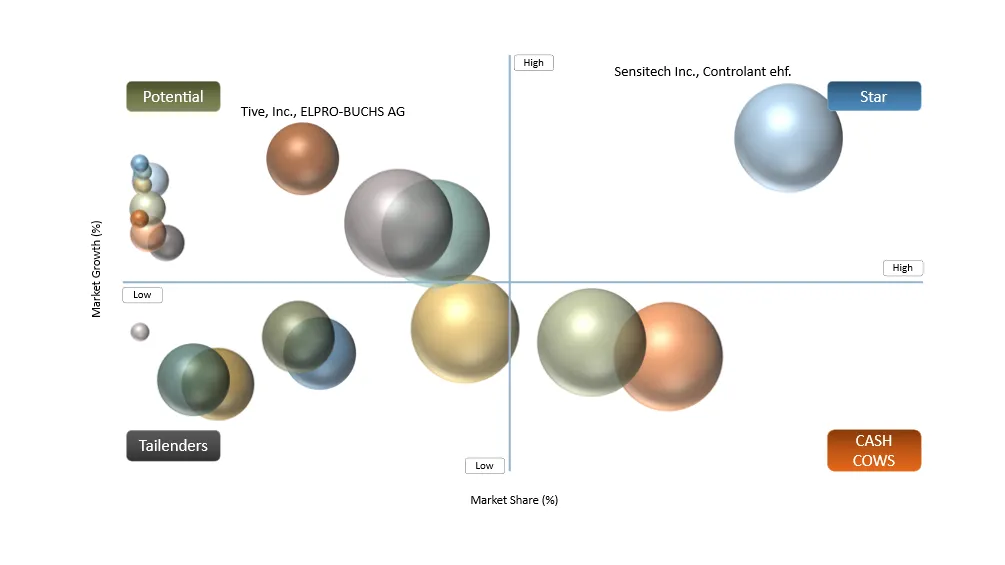
Sensitech Inc., Controlant ehf., ORBCOMM Inc., Zebra Technologies Corporation and Honeywell International Inc. all belong to the Star quadrant, thanks to their solid presence in the market as well as their extensive portfolios of solutions in cold chain monitoring. The ongoing investment in technologies related to the provision of real-time visibility and cold chain monitoring of pharmaceuticals gives them an edge in addressing rigorous regulations imposed on the market.
POTENTIAL
The companies that are present in the Potential quadrant include Tive, Inc., ELPRO-BUCHS AG, Berlinger & Co. AG, Roambee Corporation and LogTag Recorders Ltd. The reason behind positioning in the Potential quadrant is their ability to monitor the temperature sensitive logistic processes using the advanced technology and increasing their use cases in pharma and healthcare industry. The players are developing innovative solutions related to cloud-based monitoring, compliance management and intelligent shipment visibility solutions.
Cold Chain Monitoring Market Dynamics
Driver Impact Analysis
| Driver | Market Growth Impact (%) | Demand Concentration | Impacted Use Case | Strategic Impact |
Rising Demand for Temperature-Sensitive Pharmaceuticals and Biologics | 6.20% | Pharmaceutical Manufacturers and Biologics Companies | Vaccine, biologics and cell & gene therapy transportation | Accelerates adoption of ultra-low temperature and real-time monitoring solutions |
Growing Adoption of IoT-Based Real-Time Monitoring Technologies | 5.60% | Global Cold Chain Logistics Providers | Continuous temperature and location tracking | Increases demand for cloud-based visibility platforms and predictive analytics capabilities |
Expansion of Global Cold Storage Infrastructure | 4.80% | Cold Storage and Third-Party Logistics (3PL) Providers | Temperature-controlled warehousing and distribution | Drives deployment of integrated monitoring systems across storage facilities |
Increasing Regulatory Requirements for Cold Chain Compliance | 4.30% | Pharmaceutical and Food Supply Chains | Automated compliance monitoring and audit reporting | Strengthens investments in end-to-end traceability and regulatory compliance solutions |
Driver: Rising Demand for Temperature-Sensitive Pharmaceuticals and Biologics
The growing need for temperature-sensitive pharma and biological drugs represents the major factor driving the Cold Chain Monitoring market. Due to the growing transportation of vaccines, biological drugs, blood products and cell and gene therapy, there has been an absolute need for temperature monitoring to ensure the efficiency and safety of the drug and patients' lives. Most of the pharmaceutical products need strict temperatures starting from 2°C – 8°C to ultra-low below -80°C, which has become necessary through monitoring and alerts to maintain proper temperatures throughout transportation and storage. Also, with the growing need for stricter regulations in cold chain management of pharmaceuticals, IoT-based monitoring solutions have become popular among the manufacturers.
Restraint Impact Analysis
| Restraint | Drag on Market Growth (%) | Primary Impact Area | Impacted Use Case | Strategic Impact |
High Initial Deployment and Integration Costs | 4.80% | Capital Expenditure | Enterprise-wide cold chain monitoring deployments | Slows adoption among SMEs and emerging market participants |
Connectivity Limitations Across Global Supply Chains | 4.20% | Real-Time Monitoring Infrastructure | Multimodal and cross-border pharmaceutical shipments | Increases demand for hybrid connectivity and offline data-capturing solutions |
Data Interoperability and System Integration Challenges | 3.70% | Digital Supply Chain Integration | Integration with ERP, WMS and transportation management systems | Delays large-scale deployments and increases implementation complexity |
Limited Cold Chain Infrastructure in Emerging Markets | 3.40% | Temperature-Controlled Logistics | Vaccine distribution and perishable food transportation | Restricts market penetration despite growing demand for monitoring technologies |
Restraint: High Deployment Costs and Integration Complexities
However, deployment cost and integration problems continue to be key constraints for the Cold Chain Monitoring market. Comprehensive implementation of monitoring solutions will require the investment in sensors, connectivity, cloud computing platforms and integration capabilities, which may pose financial difficulties for smaller and mid-size firms. Moreover, integration of monitoring technologies in transportation, warehouse and supply chain management systems poses various interoperability and connectivity issues especially for cold chains that are geographically dispersed. Such challenges may delay the adoption of the technology despite increasing demand for cold chain monitoring solutions.
Cold Chain Monitoring Market Segment Analysis
The global cold chain monitoring market is segmented based on the offering, temperature type, monitoring type, connectivity, deployment mode, application, supply chain stage, end-user, transportation mode, enterprise size, and region.
By Monitoring Type
Real-Time Monitoring Dominates the Market Through Enhanced Cold Chain Visibility
The real-time monitoring segment is anticipated to contribute around US$ 2.48 billion towards the Cold Chain Monitoring market size in 2025 and hold the highest market share. This can be attributed to the increasing requirement for real-time monitoring across temperature sensitive supply chains, especially drugs and vaccines, among others. The segment has established itself as the benchmark for the industry due to its capability to offer immediate alerts, end-to-end tracking and compliance reports. Increasing adoption of IoT-enabled monitoring devices and cloud-based platforms is expected to further strengthen the segment's leadership position throughout the forecast period.
By Offering
Software Segment Witnesses Rapid Growth with the Shift Toward Intelligent Monitoring Platforms
In the Software segment, Cold Chain Monitoring Market is expected to record the fastest growth rate over the forecast period (2026-2035), growing at a CAGR of 15.4%. The growth is mainly attributed to increasing demand for cloud-based monitoring systems, predictive analytics systems, digital twin and automated compliance systems. Increasing adoption of software solutions that provide centralized monitoring and real-time analytics is the reason behind their growing usage. In addition, preference for subscription monitoring services and cold chain visibility platforms is anticipated to boost their adoption.
Cold Chain Monitoring Market Geographical Penetration
U.S. Cold Chain Monitoring Market Landscape
The US accounts for the biggest market for Cold Chain Monitoring around the world, owing to its state-of-the-art pharmaceutical production system, robust regulatory setup and use of digital tools in its supply chains. The trend toward the commercialization of biologics, cell & gene therapy and specialty drugs that require ultra-low temperature transportation is fueling the demand for monitoring solutions. Besides, the investments made by pharmaceutical companies and third-party logistics providers in internet-of-things (IoT) sensors and predictive analysis systems are adding more value to this market leadership position.
Japan Cold Chain Monitoring Market Outlook
The Japanese market for cold chain monitoring systems is being fueled by their well-developed healthcare system, robust logistics infrastructure and the rising demand for temperature-sensitive medicines. In Japan, there is an increasing use of smart monitoring systems to ensure continuous temperature monitoring and automated management for pharmaceutical as well as food cold chains. Japan's initiatives for digital transformation of the supply chain and investment in ultra-cold storage facilities are creating good opportunities for the next generation of cold chain monitoring systems.
China Cold Chain Monitoring Market Trends
China is set to become one of the rapidly growing Cold Chain Monitoring Markets due to the fast development of cold storage facilities, pharmaceutical industry and temperature-controlled logistics systems. Government policies focused on the cold chain modernization and the rise in demand for high-value biological products and vaccines are contributing to the use of real-time monitoring solutions. In addition, the application of the Internet of Things (IoT), AI-powered analytics and cloud-based solutions in the pharmaceutical and food supply chains in China will result in significant market growth.
Cold Chain Monitoring Market Competitive Landscape
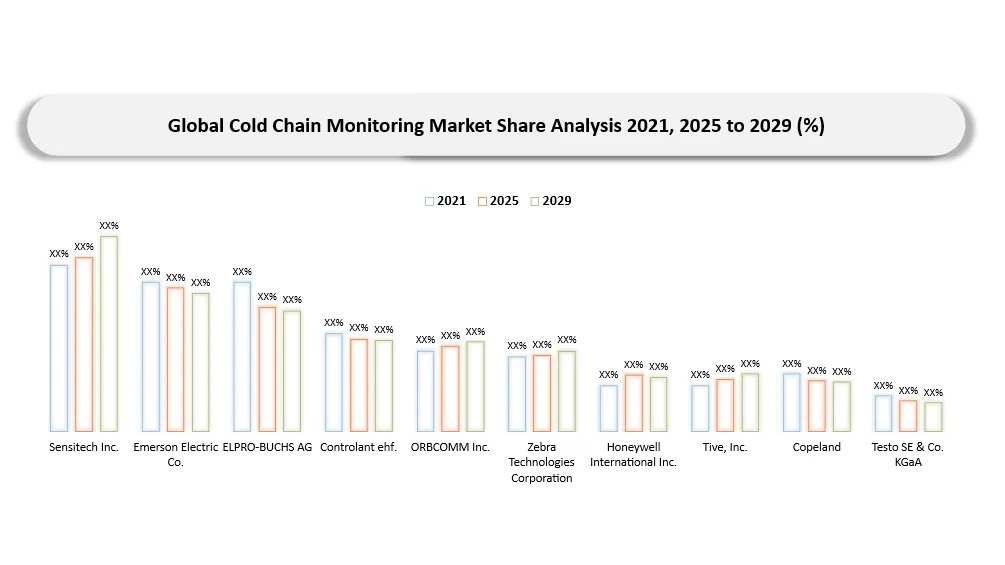
- The Cold Chain Monitoring market involves companies that have been established as service providers of monitoring solutions, such as Sensitech Inc., Controlant ehf., ELPRO-BUCHS AG, ORBCOMM Inc. and Tive, Inc. The solutions that these companies provide include real-time shipment visibility, temperature monitoring and compliance management solutions for the pharma and food cold chain.
- Leading companies such as Zebra Technologies Corporation, Honeywell International Inc., Copeland, Testo SE & Co. KGaA and Berlinger & Co. AG are focusing on adding new products to their offerings by means of connected sensing solutions, cloud monitoring systems and ultra-low temperature monitoring solutions.
- The competition is gradually evolving from individual temperature monitors to platforms for cold chain visibility that include the features of temperature, location, humidity and shock tracking with predictive analysis and compliance reporting.
- Pharmaceuticals cold chain solutions continue to be the most competitive market segment, where vendors concentrate on biological drugs, vaccines and cell and gene therapy logistics requiring strict temperature conditions.
- Market players tend to emphasize their solutions by offering subscription-based monitoring solutions, cloud-based and interoperable platforms, as well as transportation tracking across different modes of transport.
Cold Chain Monitoring Market Key Companies
- Sensitech Inc. (United States)
- Emerson Electric Co. (United States)
- ELPRO-BUCHS AG (Switzerland)
- Controlant ehf. (Iceland)
- ORBCOMM Inc. (United States)
- Zebra Technologies Corporation (United States)
- Honeywell International Inc. (United States)
- Tive, Inc. (United States)
- Berlinger & Co. AG (Switzerland)
- Monnit Corporation (United States)
- Roambee Corporation (United States)
- DeltaTrak, Inc. (United States)
- Testo SE & Co. KGaA (Germany)
- Dickson Data (United States)
- SpotSee (United States)
- LogTag Recorders Ltd. (New Zealand)
- Blulog (France)
- Temptime Corporation (United States)
- Copeland (United States)
- Zest Labs, Inc. (United States)
Cold Chain Monitoring Market Major Pain Points
- Temperature variances in multimodal transport are among the greatest issues faced, especially in cases where biologic products and specialty drugs require precise temperature management throughout air, water and land modes of transport.
- The lack of interoperability between the monitoring software and the supply chain management system leads to siloed data, making the challenge of getting end-to-end visibility harder for all parties involved.
- Connectivity problems that occur in remote and international shipments could interfere with the real-time transfer of data, making the continuous monitoring and automatic alerting difficult to be used effectively.
- The high expenses that go into the implementation of the monitoring technology, like sensors, cloud platforms and monitoring services, still serve as barriers for cost-sensitive end-users.
- Ultra-low temperature logistics that occur within the range of -80°C to -196°C represent a big problem for the management of advanced therapy logistics.
Cold Chain Monitoring Market Recent Developments
- January 2025: ORBCOMM declared that its cold chain monitoring system had been certified by the United States Department of Agriculture for the use of their solution in refrigerated transportation compliance applications.
- May 2025: Controlant introduced Controlant Go, a streamlined version of their real-time pharmaceutical shipment monitoring system aimed at fastening the cold chain visibility process.
- September 2025: Tive made announcements regarding new features on their real-time tracking technology in order to monitor the temperature, location, shock and humidity of temperature sensitive shipments including pharmaceuticals and foods.
- February 2026: Copeland extended its line of intelligent cold chain monitoring solutions to include refrigeration technologies that can monitor foods and temperature controlled logistics.
- July 2025: ELPRO launched the latest version, libreMANAGER 3.0, that comes with built-in real-time monitoring solutions to facilitate cold chain visibility. The software provides a solution for centrally managing the LIBERO data loggers using USB, Bluetooth and IoT connectivity. Moreover, the system supports automated shipping processes, alerts and easy release workflows.
Analyst View / Opinion on Cold Chain Monitoring Market
- There is an ongoing move from stand-alone temperature monitoring solutions to comprehensive cold chain visibility solutions providing real-time tracking, analytics and compliance capabilities.
- Applications within the pharmaceutical segment will continue to fuel market growth, especially with the growing adoption of biologic drugs and novel cell-based and gene-based therapies.
- AI-enabled predictive monitoring solutions as well as those with multi-parameter sensing features will have a competitive edge owing to their ability to help mitigate risks proactively.
- There will be a greater use of subscription services and managed services, as companies look for scalable and affordable solutions to their problems in globally distributed supply chains.
- There will be substantial potential in emerging economies in the long term, as there is more investment in cold storage infrastructure and temperature control logistics solutions.
Cold Chain Monitoring Market Target Audience
| INDUSTRY | WHO SHOULD BUY THIS REPORT? | REASON TO BUY THIS REPORT |
| Pharmaceutical Manufacturing | Pharmaceutical Manufacturers | To assess demand trends for temperature-sensitive drug monitoring and compliance requirements |
| Healthcare & Biotechnology | Biotechnology and Cell & Gene Therapy Companies | To evaluate ultra-low temperature logistics and monitoring technology adoption trends |
| Cold Chain Logistics | Third-Party Logistics (3PL) Providers | To identify opportunities in real-time shipment visibility and managed monitoring services |
| Cold Storage & Warehousing | Cold Storage Facility Operators | To understand investments in monitoring infrastructure and warehouse digitization trends |
| Food & Beverage | Food Processing and Distribution Companies | To improve product traceability and reduce spoilage across temperature-controlled supply chains |
| Medical Devices | Medical Device Manufacturers and Distributors | To evaluate monitoring requirements for temperature-sensitive medical products during transportation |
| Technology & IoT | Sensor Manufacturers and IoT Solution Providers | To identify emerging opportunities in connected monitoring devices and predictive analytics platforms |
| Software & Cloud Services | Supply Chain Software and Cloud Platform Providers | To assess demand for integrated cold chain visibility and compliance management solutions |
| Investment & Consulting | Private Equity Firms, Investors and Management Consultants | To analyze market growth opportunities, competitive dynamics and investment trends |
| Government & Regulatory Bodies | Healthcare Agencies and Regulatory Organizations | To understand evolving cold chain compliance requirements and infrastructure development trends |
Why Choose DATAM?
- Data-Driven insights: Dive into detailed analyses with granular insights such as pricing, market shares and value chain evaluations, enriched by interviews with industry leaders and disruptors.
- Post-Purchase Support and Expert Analyst Consultations: As a valued client, gain direct access to our expert analysts for personalized advice and strategic guidance, tailored to your specific needs and challenges.
- White Papers and Case Studies: Benefit quarterly from our in-depth studies related to your purchased titles, tailored to refine your operational and marketing strategies for maximum impact.
- Annual Updates on Purchased Reports: As an existing customer, enjoy the privilege of annual updates to your reports, ensuring you stay abreast of the latest market insights and technological advancements. Terms and conditions apply.
- Specialized Focus on Emerging Markets: DataM differentiates itself by delivering in-depth, specialized insights specifically for emerging markets, rather than offering generalized geographic overviews. The approach equips our clients with a nuanced understanding and actionable intelligence that are essential for navigating and succeeding in high-growth regions.
- Value of DataM Reports: Our reports offer specialized insights tailored to the latest trends and specific business inquiries. The personalized approach provides a deeper, strategic perspective, ensuring you receive the precise information necessary to make informed decisions. The insights complement and go beyond what is typically available in generic databases.
What DATAM Uniquely Provides
- In-depth assessment of the value chain of Cold Chain Monitoring, examining all types of monitoring equipment, connectivity, software and managed monitoring services in pharmaceutical, food and healthcare industry sectors.
- An all-encompassing assessment of new technologies, such as IoT sensors, artificial intelligence, predictive analytics, visibility platforms and ultra-low temperature monitoring systems, to understand the dynamics of future markets.
- An analysis of regulatory and compliance trends and their effects on temperature-sensitive drug logistics and cold storage.
- Investment opportunities and regional hotspots in terms of growth, with an emphasis on investments in cold chain infrastructure, supply chain digitalization projects and changing procurement behavior of customers.
- Detailed competitive analysis and market forecast, allowing all players to understand the trends that will shape the market for Cold Chain Monitoring up to 2035.
Questions This Report Answers
- What are the most critical drivers for the deployment of real-time cold chain monitoring technologies among the pharmaceuticals, health care and food industries?
- Which technologies, connectivity solutions and applications will provide the highest growth potential within the Cold Chain Monitoring market until 2035?
- What impact do IoT technologies, AI-based predictive analysis and ultra-cold logistics have on the cold chain monitoring strategy?
- In which countries and regions can the most attractive investments be made due to growing cold chain facilities and temperature-controlled logistics network?
- What effect do regulations, purchasing trends and competition have on technology deployments within the Cold Chain Monitoring market?


























































