


Cholangiocarcinoma Market Size and Overview
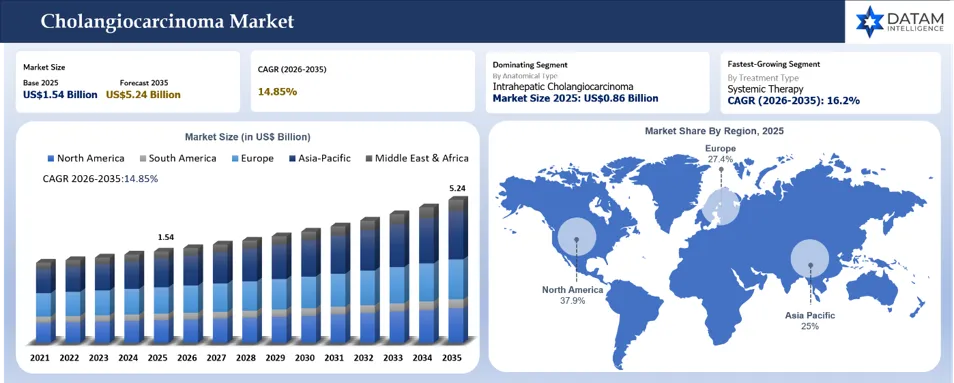
The global cholangiocarcinoma market reached US$ 1.54 billion in 2025 and is expected to reach US$ 5.24 billion by 2035, growing with a CAGR of 14.85% during the forecast period 2026-2035.
The Cholangiocarcinoma Market is undergoing a significant transformation as disease management shifts from conventional chemotherapy-dominated treatment toward precision oncology, molecular profiling and biomarker-directed therapeutic strategies. Cholangiocarcinoma is a heterogeneous malignancy arising from the biliary tract and is generally classified into intrahepatic, perihilar and distal cholangiocarcinoma, each with distinct clinical characteristics, molecular profiles and treatment pathways. A substantial proportion of patients are diagnosed at an advanced or unresectable stage, creating strong demand for effective systemic therapies and improved diagnostic approaches.
The market is increasingly shaped by broader use of next-generation sequencing and comprehensive genomic profiling, which enable identification of actionable alterations such as FGFR2 fusions or rearrangements, IDH1 mutations, HER2 abnormalities, BRAF mutations and NRG1 fusions. These advances are expanding the role of targeted therapies and companion diagnostics while supporting more individualized treatment selection. Immunotherapy combinations and emerging antibody-drug conjugates are also adding new dimensions to the treatment landscape.
Clinical development activity remains strong, with pharmaceutical and biotechnology companies focusing on next-generation inhibitors, resistance-management strategies, combination regimens and earlier-line treatment expansion. Market opportunities are further supported by regulatory incentives for rare cancers, increasing investment in precision medicine and stronger collaboration between drug developers, diagnostic companies and specialized cancer centers. However, late diagnosis, tumor heterogeneity, limited biomarker-eligible populations, high treatment costs, uneven access to genomic testing and acquired resistance continue to constrain broader adoption. Overall, the market is moving toward a more segmented, biomarker-driven and competitive treatment environment centered on improving patient selection, response durability and long-term outcomes.
Cholangiocarcinoma Market Key Takeaways
- The global Cholangiocarcinoma Market reached approximately US$1.54 billion in 2025 and is projected to reach around US$5.24 billion by 2035, reflecting strong long-term expansion supported by precision oncology and increasing treatment innovation.
- Intrahepatic cholangiocarcinoma represents a major opportunity because it is more frequently associated with actionable molecular alterations, supporting wider use of genomic profiling and targeted treatment approaches
- Targeted therapies are expected to gain strong momentum as testing for FGFR2 fusions or rearrangements, IDH1 mutations, HER2 alterations, BRAF mutations and other actionable biomarkers becomes more integrated into clinical practice.
- The treatment landscape is shifting from chemotherapy-centered care toward biomarker-guided treatment sequencing, including targeted therapies, immunotherapy combinations and emerging antibody-drug conjugates
- Comprehensive genomic profiling and companion diagnostics are becoming increasingly important for identifying eligible patients, supporting treatment selection and enabling enrollment in biomarker-driven clinical trials.
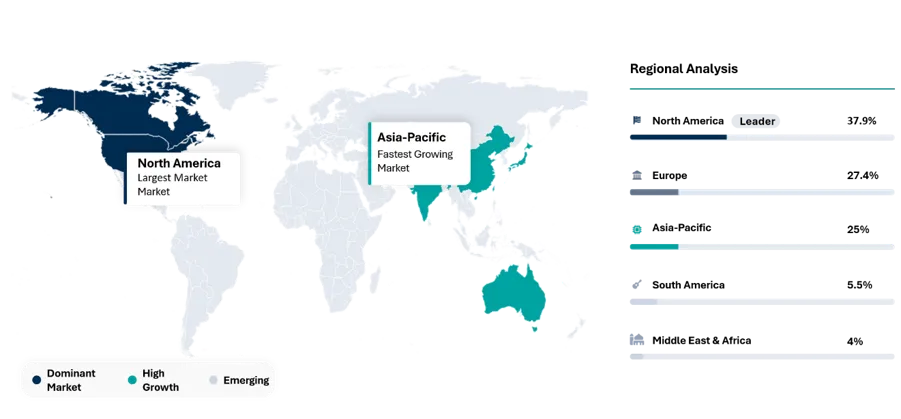
- North America remains the leading regional market opportunity, supported by advanced oncology infrastructure, broad molecular-testing availability and relatively rapid adoption of precision medicines, while Asia-Pacific is gaining importance through expanding diagnostic and specialty-care capacit
- Competitive differentiation is increasingly driven by clinical efficacy, durability of response, biomarker coverage, resistance-management capability, earlier-line expansion and successful diagnostic and commercialization partnership.
- Key market restraints include late-stage diagnosis, limited biomarker-defined patient populations, high treatment costs, uneven access to genomic testing and development of acquired resistance to targeted therapies.
Cholangiocarcinoma Industry Trends and Strategic Insights
- Biomarker-Driven Treatment Is Becoming the Core Development Focus: Cholangiocarcinoma treatment is increasingly shifting toward molecularly selected therapies targeting alterations such as FGFR2, IDH1, HER2, BRAF and NRG1, strengthening the role of precision oncology across advanced disease.
- FGFR2-Targeted Therapy Competition Is Intensifying: Developers are increasingly advancing next-generation FGFR inhibitors for FGFR2 fusion or rearrangement-positive cholangiocarcinoma, with greater emphasis on response durability, resistance mutations and treatment options following prior FGFR-directed therapy.
- Immunotherapy-Based First-Line Strategies Are Gaining Importance: Immune checkpoint inhibitors combined with chemotherapy are becoming more established in advanced cholangiocarcinoma, expanding treatment choices beyond chemotherapy alone and increasing competition within the first-line setting.
- Rare Molecular Subgroups Are Creating New Commercial Opportunities: HER2-positive, NRG1 fusion-positive, BRAF-mutated and other actionable molecular subsets are attracting greater development interest as companies pursue highly targeted therapies for smaller but clinically distinct patient populations.
- Molecular Testing and Companion Diagnostics Are Becoming Strategically Critical: Wider adoption of next-generation sequencing and comprehensive genomic profiling is becoming essential for identifying eligible patients, improving therapy selection and supporting commercialization of biomarker-specific cholangiocarcinoma treatments.
Cholangiocarcinoma Market Scope
| Metrics | Details | |
| 2025 Market Size | US$1.54 Billion | |
| 2035 Projected Market Size | US$5.24 Billion | |
| CAGR (2026-2035) | 14.85% | |
| Largest Market | North America | |
| Fastest Growing Market | Asia-Pacific | |
| By Anatomical Type | Intrahepatic Cholangiocarcinoma, Perihilar Cholangiocarcinoma, and Distal Cholangiocarcinoma | |
| By Treatment Type | Surgical Treatment, Systemic Therapy, Radiation Therapy, Locoregional Therapy, and Supportive and Palliative Treatment | |
| By Line of Therapy | First-Line, Second-Line, and Third-Line and Later | |
| By Route of Administration | Oral, Intravenous, Intra-Arterial, and Other Routes | |
| By Disease Stage | Localized, Locally Advanced, and Metastatic | |
| By Distribution Channel | Hospital Pharmacies, Specialty Pharmacies, Retail Pharmacies, Online Pharmacies, and Others | |
| By End User | Hospitals, Cancer Centers, Specialty Oncology Clinics, Ambulatory Surgical Centers, and Others | |
| By Region | North America | U.S., Canada, Mexico |
| Europe | Germany, UK, France, Spain, Italy, Poland | |
| Asia-Pacific | China, India, Japan, Australia, South Korea, Indonesia, Malaysia, Singapore, Vietnam, Thailand, Philippines, Taiwan | |
| South America | Brazil, Argentina | |
| Middle East and Africa | Israel, Saudi Arabia, UAE, Turkiye, South Africa, Nigeria | |
| Report Insights Covered | Competitive Landscape Analysis, Company Profile Analysis, Market Size, Share, Growth | |
Why does this report matter in 2026?
The Cholangiocarcinoma market is gaining strategic importance in 2026 as treatment moves rapidly from conventional chemotherapy toward biomarker-driven precision oncology. Clinical and commercial activity is increasingly concentrated around actionable alterations such as FGFR2 fusions or rearrangements, IDH1 mutations, HER2 alterations, BRAF mutations and NRG1 fusions, while immunotherapy-based combinations are strengthening their role in advanced disease management.
Competition is increasingly focused on differentiated targeted therapies, immune checkpoint inhibitors and next-generation combination regimens, with clinical positioning shaped by response durability, resistance management, safety, molecular eligibility and line-of-therapy expansion. FGFR2-positive and IDH1-mutated cholangiocarcinoma remain important precision-treatment segments, while HER2-positive, NRG1 fusion-positive and other rare molecular subgroups are creating additional opportunities for highly targeted drug development.
In 2026, understanding molecular testing penetration, treatment sequencing, clinical pipelines, biomarker-defined patient populations, emerging resistance mechanisms, regulatory approvals, competitive positioning and regional access is critical for assessing commercial potential. The report helps identify where future value is likely to emerge as cholangiocarcinoma evolves into a more fragmented, precision-led and therapeutically competitive oncology market.
Cholangiocarcinoma Market White Space & Investment Opportunities
- Biomarker-Defined Patient Segments Remain Underpenetrated: Significant white space remains across FGFR2, IDH1, HER2, BRAF, NRG1 and other actionable molecular subgroups, particularly in patients who progress after currently available targeted therapies or remain unidentified because of limited genomic testing.
- Next-Generation Targeted Therapies Offer Differentiation Potential: Opportunities remain for therapies with improved potency, resistance coverage, durability of response, tolerability and activity in earlier treatment lines, especially within FGFR2-driven and other precision-oncology segments.
- Rare Molecular Subgroups Are Creating New Investment Niches: Smaller cholangiocarcinoma populations defined by HER2 alterations, NRG1 fusions, BRAF mutations and other uncommon biomarkers are attracting greater strategic interest because highly selected patient groups can support differentiated development and premium oncology positioning.
- Combination and Earlier-Line Strategies Represent Major White Space: Developers have opportunities to move targeted agents and immunotherapies into earlier treatment settings and evaluate combinations with chemotherapy, immune checkpoint inhibitors and other precision therapies to improve depth and duration of response.
- Diagnostics, Licensing and Regional Commercialization Create Additional Value Pools: Expansion of molecular testing, companion diagnostics, regional licensing, co-development and asset acquisition can unlock commercial opportunities, particularly in markets where biomarker testing and access to targeted cholangiocarcinoma therapies remain limited.
Cholangiocarcinoma Market Future Market Transformation
The Cholangiocarcinoma market is expected to undergo significant transformation as treatment increasingly shifts from conventional chemotherapy toward biomarker-driven precision oncology and more personalized treatment sequencing. Future development is likely to focus on FGFR2, IDH1, HER2, BRAF, NRG1 and other actionable molecular subgroups, with competition centered on clinical efficacy, resistance management, durability of response, safety, earlier-line positioning and broader biomarker-defined eligibility.
Combination strategies integrating targeted therapies, immunotherapies and chemotherapy are expected to become an important area of differentiation, particularly in advanced and previously treated disease. Advances in next-generation sequencing, liquid biopsy, companion diagnostics, molecular profiling and AI-supported drug development may improve identification of eligible patients and accelerate clinical development.
Over time, additional regulatory approvals, earlier-line expansion, next-generation targeted agents, improved genomic-testing penetration and regional commercialization are expected to reshape the competitive landscape. Companies capable of addressing treatment resistance, rare molecular subgroups and unmet needs across later-line disease are likely to create new growth opportunities within the evolving Cholangiocarcinoma market.
Cholangiocarcinoma Market Buyer Decision-Making Criteria
- Clinical Efficacy and Strength of Supporting Evidence
- Safety and Tolerability Profile
- Biomarker Match and Molecular Eligibility
- Durability of Treatment Response
- Progression-Free and Overall Survival Benefit
- Ability to Overcome or Delay Treatment Resistance
- Line-of-Therapy Positioning
- Combination Therapy Compatibility
- Route of Administration and Dosing Convenience
- Companion Diagnostic Availability
- Patient Selection and Genomic Testing Accessibility
- Regulatory Approval Status
- Guideline Inclusion and Physician Adoption
- Reimbursement and Market Access
- Total Treatment Cost and Value Proposition
Cholangiocarcinoma Market Economic & Investment Analysis
The Cholangiocarcinoma market presents a growing investment opportunity as treatment shifts toward precision oncology, biomarker-directed therapies and more differentiated treatment sequencing. Investment interest is being supported by the expanding commercial relevance of FGFR2, IDH1, HER2, BRAF, NRG1 and other actionable molecular alterations, alongside broader use of immunotherapy-based regimens. The commercial attractiveness of individual programs will increasingly depend on clinical efficacy, durability of response, safety, resistance management, biomarker prevalence, diagnostic accessibility and the ability to demonstrate meaningful benefit over established standards of care.
From an investment perspective, opportunities are concentrated across next-generation targeted therapies, biomarker-defined development programs, combination strategies, companion diagnostics and regional licensing partnerships. Program valuations are likely to reflect clinical-development maturity, probability of regulatory approval, addressable molecularly defined patient populations, intellectual-property strength, competitive differentiation and potential for expansion into earlier treatment lines. Companies demonstrating strong clinical outcomes, effective resistance-management strategies and scalable commercialization across multiple biomarker-defined cholangiocarcinoma populations are likely to attract greater strategic investment, licensing interest and co-development activity.
Cholangiocarcinoma Market Trends
- Growing Adoption of Biomarker-Driven Precision Therapy as treatment selection increasingly incorporates FGFR2, IDH1, HER2, BRAF, NRG1 and other actionable molecular alterations.
- Rising Use of Immunotherapy-Based Combination Regimens as immune checkpoint inhibitors are increasingly integrated with chemotherapy in advanced and unresectable cholangiocarcinoma.
- Increasing Development of Next-Generation Targeted Therapies as companies focus on improving response durability, overcoming acquired resistance and expanding treatment options for previously treated biomarker-positive patients.
- Growing Emphasis on Comprehensive Molecular Profiling as next-generation sequencing, companion diagnostics and genomic testing become more important for identifying eligible patients and guiding treatment selection.
Strategic Indicators for Cholangiocarcinoma Market
High Regulation Impact
The Cholangiocarcinoma market is highly influenced by regulatory requirements governing oncology drug development, biomarker validation, clinical efficacy, safety, manufacturing quality and marketing authorization. Developers of chemotherapy combinations, immunotherapies and biomarker-directed treatments must generate robust evidence on response rates, progression-free survival, overall survival, toxicity, dose optimization and treatment benefit within clearly defined patient populations.
Regulatory scrutiny is particularly important for targeted therapies addressing FGFR2, IDH1, HER2, BRAF, NRG1 and other molecular alterations, where approval can depend on validated diagnostic testing and demonstration of benefit in relatively small biomarker-defined populations. Requirements around companion diagnostics, accelerated approval pathways, confirmatory trials, GMP manufacturing, post-marketing surveillance and benefit-risk assessment can materially influence development timelines and commercialization costs. Companies that engage regulators early, align clinical programs with biomarker-defined populations and generate strong confirmatory evidence are better positioned to reduce development risk and support faster market access.
High Investment Activity
Investment activity in the Cholangiocarcinoma market is increasing as biotechnology and pharmaceutical companies expand development around biomarker-defined therapies, immuno-oncology combinations and next-generation targeted agents. Capital is increasingly directed toward FGFR2, IDH1, HER2, BRAF, NRG1 and other actionable molecular subgroups, as well as technologies supporting comprehensive genomic profiling, companion diagnostics and resistance monitoring.
Strategic licensing agreements, research collaborations, regional commercialization partnerships and co-development models are becoming increasingly important as companies seek differentiated clinical assets, stronger intellectual property and faster access to specialized patient populations. Investment priorities are shifting toward programs with compelling efficacy, durable responses, manageable safety profiles and the potential to move into earlier treatment lines. Companies capable of overcoming acquired resistance, expanding biomarker eligibility and generating strong late-stage clinical evidence are likely to attract greater strategic investment, partnering interest and acquisition attention.
Supply Chain Disruption
The Cholangiocarcinoma market faces moderate supply chain vulnerability because treatment providers and drug developers depend on specialized active pharmaceutical ingredients, biologic manufacturing capacity, oncology-grade formulation facilities, companion diagnostic platforms, cold-chain logistics and reliable clinical-trial supply networks. Key dependencies include complex synthesis of targeted small molecules, monoclonal antibody production, sterile injectable manufacturing, biomarker testing reagents, packaging and timely distribution to hospitals, cancer centers and specialty pharmacies.
Supply risk is particularly relevant for targeted therapies and immunotherapies serving relatively small biomarker-defined patient populations, where manufacturing volumes may be limited and production can depend on a narrow group of qualified suppliers. Disruptions in active ingredient availability, biologic production, diagnostic testing materials or regional distribution can affect treatment continuity and clinical-trial execution. Companies with diversified suppliers, validated backup manufacturing capacity and resilient regional distribution networks are better positioned to reduce supply-related commercialization risk.
Pricing Volatility
The Cholangiocarcinoma market is expected to experience moderate pricing variability as future commercial pricing will depend on clinical efficacy, indication, treatment duration, target selectivity, combination use, competitive intensity and reimbursement conditions. Since QPCT and QPCTL inhibitors are still largely in development, pricing remains highly sensitive to clinical outcomes, regulatory positioning and the level of benefit demonstrated over existing standards of care.
Pricing differences are likely to emerge across renal, oncology, neurodegenerative and fibrotic indications, as well as between monotherapy, add-on therapy and combination regimens. Use alongside established therapies could increase total treatment costs and intensify payer scrutiny around incremental clinical benefit. Manufacturing complexity, biomarker testing, treatment monitoring and regional reimbursement frameworks may also influence overall therapy costs. Developers demonstrating strong efficacy, convenient oral dosing, clear differentiation and measurable improvements in patient outcomes will be better positioned to support premium pricing and favorable reimbursement.
Procurement Pressure
Cholangiocarcinoma market faces moderate procurement pressure because pharmaceutical and biotechnology companies require reliable access to high-purity active pharmaceutical ingredients, oncology-grade chemical intermediates, biomarker-testing reagents, GMP-compliant manufacturing capacity and specialized clinical-trial supply services. Procurement decisions are increasingly shaped by supplier qualification, batch consistency, regulatory documentation, manufacturing lead times, cold-chain or controlled-storage requirements and the ability to scale production as therapies advance through clinical development.
Pressure is particularly relevant for targeted therapies and emerging precision-oncology programs addressing alterations such as FGFR2 fusions, IDH1 mutations and other actionable molecular abnormalities. These therapies often depend on specialized synthesis processes, companion diagnostic testing, validated analytical methods and a relatively concentrated network of qualified contract development and manufacturing organizations. Growing use of biomarker-driven treatment approaches can also increase demand for molecular diagnostic kits, sequencing reagents and specialized laboratory services. Companies adopting dual-sourcing strategies, long-term supplier agreements, early manufacturing scale-up and integrated diagnostic supply planning will be better positioned to reduce procurement disruptions and maintain clinical and commercial timelines.
Regional Expansion Opportunity
The Cholangiocarcinoma market offers meaningful regional expansion opportunities as molecular diagnostics, precision oncology, hepatobiliary cancer care and access to targeted therapies strengthen across major healthcare markets. North America is expected to remain an important development and commercialization region due to its established oncology research ecosystem, broad genomic-testing infrastructure, extensive clinical-trial networks and concentration of specialty cancer centers capable of identifying actionable alterations such as FGFR2 fusions and IDH1 mutations.
Europe also represents a significant opportunity, supported by established cancer research institutions, advanced hepatobiliary oncology care and growing adoption of biomarker-guided treatment, although country-specific reimbursement and health-technology assessment requirements may influence market access. Asia-Pacific is gaining strategic importance, particularly across China, Japan and South Korea, as cancer diagnostics, sequencing capabilities, clinical-trial activity and investment in precision oncology expand. Regional growth will depend on regulatory approvals, biomarker-testing penetration, physician awareness, reimbursement pathways and access to specialized oncology centers. Companies developing region-specific clinical, licensing, diagnostic and commercialization partnerships will be better positioned to broaden patient access and strengthen long-term market presence.
Government Policy Support
The Cholangiocarcinoma market receives moderate-to-strong policy support through broader government initiatives focused on cancer research, rare cancers, precision oncology, genomic medicine and development of innovative targeted therapies. Public funding for translational research, molecular profiling, biomarker discovery, clinical trials and next-generation oncology therapeutics can support the advancement of treatments targeting actionable alterations such as FGFR2 fusions, IDH1 mutations and other emerging molecular drivers.
Government support is further reinforced by regulatory pathways intended to accelerate therapies for serious and life-threatening diseases with significant unmet medical need. Developers may benefit from orphan-drug incentives, expedited review programs, priority regulatory pathways, research grants and public-private collaborations supporting oncology innovation. However, commercialization remains dependent on demonstrating meaningful clinical benefit, securing reimbursement and meeting country-specific health-technology assessment requirements. Policies encouraging comprehensive genomic testing, earlier cancer diagnosis and access to precision medicines could further expand the eligible treatment population and improve adoption of targeted cholangiocarcinoma therapies.
AI Impact Analysis of Cholangiocarcinoma Market
Artificial intelligence is expected to increasingly influence the Cholangiocarcinoma market across early detection, molecular profiling, biomarker identification, drug discovery, clinical-trial design and treatment selection. AI-enabled platforms can analyze radiology, pathology, genomic and transcriptomic datasets to identify disease patterns, detect actionable molecular alterations and improve characterization of tumors with FGFR2 fusions, IDH1 mutations, HER2 alterations, BRAF mutations and other clinically relevant biomarkers. AI-supported drug-discovery platforms can also accelerate target identification, optimize small-molecule and biologic candidates and predict pharmacokinetic, toxicity and combination-treatment characteristics.
AI can further support patient stratification by integrating tumor genomics, imaging findings, disease stage, treatment history, laboratory parameters and real-world clinical data. Machine-learning models may improve patient recruitment, trial-site selection, treatment-response prediction, resistance monitoring and identification of patients suitable for targeted therapies or immunotherapy. Longer term, integration of AI with multi-omics, liquid biopsy, digital pathology and real-world evidence could enable earlier diagnosis, more precise treatment sequencing and identification of new therapeutic targets, strengthening the shift toward personalized and biomarker-driven management of cholangiocarcinoma.
Disruption Analysis of Cholangiocarcinoma Market
The Cholangiocarcinoma market is being disrupted by the transition from largely chemotherapy-based treatment pathways toward biomarker-driven precision oncology and increasingly differentiated targeted therapies. Molecular profiling is reshaping treatment decisions by identifying actionable alterations such as FGFR2 fusions, IDH1 mutations, HER2 abnormalities, BRAF V600E mutations, NTRK fusions and other emerging genomic targets, allowing defined patient subgroups to receive therapies matched more closely to tumor biology.
Competitive differentiation is increasingly centered on molecular selectivity, depth and durability of response, resistance management, safety, oral convenience, combination potential and expansion into earlier lines of therapy. Advances in next-generation sequencing, liquid biopsy, artificial intelligence-assisted diagnostics and companion diagnostic development are also changing how eligible patients are identified and enrolled in clinical trials. At the same time, emerging targeted agents, antibody-drug conjugates, bispecific approaches and novel immunotherapy combinations could challenge existing standards of care. Companies capable of integrating drug development with biomarker strategies, diagnostic partnerships and evidence-based treatment sequencing are likely to play a central role in the evolving cholangiocarcinoma treatment landscape.
Cholangiocarcinoma Market BCG Matrix: Company Evaluation
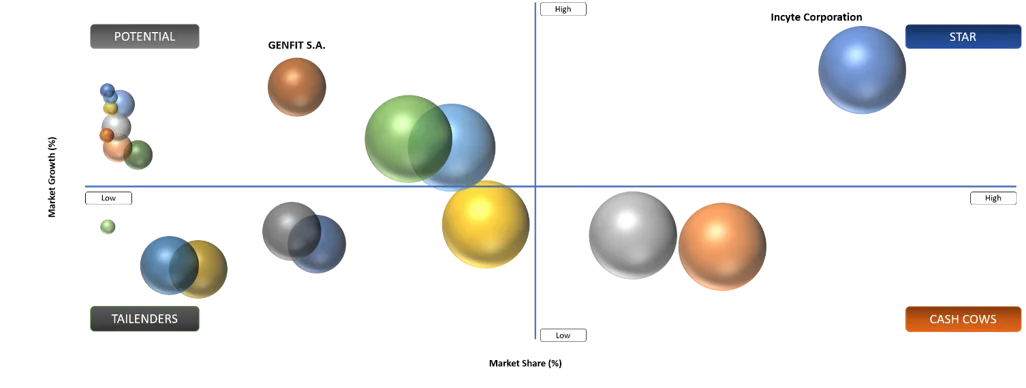
STAR
Incyte Corporation, Taiho Pharmaceutical Co., Ltd., Servier and Elevar Therapeutics, Inc. are positioned as Star companies in the Cholangiocarcinoma Market due to their approved biomarker-directed therapies and established clinical and commercial presence. Incyte markets pemigatinib (Pemazyre) for previously treated FGFR2 fusion or rearrangement-positive cholangiocarcinoma, while Taiho Pharmaceutical competes through futibatinib (Lytgobi) for previously treated FGFR2-altered intrahepatic cholangiocarcinoma. Servier maintains a strong position through ivosidenib (Tibsovo) for previously treated IDH1-mutated cholangiocarcinoma. Most recently, Elevar Therapeutics strengthened competition following the September 2026 FDA approval of lirafugratinib (Lyrfigtu) for previously treated FGFR2 fusion or rearrangement-positive cholangiocarcinoma, supported by a 46% objective response rate in the REFOCUS study.
POTENTIAL
GENFIT S.A., OBI Pharma, Inc., Compass Therapeutics, Inc. and other emerging precision-oncology developers are positioned as Potential companies due to their investigational cholangiocarcinoma programs and opportunities to address underserved molecular or treatment-refractory populations. GENFIT is advancing GNS561 in combination with a MEK inhibitor for KRAS-mutated cholangiocarcinoma, with positive Phase 1b safety findings and Phase 2 development planned during the second half of 2026. OBI Pharma is developing the TROP2-directed antibody-drug conjugate OBI-902, which is in Phase I/II development and received U.S. FDA Orphan Drug Designation for cholangiocarcinoma in November 2025. These emerging programs could broaden competition beyond established FGFR2 and IDH1-directed therapies toward KRAS-driven disease, antibody-drug conjugates and other novel treatment mechanisms.
Cholangiocarcinoma Market Dynamics
Driver Impact Analysis
| Driver | Market Growth Impact (%) | Demand Concentration | Impacted Use Case | Strategic Impact |
Rising cholangiocarcinoma incidence and growing disease burden across high-risk populations | 24% | High | Diagnosis, systemic therapy, specialty oncology care | Expands the addressable treatment population and increases demand for effective first-line and subsequent-line therapies, particularly for advanced and unresectable disease. |
Growing adoption of genomic profiling and molecular testing for actionable alterations | 31% | Very High | Next-generation sequencing, biomarker testing, companion diagnostics, patient stratification | Accelerates identification of FGFR2, IDH1, HER2, BRAF and other actionable alterations, supporting broader use of precision therapies and biomarker-driven clinical trials. |
Increasing availability of targeted therapies and precision-oncology treatment approaches | 27% | High | Targeted therapy, precision oncology, treatment sequencing | Shifts treatment pathways beyond conventional chemotherapy, strengthens therapy differentiation and creates opportunities for targeted agents, combination regimens and next-generation inhibitors. |
Driver: Rising cholangiocarcinoma incidence and growing disease burden across high-risk populations
Rising cholangiocarcinoma incidence and growing disease burden across high-risk populations are strengthening demand for improved diagnosis, treatment and long-term disease management. The burden is particularly significant among patients with primary sclerosing cholangitis, chronic biliary inflammation, hepatolithiasis, liver fluke infection and certain congenital biliary disorders. Because cholangiocarcinoma is frequently diagnosed at an advanced stage, many patients are not eligible for curative surgery and require systemic treatment. Increasing recognition of molecularly distinct disease subtypes is also expanding the need for genomic testing and targeted therapies. This growing clinical burden is encouraging investment in earlier detection, precision oncology, novel therapeutics and multidisciplinary cancer care.
Restraint Impact Analysis
| Restraint | Drag on Market Growth (%) | Primary Impact Area | Impacted Use Case | Strategic Impact |
Late diagnosis and advanced-stage disease presentation | 28% | Very High | Early diagnosis, surgery and systemic treatment | Reduces eligibility for curative resection and increases dependence on systemic and palliative treatment approaches. |
High cost and limited accessibility of genomic testing and targeted therapies | 24% | High | Biomarker testing, companion diagnostics and targeted therapy | Restricts identification of eligible patients and slows adoption of precision oncology, particularly in resource-constrained healthcare systems. |
Development of acquired resistance to targeted therapies | 21% | High | Targeted therapy, treatment sequencing and resistance monitoring | Limits treatment durability and increases the need for next-generation inhibitors, combination regimens and repeat molecular profiling. |
Restraint: Development of Acquired Resistance to Targeted Therapies
Acquired resistance to targeted therapies represents an important restraint because cholangiocarcinoma tumors can develop molecular changes that reduce treatment effectiveness after an initial response. Secondary mutations, activation of alternative signaling pathways, tumor heterogeneity and clonal evolution can contribute to disease progression during targeted treatment. Resistance can narrow subsequent treatment options and complicate sequencing strategies, particularly in biomarker-defined patient groups. This challenge increases the need for repeat molecular profiling, liquid biopsy, next-generation inhibitors and combination regimens designed to overcome resistant tumor clones. Continued research into resistance mechanisms will therefore remain important for improving response durability and extending the clinical value of precision therapies.
Cholangiocarcinoma Market Segment Analysis
The global cholangiocarcinoma market is segmented based on anatomical type, treatment type, line of therapy, route of administration, disease stage, distribution channel, end user and region.
By anatomical type
Intrahepatic Cholangiocarcinoma
Intrahepatic cholangiocarcinoma is estimated to be the dominating anatomical segment of the cholangiocarcinoma market in 2025, with a modeled market value of approximately US$0.86 billion. Its leading position is supported by the growing clinical focus on molecularly defined disease and the comparatively high relevance of actionable genomic alterations in intrahepatic tumors. FGFR2 fusions or rearrangements, IDH1 mutations, BRAF mutations and other molecular abnormalities are increasingly identified through comprehensive genomic profiling, creating opportunities for targeted treatment. The availability of approved FGFR and IDH1 inhibitors has further strengthened therapeutic demand within this patient group. In addition, intrahepatic cholangiocarcinoma frequently presents at advanced stages, increasing reliance on systemic therapy, biomarker testing and specialized oncology care. Continued expansion of next-generation sequencing, targeted-therapy adoption and clinical trials focused on molecularly selected patients is expected to reinforce the segment’s importance within the overall cholangiocarcinoma treatment landscape.
By Treatment Type
Systemic Therapy
Systemic therapy is expected to represent one of the fastest-growing treatment segments in the Cholangiocarcinoma Market during 2026–2035, with a modeled CAGR of approximately 16.2%. Growth is being driven by the increasing use of chemotherapy, immunotherapy, targeted therapies and biomarker-guided treatment combinations for patients with unresectable, recurrent or metastatic disease. The treatment landscape is expanding rapidly as molecular testing identifies patients with FGFR2 fusions, IDH1 mutations, HER2 alterations, BRAF mutations and other actionable biomarkers. This is enabling wider adoption of precision medicines alongside established chemotherapy-based regimens. Immunotherapy combinations are also becoming more relevant in first-line treatment, while next-generation inhibitors and antibody-drug conjugates are broadening later-line options. Because a large proportion of cholangiocarcinoma patients are diagnosed at advanced stages and are not eligible for curative surgery, dependence on systemic treatment remains high. Continued clinical development and earlier-line expansion are expected to support sustained segment growth.
Cholangiocarcinoma Market Geographical Penetration
U.S. Cholangiocarcinoma Market Landscape
The U.S. Cholangiocarcinoma market is increasingly shaped by precision oncology, broader molecular profiling and rapid regulatory adoption of biomarker-directed therapies. Treatment pathways are progressively moving beyond chemotherapy toward targeted approaches for molecularly defined patients, particularly those with FGFR2 fusions or rearrangements, IDH1 mutations and rarer alterations. In May 2026, the FDA approved zenocutuzumab-zbco for adults with advanced, unresectable or metastatic NRG1 fusion-positive cholangiocarcinoma following prior systemic therapy, highlighting continued expansion of the U.S. targeted-treatment landscape. U.S. Food and Drug Administration
Momentum strengthened further on September 23, 2026, when the FDA approved lirafugratinib for previously treated, unresectable, locally advanced or metastatic FGFR2 fusion- or rearrangement-positive cholangiocarcinoma. In the REFOCUS trial, lirafugratinib achieved a 46% objective response rate with a median duration of response of 11.8 months, reinforcing the commercial importance of genomic testing and FGFR2-directed treatment. U.S. Food and Drug Administration The U.S. market therefore offers a strong environment for companion diagnostics, next-generation inhibitors, resistance-focused therapies and biomarker-guided clinical development.
Japan Cholangiocarcinoma Market Outlook
Japan represents an important Cholangiocarcinoma market due to its established oncology infrastructure, strong hepatobiliary cancer expertise and increasing integration of molecularly guided treatment into advanced biliary tract cancer management. The market is gradually shifting toward precision oncology as testing for actionable molecular abnormalities becomes more relevant in treatment selection, particularly for patients who progress following chemotherapy. Regulatory recognition of biomarker-defined populations is strengthening opportunities for targeted therapies, companion diagnostics and specialized oncology testing.
A notable development occurred in May 2026, when Japan’s Ministry of Health, Labour and Welfare reviewed an application supporting approval of an IDH1-targeted therapy for IDH1 mutation-positive unresectable biliary tract cancer after progression on chemotherapy. The review cited Phase III evidence showing a statistically significant improvement in progression-free survival versus placebo and noted that the treatment had already been approved in 48 countries or regions as of January 2026. mhlw.go.jp This regulatory progress supports continued expansion of biomarker testing, targeted treatment sequencing and precision-medicine adoption across Japan’s cholangiocarcinoma treatment landscape.
Cholangiocarcinoma Market Competitive Landscape
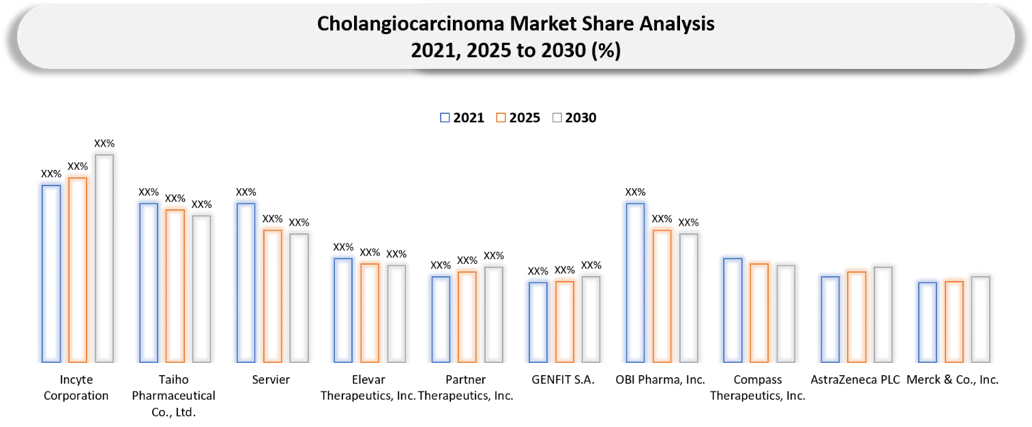
- The Cholangiocarcinoma market is moderately concentrated, with competition increasingly centered on pharmaceutical and biotechnology companies developing targeted therapies, immunotherapies and biomarker-driven treatment approaches. Competitive positioning is shaped by approved indications, strength of clinical pipelines, biomarker coverage, line-of-therapy expansion, companion diagnostic strategies and the ability to address resistance mechanisms in molecularly defined patient populations.
- Key competitive activity is concentrated around actionable alterations such as FGFR2 fusions or rearrangements, IDH1 mutations, HER2 abnormalities, BRAF V600E mutations and NRG1 fusions. Companies with approved or advanced assets in these areas include Incyte, Servier, Taiho Pharmaceutical, Merus and other oncology developers pursuing next-generation targeted agents and combination strategies. Competition is also expanding through broader use of immunotherapy-based regimens, antibody-drug conjugates and precision-medicine approaches. Strategic collaborations with diagnostic companies, academic cancer centers and clinical-trial networks are becoming increasingly important for identifying eligible patients, accelerating enrollment and supporting commercialization across major oncology markets.
Key Companies of Cholangiocarcinoma Market
- Incyte Corporation (United States)
- Taiho Pharmaceutical Co., Ltd. (Japan)
- Servier (France)
- Elevar Therapeutics, Inc. (United States)
- Partner Therapeutics, Inc. (United States)
- GENFIT S.A. (France)
- OBI Pharma, Inc. (Taiwan)
- Compass Therapeutics, Inc. (United States)
- AstraZeneca PLC (United Kingdom)
- Merck & Co., Inc. (United States)
- Jazz Pharmaceuticals plc (Ireland)
- Zymeworks Inc. (Canada)
- Innovent Biologics, Inc. (China)
- BeOne Medicines Ltd. (Switzerland)
- TransThera Sciences (Nanjing), Inc. (China)
Cholangiocarcinoma Market Major Pain Points
- Late Diagnosis and Limited Curative Eligibility: Cholangiocarcinoma is frequently diagnosed at an advanced or metastatic stage, reducing the proportion of patients eligible for surgical resection and increasing dependence on systemic treatment.
- Small Biomarker-Defined Patient Populations: Targeted therapies are often applicable only to patients carrying specific molecular alterations such as FGFR2 fusions, IDH1 mutations, HER2 abnormalities or BRAF mutations, limiting the addressable population for individual therapies.
- Uneven Access to Molecular Testing: Availability of next-generation sequencing, companion diagnostics and specialized pathology services varies considerably across regions, limiting identification of patients who may benefit from precision therapies.
- Acquired Resistance to Targeted Therapies: Tumor evolution, secondary mutations and activation of alternative signaling pathways can reduce treatment durability and create significant unmet need after progression on targeted agents.
- Complex Treatment Sequencing: Increasing numbers of targeted therapies, immunotherapies and combination regimens are making optimal treatment selection and sequencing more complex, particularly after first-line disease progression.
- High Treatment and Diagnostic Costs: Comprehensive genomic profiling, targeted drugs, companion diagnostics and specialized oncology care can create affordability and reimbursement challenges, particularly in resource-constrained healthcare systems.
Cholangiocarcinoma Market Recent Developments
- September 2026: The U.S. FDA approved lirafugratinib (Lyrfigtu) for adults with previously treated, unresectable, locally advanced or metastatic cholangiocarcinoma harboring an FGFR2 fusion or other rearrangement. The REFOCUS study reported a 46% objective response rate and median duration of response of 11.8 months.
- July 2026: Molecular Partners announced dosing of the first patients in a randomized Phase II TACTIC study evaluating MP0317 in combination with chemoimmunotherapy as first-line treatment for advanced biliary tract carcinoma, including cholangiocarcinoma.
- May 2026: The U.S. FDA approved zenocutuzumab-zbco (Bizengri) for adults with advanced, unresectable or metastatic NRG1 fusion-positive cholangiocarcinoma following progression on prior systemic therapy, establishing a targeted treatment option for this rare molecular subgroup.
- February 2026: The UK Medicines and Healthcare products Regulatory Agency approved Ziihera (zanidatamab) for the treatment of HER2-positive biliary tract cancer, extending the geographic availability of HER2-directed therapy for eligible patients with biliary tract malignancies, including cholangiocarcinoma.
- January 2026: Elevar Therapeutics submitted a New Drug Application to the U.S. FDA for lirafugratinib as a second-line treatment for cholangiocarcinoma patients with FGFR2 fusions or rearrangements. The submission was supported by efficacy and safety results from the Phase I/II REFOCUS trial.
Analyst View / Opinion on Cholangiocarcinoma Market
- The Cholangiocarcinoma Market is evolving into a highly specialized precision-oncology opportunity, supported by broader molecular profiling, increasing identification of actionable alterations and expanding availability of biomarker-directed therapies.
- Near-term commercial momentum is strongest in molecularly defined patient groups, particularly those with FGFR2 fusions or rearrangements, IDH1 mutations, HER2 abnormalities, BRAF mutations and other actionable genomic changes.
- The market is gradually shifting away from a predominantly chemotherapy-centered treatment model toward more individualized treatment sequencing that integrates targeted therapies, immunotherapy and companion diagnostics
- Longer-term growth is expected to depend on earlier molecular testing, wider access to next-generation sequencing, development of therapies that overcome acquired resistance and expansion of targeted agents into earlier lines of treatment.
- Competitive advantage will increasingly favor companies that combine strong clinical efficacy with biomarker strategy, companion diagnostic access, resistance-management capabilities and region-specific commercialization partnerships.
Cholangiocarcinoma Market Target Audience
| INDUSTRY | WHO SHOULD BUY THIS REPORT? | REASON TO BUY THIS REPORT |
| Pharmaceutical and Biotechnology Companies | Oncology business heads, pipeline strategy teams, clinical development leaders and commercial planning teams | To assess treatment gaps, competitive positioning, biomarker opportunities, pipeline intensity and commercialization potential across cholangiocarcinoma therapies. |
| Precision Oncology and Targeted Therapy Developers | Research and development teams, translational medicine leaders and portfolio managers | To evaluate opportunities across FGFR2, IDH1, HER2, BRAF, NRG1 and other actionable molecular targets and identify high-potential development areas. |
| Diagnostic and Genomic Testing Companies | Molecular diagnostics companies, next-generation sequencing providers and companion diagnostic developers | To understand testing demand, biomarker adoption, patient identification pathways and opportunities for companion diagnostic partnerships. |
| Contract Research and Development Organizations | Clinical research organizations, contract development and manufacturing organizations and trial management teams | To identify clinical development demand, trial activity, patient recruitment requirements and outsourcing opportunities across emerging therapies. |
| Hospitals and Specialized Cancer Centers | Oncologists, hepatobiliary specialists, pathology departments and precision medicine teams | To track evolving treatment pathways, biomarker testing practices, therapy sequencing and emerging standards of care. |
Why Choose DATAM?
- Therapy-Level Competitive Intelligence: Gain detailed intelligence on approved and pipeline cholangiocarcinoma therapies, including FGFR2, IDH1, HER2, BRAF, NRG1 and other biomarker-directed treatment programs, development stages, indications and competitive differentiation.
- Patient and Biomarker Opportunity Analysis: Assess addressable opportunities across intrahepatic, perihilar and distal cholangiocarcinoma, with additional focus on molecularly defined patient populations and biomarker-driven treatment eligibility.
- Clinical Development and Trial Tracking: Monitor ongoing Phase I, Phase II and Phase III programs, trial design, patient selection, efficacy signals, safety findings, combination strategies and progression toward regulatory approval.
- Molecular Target and Mechanism Assessment: Understand the role of FGFR2 fusions, IDH1 mutations, HER2 alterations, BRAF mutations, NRG1 fusions and other actionable molecular drivers shaping precision-treatment development.
- Treatment Sequencing and Resistance Analysis: Evaluate evolving first-line and later-line treatment pathways, acquired resistance mechanisms, next-generation inhibitors and opportunities for combination and sequential therapy strategies.
- Regional Commercialization Intelligence: Compare regulatory pathways, reimbursement conditions, genomic-testing penetration, treatment accessibility and commercialization opportunities across North America, Europe, Asia-Pacific and emerging markets.
- Strategic Partnership and Licensing Insights: Identify opportunities across licensing, co-development, companion diagnostics, clinical collaborations and commercialization partnerships that can accelerate market entry and portfolio expansion.
What DATAM Uniquely Provides
- Deep Cholangiocarcinoma Market Segmentation: Detailed analysis across disease type, treatment type, molecular biomarker, therapy class, line of treatment, disease stage, route of administration, treatment setting, patient type and geography.
- Pipeline and Competitive Benchmarking: Comparative assessment of approved and pipeline therapies based on molecular target, development stage, treatment setting, clinical progress, efficacy, safety, combination potential and competitive differentiation.
- Patient Opportunity and White-Space Mapping: Identification of high-value opportunities across intrahepatic, perihilar and distal cholangiocarcinoma, with additional focus on FGFR2-, IDH1-, HER2-, BRAF- and NRG1-defined patient populations.
- Clinical, Regulatory and Commercial Intelligence: Assessment of clinical-trial activity, regulatory pathways, biomarker testing requirements, addressable patient populations, reimbursement considerations, pricing dynamics and commercialization readiness.
- Partnership and Investment Intelligence: Tracking of licensing agreements, co-development partnerships, companion diagnostic collaborations, regional commercialization rights, funding activity and strategic investments across cholangiocarcinoma-focused programs.
- Risk-Adjusted Market Opportunity Assessment: Evaluation of therapeutic opportunities based on patient eligibility, biomarker prevalence, clinical success probability, competitive intensity, treatment resistance, reimbursement environment and potential expansion into earlier lines of therapy.
- Treatment Sequencing and Resistance Intelligence: Analysis of first-line and later-line treatment pathways, acquired resistance mechanisms, next-generation inhibitors and emerging combination strategies that could reshape future standards of care.


























































