


Chewable Herbal Supplements Market Size and Overview
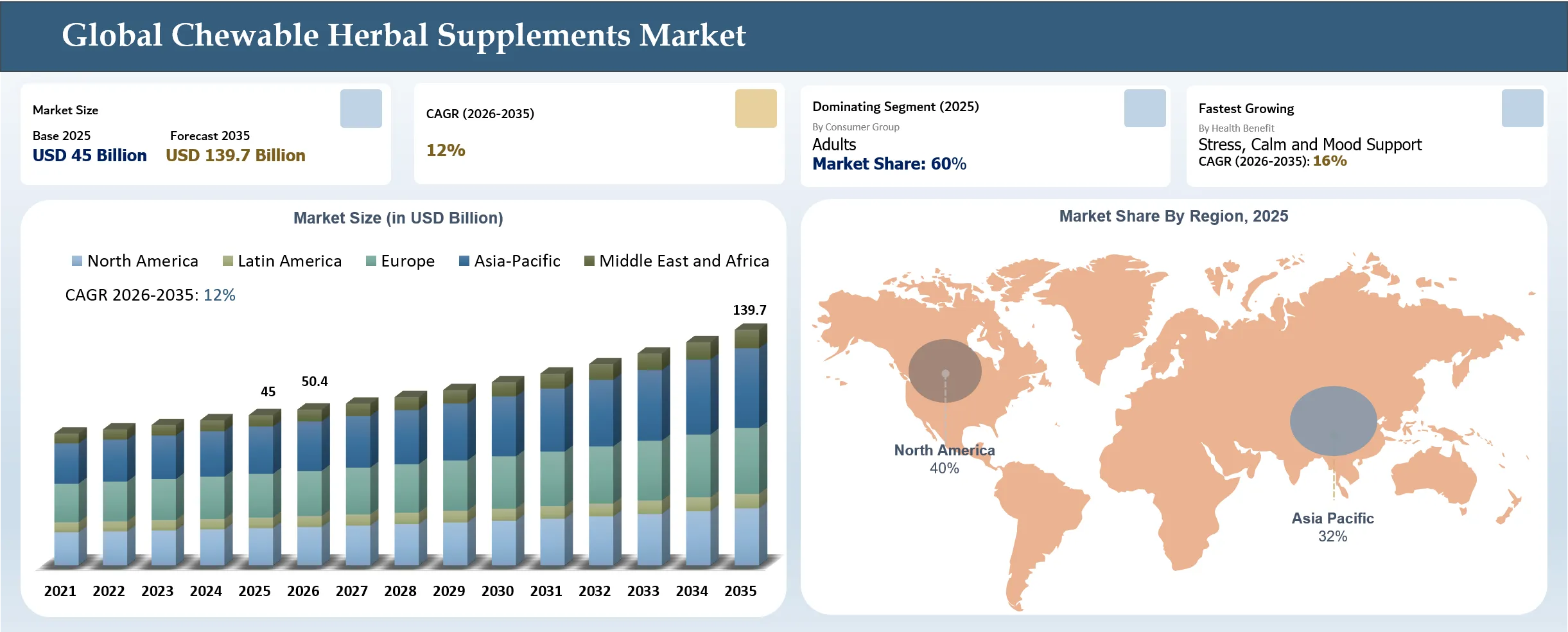
The global chewable herbal supplements market reached USD 45 billion in 2025 and is expected to reach USD 139.7 billion by 2035, growing with a CAGR of 12% during the forecast period 2026-2035. The market is witnessing increasing product adoption as consumers shift from conventional pills and tablets to easier and tastier consumption formats of supplements. In January 2026, as per the Kerry Supplement Taste Charts, more than 60% of supplement sales are made up of gummies, chews, powders, and stick packs, with gummies accounting for 23.4%, indicating the increasing significance of chewable consumption formats in the supplements industry. In addition, ease of consumption is cited as the main factor by 41% of consumers of supplements.
The market is also boosted due to the commercialization of digitally delivered wellness and nutraceutical products. In June 2025, Dabur India Ltd. entered the nutraceutical category with the launched its first nutraceutical product named Siens by Dabur, which is a premium digital brand that provides supplements in three main categories of wellness such as Beauty and Skin Health, Daily Wellness, and Gut Health. Siens introduced 3-in-1 Hair, Skin & Nails Gummies. Dabur emphasized the fact that the company has been providing products to consumers for 141 years, and its Siens products are produced in GMP-, ISO, and HACCP-certified units.
The growing inclination of consumers toward taste, convenience, purity in formulations, and functional wellness benefits will drive the innovation process in the space of herbal gummies, chewable tablets, and soft chews. The increasing use of botanicals and herbs in convenient formulations, coupled with the increasing use of direct-to-consumer distribution channels, will provide a strong business environment for the chewable herbal supplements market.
Consumer inclination towards convenience, pleasure, and functionality of supplements has led to innovations in the herbal gummy category. In June 2026, according to ADVFN, Nature Echo launched its Mushroom Gummies 15 in 1 with Ashwagandha, aimed at people who want chewable supplements as an alternative to pills and powders. In every two gummy servings, there are 3,000 mg of key ingredients, which include 2,750 mg of a 15-mushroom blend and 250 mg of Ashwagandha extract. Each container contains 90 gummies, providing a 45-day supply of the supplement, and the product is also positioned as a 0 g total sugar, vegan, non-GMO, and gluten-free supplement.
White-Space Opportunities for Clinical Validation and Therapeutic Innovation in the Chewable Herbal Supplements
In March 2025, the NCCIH Natural Product Early Phase Clinical Trial Phased Innovation Award (R61/R33) creates a significant funding opportunity for the broader natural product and dietary supplement sector, including companies developing scientifically validated herbal and chewable supplement formulations. According to the National Institutes of Health (NIH), the funding provides up to USD 350,000 in direct costs per year for both the R61 and R33 phases, with a combined project duration of up to five years, including up to three years for the R61 phase and additional support for the R33 phase upon successful completion of milestones. The highest programmatic priority is directed toward natural products addressing symptom management, particularly sleep disorders, pain conditions, gastrointestinal disorders, post-acute COVID-19 conditions, and mental health conditions such as chronic stress, depression, anxiety, and PTSD.
Other priority investment areas include gut microbiome-brain interactions involving prebiotics and probiotics, natural products targeting health disparities, HIV-related comorbidities and complications, and research examining the influence of dietary intake and nutritional status on clinical outcomes. The funding also supports pharmacokinetic studies, bioavailability assessments, safety and tolerability testing, dose optimization, and the evaluation of different formulations, creating opportunities for innovation in herbal gummies, chewable tablets, and other dietary supplement delivery formats.
The investment is expected to benefit a broad range of eligible organizations, including small businesses, for-profit companies, universities, nonprofit organizations, and government entities, although funding is awarded directly to successful research applicants rather than automatically allocated to commercial supplement manufacturers. Companies operating in the herbal and botanical supplements area, such as Nature's Way, Gaia Herbs, Himalaya Wellness, and Herbalife, could potentially benefit if they or their research partners develop eligible natural-product clinical research programs.
Similarly, companies specializing in gummy and chewable supplement formulation and manufacturing, including Sirio Pharma and Vitaquest International, may benefit indirectly through increased demand for formulation development, clinical-grade product manufacturing, dose optimization, and bioavailability research. The funding particularly opens opportunities for companies and research organizations developing natural products for sleep, stress and anxiety management, digestive health, pain management, and microbiome health, as these represent the areas receiving the strongest programmatic emphasis under the NCCIH funding opportunity.
Chewable Herbal Supplements Market Key Takeaways
- North America led the overall market in 2025 with a 40% share of global revenue. Asia-Pacific represented the fastest-growing region with a 32% market share in 2025.
- The adults segment led the chewable herbal supplements market with a 60% share in 2025. CDC data shows 60.2% of adults aged 20 and over used supplements in 30 days.
- Quality inconsistencies and standardization issues present a 30% drag on potential market growth. Complex regulations across regions account for a 28% market growth restraint.
- The NIH NCCIH R61/R33 award provides up to USD 350,000 in direct costs annually for clinical trials. The initiative supports natural product research projects lasting up to 5 years.
- SPINS data showed gummies achieved a 7.1% year-over-year dollar growth rate. Survey data indicates over 70% of respondents take dietary supplements daily.
Chewable Herbal Supplements Market Industry Trends and Strategic Insight
- Manufacturers are increasingly positioning chewable herbal supplements around specific needs such as stress management, sleep, immunity, digestive health, and beauty rather than marketing broad-spectrum herbal formulations.
- Companies are investing in flavour development and taste-masking technologies to overcome the naturally bitter, earthy, or astringent sensory profiles associated with herbal extracts.
- Traditional herbal and Ayurvedic companies are expanding beyond conventional dosage forms by introducing consumer-friendly gummies and digitally positioned supplement brands.
- Successful market participants are increasingly prioritising taste, texture, convenient dosing, and clearly defined wellness benefits to encourage sustained daily use rather than one-time product trials.
- Companies using herbal ingredients are strengthening formulation credibility through standardized extracts, ingredient research, and more transparent communication around product functionality.
Chewable Herbal Supplements Market Scope
| Metrics | Details | |
| 2025 Market Size | USD 45 Billion | |
| 2035 Projected Market Size | USD 139.7 Billion | |
| CAGR (2026-2035) | 12% | |
| Largest Market | North America | |
| Fastest Growing Market | Asia-Pacific | |
| By Herbal Ingredient | Adaptogenic Herbs, Traditional Herbal Extracts, Immune-Supporting Botanicals, Medicinal Mushroom Extracts, Ayurvedic Herbs, Herbal Extract Blends, Others | |
| By Health Benefit | Stress Management and Relaxation, Sleep Support, Immunity Support, Cognitive Health and Focus, Energy and Fatigue Management, Digestive and Gut Health, Joint and Mobility Support, Beauty, Hair, Skin and Nail Health, Metabolic Wellness, Others | |
| By Product Format | Gummies, Chewable Tablets, Soft Chews, Pastilles, Chewable Lozenges, Other | |
| By Consumer Group | Adults, Children, Seniors, Others | |
| By Distribution Channel | Pharmacies & Drugstores, Supermarkets & Hypermarkets, Health & Wellness Stores, Specialty Nutrition Stores, Convenience Stores, E-Commerce, Others | |
| By Region | North America | U.S., Canada, Mexico |
| Europe | Germany, UK, France, Spain, Italy, Poland | |
| Asia-Pacific | China, India, Japan, Australia, South Korea, Indonesia, Malaysia | |
| Latin America | Brazil, Argentina | |
| Middle East and Africa | UAE, Saudi Arabia, South Africa, Israel, Türkiye | |
| Report Insights Covered | Competitive Landscape Analysis, Company Profile Analysis, Market Size, Share, Growth | |
Chewable Herbal Supplements Market Disruption Analysis
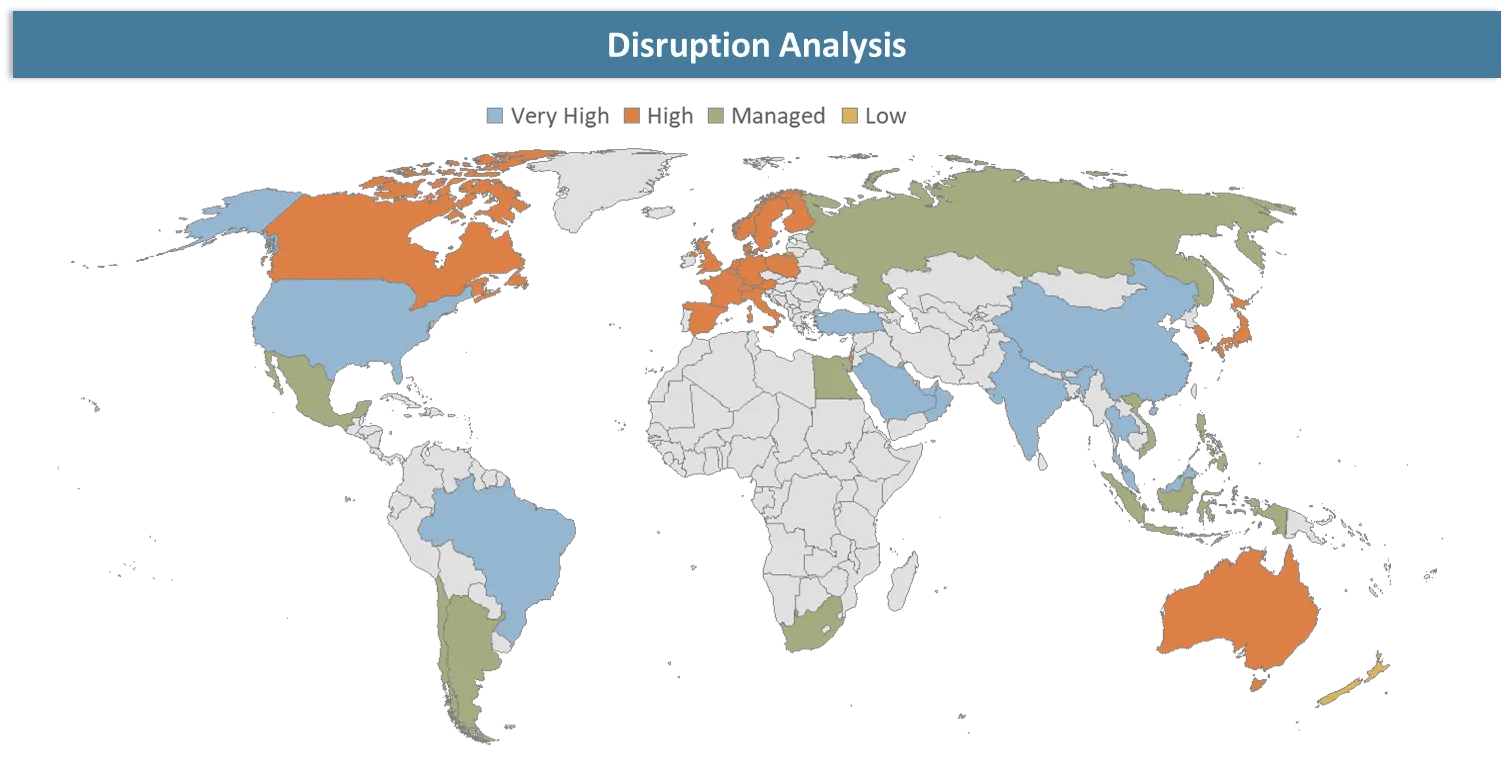
Sugar Reduction Reshaping Formulation Strategies in the Chewable Herbal Supplements Market
The disruption in the chewable herbal supplements market is increasingly associated with the transition from conventional sugar-based gummy formulations toward reduced-sugar and sugar-free alternatives. The use of sugar in this market is causing disruptions in the way products are made; there are various uses of sugar in making chewable products. For instance, sugar is used for its sweetness, provides texture in products, and masks the bitterness of herbal components. As a result, pharmaceutical manufacturers have been forced to reformulate their products using new sweetening ingredients and improved taste-masking techniques in addition to retaining the same chewability of their herbal dietary supplements.
Attempts by consumers to cut down on sugar intake are escalating the above disruption. In December 2025, according to Food Business, the IFIC Food & Health Survey, which covered 3,000 Americans, indicated that 75% of consumers attempted to lower or cut out their sugar intake, while 63% of these consumers focused on cutting out added sugars. Further results revealed that 27% chose "reduced sugar" products and 25% opted for sugar-free products whenever such products were available. Consequently, the formulation of chewable herbal supplement manufacturing companies is being restructured based on alternative sweetness systems and texture optimization, making advanced formulation capability a critical competitive requirement in the market.
Chewable Herbal Supplements Market BCG Matrix: Company Evaluation

Stars include Himalaya Global Holdings Ltd., Goli Nutrition, and Kirin Holdings (Blackmores) because of their strong consumer recognition, established presence in herbal or dietary supplements, and ability to address the growing demand for convenient wellness formats. Companies such as Nestlé S.A., Jamieson Wellness Inc., and NOW Health Group, Inc. are placed in the Question Mark category because they possess strong nutritional, wellness, and supplement capabilities but have comparatively diverse portfolios rather than an exclusive strategic concentration on chewable herbal supplements.
The category of Potential includes Biofarma Group, Sirio Pharma Co., Ltd., and Sucotond, which benefit from the growing demand for contract manufacturing, private-label development, and specialised gummy production. Companies possess opportunities to strengthen their position as demand increases for customised herbal chewables, particularly products requiring advanced flavour masking, botanical ingredient incorporation, sugar reduction, and clean-label formulations. Hamdard Laboratories and Swanson Health Products, Inc. belong to the Tailenders category in the specific Chewable Herbal Supplements Market. Hamdard Laboratories has a strong heritage in herbal and traditional wellness products, but its dedicated presence in modern chewable supplement formats remains comparatively narrower.
Chewable Herbal Supplements Market Dynamics
Driver Impact Analysis
| Driver | Market Growth Impact (%) | Demand Concentration | Impacted Use Case | Strategic Impact |
Growing preference for convenient and tasty supplement formats is driving demand for chewable herbal products as alternatives to traditional pills and capsules. | 30% | High – Adults and younger consumers; daily wellness users | Herbal gummies, soft chews, and chewable tablets for daily supplementation | Companies need to prioritize taste masking, texture optimization, convenient dosing, and conversion of traditional herbal capsules into chewable formats. |
Rising consumer interest in natural, plant-based, and clean-label wellness products is accelerating the adoption of herbal chewable supplements. | 25% | High – Health-conscious and clean-label consumers | Plant-based, vegan, sugar-free, and botanical chewable supplements | Manufacturers need to strengthen ingredient traceability, natural formulations, clean-label claims, and alternative gelling systems to differentiate their products. |
Increasing demand for stress, sleep, immunity, digestion, and cognitive health solutions is supporting the development of targeted herbal chewable formulations. | 25% | High – Condition-specific wellness consumers | Stress relief, sleep support, immunity, digestive health, and cognitive wellness chewables | Product portfolios are shifting toward condition-specific formulations, creating opportunities for targeted botanical combinations and premium functional products. |
Growing popularity of adaptogenic herbs such as ashwagandha and ginseng is driving innovation in functional chewable supplements. | 20% | Moderate to High – Stress management, energy, and cognitive wellness consumers | Adaptogen-based gummies and functional chewables for stress, energy, and mental wellness | Companies should focus on standardized botanical extracts, effective dosing, clinical substantiation, and advanced flavour masking to improve product differentiation. |
Growing preference for convenient and tasty supplement formats is driving demand for chewable herbal products as alternatives to traditional pills and capsules
The growing preference for convenient and palatable supplement formats is emerging as a key driver for the chewable herbal supplements market, as consumers increasingly seek alternatives to conventional tablets and capsules. Chewable forms, especially gummies and soft chews, make it easy for people to take their supplements and provide them with an enhanced sensory experience with respect to herbs, which are often characterized by bitterness, earthiness, or strong flavors. Such a change is pushing manufacturers to blend botanical components into products that are more easily consumed and that are in line with people’s wellness routines.
The increasing consumer shift toward convenient, enjoyable, and easy-to-consume supplement formats is strengthening demand for chewable alternatives to traditional herbal tablets and capsules. In February 2026, according to Nutraceuticals World, citing SPINS data, gummies recorded 7.1% year-over-year dollar growth during the 52 weeks ending November 2, 2025, outperforming several traditional supplement formats, including tablets and capsules. Additionally, SPINS consumer survey data showed that more than 70% of respondents take supplements daily, while among consumers aged 18–34, gummies are nearly as popular as tablets and softgels. The developments demonstrate the growing acceptance of convenient and enjoyable supplement formats and are creating opportunities for manufacturers to convert traditional herbal formulations into gummies and other chewable products.
Restraint Impact Analysis
| Restraint | Drag on Market Growth (%) | Primary Impact Area | Impacted Use Case | Strategic Impact |
Quality inconsistencies and difficulties in standardizing herbal ingredients can limit consumer trust and product reliability in chewable formulations. | 30% | Ingredient quality, potency consistency, and consumer confidence | Standardized herbal gummies and multi-botanical chewable formulations | Companies need to strengthen botanical authentication, supplier qualification, standardized extracts, batch testing, and traceability systems. |
Complex and varying regulations for herbal ingredients, health claims, labeling, and product classification can delay product launches and increase compliance costs. | 28% | Regulatory compliance and time-to-market | Cross-border herbal chewables and condition-specific wellness products | Manufacturers must develop region-specific compliance strategies and substantiate product claims before expanding across international markets. |
Concerns regarding contamination, adulteration, and undisclosed ingredients can negatively affect consumer confidence in herbal supplements. | 24% | Product safety and brand reputation | Botanical blends, imported herbal ingredients, and private-label chewables | Companies need rigorous raw-material screening, contaminant testing, third-party verification, and transparent ingredient sourcing to protect brand credibility. |
The difficulty of maintaining herbal ingredient stability, potency, taste, and shelf life in chewable formats can create formulation and manufacturing challenges. | 18% | Formulation stability and manufacturing efficiency | Herbal gummies, high-dose botanical chews, and multi-ingredient formulations | Investment in encapsulation, stability testing, taste masking, moisture control, and optimized processing technologies is necessary to maintain consistent product performance. |
Quality inconsistencies and difficulties in standardizing herbal ingredients can limit consumer trust and product reliability in chewable formulations
One of the key restraints affecting the chewable herbal supplements market is the inherent difficulty of maintaining consistent quality, identity, and potency across herbal ingredients. Unlike synthetic ingredients that have been very standardized, botanical ingredients may vary based on species of plants, geographic location, cultivation practices, harvesting procedures, manufacturing process, and method of extraction. Makes it difficult for manufacturers to ensure delivery of consistent amounts of active ingredients within each chewable formulation. It is even more difficult in gummies and other types of chewable products, as herbal extract should also be stable in processing and storage and accurate in terms of dosing, taste, and consistency.
Recent evidence continues to highlight the scale of botanical authenticity concerns. In December 2025, according to the Sage Journals, examining global ginseng adulteration found an adulteration rate of 22.1% for the 2021–2025 period, based on 344 tested samples, compared with 13.7% during 2016–2020. Separately, discussions presented at the 2025 International Congress on the Science of Botanicals, reported by the American Botanical Council, identified that 22% of 139 assessed products were adulterated or mislabeled. These quality inconsistencies can directly undermine consumer confidence in herbal chewables, where consumers expect the botanical ingredient declared on the label to deliver consistent potency and functionality. Consequently, manufacturers are increasingly required to strengthen raw-material authentication, standardized extraction, batch testing, traceability, and analytical quality-control systems, which can increase formulation complexity and production costs.
Chewable Herbal Supplements Market Segment Analysis
The global chewable herbal supplements market is segmented based on herbal ingredient, health benefit, product format, consumer group, distribution channel, and region.
Growing Adult Adoption of Convenient Herbal Wellness Formats Driving Market Dominance
The adults segment dominated the chewable herbal supplements market, with a market share of 60% in 2025, due to increasing usage of herbal supplements in people's daily routines. Adults are the major consumers of chewable herbal products used for addressing the issues of stress, sleep, immune support, energy, digestion, and cognition. The increasing trend of using convenient options instead of conventional forms like tablets and capsules has contributed to the increasing usage of herbal gummies, soft chews, and chewable tablets among adults, particularly consumers seeking products that combine botanical ingredients with improved taste and ease of consumption.
The expanding use of dietary supplements among adults further reinforces the segment's dominant position. In May 2026, the U.S. CDC reported that 60.2% of adults aged 20 years and above used a dietary supplement during the previous 30 days, compared with 35.7% of individuals aged 0–19 years, highlighting the substantially higher supplement consumption base among adults. The CDC also reported that 38.7% of adults used two or more dietary supplements, demonstrating the increasing integration of multiple wellness products into adult health routines. These consumption patterns are supporting the development of targeted chewable herbal products for adult consumers and encouraging manufacturers to expand formulations addressing multiple condition-specific wellness requirements.
Chewable Herbal Supplements Market Geographical Penetration
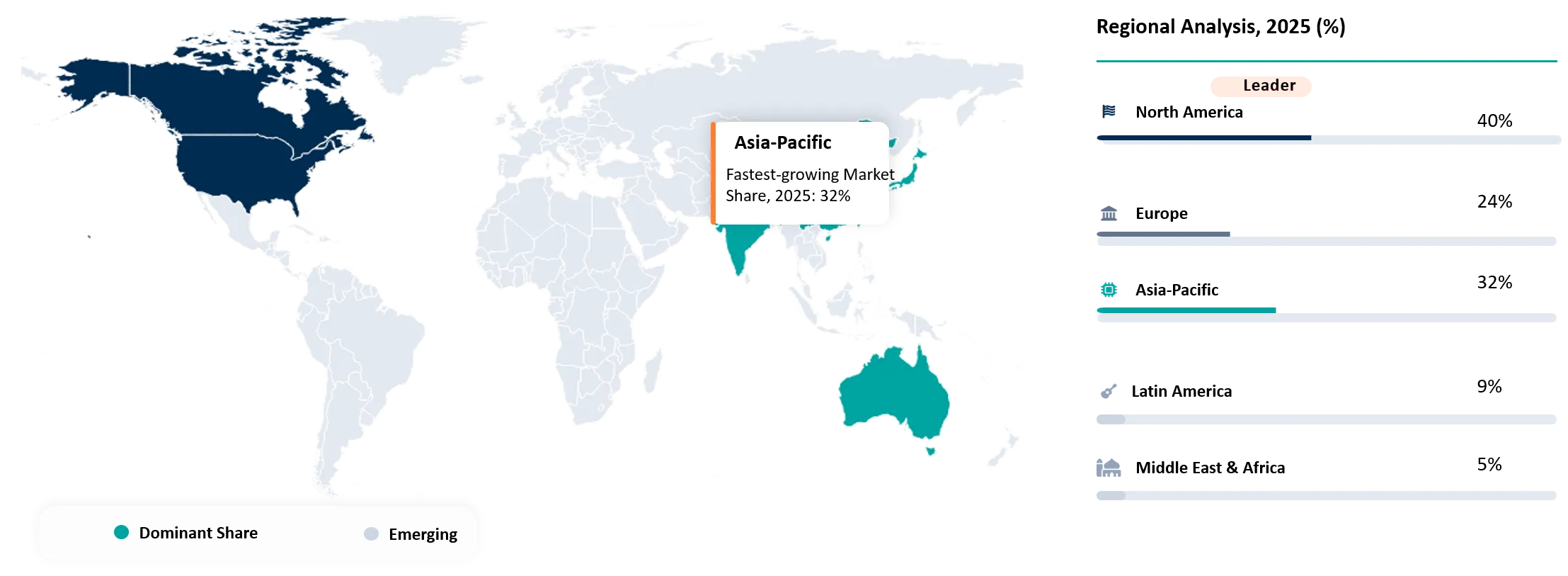
Strong Supplement Consumption and Botanical Wellness Adoption Driving North American Market Leadership
North America dominated the chewable herbal supplements market, accounting for a 40% market share in 2025, supported by the region's well-established dietary supplement ecosystem, high consumer awareness of preventive wellness, and increasing preference for convenient supplement delivery formats. The United States remains the primary contributor to regional demand, with consumers increasingly incorporating herbal and botanical ingredients into products targeting stress management, immunity, digestive health, sleep, and healthy aging. The presence of established supplement brands, specialised nutraceutical manufacturers, and extensive pharmacy and e-commerce distribution networks further supports the region's leading position in chewable herbal formulations.
Growing consumer demand for convenient, plant-based, and functional wellness products is driving strategic acquisitions within the natural and chewable supplements industry. In March 2025, Grove Collaborative Holdings, Inc., a U.S.-based sustainable consumer products and wellness company, acquired substantially all the assets of 8Greens, a U.S.-based natural wellness and dietary supplement company specializing in nutrient-rich gummy and effervescent tablet formats. The acquisition strengthened Grove Collaborative's expansion into the wellness category and its focus on human health. Financial disclosures subsequently showed that Grove paid approximately USD 636,000 in cash for the 8Greens acquisition, which included acquired assets such as USD 742,000 in inventory, USD 608,000 in accounts receivable, and USD 696,000 in customer relationships.
U.S. Chewable Herbal Supplements Market Trends
The U.S. holds a dominant position in the North American chewable herbal supplements market, supported by its large dietary supplement consumer base, well-developed nutraceutical industry, and growing demand for convenient wellness products. The country has a strong ecosystem of herbal supplement brands, contract manufacturers, pharmacies, specialty retailers, and direct-to-consumer platforms, enabling the rapid commercialization of gummies, soft chews, and other chewable formulations. Growing consumer interest in botanical ingredients for stress management, sleep, immunity, digestive health, and energy is further supporting the expansion of condition-specific herbal chewable products across the U.S. market.
Growing strategic investments and acquisitions by major consumer goods companies are highlighting the increasing commercial attractiveness of the dietary supplements and wellness sector. In August 2026, Procter & Gamble (P&G), a U.S.-based multinational consumer goods company, announced an agreement to acquire Thorne, a U.S.-based premium dietary supplements and wellness company, for USD 3.8 billion in cash. The acquisition is expected to strengthen P&G's presence in the health and wellness sector, with Thorne projected to generate approximately USD 650 million in annual sales in 2026, following annual revenue of more than USD 500 million in 2025.
Canada Chewable Herbal Supplements Market Outlook
Canada is an important country in the North American chewable herbal supplements market, supported by a well-established natural health products ecosystem, growing consumer preference for convenient supplement formats, and the presence of specialised nutraceutical manufacturers. Herbal remedies are formally included within Canada's natural health product framework, with Health Canada requiring products to meet safety, efficacy, and quality requirements before market authorization. Regulatory structure supports consumer confidence and provides a defined pathway for the commercialization of herbal chewables, gummies, and other innovative supplement formats.
Growing consolidation in the natural health and wellness industry is enabling pharmaceutical and consumer health companies to expand their presence in the dietary supplements sector. In February 2025, Apotex Inc., a Toronto, Canada-based global pharmaceutical and consumer health company, acquired CanPrev, a Canadian natural health products company specializing in vitamins, minerals, supplements, and wellness formulations. The acquisition expanded Apotex into Canada's health and wellness sector and added the CanPrev, Cyto-Matrix, and Orange Naturals brands to its portfolio. At the time of the acquisition, CanPrev offered more than 445 products across over 3,400 retail locations in Canada and online, strengthening Apotex's access to pharmacies, health food stores, grocery channels, and natural health professionals.
Expanding Herbal Wellness Adoption and Chewable Supplement Innovation Driving Asia-Pacific Market Growth
Asia-Pacific is the fastest-growing region in the chewable herbal supplements market, with a 32% market share in 2025, supported by the region's deep-rooted use of traditional herbal ingredients, expanding nutraceutical consumption, and increasing adoption of convenient supplement formats. Countries including China, India, Japan, South Korea, and Australia provide a large consumer base for botanical products based on Ayurveda, Traditional Chinese Medicine, and other indigenous wellness practices. Rising disposable incomes, preventive healthcare awareness, and demand for plant-based and clean-label products are further encouraging manufacturers to convert traditional herbal formulations into gummies, soft chews, and other consumer-friendly formats.
Growing consumer adoption of convenient gummy-based nutraceuticals is driving strategic acquisition activity in India's expanding wellness and dietary supplements sector. In August 2025, Panacea Biotec Pharma Limited, an India-based pharmaceutical, vaccines, and nutrition company, was reported to be in the final stages of acquiring the entire stake in Power Gummies, an India-based nutraceutical and functional gummy supplement company founded in 2018. The proposed acquisition included Power Gummies' patents and trademarks and would expand Panacea Biotec's presence in the nutraceutical and lifestyle wellness sector. Power Gummies had raised approximately INR 76.6 crore (around USD 9 million) in funding, including a USD 6 million Series A round, while its operating revenue reached INR 17.4 crore (USD 1.84 million) in FY2024.
Japan Chewable Herbal Supplements Market Trends
Japan is one of the major countries in the Asia-Pacific chewable herbal supplements market, supported by its long-established culture of herbal wellness, advanced nutraceutical industry, and growing acceptance of convenient supplement delivery formats. The country's traditional use of botanical ingredients, including Kampo-based formulations and Asian herbal extracts, provides a strong foundation for the commercialization of modern chewable supplements. Japan's established health-food manufacturers, sophisticated product formulation capabilities, and extensive pharmacy and retail networks further support the development of gummies and other chewable products targeting immunity, energy, beauty, healthy aging, and everyday wellness.
Growing global demand for vitamins, dietary supplements, and preventive health solutions is driving strategic consolidation among major health and consumer product companies. In August 2026, Kirin Holdings Company, Limited, a Tokyo, Japan-based multinational beverage and health science holding company, agreed to acquire Jamieson Wellness Inc., a Toronto, Canada-based manufacturer and marketer of vitamins, minerals, and dietary supplements, to strengthen its global Health Science business. The transaction values Jamieson Wellness at approximately CAD 2.5 billion (USD 1.8 billion) in enterprise value (approximately JPY 218.3 billion), with Kirin offering CAD 45.75 per share in cash to acquire 100% of the company's outstanding shares.
Chewable Herbal Supplements Market Competitive Landscape
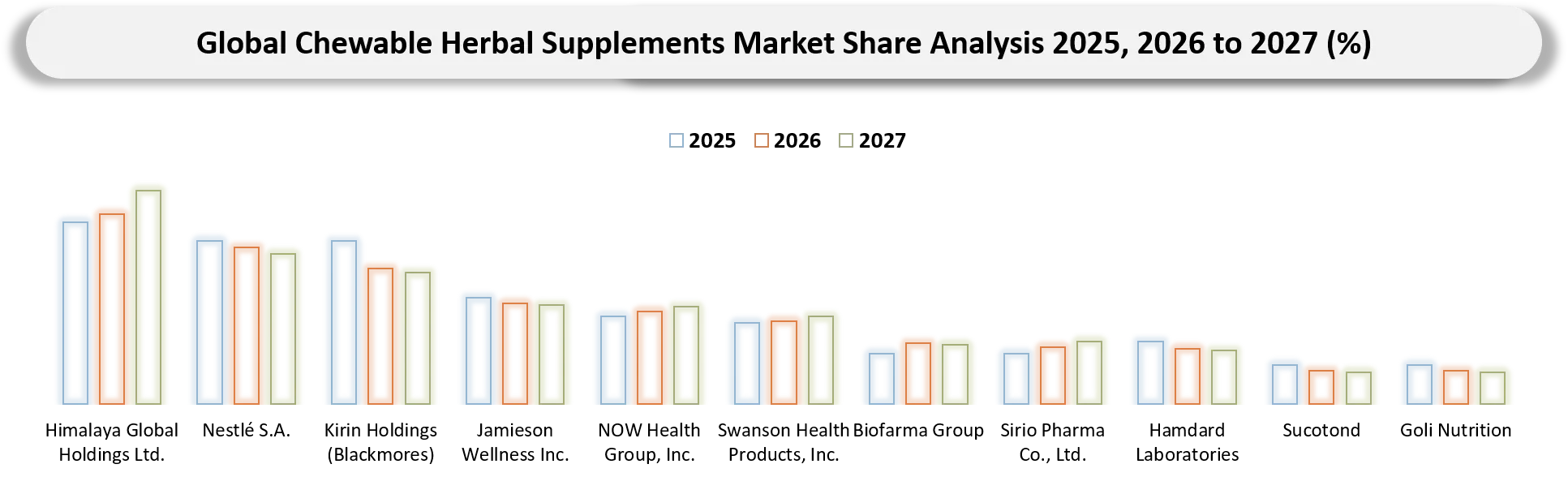
- The market is characterized by three key participant groups: established herbal and consumer wellness brands, branded dietary supplement companies, and specialized gummy and nutraceutical manufacturers. Himalaya Global Holdings Ltd., Kirin Holdings through Blackmores, Jamieson Wellness Inc., NOW Health Group, Inc., Swanson Health Products, Inc., Hamdard Laboratories, and Goli Nutrition compete primarily through branded herbal and wellness portfolios, consumer trust, and broad retail and e-commerce distribution. Meanwhile, Nestlé S.A. leverages its global nutrition and health-science capabilities, while Biofarma Group, Sirio Pharma Co., Ltd., and Sucotond strengthen the competitive ecosystem through contract development, private-label manufacturing, and specialized chewable and gummy formulation capabilities. Creating a fragmented and innovation-driven competitive environment where brand credibility, botanical ingredient quality, flavour masking, sugar reduction, and manufacturing scale define competitiveness.
- Key players include Himalaya Global Holdings Ltd. (India), Nestlé S.A. (Switzerland), Kirin Holdings (Blackmores) (Japan/Australia), Jamieson Wellness Inc. (Canada), NOW Health Group, Inc. (United States), Swanson Health Products, Inc. (United States), Biofarma Group (Italy), Sirio Pharma Co., Ltd. (China), Hamdard Laboratories (India), Sucotond (China), and Goli Nutrition (United States).
Key Developments
- April 2025: VIVAZEN, a Phoenix, Arizona, U.S.-based privately held botanical wellness and functional plant-based supplements company, launched its new Botanical Gummies line to expand its chewable supplement portfolio.
- February 2026: Releaf Wellness, an India-based herbal pharmaceutical and wellness company, entered the Indian wellness market with what it describes as the country's first range of small-molecule herbal formulations.
- March 2025: Grove Collaborative Holdings, Inc., a U.S.-based sustainable consumer products and online retail company, acquired substantially all assets of 8Greens, a U.S.-based health and wellness supplements company specializing in nutrient-rich gummies and effervescent tablets.
- August 2025: FitLife Brands, Inc., a U.S.-based developer and marketer of nutritional supplements and wellness products, announced the acquisition of substantially all assets of Irwin Naturals, a U.S.-based nutritional and wellness supplements company, for USD 42.5 million in cash.
- August 2025: Doseology Sciences Inc., a Canada-based biotechnology innovation company specializing in precision-formulated oral stimulants, acquired the Feed That Brain (FTB) division from Joseph Mimran & Associates Inc. for aggregate consideration of CAD 400,000 (approximately USD 290,000).
Key Procurement Priorities and Buyer Evaluation Criteria
- Organizations investing in the Chewable Herbal Supplements Market are increasingly selecting suppliers based on their ability to provide standardized, high-quality herbal ingredients and scalable chewable formulations with consistent potency, safety, taste, and shelf-life performance.
- Procurement decisions are increasingly influenced by demand for convenient gummy and chewable formats, clean-label products, reduced-sugar formulations, plant-based ingredients, and condition-specific herbal supplements targeting stress, sleep, immunity, digestive health, and cognitive wellness.
- Buyers evaluate suppliers based on key factors such as botanical ingredient authenticity, active ingredient standardization, contaminant testing, dosage accuracy, flavour-masking capabilities, texture consistency, stability, and compliance with applicable dietary supplement and food safety regulations.
Why Choose DataM?
- Technological & Formulation Innovations: Explores advancements in chewable supplement technologies, including flavour masking, microencapsulation, sugar-free formulations, vegan gelling systems, and stability-enhancing technologies that enable effective delivery of herbal and botanical ingredients.
- Product Performance & Market Positioning: Evaluates how manufacturers differentiate chewable herbal supplements based on ingredient potency, botanical standardization, taste, texture, dosage convenience, sugar content, clean-label positioning, and condition-specific health benefits.
- Real-World Evidence: Highlights the adoption of herbal chewables across stress management, sleep support, immunity, digestive health, cognitive wellness, energy management, and beauty applications, demonstrating the growing transition from conventional tablets and capsules toward consumer-friendly formats.
- Market Updates & Industry Changes: Tracks key developments such as new herbal gummy launches, product reformulations, reduced-sugar innovations, manufacturing capacity expansions, regulatory developments, and investments across North America, Asia-Pacific, Europe, and other emerging markets.
- Competitive Strategies: Analyzes how leading companies expand through herbal ingredient innovation, branded product launches, strategic acquisitions, contract manufacturing partnerships, distribution expansion, and investments in advanced gummy and chewable formulation capabilities.
- Pricing & Market Access: Examines pricing variations based on botanical ingredient quality, extract standardization, dosage strength, formulation complexity, organic and clean-label certifications, and access through pharmacies, health stores, supermarkets, e-commerce platforms, and direct-to-consumer channels.
- Market Entry & Expansion: Identifies growth opportunities driven by rising demand for convenient supplement formats, plant-based wellness products, adaptogenic herbs, personalized nutrition, and condition-specific formulations, while outlining strategies such as product differentiation, regional expansion, digital distribution, and strategic manufacturing partnerships.
Target Audience
- Herbal Supplement Manufacturers
- Nutraceutical and Functional Food Companies
- Pharmaceutical and Consumer Healthcare Companies
- Botanical Ingredient Suppliers
- Contract Development and Manufacturing Organizations (CDMOs)
- Brand Owners and Start-ups
- Investors and Venture Capital Firms


























































