


Chemical Peel Market Size & Industry Outlook
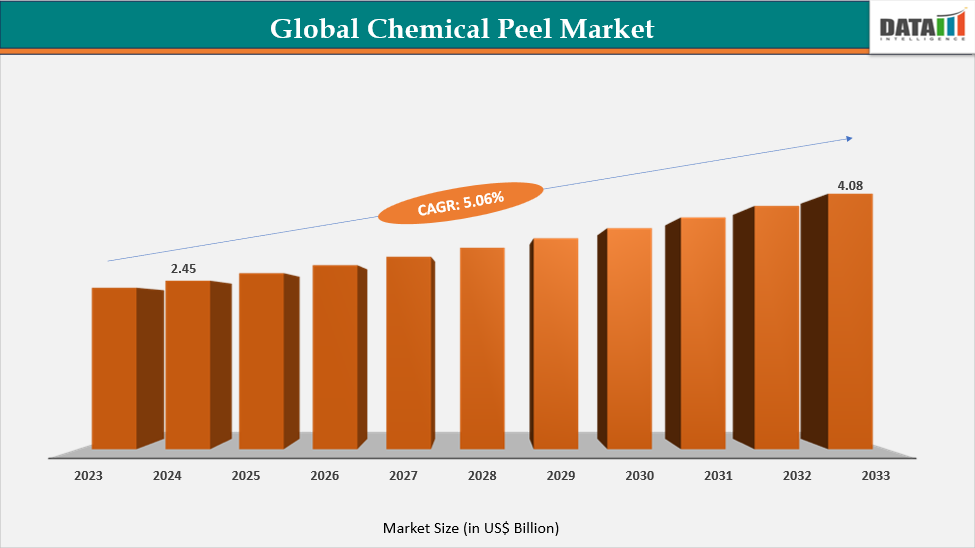
The global Chemical Peel market size reached US$2.45 billion in 2024, up from US$2.22 billion in 2023, and is expected to reach US$4.08 billion by 2033, growing at a CAGR of 5.06% during 2025–2033. The market is expanding rapidly, driven by factors such as the rising demand for minimally invasive aesthetic procedures, increasing consumer focus on skin rejuvenation and anti-aging solutions, and the growing influence of social media and beauty trends. Additionally, technological advancements in peel formulations such as combination peels, lactic acid-based peels, and customizable depth treatments are improving safety, effectiveness, and patient satisfaction, boosting market adoption.
Furthermore, the increasing availability of chemical peel services in dermatology clinics, medical spas, and home-use products, along with higher disposable incomes and expanding urban populations, is supporting market growth. Strong participation from aesthetic device manufacturers and skincare brands is also driving innovation and commercialization.
Key Market Highlights
- North America dominates the Chemical Peel market with the largest revenue share of 40.87% in 2024.
- The Asia Pacific is the fastest-growing region and is expected to grow at the fastest CAGR of 7.12% over the forecast period.
- Based on the product type, the fruit peel segment led the market with the largest revenue share of 24.52% in 2024.
- The major market players in the Chemical Peel market are Galderma S.A., Bausch Health Companies Inc., Merz Pharma GmbH & Co. KGaA, L’Oréal, Lumenis, Johnson & Johnson Private Limited, Glytone, Sinclair, IMAGE Skincare, Proderma Light, among others.
Market Dynamics
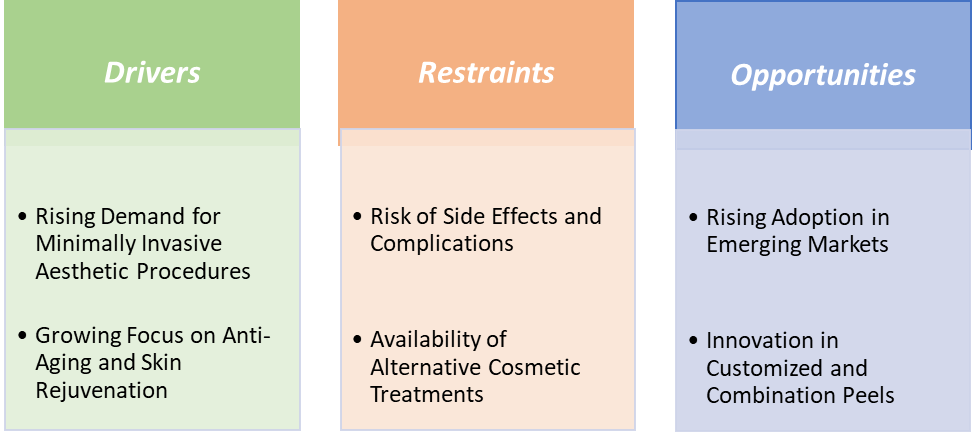
Drivers: Rising Demand for Minimally Invasive Aesthetic Procedures is significantly driving the Chemical Peel market growth
The growing global preference for non-surgical cosmetic treatments is one of the most significant drivers of the chemical peel market. Consumers are seeking quick, affordable, and low-risk procedures that deliver visible skin improvements without the downtime associated with surgery. Chemical peels fit this demand perfectly, offering benefits such as skin rejuvenation, acne reduction, hyperpigmentation correction, and anti-aging effects in a short treatment session.
According to the American Society of Plastic Surgeons (ASPS) 2024 report, chemical peels ranked among the top five minimally invasive aesthetic procedures in the United States, with a strong year-on-year growth rate. The increasing popularity of med spas, dermatology clinics, and at-home skin care kits has also made chemical peels more accessible to a wider population.
In addition, social media influence, beauty standards, and rising awareness of skincare are encouraging younger consumers to adopt preventative aesthetic treatments early. Major skincare brands and aesthetic service providers such as Allergan Aesthetics, L’Oréal, and SkinCeuticals are expanding their professional-grade peel offerings to meet market demand. Furthermore, combination peels and customizable formulations are making treatments safer for different skin types, including sensitive and darker skin tones.
Restraints: The risk of Side Effects and Complications is hampering the growth of the market
Chemical peels carry a significant risk of side effects and post-treatment complications, which limit wider adoption, especially among first-time and sensitive-skin patients. Common side effects include redness, burning, swelling, prolonged irritation, hyperpigmentation, hypopigmentation, scarring, and infection, particularly when deeper peels or improperly administered treatments are involved.
A key factor hampering market growth is the lack of standardized protocols and variation in practitioner skill levels. Many chemical peels are performed in med spas or beauty clinics where certification and medical supervision may be insufficient, increasing the chance of errors. According to a 2024 study published in the Journal of Dermatological Treatment, over 25% of adverse cosmetic procedure reports were linked to chemical peels, highlighting safety concerns.
Recent lawsuit cases in the U.S. and Europe over burns and scarring caused by unregulated chemical peels have drawn media attention and increased demand for stricter regulations and practitioner licensing. As a result, many consumers are opting for safer alternatives such as laser resurfacing, microneedling, or IPL therapy, which offer more controlled outcomes.
Unless safety protocols, practitioner training, and standardized formulations continue to improve, concerns over side effects and complications will remain a major restraint, slowing the broader adoption of chemical peels in both established and emerging markets.
For more details on this report – Request for Sample
Segmentation Analysis
The global Chemical Peel market is segmented based on product type, type, application, end-user, and region.
Product Type: The fruit peel segment is dominating the Chemical Peel market with a 24.52% share in 2024

The Fruit Peel segment is currently dominating the Chemical Peel market, accounting for 24.52% of the market share in 2024. Fruit peels, also known as alpha-hydroxy acid (AHA) peels, use naturally derived acids from fruits such as glycolic acid from sugarcane, citric acid from citrus fruits, lactic acid from milk, and malic acid from apples to gently exfoliate the skin. These peels help in removing dead skin cells, improving skin texture, reducing fine lines, and addressing mild pigmentation issues, making them popular among a wide range of consumers. The growth of this segment is driven by its gentle and safe profile, making it suitable for sensitive skin, as well as the rising demand for natural and organic skincare solutions. Additionally, the availability of both professional-grade and at-home formulations from brands such as The Ordinary, Dermalogica, and SkinCeuticals has increased accessibility, while social media influence has popularized fruit peels as a quick, effective, and safe skin rejuvenation solution. For example, glycolic acid peels derived from sugarcane are widely used in dermatology clinics and med spas for treating acne scars and uneven skin tone, whereas lactic acid peels are preferred for hydration and gentle exfoliation. With their natural composition, mild action, and broad applicability, fruit peels continue to dominate the chemical peel market, and growing consumer preference for safe and effective skincare solutions ensures strong growth for this segment in the forecast period.
The lactic peel segment is the fastest-growing in the Chemical Peel market, with a 19.42% share in 2024
The Lactic Peel segment is the fastest-growing in the Chemical Peel market, holding a 19.42% share in 2024. Lactic peels, derived from lactic acid, are considered a gentle and hydrating alpha-hydroxy acid (AHA) peel, making them suitable for sensitive and dry skin types. They work by exfoliating dead skin cells, improving skin texture, reducing fine lines, and enhancing moisture retention, which contributes to healthier and more radiant skin. The growth of this segment is driven by the increasing consumer preference for mild, low-risk skincare treatments, the rising popularity of natural and biocompatible ingredients, and the expanding availability of both clinical and at-home peel formulations. For example, lactic acid peels from brands like The Ordinary and Murad have gained popularity for treating dryness, dullness, and early signs of aging without irritation. Additionally, dermatologists recommend lactic peels for patients with sensitive skin or pigmentation issues where stronger peels may be unsuitable. With their gentle action, skin-rejuvenating benefits, and suitability for diverse skin types, lactic peels are poised to maintain rapid growth, solidifying their position as a key segment in the global chemical peel market.
Geographical Analysis
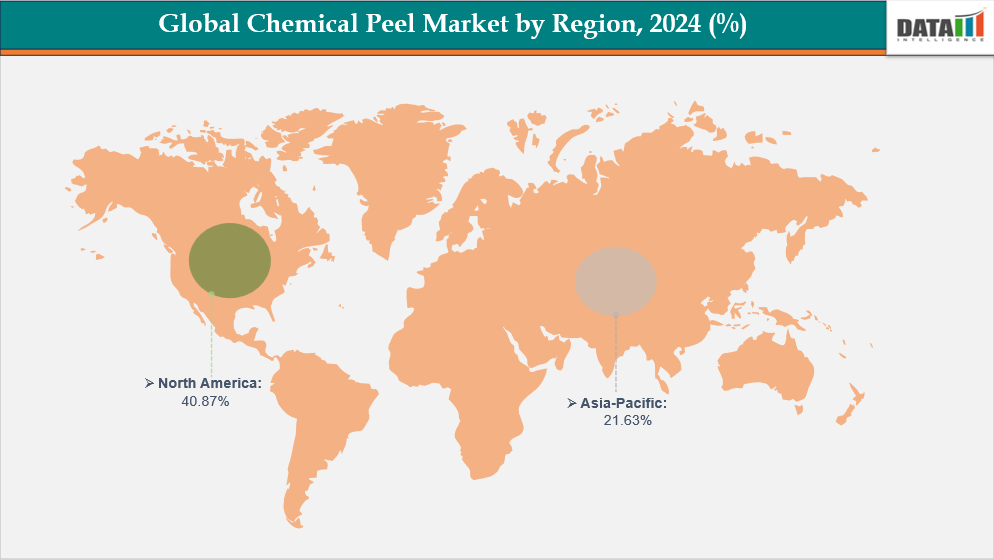
North America is expected to dominate the global Chemical Peel market with a 40.87% in 2024
North America is the dominant region in the Chemical Peel market, largely due to the presence of major market players, high consumer awareness of aesthetic procedures, and advanced healthcare infrastructure. The region has a well-established network of dermatology clinics, med spas, and cosmetic surgery centers, which makes chemical peel treatments widely accessible. Additionally, consumers in the U.S. and Canada are increasingly seeking minimally invasive and anti-aging skincare solutions, fueling demand for chemical peels.
The growth is also supported by stringent safety regulations and the availability of professional-grade peel formulations from leading brands such as The Ordinary, SkinCeuticals, and L’Oréal, which ensure effective and safe treatments. For example, glycolic and lactic acid peels are commonly used in dermatology clinics across the U.S. to treat hyperpigmentation, acne scars, and early signs of aging. With high disposable incomes, growing acceptance of cosmetic procedures, and continuous innovations in peel formulations, North America is expected to maintain its position as the largest and most influential market in the global chemical peel industry.
US Chemical Peel Market Trends
The United States continues to lead the global Chemical Peel market, driven by high consumer awareness of aesthetic treatments, advanced dermatology infrastructure, and strong adoption of minimally invasive skincare procedures. The U.S. market benefits from a large base of dermatology clinics, med spas, and cosmetic centers offering professional-grade chemical peels, which are widely recommended for treating acne scars, hyperpigmentation, fine lines, and uneven skin tone. Popular peels such as glycolic acid, lactic acid, and trichloroacetic acid (TCA) peels are routinely used in clinics by brands like SkinCeuticals, The Ordinary, and Murad, reflecting a preference for both clinical and at-home solutions. Additionally, high disposable incomes and increasing spending on personal care and anti-aging treatments support market growth. With continued innovations in peel formulations, growing consumer preference for non-invasive procedures, and robust healthcare infrastructure, the United States is expected to maintain its leadership position in the global chemical peel market in the coming years.
The Asia Pacific region is the fastest-growing region in the global Chemical Peel market, with a CAGR of 7.12% in 2024
The Asia Pacific region is the fastest-growing market for Chemical Peel, driven by a rapidly expanding middle-class population, increasing disposable incomes, rising awareness of skincare and aesthetic treatments, and growing availability of dermatology clinics and med spas. Countries such as China, India, Japan, and South Korea are witnessing a surge in demand for chemical peels due to the rising prevalence of skin pigmentation issues, acne scars, and early signs of aging among urban consumers.
The growth is further fueled by the popularity of beauty and skincare trends promoted through social media and influencer marketing, as well as the introduction of affordable at-home peel kits and professional-grade peel services. For example, glycolic and lactic acid peels are increasingly being offered in med spas across China and India, catering to consumers seeking non-invasive solutions for skin rejuvenation. With ongoing investments in aesthetic clinics, rising consumer awareness, and the adoption of advanced peel technologies, the Asia Pacific region is poised to sustain its rapid growth and become a key driver of the global chemical peel market.
Europe Chemical Peel Market Trends
In Europe, the Chemical Peel market is witnessing steady growth, driven by increasing consumer awareness of skincare, a growing demand for anti-aging and skin rejuvenation treatments, and the presence of established dermatology and cosmetic clinics across countries such as Germany, the United Kingdom, France, and Italy. European consumers are increasingly seeking minimally invasive aesthetic procedures that provide effective results with reduced downtime, making chemical peels a preferred choice. The adoption of professional-grade peels such as glycolic, lactic, and trichloroacetic acid (TCA) peels in dermatology clinics and medical spas is also supporting market expansion. For example, dermatology centers in the UK and Germany frequently use combination fruit and lactic acid peels to treat hyperpigmentation and acne scars, reflecting a trend toward safer and customizable treatments. With rising disposable incomes, regulatory support for safe cosmetic procedures, and continuous innovation in peel formulations, Europe is expected to maintain steady growth in the chemical peel market in the coming years.
Competitive Landscape
Top companies in the Chemical Peel market include Galderma S.A., Bausch Health Companies Inc., Merz Pharma GmbH & Co. KGaA, L’Oréal, Lumenis, Johnson & Johnson Private Limited, Glytone, Sinclair, IMAGE Skincare, Proderma Light, among others.
Market Scope
| Metrics | Details | |
| CAGR | 5.06% | |
| Market Size Available for Years | 2022-2033 | |
| Estimation Forecast Period | 2025-2033 | |
| Revenue Units | Value (US$ Bn) | |
| Segments Covered | Product | Fruit Peel, Salicylic Acid Peel, Lactic Peel, Pigment Balancing Peel, Vitalize Peel, Trichloroacetic Acid Peel |
| Type | Superficial Peel, Medium Peel, Deep Peel | |
| Application | Acne Spots, Wrinkles, Hyperpigmentation, Others | |
| End-user | Hospitals, Med Spa, Dermatology Clinics | |
| Regions Covered | North America, Europe, Asia-Pacific, South America, and the Middle East & Africa | |
The global Chemical Peel market report delivers a detailed analysis with 70 key tables, more than 66 visually impactful figures, and 159 pages of expert insights, providing a complete view of the market landscape.
Suggestions for Related Report
For more pharmaceuticals-related reports, please click here


























































