


Cellular Energy Supplements Market Size
The global Cellular Energy Supplements market reached an estimated US$ 3.84 billion in 2025 and is expected to reach US$ 11.23 billion by 2035, growing with a CAGR of 11.4% during 2026-2035. The market includes NAD+ precursors, coenzyme Q10, PQQ, creatine, B vitamins, magnesium, carnitine, D-ribose and multi-ingredient formulas positioned for ATP production, mitochondrial health, daily energy, exercise performance, cognitive focus and recovery.
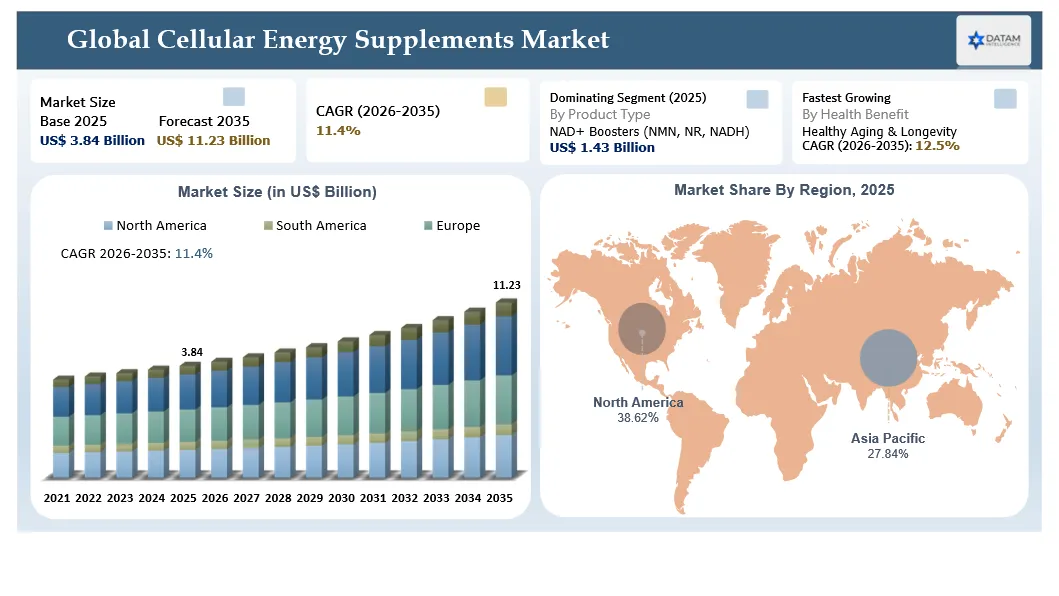
North America leads through high supplement spending, broad sports-nutrition adoption, practitioner channels and strong direct-to-consumer activity. Europe has an important premium nutrition and healthy-aging base, while Asia-Pacific is expected to grow fastest as urban wellness demand, e-commerce and preventive-health spending expand. Growth will favor products that combine recognizable ingredients with clinically relevant doses, convenient formats and substantiated structure-function claims.
| Metric | Details |
| 2025 Market Size | US$ 3.84 Billion |
| 2035 Projected Market Size | US$ 11.23 Billion |
| CAGR (2026-2035) | 11.4% |
| Largest Market | North America |
| Fastest-Growing Market | Asia-Pacific |
| Largest Product Type | NAD+ precursors |
| Fastest-Growing Health Benefit | Healthy Aging and Longevity |
| Largest Channel | Online and Direct-to-Consumer |
Cellular Energy Supplements Market Key Takeaways
- General wellness and immunity remain the largest use case because they support daily repeat purchasing across younger, middle-aged and older men.
- Protein, creatine and amino-acid products continue to broaden from bodybuilding into active aging, weight management and recovery.
- Prostate, urinary and cognitive energy products command premium pricing, but require careful claims control and stronger quality assurance.
- Cellular energy is the fastest-growing strategic theme as brands combine muscle, cognition, heart, sleep and metabolic support into age-based systems.
- Online and direct-to-consumer channels lead growth through subscriptions, education, personalization and bundled regimens.
- Consumer trust increasingly depends on clinically relevant doses, third-party testing, transparent sourcing and avoidance of exaggerated hormone claims.
- Asia-Pacific offers the strongest growth through urbanization, e-commerce, sports participation and established herbal-supplement traditions.
- Future leadership will depend on evidence, personalization, format innovation, retention economics and responsible communication.
Cellular Energy Supplements Industry Trends and Strategic Insights
- Cellular energy wellness is moving from generic stimulant-led products toward integrated routines covering mitochondrial support, micronutrient sufficiency, physical performance, cognitive focus, recovery and healthy aging.
- Creatine and D-Ribose is expanding beyond gym users as brands position it for healthy aging, cognitive support and preservation of strength, while remaining careful about claims.
- Gummies, stick packs and ready-to-consume formats are improving convenience, although stability, sugar content and dose capacity remain formulation constraints.
- Personalization is shifting from quizzes toward biomarker-informed recommendations, subscription refills and age-based product systems.
- Clinician and pharmacist credibility is becoming more valuable as consumers seek help distinguishing evidence-backed ingredients from social-media hype.
- Regulatory scrutiny of adulterated sexual-enhancement products is creating a quality premium for compliant brands and verified supply chains.
Cellular Energy Supplements Market Scope
| Metrics | Details |
| 2025 Market Size | US$ 3.84 Billion |
| 2035 Projected Market Size | US$ 11.23 Billion |
| CAGR | 11.4% |
| By Product Type | NAD+ precursors, Protein and Amino Acids, Botanicals, Omega and Lipids, Probiotics, Specialty Nutrients |
| By Health and Performance Positioning | General Wellness, Performance, Prostate, Sexual Wellness, Fertility, Cardiometabolic, Cognitive and Sleep, Healthy Aging |
| By Ingredient | Vitamins, Minerals, Proteins, Creatine and D-Ribose, Botanicals, Lipids, Biotics, Specialty Bioactives |
| By Dosage Form | Capsules, Tablets, Powders, Gummies, Softgels, Liquids, Ready-to-Consume |
| By Consumer Group | 18-30, 31-45, 46-60, Above 60 |
| By Channel | Online, Pharmacy, Mass Retail, Specialty, Gyms, Practitioner |
| Report Insights | Market Size, Share, Growth, Competition, Company Profiles and Country-Level Opportunity |
Why does this report matter in 2026?
The year 2026 is important because cellular energy has become a shared positioning across healthy aging, sports nutrition, cognitive wellness and metabolic health. NAD+ precursors, ubiquinol, creatine and mitochondrial cofactors are moving beyond niche practitioner use into mass-premium retail and subscription channels. At the same time, consumers are demanding clearer evidence, better dosing transparency and stronger quality assurance.
This report matters because products marketed for energy differ sharply in mechanism, evidence and use case. The study separates rapid perceived energy from long-term mitochondrial support, exercise performance, cognitive energy and recovery. It evaluates product type, ingredient platform, dosage form, consumer group and distribution channel while distinguishing clinically established nutrients from emerging cellular-energy compounds.
Strategic decisions in 2026 on claim substantiation, ingredient standardization, delivery technology and practitioner education will shape durable brand trust. FDA rules require structure-function claims to be truthful and not misleading, supported by substantiation and accompanied by the required disclaimer. Companies that align product design, evidence and communication will be better positioned as scrutiny increases.
Cellular Energy Supplements Market White Space & Investment Opportunities
- Clinically supported mitochondrial and urinary-health formulas can gain share through better dosing, urologist education and pharmacy credibility.
- Female recovery nutrition remains fragmented and offers room for evidence-backed antioxidant, micronutrient and lifestyle-support programs linked to testing and counseling.
- GLP-1 companion products for women can support protein intake, muscle preservation, hydration and micronutrient adequacy during weight loss.
- Healthy-aging systems combining strength, cognition, sleep and cardiometabolic support can increase basket size among women above 45.
- Personalized subscriptions using health goals, diet, medications and biomarkers can improve retention while reducing indiscriminate supplement stacking.
- Quality-assured cognitive-energy products can differentiate through compliant claims, transparent testing and separation from adulterated male-enhancement products.
Cellular Energy Supplements Future Market Transformation
The market is expected to transform from product-led retail into guided wellness systems. Brands will organize portfolios around life stage and health goal rather than isolated ingredients. A younger consumer may enter through performance and recovery, then add stress, sleep and daily wellness. A middle-aged consumer may prioritize metabolic health, mitochondrial support and energy, while older women may focus on muscle preservation, mobility, cognition and heart health. This progression creates opportunities for long-term customer relationships and structured regiwomen upgrades.
Personalization will become more practical. Instead of relying only on lifestyle quizzes, leading platforms will combine purchase history, diet, activity, wearable data and selected laboratory markers. Recommendations will need safeguards for medication interactions, duplicate ingredients and excessive dosing. Retailers and healthcare-adjacent platforms will increasingly use pharmacists, dietitians or coaches to strengthen trust. The result will be a blended model in which commerce, education and monitoring reinforce one another.
By 2035, market leadership is likely to depend on a quality-and-retention flywheel. Strong brands will secure reliable raw materials, validate identity and potency, publish usable evidence, communicate conservative benefits and make adherence easy. Subscriptions and bundles will provide recurring revenue, but only when consumers perceive ongoing value. Companies that rely on aggressive hormone claims or opaque proprietary blends may face higher churn, retailer resistance and enforcement risk.
Cellular Energy Supplements Market Buyer Decision-Making Criteria
Consumers prioritize a clear health goal, recognizable ingredients, practical dosage, trust, price and convenience. Younger women often compare protein content, creatine dose, flavor and performance claims. Women seeking mitochondrial, recovery or cognitive-energy support place greater weight on confidentiality, safety and perceived clinical credibility. Older consumers consider pill burden, interactions, ease of swallowing and the reputation of the pharmacy or practitioner. Across groups, repeat purchase depends on tolerability, perceived benefit and fit within a daily routine.
Retailers and practitioners assess quality systems, documentation, claims, recall history, margin, sell-through and customer-support capacity. Products with third-party certification and transparent labeling can reduce reputational risk. Subscription platforms evaluate retention, cross-sell potential and the cost of professional support. Ingredient suppliers are judged on standardization, traceability, clinical evidence and supply consistency. Buyers increasingly prefer partners that can support education and compliance rather than provide only a finished product.
Demand is strongest for simple products that address recognizable needs, yet supply often concentrates on crowded multivitamin and performance categories. Gaps remain in evidence-backed recovery support, bone and joint health, healthy aging for women above 50, and nutrition for women using GLP-1 therapies. There is also unmet demand for products designed around medication use, dietary patterns and pill burden. Companies that simplify regimens and provide professional guardrails can capture consumers who are interested in supplements but distrust large self-directed stacks.
Cellular Energy Supplements Market Economic & Investment Analysis
The market combines high-volume daily wellness with premium condition-specific and performance products. Multivitamins and basic minerals generate broad demand but face private-label pressure and low switching costs. Protein, creatine and specialty formulations can command higher spend when brands provide sensory quality, trusted sourcing and a clear use case. Prostate, recovery and energy and wellness products may support premium pricing because consumers perceive a specific need, although evidence and trust are essential for sustained adoption.
Economic models should separate customer acquisition from customer lifetime value. Direct-to-consumer brands may achieve attractive gross margins but face high paid-media costs, influencer fees and promotional discounting. Subscription retention improves unit economics when products are consumed daily and benefits are easy to understand. Retail distribution reduces the burden of digital acquisition but introduces listing fees, wholesale margins and inventory risk. Omnichannel brands can use retail for discovery and digital channels for education, replenishment and cross-selling.
Investment analysis should also distinguish category quality. General wellness and sports nutrition have large addressable markets, but competition is intense. Prostate, recovery, cognitive energy and age-specific products offer higher differentiation, but require stronger evidence and compliance. Strategic value is highest for platforms with repeatable formulation capability, proprietary delivery formats, trusted practitioner relationships or data-enabled personalization. Contract manufacturers with flexible runs, validated testing and difficult-format expertise can capture value across many brands.
Raw-material and working-capital requirements vary materially by format. Powders require flavor systems, moisture control and large packaging, while gummies require specialized production and stability management. Botanicals create standardization and contamination risks. Omega oils require oxidation control. Probiotics require potency management through shelf life. Investors should therefore evaluate the operational burden behind each product promise and avoid treating all supplements as simple asset-light consumer goods.
From a portfolio perspective, the market supports a barbell strategy. High-volume daily products provide recurring cash flow and customer entry, while specialized products create premium growth and brand authority. Companies can use multivitamins, protein or creatine to acquire consumers, then expand into sleep, stress, mitochondrial or cellular-energy bundles. The strongest economics emerge when cross-category recommendations are relevant and do not encourage unnecessary stacking.
Cellular Energy Supplements Investment Trends in the Market
- Capital is moving toward NAD+ precursor, ubiquinol and mitochondrial-cofactor platforms with stronger identity, purity and human evidence.
- Brands are investing in clinically relevant creatine, magnesium and B-vitamin formulations that bridge sports performance and daily wellness.
- Enhanced-delivery technologies such as liposomes, phytosomes, softgels and sustained-release systems are receiving investment to improve absorption and convenience.
- Direct-to-consumer companies are using subscriptions, quizzes and personalized regimens to increase retention across energy, recovery and healthy-aging use cases.
- Ingredient suppliers are funding application studies that connect biomarkers with physical performance, perceived fatigue and cognitive outcomes.
- Investors are favoring brands with third-party testing, conservative claims and diversified retail channels because evidence and quality scrutiny are increasing.
Strategic Indicators for Cellular Energy Supplements Market
High Regulation Impact
Regulatory impact is high because product classification, ingredient legality, labeling and claims determine market access. In the U.S., dietary supplements are regulated as food rather than drugs and generally are not preapproved for safety and effectiveness. Companies must avoid disease-treatment claims and maintain evidence for structure-function statements. Sexual-enhancement products face particular scrutiny because undeclared pharmaceutical ingredients can create serious safety risks and recalls.
High Investment Activity
Investment is active across digital wellness, performance nutrition, healthy aging and personalized supplementation. Capital favors brands with recurring revenue, strong retention and quality differentiation. Ingredient suppliers are funding clinical research and standardized extracts, while manufacturers invest in flexible formats and testing. Valuations are more disciplined than during earlier direct-to-consumer expansion, with greater emphasis on contribution margin and repeat purchase.
Supply Chain Disruption
The market depends on globally traded vitamins, amino acids, botanicals, oils, packaging materials and specialty excipients. Disruption can arise from weather, crop variability, energy costs, shipping delays, quality failures or concentration of production in a small number of countries. Brands are dual-sourcing critical ingredients, increasing safety stock and requiring stronger documentation from suppliers.
Pricing Volatility
Pricing volatility affects proteins, creatine, omega oils, botanicals and packaging. Promotional intensity also creates effective price volatility at retail. Premium products can protect margins through evidence, format and brand trust, while commodity multivitamins face private-label pressure. Subscription discounts must be balanced against retention and customer-service costs.
Procurement Pressure
Retailers and platforms increasingly require testing certificates, insurance, recall readiness, compliant claims and reliable fill rates. Large accounts may demand promotional funding and extended payment terms. Practitioner channels require educational support and clear interaction guidance. Suppliers that provide documentation and rapid technical response can become preferred partners.
New Technology Adoption
Technology adoption includes personalized recommendation engines, connected packaging, QR-linked traceability, AI-assisted formulation, digital adherence tools and laboratory integration. Adoption is strongest where technology simplifies choice or improves safety. Consumer-facing systems must avoid presenting supplement recommendations as medical diagnosis or treatment.
Regional Expansion Opportunity
North America remains the largest market, while Asia-Pacific offers the strongest growth through e-commerce, sports participation, rising incomes and local herbal traditions. Europe offers premium opportunities but tighter claims control. Expansion requires local ingredient compliance, language-specific labeling and a channel strategy suited to pharmacy, marketplace and specialty retail structures.
Government Policy Support
Policy support is indirect and centered on food safety, preventive health, nutrition literacy and manufacturing standards. Government action can also constrain the market through warning letters, import alerts and recalls. Companies benefit from proactive compliance and participation in recognized quality programs rather than relying on minimum legal requirements.
Pricing Intelligence
Pricing should be evaluated by cost per daily dose, clinically relevant dose, format convenience and channel. A lower bottle price may conceal a short supply or subtherapeutic serving. Premium pricing is more sustainable when consumers understand the ingredient dose, testing and intended use. Bundles should communicate the role of each product and avoid unnecessary overlap.
AI Impact Analysis of Cellular Energy Supplements Market
AI can improve product discovery by translating consumer goals, diet, age, medications and purchase history into a manageable shortlist. Recommendation systems can identify duplicate ingredients, excessive cumulative doses and potential interaction flags for professional review. Brands can also use AI to analyze reviews, detect emerging needs and optimize content. The value is highest when systems reduce confusion rather than encourage larger supplement stacks.
In R&D, AI can support literature screening, ingredient-combination analysis, flavor optimization and stability prediction. In operations, it can improve demand forecasting, inventory allocation and fraud detection. Marketing applications include audience segmentation and compliant content review. Governance is essential because models may overstate evidence or blur the line between wellness guidance and medical advice. Human review, source transparency and conservative claims remain necessary.
Disruption Analysis of Cellular Energy Supplements Market
Personalized subscriptions are disrupting the traditional shelf by organizing products around goals and life stages. Digital platforms can educate consumers, replenish automatically and cross-sell adjacent needs. Pharmacy and mass retail are responding with curated cellular energy wellness sections, private labels and online consultations. The result is a more competitive environment in which channel ownership and consumer data can matter as much as formulation.
Healthcare-adjacent services are also changing the category. Fertility testing, weight-management programs, telehealth and preventive screening can create moments when nutrition support becomes relevant. Brands that integrate responsibly with these pathways may gain credibility and retention. At the same time, regulatory enforcement against adulterated products can rapidly remove low-quality competitors and shift demand toward verified brands. Trust is therefore becoming a structural source of market share.
Cellular Energy Supplements Market BCG Matrix: Company Evaluation
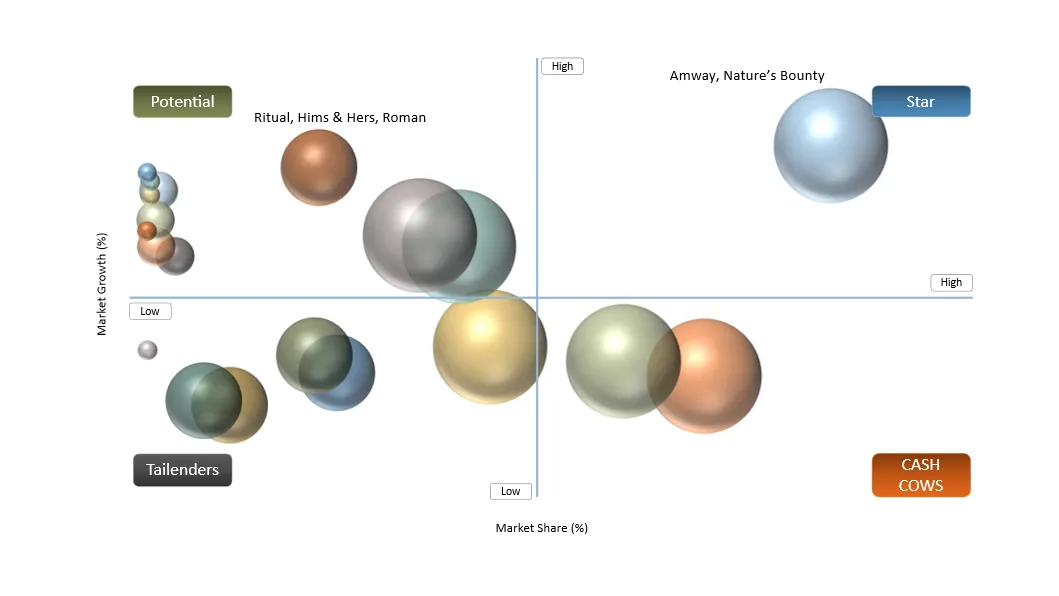
| Category | Representative Companies | Strategic Interpretation |
| Stars | Amway, Nature’s Bounty, Pharmavite, Elysium Health | Strong brand authority, broad distribution or high-growth positioning across performance and healthy aging. |
| Potential | Ritual, Hims & Hers, Roman, specialist recovery and mitochondrial brands | High growth through personalization and cellular energy health focus, but still building share and evidence. |
| Cash Cows | Jarrow Formulas, Life Extension, Life Extension, Nature’s Bounty, Doctor’s Best | Large established wellness portfolios with recurring demand and extensive retail reach. |
| Tailenders | Undifferentiated private labels and noncompliant male-enhancement brands | Low differentiation, high promotional dependence or elevated regulatory and trust risk. |
Stars combine scale, quality reputation and access to expanding categories such as performance, healthy aging and practitioner-led wellness. Potential players can grow rapidly through personalization, recovery, cognitive energy or digital subscriptions, but their position depends on retention and regulatory discipline. Cash Cows benefit from broad distribution and habitual use, while Tailenders face price competition, weak trust or enforcement risk.
Cellular Energy Supplements Market Dynamics
Driver Impact Analysis
| Driver | Market Growth Impact | Demand Concentration | Impacted Use Case | Strategic Impact |
| Preventive wellness adoption | High | All age groups | Daily wellness and immunity | Expands routine use and subscription potential. |
| Sports nutrition mainstreaming | High | 18-45 years | Protein, creatine and recovery | Broadens performance products beyond bodybuilding. |
| Cellular energy focus | High | 46+ years | Muscle, cognition and cardiometabolic support | Creates premium multi-benefit systems. |
| E-commerce and personalization | Medium-High | Urban digital consumers | Goal-based bundles | Improves education, convenience and cross-selling. |
Driver: Preventive Wellness and Life-Stage Purchasing Expand the Addressable Market
Women increasingly view supplements as part of a broader self-care routine that includes exercise, sleep, nutrition and preventive screening. This behavior expands demand beyond episodic sports use. Younger consumers enter through performance and convenience, while middle-aged and older women add products for mitochondrial, metabolic health, cognition and muscle preservation. Brands can therefore build life-stage portfolios and retain customers across changing goals. Growth is strongest when products provide clear usage guidance and avoid promising drug-like outcomes.
Restraint Impact Analysis
| Restraint | Drag on Market Growth | Primary Impact Area | Impacted Use Case | Strategic Impact |
| Inconsistent evidence and claims | High | Consumer trust | Hormone, recovery and cellular-energy products | Raises skepticism and limits practitioner support. |
| Adulteration and recall risk | High | Cognitive energy | Female enhancement | Creates safety, liability and retailer risk. |
| Price and subscription fatigue | Medium-High | DTC channels | Daily bundles | Increases churn and promotional dependence. |
| Ingredient and format complexity | Medium | Manufacturing | Botanicals, gummies and probiotics | Raises quality-control and stability costs. |
Restraint: Trust, Evidence and Adulteration Risk Constrain Premium Growth
The category contains strong ingredients, weak ingredients and products that make claims exceeding available evidence. Consumers may struggle to distinguish them. Female sexual-enhancement products create an additional problem because regulators continue to identify undeclared pharmaceutical ingredients. These events damage trust across the wider cellular energy health category. Brands must invest in testing, documentation, conservative claims and consumer education. Retailers should conduct enhanced due diligence for sensitive categories and avoid suppliers that cannot provide traceability or evidence.
Cellular Energy Supplements Market Segmentation Analysis
The global Cellular Energy Supplements market is segmented by Product Type, Health Benefit, Ingredient Category, Dosage Form, Age Group, Distribution Channel and region.
By Product Type
NAD+ and Mitochondrial Support Formulas Will Lead Premium Growth
NAD+ precursors and coenzyme Q10 lead premium cellular-energy positioning because they connect directly with mitochondrial metabolism and healthy-aging narratives. Creatine and D-ribose are expanding from sports performance into daily vitality and recovery, while B vitamins and magnesium remain the broadest mass-market ingredients. PQQ, alpha-lipoic acid and acetyl-L-carnitine support higher-value formulations, although brands need clinically relevant dosing, stability data and careful claims.
By Health and Performance Positioning
Daily Energy and Fatigue Support Will Remain the Largest Positioning
Cellular energy is expected to grow fastest as women seek to preserve muscle, mobility, cognition, metabolic health and independence. The segment brings together protein, creatine, omega fatty acids, vitamin D, magnesium, antioxidants and specialty bioactives. General wellness remains the largest category because of broad penetration. Muscle and healthy aging retain strong demand among younger men. Prostate and recovery products can command premium prices, while cognitive-energy products require strict quality controls and compliant communication.
By Ingredient Category
NAD+ precursors will lead consumer recognition, while creatine and D-ribose gain strategic importance.
Vitamins and minerals retain the largest share because they form the base of daily wellness and age-based formulas. Creatine and D-Ribose is gaining strategic importance because they are familiar in sports nutrition and increasingly used by active adults concerned with strength and muscle preservation. Proteins and amino acids support recovery and satiety. Botanicals and adaptogens provide differentiation but face variability in evidence and standardization. Probiotics and omega ingredients add digestive and cardiometabolic positioning.
By Dosage Form
Capsules and Tablets Will Remain Largest, While Gummies and Powders Grow Faster
Capsules and tablets lead because they support precise dosing, long shelf life and broad ingredient compatibility. Powders are central to protein, creatine and hydration products and can deliver higher doses. Gummies improve convenience and appeal to consumers who dislike pills, but dose capacity and sugar remain constraints. Softgels are preferred for omega oils. Liquids and shots support energy and convenience, while ready-to-consume nutrition can combine supplementation with meals or snacks.
By Consumer Group
Consumers Aged 45-59 Will Form the Most Valuable Growth Cohort
Women aged 46-60 are expected to become the most valuable growth cohort because they combine purchasing power with rising concern about muscle, energy, metabolic health, mitochondrial function and healthy aging. Consumers aged 18-30 remain important for performance, protein and digital-first brands. Women aged 31-45 often purchase stress, sleep, recovery and weight-management support. Women above 60 prioritize pill burden, interactions, mobility and healthcare trust, favoring pharmacy and practitioner channels.
By Distribution Channel
Online and Direct-to-Consumer Will Continue to Lead Growth
Online and direct-to-consumer channels lead growth through education, privacy, subscriptions and broad assortment. Sensitive needs such as cognitive energy, recovery and mitochondrial support benefit from discreet purchasing. Pharmacies retain trust and are important for older consumers and products positioned near healthcare. Mass retail provides scale and value, while specialty nutrition stores and gyms support performance categories. Practitioner channels are smaller but can command higher trust and premium pricing.
Cellular Energy Supplements Market Geographical Penetration
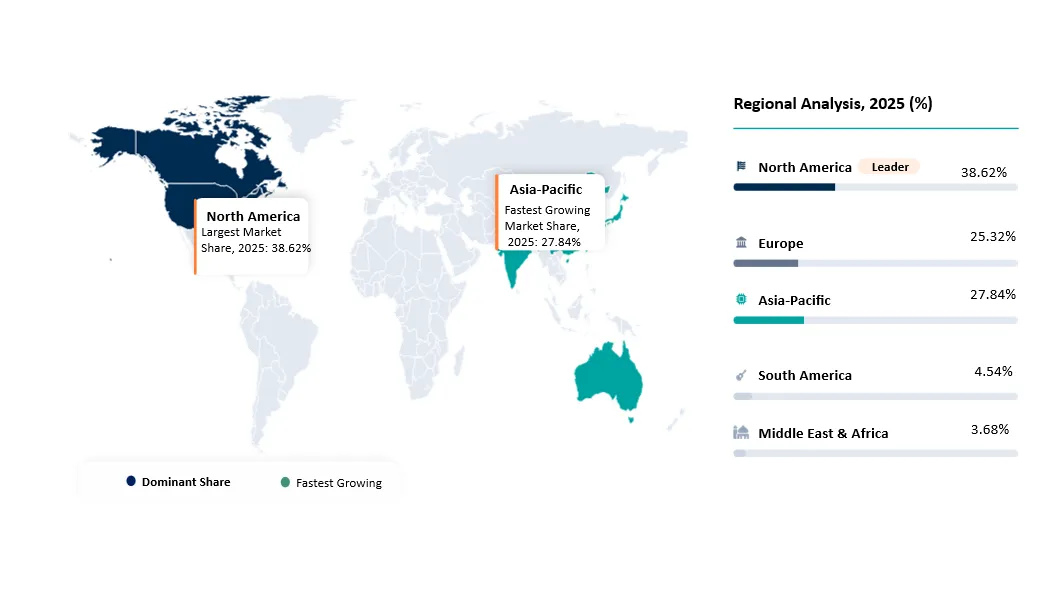
| Region | 2025 Share | Market Position | Core Growth Factors |
| North America | 38.62% | Largest | High supplement penetration, DTC maturity, sports nutrition and premium wellness. |
| Europe | 25.32% | Established | Pharmacy credibility, aging population and tighter claims governance. |
| Asia-Pacific | 27.84% | Fastest Growing | E-commerce, rising income, fitness adoption and herbal traditions. |
| South America | 4.54% | Emerging | Urban wellness, gyms and pharmacy expansion. |
| Middle East & Africa | 3.68% | Developing | Premium imports, young populations and digital retail. |
U.S. Cellular Energy Supplements Market Landscape
The U.S. is the largest national market due to high supplement use, deep e-commerce penetration, extensive sports nutrition and a large base of specialty brands. Growth is supported by creatine, protein, daily packs, cellular-energy formulas and online cellular energy wellness platforms. The market also faces high regulatory and reputational risk in male-enhancement products. FDA public notifications in 2025 involving products with undeclared sildenafil or tadalafil reinforce the importance of retailer due diligence, testing and transparent claims.
Germany Cellular Energy Supplements Market Outlook
Germany is a leading European market with strong pharmacy participation, consumer interest in vitamins, minerals and herbal products, and high expectations for quality documentation. Men’s cellular-energy and sports products offer opportunity, while claims must remain conservative. Pharmacy, drugstore and online channels are important. Brands benefit from evidence, sustainable packaging and formulations compatible with local regulatory requirements.
Japan Cellular Energy Supplements Market Trends
Japan combines an aging adult wellness population, established functional-health behavior and strong demand for convenience. Products for energy, metabolic health, mitochondrial support and healthy aging can gain traction through trusted domestic channels. The market values compact formats and disciplined quality. Local partnerships, compliant health claims and adaptation to Japanese ingredient preferences are important for entry.
China Cellular Energy Supplements Market Outlook
China offers scale through e-commerce, urban fitness and growing preventive-health spending. Imported brands can command premiums when they provide authenticity and traceability. Domestic brands are expanding rapidly in protein, vitamins and traditional botanical products. Regulatory compliance, cross-border e-commerce rules and localized content influence growth. Opportunities are strongest in younger digital consumers and middle-aged cellular-energy users.
India Cellular Energy Supplements Market Outlook
India is expanding through gyms, online marketplaces, pharmacies and rising awareness of protein, micronutrients, recovery and metabolic health. Price sensitivity remains important, but premium demand is growing in major cities. The market also faces challenges from counterfeit products and exaggerated claims. Trusted manufacturing, local-language education and partnerships with nutritionists or healthcare providers can strengthen adoption.
Brazil Cellular Energy Supplements Market Outlook
Brazil has a strong fitness culture and expanding demand for protein, creatine, vitamins and weight-management support. Pharmacies, specialty stores and digital channels are important. Economic volatility affects imported ingredients and premium pricing. Local manufacturing and value-tier formats can improve resilience, while sports partnerships support brand visibility.
Middle East and Africa Cellular Energy Supplements Market Outlook
The region presents a mixed opportunity. Gulf markets support premium imported supplements, gyms and digital wellness, while South Africa has established retail and sports nutrition. Other markets face affordability and distribution constraints. Young populations, rising fitness participation and demand for energy and general wellness support growth. Companies need halal compliance where relevant, heat-stable packaging and local distributor partnerships.
Cellular Energy Supplements Market Competitive Landscape
- Competition spans multinational consumer-health companies, sports nutrition leaders, specialist cellular energy wellness brands, direct-to-consumer platforms and private labels.
- Large companies benefit from retail reach and quality systems, while digital specialists compete through personalization, privacy and focused education.
- Performance categories are crowded, making flavor, format, certification and community credibility important differentiators.
- Prostate, recovery and cognitive-energy categories reward clinical positioning but carry higher claims and reputational risk.
- Retailers are increasing private-label participation in multivitamins and basic wellness, pressuring undifferentiated brands.
- Partnerships with ingredient suppliers, practitioners, laboratories, gyms and telehealth platforms can improve evidence, acquisition and retention.
Competitive intensity will increase as the boundaries between supplements, sports nutrition, digital health and preventive wellness continue to blur. Brands that own a trusted relationship with female consumers can expand across several needs, but excessive cross-selling can weaken credibility. Market share will therefore depend on clear segmentation, reliable quality and useful guidance. Companies with strong operational control can launch new formats faster and reduce recall risk. Digital platforms can move quickly, while multinational companies can scale through retail and pharmacy. The most defensible position combines brand trust, repeat purchase and clear evidence standard.
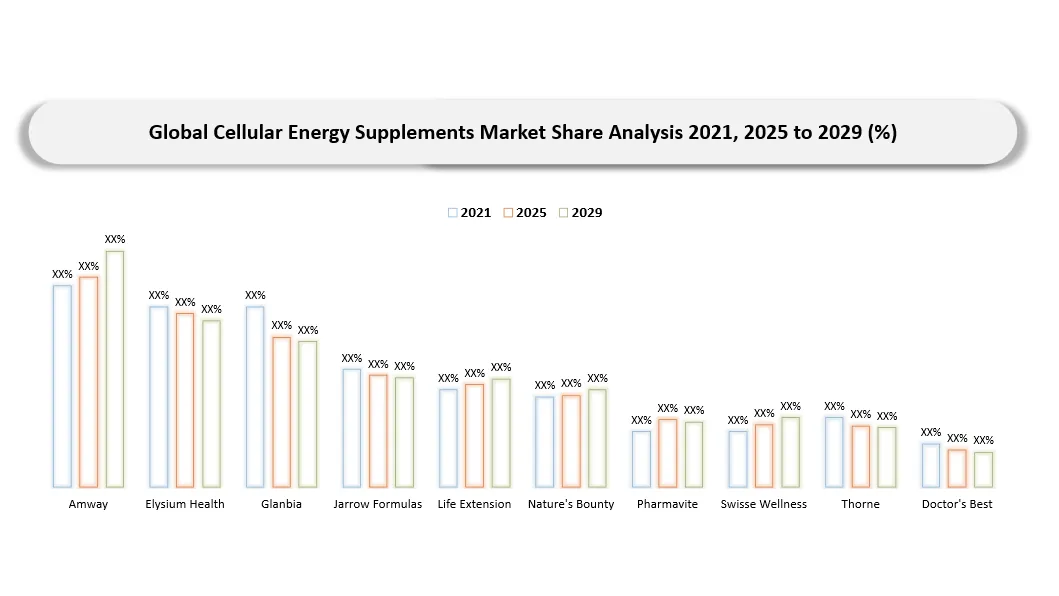
Key Companies of Cellular Energy Supplements Market
- Jarrow Formulas AG
- Life Extension plc
- Amway
- Nature’s Bounty Laboratories
- Life Extension
- Thorne
- Glanbia
- Pharmavite HealthTech
- The Vitamin Shoppe
- Nature’s Bounty
- Doctor’s Best
- Nature’s Bounty
- Elysium Health
- Garden of Life
- Pharmavite
- Ritual
- Hims & Hers Health
- Roman Health Ventures
- Blackmores
- Swisse Wellness
Cellular Energy Supplements Market Major Pain Points
- Inconsistent evidence and overstatement of benefits across hormone, recovery and longevity claims.
- Adulteration risk in female sexual-enhancement products and associated retailer liability.
- Consumer confusion caused by overlapping ingredients and excessive supplement stacking.
- High digital customer-acquisition costs and subscription churn.
- Raw-material variability in botanicals, oils, proteins and specialty compounds.
- Difficulty maintaining effective doses in gummies, small capsules and convenience formats.
- Private-label pressure in multivitamins and basic minerals.
- Limited integration between supplement use, diet, medications and professional guidance.
Cellular Energy Supplements Market Recent Developments
- 2025-2026: Supplement brands expanded NAD+ precursor, ubiquinol, PQQ and mitochondrial-support formulas across direct-to-consumer and practitioner channels.
- 2025-2026: Creatine and D-Ribose adoption broadened beyond sports nutrition into healthy-aging, cognitive wellness and wocellular wellness positioning.
- 2025-2026: Manufacturers increased use of liposomal, sustained-release and softgel delivery systems for compounds with absorption or stability limitations.
- 2025-2026: Retailers expanded energy and vitality assortments that combine B vitamins, magnesium, adaptogens and mitochondrial cofactors.
- 2025-2026: Brands increased third-party testing, certificates of analysis and claims review as regulators and consumers focused more closely on substantiation.
Analyst View / Opinion on Cellular Energy Supplements Market
The market is likely to separate into evidence-led platforms and highly promotional commodity products. Evidence-led brands will use clinically relevant doses, transparent ingredient sourcing, safety screening and practitioner education to build repeat purchase. Commodity products will continue to compete on price and social-media visibility but may face higher churn, retailer scrutiny and reputational risk. The strongest commercial models will connect symptom education, product selection, adherence support and referral to medical care when symptoms require diagnosis or prescription treatment.
- Cellular wellness supplements are becoming a life-stage market rather than a single demographic category.
- Cellular energy will provide the broadest long-term platform because it connects muscle, cognition, heart, sleep and metabolic health.
- Creatine and D-Ribose and protein will remain important growth anchors as performance nutrition expands into middle-aged and older consumers.
- Sexual-wellness products will remain commercially attractive, but quality and claims risk can destroy value quickly.
- Digital subscriptions can improve retention only when recommendations are relevant, transparent and easy to follow.
- Long-term leadership will depend on evidence, testing, responsible communication and omnichannel trust.
Cellular Energy Supplements Market Target Audience
| Industry | Who Should Buy This Report? | Reason to Buy This Report |
| Supplement Brands | Portfolio, innovation, marketing and commercial teams | Assess growth categories, positioning and channel strategy. |
| Ingredient Suppliers | Business development, technical and clinical teams | Identify evidence needs, formulation gaps and customer opportunities. |
| Retail and E-commerce | Category managers, private-label teams and marketplace operators | Improve assortment, trust, compliance and pricing architecture. |
| Contract Manufacturing | CDMOs, formulators, testing laboratories and packaging providers | Evaluate demand by format, quality requirement and capacity need. |
| Healthcare-Adjacent Platforms | Telehealth, recovery, weight management and preventive wellness providers | Identify responsible nutrition partnerships and subscription opportunities. |
| Investors & Consulting | Private equity, venture capital, institutional investors and advisors | Evaluate market size, economics, risks and white spaces. |
| Government & Regulators | Food authorities, trade bodies and consumer-protection organizations | Understand claims, adulteration, safety and market structure. |
Why Choose DATAM?
- Data-driven insights combining market sizing, consumer behavior, channel economics, regulation and ingredient trends.
- Post-purchase analyst consultations for portfolio planning, market entry, partner identification and custom modeling.
- Annual updates covering product launches, recalls, ingredient regulation, acquisitions and channel shifts.
- Specialized focus on emerging markets and country-level commercial pathways.
- Actionable analysis connecting product innovation with evidence, quality and customer retention.
What DATAM Uniquely Provides
- Ten-year forecasts across product type, health benefit, ingredient, format, age group, channel and region.
- Clear separation of daily wellness, performance, mitochondrial, recovery, cognitive energy and cellular-energy demand.
- Buyer-focused analysis of evidence, trust, claims, format, subscriptions and pharmacy participation.
- Country-level views linking consumer behavior, regulation, retail structure and premiumization.
- Strategic recommendations for partnerships, quality systems, product architecture and market entry.
- Comprehensive company coverage in the report scope without duplicating profile narratives in this brochure.


























































