


Carbonated Beverages Market Overview
The Global Carbonated Beverages Market reached US$ 421.26 billion in 2025 and is projected to witness lucrative growth by reaching up to US$ 718.41 billion by 2033. The market is growing at a CAGR of 6.9% during the forecast period 2026-2033.
Carbonated drinks, or soda or soft drinks, are beverages infused with carbon dioxide (CO2) gas under pressure. Carbonation technology and the carbonation process achieve the characteristic fizz and bubbles in these beverages and drive the carbonated beverages market size. Beverage carbonation systems are designed to efficiently carbonate various drinks, including water, juices, and flavored beverages. Carbonation levels can vary, ranging from lightly carbonated to highly effervescent.
The Global Carbonated Beverage Market is experiencing growth due to the growing trend of serving carbonated drinks alongside meals in fast food restaurants and cafes. Additionally, the increasing consumer preference for low-sugar and diet-carbonated beverages, driven by the rising adoption of healthy lifestyles, contributes to market growth.
Key Takeaways
- North America accounted for approximately 42.7% of the global carbonated beverages market share in 2025, supported by strong consumption of carbonated soft drinks, premium sparkling beverages, flavored sodas, and zero-sugar product innovations. Major manufacturers continue investing in healthier formulations, functional beverages, and sustainable packaging solutions to maintain consumer engagement.
- Asia-Pacific held around 32.7% market share in 2025 and is projected to register the fastest CAGR through 2033. Rising urbanization, increasing disposable incomes, expanding retail networks, and growing demand for ready-to-drink beverages in China, India, Indonesia, and Southeast Asia are accelerating market growth. Local and international brands are launching region-specific flavors to attract younger consumers.
- Health-conscious consumption patterns are reshaping the industry. Manufacturers are increasingly introducing low-calorie, reduced-sugar, and naturally sweetened carbonated beverages to address concerns regarding obesity, diabetes, and excessive sugar intake. Zero-sugar variants have become one of the fastest-growing product categories globally.
- Premiumization is becoming a major growth strategy. Consumers are showing increased interest in craft sodas, premium mixers, sparkling fruit beverages, and functional carbonated drinks enriched with vitamins, minerals, probiotics, and botanical ingredients, creating new revenue opportunities for beverage companies.
- Sustainability initiatives are influencing purchasing decisions. Leading beverage manufacturers are investing heavily in recyclable aluminum cans, recycled PET bottles, biodegradable packaging materials, and carbon-neutral production facilities to align with environmental regulations and evolving consumer preferences.
- Digital commerce is transforming beverage distribution channels. Online grocery platforms, quick-commerce services, and direct-to-consumer beverage subscriptions are enabling brands to expand market reach and strengthen customer engagement while improving product accessibility.
- Innovation in flavors remains a critical competitive differentiator. Companies are continuously introducing exotic fruit blends, limited-edition offerings, botanical infusions, and culturally inspired flavors to capture consumer attention and increase brand loyalty in mature and emerging markets alike.
- The competitive landscape is dominated by multinational beverage companies, yet regional brands continue gaining traction. Global leaders such as The Coca-Cola Company and PepsiCo are expanding their portfolios through acquisitions, partnerships, and product innovation, while local manufacturers leverage regional taste preferences to strengthen market presence.
- Emerging markets are becoming the primary growth engines for the industry. Increasing youth populations, rapid urban development, growing convenience store penetration, and expanding foodservice sectors are driving higher consumption of carbonated beverages across Latin America, Asia-Pacific, the Middle East, and Africa.
Carbonated Beverages Market Scope
| Metrics | Details |
| CAGR | 6.9% |
| Size Available for Years | 2025-2032 |
| Forecast Period | 2026-2033 |
| Data Availability | Value (US$) |
| Segments Covered | Type, Flavor, Distribution Channel, and Region |
| Regions Covered | North America, Europe, Asia-Pacific, South America and Middle East & Africa |
| Fastest Growing Region | Asia-Pacific |
| Largest Region | North America |
| Report Insights Covered | Competitive Landscape Analysis, Company Profile Analysis, Market Size, Share, Growth, Demand, Recent Developments, Mergers and Acquisitions, New Product Launches, Growth Strategies, Revenue Analysis, Porter’s Analysis, Pricing Analysis, Regulatory Analysis, Supply-Chain Analysis and Other key Insights. |
For more Insights Request Free Sample
Carbonated Beverages Market Dynamics
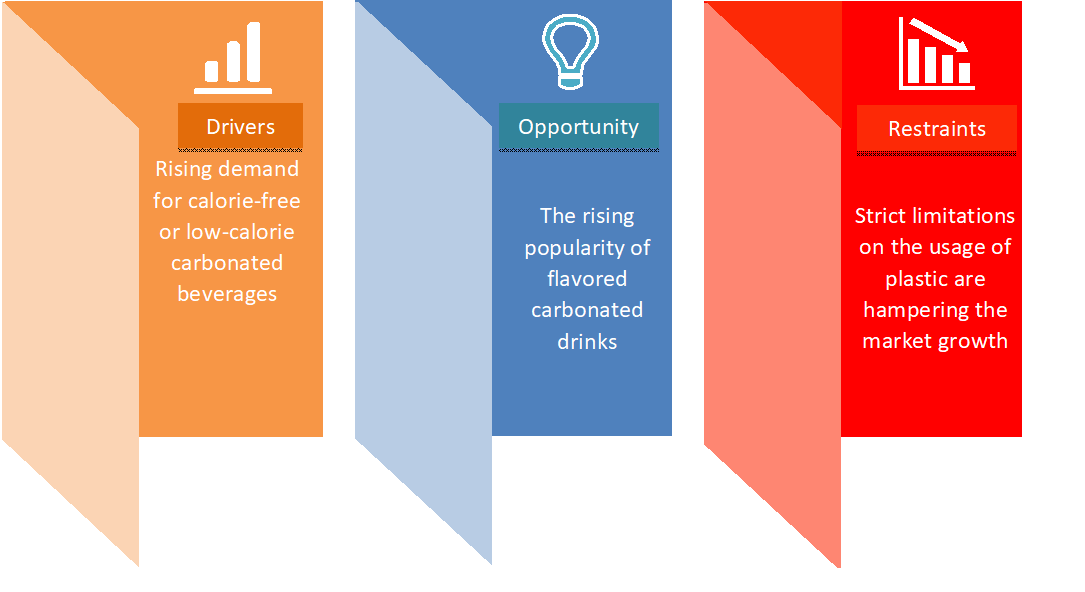
Rising Demand for Calorie-Free Or Low-Calorie Carbonated Beverages
There is increasing demand for carbonated beverages among consumers. The need for low-calorie carbonated beverages has increased due to consumers’ awareness of their health. Key players in the market are continuously innovating with new tastes and launching zero-calorie beverages to seek more attention from most customers. For instance, on February 1, 2023, The US-based PepsiCo company launched a caffeine-free lemon-lime flavored soda in the US in regular and zero-sugar formats.
Strict Limitations on the Usage Of Plastic is Hampering the Market Growth.
The FDA's strict quality standards and specific identification requirements for bottled water ensure consumer protection. However, plastic packaging is subject to rigorous regulations, which hinders market growth. Furthermore, the high sugar content in carbonated beverages contributes to health issues such as diabetes, calcium deficiency, and obesity. These factors are anticipated to restrict the global expansion of the carbonated beverages market.
Carbonated Beverages Market Segment Analysis
The Global Carbonated Beverages Market is segmented based on type, flavor, distribution channel and region.
Fruit Flavored Carbonates Segment Accounts for the Highest Share in Global Carbonated Beverages Market
Fruit-flavored carbonates are carbonated beverages that offer a refreshing and fruity taste. These beverages combine the effervescence of carbonation with the natural or artificial flavors of various fruits. Fruit-flavored carbonates come in a wide range of options, including citrus fruits like lemon and lime and tropical fruits like pineapple, mango, and passion fruit.
They provide a delightful alternative to traditional soda flavors and are popular among consumers seeking a fruity and bubbly beverage experience, driving the segment expansion. For instance, on May 04, 2023, Topo Chico launched a line of premium sparkling waters made with real fruit juice and herbal extracts.
Why Carbonated Beverages Market Matters by 2033
The global beverage industry is experiencing a significant transformation driven by changing consumer preferences, product innovation, and evolving health-conscious consumption patterns.
Carbonated beverages continue to remain one of the largest segments within the non-alcoholic beverage industry, supported by strong brand loyalty, expanding product portfolios, and growing demand for premium and functional drink options.
Several macroeconomic and consumer-driven factors are fueling market growth:
- Growing popularity of low-sugar and zero-sugar carbonated drinks
- Increasing product innovation in flavors and formulations
- Expansion of premium and functional beverage categories
- Growing urbanization and fast-paced lifestyles
- Strong penetration of organized retail and e-commerce channels
- Increasing demand among younger consumer demographics
- Advancements in sustainable packaging solutions
- Growing consumption in emerging economies
Analyst View
DataM Intelligence Analyst Perspective
The carbonated beverages market is transitioning from a traditional soft-drink industry into a diversified and innovation-driven beverage ecosystem.
The long-term success of the carbonated beverages market will depend on:
- Development of healthier beverage alternatives
- Expansion of sugar-free and reduced-calorie product portfolios
- Sustainable packaging adoption
- Supply chain efficiency and raw material availability
- Consumer preference shifts toward functional beverages
- Brand differentiation through innovation
- Expansion into emerging markets
- Digital marketing and direct-to-consumer strategies
North America continues to lead in premium product innovation and brand development, while Asia-Pacific dominates consumption growth due to rising disposable incomes, urbanization, and expanding middle-class populations. Europe is witnessing increased demand for low-calorie and naturally flavored carbonated beverages driven by health-conscious consumers. Meanwhile, countries such as India, China, and Southeast Asian nations are emerging as high-growth markets supported by changing lifestyles, retail expansion, and increasing beverage consumption.
Carbonated Beverages Market Geographical Share
Asia-Pacific is Expected to be the Dominating Region During Forecast Period.
The Global Carbonated Beverages Market is segmented by region into North America, South America, Europe, Asia-Pacific, Middle-east and Africa.
The Asia-Pacific region will have a strong presence in the carbonated beverage industry in 2022. This region has a diverse and growing market for carbonated beverages, driven by factors such as changing consumer preferences, urbanization, and increasing disposable incomes. The market offers various carbonated drinks, including popular cola and citrus and unique regional flavors catering to local tastes.
Western culture's influence and fast food chains' presence have also contributed to the demand for carbonated beverages in the region. Manufacturers in the Asia-Pacific region are continually introducing innovative products and exploring healthier options to meet evolving consumer demands. For instance, on March 09, 2023, The Campa Cola launched Campa Lemon and Campa Orange in the sparkling beverage category in India.
Carbonated Beverages Market Key Players
The major global players include Danone S.A, Keurig Dr Pepper Inc., JONES SODA CO., National Beverage Corp., Suntory Beverage & Food Limited , Sodastream International Ltd., Monster Energy Company, The Coca-Cola Company, PepsiCo., and Refresco Group.
Key Developments
- In May 2026, PepsiCo expanded its functional beverage portfolio with the launch of Propel Clear Protein, a ready-to-mix drink offering 20g protein, fiber, and electrolytes in a zero-sugar formulation. The launch reflects the growing consumer demand for health-focused and functional carbonated and beverage alternatives.
- In May 2026, PepsiCo India introduced Sting® Classic Kick, a new flavor extension under its popular Sting Energy brand. The launch aims to strengthen PepsiCo’s position in the fast-growing energy and carbonated beverage segment while targeting younger consumers seeking bold flavor experiences.
- In April 2026, PepsiCo Canada launched bubly POP™, a new soda made with real fruit juice, low sugar content, and no artificial colors. Available in Berry, Black Cherry, and Lemon Lime flavors, the product highlights the industry's shift toward better-for-you carbonated beverage options.
- In February 2026, PepsiCo officially launched Pepsi Prebiotic Cola nationwide in the United States. Available in Original Cola and Cherry Vanilla flavors, the beverage contains prebiotic fiber, low sugar, and no artificial sweeteners, marking a major innovation in the functional carbonated soft drink category.
- In February 2026, Keurig Dr Pepper announced the introduction of more than 35 new beverage varieties across its portfolio, including the return of Dr Pepper Creamy Coconut. The initiative demonstrates the company’s continued focus on flavor innovation and premiumization within the carbonated soft drink market.
Carbonated Beverages Market Investment & Funding Analysis
Global investments in the carbonated beverages industry continue to increase significantly.
Major funding areas include:
- Product innovation and flavor development
- Low-sugar and sugar-free beverage formulations
- Sustainable packaging technologies
- Manufacturing automation and digitalization
- Distribution and cold-chain infrastructure
- Functional and fortified carbonated drinks
- Premium and craft beverage brands
- Recycling and circular economy initiatives
Strategic Recommendations
For Beverage Manufacturers
- Expand low-calorie and zero-sugar product offerings
- Invest in sustainable packaging solutions
- Strengthen omnichannel distribution capabilities
- Develop functional and health-oriented beverage lines
For Investors
- Focus on premium and functional beverage segments
- Monitor changing consumer health preferences
- Evaluate emerging beverage startups and innovative brands
- Assess long-term sustainability and packaging investments
For Governments
- Promote sustainable packaging regulations
- Support recycling and waste management infrastructure
- Encourage responsible sugar consumption initiatives
- Foster innovation in environmentally friendly beverage production
Why Buy This Carbonated Beverages Report?
This report helps organizations:
- Understand future beverage consumption trends
- Identify high-growth investment opportunities
- Benchmark competitors effectively
- Analyze evolving consumer preferences
- Optimize market entry and expansion strategies
- Evaluate product innovation opportunities
- Assess regional growth potential
- Track sustainability and packaging developments
What’s Included in the Carbonated Beverages Report?
The report provides:
- Market size & forecast analysis
- Regional growth outlook
- Competitive intelligence
- Consumer behavior analysis
- Pricing analysis
- Distribution channel assessment
- Supply chain insights
- Market share analysis
- Investment landscape analysis
- Strategic recommendations
- Emerging trends analysis
- Company profiling
Who Should Buy This Report?
This carbonated beverages report is ideal for:
- Beverage manufacturers
- Soft drink companies
- Food & beverage corporations
- Ingredient suppliers
- Packaging manufacturers
- Retail chains
- E-commerce beverage platforms
- Private equity firms
- Institutional investors
- Market intelligence teams
- Government agencies
Key Benefits for Stakeholders
Gain actionable market intelligence:
- Understand evolving consumer beverage preferences
- Analyze global expansion and distribution strategies
- Evaluate product innovation and flavor trends
- Identify strategic growth opportunities
- Benchmark market competitors
- Improve investment decision-making
- Assess sustainability initiatives and packaging advancements
- Monitor emerging opportunities in functional carbonated beverages
Why Purchase the Report?
- To visualize the Global Carbonated Beverages Market segmentation based on type, flavor, distribution channel, and region and understand key commercial assets and players.
- Identify commercial opportunities by analyzing trends and co-development.
- Excel data sheet with numerous carbonated beverages market-level data points with all segments.
- PDF report consists of a comprehensive analysis after exhaustive qualitative interviews and an in-depth study.
- Product mapping available as Excel consisting of key products of all the major players.
The Global Carbonated Beverages Market Report Would Provide Approximately 77 Tables, 82 Figures And 195 Pages.
Target Audience
- Manufacturers/ Buyers
- Industry Investors/Investment Bankers
- Research Professionals
- Emerging Companies



























































