


Capsid Inhibitor Market Size and Overview
The global capsid inhibitor market is modeled at US$ 1.42 billion in 2025 and is projected to reach US$ 7.86 billion by 2035, expanding at a CAGR of 18.7% during 2026-2035. Growth is driven by the emergence of capsid inhibition as a clinically validated antiviral mechanism, the expansion of long-acting HIV treatment and prevention, and continued development of HBV capsid assembly modulators. Lenacapavir established the first commercial proof of concept by targeting HIV capsid at multiple stages of the viral lifecycle. The market is now moving from a narrow treatment-experienced indication toward prevention, switch therapy, once-weekly oral combinations and next-generation depot formulations.
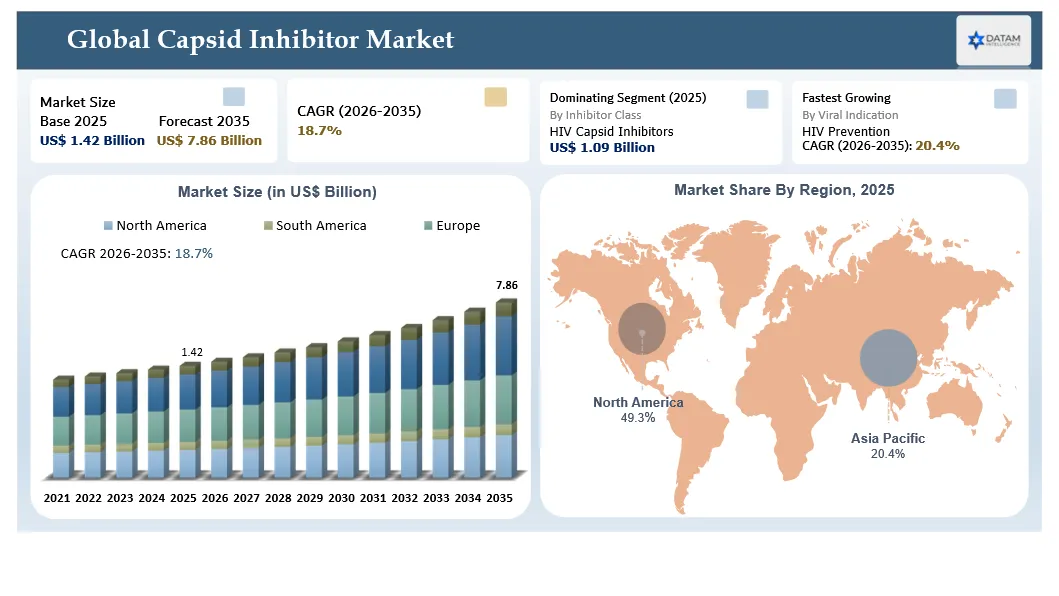
The commercial profile is unusual because a single platform can serve several high-value use cases. In HIV, capsid inhibition can support multidrug-resistant treatment, simplified maintenance therapy and pre-exposure prophylaxis. In chronic hepatitis B, capsid assembly modulators are being evaluated as components of suppressive and functional-cure regimens. This creates a layered revenue opportunity across commercial products, fixed-dose combinations, public-health procurement and pipeline licensing. North America leads revenue, while Asia-Pacific has the largest long-term HBV patient opportunity and a growing role in generic supply and clinical development.
| Metric | Detail |
| 2025 Market Size | US$ 1.42 Billion |
| 2035 Projected Market Size | US$ 7.86 Billion |
| CAGR 2026-2035 | 18.7% |
| Largest Market | North America |
| Fastest-Growing Market | Asia-Pacific |
| Leading Inhibitor Class | HIV Capsid Inhibitors |
| Fastest-Growing Indication | HIV Prevention |
| Primary Commercial Platform | Lenacapavir-based regimens |
Capsid Inhibitor Pipeline Analysis
| Candidate | Company | Indication | Stage | Strategic Relevance |
| Lenacapavir / Sunlenca | Gilead Sciences | HIV treatment | Approved | First-in-class capsid inhibitor for heavily treatment-experienced patients, with lifecycle expansion into combinations. |
| Lenacapavir / Yeztugo | Gilead Sciences | HIV prevention | Approved / launch expansion | Twice-yearly PrEP platform supporting broad prevention-market development and access programs. |
| Bictegravir + lenacapavir | Gilead Sciences | HIV switch treatment | Regulatory review in 2026 | Once-daily two-drug single-tablet regimen for virologically suppressed adults. |
| Islatravir + lenacapavir | Gilead Sciences / Merck | HIV switch treatment | Phase 3 | Once-weekly oral regimen that met primary endpoints in ISLEND-1 and ISLEND-2. |
| GS-3107 | Gilead Sciences | HIV treatment | Phase 1 | Next-generation long-acting oral capsid inhibitor intended to extend platform durability. |
| Lenacapavir + bNAbs | Gilead Sciences and partners | HIV treatment / remission | Phase 2 | Long-acting injectable combination with teropavimab and zinlirvimab. |
| Pevifoscorvir sodium | Aligos Therapeutics | Chronic hepatitis B | Phase 2 | Oral CAM-E evaluated in B-SUPREME, with 2026 interim data and FDA Fast Track designation. |
| ABI-4334 | Assembly Biosciences | Chronic hepatitis B | Phase 1b completed / partnering | Next-generation capsid assembly modulator designed to inhibit replication and cccDNA replenishment. |
| EDP-514 | Enanta Pharmaceuticals | Chronic hepatitis B | Clinical development | Core inhibitor affecting multiple stages of HBV replication and capsid recycling. |
| Next-generation CAM combinations | Multiple developers | Chronic hepatitis B | Preclinical to Phase 2 | Combination programs pair capsid modulation with nucleos(t)ide analogues, siRNA, ASO and immune-directed agents. |
Capsid Inhibitor Market Key Takeaways
- North America accounted for an estimated 55% of global revenue in 2025 due to early uptake of lenacapavir, high HIV treatment spending and rapid adoption of long-acting prevention.
- HIV capsid inhibitors generated the majority of 2025 revenue, while HBV capsid assembly modulators remain a pipeline-led opportunity with substantial Asia-Pacific potential.
- HIV prevention is expected to be the fastest-growing indication as twice-yearly dosing addresses adherence, privacy and persistence limitations associated with daily PrEP.
- Fixed-dose combinations will become increasingly important as capsid inhibitors move into switch therapy and simplified maintenance regimens.
- Pipeline value is concentrated in assets that extend dosing intervals, maintain activity against resistant virus or contribute to functional-cure combinations.
- Access agreements and generic manufacturing will determine how quickly long-acting PrEP reaches high-incidence low- and middle-income markets.
Capsid Inhibitor Industry Trends and Strategic Insights
- Commercial competition is shifting toward dosing convenience, with twice-yearly injections, once-weekly oral therapy and potential once-yearly formulations redefining adherence expectations.
- Capsid inhibitors are becoming platform assets rather than single products because the same mechanism can be combined with integrase inhibitors, NRTTIs and broadly neutralizing antibodies.
- Public-health procurement will influence volume more strongly as capsid-based PrEP is incorporated into national and donor-supported prevention programs.
- HBV development is moving toward multi-mechanism regimens that combine deep viral suppression, antigen reduction and immune restoration.
- Resistance surveillance and companion regimen design remain central because capsid inhibitors should not be used as functionally unprotected monotherapy in HIV treatment.
- Licensing and regional partnerships are important in HBV, where smaller developers require capital and commercial infrastructure to advance long-duration combination trials.
Capsid Inhibitor Market Scope
| Scope Category | Coverage |
| Inhibitor Class | HIV capsid inhibitors, HBV capsid assembly modulators, other capsid-targeting antivirals |
| Viral Indication | HIV treatment, HIV prevention, chronic hepatitis B, other viral infections |
| Molecule Format | Small molecules, fixed-dose combinations, long-acting depot formulations |
| Route | Oral, subcutaneous injectable, other routes |
| Treatment Setting | Treatment-experienced, switch, treatment-naive, PrEP and functional-cure studies |
| Patient Group | Adults, adolescents, pediatric patients and high-risk prevention populations |
| Distribution | Hospital, specialty, retail and public-health procurement |
| Study Period | 2025 base year, 2026-2035 forecast |
Why does this report matter in 2026?
The year 2026 is strategically important because capsid inhibition is moving into broader commercial use. Regulatory review of bictegravir plus lenacapavir and positive Phase 3 results for once-weekly islatravir plus lenacapavir demonstrate that the mechanism can support mainstream switch therapy. At the same time, long-acting PrEP is changing prevention-market economics, requiring payers, clinics and public-health programs to plan for new administration, persistence and procurement models. In HBV, Phase 2 development of pevifoscorvir sodium and partnering activity around ABI-4334 show that capsid modulation remains a meaningful route toward deeper suppression and future functional-cure combinations.
The report provides intelligence on product expansion, clinical milestones, patient segments, pricing, access, regional uptake and investment priorities. It is relevant to antiviral developers, pharmaceutical companies, generic manufacturers, public-health agencies, investors and service providers that need to understand which capsid-targeting programs can generate durable value through 2035.
Capsid Inhibitor Market White Space & Investment Opportunities
Once-yearly HIV prevention formulations represent a major white space because they could further reduce adherence burden and improve persistence in populations that face stigma, mobility or limited clinic access.
Once-weekly oral combinations provide an opportunity for patients who prefer long-acting convenience without injections, creating a differentiated maintenance segment.
HBV functional-cure combinations are attractive because current nucleos(t)ide analogues suppress replication but rarely produce durable antigen loss. Capsid modulators may contribute by reducing replication and cccDNA replenishment.
Pediatric and adolescent formulations remain underdeveloped, particularly for prevention and treatment in regions with high HIV burden.
Access-oriented manufacturing, licensing and procurement partnerships can unlock high-volume demand in low- and middle-income countries while supporting sustainable pricing.
Capsid Inhibitor Future Market Transformation
The market will evolve from a single-product niche into a broader antiviral platform defined by extended dosing intervals and combination flexibility. Capsid inhibitors can intervene at several stages of viral replication, allowing developers to pair them with agents that have complementary resistance profiles. This creates opportunities for two-drug maintenance regimens, long-acting prevention and combination approaches directed toward remission or functional cure.
Commercial success will depend increasingly on delivery models. Injectable prevention requires clinic capacity, patient recall systems and inventory planning, while once-weekly oral therapy requires adherence support that differs from daily treatment. Digital scheduling, decentralized administration and public-health procurement will become part of product differentiation.
Commercial transformation will also be shaped by the widening gap between premium innovation markets and large public-health procurement markets. In the United States and selected European countries, manufacturers can support specialist education, reimbursement navigation and differentiated pricing around convenience and persistence. In high-incidence lower-income markets, the viable model depends on voluntary licensing, pooled procurement, predictable demand commitments and manufacturing transfer. Companies that design both pathways early will be better positioned than those that attempt to adapt a single commercial model after approval.
The HBV segment will develop on a different timetable. Capsid assembly modulators must demonstrate that deeper suppression or reduced reservoir replenishment translates into higher rates of sustained off-treatment control when combined with antigen-lowering and immune-directed agents. This creates a portfolio logic in which value depends on the quality of combination partners, biomarker strategy and sequencing rather than the potency of one component alone. Developers able to build flexible combination platforms may capture greater long-term value than companies pursuing isolated monotherapy programs.
Capsid Inhibitor Market Buyer Decision-Making Criteria
Clinicians and payers assess capsid inhibitor regimens based on antiviral potency, resistance barrier, dosing interval, injection tolerability, drug-drug interactions, durability and compatibility with background therapy. For heavily treatment-experienced patients, retained activity against resistant virus and the availability of an optimized background regimen are decisive. For switch therapy, simplicity, safety and non-inferiority to established regimens are essential.
Prevention buyers focus on effectiveness, persistence, administration burden, price, supply reliability and the ability to reach populations that do not remain on daily PrEP. Public-health agencies also evaluate implementation cost, cold-chain requirements, training, follow-up and access agreements. HBV developers prioritize depth of DNA and RNA suppression, antigen effects, resistance profile and combination compatibility.
Capsid Inhibitor Market Economic & Investment Analysis
The economic outlook is supported by high-value HIV treatment, a large prevention population and the possibility that capsid inhibitors will capture share from daily oral regimens. Revenue is concentrated in developed markets during early commercialization, but the largest unit volumes may eventually come from donor-supported and generic-access prevention programs. The value of long-acting products extends beyond drug price because improved persistence can reduce infections and future treatment costs.
Investment is concentrated in lifecycle expansion of lenacapavir, next-generation capsid chemistry, HBV capsid assembly modulators and delivery technologies. Investors favor programs with validated mechanisms, clear combination partners and regulatory paths. HBV assets face longer development timelines and greater biological uncertainty, but successful functional-cure components could address a very large chronic population.
Buyers will increasingly compare capsid-based regimens with daily oral generics, existing long-acting injectables and future weekly oral options. A product does not need to be the cheapest option when it materially reduces missed doses, protects privacy or lowers clinic burden, but the economic argument must be demonstrated in the population being targeted. Prevention programs will examine infections averted and delivery cost, while treatment payers will examine persistence, resistance, regimen simplification and avoidance of downstream care. Evidence packages therefore need both clinical efficacy and real-world implementation measures.
Capsid Inhibitor Investment Trends in the Market
- Investment is increasing in long-acting formulations that extend dosing from six months toward annual administration and reduce clinic burden.
- Pharmaceutical companies are funding fixed-dose combinations that move capsid inhibitors from salvage therapy into switch and maintenance populations.
- Capital is flowing toward HBV capsid assembly modulators that show deep DNA and RNA suppression and can be combined with antigen-reducing or immune-directed agents.
- Access partnerships and generic manufacturing agreements are becoming investment priorities because broad PrEP uptake requires affordable supply at global scale.
- Biomarker, resistance and implementation research is receiving more attention as developers seek to optimize patient selection, monitor breakthrough and improve persistence.
Commercial forecasts should separate treatment-experienced HIV, switch therapy, prevention and HBV because each opportunity has different eligible populations, pricing and adoption constraints. Treatment-experienced use is clinically important but relatively small. Switch therapy can expand rapidly if regimens are simple and well tolerated. Prevention offers the greatest volume but requires testing and repeat administration infrastructure. HBV offers a very large underlying population, although revenue is delayed by combination-development risk and low-cost standard therapy. Milestone-adjusted valuation is therefore more reliable than applying one growth rate across the entire class.
Investment diligence should also account for the pharmacokinetic tail of long-acting products. Missed injections or delayed follow-up can create subtherapeutic exposure and resistance risk, increasing the value of digital reminders, patient navigation and rapid oral bridging protocols. These implementation capabilities require funding before broad launch. They also create partnership opportunities for pharmacy networks, diagnostics companies, digital-health providers and community organizations. The strongest investments will combine differentiated drug performance with an operating model that protects adherence at population scale.
Strategic Indicators for Capsid Inhibitor Market
High Regulation Impact
Capsid inhibitors are regulated as antiviral medicines, and approval depends on robust efficacy, resistance, safety and adherence evidence. Long-acting prevention products require careful evaluation of breakthrough infection and resistance during the pharmacokinetic tail. Combination regimens must demonstrate that each component contributes to durable suppression. Post-marketing surveillance and resistance testing therefore have strategic importance.
High Investment Activity
Investment is elevated because lenacapavir has validated the mechanism across treatment and prevention. Phase 3 combination results, regulatory submissions and HBV Phase 2 programs expand the opportunity. Funding is directed toward clinical trials, formulation technology, manufacturing scale-up and access infrastructure.
Supply Chain Disruption
Long-acting products depend on specialized active ingredients, sterile manufacturing, device or syringe supply and coordinated distribution. Delays can affect dosing schedules and undermine prevention programs. Companies are building redundant manufacturing, inventory buffers and regional supply partnerships.
Pricing Volatility
Pricing varies widely between high-income commercial markets and access-oriented public procurement. Premium prices reflect innovation and infrequent dosing, while generic or negotiated prices are needed for broad global prevention. The resulting two-tier market creates pressure on forecasting, contracting and margin management.
Procurement Pressure
Public-health buyers require predictable supply, transparent pricing and implementation support. Specialty pharmacies and clinics must manage inventory for scheduled administration. Procurement complexity increases when reimbursement, patient assistance and donor funding differ across regions.
New Technology Adoption
Adoption is supported by improved depot formulations, high-potency chemistry, resistance analytics, digital adherence tools and decentralized delivery. These technologies can extend dosing intervals, simplify follow-up and improve real-world persistence.
Regional Expansion Opportunity
North America and Europe lead revenue, while sub-Saharan Africa, Latin America and parts of Asia offer large prevention opportunities. Asia-Pacific also represents the largest HBV patient pool, creating long-term demand for capsid assembly modulators if clinical outcomes support approval.
Government Policy Support
National HIV strategies, PrEP guidelines, donor procurement and hepatitis elimination programs can accelerate uptake. Policy support is strongest where governments view long-acting prevention as a tool to reach populations underserved by daily oral therapy.
Pricing Intelligence
Commercial pricing will be shaped by clinical value, dosing frequency, avoided infections and competitive long-acting alternatives. Volume-based contracts and differential pricing will become more common as prevention programs scale.
AI Impact Analysis of Capsid Inhibitor Market
Artificial intelligence supports capsid inhibitor discovery by identifying binding pockets, predicting resistance substitutions, optimizing potency and screening chemical libraries. Structural models can accelerate design against conserved capsid interfaces and help prioritize compounds with favorable cross-resistance profiles. AI is also used to integrate virology, pharmacokinetic and clinical data when selecting doses for long-acting formulations.
In commercial practice, AI-enabled analytics can identify patients at risk of poor adherence, optimize appointment reminders and forecast clinic demand for scheduled injections. Public-health programs can use geospatial and epidemiological models to target prevention resources. These applications require strong privacy safeguards because HIV-related data are sensitive and misuse could reinforce stigma.
Disruption Analysis of Capsid Inhibitor Market
Capsid inhibitors disrupt the antiviral market by attacking a structural viral target that differs from reverse transcriptase, protease and integrase. Lenacapavir showed that a highly potent molecule can support six-month dosing, changing expectations for treatment and prevention. The next disruption is regimen simplification, as once-weekly oral and compact two-drug combinations challenge the dominance of daily three-drug therapy.
The prevention market may experience the largest structural change. Long-acting PrEP shifts value from daily dispensing toward scheduled administration and public-health implementation. In HBV, a successful capsid-modulator combination could alter a market dominated by lifelong suppressive nucleos(t)ide therapy, although functional cure remains difficult and uncertain.
Capsid Inhibitor Market BCG Matrix: Company Evaluation
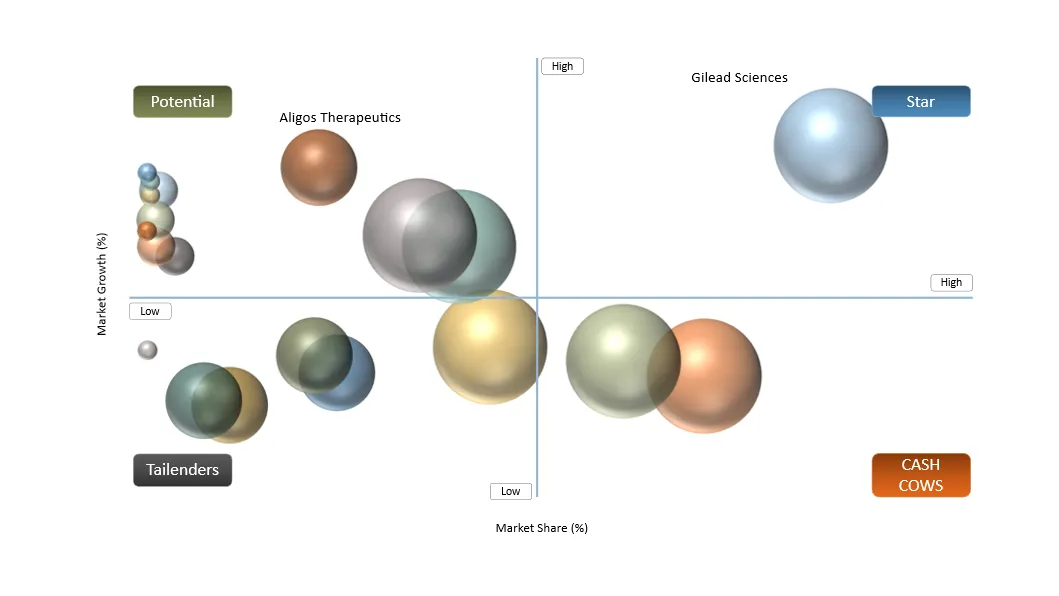
STAR
Gilead Sciences is the clear Star because it owns the only commercially validated HIV capsid inhibitor platform and is expanding it across treatment, prevention and combination regimens. Merck also participates through the once-weekly islatravir-lenacapavir partnership.
POTENTIAL
Aligos Therapeutics and Assembly Biosciences are Potential players because their HBV capsid assembly modulators could create value through Phase 2 data, partnering and combination development. Enanta remains scientifically relevant through EDP-514.
CASH COWS
Established HIV companies with large oral antiretroviral franchises are Cash Cows. Their existing products generate strong revenue, but capsid-based regimens may require them to defend share through combination innovation or partnerships.
TAILENDERS
Early research programs without differentiated dosing, resistance or combination advantages are Tailenders. Historical HBV core inhibitors that did not progress also illustrate the difficulty of translating viral-load reductions into commercially meaningful outcomes.
Capsid Inhibitor Market Dynamics
| Driver | Market Growth Impact | Demand Concentration | Impacted Use Case | Strategic Impact |
| Long-acting HIV prevention | High | North America, Europe, Africa | PrEP | Expands addressable population and persistence |
| Combination regimen expansion | High | Developed markets | Switch treatment | Moves capsid inhibition into mainstream care |
| Resistance and unmet need | Medium-High | Global | Treatment-experienced HIV | Supports differentiated mechanism adoption |
| HBV functional-cure research | Medium | Asia-Pacific | Chronic HBV | Creates pipeline and licensing value |
Driver: Expansion of Long-Acting HIV Treatment and Prevention
Long-acting treatment and prevention are the strongest market drivers because they address adherence, privacy and treatment-fatigue challenges. Twice-yearly capsid inhibition reduces dosing frequency dramatically compared with daily oral therapy. This can improve persistence in prevention and provide new options for patients who struggle with daily regimens. Positive Phase 3 results for once-weekly oral combinations further widen the market by serving patients who want less frequent dosing without injections.
The driver is reinforced by public-health goals. Prevention programs need options that reach people who discontinue daily PrEP or face stigma when storing medication. Long-acting administration creates implementation challenges, but it also provides a scheduled point of contact with health services. Commercial and public procurement demand can therefore grow simultaneously.
| Restraint | Drag on Growth | Primary Impact Area | Impacted Use Case | Strategic Impact |
| Premium pricing and access gaps | High | Reimbursement | PrEP and global treatment | Limits early uptake outside wealthy markets |
| Resistance during PK tail | Medium-High | Clinical management | Long-acting prevention | Requires testing and follow-up |
| Injection-site reactions | Medium | Patient acceptance | Subcutaneous products | May influence preference |
| Dependence on combination partners | Medium | Regimen design | HIV treatment | Limits standalone use |
Restraint: Premium Pricing, Access and Resistance Management
High commercial prices can constrain uptake when payers compare capsid inhibitors with inexpensive generic oral antivirals. Long-acting prevention may be cost-effective from a population perspective, but health systems must fund drug acquisition, administration, testing and follow-up. Access agreements and generic supply can reduce this barrier, although implementation capacity remains uneven.
Resistance is another constraint. Breakthrough infection during declining drug concentrations can select capsid resistance, especially when follow-up is missed. HIV treatment also requires an effective combination regimen. These factors create a need for testing, counseling, adherence systems and careful patient selection, increasing the operational burden around otherwise convenient dosing.
Capsid Inhibitor Market Segment Analysis
By Inhibitor Class
HIV Capsid Inhibitors Will Retain the Largest Commercial Share
HIV capsid inhibitors dominate commercial revenue because lenacapavir has established treatment and prevention use and is being expanded into daily and weekly combinations. HBV capsid assembly modulators represent the fastest-growing pipeline segment, supported by Phase 2 development and the large chronic HBV population. Other viral capsid-targeting agents remain earlier-stage opportunities.
Market attractiveness is highest where clinical differentiation, persistence benefits and scalable access models combine. The ability to support testing, scheduled administration, resistance monitoring and patient follow-up is becoming part of the product value proposition.
By Viral Indication
HIV Prevention Will Be the Fastest-Growing Indication
HIV treatment provides the current revenue base, initially through heavily treatment-experienced patients and increasingly through switch regimens. HIV prevention is expected to grow faster because long-acting PrEP can serve a broad at-risk population and improve persistence. Chronic HBV offers substantial long-term upside if capsid modulators contribute to durable antigen reduction or functional cure.
Market attractiveness is highest where clinical differentiation, persistence benefits and scalable access models combine. The ability to support testing, scheduled administration, resistance monitoring and patient follow-up is becoming part of the product value proposition.
By Molecule Format
Long-Acting Depot Formulations Will Drive Differentiation
Small molecules remain the underlying modality, but formulation determines commercial positioning. Long-acting depot formulations create the strongest differentiation through six-month or potentially annual dosing. Fixed-dose combinations will expand in treatment as capsid inhibitors are paired with integrase inhibitors or NRTTIs. Conventional oral monotherapy has limited use in HIV because of resistance concerns.
Market attractiveness is highest where clinical differentiation, persistence benefits and scalable access models combine. The ability to support testing, scheduled administration, resistance monitoring and patient follow-up is becoming part of the product value proposition.
By Route of Administration
Subcutaneous Injectable Products Will Lead Value Growth
Oral products are familiar and scalable, and once-weekly oral regimens could attract broad switch populations. Subcutaneous injectables generate higher value growth because they enable twice-yearly prevention and treatment. Administration burden, injection-site reactions and clinic capacity will influence adoption. Other routes remain exploratory.
Market attractiveness is highest where clinical differentiation, persistence benefits and scalable access models combine. The ability to support testing, scheduled administration, resistance monitoring and patient follow-up is becoming part of the product value proposition.
By Treatment Setting
Pre-Exposure Prophylaxis Will Become the Largest Incremental Opportunity
Treatment-experienced HIV established the class, while virologically suppressed switch patients represent the next commercial expansion. Pre-exposure prophylaxis is the largest incremental opportunity because prevention populations are much broader than salvage-treatment populations. Functional-cure combination studies in HBV carry high scientific value but longer timelines.
Market attractiveness is highest where clinical differentiation, persistence benefits and scalable access models combine. The ability to support testing, scheduled administration, resistance monitoring and patient follow-up is becoming part of the product value proposition.
By Patient Group
Adults Will Dominate, While Adolescents Offer High Public-Health Value
Adults account for most treatment and prevention demand. Adolescents are strategically important because adherence barriers and stigma can be pronounced, making long-acting prevention attractive. Pediatric development will proceed more gradually due to dosing, safety and consent considerations. High-risk prevention populations form a cross-cutting commercial and public-health segment.
Market attractiveness is highest where clinical differentiation, persistence benefits and scalable access models combine. The ability to support testing, scheduled administration, resistance monitoring and patient follow-up is becoming part of the product value proposition.
By Distribution Channel
Public-Health Procurement Will Record the Fastest Volume Growth
Specialty and hospital pharmacies lead early commercial distribution because long-acting administration requires coordination and reimbursement support. Public-health and institutional procurement will record the fastest volume growth as national programs and global donors adopt long-acting PrEP. Retail pharmacies may play a larger role if administration authority expands and oral weekly combinations launch.
Market attractiveness is highest where clinical differentiation, persistence benefits and scalable access models combine. The ability to support testing, scheduled administration, resistance monitoring and patient follow-up is becoming part of the product value proposition.
Capsid Inhibitor Market Geographical Penetration
U.S. Capsid Inhibitor Market Landscape
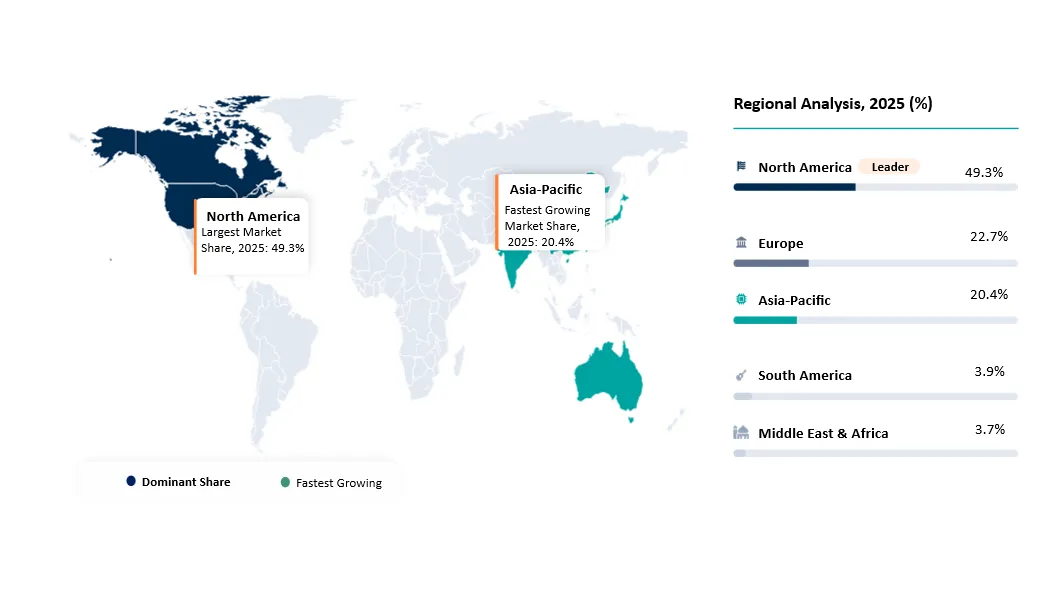
The U.S. is the largest revenue market due to early regulatory adoption, strong HIV specialist infrastructure and high commercial pricing. Uptake is supported by treatment-experienced use, long-acting PrEP and regulatory review of simplified combinations. Payer policies, injection administration and patient assistance programs shape access.
Europe Capsid Inhibitor Market Outlook
Europe offers broad treatment access but country-level reimbursement varies. Germany, the UK, France, Spain and Italy are important markets for long-acting HIV therapy and prevention. Central procurement and health-technology assessment may slow launch, while strong public-health systems can support scheduled administration.
Asia-Pacific Capsid Inhibitor Market Trends
Asia-Pacific combines growing HIV prevention demand with the world’s largest chronic HBV burden. Japan and Australia are premium markets, while China, India, Thailand and other countries offer scale. HBV capsid assembly modulators have particularly strong strategic relevance. Regional generic manufacturing can also shape global access.
Capsid Inhibitor Market Competitive Landscape
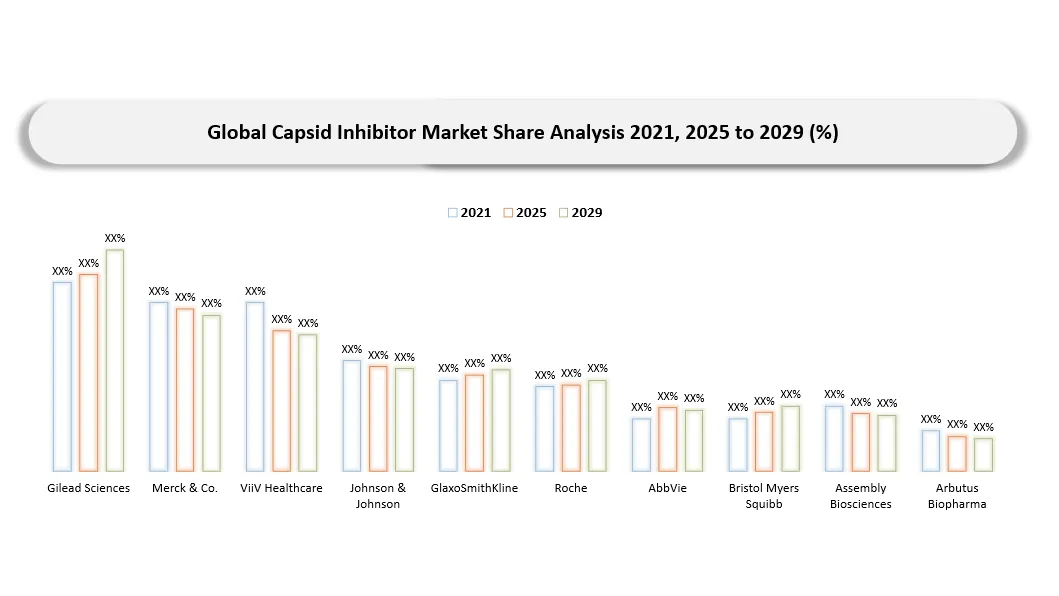
- Gilead Sciences holds a structurally dominant position through lenacapavir and its expanding treatment and prevention lifecycle strategy.
- Merck participates through islatravir combinations and benefits from complementary HIV mechanisms that support once-weekly therapy.
- HBV competition is fragmented among biotechnology companies developing capsid assembly modulators and combination strategies.
- Partnerships are critical because long antiviral trials require capital, global regulatory capability and access to combination assets.
- Access agreements, generic licensing and public procurement are becoming competitive tools alongside efficacy, dosing interval and resistance profile.
- Companies with differentiated long-acting delivery, broad geographic supply and implementation support will be best positioned through 2035.
Country sequencing will be central to launch economics. Premium markets can fund specialist-led introduction and generate early evidence, while public programs offer the volume needed to expand manufacturing and reduce unit cost. Companies should prioritize markets where testing coverage, administration infrastructure and procurement budgets are aligned. Entering a country without reliable follow-up can produce weak persistence and reputational risk even when clinical demand is high. Regional partners with established HIV or hepatitis networks can shorten implementation timelines and improve policy engagement.
For HBV, Asia-Pacific partnership strategy is especially important because the region combines a large diagnosed population, substantial clinical-trial capacity and growing biotechnology capabilities. Regional licensing can provide capital and local development expertise while preserving rights in premium markets. The trade-off is reduced downstream economics and possible complexity in global data integration. Companies should define biomarker standards, manufacturing responsibilities and combination rights clearly so that regional deals accelerate rather than fragment development
Key Companies of Capsid Inhibitor Market
- Gilead Sciences
- Merck & Co.
- ViiV Healthcare
- Aligos Therapeutics
- Assembly Biosciences
- Enanta Pharmaceuticals
- Arbutus Biopharma
- Janssen Pharmaceuticals
- Roche
- GlaxoSmithKline
- AbbVie
- Bristol Myers Squibb
- Vir Biotechnology
- Antios Therapeutics
- Tune Therapeutics
- Johnson & Johnson
- Dr. Reddy’s Laboratories
- Hetero Labs
- Cipla
- Shanghai Fosun Pharmaceutical
Capsid Inhibitor Market Major Pain Points
- Premium pricing and reimbursement barriers in markets with generic oral alternatives.
- Risk of resistance when long-acting pharmacokinetic exposure declines after missed doses.
- Need for reliable HIV testing before and during prevention use.
- Injection-site reactions and clinic capacity constraints.
- Dependence on combination partners for HIV treatment.
- Long HBV development timelines and uncertainty around functional cure.
- Uneven access across high-incidence low- and middle-income countries.
- Manufacturing and supply complexity for long-acting formulations.
Competitive intensity will increase as lenacapavir moves from a specialist treatment asset into prevention and simplified maintenance regimens. Gilead benefits from ownership of the capsid mechanism and the ability to pair it with internal or partnered agents. Competitors can still differentiate through oral weekly dosing, alternative resistance profiles, smaller injection volumes, annual administration or HBV functional-cure combinations. Market share will depend on how well these advantages translate into real-world persistence and affordability rather than on dosing interval alone.
Access strategy is becoming part of competitive positioning. Originators that secure voluntary licenses, donor partnerships and implementation commitments can build category leadership and reduce the risk that constrained supply slows adoption. Generic manufacturers and regional pharmaceutical companies will gain influence as prevention demand expands. Their participation may compress prices, but it can also increase total market volume and create more durable public-health procurement. Companies should therefore evaluate access partnerships as market-building investments rather than as late-stage concessions.
Capsid Inhibitor Market Recent Developments
- June 2026: Gilead and Merck announced positive topline Phase 3 results from ISLEND-1 and ISLEND-2 evaluating once-weekly islatravir plus lenacapavir in virologically suppressed adults.
- April 2026: The U.S. FDA granted priority review to bictegravir plus lenacapavir, with a PDUFA action date of August 27, 2026.
- 2026: Gilead continued development of GS-3107, a next-generation oral capsid inhibitor, and long-acting lenacapavir combination programs.
- 2026: Aligos reported Phase 2 B-SUPREME progress, interim analysis and FDA Fast Track designation for pevifoscorvir sodium in chronic HBV.
- 2026: Assembly Biosciences initiated a partnering process for ABI-4334 after regaining full rights to the HBV capsid assembly modulator.
Analyst View/Opinion on Capsid Inhibitor Market
- Capsid inhibition is likely to become a durable antiviral class because it combines a differentiated target with exceptional potency and long-acting potential.
- HIV prevention will generate the largest incremental revenue opportunity, although access pricing and implementation will determine global impact.
- Once-weekly oral and compact two-drug regimens can broaden adoption beyond patients willing to receive injections.
- Gilead will retain the strongest position, but Merck partnerships and HBV biotechnology programs create targeted competitive openings.
- HBV capsid assembly modulators should be valued as combination components rather than standalone cures until durable antigen and clinical outcomes are demonstrated.
- Long-term leadership will depend on resistance management, manufacturing scale, access partnerships and the ability to support real-world persistence.
The central strategic question is whether the class can convert pharmacological duration into durable real-world prevention and treatment outcomes. Long dosing intervals reduce the frequency of adherence decisions, yet they do not eliminate the need for testing, scheduled follow-up and resistance management. Programs that combine medicine with convenient administration, community delivery and rapid re-engagement will create stronger evidence and higher persistence. This operational layer will become a significant differentiator as products with similar virologic efficacy compete for the same populations.
Capsid Inhibitor Market Target Audience
| Industry | Who Should Buy This Report? | Reason to Buy |
| Pharmaceutical Companies | Virology leaders, portfolio teams, licensing executives | Evaluate class expansion and combination strategy |
| Biotechnology Companies | Clinical-stage antiviral developers | Benchmark pipeline and partnering opportunities |
| Public-Health Agencies | HIV prevention and hepatitis program leaders | Plan procurement and implementation |
| Payers | Health plans and HTA teams | Assess value, persistence and budget impact |
| Investors | Venture capital, private equity and institutions | Evaluate commercial and pipeline value |
| CROs and CDMOs | Clinical and manufacturing service providers | Identify trial and supply opportunities |
| Clinicians | HIV specialists and hepatologists | Understand evolving treatment options |
| Generic Manufacturers | API and finished-dose producers | Assess access-oriented supply opportunities |
Why Choose DATAM?
- Data-driven market sizing with product-level, patient-level and regional triangulation.
- Post-purchase support and access to analysts for strategic interpretation.
- Country-level coverage of treatment access, prevention programs and HBV opportunity.
- Pipeline analysis linking clinical stage, mechanism, dosing and commercial relevance.
- Competitive intelligence covering partnerships, access agreements and lifecycle strategy.
- Annual updates reflecting regulatory, clinical and market developments.
What DATAM Uniquely Provides
- Ten-year forecasts by inhibitor class, indication, format, route, setting, patient group, channel and region.
- Integrated HIV treatment, HIV prevention and HBV capsid-modulator analysis.
- Product and pipeline benchmarking with commercialization scenarios.
- Assessment of pricing, procurement, implementation and resistance-management factors.
- White-space and partnership analysis for long-acting and functional-cure programs.
- Country-level recommendations for pharmaceutical, investor and public-health stakeholders.
Questions This Report Answers
- How will long-acting HIV prevention reshape the capsid inhibitor market through 2035?
- Which combinations and dosing formats offer the largest commercial potential?
- How will bictegravir-lenacapavir and islatravir-lenacapavir affect mainstream HIV treatment?
- Which HBV capsid assembly modulators are most strategically relevant?
- How will access pricing and generic supply influence global prevention uptake?
- Which companies and regions offer the strongest investment and partnership opportunities?


























































