


Cancer Gene Therapy Market Size & Industry Outlook
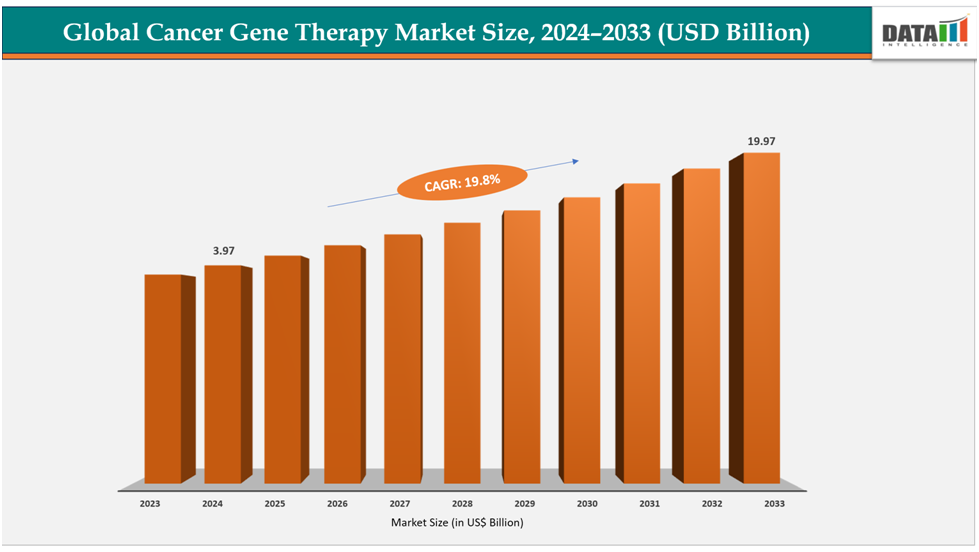
The global Cancer Gene Therapy market size reached US$ 3.36 Billion with rise of US$3.97Billion in 2024 is expected to reach US$ 19.97Billion by 2033, growing at a CAGR of 19.8%during the forecast period 2025-2033.
Rapid technological advances in gene-editing and cell engineering are transforming the cancer gene therapy market by making treatments more precise, effective, and scalable. Breakthrough tools such as CRISPR/Cas9, TALENs, and zinc-finger nucleases enable highly accurate editing of cancer-related genes, minimizing off-target effects and improving safety.
At the same time, innovations in cell engineering such as next-generation CAR-T and TCR-T therapies are enhancing immune cells to better recognize and destroy tumors, resist immune suppression, and persist longer in the body. Furthermore, progress in viral and non-viral vector systems has improved gene delivery efficiency, while automation and advanced biomanufacturing platforms are streamlining production, reducing costs, and accelerating commercialization.
Key Takeaways
- North America accounted for approximately 44-48% of the global Cancer Gene Therapy Market share in 2025, driven by increasing investments in oncology research, expanding regulatory support for advanced therapeutics, and the strong presence of leading biotechnology and pharmaceutical companies.
- Viral vector-based cancer gene therapies represented nearly 55-60% of the total market revenue in 2025 owing to their established therapeutic efficacy and increasing adoption across oncology clinical development programs.
- Hematological malignancies contributed approximately 40-45% of the overall market demand in 2025, supported by significant advancements in gene-modified cellular therapies and targeted oncology treatment approaches.
- More than 70% of the global cancer gene therapy pipeline is currently focused on next-generation gene editing technologies, personalized oncology applications, and novel vector delivery platforms designed to improve therapeutic precision and clinical outcomes.
- Pharmaceutical and biotechnology companies accounted for nearly 65-70% of total market investments in 2025, reflecting growing expenditures across clinical development programs, manufacturing capacity expansions, and strategic licensing collaborations.
- Precision oncology applications are expected to contribute approximately 35-40% of future commercialization opportunities by 2035, driven by increasing adoption of biomarker-guided treatment strategies and genomic profiling technologies.
- Asia-Pacific is projected to register the fastest regional growth during the forecast period owing to expanding biotechnology infrastructure, increasing clinical trial activities, and rising investments supporting advanced therapeutic manufacturing capabilities.
- Combination therapeutic approaches integrating cancer gene therapies with immunotherapies and targeted oncology treatments are anticipated to account for approximately 30-35% of future pipeline developments through 2035, substantially expanding market opportunities.
- More than 60% of newly announced strategic collaborations across the cancer gene therapy ecosystem involve next-generation gene editing technologies and vector engineering platforms, highlighting the increasing importance of technological innovation across the market.
- The Cancer Gene Therapy Market is projected to witness substantial growth through 2035, driven by expanding precision medicine initiatives, continuous technological advancements across advanced therapeutics, and increasing global investments supporting oncology innovation.
Cancer Gene Therapy Market Scope
| Metrics | Details | |
| CAGR | 19.8% | |
| Market Size Available for Years | 2022-2033 | |
| Estimation Forecast Period | 2025-2033 | |
| Revenue Units | Value (US$ Bn) | |
| Segments Covered | Therapy Type | Gene Induced Immunotherapy, Oncolytic Virotherapy, Gene Transfer Therapy |
| Indication | Breast Cancer, Brain Cancer, Lung Cancer, Pancreatic Cancer, Liver Cancer, Others | |
| End User | Hospitals, Cancer Research Institutes, Biotechnology & Pharmaceutical Companies | |
| Regions Covered | North America, Europe, Asia-Pacific, South America and the Middle East & Africa | |
Cancer Gene Therapy Clinical Trial Landscape Analysis
Clinical development activities within the Cancer Gene Therapy Market continue to expand significantly owing to increasing investments in targeted oncology therapeutics and personalized medicine initiatives. Pharmaceutical and biotechnology companies are actively advancing clinical programs evaluating viral and non-viral gene delivery platforms across multiple cancer indications. Growing numbers of early-stage and late-stage clinical trials investigating gene-modified immunotherapies, tumor suppressor gene replacement strategies, and next-generation gene editing technologies are expected to accelerate commercialization opportunities globally. Furthermore, increasing clinical evidence supporting improved treatment efficacy and long-term therapeutic responses is anticipated to strengthen market adoption throughout the forecast period.
Vector Technology and Delivery System Analysis
Advancements in vector technologies remain among the most significant factors influencing cancer gene therapy commercialization. Viral vectors, including adenoviral, lentiviral, and adeno-associated viral platforms, continue to play critical roles in improving therapeutic delivery efficiencies across oncology applications. Simultaneously, non-viral delivery technologies are gaining considerable attention owing to their potential advantages in safety, scalability, and manufacturing flexibility. Continuous innovations focused on improving targeted delivery mechanisms and minimizing off-target effects are expected to substantially influence future technological developments across the market.
Precision Oncology and Biomarker Analysis
Precision oncology approaches are increasingly strengthening the therapeutic potential of cancer gene therapies worldwide. Biomarker-guided treatment strategies enable improved patient stratification while enhancing treatment outcomes across multiple cancer indications. Growing integration between molecular diagnostics, genomic profiling technologies, and personalized medicine initiatives is significantly expanding commercialization opportunities across targeted oncology therapeutics. Advances in biomarker discovery programs are anticipated to further improve treatment optimization capabilities throughout the forecast period.
Cancer Gene Therapy Market Market Dynamics
Drivers: The rising investment, partnerships, and product approvals is significantly driving the cancer gene therapy market growth
The global cancer gene therapy market is being driven by increased investment, strategic partnerships, and product approvals. Major pharmaceutical companies, biotech firms, and venture capitalists are investing in research and development to accelerate gene-editing technologies and cell-based therapies. Collaborations between large pharma and specialized biotechs enable faster translation of laboratory breakthroughs into clinical Indications. Regulatory approvals of landmark therapies like Kymriah and Yescarta validate the clinical potential of gene therapies in oncology, encouraging more companies to pursue similar programs.
For instance, in May 2025, The US FDA approved nine cell and gene therapy products in 2024 to treat cancer, hemophilia B, and L-amino acid decarboxylase deficiency. This momentum continues into 2025 with Encelto for macular telangiectasia Therapy Type 2 and Zevaskyn for recessive dystrophic epidermolysis bullosa, providing hope to patients with limited treatment options.
Restraints: Regulatory complexity and safety/immune risks are hampering the growth of the cancer gene therapy market
Regulatory complexity and safety/immune risks remain significant challenges in the global cancer gene therapy market. Developing and approving these therapies involves navigating highly stringent and often inconsistent regulatory frameworks across different regions, which slows clinical progress and commercialization timelines. Safety concerns, such as cytokine release syndrome, neurotoxicity, and potential off-target genetic effects, also pose critical hurdles to patient adoption and physician confidence. Long-term monitoring requirements further complicate trial design and add to development costs. These challenges not only delay market entry but also limit accessibility, making it difficult for smaller biotech firms to compete with larger players.
For more details on this report - Request for Sample
Regulatory Landscape and Expedited Approval Pathway Analysis
The Cancer Gene Therapy Market operates within an evolving regulatory environment supporting innovative oncology therapeutics addressing significant unmet medical needs. Regulatory authorities continue emphasizing comprehensive clinical evidence, long-term safety monitoring, and manufacturing quality standards across advanced therapeutic products. Increasing utilization of accelerated regulatory pathways for breakthrough therapies is expected to improve commercialization timelines for promising oncology treatments. Furthermore, evolving regulatory frameworks supporting personalized medicine initiatives are anticipated to significantly influence future market dynamics across major pharmaceutical markets.
Manufacturing and CDMO Landscape Analysis
Manufacturing capabilities represent a critical determinant influencing commercial scalability across cancer gene therapies globally. Contract Development and Manufacturing Organizations are increasingly expanding specialized capabilities supporting viral vector production, cell processing technologies, and commercial-scale advanced therapy manufacturing activities. Growing outsourcing trends among pharmaceutical organizations are accelerating investments supporting manufacturing capacity expansions and supply chain optimization initiatives. Strategic collaborations between biotechnology companies and manufacturing partners are anticipated to significantly strengthen future commercialization prospects throughout the forecast period.
Gene Editing Technology Analysis
Emerging gene editing technologies are substantially transforming the future landscape of cancer therapeutics. Platforms involving CRISPR-based technologies, TALENs, and Zinc Finger Nucleases continue to expand opportunities for developing highly targeted oncology interventions. Advances in genome engineering capabilities are improving therapeutic precision while simultaneously creating attractive opportunities across difficult-to-treat cancer indications. Increasing investments supporting next-generation gene editing technologies are expected to significantly influence future pipeline developments across the market.
Solid Tumor versus Hematological Malignancies Analysis
Cancer gene therapies are increasingly demonstrating significant therapeutic potential across both hematological malignancies and solid tumor applications. While hematological cancers currently represent an important area of commercialization, expanding research activities involving solid tumors continue to create substantial future growth opportunities. Innovations supporting enhanced tumor targeting capabilities, improved cellular penetration mechanisms, and optimized delivery technologies are expected to strengthen therapeutic outcomes across challenging oncology indications. Continued clinical advancements are anticipated to significantly broaden future treatment applications worldwide.
Patent and Intellectual Property Landscape Analysis
Innovation activities across cancer gene therapies continue to expand substantially owing to increasing investments in advanced therapeutic technologies. Patent filings involving vector engineering platforms, gene editing technologies, targeted delivery systems, and manufacturing methodologies are witnessing considerable growth across major pharmaceutical markets. Intellectual property portfolios remain strategically important for strengthening competitive positioning among leading market participants. Collaborative licensing agreements and co-development partnerships are expected to accelerate technological advancements throughout the forecast period.
Investment, Funding, and Licensing Deal Analysis
Increasing investments supporting advanced oncology therapeutics continue to create substantial commercialization opportunities across the Cancer Gene Therapy Market. Pharmaceutical companies are actively pursuing licensing agreements, strategic collaborations, and acquisition activities aimed at strengthening oncology therapeutic portfolios. Institutional investors and venture capital organizations continue demonstrating growing interest in next-generation cancer gene therapies owing to their significant clinical and commercial potential. Investments supporting clinical development programs and manufacturing capabilities are anticipated to remain key market growth drivers globally.
Cancer Gene Therapy Market Segmentation Analysis
The global cancer gene therapy market is segmented based on therapy type, indication, end user, and region.
Therapy Type:
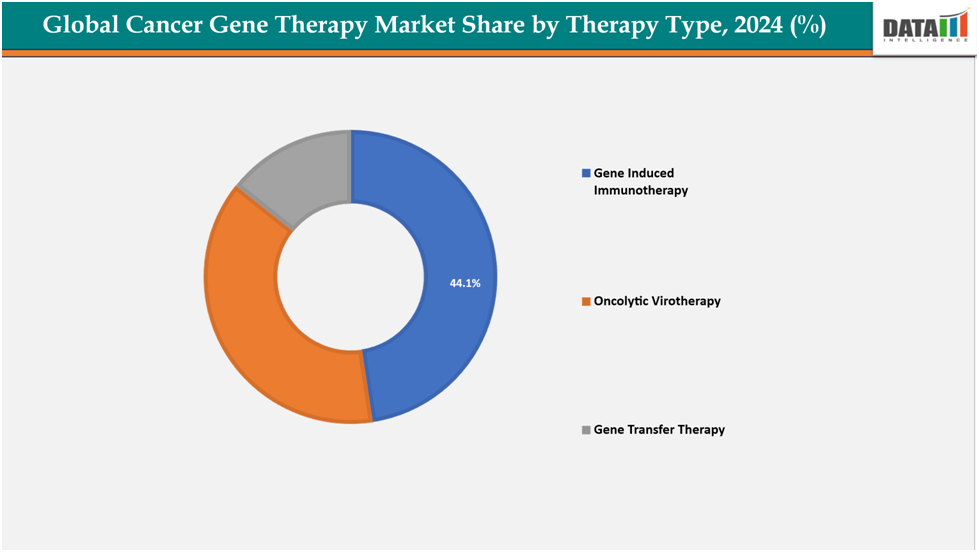
The gene induced immunotherapy from therapy type segment to dominate the cancer gene therapy market with a 44.1% share in 2024
The gene-induced immunotherapy segment is driving growth in the global cancer gene therapy market due to its proven ability to reprogram a patient’s own immune system to effectively recognize and attack tumors. CAR-T cell therapies like Novartis’ Kymriah and Gilead’s Yescarta have demonstrated high remission rates in relapsed or refractory blood cancers, where conventional treatments often fail.
These successes have validated the therapeutic approach, resulting in strong demand, rapid regulatory approvals, and accelerated R&D investment in expanding indications beyond hematological malignancies to solid tumors. The clinical efficacy and commercialization of these therapies are establishing gene-induced immunotherapy as the most dominant and revenue-generating segment within cancer gene therapy, making it a primary growth engine for the market.
Indication: The breast cancer segment is estimated to have a 31.4% of the cancer gene therapy market share in 2024
The breast cancer segment is driving growth in the global cancer gene therapy market due to the rising prevalence of the disease worldwide and the urgent need for more effective treatments beyond chemotherapy, radiotherapy, and hormonal therapies. Gene-based approaches, including oncolytic virotherapy and gene-modified immunotherapies, are being actively investigated to overcome resistance in aggressive forms such as triple-negative breast cancer (TNBC). Ongoing clinical trials using adenoviral vectors and gene-edited immune cells are showing encouraging results in improving tumor response and survival rates. Additionally, the strong focus of pharmaceutical and biotech companies on developing targeted gene therapies for breast cancer, coupled with increasing research funding and patient enrollment in clinical studies, is propelling this segment forward as one of the key contributors to overall market expansion.
Cancer Gene Therapy Market Geographical Analysis
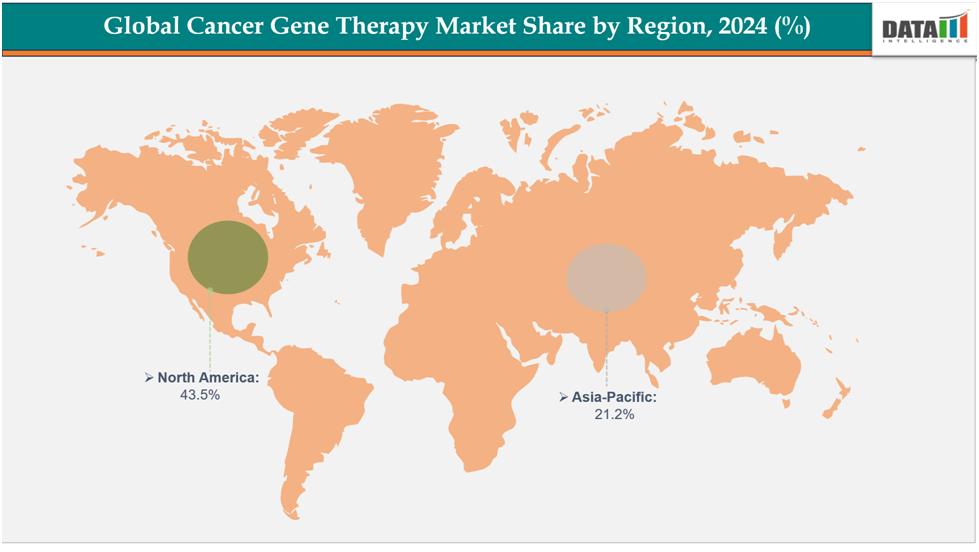
North America is expected to dominate the global cancer gene therapy market with a 43.5% in 2024
North America leads the global cancer gene therapy market, supported by high healthcare spending, strong clinical research infrastructure, and widespread adoption of advanced oncology treatments. The presence of major biotech firms and continuous funding for gene-editing technologies ensure steady market expansion.
For instance, in August 2024, The U.S. FDA has approved Tecelra, a gene therapy for adults with unrespectable or metastatic synovial sarcoma who have received prior chemotherapy, are HLA antigen positive, and express the MAGE-A4 antigen, as determined by FDA-approved diagnostic devices.
The U.S. dominates this space with FDA approvals of breakthrough therapies such as Kymriah and Yescarta. Extensive clinical trial activity, advanced manufacturing capabilities, and strong venture capital investment further strengthen its leadership in cancer gene therapy development and commercialization.
Europe is the second region after North America which is expected to dominate the global cancer gene therapy market with a 34.5% in 2024
The European innovation council (EIC) cell and gene therapy symposium is expected to significantly drive the growth of the European cancer treatment market. The event, organized in October 2023, brings together key stakeholders in the rapidly evolving cell and gene therapy sector to discuss advancements, challenges, and opportunities. It serves as a platform for researchers, clinicians, industry leaders, investors, and policymakers to exchange ideas, collaborate on innovative projects, and drive the development of cutting-edge therapies. The symposium is a crucial event in driving the growth of the European cancer treatment market.
Germany acts as a central hub for cancer gene therapy in Europe, thanks to its advanced healthcare system, strong research universities, and active participation in clinical trials. High patient awareness and access to innovative therapies contribute to its market strength.
Moreover, the growth of cancer treatment in the UK is driven by increased research investment, favorable regulatory frameworks, and rising cancer cases. Collaborations between academic institutions and biotech companies are accelerating the development of innovative therapies, with personalized medicine enhancing the potential of gene therapies for improved patient outcomes.
The Asia Pacific region is the fastest-growing region in the global cancer gene therapy market ,with a CAGR of 8.1% in 2024
Asia-Pacific is emerging as a high-growth region due to the rising cancer burden, improving healthcare infrastructure, and government initiatives to promote biotechnology innovation. Partnerships between global pharma companies and local players are accelerating therapy development and adoption.
Japan drives regional growth with its fast-track regulatory framework for regenerative and gene-based medicines. Early approvals of advanced therapies, combined with strong government support and academic-industry collaboration, make Japan a key market for cancer gene therapy in Asia.
For instance, the approval of Tecartus (brexucabtagene autoleucel) by the Japanese Ministry of Health, Labour and Welfare (MHLW) for relapsed or refractory mantle cell lymphoma, making Japan one of the earliest countries outside the U.S. to provide patient access to this CAR-T therapy. Such regulatory agility, coupled with strong government support and active collaboration between academia and industry, continues to position Japan as a leader in cancer gene therapy adoption.
Cancer Gene Therapy Market Competitive Landscape
Top companies in the cancer gene therapy market include Novartis AG, Pfizer, Adapt immune Therapeutics, Bluebird Bio, Inc., Krystal Biotech, Inc., Regulus Therapeutics, Biogenera and among others.
Novartis AG: Novartis plays a pivotal role in the global cancer gene therapy market, primarily through its leadership in CAR-T cell therapies. The company’s flagship product, Kymriah (tisagenlecleucel), was the first FDA-approved CAR-T therapy for pediatric and young adult patients with relapsed or refractory B-cell acute lymphoblastic leukemia (ALL) and later expanded to treat adult patients with large B-cell lymphoma. Novartis has invested heavily in developing scalable manufacturing platforms, global distribution networks, and patient access programs, ensuring wider adoption of its therapies.
Key Developments in Cancer Gene Therapy Market
- June 2026: Novartis AG continued advancing its oncology cell and gene therapy pipeline through ongoing clinical development programs focused on next-generation cancer treatments and precision medicine approaches.
- June 2026: Pfizer Inc. strengthened its gene therapy capabilities by expanding investments in innovative oncology platforms designed to accelerate the development of targeted cancer therapeutics.
- May 2026: Adaptimmune Therapeutics plc progressed its engineered T-cell therapy programs targeting solid tumors, advancing clinical studies aimed at improving treatment outcomes for patients with difficult-to-treat cancers.
- May 2026: bluebird bio, Inc. continued supporting its gene therapy research initiatives and strategic programs focused on advancing genetic medicine technologies applicable across oncology and rare disease indications.
- April 2026: Krystal Biotech, Inc. expanded its genetic medicine research efforts by advancing proprietary gene delivery technologies that support the development of next-generation therapeutic applications.
- April 2026: Regulus Therapeutics Inc. strengthened its RNA-targeted therapeutic platform through continued investments in oligonucleotide-based technologies that hold potential for future oncology applications.
- March 2026: Biogenera S.p.A. continued advancing its proprietary AntagoNAT® technology platform for gene modulation, supporting the development of novel therapeutic candidates for oncology and rare diseases.
- March 2026: Novartis AG expanded its precision oncology initiatives by strengthening collaborations focused on biomarker-driven treatment strategies and advanced therapeutic technologies.
- February 2026: Pfizer Inc. continued enhancing its oncology research portfolio through investments in gene-based therapeutic platforms and clinical development programs for innovative cancer treatments.
In June 2024, The FDA has approved a combination of adagrasib and cetuximab for KRAS G12C-mutated colorectal cancer treatment, marking a significant advancement in precision medicine for this specific genetic mutation.
In April 2024, India has launched its first homegrown CAR T-cell therapy, a groundbreaking immunotherapy that modifies a patient's immune cells to better recognize and attack cancer cells. The President of India hailed it as a beacon of "new hope" in the fight against cancer.
Cancer Gene Therapy Market Future Market Trends (2026-2033)
The Cancer Gene Therapy Market is expected to witness substantial growth throughout the forecast period driven by increasing cancer prevalence, expanding precision medicine initiatives, and rapid technological advancements across advanced therapeutics. Future market expansion will be supported by innovations involving gene editing technologies, biomarker-guided treatment strategies, and next-generation delivery platforms. Additionally, increasing investments supporting manufacturing capabilities, regulatory advancements, and strategic collaborations are anticipated to significantly influence future market dynamics. Organizations prioritizing technological innovation and commercialization excellence are expected to achieve considerable competitive advantages within the evolving oncology therapeutics ecosystem.
Emerging Technologies and Pipeline Analysis
Emerging technologies involving gene-modified cellular therapies, next-generation viral vectors, programmable gene editing systems, and targeted delivery platforms are substantially expanding future market opportunities. Increasing diversification across oncology pipelines targeting both common and rare cancer indications continues to strengthen commercialization prospects globally. Furthermore, advancements supporting combination therapeutic approaches integrating immunotherapies and gene therapies are expected to significantly influence technological developments throughout the forecast period.
Who Should Buy This Report?
This report is designed for pharmaceutical and biotechnology companies, oncology drug developers, Contract Development and Manufacturing Organizations (CDMOs), Contract Research Organizations (CROs), academic research institutions, and healthcare technology organizations seeking comprehensive insights into emerging cancer gene therapy technologies and commercialization opportunities. Institutional investors, venture capital firms, healthcare consulting organizations, and strategic planning teams can leverage the report to evaluate investment trends, clinical development activities, and competitive dynamics shaping the global market. Additionally, regulatory stakeholders, oncology researchers, and manufacturing leaders can utilize the report to support informed decisions related to partnerships, product development initiatives, capacity expansion strategies, and long-term business planning activities.
Why Should You Buy This Report?
This report provides comprehensive market intelligence on the Cancer Gene Therapy Market by delivering valuable insights into technological advancements, clinical development trends, regulatory developments, and investment opportunities across major global markets. It enables stakeholders to identify high-growth opportunities across precision oncology, gene editing technologies, and advanced therapeutic platforms while evaluating evolving commercialization patterns worldwide. Furthermore, the report supports strategic decision-making related to clinical trial investments, manufacturing capacity expansion, licensing partnerships, and market entry initiatives by providing in-depth analyses of competitive dynamics, regional growth opportunities, and future technological trends expected to shape the industry through 2035.
The global cancer gene therapy market report delivers a detailed analysis with 62 key tables, more than 57visually impactful figures, and 159 pages of expert insights, providing a complete view of the market landscape.




























































