


Brain-Health Snacks Market Size and Overview
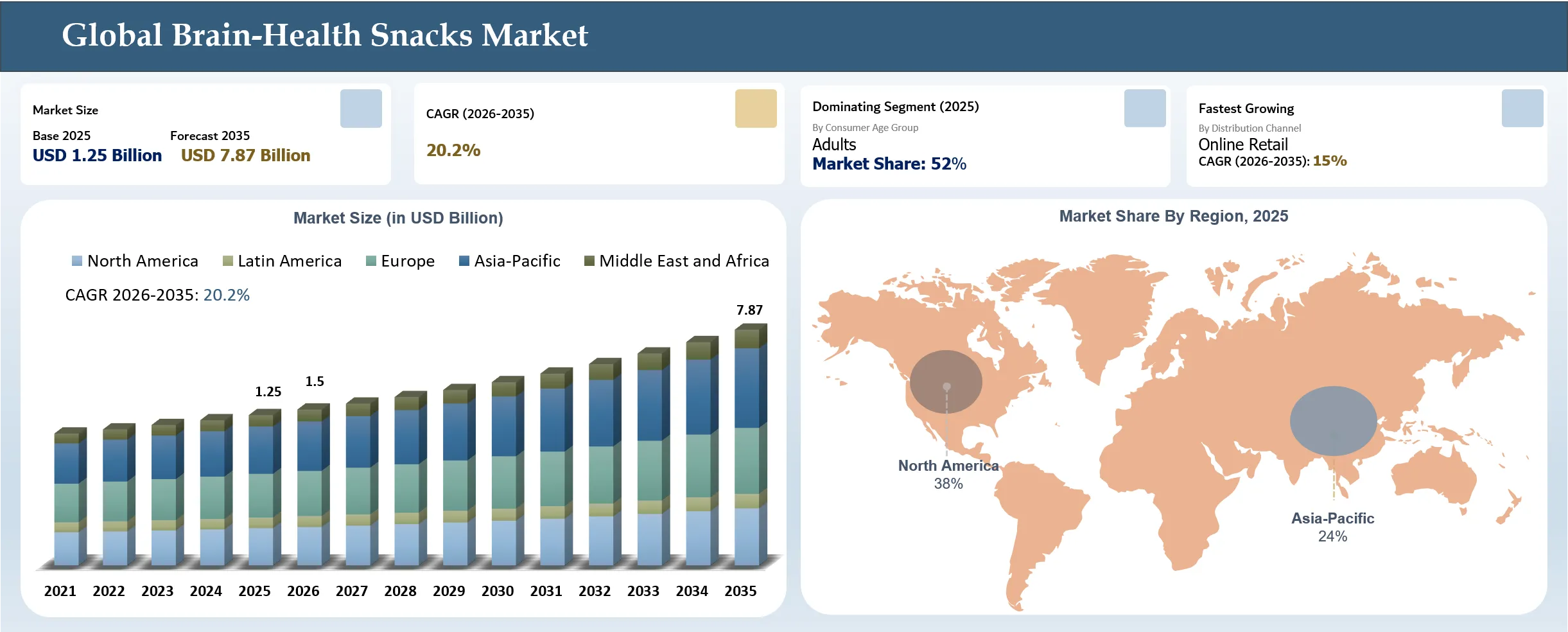
The global brain-health snacks market reached USD 1.25 billion in 2025 and is expected to reach USD 7.87 billion by 2035, growing with a CAGR of 20.2% during the forecast period 2026-2035. The market is gaining commercial traction as cognitive wellness continues to transition out of supplements and into food products that include nutrition bars, high-protein snacks, peanut butter cups, gummies, and other types of functional snacks. In May 2026, brain health snack brand Mosh raised a total of USD 13 million in Series A funding that will help the firm grow retail presence, release new high-protein products, and solidify itself in the category of cognitive nutrition. Mosh has since launched high-protein products in 2,000 Target doors, increasing its retail door count almost twofold, all while posting top-quartile velocity among Kroger doors.
The snacks offered by Mosh utilize lion’s mane, ashwagandha, vitamin D3 and vitamin B12, omega-3, and Cognizin citicoline, which is indicative of the trend towards clinically tested ingredients to support cognitive health becoming more prevalent in snack products. Growth in the market is fueled by consumer interest in cognitive health, longevity, stress resistance, and preventive nutrition; but health claim regulations, high cost of premium formulations, and scientific benefit substantiation continue to hinder category growth.
Growing consumer concerns regarding brain health and the cognitive system are creating a need for functional foods that have brain-nourishing ingredients. In January 2025, according to Women's Health UK, M&S launched a new range of Brain Food, which included 13 products that were developed after consulting with the British Nutrition Foundation and featured six brain-supporting nutrients, namely Omega-3(DHA), iron, iodine, folate, zinc, and vitamin B12. According to the report, 75% of people have brain fog up to nine times a day, and 80% of M&S consumers are worried about their brain health. Some of the products in this range include Brain Balls, mixed berry bars, smoothies, and snack shots, all of which include at least two brain-supporting nutrients, highlighting growing demand for convenient foods and snacks targeting cognitive health.
White-Space Opportunities for Brain-Health Snacks Through Government Investment in Brain Health and Nutrition Research
In May 2025, the European Commission directed significant funding toward health and brain-related research, under the Horizon Europe Work Programme, with the European Partnership for Brain Health receiving the highest directly identifiable indicative EU investment of EUR 150 million (USD 174.01 million). The investment is focused on advancing research and innovation in brain health, including prevention, early detection, diagnosis, treatment, care, and a better understanding of factors affecting neurological and mental health.
Other investment areas covered under the programme include the European Partnership for Health Research with an indicative EU contribution of EUR 77 million (USD 89.33 million), alongside funding opportunities across nutrition, food systems, personalised health, mental health, digital health, research infrastructures, and other health-related innovation areas. These investments are primarily directed toward research institutions and collaborative projects rather than directly funding Brain-Health Snack manufacturers; however, increased investment in brain health and nutrition research could strengthen scientific knowledge surrounding the relationship between diet, nutrients, and cognitive health, creating longer-term opportunities for the development of scientifically supported functional foods and brain-health snack products.
The funding is expected to create indirect opportunities across the brain-health and nutrition innovation value chain. Functional food and nutrition companies such as Nestlé, Danone, Unilever, and General Mills could potentially benefit by participating in collaborative research projects or applying emerging scientific findings to develop foods targeting cognitive wellness. Nutritional ingredient suppliers including DSM-Firmenich, BASF, Kerry Group, and IFF could gain opportunities through increased research into omega-3 fatty acids, vitamins, minerals, probiotics, and other ingredients associated with cognitive and mental wellness. In addition, research organisations, universities, biotechnology companies, clinical research organisations, and personalised nutrition technology providers could benefit through Horizon Europe-funded projects involving brain health, nutrition, prevention, and health innovation.
Brain-Health Snacks Market Key Takeaways
- North America held the largest regional market share at 38% in 2025, driven by functional product adoption. A representative survey revealed 57% of U.S. consumers actively look for healthier snacks, while 62% search specifically for packaging health claims.
- Adults represented the dominant consumer segment in 2025, capturing a total market share of 52%. Survey metrics show 70% of adults consume daily snacks and 63% would adopt a healthy diet if diagnosed with dementia.
- Functional nutrition demand drives market growth with a 20% impact, as 72% of surveyed consumers seek energy- or mood-boosting functional snacks. Furthermore, 2025 IFIC data indicate 70% of Americans eat at least one daily snack, with 60% using snacks to replace full meals
- Under the Horizon Europe Work Programme in May 2025, the European Commission allocated EUR 150 million (USD 174.01 million) to the European Partnership for Brain Health. An additional EUR 77 million (USD 89.33 million) was contributed toward the European Partnership for Health Research.
Brain-Health Snacks Market Industry Trends and Strategic Insight
- Cognitive wellness is moving from the supplement aisle into everyday snacking, prompting brands to develop portable products that integrate brain-support ingredients into routine consumption occasions.
- Multi-functional formulations are becoming a core product-development strategy, with brands combining cognitive support with protein, fiber, stress resilience, mood, and healthy-aging benefits.
- Adaptogens, medicinal mushrooms, L-theanine, omega-3s, choline compounds, and polyphenol-rich ingredients are expanding the ingredient innovation pipeline for cognitive-focused snack formulations.
- Brain-health snack manufacturers are increasingly adopting targeted benefit platforms, developing differentiated products around focus, memory, stress management, mood, sleep, and healthy cognitive aging rather than using a single broad wellness proposition.
- The convergence of gut health and brain health is opening new formulation opportunities, particularly through prebiotics and dietary ingredients positioned around the gut–brain connection, stress resilience, and cognitive well-being.
Brain-Health Snacks Market Scope
| Metrics | Details | |
| 2025 Market Size | USD 1.25 Billion | |
| 2035 Projected Market Size | USD 7.87 Billion | |
| CAGR (2026-2035) | 20.2% | |
| Largest Market | North America | |
| Fastest Growing Market | Asia-Pacific | |
| By Product Type | Snack Bars, Gummies and Chews, Nut and Seed-Based Snacks, Trail Mixes and Snack Mixes, Fortified Chocolates and Confectionery, Functional Cookies and Baked Snacks, Functional Chips and Crisps, Brain-Health Bites and Energy Balls, Fruit-Based Functional Snacks, Other Brain-Health Snacks | |
| By Ingredient Type | Omega-3 Fatty Acids, Botanical Extracts, Adaptogens, Nootropics, Vitamins and Minerals, Amino Acids, Choline-Based Ingredients, Others | |
| By Health Benefit | Memory Support, Focus and Attention, Mental Energy and Alertness, Mood and Emotional Well-Being Support, Stress Management, Cognitive Health and Brain Aging Support, Brain-Gut Axis Support, Sleep Quality Support, Others | |
| By Consumer Age Group | Children and Teenagers, Adults, Seniors, Others | |
| By Distribution Channel | Supermarkets and Hypermarkets, Convenience Stores, Pharmacies and Drug Stores, Online Retail, Other | |
| By Region | North America | U.S., Canada, Mexico |
| Europe | Germany, UK, France, Spain, Italy, Poland, Spain, Netherlands, Switzerland | |
| Asia-Pacific | China, India, Japan, Australia, South Korea, Indonesia, Malaysia | |
| Latin America | Brazil, Argentina | |
| Middle East and Africa | UAE, Saudi Arabia, South Africa, Israel, Türkiye | |
| Report Insights Covered | Competitive Landscape Analysis, Company Profile Analysis, Market Size, Share, Growth | |
Brain-Health Snacks Market Disruption Analysis
Shift Toward Nootropics, Adaptogens, and Medicinal Mushrooms Reshaping the Brain-Health Snacks Landscape
The disruption of the brain-health snacks market is primarily associated with the transition from conventional healthy-snack formulations toward products containing nootropics, adaptogens, and medicinal mushrooms. While traditional healthy snacks have been competing mainly based on high protein, high fiber, low sugar content, and overall nutrition, the ingredients used in these new snacks focus more on helping consumers concentrate better, have clear thinking, cope with stress, and improve brain health in general. This change is causing disruption in the current healthy snacking market environment through the formation of a new niche of cognitive nutrition based on functional properties of ingredients.
The rising interest of consumers and the product development process in these ingredients point to the magnitude of this transition. In August 2025, according to Food Navigator, searches for Lion's Mane mushroom in the protein bar segment increased by 13,900 year-on-year, while searches for ashwagandha increased by 10,000 and searches associated with brain health increased by 5,300. By mid-July of 2025, there were 237 new nutrition bar launches, suggesting that more innovation was going on with functional ingredients and brain health-specific propositions. Snack producers are therefore remodeling their product lines based on cognitive and stress relief benefits, leading to accelerated substitution of traditional single benefit formulas with ingredient-based ones.
Brain-Health Snacks Market BCG Matrix: Company Evaluation
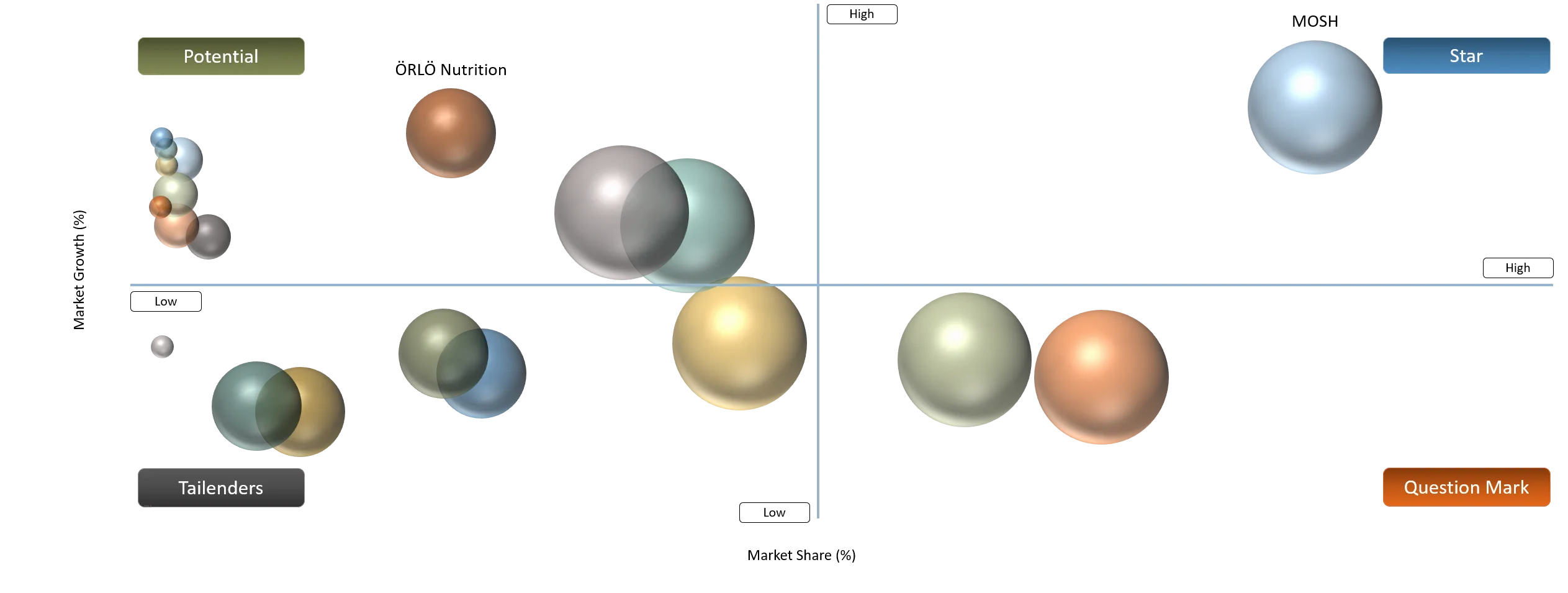
Stars include MOSH and IQBAR, Inc., as both companies have established strong brand positioning in the cognitive and functional nutrition space through snack products formulated around brain health, focus, and mental performance. Their expanding retail presence, product portfolio development, and direct alignment with the growing demand for cognitive-focused snacking position them as leading companies within the category. EBARS, TRIBE Natural Energy, and Balanced Tiger are placed in the Question Mark category because they operate in the emerging functional and performance-snacking space but have comparatively limited market penetration and brand scale.
The category of Potential includes ÖRLÖ Nutrition, BEL SA, and Wise Bar, which are positioned to benefit from increasing consumer interest in functional nutrition, adaptogenic ingredients, and targeted wellness benefits. Laird Superfood and Indi Supplements belong to the Tailenders category, as their participation in functional nutrition and wellness products provides relevance to the broader market, but their direct specialization and scale within brain-health snacks remain more limited compared with companies such as MOSH and IQBAR.
Brain-Health Snacks Market Dynamics
Driver Impact Analysis
| Driver | Market Growth Impact (%) | Demand Concentration | Impacted Use Case | Strategic Impact |
Growing consumer focus on cognitive health and mental wellness is driving demand for convenient snacks. | 22% | Demand is highly concentrated among consumers seeking convenient products that support memory, focus, mental energy, and long-term cognitive wellness. | Focus, memory, mental energy, mood, and cognitive wellness | Encourages manufacturers to develop dedicated brain-health formulations and position snacks as part of preventive cognitive nutrition. |
Increasing preference for functional nutrition is encouraging consumers to choose snacks enriched with brain- supporting ingredients. | 20% | Demand is highly concentrated in snacks containing targeted functional ingredients associated with cognitive performance and brain health. | Nootropic nutrition, omega-3 supplementation, stress resilience, and cognitive performance | Accelerates the incorporation of clinically studied ingredients, including nootropics, adaptogens, omega-3s, and botanical extracts, into mainstream snack portfolios. |
Rising stress, demanding lifestyles, and mental fatigue are boosting demand for convenient on-the-go snacks positioned to support cognitive performance and mental well-being. | 19% | Demand is highly concentrated among working professionals, students, and other consumers seeking convenient solutions for focus, stress resilience, and sustained mental performance. | Calm focus, sustained mental energy, stress management, and workplace productivity | Creates opportunities for portable snack formats targeting working professionals, students, gamers, and consumers with high-intensity lifestyles. |
The growing shift toward healthier and mindful snacking is accelerating the adoption of nutrient-rich snacks with targeted functional benefits. | 18% | Demand is moderately to highly concentrated in nutrient-dense snacks that combine everyday nutrition with targeted cognitive-health benefits. | Daily wellness, preventive nutrition, healthy snacking, and cognitive maintenance | Requires companies to combine cognitive-health positioning with low sugar, high protein, fiber-rich, and nutrient-dense product attributes. |
Rising demand for clean-label and natural functional snacks is supporting the development of brain-health products. | 16% | Demand is concentrated among ingredient-conscious consumers seeking naturally formulated and transparently labeled brain-health snack products. | Natural cognitive support, plant-based nutrition, and ingredient-conscious consumption | Increases the strategic importance of transparent labeling, recognizable ingredients, botanical formulations, and reduced artificial additives. |
Growing consumer focus on cognitive health and mental wellness is driving demand for convenient snacks
The growing emphasis on cognitive health and mental wellbeing has become a significant driver of the brain-health snacks market, with consumers looking for food products that will help them stay focused, maintain memory and emotional health, and improve their cognitive health in the long run. In April 2026, according to the Alzheimer's Association, it was found that 88% of U.S. adults find it extremely important to take care of their brain health in their old age, whereas 99% find brain health as important or more than their physical health. But only 9% of them were aware of how to keep their brain healthy, creating a substantial opportunity for food manufacturers to position convenient and accessible snack formats as part of everyday cognitive-wellness routines.
In parallel, the broader shift toward health-oriented snacks is creating favorable conditions for the brain-focused products market. In July 2025, according to the India Brand Equity Foundation (IBEF) Farmley Consumer Survey, conducted on a sample of about 6,000 consumers, 72% look for snacks that provide functional benefits like increased energy or a positive effect on mood, whereas 94% desire snacks that are healthy yet tasty. In addition, the IFIC 2025 Food & Health Survey shows that 70% of Americans eat at least one snack a day and 60% of Americans use snacks instead of regular meals. These trends lead manufacturers to the development of portable snacks like bars, gummies, bites, and nuts.
Restraint Impact Analysis
| Restraint | Drag on Market Growth (%) | Primary Impact Area | Impacted Use Case | Strategic Impact |
Limited scientific evidence supporting the cognitive benefits of certain functional ingredients can reduce consumer trust and slow product adoption. | 18% | Consumer Trust and Product Validation | Memory support, focus enhancement, and cognitive-performance snacks | Manufacturers need to prioritize clinically substantiated ingredients, evidence-based dosage levels, and product-specific validation before making cognitive-benefit claims. |
Strict and varying regulations surrounding brain-health claims, labeling, and ingredient safety can delay product launches and market expansion. | 17% | Regulatory Compliance and Market Access | Snacks marketed for memory, cognitive function, mental performance, and healthy aging | Companies must adapt formulations and claim language by region and strengthen regulatory review processes before commercialization. |
Higher costs of premium cognitive-health ingredients and specialized formulations can make brain-health snacks less affordable for price-sensitive consumers. | 15% | Product Pricing and Profitability | Premium snack bars, adaptogen-based snacks, nootropic gummies, and mushroom-based snacks | Manufacturers need to optimize ingredient sourcing, formulation efficiency, and product architecture to balance efficacy with accessible pricing. |
Consumer skepticism toward cognitive-health claims can limit the acceptance of snacks marketed for improving memory, focus, or mental performance. | 16% | Consumer Acceptance and Brand Credibility | Nootropic snacks, adaptogenic products, and cognitive-performance formulations | Brands need transparent ingredient communication, credible scientific education, and carefully substantiated benefit positioning to build consumer confidence. |
Limited scientific evidence supporting the cognitive benefits of certain functional ingredients can reduce consumer trust and slow product adoption
One of the key restraints affecting the brain-health snacks market is the limited and inconsistent scientific evidence supporting the cognitive health benefits of various functional ingredients. This constraint is pertinent to brain health snacks that include polyphenols, botanicals, adaptogens, and other novel bioactive ingredients, which have varying evidence based on the ingredient class and formulation. In January 2026, according to the Royal Society of Chemistry (RSC), 19,132 reports were first selected, out of which 15,073 unique articles were reviewed, leading to a total of just 13 randomized controlled trials including 849 participants in seven neurodegenerative conditions being included in the quantitative analysis. The fairly limited set of directly relevant clinical evidence points to the challenge of making universal cognitive health claims regarding various functional ingredients and target groups.
In addition, the findings demonstrated substantial variation in ingredient effectiveness. According to the meta-analysis from Food & Function (RSC, 2026), a gain of 2.06 MMSE cognitive score (95% CI: 0.62–3.49; p = 0.005) was observed in response to polyphenol supplementation; nevertheless, the effect was variable depending on the polyphenol subclass. In other words, anthocyanidins, phenolic acids, and lignans did not have any statistically significant impact on cognitive measures, while flavonoids had a minor effect and stilbenes had one in the context of daily performance. Variability poses a major problem for brain-health snack producers since the presence of functional ingredients is not enough to prove the efficacy of the final product in improving cognition. Therefore, it becomes crucial for the companies to confirm the dosage, bioavailability, and efficacy of the ingredient and the product in question.
Brain-Health Snacks Market Segment Analysis
The global brain-health snacks market is segmented based on product type, ingredient type, health benefit, consumer age group, distribution channel, and region.
Adult Consumers Drive the Largest Demand for Brain-Health Snacks Through Preventive Cognitive Wellness and Convenient Nutrition
The adults segment dominated the brain-health snacks market, with a market share of 52% in 2025. Adults comprise the largest consumption group since brain-health snacks meet a number of needs among adults, such as attention, mental energy, stress management, mood, and mental well-being. The trend of increasing snack consumption as part of eating behavior is another factor contributing to the leading position of the segment. In October 2025, as per the IFIC Food & Health Survey, which interviewed 3,000 U.S. consumers aged 18-80 years, 70% of Americans consume at least one snack per day, while 62% replace their regular meals with snacks or mini-meals. Such behaviors help increase the target market for portable functional snacks with mental wellness as the main consideration.
At the same time, adults are increasingly associating brain health with their overall brain health management, which contributes to their need for brain health snacks that are easy to consume and have specific functional components. In March 2025, according to the AARP, in a survey of adults aged 40, more than 80% of American adults aged 50 and over are aware of the concept of brain health, while 63% are ready to eat healthy food if they get diagnosed with dementia. Availability of specialized brain health snacks contributes even more to adult segment dominance. Thus, manufacturers target adults via brain health snacks with cognitive wellness, protein nutrition, stress resilience, and convenient consumption features. Thus, adults remain the most profitable customer segment in the market.
Brain-Health Snacks Market Geographical Penetration
Strong Functional Nutrition Adoption and Retail Commercialization Positioning North America as the Leading Brain-Health Snacks Market
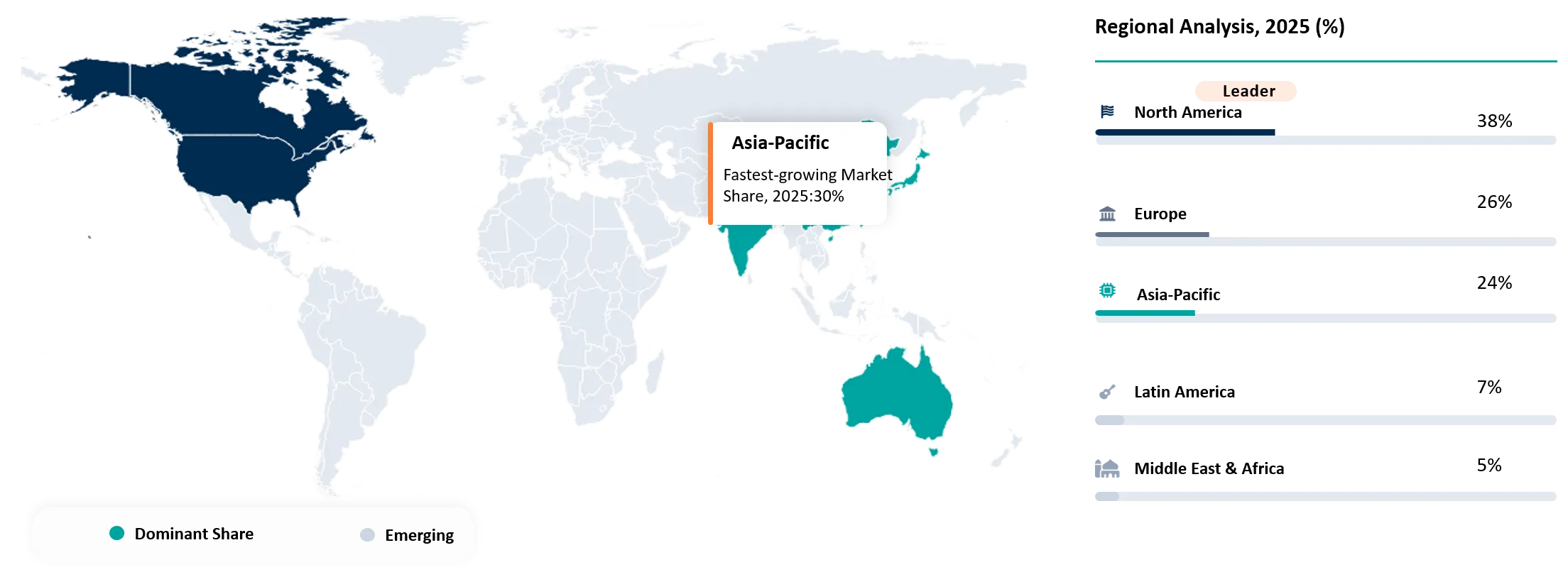
The North America region is dominating the brain-health snacks market, accounting for an estimated 38% market share in 2025. The region's leadership is supported by strong consumer adoption of healthier and functionally positioned snacks, creating a favorable commercial environment for products incorporating brain-supporting ingredients. In February 2025, according to Zappi's nationally representative survey of 2,000 U.S. consumers conducted in January 2025, 57% of consumers actively sought healthier snack options, while 62% actively looked for health claims on product packaging. Additionally, 58% of consumers under the age of 45 reported being more likely to choose healthier snacks over traditional alternatives, highlighting particularly strong demand among younger and working-age consumers. These consumer preferences support the expansion of brain-health snacks that combine convenient consumption with targeted nutritional and cognitive-wellness positioning.
Strategic acquisitions are enabling major food and snacking companies to expand their presence in the rapidly growing brain-health and functional snack segment. In May 2026, Bel Group, a France-based multinational food and healthy snacking company, acquired the Brainiac and Little Brainiac brands from Ingenuity Foods, a U.S.-based functional snack producer. The acquisition strengthened Bel Group's North American better-for-you snacking portfolio, with Brainiac products formulated with Omega-3s and other essential nutrients to support brain, gut, and immune health. Notably, the Brainiac brand recorded triple-digit value net sales growth over the previous year, highlighting increasing consumer traction for functional and brain-health-focused snacks in the U.S. market.
U.S. Brain-Health Snacks Market Trends
The U.S. holds a dominant position in the North America brain-health snacks market owing to its large and established snacking culture, advanced functional-food ecosystem, and strong commercialization of products targeting specific wellness needs. High-frequency snack consumption provides a substantial platform for manufacturers to introduce convenient products incorporating ingredients associated with cognitive wellness, focus, mental energy, and stress management. In April 2025, according to Circana's 2025 Snack Unwrap research, 48.8% of U.S. consumers snack three or more times per day, representing a 2.7% year-on-year increase, while consumers aged 18-44 demonstrated the highest snacking frequency. The research also found that 64.1% of consumers actively seek snacks perceived as “good for them,” supporting the expansion of functional and health-oriented snack formulations in the country.
The increasing demand for convenient, nutrient-rich snacks that support cognitive wellness is driving companies to expand their brain-health-focused product portfolios. In June 2025, MOSH, a U.S.-based functional nutrition and brain-health snack company, launched a new vegan protein bar collection comprising three flavors: Hazelnut Chocolate Chip, Peanut Chocolate Chip, and Chocolate Chip Cookie. Each bar contains 11 grams of plant-based protein and incorporates Cognizin Citicoline, lion's mane, ashwagandha, omega-3s, and vitamins B12 and D3 to support cognitive and physical health. MOSH was available in nearly 1,000 retail locations across the U.S., while its first-quarter revenue increased by more than 100% year-over-year, and the company recorded three consecutive months with sales exceeding USD 1 million, demonstrating growing consumer demand for brain-health-focused functional snacks.
Canada Brain-Health Snacks Market Outlook
Canada is an emerging player in the North America brain-health snacks market owing to increasing consumer interest in healthier food choices, clean-label products, and snacks offering functional benefits. The country's established food manufacturing sector and growing emphasis on preventive nutrition provide favorable conditions for the development of products incorporating ingredients associated with cognitive wellness, including omega-3 fatty acids, botanical extracts, adaptogens, and other functional compounds. According to Agriculture and Agri-Food Canada (AAFC), its Survey on Consumer Perceptions of Food included 3,077 Canadians, reflecting the growing institutional focus on understanding changing consumer food preferences and purchasing behavior in Canada.
The growing demand for convenient, plant-based, and functional snack products is encouraging companies to develop innovative offerings targeting cognitive performance and overall brain wellness. In June 2025, Restart Life Sciences Corp., a Canada-based life sciences and health and wellness company, announced the forthcoming launch of BrainBalls, a functional wellness snack developed in collaboration with Brain Balls Inc. through a strategic joint venture established in December 2024. The initial BrainBalls product line includes three flavours—Chocolate, Vanilla, and Blueberry—and is formulated with clean-label, plant-based ingredients to support mental clarity, cognitive performance, sustained energy, and overall well-being. The products will be offered in two convenient packaging formats: family-size sachets and multi-pack travel options, targeting busy and health-conscious consumers seeking functional brain-health snacks.
Expanding Functional Snacking and Cognitive Wellness Demand Strengthening Asia-Pacific's Position
The Asia-Pacific brain-health snacks market accounted for an estimated 24% market share in 2025, supported by the region's large consumer base, increasing health consciousness, and rapid expansion of functional food innovation. Consumers across Asian markets are increasingly seeking snacks that combine convenience with nutritional and wellness benefits, creating favorable conditions for products positioned around cognitive health, mental well-being, and stress management. In January 2026, according to PwC's Voice of the Consumer Survey, 54% of consumers expect food companies to help them lead healthier lives, while health benefits influence 38% of consumers to switch food brands. These preferences are encouraging food manufacturers to expand targeted functional nutrition portfolios and develop snacks incorporating ingredients associated with cognitive and mental wellness.
Increasing investor interest in nootropic and cognitive wellness solutions is supporting the development and commercialization of innovative products targeting concentration, mental performance, and stress management. In September 2025, Nootropic Lab, a South Korea-based food-tech startup, secured a seed investment from the CNT Tech-DB Dream Big Investment Association, jointly formed by CNT Tech, a South Korean startup accelerator and investment company, and DB Capital, a South Korean technology business finance company affiliated with DB Group. Nootropic Lab develops nootropic-based functional beverages and products targeting concentration, cognitive ability, and stress relief, with its flagship Pure Focus containing functional ingredients such as L-theanine, biphylline, choline, and ginkgo extract.
Japan Brain-Health Snacks Market Trends
Japan is one of the key players in the Asia-Pacific brain-health snacks market owing to its well-established functional food ecosystem, strong consumer familiarity with Foods with Function Claims (FFC), and advanced capabilities in developing scientifically positioned food products. The country's regulatory framework has supported the commercialization of functional foods across conventional food formats, including snacks and beverages, creating a favorable environment for products incorporating ingredients associated with stress management, sleep, fatigue reduction, and cognitive wellness. In June 2026, according to the Food Navigator, a MyVoicecom consumer survey involving 11,179 respondents in Japan, 28.4% had consumed functional foods during the previous year, while 38.7% knew about functional foods but had never used them, indicating awareness of the category among more than 80% of respondents.
The growing integration of clinically positioned nootropic ingredients into functional snack products is encouraging collaborations between ingredient developers and brain-health food brands. In February 2025, Kyowa Hakko, the Japan-based health ingredients subsidiary of Kyowa Hakko Bio Co., Ltd., highlighted its partnership with MOSH, a U.S.-based functional nutrition and brain-health protein bar company, at Natural Products Expo West. MOSH's protein bars incorporate Cognizin Citicoline, Kyowa Hakko's patented nootropic ingredient, which is positioned to support focus, attention, memory, and mental energy. MOSH is the first and only protein bar brand featuring Cognizin, while its formulation also includes lion's mane, ashwagandha, omega-3s, and vitamins B12 and D3, demonstrating the growing collaboration between Japanese functional ingredient companies and U.S. brain-health snack brands.
Brain-Health Snacks Market Competitive Landscape
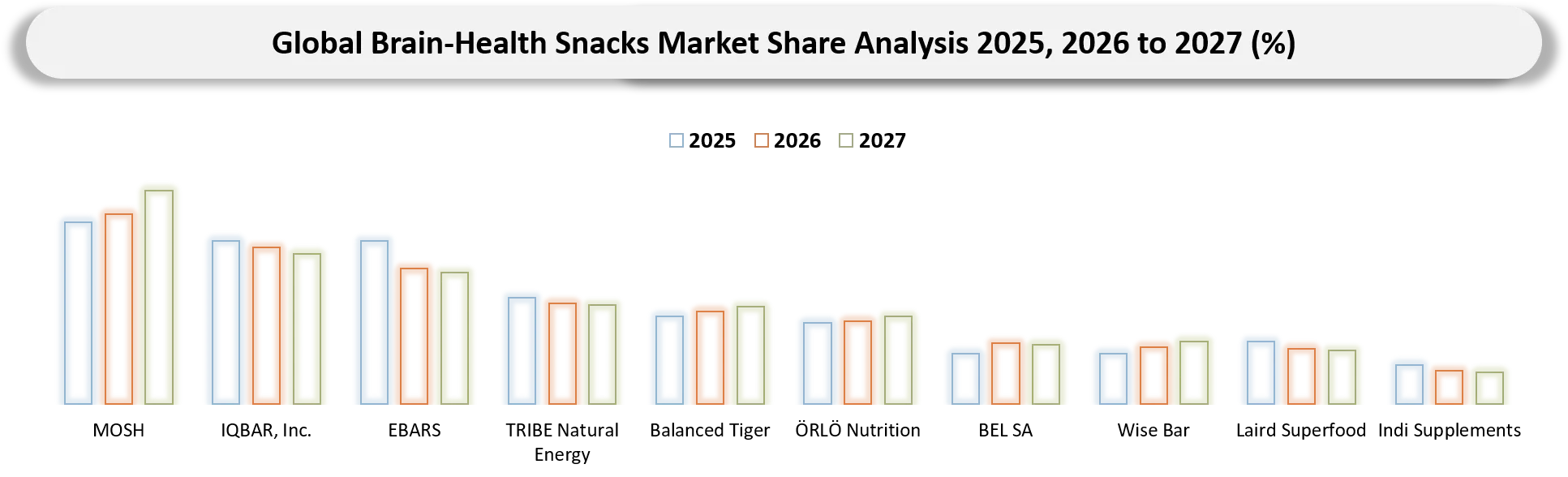
- The brain-health snacks market is characterized by three key participant groups: dedicated brain-health nutrition brands, functional energy and performance snack companies, and broader wellness and nutrition brands. MOSH and IQBAR, Inc. are positioned as dedicated cognitive-nutrition players, focusing on formulations that combine protein and functional ingredients associated with brain health. EBARS, TRIBE Natural Energy, Balanced Tiger, and Wise Bar participate primarily in functional energy and performance-oriented snacking, while ÖRLÖ Nutrition, BEL SA, Laird Superfood, and Indi Supplements operate across broader wellness, nutrition, and functional-food categories. This creates a fragmented and innovation-driven landscape where ingredient science, product differentiation, taste, retail accessibility, and credible cognitive-health positioning define competitiveness. In 2026, MOSH's expansion into national retail and its development of products combining protein, creatine, and brain-focused ingredients illustrate the increasing convergence of cognitive nutrition with mainstream functional snacking.
- Key players include MOSH (U.S.), IQBAR, Inc. (U.S.), EBARS (U.S.), TRIBE Natural Energy (UK), Balanced Tiger (U.S.), ÖRLÖ Nutrition (U.S.), BEL SA (France), Wise Bar (U.S.), Laird Superfood (U.S.), and Indi Supplements (UK).
Key Developments
- May 2025: Omega 3 Nutrition, Inc., a U.S.-based early-stage health food and functional nutrition company, closed an oversubscribed Series Seed funding round led by Capitalize VC, a U.S.-based early-stage venture capital firm, with participation from the Maryland Momentum Fund, 1863 Ventures, Dingman Center Angels Network, and 757 Angels.
- July 2025: Nature’s Garden, a better-for-you functional snacking brand owned by Cibo Vita, a U.S.-based food and snack company, received multiple consumer and trade recognitions for its probiotic fruit snack innovations.
- February 2025: Restart Life Sciences Corp., a Canada-based life sciences and health and wellness company, secured a strategic production partnership with a Canadian manufacturing and co-packing company to support the commercial production of its Brain Balls functional snack line.
- April 2025: Kameda Seika Co., Ltd., a Japan-based food and rice snack manufacturer, launched its “Kameda no Supplement Seeds” series in limited quantities at two Seven-Eleven stores located at the Osaka-Kansai Expo.
- November 2025: Suntory Beverage & Food (Thailand) Co., Ltd., a Thailand-based subsidiary of Japan-headquartered Suntory Beverage & Food Ltd. and a health-enrichment food and beverage company, collaborated with the Thai Neuroscience Society, a Thailand-based scientific organization, to promote brain health and memory care among senior citizens.
Key Procurement Priorities and Buyer Evaluation Criteria
- Organizations procuring products in the Brain-Health Snacks Market increasingly prioritize suppliers and manufacturers capable of delivering scientifically formulated snacks that combine cognitive-health ingredients with nutritional quality, convenient consumption, and consistent product performance.
- Procurement decisions are increasingly influenced by growing consumer demand for cognitive wellness, mental energy, stress management, healthy aging, and functional nutrition, encouraging buyers to select products aligned with specific brain-health benefits and evolving wellness preferences.
- Buyers evaluate factors such as ingredient quality, scientific substantiation, dosage transparency, nutritional composition, taste, sugar content, clean-label credentials, and the safety profile of functional ingredients when selecting brain-health snack suppliers.
Why Choose DataM?
- Ingredient Innovation & Scientific Developments: Explores advancements in cognitive-health ingredients, including omega-3 fatty acids, nootropics, adaptogens, botanical extracts, choline-based ingredients, probiotics, and other functional compounds, supporting the development of snacks targeting memory, focus, mental energy, and cognitive wellness.
- Product Performance & Market Positioning: Evaluates how different brands differentiate their products based on ingredient formulations, nutritional composition, protein content, sugar levels, clean-label attributes, taste, convenience, and targeted cognitive-health benefits.
- Real-World Consumer Insights: Examines the adoption of brain-health snacks among adults, working professionals, students, and aging consumers, highlighting demand for convenient products supporting focus, memory, stress management, mental energy, and healthy cognitive aging.
- Market Updates & Industry Changes: Tracks key developments, including new product launches, functional ingredient innovations, retail expansion, funding activities, strategic partnerships, and regulatory developments affecting cognitive-health claims across major regional markets.
- Competitive Strategies: Analyzes how leading companies strengthen their market position through product innovation, clinically supported ingredients, direct-to-consumer expansion, retail partnerships, brand differentiation, and investment in cognitive-health-focused nutrition.
- Pricing & Market Access: Explains pricing variations based on ingredient quality, scientific formulation, protein content, premium functional compounds, and product format, along with market access through supermarkets, specialty health stores, pharmacies, e-commerce platforms, and direct-to-consumer channels.
- Market Entry & Expansion: Identifies growth opportunities driven by increasing consumer interest in preventive cognitive wellness, functional nutrition, mental health support, and convenient healthy snacking, while outlining strategies such as evidence-based product development, retail expansion, clean-label positioning, and targeted consumer segmentation.
Target Audience
- Brain-Health Snack Manufacturers and Brands
- Functional Food and Beverage Companies
- Food Ingredient Manufacturers and Suppliers
- Nutraceutical and Dietary Supplement Companies
- Retailers and Distribution Companies
- Investors and Venture Capital Firms
- Research and Development Teams


























































