


Blockchain in Healthcare Market Size
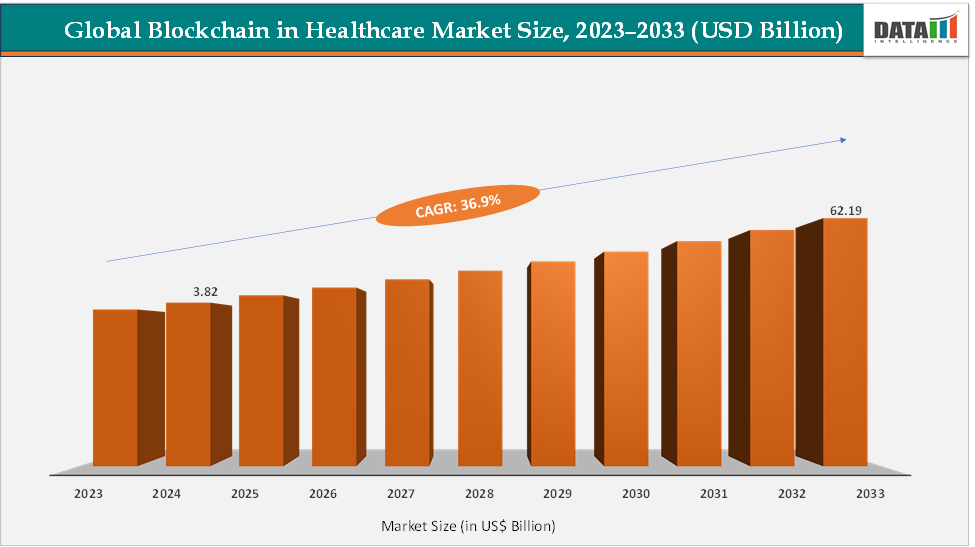
The Blockchain in Healthcare Market is estimated to reach USD 5.23 Billion in 2025 and is projected to grow to USD 62.19 Billion by 2033, registering exceptional growth at a CAGR of 36.9% during the forecast period from 2026 to 2033.
The market is witnessing rapid expansion, driven by the growing need for secure, transparent, and efficient management of healthcare data. Key platforms driving this growth include Patientory, which provides a HIPAA-compliant healthcare information exchange for secure storage and transfer of patient data and Guardtime, which focuses on protecting healthcare data from unauthorized access. These platforms address critical challenges such as data breaches, interoperability issues, and administrative inefficiencies.
The growth is further fueled by factors such as increasing data breaches, the demand for interoperability, and the need for streamlined operations. For instance, according to the HIPAA Journal, in August 2023, 23 million breached healthcare records are reported. Over the past 12 months, an average of 9,989,003 healthcare records were breached each month. In the year to August 31, 2024, there have been 491 data breaches of 500 or more records, and at least 58,668,002 records are known to have been breached. The average breach size in 2024 is currently 119,487 records and the median breach size is 4,109 records.
By leveraging blockchain’s decentralized, immutable architecture, they enhance data security, streamline operations, and build trust among stakeholders. The increasing adoption of blockchain for applications like electronic health records, pharmaceutical supply chain management, clinical trial data management, and patient consent management underscores the market’s transformative potential and highlights why it is poised for strong, sustained growth globally.
Key Market Highlights
- North America dominates the blockchain in healthcare market with the largest revenue share of 44.47% in 2024.
- The Asia Pacific is the fastest-growing region and is expected to grow at the fastest CAGR of 36.7% over the forecast period.
- Based on application, the clinical data exchange & interoperability segment led the market with the largest revenue share of 43.02% in 2024.
- The major market players in the blockchain in healthcare market are IBM, Guardtime, Oracle, BurstIQ, PixelPlex, Kaleido, Inc., and Solve.Care, among others
Market Dynamics
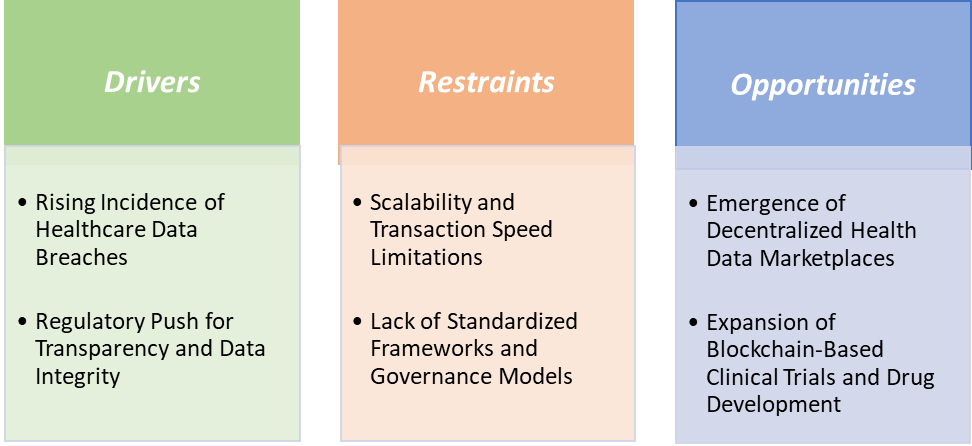
Drivers: The rising incidence of healthcare data breaches is significantly driving the blockchain in healthcare market growth
The escalating frequency of healthcare data breaches is a major driver for the growth of the blockchain in healthcare market. According to HIPAA Journal, in August 2023 alone, 23 million healthcare records were breached, and over the past 12 months, an average of nearly 10 million records were compromised each month. By August 31, 2024, there were 491 reported breaches involving 500 or more records, with at least 58.6 million records affected. The average breach size reached 119,487 records, while the median breach size was 4,109 records, illustrating that both large-scale cyberattacks and smaller targeted breaches are common.
These stats highlight the vulnerabilities in traditional centralized healthcare databases, which are often unable to prevent unauthorized access, hacking, and data manipulation. As patient data becomes increasingly digitized, healthcare organizations face immense pressure to secure sensitive information and comply with strict regulatory standards. Blockchain technology provides a compelling solution by offering decentralized, tamper-proof, and transparent record-keeping, which can significantly reduce the risk of breaches and unauthorized modifications.
Its secure, auditable framework ensures that healthcare data can be shared safely across providers, insurers, and other stakeholders without compromising patient privacy. The growing number of high-profile breaches is raising awareness among healthcare providers about the importance of robust data security measures. As a result, the adoption of blockchain platforms for patient data management, clinical trials, supply chain tracking, and health information exchange is accelerating. This trend is fueling investment and innovation in the blockchain in healthcare market, as organizations recognize the technology’s potential to enhance security, trust, and operational efficiency across the healthcare ecosystem.
Restraints: Scalability and transaction speed limitations are hampering the growth of the market
While blockchain offers significant benefits for healthcare, its growth is being constrained by inherent scalability and transaction speed limitations. Most blockchain networks, especially those based on public ledgers, process transactions sequentially, which can result in slow confirmation times when handling large volumes of healthcare data. This limitation becomes critical in environments requiring real-time data sharing, such as hospitals, emergency care, and telemedicine platforms, where delays can affect patient outcomes.
Additionally, as the number of participants in a blockchain network increases, transaction validation can become slower, further impeding the seamless interoperability that healthcare providers demand. High latency and processing delays also increase operational costs and reduce system efficiency, discouraging some organizations from adopting blockchain despite its security advantages. These performance constraints limit the ability to integrate blockchain with advanced AI and IoT solutions, which require rapid and scalable data throughput for predictive analytics and remote monitoring.
Blockchain in Healthcare Market, Segmentation Analysis
The global blockchain in healthcare market is segmented based on deployment mode, application, end-user, and region.
by Application
The clinical data exchange & interoperability segment is dominating the blockchain in healthcare market with a 43.02% share in 2024
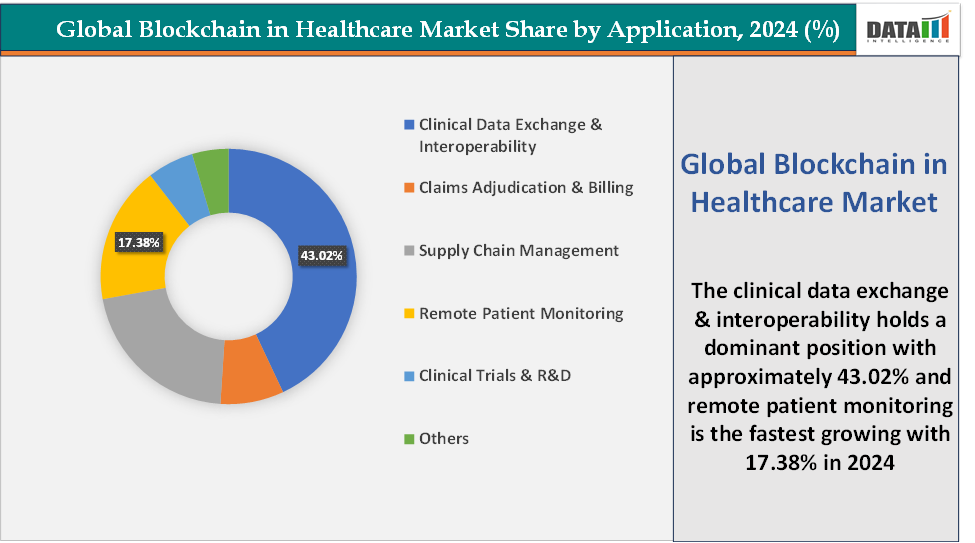
The clinical data exchange and interoperability segment is the dominant application area in the blockchain in healthcare market, primarily because of the pressing need to overcome fragmented and siloed patient information across diverse healthcare systems. Traditional centralized databases often hinder seamless data sharing between hospitals, clinics, laboratories, and insurance providers, leading to delays, errors, and compromised patient care. Blockchain technology addresses these challenges by providing a decentralized, immutable, and secure framework that enables real-time access and trustworthy sharing of clinical data among authorized parties.
Moreover, the integration of blockchain with advanced technologies like artificial intelligence and cloud computing further enhances clinical data exchange, enabling large-scale analytics, predictive modeling, and personalized care while maintaining stringent data privacy and security standards. These combined capabilities position the clinical data exchange and interoperability segment as the key driver of blockchain adoption in healthcare, underscoring its critical role in transforming modern healthcare delivery systems.
The remote patient monitoring segment is the fastest-growing segment in the blockchain in healthcare market with a 17.38% share in 2024
The Remote Patient Monitoring (RPM) segment is emerging as the fastest-growing application in the blockchain healthcare market, driven by the increasing adoption of digital health technologies and the need for secure, real-time patient data management. This growth is further accelerated by the integration of blockchain technology, which enhances data security and interoperability in IoT-based healthcare systems.
Blockchain's role in RPM is pivotal, particularly in addressing challenges related to data privacy, device authentication, and secure data sharing across healthcare systems. Innovative solutions like the Empatica Care platform utilize blockchain to securely transmit physiological data from wearables to healthcare providers, enabling continuous monitoring and timely interventions. Similarly, a study proposed a lightweight blockchain and fog computing-based RPM system, demonstrating a 40% improvement in response time and enhanced security, making it suitable for resource-constrained IoT devices.
The convergence of RPM with blockchain technology not only ensures the integrity and confidentiality of patient data but also supports the scalability required for widespread adoption. As healthcare systems continue to embrace digital transformation, the integration of blockchain in RPM is set to play a crucial role in delivering efficient, secure, and patient-centered care.
Geographical Analysis
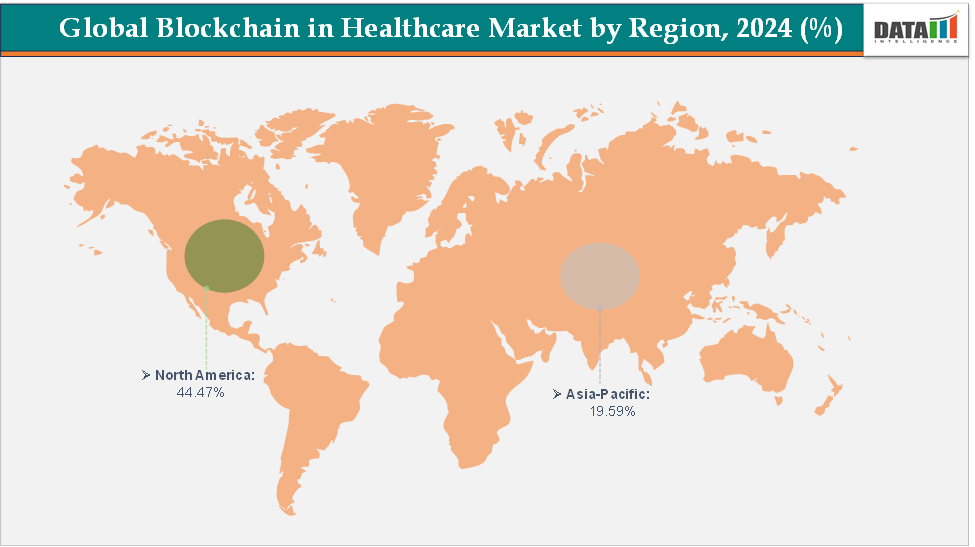
North America is expected to dominate the global blockchain in healthcare market with a 44.47% in 2024
North America accounted for the highest revenue share. The rising data breaches and counterfeit pharmaceuticals, improved implementation and adherence to regulatory acts in the United States, such as the Drug Security and Safety Act, increasing summits and product launches by market key players for blockchain-based healthcare applications, advancement in blockchain technology by the key market players in the region are some of the factors the market is expected to boost in the forecast period.
US Blockchain in Healthcare Market Trends
In August 2025, a major pharmaceutical distributor made crypto payments a reality for thousands of pharmacies across America. Wellgistics Health rolled out its XRP-powered payment system on August 13, 2025, letting over 6,500 independent pharmacies process drug purchases using blockchain technology. This rising adoption of blockchain technology over the United States is further boosting the growth in blockchain in healthcare market.
Moreover, the U.S. pharma Pfizer accidentally released private data of the country's prescription medicine consumers in a data breach caused by insecure cloud storage. The folder titled 'escalations' comprised transcripts of interactions between drug users and the company's customer service software. The company's inquiry revealed hundreds of transcripts, with more being uploaded. Each transcript contained personal information such as full names, addresses, phone numbers, and health and medical status information. Furthermore, the transcripts contained information about Pfizer's drugs, including many medicines used to treat various types of cancer.
The Asia Pacific region is the fastest-growing region in the global blockchain in healthcare market, with a CAGR of 36.7% in 2024
The Asia Pacific region is emerging as the fastest-growing market for blockchain in healthcare, driven by rapid digital transformation, government initiatives, and increasing demand for secure, interoperable health data solutions. Governments in countries like India and China are actively integrating blockchain into their healthcare systems. For instance, China's National Health Commission is exploring blockchain for digital health passports and pharmaceutical logistics. Similarly, India's Ministry of Health and Family Welfare is piloting blockchain-based electronic health records (EHRs) to enhance data security and patient privacy.
The convergence of blockchain with other technologies like artificial intelligence and machine learning is also enhancing the capabilities of digital health platforms in the region. This integration is leading to improved patient outcomes and streamlined healthcare operations. In summary, the Asia Pacific region's rapid adoption of blockchain in healthcare is driven by supportive government policies, private sector innovation, and the integration of emerging technologies, positioning it as the fastest-growing market in this sector.
Europe Blockchain in Healthcare Market Trends
The blockchain in healthcare market in Europe is experiencing significant growth, driven by a combination of supportive government policies, collaborative initiatives, and increasing demand for secure and interoperable healthcare solutions. This growth is being driven by increasing adoption of digital health solutions, stringent data protection regulations under GDPR, and rising investments in blockchain infrastructure across the region.
Additionally, the European Blockchain Services Infrastructure (EBSI), developed under the Digital Europe Programme, is playing a pivotal role in establishing cross-border blockchain services for healthcare, identity verification, and data exchange. These initiatives demonstrate Europe’s strategic commitment to integrating blockchain with its digital health agenda, promoting patient-centric care and secure data exchange between providers, insurers, and research institutions.
Blockchain in Healthcare Market Competitive Landscape
Top companies in the blockchain in healthcare market include IBM, Guardtime, Oracle, BurstIQ, PixelPlex, Kaleido, Inc., and Solve.Care, among others.
Blockchain in Healthcare Market Scope
| Metrics | Details | |
| CAGR | 36.9% | |
| Market Size Available for Years | 2023-2033 | |
| Estimation Forecast Period | 2026-2033 | |
| Revenue Units | Value (US$ Bn) | |
| Segments Covered | Deployment Mode | Cloud-based and On-Premises |
| Application | Clinical Data Exchange & Interoperability, Claims Adjudication & Billing, Supply Chain Management, Remote Patient Monitoring, Clinical Trials & R&D, and Others | |
| End-User | Healthcare Providers, Healthcare Payers, Pharmaceutical & Biotech Companies, Medical Device Manufacturers, and Public Health Agencies | |
| Regions Covered | North America, Europe, Asia-Pacific, South America and the Middle East & Africa | |
The global blockchain in healthcare market report delivers a detailed analysis with 53 key tables, more than 53 visually impactful figures, and 159 pages of expert insights, providing a complete view of the market landscape.
Suggestions for Related Report
For more healthcare IT-related reports, please click here



























































