


Biopolymers Market Overview
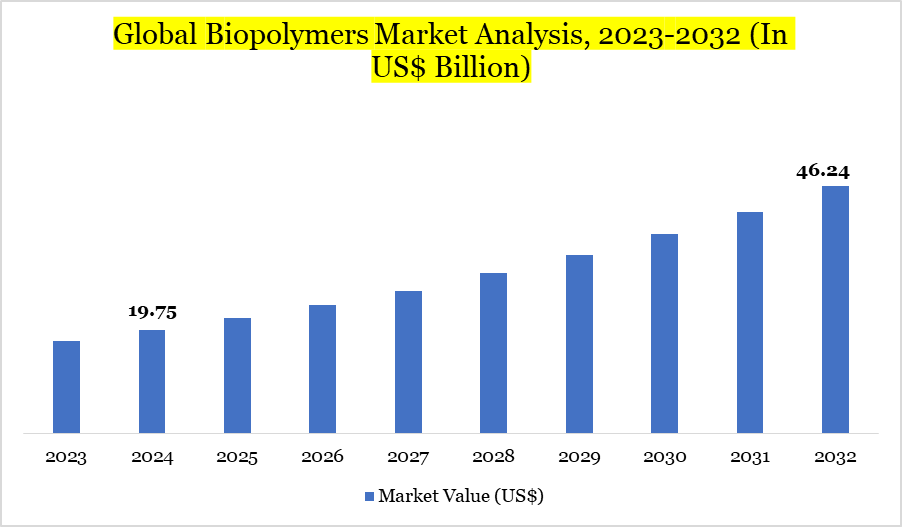
The biopolymer industry is experiencing significant expansion due to increasing global sustainability demands. Biopolymers, sourced from renewable materials including corn, sugarcane, residual wood, and agricultural biomass, provide an environmentally sustainable alternative to petrochemical plastics.
These biodegradable materials mitigate critical environmental challenges such as plastic pollution and global warming, facilitating their use across various sectors, including biomedical, food, and pharmaceuticals. The increasing demand for polyhydroxyalkanoates (PHA)-based biopolymers, which facilitate wound healing and exhibit superior recovery properties, substantially drives market expansion.
Moreover, with 78 million tons of single-use plastic packaging produced each year and with 2% being successfully recycled, environmental issues have reached a crucial juncture. This has prompted manufacturers, regulators, and major brands to invest in recyclable and biodegradable packaging alternatives. The increasing consumer demand for sustainable options, together with advancing governmental frameworks, is poised to bolster the growth trajectory of the biopolymer market
Biopolymers Market Key Takeaways
- Asia-Pacific accounted for around 38% market share in 2025 and is projected to grow at the fastest CAGR 15% through 2026–2033, driven by strong regulatory push on single-use plastics, rapid packaging demand, and large-scale biopolymer capacity expansion in China, India, and Southeast Asia. China is accelerating industrial-scale adoption of PLA and bio-based materials through national sustainability targets, while India is strengthening bans on conventional plastics and encouraging compostable alternatives, creating strong downstream demand from packaging, agriculture films, and consumer goods sectors.
- Europe held approximately 33% market share in 2025. The region remains the regulatory leader, driven by the EU Single-Use Plastics Directive, Extended Producer Responsibility (EPR) frameworks, and strict recycling/compostability standards. The market is shifting from “bio-based adoption” to “certified circular materials,” where compostability, industrial biodegradation, and traceability are becoming mandatory procurement criteria for FMCG and food packaging industries.
- North America accounted for nearly 28% market share in 2025, with growth increasingly shaped by corporate sustainability commitments rather than federal mandates. Large CPG brands and retailers are driving demand for biopolymers in packaging, while U.S. state-level bans on single-use plastics (notably in California, New York, and Washington) are accelerating substitution of fossil-based plastics. However, infrastructure gaps in industrial composting remain a key constraint limiting full-scale adoption.
- Material innovation is shifting the market from first-generation PLA dominance toward a more diversified portfolio including PHA, PBS, starch blends, and bio-based PET alternatives. PHA is gaining traction due to its marine biodegradability, while PLA continues to dominate rigid packaging applications. At the same time, next-generation enzymatic and microbial fermentation technologies are improving cost efficiency and scalability, narrowing the price gap with conventional plastics.
- The packaging industry remains the dominant end-use segment, but agriculture films, textiles, and medical applications are emerging as high-growth verticals. Biopolymers are increasingly being used in controlled-release agricultural films and biodegradable sutures, reflecting expanding functional performance beyond sustainability positioning.
- Despite strong growth momentum, the market faces structural challenges including high production costs, feedstock volatility (corn, sugarcane, cellulose), and inconsistent global composting infrastructure. However, increasing investments from major chemical players and oil & gas companies into bio-refineries are gradually improving scale economics, signaling a transition from niche adoption to early industrial mainstreaming by the early 2030
Biopolymers Market Trend
A significant trend transforming the biopolymer market is the increasing need for sustainable packaging across many industries. As environmental consciousness rises, manufacturers are shifting from conventional plastics to biodegradable substitutes. This transition is particularly apparent in packaging applications, where biopolymers offer end-of-life adaptability and substantially diminish environmental impacts.
Innovations like seaweed-based packaging from Indonesia's Evoware exemplify regional progress in accordance with global sustainability goals. Biopolymers are increasingly being utilized in biomedical applications owing to their inherent healing qualities. The strategic partnership between Mitsubishi Chemical Holding Corporation and Lenovo Group to manufacture bioplastic smartphone components exemplifies the growing incorporation of bio-based solutions into conventional industries.
Moreover, governmental initiatives prohibiting single-use plastics and promoting natural packaging alternatives are enhancing market preparedness. These advancements jointly establish biopolymers as essential facilitators of a circular economy, bolstered by consumers' increasing dedication to minimizing carbon footprints.
For more details on this report – Request for Sample
Biopolymers Market Scope
| Metrics | Details |
| By Product | Bio-PE, Bio-PET, PLA, PHA, Biodegradable Plastics, Other |
| By Application | Films, Bottle, Fibers, Seed Coating, Vehicle Components, Medical Implants, Other |
| By End-user | Food & Beverage, Pharmaceutical & Medical, Cosmetics, Agriculture, Industrial, Other |
| By Region | North America, South America, Europe, Asia-Pacific, Middle East and Africa |
| Report Insights Covered | Competitive Landscape Analysis, Company Profile Analysis, Market Size, Share, Growth |
Biopolymers Market Dynamics
Regulatory Influence and Consumer Cognizance Surge in Power Demand
The increasing environmental awareness among consumers and the escalating government regulations are serving as dual catalysts for the expansion of the biopolymer industry. The growing knowledge of the ecological impacts of petrochemical plastics, especially their role in pollution and global warming, is driving a transition towards sustainable alternatives.
Governments around are enacting prohibitions on single-use plastics and advocating for compostable, bio-based substitutes. These initiatives are bolstered by policy-level endorsement for packaging solutions that are recyclable or biodegradable in diverse end-of-life contexts. Regional policies in the Asia-Pacific area designed to eradicate plastic bags and mitigate climate change are driving the market for biopolymers.
Simultaneously, enterprises are acknowledging the reputational and regulatory hazards associated with the continued use of non-biodegradable plastics. As a result, biopolymers—especially those derived from PLA and PHA are increasingly recognized as essential elements in sustainable development efforts across several sectors, offering not only compliance but also enduring ecological benefits.
High Cost Impedes Commercial Feasibility
Biopolymers have substantial economic obstacles that impede their extensive utilization. The production cost of biodegradable plastics is generally 20–80% greater than that of conventional polymers, mainly due to elevated polymerization expenses and the absence of extensive manufacturing facilities.
Materials such as PHA, although beneficial for applications like food packaging and medical devices, persistently experience low yields and elevated processing costs. Despite being more inexpensively made than PHA, PLA is still more expensive than petroleum-based PE and PP. The increased expenses stem from restricted commercialization and insufficiently developed industrial economies of scale.
As a result, numerous industries continue to depend on less expensive petrochemical substitutes. The substantial expenditure in research and development, coupled with limited raw material processing skills, remains a significant obstacle to gaining mass-market penetration. The shift to biopolymers will be gradual and sector-specific until cost parity with conventional plastics is achieved.
Biopolymers Market Industry Trends and Strategic Insight
Governments and manufacturers are accelerating investments in biopolymer production to reduce dependence on fossil-based plastics and support circular economy initiatives. Rising environmental regulations and bans on single-use plastics are driving the adoption of biodegradable and bio-based polymer solutions across multiple industries.
Production capacity for biopolymers is expanding as packaging, automotive, agriculture, consumer goods, and healthcare companies secure long-term supply agreements to meet growing sustainability targets. Major material manufacturers are increasing investments in advanced biopolymer technologies and commercial-scale production facilities.
The biopolymers market is evolving from a niche sustainable materials segment into a strategic component of the global green materials economy. Businesses increasingly view biopolymers as essential for achieving carbon reduction goals, improving recyclability, and complying with evolving environmental regulations.
Technological advancements are reshaping product development through innovations in bio-based feedstocks, biodegradable polymers, high-performance bioplastics, and compostable materials. Continuous R&D is improving mechanical strength, thermal stability, barrier properties, and cost competitiveness, expanding biopolymer applications across diverse industries.
Supply chain diversification and regional manufacturing expansion are creating new growth opportunities worldwide. Governments and private companies are investing in domestic biopolymer production, renewable feedstock sourcing, and sustainable manufacturing infrastructure to strengthen supply security and support the global transition toward a low-carbon, circular economy.
Biopolymers Market Segment Analysis
The global biopolymers market is segmented based on product, application, end-user and region.
Biopolymer Packaging Fuels the Shift Toward Sustainability
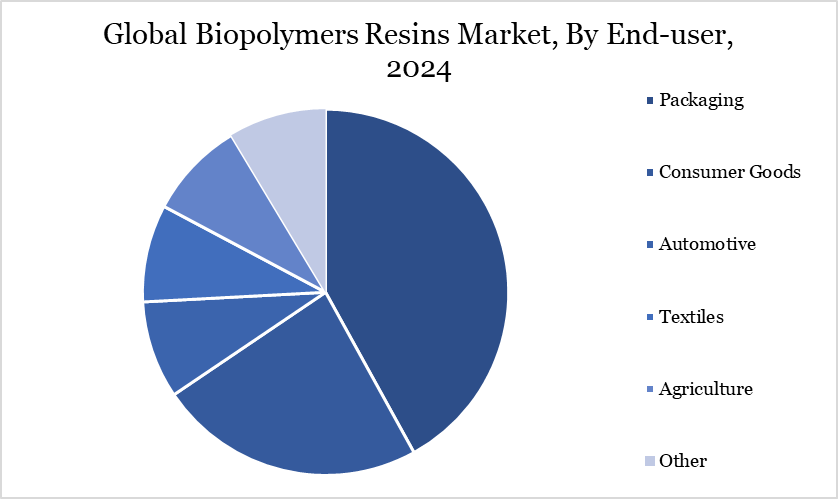
Packaging constitutes the predominant end-use sector for biopolymers, with the consumer goods market serving as a crucial catalyst for demand. Increasing environmental concerns and legal requirements are driving prominent consumer brands to incorporate biodegradable packaging into their product plans. Food and beverage packaging constitutes a significant share of biopolymer usage, since the industry encounters increasing criticism about its role in plastic waste generation.
The functionality of biopolymers, including moisture resistance, rigidity, and compostability, renders them suitable for use in wrapping, containers, and trays. Pharmaceuticals and personal care represent additional significant end-users, leveraging the sustainable allure to environmentally aware consumers.
As large-scale packaging manufacturers use bio-based solutions to achieve corporate sustainability objectives, the end-user scenario is continually transforming. Retailer pressure and changing customer expectations are further solidifying biopolymer usage in packaging formats, establishing this segment as the foundation for future market growth.
Why Does This Report Matter in 2026?
In 2026, the Biopolymers Market is being transformed by tightening environmental regulations, corporate sustainability commitments, and growing consumer demand for eco-friendly materials. Industries are accelerating the transition from conventional plastics to biodegradable and bio-based polymers to reduce carbon emissions, improve recyclability, and comply with evolving global regulations.
This report helps material manufacturers, packaging companies, consumer goods brands, investors, chemical producers, and policymakers identify the fastest-growing biopolymer segments, emerging applications, and regional investment opportunities. It also examines how innovations in renewable feedstocks, compostable materials, circular economy initiatives, and advanced biopolymer technologies are reshaping competitive dynamics.
Competitive advantage increasingly depends on production scalability, cost optimization, sustainable feedstock sourcing, regulatory compliance, and strategic partnerships across the value chain. The report provides actionable insights into market demand, technology adoption, investment trends, and long-term growth opportunities, enabling stakeholders to make informed business decisions.
Biopolymers Market White Space & Investment Opportunities
- Expand regional biopolymer production facilities to strengthen local supply chains and reduce dependence on fossil-based plastic imports.
- Invest in next-generation biodegradable and compostable polymers with improved performance for packaging, agriculture, healthcare, and consumer goods applications.
- Develop advanced recycling, composting, and circular economy solutions that enhance the sustainability and commercial viability of biopolymer products.
- Increase R&D in bio-based feedstocks, high-performance bioplastics, and cost-efficient manufacturing technologies to improve product competitiveness.
- Establish strategic partnerships between polymer manufacturers, packaging companies, consumer brands, and retailers to accelerate commercial adoption.
- Localize manufacturing and raw material sourcing across North America, Europe, and Asia-Pacific to improve supply resilience, reduce production costs, and meet growing regional demand for sustainable materials.
Biopolymers Market Geographical Share
Europe Advocates Sustainable Packaging through Regulatory Endorsement
Europe leads the worldwide biopolymer industry, propelled by rigorous regulatory standards and an environmentally aware consumer demographic. The region's sophisticated waste management systems and robust sustainability standards, exemplified by the EU's Single-Use Plastics Directive, promote the swift implementation of biodegradable packaging solutions.
European manufacturers are incorporating biopolymers into supply chains to conform to circular economy objectives, bolstered by governmental incentives and consumer demand. Europe's leadership is seen in its emphasis on research and development and sustainable industrial practices, facilitating the discovery and commercialization of bio-based products.
Public-private collaborations in the region are expediting investment in compostable and recyclable alternatives, particularly within the consumer goods and food packaging industries. While other regions grapple with inadequate waste management systems, Europe’s holistic strategy towards sustainability positions it as a pivotal participant and exemplary market in the global biopolymer shift.
Sustainability Analysis
Biopolymers provide a concrete solution for mitigating environmental degradation, closely harmonizing with global sustainability initiatives. Originating from renewable feedstocks like corn, sugarcane, and residual biomass, they exemplify a circular economy model that diminishes reliance on fossil resources. Their biodegradability guarantees a limited environmental impact, especially in contrast to conventional plastics that endure in ecosystems for decades.
The Ellen MacArthur Foundation's statistics on plastic pollution indicates that 32% of plastic packaging evades garbage collection systems, highlighting the necessity for scalable biodegradable solutions. Biopolymers fulfill this requirement by decomposing spontaneously and assimilating into organic waste cycles.
Biopolymer technologies such as seaweed packaging illustrate how local resources might facilitate sustainable alternatives. Policy interventions and increasing environmental awareness among consumers and businesses are fostering an environment favorable to biopolymer uptake. As industries progressively conform to carbon reduction and circular economy objectives, biopolymers will remain pivotal in transforming sustainable material environments.
Biopolymers Market Buyer Decision-Making Criteria
Buyers evaluate biopolymers based on material performance, biodegradability, mechanical strength, thermal stability, process compatibility, and overall lifecycle cost. While pricing remains an important consideration, sustainability performance, regulatory compliance, and product quality increasingly influence purchasing decisions. Certifications, renewable feedstock sourcing, and proven application performance are key factors in supplier selection.
For long-term supply agreements, buyers assess production capacity, supply reliability, product consistency, technical support, innovation capabilities, and the ability to deliver customized biopolymer solutions. Companies also evaluate recycling and compostability credentials, supply chain resilience, and the supplier's commitment to sustainability.
Procurement decisions are becoming increasingly cross-functional. Product development teams focus on material performance, procurement teams evaluate cost competitiveness and supply security, sustainability teams assess environmental impact, and regulatory teams ensure compliance with global standards. Suppliers that combine innovation, scalability, and sustainable manufacturing are more likely to secure long-term strategic partnerships.
Biopolymers Market Economic & Investment Analysis
The biopolymers market is supported by growing demand across packaging, consumer goods, agriculture, healthcare, automotive, and textiles. Increasing environmental regulations, corporate sustainability commitments, and consumer preference for eco-friendly materials are driving investments in bio-based and biodegradable polymer production. As adoption expands, manufacturers are increasing capacity while investing in advanced production technologies to improve efficiency and reduce costs.
Investment is increasingly directed toward next-generation biopolymer manufacturing, renewable feedstock development, advanced compounding technologies, and recycling infrastructure. Companies are also expanding regional production facilities to strengthen supply chains and meet rising global demand. Investors are focusing on high-value opportunities in sustainable materials, circular economy solutions, and innovative biopolymer technologies that offer long-term growth potential and competitive differentiation.
Biopolymers Market Major Players
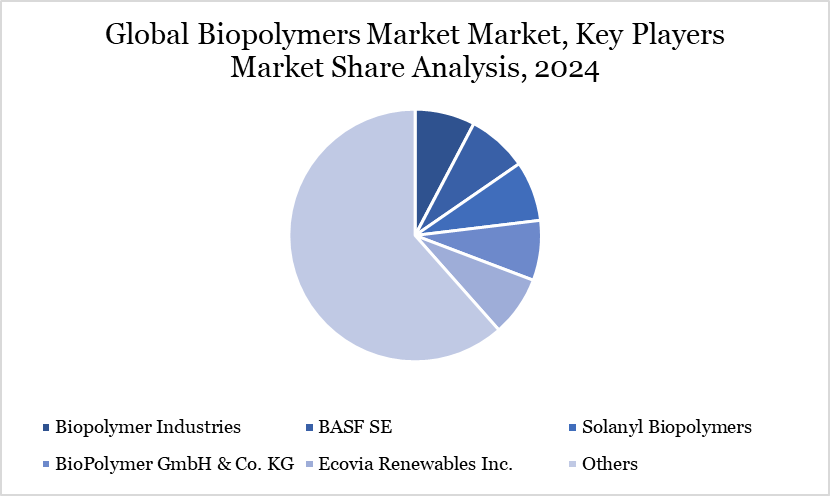
The major global players in the market include BASF SE, Solanyl Biopolymers, BioPolymer GmbH & Co. KG, Ecovia Renewables Inc., BiologiQ, Inc., ADM, DuPont, Novamont, BIOTEC.
Biopolymers Market Key Developments
- May 2026: Unity Technologies expanded its Unity Ads ecosystem with advanced AI-driven contextual in-game ad placement, improving non-intrusive ad experiences across mobile and console games. The update also strengthened partnerships with major publishers including Electronic Arts (EA) and Take-Two Interactive, enabling more dynamic programmatic monetization.
- April 2026: AppLovin Corporation introduced a next-generation machine learning optimization engine for its in-game advertising platform, enhancing real-time bidding accuracy and advertiser ROI. The company also deepened collaborations with mobile gaming studios such as Zynga and Scopely to scale immersive ad inventory across casual and mid-core games.
- March 2026: Anzu.io announced the expansion of its programmatic in-game advertising solution into AAA gaming environments, integrating non-disruptive 3D billboard ads in racing and sports titles. Strategic partnerships with esports-focused publishers and simulation game developers further strengthened its global in-game media footprint.
- February 2026: ironSource (Unity LevelPlay) rolled out enhanced mediation tools for in-game ad monetization, enabling developers to optimize multiple ad networks in real time. The upgrade improved fill rates and eCPMs across casual gaming apps, with strong adoption among mid-sized mobile game publishers.
- January 2026: Bidstack Group Plc secured new collaborations with leading sports and open-world game developers to deliver native in-game brand placements. The company focused on expanding immersive advertising formats that integrate directly into gameplay environments, enhancing realism and advertiser engagement.
Key Procurement Priorities and Buyer Evaluation Criteria
Companies investing in the Biopolymers Market evaluate suppliers based on their ability to consistently deliver high-quality bio-based and biodegradable materials, maintain scalable production capacity, and comply with global sustainability and environmental regulations. Buyers also assess suppliers on product performance, feedstock reliability, manufacturing capabilities, and long-term supply security.
Procurement decisions are increasingly influenced by corporate sustainability goals, circular economy initiatives, government regulations on single-use plastics, and growing consumer demand for environmentally friendly materials. Packaging manufacturers, consumer goods companies, automotive OEMs, healthcare providers, and industrial users are seeking partners capable of delivering innovative and cost-effective biopolymer solutions.
Key buyer evaluation criteria include biopolymer quality, renewable feedstock availability, biodegradability and compostability certifications, production scalability, regulatory compliance, pricing competitiveness, and supply chain resilience. Leading companies such as BASF SE, Solanyl Biopolymers, BioPolymer GmbH & Co. KG, Ecovia Renewables Inc., BiologiQ, Inc., ADM, DuPont, Novamont, BIOTEC are evaluated based on their ability to provide high-performance, sustainable biopolymer solutions that support large-scale commercial applications and evolving environmental requirements.





























































