


BioLNG Market Overview
The global BioLNG market reached US$ 2.76 billion in 2025 and is expected to reach US$ 64.82 billion by 2035, growing with a CAGR of 37.1% during the forecast period 2026-2035.
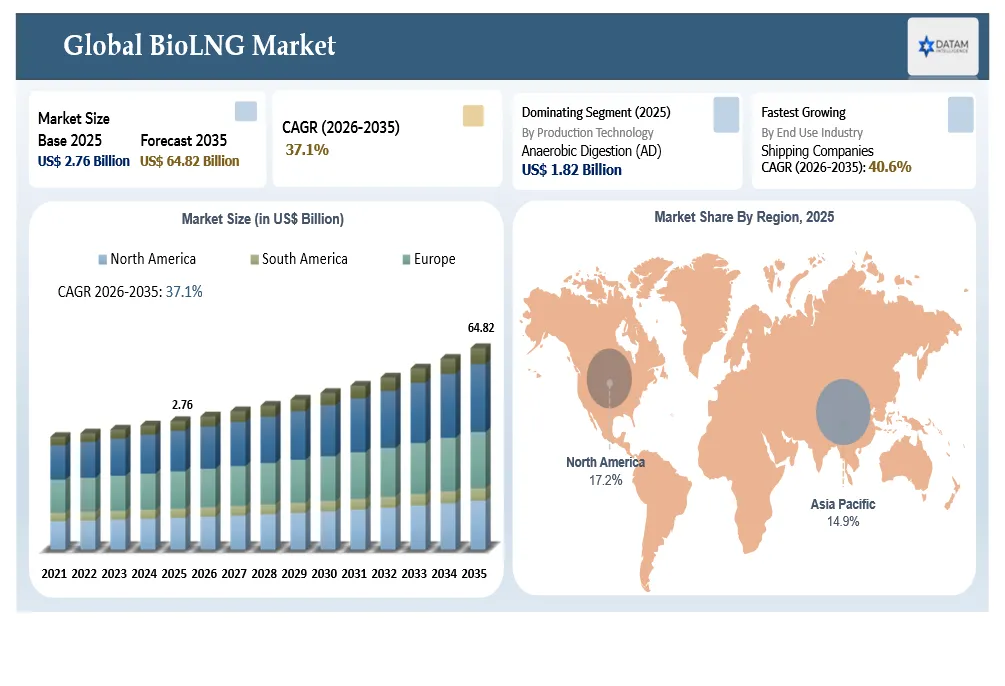
The production levels of BioLNG have witnessed significant growth in 2025 due to increased investments in the production of biomethane and renewable gas. Biomethane acts as the main raw material that makes up BioLNG which results from the liquefaction of upgraded biogas from agriculture residue, animal waste, food waste and municipal organic waste. Europe has maintained its position as the largest producer and consumer of BioLNG through its biomass production capacity that stands at 7 billion cubic meters (bcm) annually with more than 1,500 operating biomethane plants in 2025. An increase in the capacity to produce biomethane is contributing to BioLNG production especially in transportation and maritime sectors. The production of BioLNG involves liquefaction of biomethane to a temperature of about -162°C, reducing its volume by almost 600 times.
| BioLNG Facility | Operator | Capacity (Tons/Year) | Feedstock | Country |
| Amsterdam BioLNG Plant* | Nordsol B.V. | 2,00,000 | Organic Waste | Netherlands |
| Korskro Biogas Facility | Nature Energy (Shell plc) | 28,600 | Manure and Agricultural Waste | Denmark |
| Götene Biogas Plant | Gasum Oy | 8,600 | Agricultural Waste and Manure | Sweden |
| Hardanger BioLNG Plant* | Vireo AS (Nordsol Technology) | 6,500 | Organic Waste | Norway |
| Jordberga Biogas Plant | Gasum Oy | 7,900 | Agricultural Feedstocks | Sweden |
| Helsingborg Biogas Plant | Gasum Oy | 5,800 | Organic Waste | Sweden |
| Mönsterås BioLNG Facility | St1 Biokraft AB | 5,400 | Forestry Residues and Organic Waste | Sweden |
| Güstrow BioLNG Facility | EnviTec Biogas AG | 9,600 | Agricultural Residues | Germany |
| Tønder Biogas Plant | Nature Energy (Shell plc) | 28,900 | Organic Waste and Manure | Denmark |
| Nurmo BioLNG Plant* | Suomen Lantakaasu Oy | 9,125 | Manure and Food Waste | Finland |
More stringent regulations for decarbonization are promoting the use of BioLNG in the transportation and maritime segments. Greenhouse gases (GHG) can be lowered in the case of BioLNG by up to 80% as compared to normal marine fuels, whereas manure-based pathways can lead to negative carbon emissions as methane emissions in waste streams will not take place. There is no need for extensive modification of fueling infrastructure and engines in order to operate the fuel, which is going to help end users in decarbonizing in a cost-efficient manner. Moreover, the number of LNG-fueled vessels accounts for the largest proportion among the global order book of alternative fuel ships. Expected growth in modular liquefaction systems, developments in renewable natural gas (RNG) and biomethane projects and BioLNG fueling and bunkering infrastructure will be major market drivers during the forecast period.
| Parameters | BioLNG | Green Methanol | Renewable Diesel | Green Ammonia | Green Hydrogen |
| Production Cost (US$/GJ) | 18–35 | 25–50 | 25–45 | 30–60 | 40–80 |
| Lifecycle Carbon Intensity | Very Low to Carbon Negative | Very Low | Low to Very Low | Near Zero | Zero at Point of Use |
| Fuel Availability (2025) | Medium–High | Medium | High | Low | Low |
| Global Production Capacity | Growing Rapidly | Limited | Established | Emerging | Emerging |
| Infrastructure Compatibility | High (LNG Infrastructure) | Moderate | Very High (Drop-in Fuel) | Low | Low |
| Storage & Transportation | Cryogenic (-162°C) | Ambient Liquid | Conventional Liquid Fuel | Pressurized/Cryogenic | High Pressure/Cryogenic |
| Technology Maturity | High | Medium | High | Low–Medium | Medium |
| Heavy-Duty Transport Suitability | High | Moderate | High | Low | Moderate |
| Maritime Fuel Suitability | High | High | Moderate | High | High |
| Scalability Potential | High | High | Moderate | High | High |
| Key Constraint | Feedstock Availability | Production Cost | Feedstock Constraints | Infrastructure Requirements | Cost and Infrastructure |
BioLNG Market Key Takeaways
- The formation of BioLNG takes place through the liquefaction process of biomethane, which involves the reduction of temperature to -162°C, thereby decreasing the volume of gas up to 600 times relative to its gas phase.
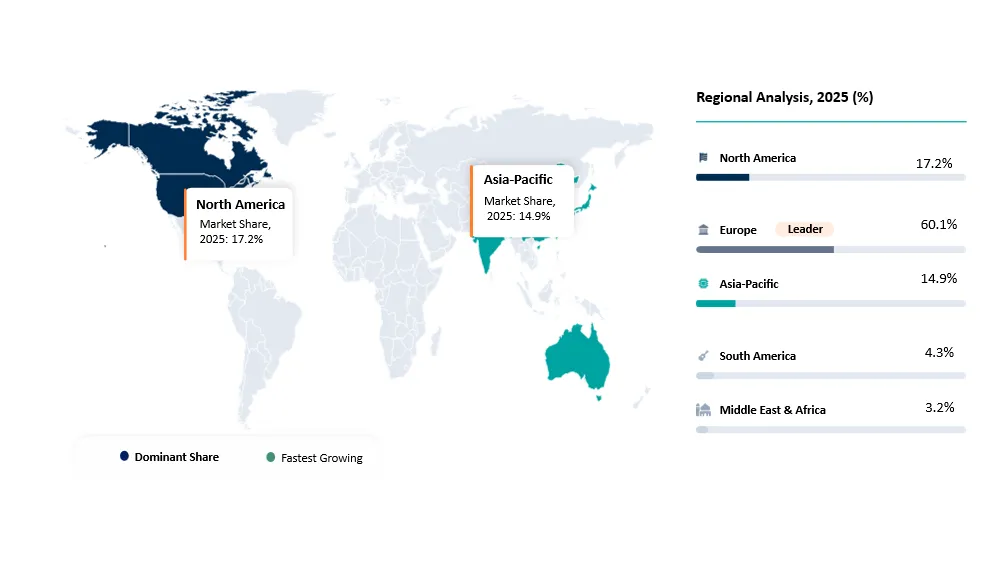
- The Europe region holds the largest BioLNG market with a share of 60.1% in 2025 owing to well-established biogas infrastructure with more than 1,500 biomethane facilities with production of more than 5 billion cubic meters of biomethane.
- Anaerobic Digestion (AD) is the most prominent production technology in the market, holding market share of 66% in 2025 due to its commercially proven nature, feedstock flexibility and widespread application for the conversion of agricultural residues, animal manure, food waste and municipal organic waste to biomethane for the production of BioLNG.
- The Shipping Companies segment is expected to witness the fastest growth, exhibiting a CAGR of 40.6% from 2026 to 2035, as a result of rising adoption of BioLNG as a renewable energy source for marine vessels and stringent decarbonization regulations within the maritime industry.
- The biomethane market globally crossed the 25 billion cubic meter capacity mark in 2025, with BioLNG emerging as one of the fastest-growing renewable fuel technologies for hard-to-abate industries such as heavy-duty transport and maritime shipping.
BioLNG Industry Trends and Strategic Insights
- Increasing Vertical Integration throughout the Value Chain: The industry is witnessing an increasing trend of vertical integration between feedstock sourcing, upgrading of biomethane, liquefaction and delivery of fuel, which will help to ensure better supply chain security, lower production cost and increased profitability from BioLNG projects.
- Agricultural Waste-to-BioLNG Projects are Becoming Popular: Producers are focusing on developing BioLNG projects using agricultural waste, manure and municipal organic waste to fulfill the renewable fuel production and methane emissions reductions goals, especially in Europe and North America.
- Multi-Year Offtake Contracts are Becoming Common: The BioLNG producers are signing multi-year off-take contracts with logistics, shipping and fuel companies to assure steady cash flow as the demand for renewable fuels is increasing.
- Modular Liquefaction Technologies for Small-Scale Production Become More Profitable: Using modular liquefaction units allows decentralized production of BioLNG near the source of feedstock and minimizes the costs of transportation of raw biogas.
- Fuel Suppliers Invest in Infrastructure for Multi-Fuel Use: Fuel providers start to create infrastructure suitable for bunkering LNG and BioLNG as a renewable marine fuel complying with emission restrictions.
BioLNG Market Scope
| Metrics | Details | |
| 2025 Market Size | US$ 2.76 Billion | |
| 2035 Projected Market Size | US$ 64.82 Billion | |
| CAGR (2026-2035) | 37.1% | |
| Largest Market | Europe | |
| Fastest Growing Market | Asia-Pacific | |
| By Feedstock | Agricultural Residues, Animal Manure, Food Waste, Municipal Organic Waste, Sewage Sludge, Industrial Organic Waste, Forestry and Wood Biomass, Energy Crops and Others | |
| By Production Technology | Anaerobic Digestion (AD), Thermochemical Process, Power-to-Methane Integrated BioLNG and Landfill Gas Upgrading | |
| By Conversion Technology | Membrane Separation, Pressure Swing Adsorption (PSA), Water Scrubbing, Chemical Scrubbing (Amine-Based), Cryogenic Separation and Others | |
| By Distribution Mode | On-Site Production and Consumption, Pipeline Injection and Liquefaction, Bulk Transportation by Cryogenic Tankers and Virtual Pipeline Distribution | |
| By End Use Industry | Transportation and Logistics Companies, Shipping Companies, Industrial Manufacturing Facilities, Utilities and Energy Companies, Mining Companies, Municipal Waste Management Companies and Agriculture and Farming Enterprises | |
| By Liquefaction Capacity | Small-Scale Plants (<50 Tons/Day), Medium-Scale Plants (50–200 Tons/Day) and Large-Scale Plants (>200 Tons/Day) | |
| By Sales Channel | Direct Supply Agreements, Fueling Station Networks, Energy Trading Companies and Third-Party Fuel Suppliers | |
| By Region | North America | U.S., Canada, Mexico |
| Europe | Germany, UK, France, Spain, Italy, Poland | |
| Asia-Pacific | China, India, Japan, Australia, South Korea, Indonesia, Malaysia, Singapore, Vietnam, Thailand, Philippines, Taiwan | |
| South America | Brazil, Argentina | |
| Middle East and Africa | UAE, Saudi Arabia, South Africa, Israel, Turkiye | |
| Report Insights Covered | Competitive Landscape Analysis, Company Profile Analysis, Market Size, Share, Growth | |
Why does this report matter in 2026?
The BioLNG market is gaining prominence in 2026 owing to the energy transition taking place globally with a focus on renewable fuels. Road transportation, maritime industry and industrial energy consumption are looking for viable solutions through the use of low carbon fuels without requiring significant change in current LNG technology. The BioLNG market presents an opportunity in being a fuel that is capable of meeting the objectives of decarbonization, waste to energy and energy security all at once. Investments in the biomethane production facilities, liquefaction facilities and BioLNG fuelling stations are helping the commercialization of the market in Europe, North America and Asia-Pacific region.
The relevance of this report in 2026 lies in the fact that it offers stakeholders a thorough analysis of the elements that will influence the development of the next phase of the market. This report offers deep insights into feedstock trends, technology used in the production and upgrading processes, demand for BioLNG across applications, the nature of investments made in different regions and competitive strategies followed by major market players. The report also discusses opportunities in emerging areas such as maritime bunkering, decentralized BioLNG production and waste-to-energy projects along with the challenges posed by infrastructure and regulatory issues for the growth of the market.
BioLNG Market White Space & Investment Opportunities
- Decentralized BioLNG Plants: There is scope for decentralized BioLNG plants that can be located close to agricultural and municipal waste sites. This will help in efficient feedstock procurement and lower transportation costs.
- Investment in Refueling Stations and Bunkering Facilities for BioLNG: Investment in refueling stations for heavy-duty vehicles and bunkering facilities for BioLNG is still untapped in developing markets. There is huge potential for future development.
- Manure-Based and Waste-Derived BioLNG Investment Opportunities: Increasing regulatory incentives for lowering methane emissions are making it increasingly profitable to invest in BioLNG projects which will use manure from livestock, food waste and municipal solid waste as feedstock.
- Strategic Partnering through Long-Term Offtake Contracts: As more logistics and shipping companies move towards adopting renewable fuels, there are investment opportunities for producers to enter into long-term BioLNG offtake agreements, thereby improving the bankability of their projects.
- Investments in Biogas Upgrading and Liquefaction Technologies: The development of membrane technology for biogas upgrading and liquefaction processes presents investment opportunities for improved economic performance in BioLNG production.
BioLNG Future Market Transformation
The BioLNG industry is predicted to experience a number of major changes during the coming decade as it progresses from a minor segment of renewable fuels to a key player in global decarbonization plans aimed at transportation and industries. Future development of the market will be marked by massive adoption of biomass gasification, liquefaction solutions and distribution infrastructure for renewable fuels. More effective use of such biomass resources as agricultural waste, urban organics and livestock manure will contribute to the development of circular economy concepts.
In addition to this, it is anticipated that there will be a move towards an integrated approach to renewable gas ecosystem in which the BioLNG plants will be located near waste management facilities and LNG fueling stations. With improved efficiency in terms of modularization of LNG production technology, process optimization and carbon accounting methods, the efficiency of production will be boosted, making projects economically viable. In addition to this, rising demand for LNG-powered trucks and ships and increasing investments in renewable marine fuels along with offtake agreements will make BioLNG a viable low-carbon fuel solution.
BioLNG Market Buyer Decision-Making Criteria
BioLNG consumers are paying attention to the fact that the solution offered should help achieve tangible emission cuts, but it should still be feasible. The lifecycle emissions of BioLNG have a substantial effect on buying decisions, especially for companies which strive to implement their corporate net-zero plans and abide by the requirements of renewables legislation. Along with sustainability aspects, buyers carefully consider issues such as availability of feedstocks, scalability of production and fuel supply security needed for the reliable procurement of fuel over time.
Key Buyer Decision-Making Criteria
- Lifecycle carbon emission reduction potential
- Total cost of ownership and fuel economics
- Feedstock availability and long-term fuel supply security
- Compatibility with existing LNG engines and infrastructure
- Production scalability and supplier reliability
- Availability of refueling and bunkering infrastructure
- Government incentives and regulatory compliance requirements
- Long-term supply agreements and strategic partnerships
Financial aspects have become important as well. Consumers evaluate the total cost of ownership based on the price of fuel, transportation and storage expenses, compatibility with the existing infrastructure and any possible government incentives for using BioLNG. Compatibility with existing vehicles and ships that use LNG as well as the infrastructure for such fuel is especially appealing because it does not require much money to invest. In addition, long-term contracts and cooperation with fuel suppliers and growing availability of networks for refueling in bio-LNG become important when making purchasing decisions.
BioLNG Market Economic & Investment Analysis
BioLNG industry is seeing huge investments because the government and the private entities have made the development of renewable gas infrastructure and low carbon fuel solutions an important part of their agendas. Investments are being made more in projects that include biogas generation, biomethane upgrading, liquefaction systems and fueling infrastructure in order to reduce inefficiencies. Europe remains ahead when it comes to investing in the BioLNG market due to favorable fuel policies and carbon reduction objectives. However, there has been an increase in investments in waste to energy and renewable natural gas projects in North America and Asia Pacific region.
From an economic point of view, BioLNG provides high value in that it enables the conversion of low-value organic material to high-value renewable fuel that can be used alongside current LNG supply chains. Innovations in the form of modular liquefaction systems and decentralization have been helping cut transportation costs related to raw biogas as well as scaling up smaller projects. Moreover, the growing economic value of environmental characteristics including renewable fuel certificates and carbon credits is boosting profitability of projects in many regions. With rising demands for renewable fuels in areas including heavy transport and maritime sectors, investments in the BioLNG sector are set to rise in future.
BioLNG Investment Trends in the Market
- Corporate Investments Growing in Multi-Feedstock BioLNG Plants: Corporate investments in projects that can process various feedstock types, including agricultural biomass, organic waste and manure, are rising in order to decrease supply risks and increase plant efficiency throughout the year.
- BioLNG Investments are Being Made on Projects with Secure Offtake Agreements: Investors are focusing on securing off-take deals with fleet managers, ship operators and industrial buyers, which enhances the financial viability of these projects.
- Expansion of Liquefaction Capacity is Becoming a Major Focused Area for Investments: Instead of investing only in biomethane production, investors have begun allocating money in BioLNG liquefaction plants to cover up supply shortages in trucking and marine fuel markets.
- Energy Companies and Waste Management Joint Ventures on the Rise: Strategic partnerships are now more frequently materializing as joint ventures whereby feedstocks, technology and fuel logistics channels are used to speed up BioLNG development on a commercial scale.
- Investment Interest Spreading from Europe to Asia-Pacific: Countries including India, China and Japan are seeing more investment in renewable gas infrastructure as policymakers support waste-to-energy schemes and low-carbon fuels for transport and industry.
Strategic Indicators for the BioLNG Market
High Regulation Impact
The regulatory impact on the BioLNG market is very high, considering that the development of this industry is directly linked to the policies of mandatory use of renewable fuels, carbon dioxide emission reduction and waste management in major economies. The government’s initiatives concerning the use of renewable natural gas, low-carbon transport fuels and circular economy principles have become significant determinants in the decision-making processes of investment and business activities. The framework of renewables energy directives, low carbon fuel standards and ship emissions policies is driving the usage of BioLNG in the fields of heavy-duty transport and marine shipping. Moreover, certification in regard to the sustainability of the feedstock used, reduction of GHG emissions and traceability of renewable fuels is becoming increasingly important for market players who want to enter premium markets and receive environmental bonuses.
High Investment Activity
Investments are being seen in high numbers within the BioLNG market as a result of the increased commercialization of renewable gas technologies and growing demand for low-carbon fuels used in transport and marine sectors. Investments are being made all along the chain starting from biomethane production, liquefaction plant building, cryogenic storage, to BioLNG fueling stations. There is an increasing trend for investments in waste-to-fuel projects along with strategic alliances to gain reliable sources of feedstock and off-take arrangements. Furthermore, investments in modular liquefaction technologies and multi-feedstock production plants are also contributing towards better scalability and flexibility. With supportive policy framework and growing decarbonization goals within companies, investments are expected to stay strong for the forecast period.
Supply Chain Disruption
There are considerable risks of supply chain disruptions within the BioLNG market owing to its dependence on steady organic feedstock supplies, as well as liquefaction and cryogenic transportation processes. Fluctuations in the amount of agricultural waste, seasonal nature of feedstock supplies and feedstock competition for biomethane feedstocks can impact the stability of production and its cost. Moreover, the lack of BioLNG liquefaction facilities and refueling infrastructure in certain regions can pose challenges as demand grows. There is also a risk of supply chain disruption in terms of equipment necessary for producing and transporting BioLNG, including biogas upgrading systems, cryogenic tanks and liquefaction units.
Pricing Volatility
The BioLNG industry witnesses moderate pricing volatility because of fluctuations in feedstock availability, liquefaction cost, renewable fuel premium and incentives in place through regulations. In the European region in 2025, BioLNG supported by subsidy was available at the cost of roughly US$25.06/MMBtu whereas unsubsidized BioLNG cost roughly US$37.23/MMBtu and indicated a cost gap of almost 49% due to differential subsidies and certifications. Additionally, unsubsidized BioLNG cost an extra price of about US$89/MWh over the natural gas benchmark price as opposed to US$47/MWh for subsidized BioLNG.
Procurement Pressure
BioLNG industry is facing growing procurement challenges as the demand for certified renewable energy remains higher than the growth of capacity in the production and liquefaction of such fuels. Procurement is becoming increasingly significant as buyers seek to obtain long-term contracts that will provide reliable sources of fuel as well as ensure stable pricing and compliance with regulations. Procurement of sustainable feedstocks like animal manure, agricultural residues and waste biomass has become more challenging especially in the light of competition between biomethane, renewable natural gas and BioLNG producers who seek the same sources.
New Technology Adoption
In the BioLNG market, the uptake of cutting-edge technology that can increase the efficiency of production and lower the costs of operations is on the rise. There is increased usage by players in the market of efficient membrane biogas upgrading systems, modular liquefaction technology and digital process optimization technology to increase the performance and scalability of plants. Multi-feedstock processing abilities are also becoming popular, making it possible for producers to be able to utilize different sources of feedstocks and improve their efficiency. In addition, advancements in small-scale liquefaction technology and cryogenic storage technology have made decentralized BioLNG production possible.
Regional Expansion Opportunity
BioLNG market offers considerable opportunities for expansion in terms of regions, especially beyond Europe towards Asia-Pacific and North American markets. India, China, Japan and the US are currently ramping up the development of renewable gas infrastructure and waste-to-energy initiatives as part of their decarbonization efforts. The growing use of LNG in trucks and the rising need for alternative marine fuels are creating an enabling environment for the adoption of BioLNG in emerging markets. In addition, the availability of ample agricultural and municipal organic waste in developing countries is creating ample feedstock opportunities for decentralized and industrial-scale production of BioLNG.
Government Policy Support
Government policy remains one of the most critical determinants behind the development of the BioLNG industry. The adoption of mandatory requirements for renewable fuels, the low carbon fuel standard, the regulation of waste management and carbon emissions reduction is making investments in the BioLNG value chain attractive. Policies that are aimed at developing the production of biomethane and reducing the levels of greenhouse gas emissions and creating a circular economy are also positively influencing project feasibility and the process of commercialization. Moreover, various financial incentives in many countries such as subsidies, fuel credits and tax exemptions are making investments in BioLNG production more attractive.
Pricing Intelligence
Pricing information related to BioLNG is more than price volatility and is indicative of the increasing importance of renewable fuel characteristics and CO2 reduction capabilities in various regions. For example, in 2025, European BioLNG prices were estimated at the approximate level of US$25-37/MMBtu and are much higher compared to prices of traditional LNG due to additional sustainability certifications and premiums for renewable fuels. It becomes evident that market players are developing indexed pricing methods which take into account feedstock costs, environmental certificates and carbon intensity scores to increase predictability of procurement. Moreover, manure and waste BioLNG have premium pricing because of their better CO2 reduction characteristics and availability of regulatory incentives in certain regions. Considering the growing role of the maritime and heavy-duty transport sectors in BioLNG demand, there is a clear tendency of moving from commodity pricing schemes to value-based models which evaluate both fuel and environmental characteristics.
| HS Code | Reporter | Trade Flow | 2025 Trade Value | Interpretation |
| 271111 | United States | Export | US$ 35.32 Billion | The U.S. remains the world's largest LNG exporter, offering significant opportunities for future BioLNG export infrastructure development. |
| 271111 | China | Import | US$ 24.84 Billion | China's large LNG import market provides substantial potential for BioLNG adoption in industrial and transportation applications. |
| 271111 | Japan | Import | US$ 33.18 Billion | Japan's mature LNG ecosystem creates favorable conditions for BioLNG integration under its carbon neutrality strategy. |
| 271111 | South Korea | Import | US$ 20.47 Billion | South Korea's dependence on imported LNG supports long-term opportunities for renewable LNG alternatives such as BioLNG. |
Disruption Analysis of BioLNG Market
Disruptions in the BioLNG industry can be attributed to the convergence of policies for renewable fuels, energy from waste technology and changing fuel demands in the transport sector. One such disruption involves moving away from the conventional methods of generating renewable gas from centralized plants towards a modular approach in which plants will be close to sources of biomass. This move has led to improvements in logistics and lowered costs of transporting feedstocks while opening doors to mid-sized project developers. On the other hand, there has been increased use of LNG-fueled vehicles and ships, leading to a change in fuel demands.
The market faces yet another form of disruption in terms of shifting competitive landscape within the realm of renewable fuels. Apart from competing with conventional LNG that is sourced from fossils, BioLNG now competes with renewable diesel, green methanol and green hydrogen in terms of investments and use. Developments in technologies related to upgrading via membranes, small scale LNG liquefaction and carbon intensity-based certification are driving the commercialization process even further along with improving project economics. What is more important is that the rising focus on mitigation of methane emissions and efforts at building a circular economy make BioLNG produced from waste sources more strategically valuable.
BioLNG Market BCG Matrix: Company Evaluation
STAR
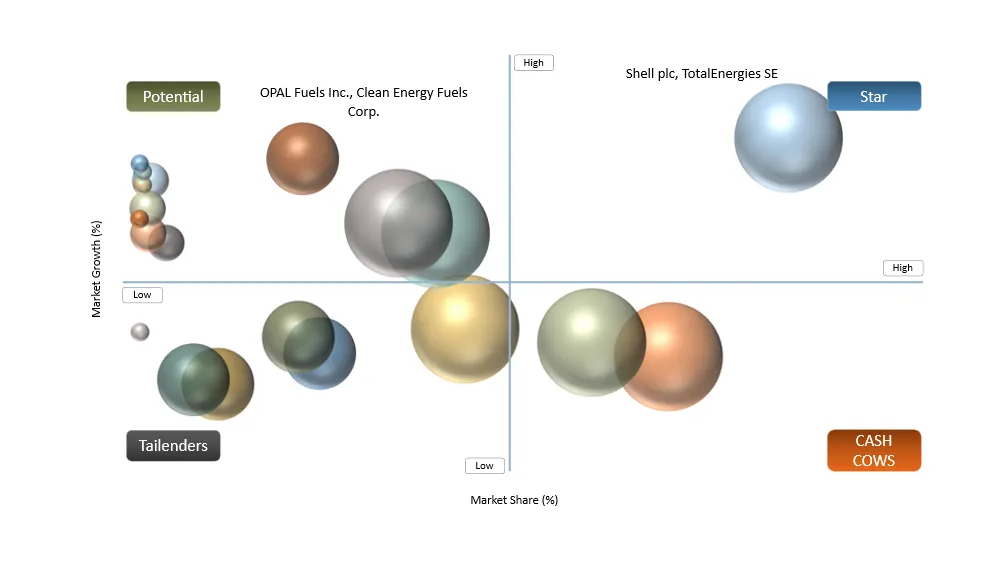
Companies such as Shell plc, TotalEnergies SE, Gasum Oy, St1 Biokraft AB and EnviTec Biogas AG fall under the STAR group in the BioLNG industry because of their good commercialization approach, investments in the whole value chain of biomethane to BioLNG and increased production capacity. The above-named companies have been able to secure a position in the renewable gas production, liquefaction process and the provision of low-carbon fuels in transport and marine applications.
POTENTIAL
OPAL Fuels Inc., Clean Energy Fuels Corp., Ameresco, Inc., Aemetis, Inc., Nordsol B.V., Waga Energy SA, HAM Group and Landwärme GmbH form the POTENTIAL category due to their increasing projects, technology and expansion plans. The firms have been establishing themselves in the market by making efforts for the commercialization of renewable gas, modular BioLNG production technologies and collaborations focused on the use of BioLNG in heavy duty transport and industry applications.
BioLNG Market Dynamics
Driver Impact Analysis
| Driver | Market Growth Impact (%) | Demand Concentration | Impacted Use Case | Strategic Impact |
Stringent Transportation and Maritime Decarbonization Regulations | 6.40% | Europe and North America | Renewable fuel adoption in LNG-powered trucks and marine vessels | Accelerates BioLNG demand through renewable fuel compliance requirements and emissions reduction targets |
Expansion of Biomethane and BioLNG Production Infrastructure | 5.80% | Europe and Asia-Pacific | Commercial-scale BioLNG production and distribution | Improves supply availability and supports large-scale market commercialization |
Growing Adoption of LNG-Powered Heavy-Duty Vehicles | 5.30% | Europe and China | Long-haul road transportation | Creates immediate opportunities for BioLNG as a drop-in renewable fuel without major engine modifications |
Increasing Investments in Waste-to-Energy Projects | 4.90% | Europe, India and the United States | Agricultural waste and manure-based BioLNG production | Strengthens feedstock security while enhancing circular economy and methane reduction benefits |
Driver: Stringent Transportation and Maritime Decarbonization Regulations
Stringent decarbonization policies in the transportation and maritime industry continue to be the main reason behind the development of the BioLNG market, as this is speeding up the transition towards renewable low-carbon fuels. Renewable fuel standards, green house gas emission reduction policies and low-carbon fuel standards, which incentivize the use of sustainable fuels in difficult-to-decarbonize industries are being introduced around the globe. The use of BioLNG provides a strong competitive edge, as BioLNG is a drop-in renewable fuel for existing LNG fueled vehicles and ships, allowing for emissions to be reduced without major changes in capital investments. Policy support for methane emission reductions, renewable gas deployment and circular economy continues to increase investments in BioLNG.
Restraint Impact Analysis
| Restraint | Drag on Market Growth (%) | Primary Impact Area | Impacted Use Case | Strategic Impact |
High Capital Costs for BioLNG Production and Liquefaction Facilities | 5.70% | Production Infrastructure | Commercial-scale BioLNG projects | Delays project commissioning and limits market entry for small and medium-sized developers |
Limited BioLNG Refueling and Bunkering Infrastructure | 5.20% | Distribution Networks | Heavy-duty transportation and maritime applications | Restricts large-scale fuel adoption outside established markets such as Europe |
Feedstock Supply Variability and Competition | 4.80% | Feedstock Procurement | Waste-to-energy and biomethane production | Increases procurement challenges and impacts long-term supply security and pricing stability |
Regulatory and Certification Compliance Complexity Across Regions | 4.40% | Market Commercialization | Cross-border BioLNG trade and renewable fuel certification | Creates compliance burdens and increases operational costs for producers and suppliers |
Restraint: High Capital Costs of BioLNG Production and Infrastructure
The lack of sufficient capital investment is the main bottleneck that presently prevents the large-scale commercialization of the BioLNG market. In order to implement BioLNG projects, a company needs to invest a lot in such areas as feedstock preparation, biogas upgrading, liquefaction technologies, cryogenic storage and fuel transportation networks. It means that the return on the invested money will be achieved over a more extended period of time. Capital investments needed for a commercial-scale BioLNG plant depend on the scale of the facility, feedstock availability and degree of integration across the value chain. As a rule, capital expenditures amount to the following: between $20 million and $150 million for each BioLNG facility and $1,500-$4,000 per ton of yearly production of BioLNG. Capital-intensive projects create difficulties not only for large companies but also for small and medium businesses which lack necessary financing in developing countries. Moreover, the need for additional capital expenditures caused by the development of BioLNG refueling facilities, bunkering facilities and cryogenic transportation network makes it more difficult to expand the market.
BioLNG Market Segmentation Analysis
The global BioLNG market is segmented based on feedstock, production technology, conversion technology, distribution mode, end-use industry, liquefaction capacity, sales channel, and region.
By Production Technology
Anaerobic Digestion Emerges as the Foundation of Commercial BioLNG Production
Anaerobic Digestion (AD) is projected to become the leading BioLNG production technology in 2025 because of its technical maturity, commercial feasibility and capability to use various organic substrates. The technology is highly popular in Europe and North America where it is used for the conversion of agricultural residues, animal waste, food waste and other organic waste streams into biomethane that is then liquefied to obtain BioLNG. In comparison with the alternatives, the AD-based BioLNG production process is characterized by established supply chain networks, supportive regulation and lower risks of commercialization. The ability to be used for decentralized energy from waste projects and investments in renewable gases infrastructure have contributed to the growth of AD's market share. Additionally, rising efforts to mitigate methane emissions and to implement the concept of circular economy have further driven the implementation of AD-based facilities.
| Parameters | AD | Thermochemical Process | Power-to-Methane | Landfill Gas Upgrading |
| Technology Maturity | High | Medium | Low-Medium | High |
| Primary Feedstock | Organic Waste | Lignocellulosic Biomass | Green Hydrogen + CO₂ | Landfill Gas |
Feedstock-to-Biomethane Conversion Efficiency (%) | 55-70% | 60-75% | 50-65% | 70-90% |
| CAPEX (US$ Million) | 20-80 | 50-150 | 80-200 | 15-60 |
| CAPEX (US$/TPA BioLNG Capacity) | 1,500-3,000 | 2,500-5,000 | 4,000-7,000 | 1,200-2,500 |
| OPEX | Medium | High | Very High | Medium |
| Production Cost (US$/GJ) | 18-35 | 25-45 | 35-60 | 20-40 |
| Infrastructure Requirements | Moderate | High | Very High | Moderate |
| Commercial Readiness (2025) | Commercial | Early Commercial | Demonstration/Early Commercial | Commercial |
| Best Suited Applications | Transportation & Maritime | Large-scale BioLNG | Seasonal Energy Storage | Waste Management Projects |
By End Use Industry
Maritime Decarbonization Accelerates BioLNG Adoption Among Shipping Companies
The Shipping Companies are predicted to have the highest growth rates during the forecast period due to the swift shift towards the use of low-carbon fuels and stricter greenhouse gas emission rules within the marine industry. BioLNG is seen as a perfect renewable fuel for marine purposes due to its ability to be used by current LNG-powered ships and its bunkering facilities which help ship owners to cut down carbon emissions without altering propulsion systems. The increase in LNG-powered vessels makes BioLNG's demand even higher since there will be more than 640 ships powered by LNG by the end of 2024 and according to the data provided by the global orderbook, the total number of LNG-powered ships will reach 1,400 units in 2030. The increasing investments in the construction of BioLNG bunkering facilities in Europe's top harbors and the use of dual-fuel engines are expected to drive the market development. In addition, global efforts to support sustainable fuels and decarbonization plans are expected to lead to long-term purchase agreements between BioLNG producers and shipping companies.
BioLNG Market Geographical Penetration
U.S. BioLNG Market Landscape
The United States is one of the rapidly growing BioLNG markets due to its large number of RNG production plants, availability of biomass and organic waste sources, as well as increasing investments into low-carbon fuels. The rising use of LNG-fueled vehicles along with the increasing need for methane emission control have fueled the growth of investments in biomethane upgrading and BioLNG liquefaction facilities. Favorable policies related to the promotion of renewable fuels, along with carbon reduction measures, are contributing towards the commercialization of BioLNG in transportation and industrial sectors. Partnerships between energy companies, waste management companies and fuel distributors will help to increase BioLNG production capacities and supply in the future.
Japan BioLNG Market Outlook
BioLNG market in Japan is influenced by the carbon-neutral policy of the country and the already developed LNG industry. Growing demand for low-carbon shipping fuels and advancements in the development of renewable gases will contribute to the development of BioLNG as an alternative fuel, especially in the maritime and industrial segments. Due to the need for foreign energy supplies, the focus on developing alternative energy sources in Japan is increasing, which may allow utilizing the available LNG infrastructure. Joint efforts of energy suppliers and innovative companies will facilitate the development of waste-to-energy projects and renewable gases utilization in Japan.
China BioLNG Market Trends
BioLNG is receiving increasing attention in China as a result of their decarbonization efforts and energy from waste strategies. With the increase in the number of LNG-fueled vehicles in China, alongside the development of renewable energy facilities, BioLNG is set for rapid development in the coming years. This has been supported by various government initiatives geared towards promoting the circular economy as well as proper waste management, which ensures that bio-waste such as agricultural residue is used to generate renewable energy.
BioLNG Market Competitive Landscape
- There is moderate consolidation in the BioLNG Market and competition within the industry comes from firms that operate in the fields of renewable gas production, liquefaction technology and fuel distribution networks for transport and marine applications.
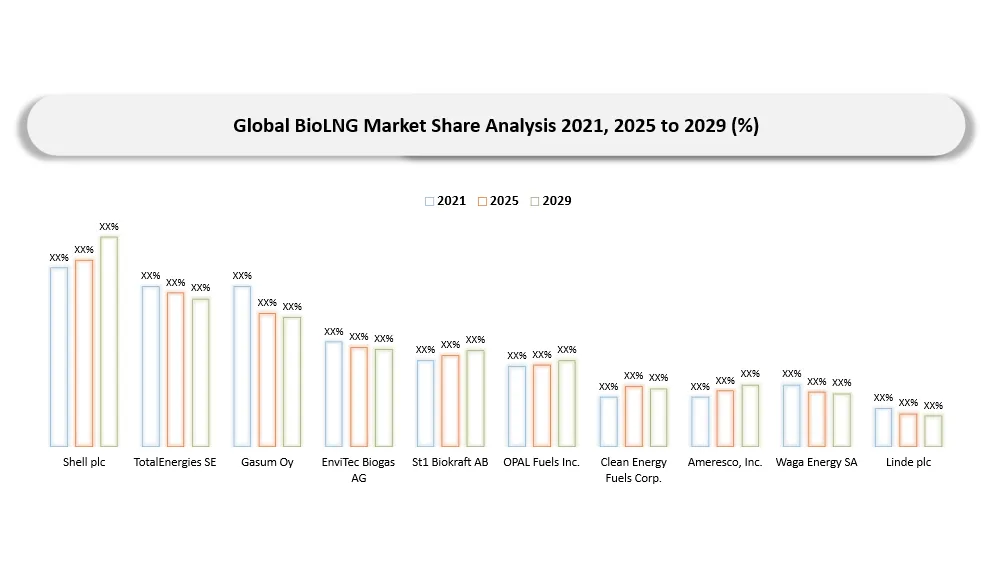
- Major firms like Shell plc, TotalEnergies SE, Gasum Oy and St1 Biokraft AB are consolidating their market positions through investment in bioLNG production capacities, acquisitions and renewable fuel supply deals.
- Firms like OPAL Fuels Inc., Clean Energy Fuels Corp., Nordsol B.V., Waga Energy SA and Ameresco, Inc. are entering into the market through innovations and project developments.
- Companies’ capabilities to secure reliable sources of feedstock, meet low-carbon certification criteria and develop multi-feedstock BioLNG production plants on an industrial scale have become key factors of competitive differentiation.
- The development of BioLNG bunkering infrastructure, decentralization of liquefaction technologies and long-term off-take arrangements are changing the competitive landscape and motivating firms to solidify themselves throughout the whole value chain.
BioLNG Market Key Companies
- Shell plc (United Kingdom)
- TotalEnergies SE (France)
- BP plc (United Kingdom)
- Chevron Corporation (United States)
- Gasum Oy (Finland)
- EnviTec Biogas AG (Germany)
- St1 Biokraft AB (Sweden)
- OPAL Fuels Inc. (United States)
- Clean Energy Fuels Corp. (United States)
- Waste Management, Inc. (United States)
- Ameresco, Inc. (United States)
- Aemetis, Inc. (United States)
- Waga Energy SA (France)
- Veolia Environnement S.A. (France)
- Landwärme GmbH (Germany)
- HAM Group (Spain)
- Nordsol B.V. (Netherlands)
- Hitachi Zosen Inova AG (Switzerland)
- Linde plc (United Kingdom)
- Molgas Energy Group (Spain)
BioLNG Market Major Pain Points
- Inadequate Large-Scale Commercial Liquefaction Capacity: There is inadequate capacity to have BioLNG liquefaction facilities available in many areas, making supply limited even when there is increased biomethane production capacity.
- Feedstock Availability and Quality Fluctuations: There may be variations in feedstock availability due to seasonal variations in the availability of agricultural residue, inefficiencies in waste management and competition for feedstock availability.
- High Capital Intensive Nature of Various Stages of the Process: High capital investment needs in various stages of the process such as biogas purification, liquefaction, storage and distribution of BioLNG.
- Underdeveloped Refueling and Bunkering Infrastructure: There is a lack of infrastructure to support BioLNG refueling in long-distance transport and sea transport since refueling stations are not available in regions where the technology is not mature.
- Difficult Renewables Fuel Certification and Carbon Management: Adherence to the sustainability certification standards, GHG emissions reduction criteria and renewable fuel tracking systems becomes complicated due to variations in jurisdictional regulations.
BioLNG Market Recent Developments
- August 2025: Gasum Oy started supplying BioLNG to Wasaline's Aurora Botnia service, establishing the world’s first carbon-neutral marine shipping route in the Baltic Sea region and further contributing to the commercial success of renewable marine fuels in Northern Europe.
- September 2025: Shell plc agreed on a long-term contract with Hapag-Lloyd regarding the delivery of liquefied biomethane (BioLNG), promoting the use of renewable marine fuels in the international container shipping sector.
- October 2025: Nordsol B.V. won the bid from Vireo AS to deliver its proprietary liquefaction technology to Norway’s new BioLNG facility in Hardanger. This BioLNG plant is estimated to produce around 90 GWh of BioLNG per year using about 125,000 metric tons of organic biomass.
- October 2025: Gasum Oy has confirmed that the full fleet of gas bunkering and carrier vessels owned by Gasum uses BioLNG to meet the requirements of the pooling service called FuelEU Maritime.
- June 2025: St1 Biokraft AB launched a new BioLNG liquefaction unit at the biogas plant in Mönsterås, Sweden, which increases the production capacity of renewable fuels in the heavy-duty transport sector.
Analyst View / Opinion on BioLNG Market
- BioLNG is poised to become one of the major renewable fuels for sectors which are difficult to decarbonize such as heavy-duty transport and marine transport where electrification proves economically infeasible.
- Competitiveness of the industry in the long run will require the emergence of value chains which include feedstock supply, biomethane upgrading, liquefaction and distribution infrastructure.
- Expansion on an industrial scale will require not only the addition of new production capacities but also investments in liquefaction facilities and offtake contracts.
- Multi-feedstock BioLNG projects are predicted to have an edge due to increased supply security, increased utilization rates of the plants and reduced risk due to feedstock price volatility.
- Organizations capable of capitalizing on both premiums offered for renewable fuels and carbon savings from low-carbon BioLNG are anticipated to be market leaders over the forecast period.
BioLNG Market Target Audience
| INDUSTRY | WHO SHOULD BUY THIS REPORT? | REASON TO BUY THIS REPORT |
| Renewable Energy | BioLNG Producers and Biomethane Developers | To identify high-growth feedstocks, production technologies and regional investment opportunities |
| Oil & Gas | LNG Suppliers and Renewable Fuel Companies | To evaluate BioLNG integration opportunities within existing LNG value chains and fuel portfolios |
| Transportation & Logistics | Fleet Operators and Commercial Transport Companies | To assess BioLNG adoption trends, fuel availability and long-term procurement strategies |
| Maritime Shipping | Ship Owners, Marine Fuel Suppliers and Bunkering Operators | To understand renewable marine fuel opportunities and regulatory developments affecting BioLNG demand |
| Waste Management | Waste-to-Energy Project Developers and Organic Waste Processors | To capitalize on opportunities in feedstock utilization and circular economy initiatives |
| Industrial Manufacturing | Industrial Energy Consumers and Plant Operators | To evaluate BioLNG as a low-carbon alternative for industrial heating and energy requirements |
| Infrastructure & Engineering | EPC Contractors and Cryogenic Infrastructure Providers | To identify opportunities related to liquefaction plants, storage systems and fueling infrastructure development |
| Financial Services | Institutional Investors, Venture Capital Firms and Infrastructure Funds | To assess market attractiveness, investment trends and project commercialization potential |
| Government & Regulatory Bodies | Policymakers, Energy Agencies and Environmental Authorities | To support renewable fuel policy development and evaluate market readiness for BioLNG deployment |
| Technology Providers | Biogas Upgrading, Liquefaction and Fueling Technology Companies | To understand emerging technology adoption trends and strategic partnership opportunities |
Why Choose DATAM?
- Data-Driven insights: Dive into detailed analyses with granular insights such as pricing, market shares and value chain evaluations, enriched by interviews with industry leaders and disruptors.
- Post-Purchase Support and Expert Analyst Consultations: As a valued client, gain direct access to our expert analysts for personalized advice and strategic guidance, tailored to your specific needs and challenges.
- White Papers and Case Studies: Benefit quarterly from our in-depth studies related to your purchased titles, tailored to refine your operational and marketing strategies for maximum impact.
- Annual Updates on Purchased Reports: As an existing customer, enjoy the privilege of annual updates to your reports, ensuring you stay abreast of the latest market insights and technological advancements. Terms and conditions apply.
- Specialized Focus on Emerging Markets: DataM differentiates itself by delivering in-depth, specialized insights specifically for emerging markets, rather than offering generalized geographic overviews. The approach equips our clients with a nuanced understanding and actionable intelligence that are essential for navigating and succeeding in high-growth regions.
- Value of DataM Reports: Our reports offer specialized insights tailored to the latest trends and specific business inquiries. The personalized approach provides a deeper, strategic perspective, ensuring you receive the precise information necessary to make informed decisions. The insights complement and go beyond what is typically available in generic databases.
What DATAM Uniquely Provides
- An in-depth analysis of the global value chain of BioLNG in terms of raw materials availability, biomethane upgradation, liquefaction, storage and end use application in various industries including transport, marine and industrial sectors.
- An assessment of production capacity, infrastructure development and investments in major BioLNG producing regions such as Europe, North America and APAC.
- An evaluation of the economics of feedstock, renewable fuel certification and carbon reduction policies impacting BioLNG commercialization and pricing strategies.
- Insights from strategy related to marine bunkering, fuels for heavy duty transport, modular liquefaction systems and decentralized models of BioLNG production.
- Market intelligence on key players, trends, partnering approaches and future growth potential influencing the worldwide BioLNG market until 2035.
Questions This Report Answers
- What are the key market drivers, restraints, opportunities and emerging trends shaping the global BioLNG market during 2026–2035?
- Which feedstocks, production technologies and end-use applications are expected to drive the highest growth and investment activity in the BioLNG market?
- How are evolving renewable fuel regulations, carbon reduction policies and sustainability certification requirements influencing BioLNG commercialization across major regions?
- Which countries are leading BioLNG production capacity expansion, infrastructure development and adoption across transportation, maritime and industrial sectors?
- What competitive strategies, technological advancements and partnership models are expected to define the future growth trajectory of the global BioLNG market?


























































