


BESS Thermal Management Market Size and Overview
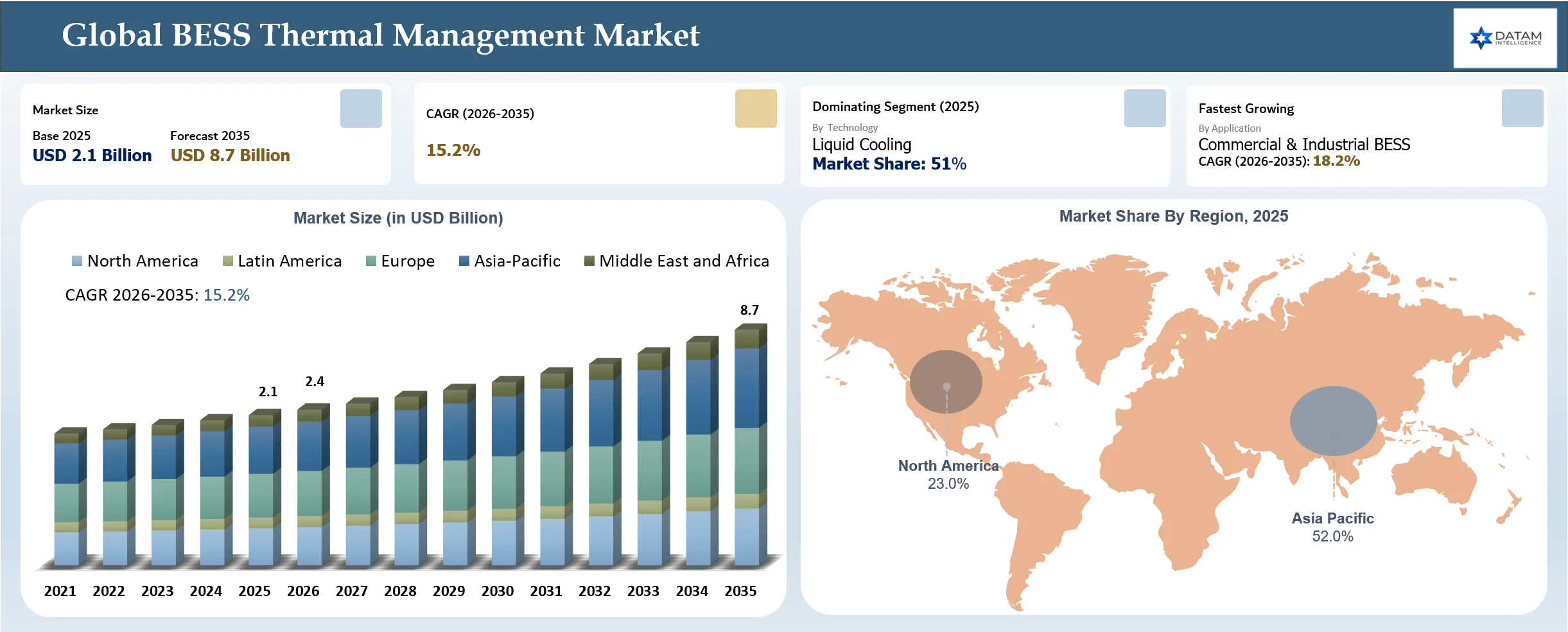
The global BESS thermal management market was valued at US$2.1 billion in 2025 and is projected to reach US$8.7 billion by 2035, growing at a CAGR of 15.2% during 2026–2035. The BESS thermal management market is driven by the rapid expansion of utility-scale BESS installations, increasing battery energy density and system capacity, growing adoption of liquid-cooling technologies, rising focus on thermal runaway prevention and fire safety, tightening BESS safety standards, and the need to maintain battery performance.
The expansion of grid-scale battery energy storage systems is increasing demand for thermal management solutions required for cooling, temperature control, and thermal monitoring. In 2025, global battery storage additions reached 108 GW, up about 40% from 2024, with around 80% of new capacity coming from utility-scale systems, expanding the addressable demand for BESS thermal management.
Growing battery energy density and larger BESS installations are increasing the need for effective heat removal and temperature control. This is driving manufacturers to develop dedicated cooling technologies that maintain optimal battery operating temperatures and support system performance and reliability. For instance, in October 2025, MAHLE announced a dedicated liquid-cooling module for stationary battery energy storage systems, securing its first series order with production planned for 2026. The module provides up to 42 kW of cooling capacity and maintains battery temperatures within the optimal 20–30°C range.
Growing Investment in Large-Scale BESS Projects Creates Opportunities for Advanced Thermal Management
The increasing investments into large BESS projects provide significant growth potential for thermal management system providers, since BESS of higher storage capacities need reliable systems for thermal management, temperature control and safety. For instance, in May 2025, ReNew announced that it would invest around US$2.5 billion into development of the 2.8 GW hybrid renewable energy project in Andhra Pradesh that would include a 2 GWh BESS. The first phase would involve construction of 415 MWh BESS, with the rest of the capacity to be built in later phases.
The growing pipeline of large BESS projects in such countries as Australia creates increased demand for thermal management systems that are able to support high storage capacities and longer duration of operations. For instance, in September 2025, Australia's Capacity Investment Scheme chose 16 large-scale battery projects that have a total capacity of 4.13 GW and approximately 15.37 GWh.
BESS Thermal Management Market Key Takeaways
- Asia Pacific held the largest regional market share, accounting for approximately 52% of the global BESS thermal management market in 2025, supported by rapid battery-storage deployment in China, India, Japan, South Korea, and Australia, along with large-scale renewable integration and expansion of grid-connected energy storage.
- Liquid Cooling held the largest technology market share, accounting for approximately 51% of the global BESS thermal management market in 2025, driven by higher heat-transfer efficiency, improved temperature uniformity, and increasing adoption in high-density and utility-scale battery energy storage systems.
- Commercial & Industrial BESS is projected to be the fastest-growing application, registering an estimated CAGR of 18.2% during 2026–2035, driven by increasing adoption of behind-the-meter storage for peak-demand management, renewable-energy integration, energy-cost optimization, and backup power.
- Liquid-cooled and high-density thermal-management technologies are reshaping BESS cooling, enabling more effective heat removal, tighter temperature control, higher battery energy density, and reliable operation of large-capacity systems operating at higher charge and discharge rates.
- Integration of thermal management with BMS, EMS, sensors, and safety systems is expanding, as BESS manufacturers increasingly combine temperature monitoring, automated cooling controls, thermal-event detection, remote monitoring, and predictive maintenance to improve battery safety, system availability, and operating efficiency.
BESS Thermal Management Market Industry Trends and Strategic Insight
- BESS manufacturers are increasingly shifting toward liquid-cooled thermal-management systems as higher battery energy density, larger storage capacities, and higher charge and discharge rates require more efficient heat removal and tighter temperature control.
- Thermal-management systems are becoming more closely integrated with battery management systems (BMS), sensors, and energy-management platforms, enabling real-time temperature monitoring, automated cooling control, fault detection, and optimization of auxiliary energy consumption.
- Increasing battery capacity and longer-duration storage are driving demand for thermal-management systems capable of maintaining temperature uniformity across large battery packs, modules, and containers while operating under variable load conditions.
- Battery safety is becoming a major consideration in thermal-management system design, with manufacturers integrating temperature monitoring, cooling controls, fire detection, thermal-runaway mitigation, and emergency-response systems into BESS architectures.
- Liquid cooling is gaining traction in utility-scale and high-density BESS applications, while air cooling continues to serve applications where lower system complexity, easier maintenance, and lower upfront costs are prioritized.
- Thermal-management manufacturers are developing modular and scalable solutions that can be adapted to different BESS capacities, battery chemistries, container configurations, and operating environments, supporting both utility-scale and commercial and industrial storage applications.
- Manufacturers are focusing on improving cooling-system energy efficiency by reducing auxiliary power consumption through optimized pumps, fans, compressors, heat exchangers, and intelligent control systems, helping improve the overall round-trip efficiency of BESS installations.
- Advanced monitoring and digital technologies are becoming increasingly important, with remote monitoring, predictive maintenance, cloud-based analytics, and automated thermal control helping operators identify abnormal temperature conditions and improve system availability.
- The expansion of BESS into regions with extreme temperatures is increasing demand for thermal-management systems capable of maintaining stable battery operating conditions across high- and low-temperature environments, particularly for outdoor and containerized installations.
BESS Thermal Management Market Scope
| Metrics | Details | |
| 2025 Market Size | USD 2.1 Billion | |
| 2035 Projected Market Size | USD 8.7 Billion | |
| CAGR (2026-2035) | 15.2% | |
| Largest Market | Asia-Pacific | |
| Fastest Growing Market | Asia-Pacific | |
| By Technology | Air Cooling, Liquid Cooling, Immersion Cooling, Phase Change Material (PCM) Cooling, Heat Pipe Cooling, Other Cooling Technologies | |
| By Component | Heat Transfer Components, Thermal Interface Materials, Air Cooling Components, Liquid Cooling Components, Monitoring & Control Components, Other Components | |
| By BESS Configuration | Containerized BESS, Cabinet-Based BESS, Rack-Based BESS, Modular BESS, Other BESS Configurations | |
| By Battery Chemistry | Lithium Iron Phosphate (LFP), Nickel-Based Lithium-Ion, Vanadium Redox Flow, Zinc-Bromine Flow, Lead-Based Batteries, Other Battery Chemistries | |
| By Application | Utility-Scale BESS, Commercial & Industrial BESS, Residential BESS, Microgrid & Off-Grid BESS | |
| By Region | North America | U.S., Canada, Mexico |
| Europe | Germany, United Kingdom, France, Italy, Spain, Netherlands, Switzerland, Sweden, Norway, Denmark, Belgium, Poland, Austria, Ireland, Portugal, Greece, Finland, and Rest of Europe. | |
| Asia-Pacific | China, Japan, India, South Korea, Australia, New Zealand, Singapore, Malaysia, Thailand, Indonesia, Vietnam, Philippines, Taiwan, and Rest of Asia Pacific. | |
| Latin America | Brazil, Argentina, Rest of Latin America | |
| Middle East and Africa | UAE, Saudi Arabia, South Africa, Israel, Türkiye, Rest of Middle East and Africa | |
| Report Insights Covered | Competitive Landscape Analysis, Company Profile Analysis, Market Size, Share, Growth | |
BESS Thermal Management Market Disruption Analysis
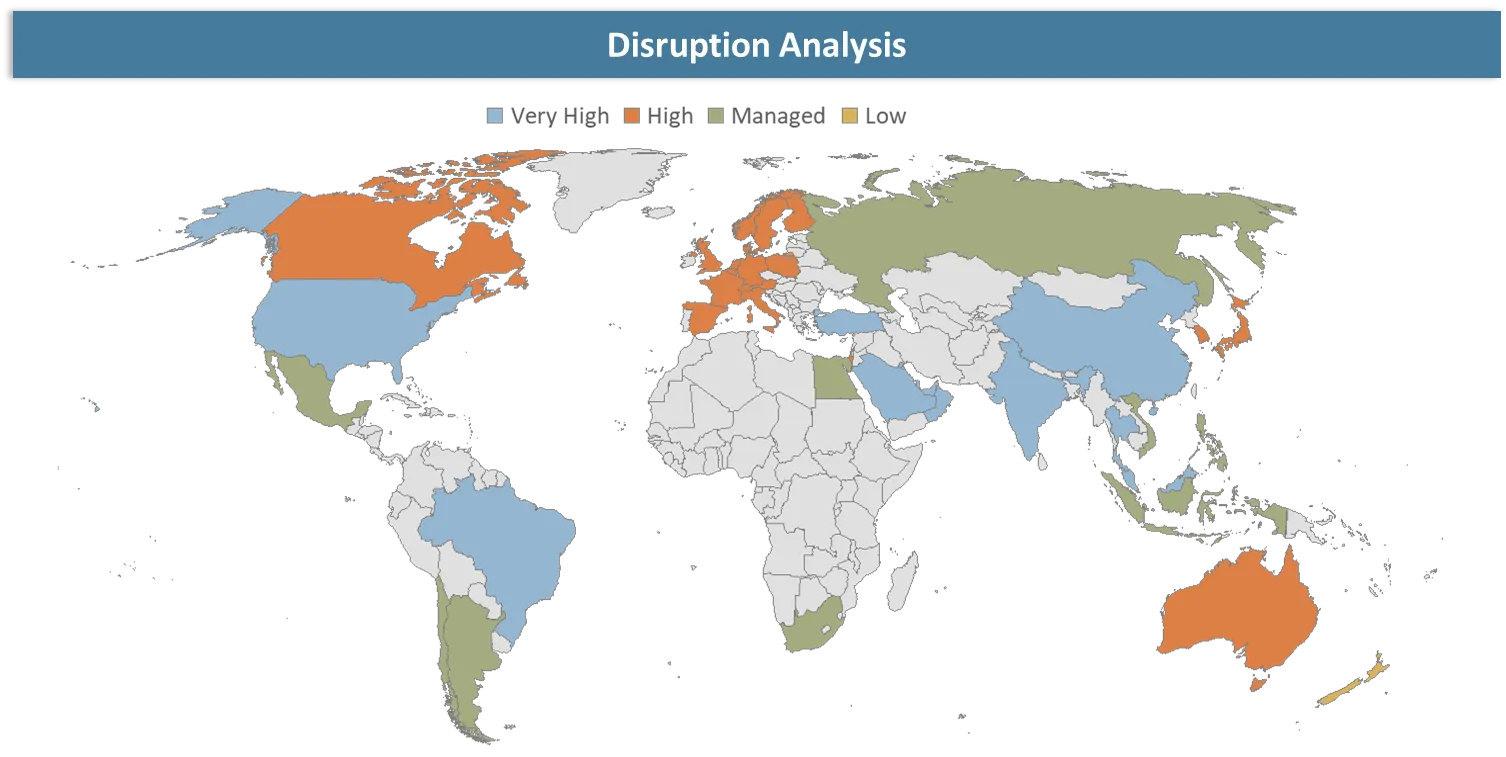
Shift from Conventional Air Cooling Toward High-Efficiency Liquid and Immersion Cooling
The BESS thermal-management industry is shifting from conventional air-cooling systems toward liquid-based technologies as battery energy density, storage capacity, and charging and discharging rates increase. Air cooling can become less effective in high-density battery configurations because air has lower heat-transfer capacity, making it more difficult to maintain uniform temperatures across large battery packs and containerized systems.
Liquid cooling provides substantially higher heat-transfer efficiency and enables closer temperature control across battery cells and modules. Leading BESS manufacturers are increasingly integrating liquid-cooled architectures into high-capacity systems. For instance, CATL's EnerD 5 MWh energy-storage system uses liquid cooling, while ZTT's ENERGRID NA7 incorporates a modular liquid-cooling system for its 7.58 MWh BESS platform.
BESS Thermal Management Market BCG Matrix: Company Evaluation

Rittal GmbH & Co. KG, Pfannenberg Group Holding, Vertiv Group Corp, and Danfoss A/S are positioned as Stars, supported by dedicated BESS thermal-management portfolios, liquid-cooling and chiller technologies, and strong industrial and energy-storage customer bases. Boyd Corporation, Tark Thermal Solutions, Miba AG, and Valeo SE are positioned as Potential Stars, supported by specialized battery-cooling technologies, liquid-cooling capabilities, and established thermal-management expertise.
CATL, Schneider Electric, Fluence Energy, LLC, and Aotecar are positioned as Question Marks, supported by BESS-related thermal-management capabilities but with stronger focus on complete energy-storage systems, energy infrastructure, or specialized cooling solutions. No company is positioned as a Tailender among the selected companies, as all have meaningful exposure to BESS thermal management or integrated energy-storage solutions.
BESS Thermal Management Market Dynamics
Driver Impact Analysis
| Driver | Market Growth Impact (%) | Demand Concentration | Impacted Areas | Strategic Impact |
Rapid Expansion of Utility-Scale Battery Energy Storage Systems | 30% | Strong demand across China, the U.S., Australia, Germany, the U.K., and other markets with large-scale grid storage deployment. | Grid-scale BESS, renewable energy integration, frequency regulation, peak shaving, capacity storage | Expands the installed base of battery systems requiring active cooling, temperature monitoring, and thermal-control systems, directly increasing demand for BESS thermal-management solutions. |
Increasing Battery Energy Density and BESS Capacity | 25% | High demand in China, the U.S., South Korea, Japan, and Europe, where high-capacity and containerized BESS are increasingly deployed. | High-density battery packs, containerized BESS, utility-scale storage, C&I storage | Higher energy density and greater installed capacity increase heat generation within confined battery enclosures, supporting adoption of liquid cooling, advanced HVAC systems, thermal sensors, and temperature-control technologies. |
Growing Focus on Thermal Runaway Prevention and BESS Fire Safety | 20% | Strong concentration in the U.S., Europe, China, Australia, and other markets introducing stricter BESS safety requirements. | Thermal monitoring, battery cooling, fire prevention, thermal propagation control, container safety | Drives integration of thermal monitoring, cooling, early-warning systems, and thermal propagation controls to reduce overheating and improve BESS safety and compliance. |
Increasing Adoption of Liquid-Cooling Systems for High-Capacity BESS | 15% | Concentrated in China, the U.S., Europe, and other markets adopting high-density utility-scale and C&I storage systems. | Liquid cooling, cooling plates, pumps, heat exchangers, coolant circulation, high-power BESS | Shifts demand from conventional air cooling toward higher-performance liquid-cooling architectures that provide more effective heat removal and improved cell-to-cell temperature uniformity. |
Expansion of BESS Deployment Across Diverse Climatic Conditions | 10% | Demand across hot climates in the Middle East, India, Australia, Southeast Asia, and the U.S., as well as cold-weather markets in North America, Europe, and Northern Asia. | Battery heating, cooling, HVAC, environmental control, outdoor containerized BESS | Increases demand for integrated heating and cooling systems capable of maintaining battery operating temperatures under high ambient temperatures, cold conditions, humidity, and seasonal variations. |
Increasing Integration of Advanced Liquid-Cooling Technologies in High-Capacity BESS
As BESS becomes more energy-dense, conventional air cooling can become less suitable for applications requiring high cooling capacity and temperature uniformity. This is creating opportunities for liquid cooling.
BESS manufacturers are integrating dedicated thermal-control technologies into energy storage systems to improve operating stability and battery performance.
The integration of advanced cooling systems into utility-scale and commercial BESS is expanding the role of thermal management in system design. For instance, in October 2025, REPLUS Engitech launched the RE5K, a 5.01 MWh liquid-cooled BESS container at Renewable Energy India Expo 2025. The system incorporates intelligent liquid cooling and is designed for grid-scale and industrial energy storage, with the company stating that the cooling system supports stable thermal performance under extreme environmental conditions.
Restraint Impact Analysis
| Restraint | Drag on Market Growth (%) | Primary Impact Area | Impacted Use Case | Strategic Impact |
High Capital and Installation Costs of Advanced Thermal-Management Systems | 25% | Cooling equipment, thermal-control infrastructure, installation and system integration costs | Utility-scale BESS, commercial and industrial BESS, high-capacity containerized storage | Increases upfront BESS project costs and can limit adoption of advanced liquid-cooling and integrated thermal-management systems, particularly in cost-sensitive projects. |
High Auxiliary Energy Consumption of Active Cooling Systems | 20% | Cooling power requirements, system efficiency and round-trip energy performance | Large-scale BESS operating under high ambient temperatures and high charge-discharge cycles | Cooling equipment consumes part of the stored energy, reducing usable system output and increasing operating costs, creating pressure to improve thermal-management efficiency. |
Complexity of Thermal Management System Integration | 20% | Battery racks, cooling loops, HVAC, sensors, BMS, EMS and control systems | Containerized utility-scale BESS, liquid-cooled battery cabinets and integrated storage systems | Requires precise coordination between battery and thermal-control components, increasing engineering, commissioning and maintenance complexity. |
Maintenance and Reliability Requirements for Liquid-Cooling Systems | 15% | Pumps, coolant circuits, heat exchangers, valves, piping and coolant management | High-capacity liquid-cooled BESS and long-duration storage systems | Coolant leakage, pump failure, clogging and component degradation can affect battery availability, increasing maintenance requirements and lifecycle costs. |
Limited Standardization Across BESS Thermal-Management Architectures | 10% | System design, component compatibility, controls and replacement requirements | Multi-vendor BESS projects, retrofit applications and large-scale storage deployments | Differences in battery chemistry, pack configuration, cooling architecture and control interfaces complicate system integration and can increase customization and replacement costs. |
High Auxiliary Energy Consumption of Active Cooling Systems in Battery Energy Storage Systems
Active cooling systems consume additional electricity through compressors, pumps, fans, and other thermal-control components. This auxiliary power reduces the net energy available for delivery from the BESS and can increase operating costs, particularly in high-temperature environments where cooling demand is higher. A 2026 experimental study evaluated the energy consumption of liquid cooling for commercial battery energy storage under high-temperature conditions, showing that cooling efficiency directly affects the overall operating efficiency of the system.
The study evaluated a 215-kWh commercial lithium-ion BESS at 40°C and recorded 5.2 kWh of cooling-system energy consumption during a complete charging, static, discharging, and static cycle under the baseline configuration. Optimizing the cooling system's supply temperature, compressor speed, and pump speed reduced cooling energy consumption by 28.9%, indicating that minimizing auxiliary power demand is necessary to improve the efficiency and operating economics of BESS thermal management.
BESS Thermal Management Market Segment Analysis
The global BESS thermal management market is segmented based on technology, component, BESS configuration, battery chemistry, application and region.
Liquid Cooling Emerges as the Leading Thermal Management Technology for BESS
Liquid cooling has emerged as the leading thermal-management technology for BESS because increasing battery energy density, larger storage capacities, and higher charge/discharge rates require more efficient and uniform heat removal than conventional air cooling can provide. Liquid-based systems transfer heat more effectively and maintain tighter temperature uniformity across battery cells, helping control temperature, improve battery performance and extend operating life. This makes liquid cooling particularly suitable for utility-scale and containerized BESS installations.
The shift is also visible in commercial BESS deployments. For instance, Sungrow's PowerTitan 2.0 uses a fully liquid-cooled architecture in its 5 MWh, 20-foot containerized energy-storage system. In March 2025, Sungrow announced that the technology would be deployed in the 50 MW/100 MWh Kalanti BESS project in Finland, with 20 units supplied for the project.
BESS Thermal Management Market Geographical Penetration
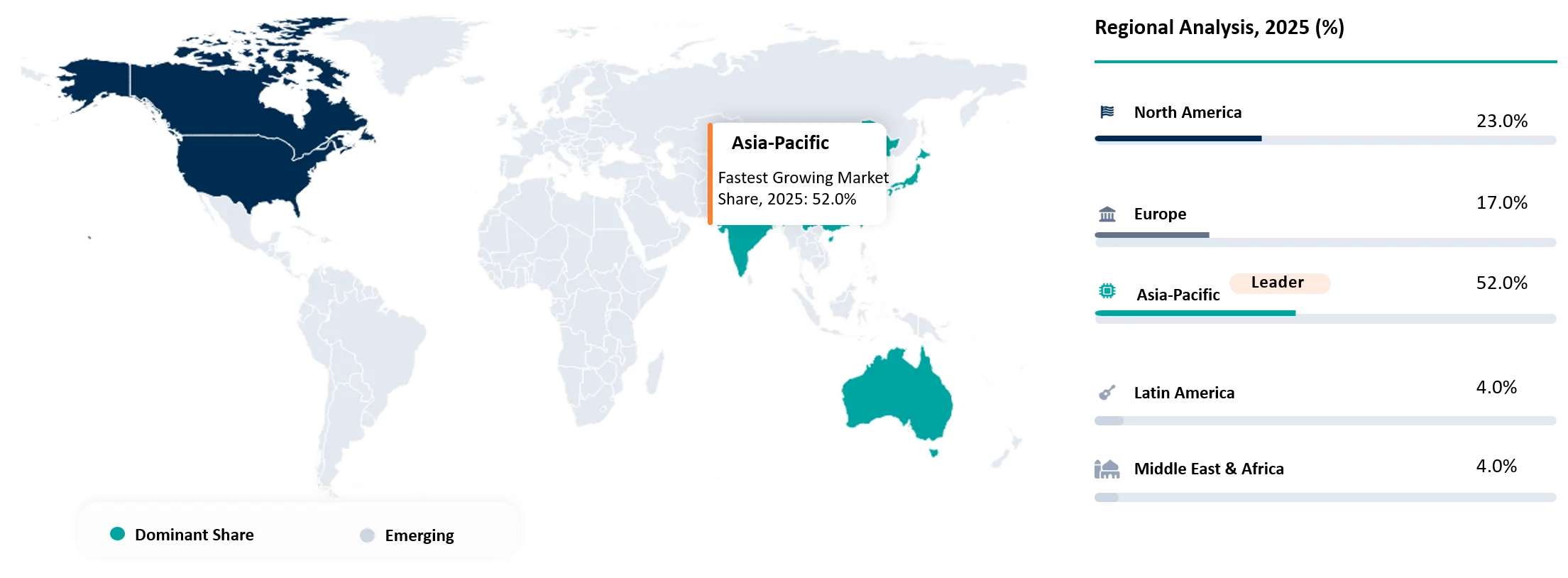
North America Market Driven by Increasing Demand for Advanced BESS Thermal Management
North America is a significant market for thermal management solutions for battery energy storage systems (BESS), supported by the rapid deployment of utility-scale battery storage, rising electricity demand, grid modernization and the increasing integration of renewable power. In Canada, grid-connected energy storage capacity above 1 MW was 552 MW at the end of 2024 and could reach 1,149 MW by 2030 from projects already under construction, while an additional 27 approved projects could raise capacity to 2,768 MW if all are built.
Regions such as Ontario is becoming a major driver of Canada's battery-storage deployment. In June 2026, the Independent Electricity System Operator (IESO) awarded 20-year contracts to three new battery-storage projects totaling 640 MW, taking Ontario's planned battery-storage capacity to more than 3,500 MW by 2030. The increasing size and power density of these systems creates greater requirements for effective thermal control.
U.S. BESS Thermal Management Market Trends
The U.S is a major market for thermal management solutions in battery energy storage systems (BESS), supported by rapid growth in utility-scale battery deployment, renewable-energy integration, rising electricity demand and increasing requirements for grid flexibility and reliability. U.S. utility-scale battery storage capacity reached 43.6 GW at the end of 2025, after averaging around 70% annual growth over the previous three years. During the first half of 2026, another 8.3 GW was added, taking capacity to nearly 52 GW.
Furthermore, growing investments in domestic production of HVAC and chiller systems indicate growing demand for advanced cooling infrastructure to support large-scale BESS deployment. For instance, in August 2025, Fluence began production of HVAC and chiller systems for its Gridstack Pro battery energy storage systems at a new manufacturing facility in Houston, Texas. The investment strengthens domestic production of thermal-management equipment for grid-scale BESS and supports growing demand for advanced cooling systems in the U.S. energy-storage market.
Asia Pacific Market Driven by Rapid BESS Expansion and Cooling Technology Adoption
Asia Pacific is a major market for thermal management solutions in battery energy storage systems (BESS), supported by rapid renewable-energy deployment, large-scale grid-storage projects, strong battery manufacturing capacity, and increasing adoption of high-density lithium-ion storage systems. Nation such as China has a highly developed battery-storage supply chain, with companies such as CATL, BYD, CRRC, Narada and ZTT developing increasingly large liquid-cooled BESS platforms. This domestic manufacturing ecosystem is accelerating the commercialization of advanced thermal-management technologies.
China is a key contributor, with rapid growth in energy-storage deployments and increasing commercialization of high-capacity liquid-cooled BESS. Products such as CATL's 5 MWh EnerD and ZTT's 7.58 MWh ENERGRID NA7 demonstrate the growing adoption of liquid-cooling technology to improve temperature control, battery safety and system performance.
India BESS Thermal Management Market Trends
India’s India's expanding battery energy storage market is creating increasing demand for thermal management, battery management, sensing, power electronics and control systems. The country's total energy-storage requirement is projected to increase from 82 GWh in 2026–27 to 411.4 GWh by 2031–32, including 236.22 GWh of BESS, supporting demand for reliable thermal-control solutions as storage projects become larger and operate for longer durations.
The shift toward larger, multi-hour grid-scale BESS projects is also increasing the need for effective temperature monitoring, cooling and safety systems. As battery systems become more complex and higher in capacity, thermal-management systems are becoming an important part of the wider BESS electronics and system-integration ecosystem in India.
Japan BESS Thermal Management Market Trends
Japan’s growing deployment of grid-scale battery energy storage systems is creating demand for advanced thermal-management solutions, particularly as BESS projects are increasingly used for renewable-energy integration and power-grid balancing. Grid-scale BESS connection applications increased from 70 GW in mid-2024 to 170.8 GW by the end of 2025, increasing the need for reliable cooling and temperature-control systems as larger storage projects are developed.
The growing energy density and scale of Japanese BESS projects are supporting adoption of liquid-cooling technologies. For instance, in August 2025, PowerX launched its Mega Power 4000 series in 2026 with liquid-cooled LFP batteries and capacities of up to 4.6 MWh, while Sunwoda introduced an 836 kWh liquid-cooled ESS specifically for the Japanese market in 2025.
BESS Thermal Management Market Competitive Landscape
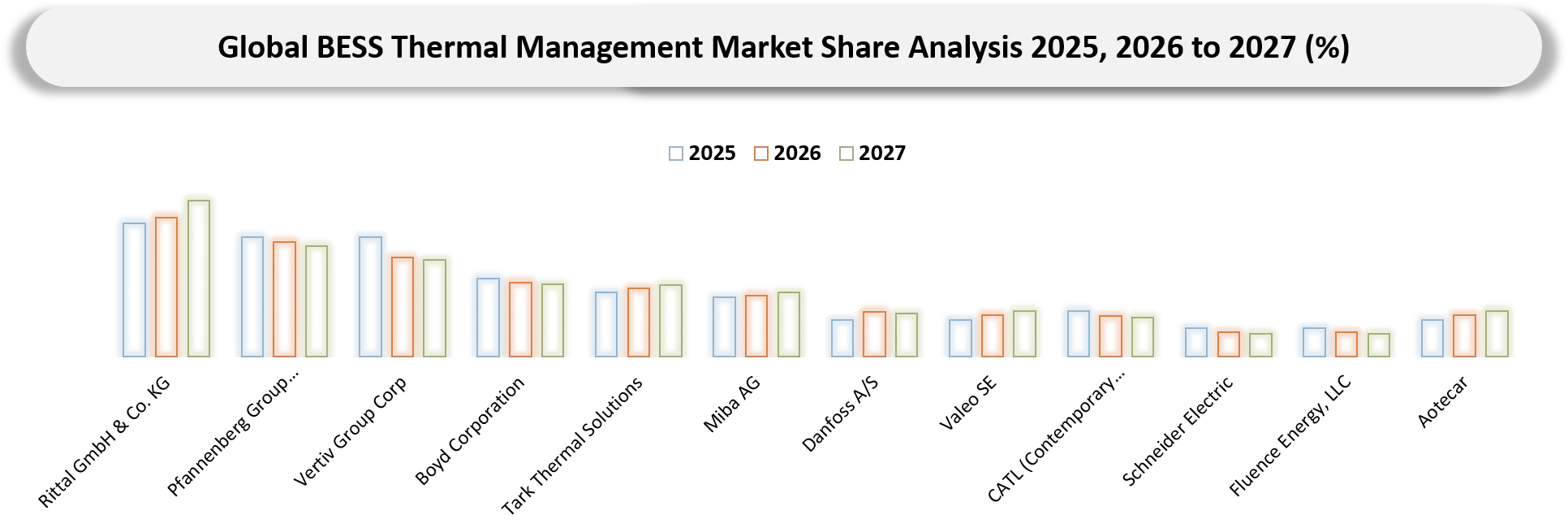
- The market comprises manufacturers specializing in liquid cooling systems, chillers, HVAC and cooling units, battery cooling systems, thermal-management components, and integrated cooling solutions for energy storage applications. Key participants include Rittal GmbH & Co. KG, Pfannenberg Group Holding, Vertiv Group Corp, Boyd Corporation, Tark Thermal Solutions, Miba AG, Danfoss A/S, Valeo SE, CATL, Schneider Electric, Fluence Energy, LLC, and Aotecar.
- Rittal GmbH & Co. KG (Germany), Pfannenberg Group Holding (Germany), Vertiv Group Corp (United States), Boyd Corporation (United States), Tark Thermal Solutions (United States), Miba AG (Austria), Danfoss A/S (Denmark), Valeo SE (France), CATL (China), Schneider Electric (France), Fluence Energy, LLC (United States), and Aotecar (China) represent key participants across the global BESS Thermal Management market.
Key Developments
- October 2025: REPLUS Engitech launched the RE5K, a 5.01 MWh liquid-cooled BESS container at Renewable Energy India Expo 2025. The system incorporates intelligent liquid cooling and is designed for grid-scale and industrial energy storage, with the company stating that the cooling system supports stable thermal performance under extreme environmental conditions.
- October 2025: MAHLE announced a dedicated liquid-cooling module for stationary battery energy storage systems, securing its first series order with production planned for 2026. The module provides up to 42 kW of cooling capacity and maintains battery temperatures within the optimal 20–30°C range.
- August 2025: Fluence began production of HVAC and chiller systems for its Gridstack Pro battery energy storage systems at a new manufacturing facility in Houston, Texas. The investment strengthens domestic production of thermal-management equipment for grid-scale BESS and supports growing demand for advanced cooling systems in the U.S. energy-storage market.
- August 2025: PowerX launched its Mega Power 4000 series in 2026 with liquid-cooled LFP batteries and capacities of up to 4.6 MWh, while Sunwoda introduced an 836 kWh liquid-cooled ESS specifically for the Japanese market in 2025.
Key Procurement Priorities and Buyer Evaluation Criteria
- BESS thermal-management buyers prioritize cooling efficiency, temperature uniformity, thermal safety, cooling capacity, system reliability, energy consumption, battery compatibility, operating temperature range, and suitability for the required storage capacity and application.
- Evaluation is based on criteria such as heat-removal capacity, temperature-control accuracy, cooling response time, thermal uniformity across battery cells and modules, cooling technology, coolant compatibility, HVAC or liquid-cooling performance, pumps and heat exchangers, thermal sensors, control systems, redundancy, and integration with the battery management system (BMS).
- Utilities, renewable-energy developers, independent power producers, battery manufacturers, system integrators, commercial and industrial users, and data-center operators consider equipment cost, installation requirements, auxiliary power consumption, maintenance requirements, operating environment, footprint, noise, water or coolant requirements, replacement components, service availability, warranty coverage, and total cost of ownership.
- Preference is given to thermal-management providers with proven performance in large-scale BESS applications, reliable cooling equipment, advanced temperature monitoring and controls, modular system configurations, high thermal efficiency, fire and safety integration, remote monitoring capabilities, and established technical support networks.
- Utility-scale BESS developers, renewable-energy companies, battery manufacturers, and C&I energy-storage operators particularly prioritize thermal-management solutions that maintain consistent battery temperatures, reduce thermal stress, improve battery life, minimize auxiliary energy consumption, support high-power charging and discharging, and enhance overall system safety and availability.
Why Choose DataM?
- Examines Thermal Management Technology & Product Analysis: Examines developments across air cooling, liquid cooling, direct and indirect liquid cooling, immersion cooling, phase-change material cooling, heat pipes, HVAC systems, thermal interface technologies, and integrated thermal-management solutions. The analysis evaluates how these technologies improve heat removal, temperature uniformity, energy efficiency, battery performance, and system safety.
- BESS Technology & Application Analysis: Evaluates thermal-management requirements across utility-scale BESS, commercial and industrial energy storage, residential storage, renewable-energy storage, microgrids, and other stationary energy-storage applications. The analysis considers requirements according to battery chemistry, storage capacity, power rating, energy density, duration, operating environment, and system configuration.
- Real-World Industry Evidence: Tracks BESS thermal-management product launches, liquid-cooled container systems, immersion-cooling developments, HVAC and chiller deployments, battery-storage project installations, manufacturing investments, technology partnerships, and thermal-management integrations across major markets. The analysis incorporates developments from BESS manufacturers, battery companies, thermal-management suppliers, utilities, renewable-energy developers, and system integrators.
- Competitive Landscape & Manufacturer Strategies: Analyzes how leading BESS and thermal-management manufacturers strengthen their positions through advanced liquid cooling, higher-capacity storage platforms, integrated HVAC systems, intelligent thermal controls, improved heat-exchanger designs, immersion cooling, modular architectures, and global service expansion.
- Pricing & Procurement Analysis: Evaluates thermal-management system pricing based on cooling technology, BESS capacity, battery chemistry, cooling capacity, container configuration, HVAC or liquid-cooling equipment, pumps, heat exchangers, sensors, controls, automation, installation requirements, and application complexity. The analysis also considers auxiliary energy consumption, coolant or refrigerant requirements, maintenance, replacement components, and total cost of ownership.
- Market Entry & Growth Opportunities: Identifies opportunities arising from utility-scale BESS deployment, renewable-energy integration, increasing battery energy density, longer-duration storage, high-power charging and discharging, grid modernization, data-center backup storage, C&I energy storage, liquid-cooling adoption, immersion cooling, and increasing requirements for battery safety and thermal control.
Target Audience 2026
- Battery Energy Storage System Manufacturers and Integrators
- Lithium-Ion Battery and Battery Pack Manufacturers
- Utilities and Power Generation Companies
- Renewable Energy Developers and Independent Power Producers
- Commercial and Industrial Energy Storage Operators
- Residential Energy Storage System Providers
- Battery Management System and Power Electronics Companies
- HVAC, Chiller and Liquid-Cooling Equipment Manufacturers
- Thermal Management Component and System Suppliers
- Data Center and Critical Infrastructure Energy Storage Providers
- Engineering, Procurement and Construction Companies
- Energy Storage Automation, Monitoring and Control System Providers
- Industrial Cooling and Heat-Exchange Equipment Manufacturers
- Energy Storage Project Developers and System Integrators


























































