


Battery-Grade Aluminum Foil Market Size and Overview
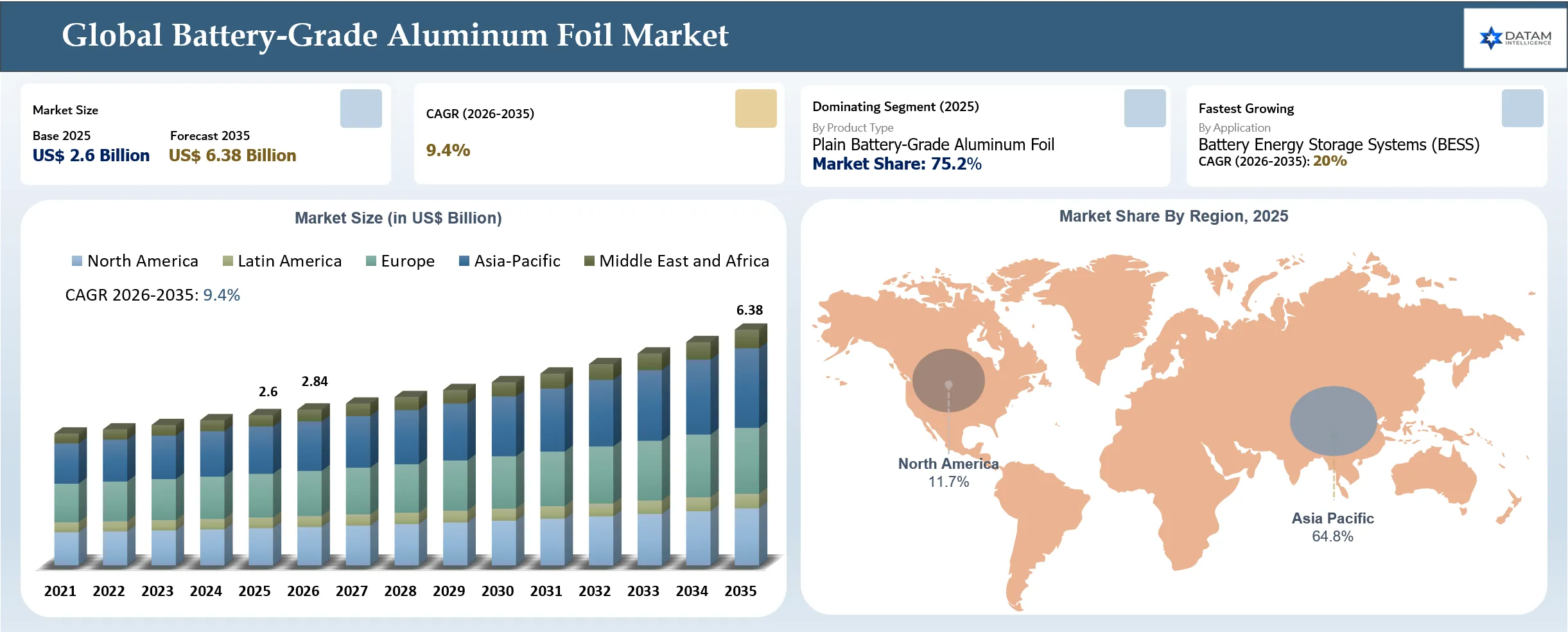
The global battery-grade aluminum foil market reached USD 2.6 billion in 2025 and is expected to reach USD 6.3 billion by 2035, growing with a CAGR of 9.4% during the forecast period 2026-2035. The market is expanding steadily due to the rapid development of lithium-ion batteries for EVs, BESS, and electronic gadgets, which use high-purity aluminum foil as the cathode current collector. According to the International Energy Agency (IEA), Global EV Outlook 2026, global EV battery deployment reached 1.2 TWh in 2025, growing by almost 30% as compared to last year, while the manufacturing capacity of lithium-ion batteries globally surpassed 4 TWh at the end of 2025. Additionally, according to the China Nonferrous Metals Industry Association (CNIA) report, there are continuous investments in the construction of ultra-thin battery foil production lines to produce the next generation of high-energy-density battery cells in 2025. The companies that specialize in producing such foil products are UACJ Corporation, LOTTE Aluminum, Jiangsu Dingsheng New Materials, Nanshan Aluminum, and Dongyangguang Aluminum. However, market expansion is limited by price fluctuations of primary aluminum, high-quality standards, and expensive technological processes of foil manufacturing.
This investment is indicative of the rapid development of battery-grade aluminum foil production to meet the increasing demand from electric vehicle and battery manufacturers. In February 2026, as per the World Energy report, Hindalco Industries announced an investment of ₹45 billion (US$515 million) to set up a 170,000-tonne-per-year battery-grade aluminum foil and flat-rolled products (FRP) plant in the Indian state of Odisha. This project will be able to cater to up to 100 GWh of battery manufacturing capacity.
Battery-Grade Aluminum Foil Market Key Takeaways
- The Asia-Pacific region led the global landscape by commanding an estimated 64.8% of the total market share in 2025. Within this region, China controlled more than 80% of global lithium-ion battery manufacturing capacity and supplied nearly 75% of EV battery deployments in 2025.
- Plain battery-grade aluminum foil dominated the product type market by capturing a dominant 75.2% share in 2025. This high share persists because the plain variant remains the most cost-effective current collector option for high-volume battery assembly.
- Global electric vehicle battery deployment reached 1.2 TWh in 2025, expanding by nearly 30% compared to the previous year. At the same time, the worldwide manufacturing capacity for lithium-ion batteries successfully surpassed 4 TWh by the end of 2025.
- Industry standards are shifting as manufacturers transition from conventional 12–15 μm foils to ultra-thin foils of ≤8–10 μm. However, production remains complex with a low yield ratio of 70% to 75%, causing scrap to account for up to 40% of total manufacturing costs.
Battery-Grade Aluminum Foil Market Industry Trends and Strategic Insights
- Ultra-thin battery foil (≤8–10 μm) is becoming the industry benchmark as cell manufacturers shift from conventional 12–15 μm foil to improve gravimetric and volumetric energy density.
- Battery foil manufacturing is evolving into a precision-engineered materials business rather than a commodity rolling industry, with investments focused on advanced rolling mills, automated gauge control, surface defect detection, and high-performance surface treatment to meet stringent battery OEM specifications.
- Localization of battery-grade aluminum foil production is accelerating as governments and battery manufacturers establish regional battery supply chains.
- Recycling and low-carbon aluminum sourcing are becoming procurement priorities for battery manufacturers, prompting foil producers to integrate recycled aluminum, renewable-energy-powered rolling operations, and traceable low-carbon supply chains to align with automotive decarbonization targets and ESG requirements.
- Surface-engineered aluminum foil is emerging as a strategic differentiator, with manufacturers developing specialized coatings and optimized grain structures that enhance cathode coating adhesion, reduce interfacial resistance, and improve fast-charging performance in high-energy-density battery cells.
Battery-Grade Aluminum Foil Market Scope
| Metrics | Details | |
| 2025 Market Size | USD 2.6 Billion | |
| 2035 Projected Market Size | USD 6.3 Billion | |
| CAGR (2026-2035) | 9.4% | |
| Largest Market | Asia-Pacific | |
| Fastest Growing Market | North America | |
| By Product Type | Plain Battery-Grade Aluminum Foil, Carbon-Coated Battery-Grade Aluminum Foil, Other Surface-Treated Battery-Grade Aluminum Foils | |
| By Thickness | 6–8 μm, 9–12 μm, 13–15 μm, above 15 μm | |
| By Battery Chemistry | Lithium Iron Phosphate (LFP) Batteries, Nickel Manganese Cobalt (NMC) Batteries, Nickel Cobalt Aluminum (NCA) Batteries, Lithium Cobalt Oxide (LCO) Batteries, Other Battery Chemistries | |
| By Application | Electric Vehicle (EV) Batteries, Battery Energy Storage Systems (BESS), Consumer Electronics Batteries, Power Tools & E-Mobility Batteries, Industrial & Medical Batteries, Battery Cell Manufacturers, Other Rechargeable Battery Applications | |
| By Region | North America | U.S., Canada, Mexico |
| Europe | Germany, UK, France, Spain, Italy, Poland | |
| Asia-Pacific | China, India, Japan, Australia, South Korea, Indonesia, Malaysia | |
| Latin America | Brazil, Argentina | |
| Middle East and Africa | UAE, Saudi Arabia, South Africa, Israel, Türkiye | |
| Report Insights Covered | Competitive Landscape Analysis, Company Profile Analysis, Market Size, Share, Growth | |
Battery-Grade Aluminum Foil Market Disruption Analysis
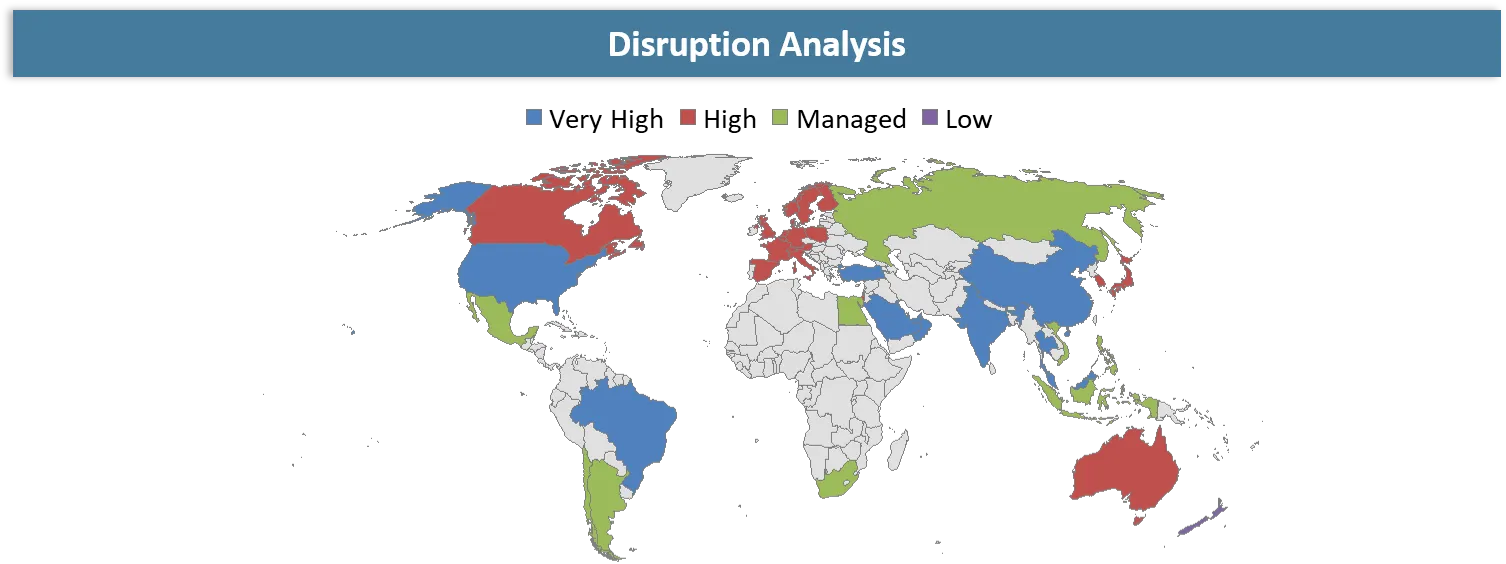
Commercialization of Solid-State Batteries Driving Next-Generation Battery-Grade Aluminum Foil Requirements
The primary factor that has disrupted the Battery-Grade Aluminum Foil Market is the commercialization of solid-state batteries, which have changed the technical parameters of cathode current collectors. Solid-state batteries differ from lithium-ion batteries because they need thinner, stronger, and coated aluminum foils having better thickness control, surface homogeneity, and interface stability. This change has disrupted the traditional methods of making battery foil because of greater investments in roll forming and coating processes. According to the International Energy Agency (IEA), Global EV Outlook 2026, all-solid-state batteries are still in the prototype phase; however, many companies are making rapid progress towards commercialization. The first all-solid-state battery-powered car will be released by Toyota by 2028.
The first all-solid-state electric vehicle (EV) from BYD is expected from 2027 to achieve mass production by 2030. Samsung SDI is also targeting commercialization by 2027, while QuantumScape launched its Eagle Line pilot production line in February 2026 for producing customer sampling cells for automotive qualification. Such technological advances are making it necessary for producers of battery-grade aluminum foils to make advancements in the field of current collector technology.
Battery-Grade Aluminum Foil Market BCG Matrix: Company Evaluation

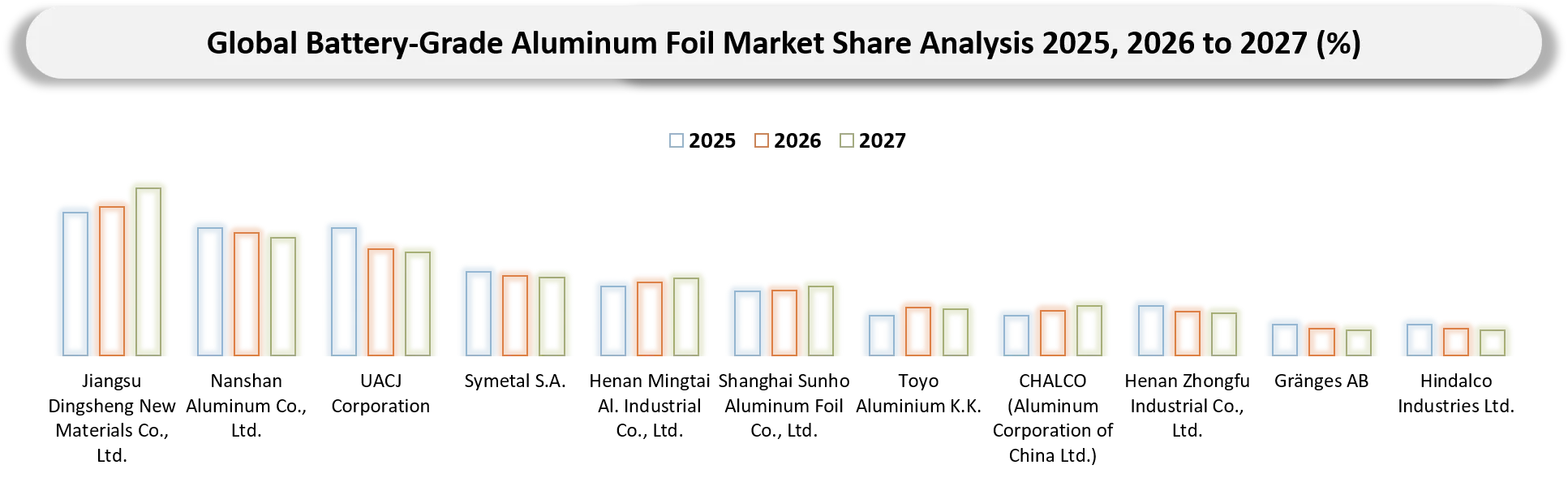
Stars include Jiangsu Dingsheng New Materials Co., Ltd., Nanshan Aluminum Co., Ltd., and UACJ Corporation because they possess strong commercial-scale battery-grade aluminum foil production capabilities, established supply relationships with leading lithium-ion battery manufacturers, and continuous investments in ultra-thin foil technologies. Question Marks include CHALCO (Aluminum Corporation of China Ltd.), Hindalco Industries Ltd., and Henan Mingtai Al. Industrial Co., Ltd. as they are significantly expanding battery-grade aluminum foil production through new investments and strategic projects, but continues to face strong competition from established battery foil specialists.
The Potential category comprises Shanghai Sunho Aluminum Foil Co., Ltd., Henan Zhongfu Industrial Co., Ltd., and Toyo Aluminium K.K. These companies have established expertise in high-quality aluminum foil manufacturing and continue to strengthen their battery materials portfolios by supplying specialty foil products for lithium-ion batteries. Tailenders include Symetal S.A., Gränges AB, and Constellium SE because their primary business remains focused on broader rolled aluminum products and specialty industrial applications, with battery-grade aluminum foil representing a relatively limited portion of their overall product portfolios.
Battery-Grade Aluminum Foil Market Dynamics
Driver Impact Analysis
| Driver | Market Growth Impact (%) | Demand Concentration | Impacted Use Case | Strategic Impact |
Rapid expansion of lithium-ion battery manufacturing capacity is driving demand for battery-grade aluminum foil as the primary cathode current collector. | 32% | Very High | EV batteries, BESS, consumer electronics | Expands battery-grade aluminum foil production capacity and strengthens long-term supply agreements with battery manufacturers. |
Advancements in ultra-thin battery foil technology (6–8 μm) are improving energy density and material efficiency, supporting wider adoption. | 22% | High | Premium EV batteries, fast-charging batteries, next-generation lithium-ion cells | Accelerates investment in precision rolling, ultra-thin foil manufacturing, and advanced surface engineering to enhance battery performance. |
Rising investments in battery gigafactories and localized battery supply chains are increasing regional production of battery-grade aluminum foil. | 24% | High | EV batteries, stationary energy storage systems | Drives localization of battery foil manufacturing, reduces import dependence, and improves supply chain resilience. |
Growing adoption of high-energy-density battery chemistries is increasing demand for precision-engineered aluminum foil with superior conductivity and surface quality. | 19% | Medium to High | High-energy EV batteries, aerospace batteries, advanced ESS | Encourages development of high-purity, surface-treated battery foil capable of meeting stringent electrochemical performance requirements. |
Government incentives supporting domestic battery manufacturing are encouraging new investments in battery-grade aluminum foil production capacity. | 16% | Medium | Regional EV battery production, localized battery supply chains | Stimulates capital investment in battery foil facilities, enhances domestic manufacturing capabilities, and supports regional battery value-chain development. |
Rapid expansion of lithium-ion battery manufacturing capacity is driving demand for battery-grade aluminum foil as the primary cathode current collector
One of the major drivers that is boosting the need for aluminum foil is the rapid expansion of lithium-ion battery manufacturing. With growing production of EVs, BESS, and consumer electronics batteries, there is also a growing consumption of ultra-thin and high-purity aluminum foil used as a cathode current collector in batteries. The development forces the companies producing aluminum foils to develop innovative solutions in rolling, controlling the thickness, and surface treatment of aluminum foil.
Further growth of gigafactory capacity in Europe is likely to drive the use of battery-grade aluminum foil as an essential raw material for the production of lithium-ion battery cells. In December 2025, as per Minor Metals Trade Association (MMTA), Europe of lithium-ion batteries production is anticipated to witness a rise of about 130 GWh in 2026, which will mean a ~40% annual growth. Even though the share of the leading producers in the market is anticipated to decrease to ~76%, battery manufacturing centers in Norway, Sweden, and Slovakia will contribute to higher capacity production in Europe. Additionally, the article highlights that should Lyten manage to breathe life into the previous Northvolt plants, then the European battery manufacturing capacity will be larger than the estimates presented.
Restraint Impact Analysis
| Restraint | Drag on Market Growth (%) | Primary Impact Area | Impacted Use Case | Strategic Impact |
Stringent quality requirements for thickness uniformity, surface cleanliness, and pinhole control increase production complexity and rejection rates. | 22% | Manufacturing efficiency & product quality | Ultra-thin EV battery cells, premium lithium-ion batteries | Increases production costs, lowers manufacturing yield, and raises qualification barriers for new suppliers. |
Volatility in primary aluminum prices creates cost uncertainty for battery-grade aluminum foil manufacturers. | 18% | Raw material procurement & cost management | EV batteries, BESS, consumer electronics | Compresses profit margins, increases pricing volatility, and complicates long-term supply contracts with battery manufacturers. |
Limited commercial availability of advanced ultra-thin (≤6–8 μm) battery-grade aluminum foil restricts supply for next-generation battery applications. | 20% | Advanced material supply & production scalability | High-energy-density EV batteries, solid-state batteries | Limits commercialization of next-generation battery technologies and strengthens the market position of technologically advanced foil producers. |
Supply chain dependence on high-purity aluminum feedstock exposes manufacturers to raw material availability and procurement risks. | 16% | Supply chain resilience & raw material sourcing | Battery cell manufacturing, stationary energy storage systems | Increases sourcing risks, extends procurement lead times, and encourages regional localization of aluminum supply chains. |
Stringent quality requirements for thickness uniformity, surface cleanliness, and pinhole control increase production complexity and rejection rates
One of the primary restraints affecting the Battery-Grade Aluminum Foil Market is the stringent quality standards required for battery-grade aluminum foil, particularly in terms of thickness uniformity, surface cleanliness, pinhole control, flatness, and tensile strength. Contrary to common aluminum foil, the battery-grade variety requires micron tolerances and a defect-free surface to provide uniform coating of the cathode, good electrochemical behavior, and high-speed assembly of battery cells. SMM states that the yield ratio of producing battery aluminum foils is 70%-75%, and the cost of scrap accounts for up to 40% of the total cost of production, while producing 8μm-thickness aluminum foils on a stable large scale is another difficult task.
High standards of quality for aluminum foil used in batteries are increasing manufacturing expenses as well as production yield for companies. In April 2025, Shanghai Metals Market (SMM) reported that the production of ultra-thin lithium battery aluminum foil necessitates high accuracy during the rolling process, where the thickness of the foil is brought down to less than 10 μm, while still controlling the thickness uniformity, cleanliness of the surface, and presence of pinholes. The article mentions that deviation on the micron level may drastically lower production yield and result in a higher rejection rate.
Battery-Grade Aluminum Foil Market Segmentation Analysis
The global Battery-Grade Aluminum Foil market is segmented based on product type, thickness, battery chemistry, application, and region.
Cost-Effective Manufacturing and Large-Scale Lithium-Ion Battery Production Driving Demand for Plain Battery-Grade Aluminum Foil
The Plain Battery-Grade Aluminum Foil segment dominates the product type category in the Battery-Grade Aluminum Foil Market, representing nearly 75.2% of the total market share in 2025. This is due to the wide utilization of the material as a cathode current collector in the manufacture of huge amounts of lithium-ion batteries in EVs, BESS, and consumer electronic devices. The plain aluminum foil is cost-effective and reliable in use, hence the preferred option by battery manufacturers. The rapid expansion in production capability of lithium-ion batteries in the period between 2025 and 2026, driven by increasing EV adoption and energy storage systems, has caused a huge surge in the demand for conventional aluminum foil.
Leading battery producers, such as CATL, LG Energy Solution, and Panasonic Energy, still employ high-grade plain aluminum foils in lithium-ion batteries because of their good electrical conductance and corrosion resistance. Although advanced surface-treated types like carbon-coated aluminum foils are increasingly being used for high-end purposes, ordinary battery-grade aluminum foils still generate most of the revenues owing to the lower manufacturing cost, established supply chain, and usage in the majority of the lithium-ion batteries. This growth in EV battery production, renewable energy storage systems, and consumer electronics batteries is anticipated to drive the segment's market leadership until 2026 and onwards.
Battery-Grade Aluminum Foil Market Geographical Penetration
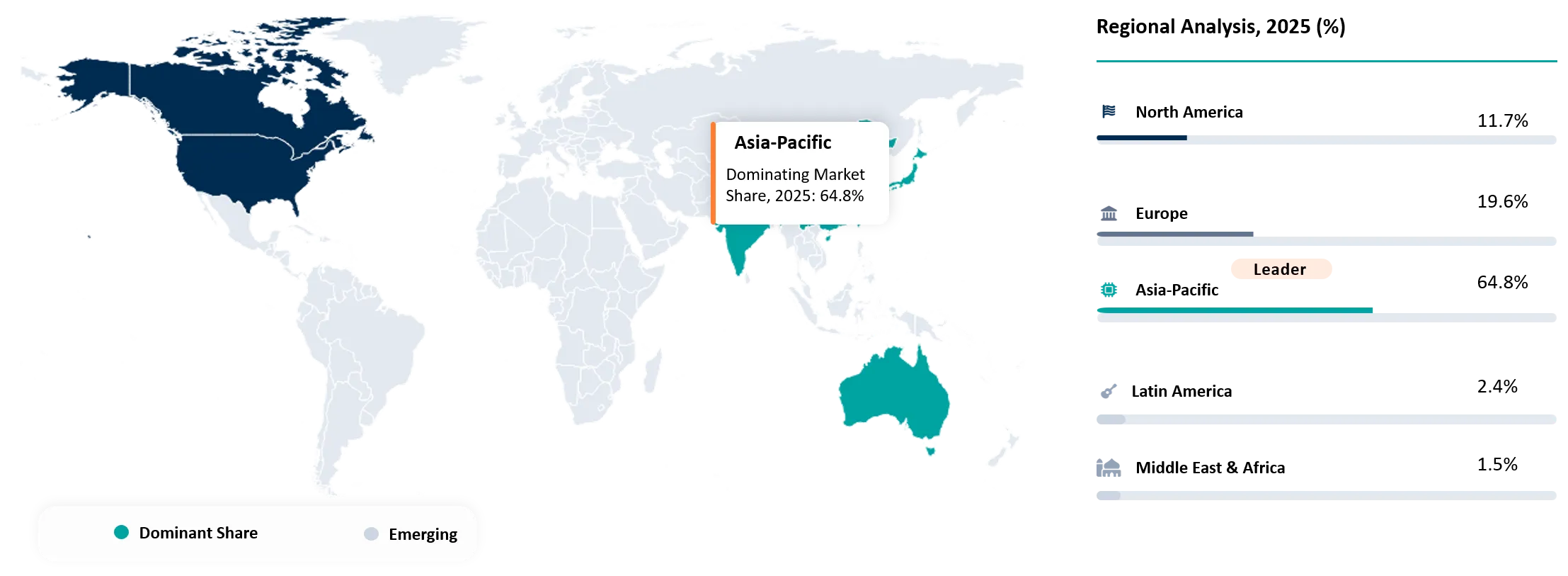
Large-Scale Lithium-Ion Battery Manufacturing and EV Supply Chain Expansion Driving Asia-Pacific Dominance
The Asia-Pacific is the dominant region in the Battery-Grade Aluminum Foil Market, comprising about 64.8% of the global market share in 2025. The region's leading position is driven by its strong lithium-ion battery manufacturing industry and a large number of battery cell manufacturers, as well as the huge investments made in the supply chain of EV and energy storage solutions. Countries such as China, Japan, South Korea, and India have established themselves as major production centers for battery material and lithium-ion cells. According to the International Energy Agency (IEA), the world's lithium-ion battery production capacity will reach over 80% in 2025.
The expansion reflects Asia-Pacific's continued investment in the manufacturing of localized battery materials in response to the increasing number of vehicles that use electricity as fuel. In August 2025, DI Dongil, a South Korea-based industrial holding company, merged with Dongil Aluminium, a South Korea-based aluminum foil manufacturer, to strengthen its advanced materials business while increasing its battery-grade aluminum foil manufacturing capability. For the expansion, Dongil Aluminium is building a 53,554 m² facility for making battery foils in Cheongju High-Tech Valley.
China Battery-Grade Aluminum Foil Market Trends
China holds a dominant position in the Asia-Pacific Battery-Grade Aluminum Foil market because of its advanced lithium-ion battery manufacturing infrastructure, substantial capacity of aluminum processing, and involvement in the value chain from the electric vehicles and energy storage side. This is because China has integrated its aluminum foil production, cathode material manufacturing, battery cell manufacturing, and electric vehicle manufacturing process to commercially utilize battery grade aluminum foil. According to the International Energy Agency (IEA), Global EV Outlook 2026, China accounted for more than 80% of global lithium-ion battery manufacturing capacity in 2025, while Chinese battery producers supplied nearly 75% of global electric vehicle battery deployment.
The development of ultra-thin battery foil demonstrates technological progress in the field of aluminum foil production. In May 2025, Guizhou Guilv New Materials Co., Ltd. (Guilv), a China-based aluminum processing company producing battery-grade aluminum foil, achieved a breakthrough in the production of 8-micron ultra-thin battery aluminum foil for lithium-ion batteries. The company has invented a unique process technology, allowing it to produce ultra-thin battery foil of excellent quality and strength.
India Battery-Grade Aluminum Foil Market Outlook
India is emerging as a high-growth market in the Asia-Pacific Battery Grade Aluminum Foil Market owing to growing usage of electric vehicles, growing manufacturing capacity of lithium ion batteries, and various efforts being made by the government to build a local battery supply chain. India is consolidating its standing in the battery materials ecosystem through investments in cell manufacturing, energy storage projects, and localization of battery component manufacturing, which creates a scope of demand for battery grade aluminum foil in lithium ion battery cathode current collectors.
The expansion demonstrates India's growing focus on developing domestic battery materials manufacturing capacities for use within the EV & Energy Storage eco-system. Hindalco Industries Limited, a India-based, aluminum company, metals manufacturing firm, has announced an investment of ₹21,000 crore (around $2.5 billion) for the growth of its aluminum smelting & downstream manufacturing capacity in Odisha. The company has established a FRP (Flat-rolled Products) & Battery Grade Aluminum Foil production facility in its Aditya Aluminium complex, where the battery foil manufacturing facility would cater to the burgeoning lithium-ion battery industry of India.
Battery-Grade Aluminum Foil Market Competitive Landscape
- The battery-grade aluminum foil market is characterized by a mix of large-scale aluminum producers, specialized battery foil manufacturers, and integrated rolled aluminum product companies. Leading players such as Jiangsu Dingsheng New Materials Co., Ltd., Henan Mingtai Al. Industrial Co., Ltd., Nanshan Aluminum Co., Ltd., CHALCO (Aluminum Corporation of China Ltd.), and Shanghai Sunho Aluminum Foil Co., Ltd. dominate high-volume battery foil production, particularly across China, which remains the largest manufacturing hub for lithium-ion batteries and aluminum cathode foil supply. These companies focus on expanding ultra-thin aluminum foil production capacity, improving surface quality, and supplying high-performance current collectors for EV batteries and energy storage systems. Hindalco Industries Ltd., UACJ Corporation, Toyo Aluminium K.K., Constellium SE, Gränges AB, and Symetal S.A. strengthen the competitive landscape through advanced aluminum rolling capabilities, high-purity aluminum processing, and the development of battery-grade foil solutions for global battery manufacturers. These companies are increasingly investing in localized battery material supply chains, supporting demand from electric vehicles, consumer electronics, and battery energy storage applications.
- Key players include Jiangsu Dingsheng New Materials Co., Ltd., Nanshan Aluminum Co., Ltd., UACJ Corporation, Symetal S.A., Henan Mingtai Al. Industrial Co., Ltd., Shanghai Sunho Aluminum Foil Co., Ltd., Toyo Aluminium K.K., CHALCO (Aluminum Corporation of China Ltd.), Henan Zhongfu Industrial Co., Ltd., Gränges AB, Hindalco Industries Ltd., and Constellium SE.
Key Developments
- February 2026: DI Dongil Co., Ltd., a South Korea-based aluminum processing company and battery materials manufacturer, announced an investment of KRW 110 billion (approximately US$75 million) to establish production facilities for carbon-coated aluminum foil used in LFP (lithium iron phosphate) batteries at its Cheongju aluminum plant.
- June 2025: SK Nexilis Co., Ltd., a South Korea-based lithium-ion battery copper foil manufacturer and advanced battery materials company under SKC, secured an investment of KRW 150 billion (approximately US$110 million) from Toyota Tsusho Corporation, a Japan-based general trading company specializing in automotive, materials, and supply chain businesses.
- March 2026: Xinglv, a Nanning Industrial Investment Aluminum-Based New Materials Group’s subsidiary, a China-based aluminum-based new materials manufacturer and battery aluminum foil producer, has commenced operations of its 100,000-tonne-per-year aluminum-based new materials project in Nanning, Guangxi, China. The project includes an annual production capacity of 100,000 tonnes of high-precision battery-grade aluminum foil and 70,000 tonnes of cane-end tab stock materials, with a total investment of approximately RMB 1.62 billion (around US$225 million).
- February 2026: Sichuan Yibin Sanjiang, a China-based industrial development zone and regional investment platform, signed a strategic agreement with Anhui Jinyu Materials Co., Ltd., a China-based aluminum alloy materials R&D, processing, and battery aluminum foil manufacturer for a US$1 billion high-performance battery aluminum foil project.
- June 2026: Aluminum Corporation of China Limited (Chalco), a China-based state-owned integrated aluminum producer and advanced aluminum materials manufacturer, showcased its high-end aluminum foil products at the 4th China International Supply Chain Expo.
Key Procurement Priorities and Buyer Evaluation Criteria
- Organizations investing in battery-grade aluminum foil procurement increasingly evaluate suppliers based on their ability to provide high-quality, ultra-thin aluminum foil solutions with consistent thickness control, surface quality, and electrochemical performance required for lithium-ion battery manufacturing. Battery manufacturers prioritize suppliers that can deliver reliable cathode current collector foil with low defect rates, high conductivity, corrosion resistance, and scalability for large-volume EV battery and energy storage production.
- The supplier selection process is increasingly influenced by the rapid expansion of electric vehicles (EVs), battery energy storage systems (BESS), and advanced lithium-ion battery technologies during 2025–2026. Buyers are focusing on manufacturers capable of supporting high-volume production requirements, including 6–8 μm and 9–12 μm thin aluminum foil formats, which enable higher battery energy density by reducing inactive material weight and improving cell efficiency.
- Buyers consider supplier capabilities in advanced manufacturing processes, production capacity expansion, supply chain reliability, and ability to support next-generation battery applications, including electric vehicles, battery energy storage systems, consumer electronics, and high-performance rechargeable batteries. Long-term supply agreements, localized production capabilities, technological expertise in surface treatment and ultra-thin foil manufacturing, and compliance with battery industry quality standards are becoming important criteria for selecting strategic aluminum foil partners.
Why Choose DataM?
- Technological Innovations: Explores advancements in battery-grade aluminum foil manufacturing technologies, including ultra-thin foil production, high-precision rolling processes, surface treatment technologies, and enhanced current collector designs that improve battery performance, energy density, and reliability for electric vehicles (EVs), battery energy storage systems (BESS), and consumer electronics applications.
- Product Performance & Market Positioning: Evaluates how different manufacturers differentiate their battery-grade aluminum foil offerings based on thickness control, purity levels, mechanical strength, electrical conductivity, surface quality, and compatibility with lithium-ion battery chemistries such as LFP, NMC, and NCA. The analysis highlights how leading companies strengthen their market position through production scale, quality consistency, and customized foil solutions for battery manufacturers.
- Real-World Evidence: Highlights the adoption of battery-grade aluminum foil across EV batteries, energy storage systems, consumer electronics, power tools, and industrial battery applications, demonstrating its role in enabling lightweight battery designs, improved electrode performance, longer cycle life, and efficient large-scale lithium-ion battery production.
- Market Updates & Industry Changes: Tracks key developments such as battery foil capacity expansions, new manufacturing facilities, strategic investments, and regional supply chain developments across Asia-Pacific, North America, and Europe. The analysis supports understanding of how increasing EV production, renewable energy storage deployment, and battery localization initiatives are reshaping the global battery-grade aluminum foil ecosystem during 2025–2026.
- Competitive Strategies: Analyzes how leading companies including Jiangsu Dingsheng New Materials Co., Ltd., Henan Mingtai Al. Industrial Co., Ltd., Nanshan Aluminum Co., Ltd., UACJ Corporation, Hindalco Industries Ltd., and Constellium SE expand through capacity enhancement, advanced foil processing technologies, strategic partnerships, and regional manufacturing investments to address rising demand from lithium-ion battery producers.
- Pricing & Market Access: Explains pricing variations based on factors such as aluminum purity, foil thickness, processing technology, surface treatment requirements, production volume, and raw material costs. The study evaluates supplier access through integrated aluminum producers, specialized foil manufacturers, and long-term supply agreements with battery cell manufacturers.
- Market Entry & Expansion: Identifies growth opportunities driven by electric vehicle adoption, battery energy storage deployment, domestic battery manufacturing initiatives, and increasing demand for lightweight high-performance battery materials. The analysis outlines expansion strategies, including localized production, technology upgrades, strategic collaborations, and supply chain integration, to capture emerging opportunities across global battery markets.
Target Audience
- Battery Manufacturers and Cell Producers
- Electric Vehicle (EV) Manufacturers and Automotive OEMs
- Battery Energy Storage System (BESS) Developers and Renewable Energy Companies
- Aluminum Producers and Rolled Product Manufacturers
- Battery Material Suppliers and Component Manufacturers
- Technology Developers and Advanced Material Companies
- Government Bodies and Policy Makers


























































