


Battery Coating Market Size and Overview
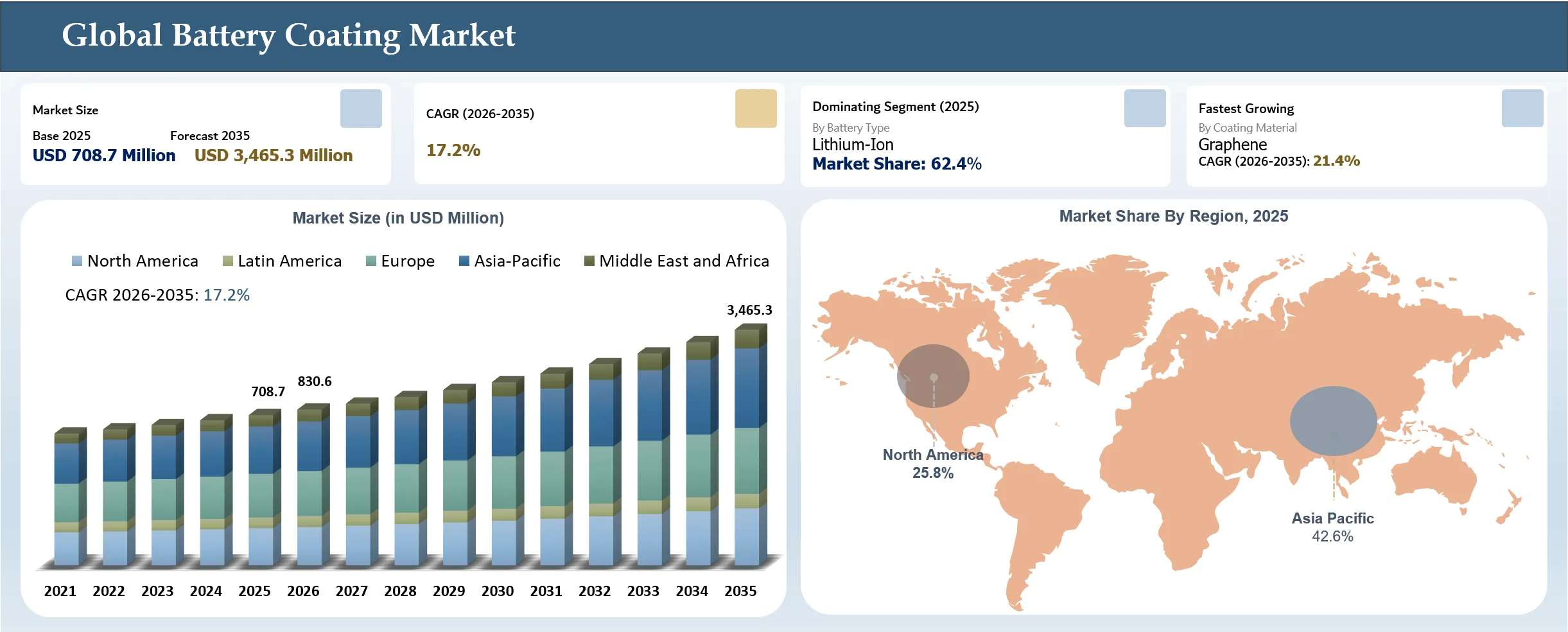
The global battery coating market reached USD 708.7 million in 2025 and is expected to reach USD 3,465.3 million by 2035, growing with a CAGR of 17.2% during the forecast period 2026-2035. The market expansion is enabled by the rapid scale-up of battery installations and the growing requirement for efficient electrode manufacturing. According to the International Energy Agency (IEA), global electric vehicle battery deployment in 2025 was 1.2 TWh, an increase of nearly 30%, of which electric vehicles account for more than 70% of global battery deployment. China accounted for 60% of the global EV battery deployment, the European Union for almost 15%, and the US for 10% of the global EV battery deployment in 2025.
Furthermore, the IEA found that LFP batteries made up more than 55% of the global EV battery deployments in 2025, boosting the requirements for coating technologies for high-volume LFP electrode manufacturing. On the manufacturing side, Dürr and GROB's 2025 battery plant concept featured the next-generation production layout, which requires 50% less space and 70% less energy than the current battery plants, where dry coating removes the energy-intensive drying step from the traditional wet coating process along with solvent recovery. Moreover, the Dürr X.Cellify DC dry coating technology aims for 70% energy savings and 65% reduced manufacturing space compared to the wet coating process. These developments are strengthening demand for energy-efficient dry coating, precise electrode coating, solvent-free processing, and innovative coating techniques by battery manufacturers who are increasing their manufacturing capacity and efficiencies.
Increasing use of separator and primer coating technology by manufacturers has led to the development of more efficient materials in order to enhance battery safety, life span, and electrochemical performance. In June 2026, Arkema showcased advanced battery materials at The Battery Show Europe 2026, held in Stuttgart, Germany. For the battery coating, Arkema offered its Kynar Flex PVDF range of products as a coating material for battery separators, as well as its Incellion Sp 1252 acrylic binder, especially formulated for ceramic-coated lithium-ion battery separators, which offers excellent adhesion, mechanical strength, thermal stability, and electrolyte wettability. The company also offered its Incellion Pr binders as a primer coating solution. Interestingly, Arkema noted that its Kynar HSV 900 PVDF binder has been used in batteries powering more than 10 million EVs worldwide since 2007.
White-Space Opportunities for Battery Coating Market, Expansion of Coated Separator Manufacturing and Advanced Coating Technologies
In October 2025, the U.S. Department of Energy (DOE) approved a USD 100 million grant toward Microporous Assets’ Project Stellar, representing the federal contribution to a USD 525 million total project, with Microporous providing the remaining USD 425 million. The investment is primarily concentrated on coated lithium-ion battery separator manufacturing, making separator coating the highest-investment area within the project. The Danville, Virginia facility is planned to establish 600 million m² per year of domestic separator manufacturing capacity and install 20 aqueous coating lines covering both ceramic coatings, including alumina and boehmite, and polymer coatings such as PVDF, alongside slurry-mixing and slitting equipment.
Other investment areas include manufacturing buildings, utility infrastructure, storage silos, administrative facilities, separator-film production, and additional coating capacity envisioned under later project phases, although DOE funding is specifically limited to Phase I. The project is also expected to create approximately 282 permanent jobs during the DOE grant’s three-year performance period, further expanding the U.S. battery-separator manufacturing base.
The investment creates opportunities primarily for Microporous LLC (MP Assets Corporation), the direct project developer, through expansion of its coated separator manufacturing capabilities for electric-vehicle lithium-ion batteries. The strongest opportunity is in separator coating technologies and materials, particularly ceramic and polymer coating lines. Arkema, Solvay, Kureha, and Dongyue Group can benefit from demand for PVDF and other polymer binder/coating materials, while Imerys, Almatis, and Sasol are potential beneficiaries in alumina and ceramic coating materials.
In coating and electrode-processing equipment, companies such as Bühler, Dürr, Hitachi High-Tech, and Nordson can benefit from demand for coating, slurry-processing, drying, and precision manufacturing systems. Schenck Process and NETZSCH can benefit from opportunities related to mixing and dispersion equipment, while Brückner and ANDRITZ are positioned in film processing, drying, and related production technologies. In separator manufacturing and processing, Asahi Kasei, Toray Industries, SK IE Technology, and ENTEK are relevant industry participants that could benefit from broader expansion of coated separator production and associated technology demand.
Battery Coating Market Key Takeaways
- Asia-Pacific dominated the global battery coating market with a 42.6% share in 2025. Growth is underpinned by concentrated EV supply chains and manufacturing facilities across China, Japan, and South Korea.
- The lithium-ion segment captured a dominant 62.4% share of the overall battery coating market in 2025. Total global battery demand expanded by over 35% in 2025, surpassing 1.5 TWh.
- Dry electrode coating processes like Dürr's X.Cellify DC eliminate wet drying steps to achieve up to 70% energy savings. The technology simultaneously reduces required plant manufacturing floor space by 65% to 70%.
- A USD 525 million investment project in Virginia includes a USD 100 million U.S. DOE grant for separator manufacturing. The facility aims to produce 600 million m² of coated lithium-ion battery separators annually across 10 aqueous coating lines.
Battery Coating Market Industry Trends and Strategic Insight
- Dry electrode coating is shifting from a process-development focus toward industrial-scale adoption, as battery manufacturers seek to eliminate solvent-intensive drying and simplify electrode production; this is positioning dry coating as a strategic manufacturing route for next-generation gigafactories.
- Water-based and solvent-free coating formulations are gaining strategic importance, particularly as manufacturers seek to reduce dependence on organic solvents while maintaining electrode adhesion, electrochemical stability, and coating processability.
- PVDF-based coating systems remain strategically important for electrode and separator applications, with suppliers developing grades that provide controlled swelling, strong adhesion, dimensional stability, and compatibility with ceramic separator coatings.
- Battery manufacturers are increasingly evaluating coating technologies based on total manufacturing economics rather than coating-material performance alone, including energy consumption, solvent handling, factory footprint, throughput, material utilization, and process integration.
- Next-generation battery architectures are expanding the addressable coating technology landscape, particularly through demand for specialized interfaces and protective layers in solid-state, semi-solid, silicon-rich, and sodium-ion batteries.
Battery Coating Market Scope
| Metrics | Details | |
| 2025 Market Size | USD 708.7 Million | |
| 2035 Projected Market Size | USD 3,465.3 Million | |
| CAGR (2026-2035) | 17.2% | |
| Largest Market | Asia-Pacific | |
| Fastest Growing Market | North America | |
| By Battery Component | Electrode Coating, Anode Coating, Cathode Coating, Separator Coating, Current Collector Coating, Battery Pack & Case Coating, Others | |
| By Coating Material | PVDF, Ceramic, Alumina, Oxide, Carbon, Graphene, Polymer, Nanocomposite, Others | |
| By Coating Technology | Wet Coating, Dry Coating, Atomic Layer Deposition (ALD), Chemical Vapor Deposition (CVD), Physical Vapor Deposition (PVD), Sol-Gel Coating, Spray Coating, Slot-Die Coating, Others | |
| By Battery Type | Lithium-Ion, Solid-State Batteries, Sodium-Ion Batteries, Lead-Acid Batteries, Nickel-Metal Hydride (NiMH) Batteries, Other Battery Type | |
| By Function | Thermal Management, Corrosion Protection, Electrical Insulation, Electrochemical Stability, Mechanical Protection, Fire Resistance, Others | |
| By Application | Electric Vehicles, Consumer Electronics, Energy Storage Systems, Industrial Equipment, Aerospace and Défense, Medical Devices, Others | |
| By Region | North America | U.S., Canada, Mexico |
| Europe | Germany, UK, France, Spain, Italy, Poland | |
| Asia-Pacific | China, India, Japan, Australia, South Korea, Indonesia, Malaysia | |
| Latin America | Brazil, Argentina | |
| Middle East and Africa | UAE, Saudi Arabia, South Africa, Israel, Türkiye | |
| Report Insights Covered | Competitive Landscape Analysis, Company Profile Analysis, Market Size, Share, Growth | |
Battery Coating Market Disruption Analysis
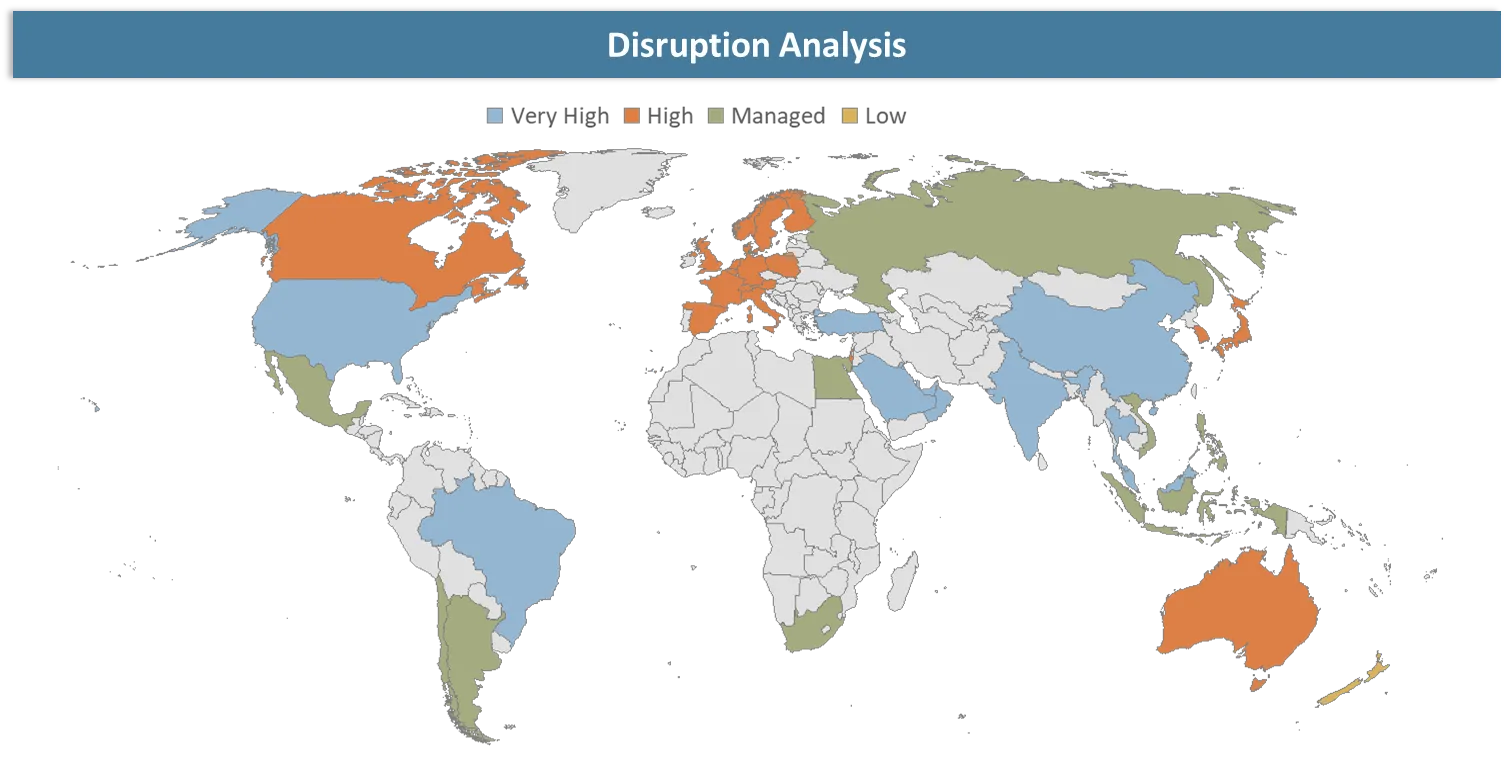
Shift Toward Dry Electrode Coating Reshaping the Battery Coating Landscape
The disruption in the battery coating market is primarily associated with the transition from conventional solvent-based wet electrode coating to dry electrode coating, which eliminates the need for solvent evaporation and drying in the electrode production process. This change is gaining commercial significance since companies aim to minimize material loss and optimize the process. In October 2025, Dürr announced that its X.Cellify DC dry-coating proof of concept proved the scalability of the process and is prepared for gigawatt-scale pilot projects, first of all aimed at lithium-ion batteries and then solid-state batteries. The process allows creation of a free-standing film made of active materials which stays 100% recyclable up to the stage of lamination onto collector foil.
In addition, the changing technology paradigm is leading to new demands in terms of coatings, binders, and process engineering in light of the adoption of solvent-free electrodes. In July 2026, Arkema suggests that solvent-free electrode manufacturing may comprise about 10% to 15% of the global EV battery business as soon as 2033. On the other hand, the development initiatives by the company with respect to dry-process include PVDF, acrylic polymers, polyamides, powder blending, direct calendering, and electrodeposition. On the other hand, according to the International Energy Agency (IEA), LFP batteries comprised more than 55% of the batteries used in EVs worldwide in 2025, thus highlighting the need for coating and binder technologies that can be used with LFP electrodes at high volumes.
Battery Coating Market BCG Matrix: Company Evaluation
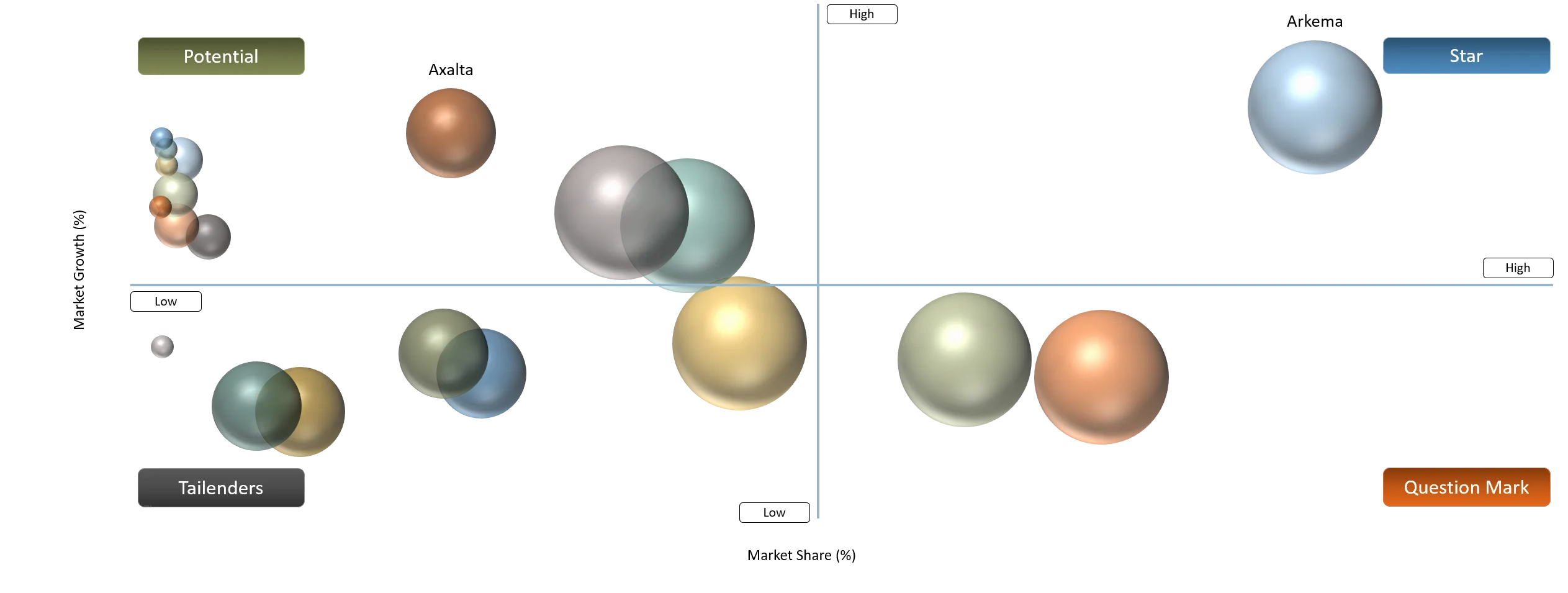
Stars include Arkema, Solvay, and PPG Industries because of their established positions in battery materials and coating solutions, broad technology portfolios, and increasing focus on advanced electrode and separator coating applications. These companies are well positioned to benefit from increasing demand for high-performance coatings as EV and energy-storage battery production expands. Question Marks include Asahi Kasei, UBE Corporation, Dürr, Hirano Tecseed, Nordson, and Mitsubishi Paper Mills. These companies have relevant technologies and are increasing their involvement across electrode coating, separator materials, coating equipment, and advanced battery manufacturing processes, but face strong competition from larger integrated material suppliers and coating-equipment providers.
The Potential category includes Axalta and Beneq, which possess relevant coating technologies and specialized surface-treatment capabilities but have comparatively narrower exposure to the core battery-coating value chain. Their technologies could gain greater relevance as battery manufacturers increase adoption of specialized surface-engineering processes. Tailenders include Forge Nano, which has a highly specialized position in atomic-layer-deposition-based battery materials and coatings but operates within a narrower technology segment than diversified coating-material and equipment companies.
Battery Coating Market Dynamics
Driver Impact Analysis
| Driver | Market Growth Impact (%) | Demand Concentration | Impacted Use Case | Strategic Impact |
Growing demand for high-performance lithium-ion batteries is driving the adoption of battery coatings to improve electrode stability. | 26% | EV batteries and high-energy-density lithium-ion cells, particularly in China, Europe, and the U.S. | High-performance cathodes, silicon/graphite anodes, electrode surface protection, and separator stabilization | Drives development of high-performance electrode and separator coatings that improve interfacial stability, cyclability, thermal performance, and compatibility with advanced chemistries. |
Rising electric vehicle production is increasing demand for advanced battery coatings. | 30% | China, Europe, and North America, with China representing 60% of global EV battery deployment in 2025 | EV battery cells, modules, and high-volume electrode manufacturing | Encourages battery manufacturers to adopt high-throughput, uniform, and cost-efficient coating processes and strengthens demand for coating equipment and materials compatible with gigafactory-scale production. |
Increasing deployment of energy storage systems is driving demand for coatings. | 18% | Utility-scale storage, particularly China, the U.S., and Europe | Grid-scale BESS, renewable-energy storage, commercial storage, and battery UPS systems | Expands demand for coatings that provide thermal stability, long-cycle durability, electrical insulation, and protection under frequent cycling. |
Growing use of high-nickel cathodes and silicon-based anodes is accelerating demand for surface coatings. | 15% | High-energy-density EV cells and advanced lithium-ion battery development, particularly Asia-Pacific, Europe, and North America | Nickel-rich cathodes, graphite–silicon anodes, lithium-metal anodes, and next-generation cells | Creates demand for nanostructured and conformal coatings that suppress active-material degradation and stabilize electrode–electrolyte interfaces, increasing opportunities for ALD. |
Rising emphasis on battery safety is driving the use of separator and electrode coatings to improve thermal resistance. | 11% | EV batteries, stationary storage, and high-power lithium-ion cells across Asia-Pacific, Europe, and North America | Ceramic-coated separators, thermal-protection layers, electrode coatings, and battery safety systems | Strengthens demand for ceramic, alumina, oxide, and polymer coatings that improve separator dimensional stability and reduce thermal-failure risks. |
Growing demand for high-performance lithium-ion batteries is driving the adoption of battery coatings to improve electrode stability
The rapid expansion of high-performance lithium-ion batteries is increasing the demand for coatings that could enhance stability, adhesion, thermal resistance, and cycleability of electrodes. According to the International Energy Agency (IEA), global battery deployment in EVs has reached 1.2 TWh in 2025, growing by 30%. At the same time, EVs accounted for more than 70% of the global battery deployment. Thus, the fast growth has increased the demand for coatings that could provide the structure and electrochemical stability of electrodes at high energy density and multiple charge-discharge cycles. Moreover, the deployment of LFP batteries in EVs has exceeded 55% in 2025.
In parallel, in July 2026, according to Advanced Functional Materials, the performance improvements possible from engineered coatings on electrodes are shown. Scientists have produced a 40-nm-thick SiOₓ/C coating on graphite via a scalable sol-gel technique. The specific capacity obtained was 584 mAh g⁻¹ and 86% capacity retention at 500 cycles in a full cell configuration with NMC532, while 68% capacity retention at 200 cycles was observed for graphite with no coating under similar conditions. Additionally, a 99.0% reversibility of lithium plating was achieved, with lithium plating accounting for about 33% of the total capacity of 600 mAh g⁻¹. These findings show how carefully designed coatings are capable of controlling lithium plating, preventing degradation, and enhancing the life of electrodes, further highlighting the significance of coatings in developing high-energy lithium-ion batteries.
Restraint Impact Analysis
| Restraint | Drag on Market Growth (%) | Primary Impact Area | Impacted Use Case | Strategic Impact |
High energy consumption during electrode drying and solvent recovery limits the cost efficiency of conventional battery coating processes. | 22% | Manufacturing cost & energy efficiency | EV batteries, energy-storage batteries, high-volume lithium-ion cell production | Accelerates investment in energy-efficient drying, aqueous coating, and dry-electrode coating; increases pressure to reduce energy intensity and operating costs. |
Use of costly and hazardous solvents such as NMP increases operational costs and creates environmental and regulatory challenges for battery coating manufacturers. | 18% | Solvent management, compliance & operating cost | NMC/NCA cathode manufacturing, conventional wet-coated electrodes | Encourages substitution toward aqueous and solvent-free coating technologies and increases investment in NMP recovery and emission-control systems. |
Difficulty in maintaining uniform coating thickness and material distribution can create defects, reducing electrode quality and battery performance. | 16% | Process quality & manufacturing yield | High-energy-density EV cells, advanced cathodes/anodes, large-format cells | Drives adoption of precision coating, inline inspection, process monitoring and AI-based quality control to improve yield and consistency. |
Binder migration, cracking, and delamination during coating and drying restrict the production of thick, high-loading battery electrodes. | 14% | Electrode performance & energy density | Fast-charging EV batteries, high-energy-density cells, thick-electrode applications | Stimulates development of optimized slurry formulations, controlled drying, advanced binders and dry-coating technologies to enable thicker electrodes. |
High energy consumption during electrode drying and solvent recovery limits the cost efficiency of conventional battery coating processes
One of the key constraints that limit the cost-effectiveness of conventional electrode coating is the high amount of energy consumption involved in the process of drying and managing the solvents. In wet-electrode processing, drying is one of the most energy-intensive operations that should be done to eliminate the solvents in order to create an electrode microstructure. In January 2026, according to the HPC4EI, Simulation of Microstructure Evolution of Battery Electrode Drying Process that was made by the University of Michigan–Dearborn, General Motors LLC, and Pacific Northwest National Laboratory, the process of drying accounts for 47% of total energy consumption in lithium-ion battery production. This highlights the reduction of drying time and energy usage, without compromising on the quality of the electrode, as one of the main objectives of production.
Moreover, the use of conventional wet electrode fabrication involves a large machinery setup and VOC/NMP emissions, whereas the use of dry electrodes is possible with less machinery setup, reduced capital investment, and thicker and uniformly composed electrodes. The above point reveals that not only does conventional battery coating involve high energy costs, but also requires additional machinery setup for solvent-based coating. With the increase in electrode production up to the level of gigawatt-hour battery production, the energy required for continuous heating and solvent evaporation becomes a major factor in increased operating costs and thermal management needs. Thus, the high share of energy spent on drying in total manufacturing energy consumption is a serious disadvantage of conventional coating.
Battery Coating Market Segment Analysis
The global battery coating market is segmented based on battery component, coating material, coating technology, battery type, function, application, and region.
Growing Adoption of Lithium-Ion Batteries Across EVs and Energy Storage Driving High-Volume Demand
The lithium-ion segment dominates the battery coating market, with a 62.4% of market share in 2025, owing to its wide application in various sectors including electric vehicles, energy storage solutions, consumer electronic devices, among others. According to the International Energy Agency (IEA), the global demand for batteries witnessed an increase of over 35% in 2025 and exceeded 1.5 TWh; battery storage emerged as one of the key drivers behind this rise. Moreover, according to the Global EV Outlook 2026 of the IEA, EV battery deployment increased to 1.2 TWh, while the overall global battery deployment by EVs stood at over 70%. This huge deployment of lithium-ion batteries is increasing the demand for coating technologies to deliver uniform electrodes and enhance battery performance.
Leading battery manufacturers and technology developers continue to bolster the dominance of the lithium-ion ecosystem by means of massive manufacturing and technology upgrades. According to the IEA, the total global nameplate lithium-ion battery manufacturing capacity surpassed 4 TWh by the end of 2025, with China having over 80% of global battery manufacturing capacity and over 80% of global battery production in 2025. Also, the IEA’s 2025 outlook report stated that 95% of installed, constructed, and finalized investment decisions of battery manufacturing capacity were aimed at lithium-ion batteries, 4% at sodium-ion, and only 1% at solid-state batteries. Thus, the size of the current manufacturing capacities and further investment in lithium-ion battery technology ensure its dominance and high-volume demand for battery coating technology.
Battery Coating Market Geographical Penetration
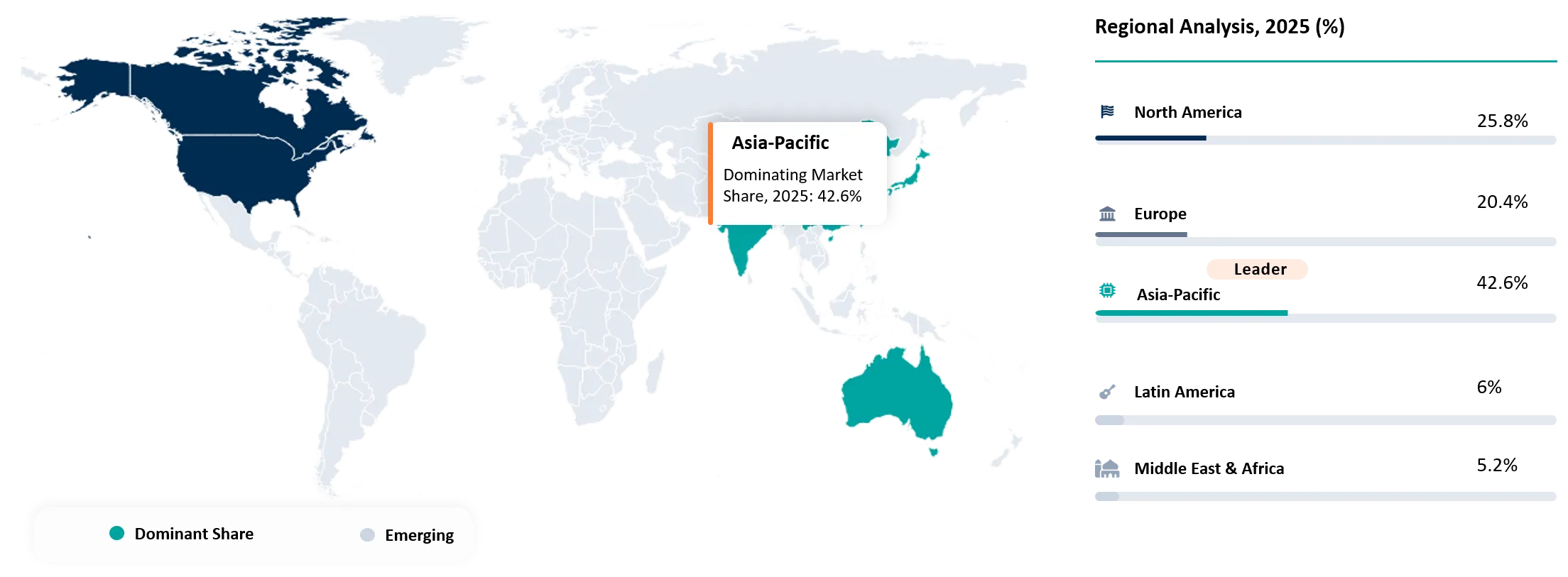
Large-Scale Battery Manufacturing and Capacity Expansion Driving Asia-Pacific Dominance
The Asia-Pacific region dominates the battery coating market, with a 42.6% of market share in 2025, supported by its strong concentration of lithium-ion battery manufacturers, established electric vehicle supply chains, and rapidly expanding battery energy-storage industry across China, Japan, South Korea, and other Asian economies. The presence of leading battery-cell manufacturers, electrode-material suppliers, coating-equipment providers, and integrated battery production ecosystems enables the large-scale adoption of advanced coating technologies. Rising demand for electric vehicles and energy-storage systems is encouraging manufacturers across the region to expand battery production capacity and adopt precise coating processes that improve electrode uniformity, adhesion, thermal stability, and overall cell performance, strengthening Asia-Pacific's leading position in the Battery Coating Market.
The shift toward high-precision and digitally controlled coating technologies is creating new opportunities to improve battery manufacturing efficiency, coating uniformity, and material utilization. In June 2025, Xaar plc, a UK-based industrial inkjet technology and printhead manufacturer, partnered with Sokan New Materials Group, a China-based chemical and functional coating materials manufacturer, to develop next-generation EV battery coating solutions. Xaar’s Xaar eX and Nitrox eX printheads enable the application of high-viscosity UV battery coatings, with the technology capable of jetting fluids up to 1,000 cP at ambient temperature. The collaboration has already produced an industrial mass-production inkjet printing line for cylindrical EV batteries. Sokan has invested more than ¥50 million (approximately USD313,627 ) across material, process, and equipment R&D, while more than 10 customers are in production or sampling phases.
China Battery Coating Market Trends
China holds a dominant position in the Asia-Pacific battery coating market owing to its highly developed lithium-ion battery manufacturing ecosystem, extensive electrode and battery-material supply chains, and large-scale production of electric vehicle and energy-storage batteries. The availability of leading battery-cell manufacturers, electrode-material producers, coating-equipment suppliers, and integrated manufacturing facilities enables rapid adoption and commercialization of advanced coating technologies across the battery value chain. The country's strong position in lithium-ion battery manufacturing also allows manufacturers to scale coating processes for high-volume production while improving electrode uniformity, energy density, manufacturing efficiency, and cell performance.
The consolidation of battery-separator manufacturing assets is creating opportunities to expand coated separator capacity and strengthen localized battery coating supply chains in China. In May 2026, Yunnan Energy New Material Co., Ltd. (Enjie), a China-based lithium-ion battery separator and functional film manufacturer, announced that its subsidiary Jiangsu Enjie New Material Technology Co., Ltd. would acquire 100% of SK Battery Materials Technology (Jiangsu) Co., Ltd. from SK IE Technology Co., Ltd. (SKIET), a South Korean battery-separator manufacturer, for a base purchase price of RMB 400 million (approximately USD 59.5 million). The target company, located in Jiangsu, China, specializes in the R&D, manufacturing, sales, and technical services of lithium-ion battery separators and coated films. Its facility operates 8 base-film production lines with a designed annual capacity of approximately 940 million m², supported by 10 coating lines, making the transaction directly relevant to China’s battery coating industry.
Japan Battery Coating Market Outlook
Japan is a major player in the Asia-Pacific battery coating market because of its established battery manufacturing ecosystem, strong presence in advanced lithium-ion technologies, and expertise in high-performance materials and precision manufacturing. The country has a long-standing position in automotive and consumer-electronics batteries, supported by companies such as Panasonic Energy and other Japanese battery-material and equipment manufacturers. Growing requirements for high-energy-density, durable, and safer batteries are encouraging Japanese manufacturers to improve electrode manufacturing processes and adopt advanced coating technologies that enable precise coating thickness, uniformity, adhesion, and enhanced cell performance.
In February 2025, BATTERY JAPAN 2025, held in Tokyo, Japan, from February 19–21, featured Manst, a China-based advanced coating technology solutions provider, at Booth E52-9. Manst has 10+ years of industry experience, operates a global network of 100+ service outlets, and has established more than 20 subsidiaries across Asia, Europe, and other regions. Through Manst Japan, the company provides localized technical services and has developed an Asia-Pacific technical service hub offering intelligent coating solutions and 24-hour rapid-response support. At the exhibition, Manst showcased fully ceramic double-layer automatic coating die heads, fully automatic double-layer coating die heads, closed-loop control systems, and dry-electrode equipment for lithium-ion battery coating applications, strengthening its expansion in the Japanese and broader Asia-Pacific battery coating market.
Accelerating Battery Manufacturing and Gigafactory Expansion Driving North American Growth
North America is a major region in the battery coating market, accounting for 25.8% of the market share in 2025, driven by the rapid development of domestic battery manufacturing, expanding electric vehicle production, and increasing demand for battery energy-storage systems. The region is strengthening its battery supply chain through investments in cell manufacturing, electrode production, battery materials, and advanced manufacturing technologies. The combination of large-scale battery plants, automotive manufacturers, technology companies, and government-supported localization initiatives is creating a favorable environment for the adoption of advanced coating technologies.
The shift toward sustainable and energy-efficient battery manufacturing is accelerating the adoption of water-based processing and advanced electrode production technologies. In March 2026, Holyvolt, a Sweden-based battery technology company, completed the acquisition of Wildcat Discovery Technologies, a U.S.-based battery materials development and manufacturing technology company, in a transaction valued at USD 73 million. The acquisition combines Holyvolt’s screen-printing and water-based battery manufacturing process, which replaces conventional solvent-based slurry processing, with Wildcat’s High Throughput Platform (HTP) for rapid battery-material discovery. Wildcat’s platform can simultaneously screen thousands of material combinations and identify optimized chemistries up to 10 times faster than conventional methods, while the company also has 20 Ah cell manufacturing capacity and a pilot line capable of producing 100 kg-scale cathode powders.
U.S. Battery Coating Market Trends
The U.S. holds a leading position in the North American battery coating market owing to the expansion of domestic battery manufacturing, growing electric vehicle production, and increasing deployment of battery energy-storage systems. The presence of major automotive companies, battery manufacturers, and battery-material suppliers is supporting the development of an integrated domestic battery ecosystem and increasing demand for advanced electrode-coating technologies. Government initiatives aimed at strengthening domestic battery supply chains are also encouraging manufacturers to localize cell and component production, creating opportunities for high-precision coating solutions that improve electrode uniformity, energy density, safety, and manufacturing efficiency.
The transition toward solvent-free electrode manufacturing is creating opportunities to reduce energy consumption, production costs, and environmental impacts across battery manufacturing. In March 2025, AM Batteries, a U.S.-based dry-electrode manufacturing technology company, entered into a joint development agreement with TDK Corporation, a Japan-based electronics and advanced materials manufacturer, to advance energy-efficient battery manufacturing in the U.S. AM Batteries’ Powder to Electrode dry-coating technology eliminates solvents and electrode drying, reducing energy consumption in electrode manufacturing by 75% and capital expenditure by 30%. The company also states that its technology can reduce electrode-manufacturing operating expenditure by more than 50% and battery-plant carbon footprint by approximately 5×.
Battery Coating Market Competitive Landscape
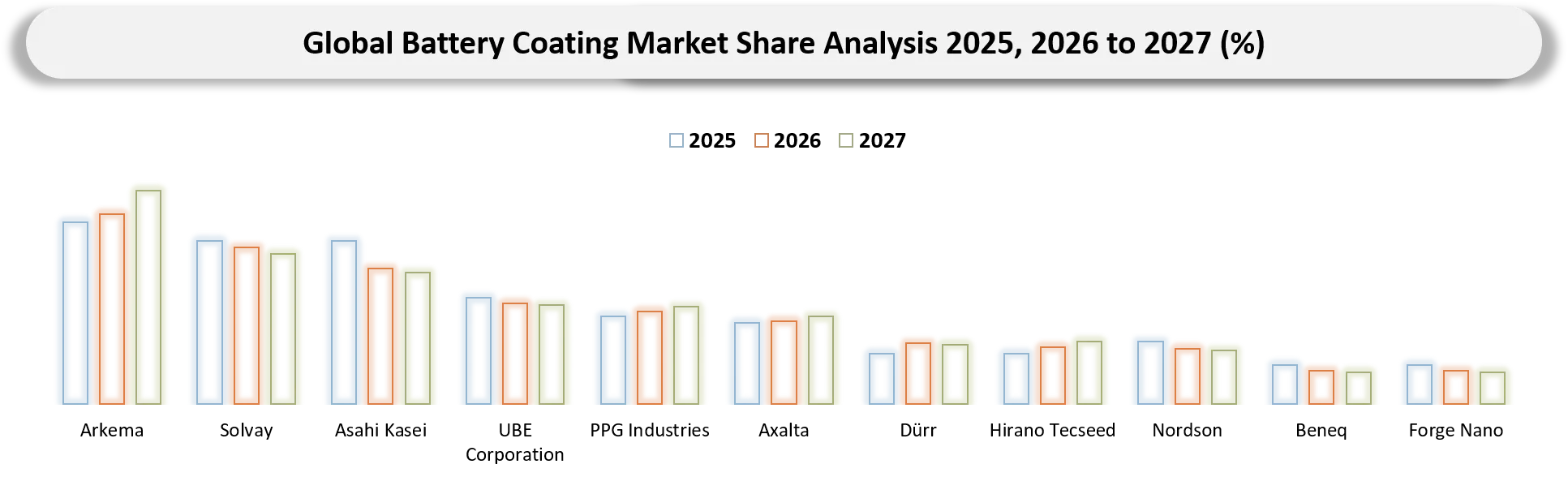
- The Battery Coating Market is characterized by three key participant groups: specialty chemical and coating-material suppliers, industrial coating and application-equipment providers, and advanced battery-coating technology specialists. Arkema, Solvay, Asahi Kasei, UBE Corporation, PPG Industries, and Axalta focus on specialty polymers, binders, functional coatings, and advanced material solutions for battery components; Dürr, Hirano Tecseed, and Nordson specialize in precision coating, electrode-processing, and high-throughput coating equipment; while Beneq and Forge Nano focus on advanced thin-film and atomic-layer-deposition technologies for battery materials and electrodes. Mitsubishi Paper Mills provides functional materials and coating-related solutions for battery applications. This creates a technology-driven competitive landscape where coating precision, material performance, production scalability, process efficiency, and compatibility with evolving battery chemistries define competitiveness.
- Key players include Arkema (France), Solvay (Belgium), Asahi Kasei (Japan), UBE Corporation (Japan), PPG Industries (U.S.), Axalta (U.S.), Dürr (Germany), Hirano Tecseed (Japan), Nordson (U.S.), Beneq (Finland), Forge Nano (U.S.), and Mitsubishi Paper Mills (Japan).
Key Developments
- June 2026: AnteoTech Ltd, an Australian-based advanced materials and battery-technology company, launched Anteo C, a PFAS-free, water-based cross-linker additive designed for primer coatings on lithium-ion battery current collectors.
- July 2025: Anaphite, a UK-based battery technology company, appointed Intralink, a UK-based international business development consultancy, to accelerate its expansion in South Korea.
- October 2025: Dürr, a Germany-based mechanical and plant engineering company, showcased its X.Cellify DC dry electrode coating technology at The Battery Show North America in Detroit, U.S. The technology forms a free-standing electrode film from dry powder before laminating it onto the current collector, eliminating solvents and energy-intensive drying ovens.
- April 2026: Focus Graphite Inc., a Canada-based developer of high-grade graphite deposits and advanced battery materials, entered into a Joint Product Development Agreement with Forge Nano Inc., a U.S.-based semiconductor equipment and advanced materials company, to evaluate Atomic Layer Deposition (ALD) coating on natural graphite from Focus Graphite’s Lac Knife project in Quebec.
- August 2025: FOM Technologies A/S, a Denmark-based precision coating equipment manufacturer, received a strategic order from the Alabama Mobility and Power Center (AMP), a U.S.-based public-private EV and battery innovation center, to supply an advanced pilot production system for battery development at the University of Alabama.
Key Procurement Priorities and Buyer Evaluation Criteria
- Organizations investing in the Battery Coating Market increasingly select suppliers based on their ability to provide high-precision, uniform, and scalable coating solutions that improve electrode performance, battery safety, manufacturing consistency, and production efficiency.
- The procurement decision-making process is increasingly influenced by the growing adoption of high-energy-density lithium-ion batteries, electric vehicles, battery energy-storage systems, and advanced cell chemistries, requiring coating technologies that can support higher production volumes while maintaining consistent coating thickness and material utilization.
- Buyers consider factors such as coating uniformity, coating thickness control, adhesion strength, thermal and chemical stability, material compatibility, production yield, coating speed, and energy efficiency when evaluating battery coating materials, equipment, and technology suppliers.
Why Choose DataM?
- Technological Innovations: Explores advancements in battery coating technologies, including electrode coatings, functional coatings, dry-coating processes, thin-film deposition, and precision coating systems, enabling improved electrode uniformity, thermal stability, adhesion, energy efficiency, and battery performance across lithium-ion and emerging battery technologies.
- Product Performance & Market Positioning: Evaluates how different players differentiate battery coating solutions based on coating uniformity, thickness control, adhesion, thermal and chemical stability, coating speed, material utilization, production yield, and cost efficiency, highlighting competitive positioning across EV batteries, consumer electronics, and energy-storage applications.
- Real-World Evidence: Highlights the adoption of battery coating technologies across electric vehicles, battery energy-storage systems, consumer electronics, and advanced lithium-ion battery manufacturing, demonstrating benefits such as improved electrode performance, enhanced safety, longer cycle life, reduced material waste, and greater manufacturing consistency.
- Market Updates & Industry Changes: Tracks key developments such as battery gigafactory expansions, electrode-production investments, advanced coating technology launches, dry-electrode manufacturing developments, and regional battery supply-chain investments across Asia-Pacific, North America, and Europe, supporting analysis of the evolving battery manufacturing ecosystem.
- Competitive Strategies: Analyzes how leading companies expand through technology development, capacity expansion, strategic partnerships, product innovation, process optimization, and integration of advanced coating systems to address increasing demand for high-performance batteries across EVs and energy-storage applications.
- Pricing & Market Access: Examines pricing variations based on coating material type, application method, coating thickness, production scale, equipment configuration, automation level, and process complexity, along with market access through battery manufacturers, electrode producers, coating-equipment suppliers, and integrated battery production facilities.
- Market Entry & Expansion: Identifies growth opportunities driven by EV adoption, battery energy storage, lithium-ion battery production, next-generation battery technologies, and regional supply-chain localization, while outlining strategies such as technology differentiation, local manufacturing, strategic partnerships, and capacity expansion to strengthen market presence globally.
Target Audience 2026
- Battery Manufacturers and Cell Producers
- Automotive and EV Manufacturers
- Battery Coating Material Suppliers
- Coating Equipment Manufacturers
- Battery Materials and Electrode Manufacturers
- Energy Storage System (ESS) Providers
- Consumer Electronics Manufacturers


























































