


Antimicrobial Urinary Catheters Market Overview
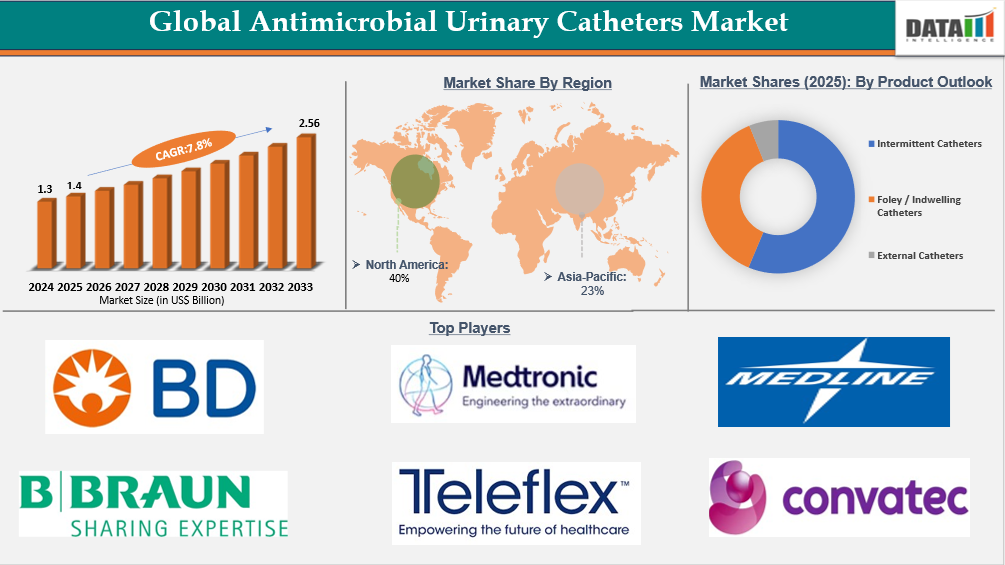
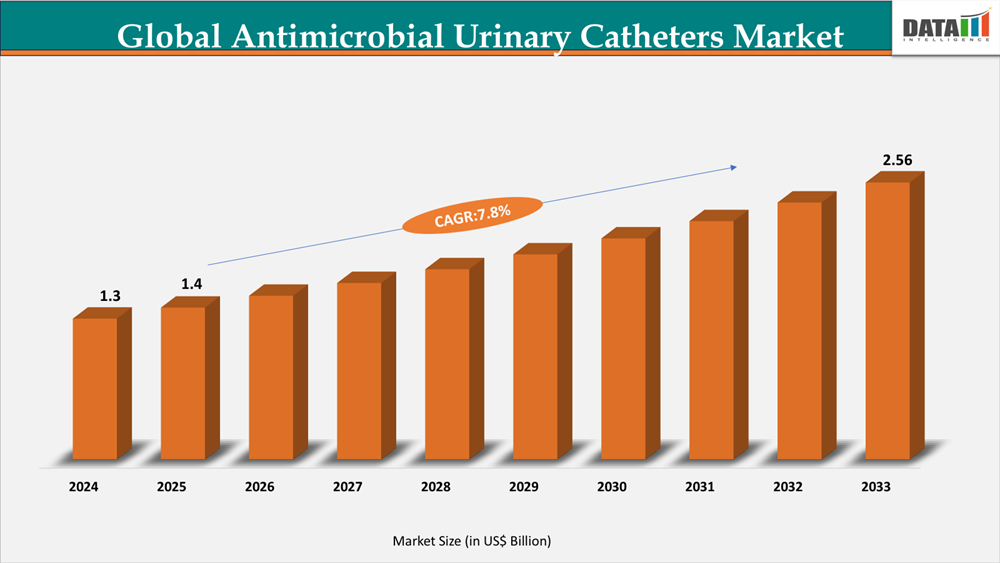
The Global Antimicrobial Urinary Catheters Market reached US$ 1.3 Billion in 2024, rising to US$ 1.4 Billion in 2025 and is expected to reach US$ 2.56 Billion by 2033, growing at a CAGR of 7.8% from 2026 to 2033.
The Global Antimicrobial Urinary Catheters Market is fueled by the high prevalence of catheter-associated urinary tract infections (CAUTIs), which account for around 70-80% of hospital-acquired UTIs. Around 15-25% of hospitalized patients require urinary catheterization, with infection risk increasing by 3-7% per catheter day, especially in ICUs, post-surgical care, and long-term care settings. Antimicrobial catheters with silver, antibiotic, and hydrophilic coatings have shown 30-50% decreases in bacterial colonization and CAUTI incidence, indicating a significant clinical acceptance.
Population aging is also driving market expansion, with the number of people over the age of 65 expected to approach 1.5 billion by 2050, boosting catheter use in high-risk patients. Rising chronic urological problems, increased healthcare spending, and tougher infection-control requirements all promote antimicrobial urinary catheters as an important infection-prevention strategy in worldwide healthcare systems.
Global Antimicrobial Urinary Catheters Industry Trends and Strategic Insights
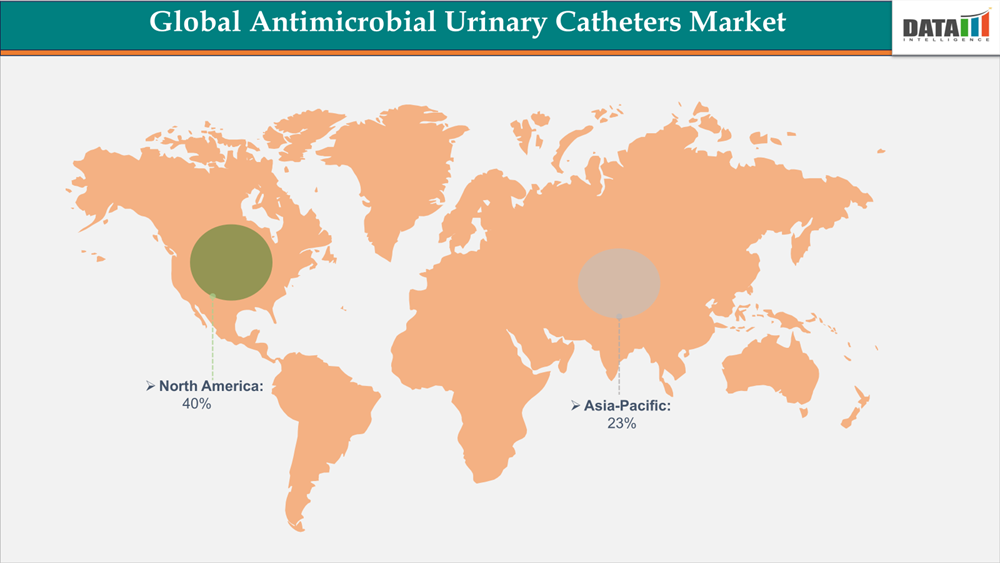
- North America leads the Global Antimicrobial Urinary Catheters Market, capturing the largest revenue share of 40% in 2025.
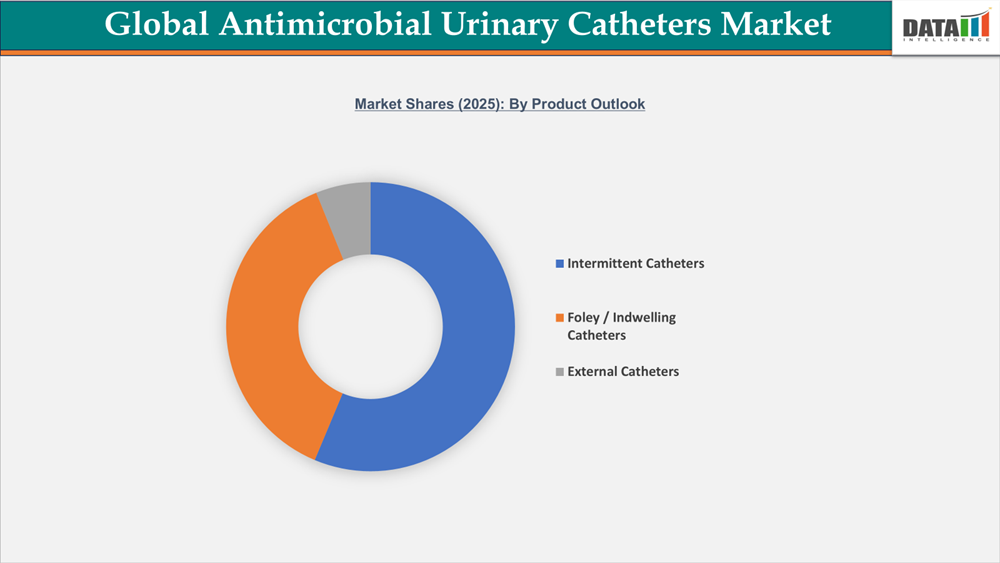
- By product outlook segment, intermittent catheters led the global antimicrobial urinary catheters market, capturing the largest revenue share of 48% in 2025.
Global Antimicrobial Urinary Catheters Market Size and Future Outlook
- 2025 Market Size: US$1.4 Billion
- 2033 Projected Market Size: US$2.56 Billion
- CAGR (2026–2033): 7.8%
- Dominating Market: North America
Fastest Growing Market: Asia-Pacific
Source: DataM Intelligence Email : datamintelligence.com
For More Detailed information Request for Sample
Market Dynamics
Rising Burden of Antimicrobial-Resistant Uropathogens
The increasing prevalence of antimicrobial-resistant uropathogens is one of the main factors driving the antimicrobial urinary catheters market, as, for most of the commonly identified CAUTI-causing bacteria, there is increased resistance to available antibiotic therapies, leading to the reduced effectiveness of conventional post-infection treatment and an increase in complications, hospital stays, and healthcare costs. In response, healthcare systems are pursuing preventive, device-based approaches. Antimicrobial urinary catheters can reduce the risk of urinary tract infection by preventing bacterial adhesion and biofilm formation on the catheter surface and decreasing the need for systemic antibiotic use, helping to achieve antimicrobial stewardship goals and supporting widespread use of long-term catheterization and market growth.
Coating Durability Degradation Over Prolonged Use
One of the major constraints for the antimicrobial urinary catheters market is the reduction in coating effectiveness due to the extended use. This phenomenon, especially for silver alloys, antibiotics, or hydrophilic antimicrobial coating, can be caused by continuous exposure to urine flow, friction, encrustation, and biofluid interaction. As the antimicrobial effectiveness decreases, so will the ability of the catheter to prevent bacterial attachment and biofilm formation, thereby compromising its clinical benefit over the conventional catheter. This limitation is particularly critical in chronic and long-term catheterization, where extended dwell time is common. The clinicians have concerns about the efficacy of antimicrobial catheters in the long run, which often leads them to replace the catheters more frequently, resulting in a higher overall cost of treatment and thus limiting the widespread use of antimicrobial catheters and restraining market growth.
Segmentation Analysis
The Global Antimicrobial Urinary Catheters Market is segmented based on product outlook, material outlook, coating & antimicrobial technology outlook, catheterization & intended duration of use, antimicrobial efficacy duration, infection risk profile, gender outlook, patient care setting, patient mobility and region.
Rising Adoption of Antimicrobial Intermittent Catheters Driven by Lower CAUTI Risk and Standard-of-Care Preference
People are using intermittent catheters more and more in hospitals and clinics. This is because antimicrobial intermittent catheters can help reduce problems that happen when catheters are used for a time. When catheters are left in the body for a time, they can cause infections in the urinary tract. These infections are called catheter-associated tract infections. The longer a catheter is used, the chance of getting an infection. In fact, 3-10% of people who use catheters for a long time get infections every day.
Using intermittent catheters instead of leaving them in all the time can help. Antimicrobial intermittent catheters do not stay in the body all the time so they do not expose the tract to bacteria all the time. This reduces the chance of bacteria growing and causing infections. Some antimicrobial intermittent catheters also have coatings that help prevent bacteria from sticking to them. These coatings can be made with silver or antibiotics. They help stop bacteria from growing and forming groups on the catheter, which can also reduce the chance of infection. Antimicrobial intermittent catheters are a choice because they have these special coatings that help keep people safe, from infections. Supported by infection-prevention guidelines and the growing shift toward outpatient and self-managed bladder care, antimicrobial intermittent catheters are increasingly adopted as a standard option, driving growth in the global antimicrobial urinary catheters market.
Geographical Penetration
Largest Market:
Demand for Antimicrobial Urinary Catheters Market in North America
In North America, the high prevalence of catheter-associated urinary tract infections (CAUTIs) and the extensive use of urinary catheters in hospital settings are the main drivers of demand for antimicrobial urinary catheters. An estimated 12–16% of hospitalized individuals need a urinary catheter, and CAUTIs are responsible for more than 30–40% of infections linked to healthcare, indicating a substantial risk of infection. The use of catheters coated with antimicrobials, which lessen bacterial adherence and biofilm formation, has increased due to these clinical considerations. The region's robust infection-prevention policies and quality-of-care programs keep up with the ongoing demand.
U.S. Antimicrobial Urinary Catheters Market Outlook
The increasing frequency of UTIs linked to catheter use and the focus on infection management in the medical setting are anticipated to fuel the steady growth of the antimicrobial urinary catheter market in the US. Since urinary catheters are used in most hospitals and long-term care homes, reducing CAUTIs is a major clinical and financial priority. The effectiveness of antimicrobial-coated catheters is demonstrated by clinical studies showing a reduction in bacterial colonization and biofilm development. The use of such catheters is supported by regulatory pressure, reimbursement structures, and hospital quality criteria. Additionally, the aging of the population, the rise in chronic illnesses requiring bladder management, and the rise in outpatient and home-care utilization in the United States are all contributing factors to the ongoing demand for antimicrobial urinary catheters.
Canada Antimicrobial Urinary Catheters Market Trends
The market for antimicrobial urinary catheters in Canada is influenced by continuing clinical emphasis on infection control and raising the standard of care in all healthcare environments. According to point-prevalence studies conducted in acute care hospitals in Canada, about 18% of inpatients have an indwelling urinary catheter at any given time, highlighting the devices' extensive use. Urinary tract infections continue to rank among the most commonly reported infections linked to healthcare, and catheterization has been found to be a significant risk factor, especially when catheter stay duration is extended. Hospital-based quality improvement programs have shown quantifiable decreases in the incidence of CAUTI after catheter use optimization treatments, underscoring the efficacy of infection-control measures. The use of urinary catheters coated with antimicrobials is being promoted by national surveillance programs, hospital accountability systems, and growing worries about antimicrobial resistance. Antimicrobial urinary catheters are positioned as a crucial part of Canada's infection-prevention landscape thanks to these developments, which sustain consistent demand across acute care, long-term care, and rehabilitation settings.
Fastest Growing Market:
Asia Pacific Records the Fastest Growth in the Antimicrobial Urinary Catheters Market
The market for antimicrobial urinary catheters in Asia Pacific is growing quickly due to the region's growing emphasis on infection control and use of evidence-based healthcare procedures. Due to large procedure volumes and growing hospital capacity, Asia Pacific accounts for about 23% of the world's use of antimicrobial urinary catheters. Structured CAUTI prevention programs that include surveillance systems and standardized catheter insertion and maintenance bundles are advised by regional guidelines, such as those published by the Asia Pacific Society of Infection Control (APSIC). These recommendations place a strong emphasis on interdisciplinary approaches to quality improvement as well as the necessity of using standardized care procedures to reduce catheter length and associated dangers.
Catheter-associated urinary tract infections (CAUTIs) are still among the most common healthcare-associated diseases in the region, pushing hospitals to implement sophisticated preventive technologies such antimicrobial-coated catheters that limit bacterial adhesion and biofilm formation. These approaches are consistent with international infection-prevention standards that promote appropriate catheter selection and intermittent catheterization where possible.
Rapid healthcare infrastructure expansion in China, India, and Southeast Asia, along with government-supported quality programs and affordable product availability, is driving adoption, cementing Asia Pacific's position as the fastest-growing regional market.
India Antimicrobial Urinary Catheters Market Insights
The Indian antimicrobial urinary catheters market is expanding as infection prevention becomes a top emphasis in private as well as public organizations. Urinary catheters are widely utilized in Indian healthcare settings, and catheter-associated urinary tract infections (CAUTIs) are among the most commonly reported hospital-acquired infections, especially in intensive care units and post-surgical wards. Recent prospective studies from Indian tertiary hospitals report a CAUTI incidence of 3-6 cases per 1,000 catheter days, whereas ICU-focused investigations have documented rates of more than 80 cases per 1,000 catheter days, indicating a high infection burden associated with prolonged catheterization and antibiotic resistance. The Indian Council of Medical Research (ICMR) has established national guidelines emphasizing surveillance, catheter care bundles, and early removal, which encourages the use of antimicrobial catheter technologies that limit bacterial adherence and biofilm formation. Accreditation frameworks such as NABH, expanding hospital infrastructure, increased surgical volumes, and rising chronic disease incidence are all boosting demand for antimicrobial urinary catheters in acute, long-term, and outpatient care in India.
China Antimicrobial Urinary Catheters Market Industry Growth
The antimicrobial urinary catheters market in China is continuously developing as hospital-acquired infection prevention becomes a national healthcare focus. According to national health data and hospital utilization studies, China has over 250 million inpatient admissions each year, and clinical audits show that 15-25% of hospitalized patients require fluid catheterization, notably in surgical, ICU, and geriatric wards. This results in 10 million catheterized patients every year, exposing them to CAUTIs, which continue to be among the most common healthcare-associated infections in Chinese hospitals. The National Health Commission of China's infection-control policies place an emphasis on standardized catheter insertion, maintenance bundling, surveillance, and timely removal. These efforts, together with developing antibiotic resistance, population aging, and hospital infrastructure growth, are hastening the introduction of antimicrobial urinary catheters in acute and long-term care settings.
Competitive Landscape
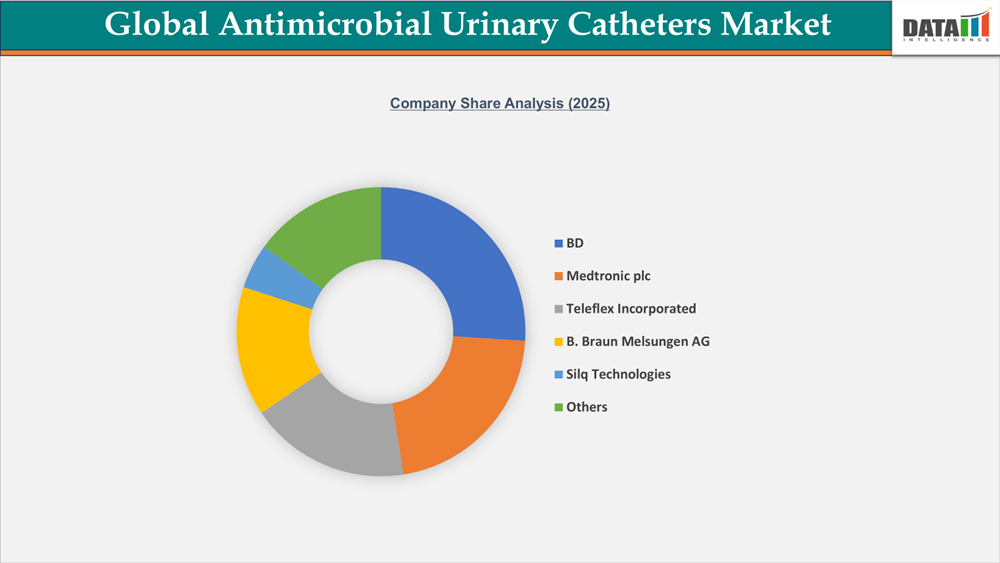
The global market for antimicrobial urinary catheters is highly competitive, with established medical device manufacturers such as BD, B. Braun Melsungen AG, Medline Industries, L.P. Teleflex Incorporated, and Medtronic plc, Silq Technologies leading the way. Other prominent players include Boston Scientific Corporation, Hollister Incorporated, Convatec, and Coloplast A/S. These corporations maintain strong market positions through diverse product portfolios, long-standing hospital ties, and substantial global distribution networks.
The market is competitive because to technological advancements in antimicrobial coatings, a growing emphasis on catheter-associated urinary tract infection (CAUTI) prevention, and an increase in demand for patient-centric and long-term catheter options. To increase acceptance across acute care, long-term care, and home care settings, market leaders prioritize product differentiation, ongoing R&D investments, and regulatory compliance. Strategic activities such as new product releases, portfolio expansion, and partnerships with healthcare providers and group purchasing organizations further intensify competition as businesses attempt to enhance market penetration and exploit long-term growth prospects.
Key Developments
- In 2023, BD became the sole global license partner for Bactiguard-coated Foley catheters, expanding its infection-prevention portfolio for antimicrobial urinary catheters and increasing its global market share.
- In 2024, Coloplast introduced a new antimicrobial hydrophilic-coated urinary catheter, with the goal of improving patient comfort and lowering infection risk, hence promoting wider usage in clinical and home care settings.
- In 2024, Vizient, Inc. awarded Silq Technologies’ ClearTract® Foley Catheter with zwitterion technology a significant innovative technology contract, recognizing advanced anti-biofilm catheter solutions that support antimicrobial management and reduce infection complications.
What Sets This Global Antimicrobial Urinary Catheters Market Intelligence Report Apart
- Latest Data & Forecasts – A comprehensive look of the market for antimicrobial urinary catheters by product outlook, material outlook, coating & antimicrobial technology outlook, catheterization & intended duration of use, antimicrobial efficacy duration, infection risk profile, gender outlook, patient care setting, patient mobility and region provides a clear picture of demand and utilization trends in acute, long-term, and home-care settings through 2033.
- Regulatory Intelligence – An in-depth analysis of the medical-device regulatory frameworks-such as the FDA, EMA, PMDA, NMPA, and CDSCO pathways—that have an impact on antimicrobial urinary catheters, including post-market surveillance, infection-control standards, device categorization, and antimicrobial claims.
- Competitive Benchmarking – Clear comparison of major companies according to their product lines, coatings, effectiveness in preventing infections, price policies, geographic reach, and hospital procurement penetration.
- Geographic & Emerging Market Coverage – Regional overview of the North America, Middle East and Africa, Asia Pacific, and Latin American markets that highlights the prevalence of CAUTI, trends in catheter uptake, healthcare infrastructure, reimbursement dynamics, and growth prospects.
- Actionable Strategies & Cost Dynamics – Supported by opinions from clinicians, infection-control specialists, and med tech stakeholders, these strategic insights cover technology differentiation (silver, hydrophilic, antimicrobial coatings), pricing pressure in tenders, raw-material costs, supply reliability, and innovation goals.





























































