


Anime-Style Mobile Gaming Market Overview
The global anime-style mobile gaming market reached US$ 3,456.50 million in 2025 and is expected to reach US$ 10265.62 million by 2035, growing with a CAGR of 11.5% during the forecast period 2026-2035. The global anime-style mobile games market is expanding due to rising demand for immersive, high-production-value RPGs and live-service titles that leverage advanced graphics engines, real-time multiplayer features, and cross-platform integration. Increasing smartphone performance, improved mobile GPUs, and widespread 5G adoption are enabling developers to deliver console-quality anime experiences on mobile devices, driving higher engagement and in-app spending.
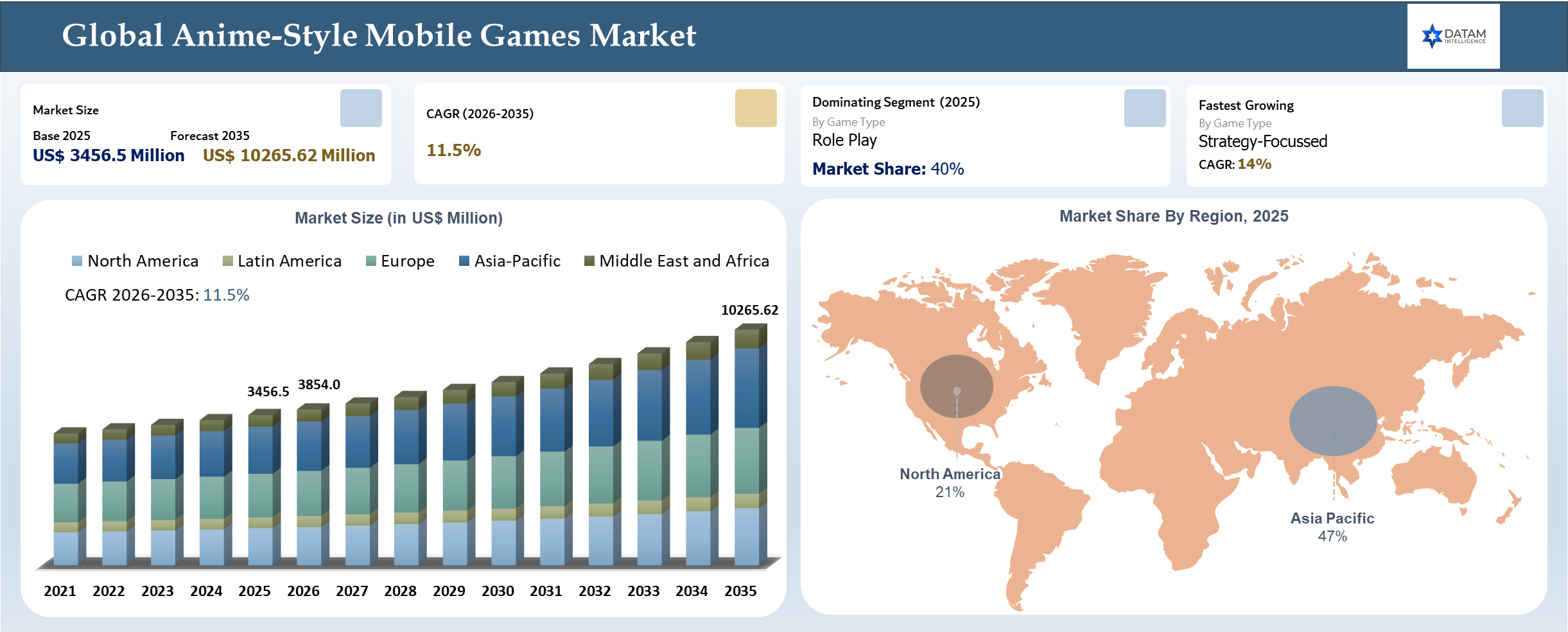
Major publishers across Asia-Pacific are responding strategically. For example, Tencent Games has continued investing in high-budget anime-style and cross-IP mobile titles, emphasizing premium production quality and large-scale live-service ecosystems. Similarly, for example, NetEase Games has expanded its portfolio of high-production-value anime-style mobile RPGs, focusing on advanced graphics optimization and large-scale live-service ecosystems. The company continues to invest in cross-platform development and international IP collaborations to strengthen its position in the premium mobile gaming segment.
Anime Style Mobile Games Industry Trends and Strategic Insights
- Incorporating the anime style into mobile game development, studios have started transitioning from simple gacha monetization strategies to immersive open-worlds, cross-playability, and long-term service models for their products. Chinese, Japanese, and South Korean developers seek to focus on rich 3D environments, AI-driven game content generation, and emotional storytelling for better retention rates and wider market reach.
- The industry's key players strive to implement AI in character design, animations, and NPC behavior algorithms to shorten the game development process and enhance content refresh. The implementation of generative AI technology becomes a strategic move in speeding up localization, optimizing Live2D animations, and generating assets.
- Monetization strategies are transforming from harsh gacha systems amid growing fatigue among global players. Game designers attempt different monetization methods, ranging from cosmetics, premium battle passes, direct character purchase systems, and hybrid single-player RPG formats.
Market Scope
| Metrics | Details | |
| 2025 Market Size | US$ 3,456.50 Million | |
| 2035 Projected Market Size | US$ 10,265.62 Million | |
| CAGR (2026-2035) | 11.5% | |
| Largest Market | Asia-Pacific | |
| Fastest Growing Market | Asia-Pacific | |
| By Game Features | Multiplayer, Single Player, Online, Offline | |
| By Platform | iOS, Android | |
| By Age Group | Teens (13-19), Young Adults (20-30), Adults (30+) | |
| By Revenue Model | Free-to-Play, Premium, Subscription | |
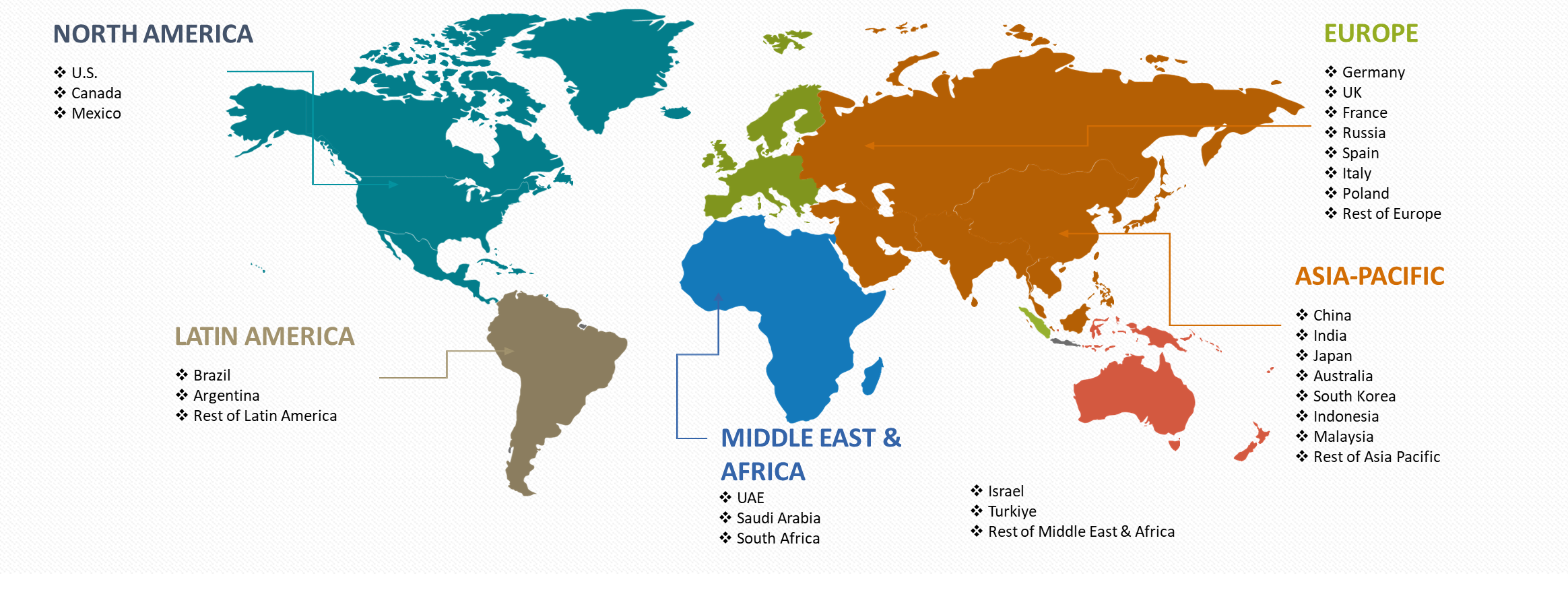
| By Region | North America | U.S., Canada, Mexico |
| Europe | Germany, UK, France, Spain, Italy, Poland | |
| Asia-Pacific | China, India, Japan, Australia, South Korea, Indonesia, Malaysia | |
| Latin America | Brazil, Argentina | |
| Middle East and Africa | UAE, Saudi Arabia, South Africa, Israel, Turkiye | |
| Report Insights Covered | Competitive Landscape Analysis, Company Profile Analysis, Market Size, Share, Growth | |
Disruption Analysis
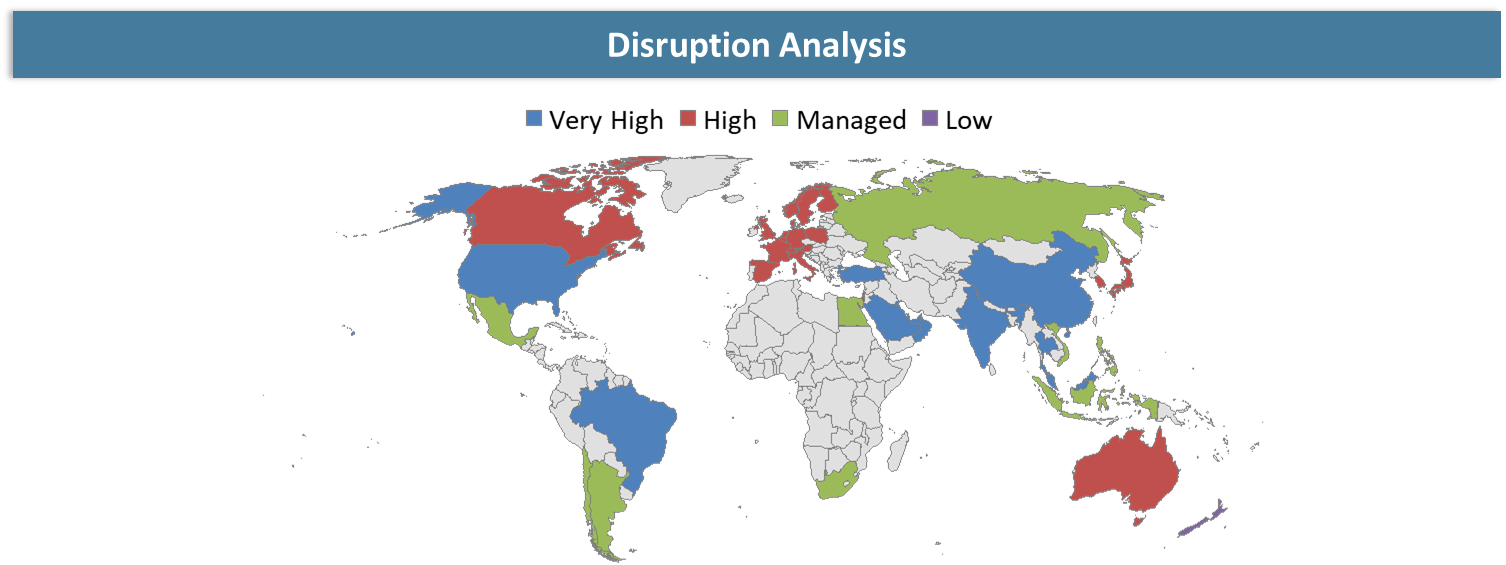
Shift Toward Live-Service Gacha Ecosystems Driving Long-Term Monetization
One of the most disruptive forces is the shift from single-player mobile games to a live service ecosystem that generates revenue on a continual basis by introducing new characters, events, and season changes. This approach is much more effective at increasing player lifetime value than any other premium game format. Game developers have focused their efforts on developing content, narratives, and fostering community interaction to ensure continuous monetization. For game development studios without live service platforms, competing in such an environment has become extremely difficult.
The other disruptive trend has been the globalization of Japanese animated content IP and the expansion of gaming ecosystems onto multiple platforms including mobile, desktops, and consoles. This approach allows game developers to grow their audiences and scale their operations globally while retaining a consistent user experience. Multiplatform capabilities are now a critical factor that gamers demand when choosing the best gaming environment.
BCG Matrix: Company Evaluation

Stars & Question Marks consist of developers with excellent intellectual property generation, live services, and international monetization scale. HoYoverse, NetEase Games, Cygames, and TiMi Studio run as Stars owing to their mega-hits, high ARPU models, and sustainable content pipelines that ensure continued engagement levels. They benefit from effective international distribution and ecosystems based on franchises. Kuro Games, Hypergryph, and Perfect World Games are regarded as Question Marks since they have proven their ability to produce high-quality games with increasing popularity although they are yet to maximize global distribution and monetization stability.
Potential Players & Tailenders represent the cluster for new studios and niche developers without significant scale. Hotta Studio, Sunborn Network Technology, iDreamSky, and Yoozoo Games can be described as Potential Players since they have selected mega-hits and regional presence but lack diversification. On the other hand, Tailenders involve Studio Montagne, Elementa, Naked Rain, and Black Tower Studios, which have limited international presence and small-scale production. The latter group of players competes intensely with big studios and must differentiate themselves through niches or collaborations.
Market Dynamics
Rapid Expansion of the Global Mobile Gamer Base and Increasing User Engagement
The global mobile gaming ecosystem continues to expand rapidly, with approximately 3.2 billion active mobile gamers worldwide, a figure projected to reach 3.5 billion by the end of 2025. In 2025 alone, the estimated number of mobile gamers stood at 3 billion out of 3.6 billion total gamers globally, reflecting a 4.5% year-over-year increase. This growth is supported by rising consumer engagement, with in-app purchase revenue increasing by 4%, time spent rising by 7.9%, and total gaming sessions growing by 12% in 2024 compared to 2023.
Monetization and advertising activity have also strengthened significantly, with global mobile consumer spending reaching $81.7 billion in 2025, up 1.3% from 2024. The number of mobile game advertisers surpassed 259,700 in 2024, marking a 60.4% year-over-year increase, and is expected to exceed 300,000 in 2025. Genre-wise, strategy, simulation, and arcade games recorded the highest year-over-year download growth, followed by shooter, RPG, and casino categories. Demographically, Gen Alpha (94%) and Gen Z (92%) account for the highest share of mobile gamers, closely followed by Millennials (88%) and Gen X (72%), highlighting broad generational adoption of mobile gaming globally.
Gaming Addiction Risks
Despite strong market growth, the anime-style mobile games industry faces increasing scrutiny due to concerns around gaming addiction and excessive engagement, particularly among younger demographics. Many anime-style titles rely on gacha mechanics, limited-time events, daily login rewards, and progression-based systems designed to maximize retention and recurring spending. While these mechanics drive revenue and user engagement, they also raise psychological and behavioral concerns related to compulsive play patterns and impulsive in-app purchases.
Rising awareness of digital addiction has prompted governments to introduce stricter youth protection policies, playtime restrictions, and spending caps, especially in major markets such as China and South Korea. Real-name authentication systems, minor spending limits, and mandatory probability disclosures for loot boxes have increased compliance complexity for developers. These regulatory pressures may constrain monetization flexibility and require publishers to redesign engagement systems to balance profitability with responsible gaming standards. Additionally, negative public perception surrounding addiction risks can impact brand reputation, increase regulatory intervention, and encourage the adoption of digital wellbeing tools that potentially reduce overall gameplay time and revenue per user.
Segment Analysis
The global anime-style mobile games market is segmented based on game type, game features, platform, age group, revenue model, and region.
Rising Consumer Demand for Immersive Anime-Style RPG Mobile Games Drives Market Dominance
RPGs dominate the mobile gaming market, holding a 40% share as players increasingly seek immersive storytelling, character-driven gameplay, and visually engaging anime-style graphics. Titles like Wuthering Waves Version 3.1, developed by Kuro Games, feature expansive story content, quality-of-life improvements, and fresh characters that keep audiences engaged across platforms, reflecting strong consumer preference for narrative-rich, visually vibrant games.
Game developers are actively enhancing RPG offerings to meet this demand. Studios like Kuro Games continue to expand content, optimize gameplay mechanics, and introduce new characters and events, creating dynamic experiences that retain player interest. These trends highlight how anime-style RPGs drive engagement and growth in the mobile gaming sector, appealing to both casual and dedicated players globally.
Rising Global Demand for Strategic Mobile Games with Strong Franchise Appeal Drives Growth in the Tactical Mobile Segment
The strategy-focused mobile game segment is growing in popularity as players seek deeper engagement, combining tactical decision-making, resource management, and narrative-driven gameplay to support complex in-game progression and competitive play. Recent game development trends have emphasized expansive story content, survivor management systems, and franchise tie-ins that deliver immersive experiences across global markets.
Technology and game developers in the broader mobile gaming ecosystem are creating optimized gameplay platforms that balance strategic depth with accessibility and ongoing live content updates. In 2026, Aniplex Inc., in collaboration with JOYCITY Corporation and Capcom Co., Ltd., launched Resident Evil: Survival Unit with features such as global deployment, real-time tactical battles, and iconic franchise character integration, highlighting broader ecosystem support for strategy-oriented mobile titles and reinforcing the segment’s growth as a key pillar in the mobile gaming market.
Geographical Penetration
Rising Investments and IP Expansion in Asia-Pacific
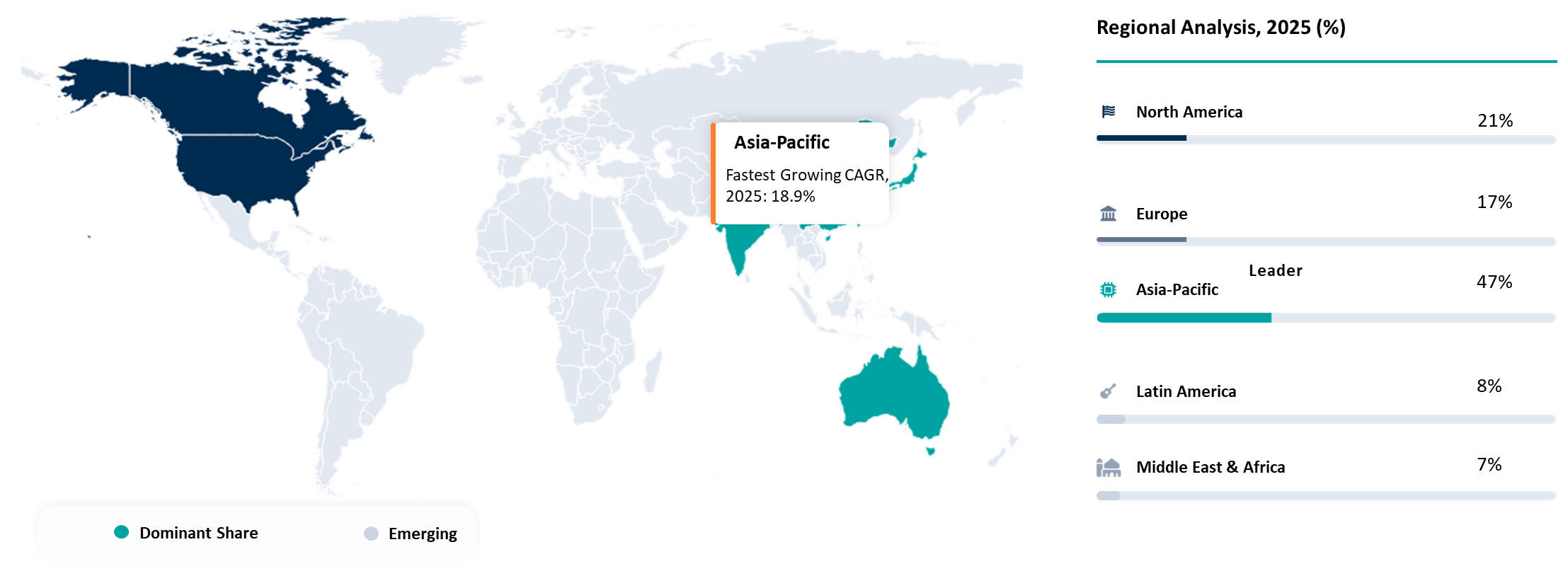
The Asia-Pacific anime-style mobile gaming market is the largest and fastest-growing globally, accounting for an estimated 62% market share in 2025. The region benefits from strong domestic developers in China and Japan, deep cultural affinity toward anime content, high smartphone penetration, and advanced digital payment ecosystems that support gacha-based monetization models. Governments across Asia-Pacific are also encouraging growth in digital entertainment, esports, and creative industries, strengthening domestic publishing ecosystems and reducing reliance on Western IP dominance.
For instance, in 2024, iDreamSky, a China-based game publisher, launched Strinova, an anime-style hero shooter integrating unique “stringification” combat mechanics, strengthening its presence in the competitive anime-themed multiplayer segment across Asia-Pacific and global markets. Overall, sustained innovation by regional developers, supportive digital policies, and strong consumer demand for anime-driven content are expected to further solidify Asia-Pacific’s leadership position in the global anime-style mobile gaming market over the coming years.
China Anime-Style Mobile Games Market Outlook
China remains the leading country in the Asia-Pacific anime-style mobile gaming market, supported by strong domestic developers, integrated digital ecosystems, and high consumer spending on in-app purchases. The country’s publishers are heavily investing in high-production-value anime RPGs and cross-platform titles.
For instance, in 2025, Perfect World Games, a China-based developer, in collaboration with Atlus, launched Persona 5: The Phantom X, a mobile adaptation of the Persona franchise, targeting the growing anime RPG mobile audience in Japan, China, and Southeast Asia. China continues to strengthen its dominance through strategic IP collaborations, advanced mobile monetization frameworks, and expanding global publishing capabilities, positioning the country as both the innovation hub and primary revenue driver within the Asia-Pacific anime-style mobile gaming ecosystem.
Japan Anime-Style Mobile Games Market Trends
The anime-style mobile gaming market in Japan continues to play a central role in the global segment due to strong local IPs, established fan communities, and high engagement with character-driven mobile RPGs and simulation titles. Japanese players remain among the top contributors to mobile game revenue in Asia-Pacific, and domestic developers continue to release titles tied to major anime franchises with strong cultural resonance.
For instance, in 2024, Capcom, a Japan-based gaming company, entered into a strategic partnership with Tencent to co-develop and publish mobile titles based on Capcom’s IP portfolio, expanding anime-style and action RPG offerings across China and broader Asia. Overall, Japan’s strong IP ecosystem, high-spending player base, and strategic cross-border partnerships continue to reinforce its position as a key innovation and revenue hub within the Asia-Pacific anime-style mobile gaming market.
Regulatory Analysis
The anime-style mobile games market is shaped by strict content governance, monetization transparency requirements, data protection laws, and youth protection regulations across major Asia-Pacific economies. In China, the National Press and Publication Administration (NPPA) mandates ISBN licensing and pre-approval for all game releases, while enforcing content censorship standards and playtime restrictions for minors. China’s Personal Information Protection Law (PIPL) also requires strong data localization and user consent mechanisms, increasing compliance obligations for domestic and foreign publishers. Similarly, South Korea’s Game Industry Promotion Act and updated loot box disclosure amendments mandate probability transparency for randomized in-game purchases, directly impacting gacha-based monetization models common in anime-style titles.
In Japan, consumer protection regulations such as the Act Against Unjustifiable Premiums and Misleading Representations prohibit misleading reward mechanics, including the previously banned “Kompu Gacha” system. Industry bodies like the Computer Entertainment Supplier's Association (CESA) further promote self-regulatory guidelines requiring disclosure of gacha probabilities. Meanwhile, India regulates digital gaming under the Information Technology Act, 2000, and the Digital Personal Data Protection Act, 2023, strengthening intermediary accountability and data privacy standards. These regulations enhance user protection, transparency, and responsible monetization practices but increase compliance costs, operational monitoring requirements, and development adjustments for publishers operating across multiple Asia-Pacific jurisdictions.
Competitive Landscape
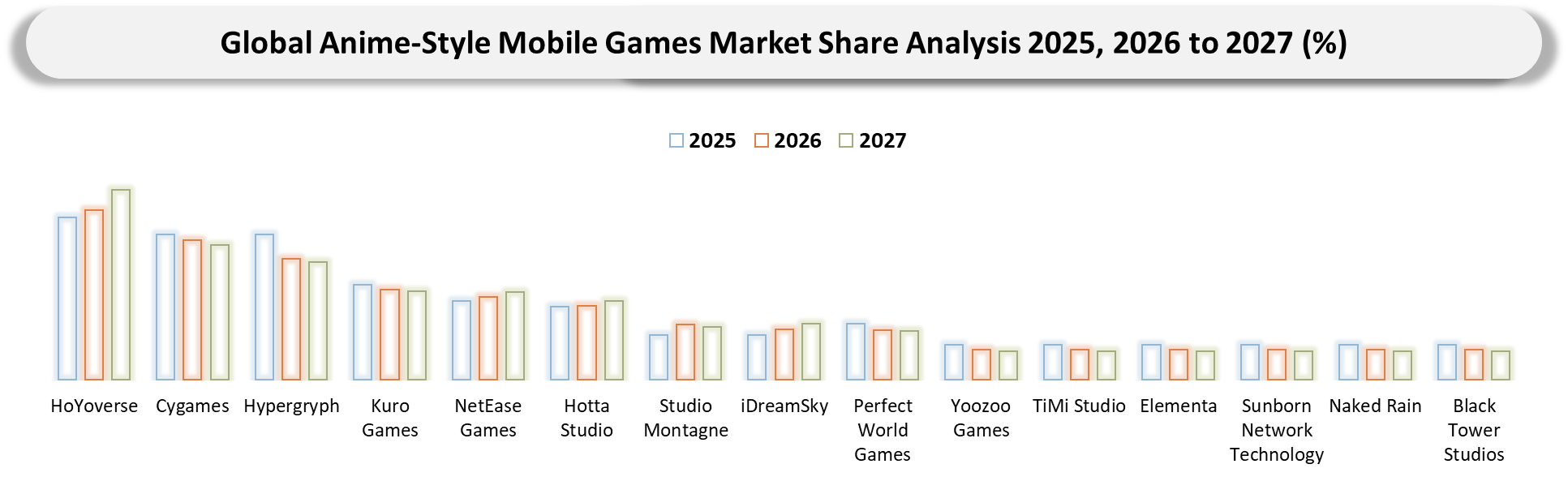
- The global anime-style mobile gaming market is characterized by a competitive landscape that includes both established and regional players.
- Key players include HoYoverse, Cygames, Hypergryph, Kuro Games, NetEase Games, Hotta Studio, Montagne, iDreamSky, Perfect World Games, Yoozoo Games, TiMi Studio (Capcom collaboration), Elementa, Sunborn Network Technology, Naked Rain, and Black Tower Studios.
Key Developments
- In 2025, Aniplex, a Japan-based anime production and gaming company, partnered with Bilibili to co-develop and publish anime-style mobile games, leveraging cross-media IP integration and Bilibili’s strong Gen Z user base in China.
- In 2025, Perfect World Games, a China-based developer, in collaboration with Atlus, launched Persona 5: The Phantom X, a mobile adaptation of the Persona franchise, targeting the growing anime RPG mobile audience in Japan, China, and Southeast Asia.
Why Choose DataM?
- Data-Driven Insights: Dive into detailed analyses with granular insights such as pricing, market shares and value chain evaluations, enriched by interviews with industry leaders and disruptors.
- Post-Purchase Support and Expert Analyst Consultations: As a valued client, gain direct access to our expert analysts for personalized advice and strategic guidance, tailored to your specific needs and challenges.
- White Papers and Case Studies: Benefit quarterly from our in-depth studies related to your purchased titles, tailored to refine your operational and marketing strategies for maximum impact.
- Annual Updates on Purchased Reports: As an existing customer, enjoy the privilege of annual updates to your reports, ensuring you stay abreast of the latest market insights and technological advancements. Terms and conditions apply.
- Specialized Focus on Emerging Markets: DataM differentiates itself by delivering in-depth, specialized insights specifically for emerging markets, rather than offering generalized geographic overviews. This approach equips our clients with a nuanced understanding and actionable intelligence that are essential for navigating and succeeding in high-growth regions.
- Value of DataM Reports: Our reports offer specialized insights tailored to the latest trends and specific business inquiries. This personalized approach provides a deeper, strategic perspective, ensuring you receive the precise information necessary to make informed decisions. These insights complement and go beyond what is typically available in generic databases.
Target Audience
- Manufacturers/ Buyers
- Industry Investors/Investment Bankers
- Research Professionals
- Emerging Companies


























































