


Animal-Free Lactoferrin Market Size and Overview
The global animal-free lactoferrin market reached USD 7.5 million in 2025 and is expected to reach USD 88.5 million by 2035, growing with a CAGR of 28% during the forecast period 2026-2035. The market is gaining commercial traction through the application of precision fermentation and recombinant microbial technologies to produce human and bovine lactoferrin without conventional animal-derived extraction. The investment in commercialization of biotechnology is helping to develop the market; in March 2026, the government of New South Wales gave AUD 1.1 million (USD 0.71 million) to All G through their Biosciences Fund while launching an AUD 20 million (USD 14.31 million) Emerging Technologies Commercialization Fund to promote technological innovations and manufacturing.
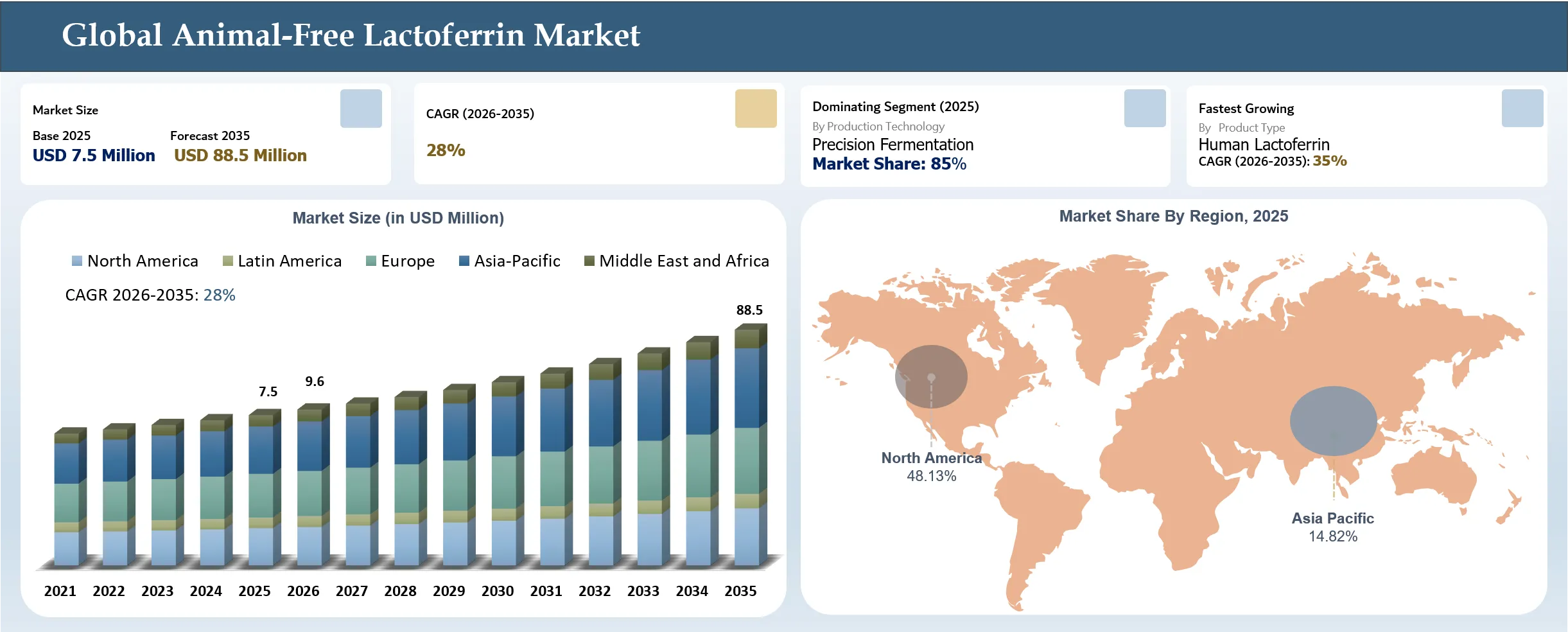
In addition, in 2026, All G also set up a joint venture company with Armor Protéines from France for the production and commercialization of recombinant human and bovine lactoferrin. Increasing demand for scalable bioactive proteins for infant nutrition, dietary supplements, and functional nutrition is increasing industry demand. Some of the companies working on producing lactoferrin are TurtleTree, All G, Vivici, De Novo Foodlabs, and Daisy Lab. However, the major challenges in the market are high cost of production, complexity in the downstream purification process, regulations, and lack of commercial-scale infrastructure.
Because of the need for high production standards and their associated cost, precision-fermented lactoferrin that does not require any animal source is being considered. In February 2026, according to Green Queen, Vivici, a Netherlands-based food tech startup, launched an animal-free lactoferrin ingredient named “Vivitein LF,” manufactured using precision fermentation technology after the company declared its GRAS status in the United States. The ingredient is 95% pure and is aimed for applications such as gut health, performance recovery, female wellness, and sustainable vitality. The website also mentions the limitations associated with the availability of conventional lactoferrin. 1 kilogram of lactoferrin needs 10,000 liters of milk to be extracted, whereas conventional lactoferrin costs between USD 600 and USD 2,000 per kilogram.
White-Space Opportunities for Precision Fermentation-Based Animal-Free Lactoferrin Production
In May 2025, the European Union investment in precision fermentation is creating a significant market opportunity for the scalable production of animal-free lactoferrin, with the largest investment focus directed toward developing industrial-scale manufacturing platforms for high-value human milk proteins. Under the European Innovation Council (EIC), the HuMiLAF (Human Milk Lactoferrin by Precision Fermentation) project received an EU contribution of USD 2.90 million (EUR 2.5 million) to support the development of precision-fermented human milk lactoferrin, with the project running from May 2025 to April 2027.
The investment is primarily focused on strain engineering, bioprocess optimization, downstream processing, production scale-up, product characterization, formulation studies, regulatory preparation, and commercial validation. Other areas benefiting from the investment include the development of nutritional applications for infant nutrition, medical nutrition, dietary supplements, healthy ageing products, immune-support formulations, and functional foods. The project has already completed a 1,500-liter scale-up program, demonstrated reproducible production, and reduced technical risks associated with the commercialization of recombinant bioactive proteins. This investment therefore creates opportunities by supporting the transition of precision-fermented lactoferrin from laboratory-scale development toward pre-industrial and commercial production.
The investment is expected to primarily benefit PFx Biotech LDA, Portugal, which coordinates the HuMiLAF project and is advancing its precision-fermentation platform for human milk lactoferrin production. PFx Biotech can benefit through microbial strain development, upstream fermentation optimization, downstream purification, product formulation, regulatory preparation, and commercial validation. The broader market opportunity could also benefit precision-fermentation and animal-free protein companies such as Vivici and All G, particularly through the expanding commercialization ecosystem for fermentation-derived lactoferrin ingredients.
Fermentation equipment and bioprocess technology providers could benefit from increasing demand for industrial-scale fermentation capacity, while downstream processing and protein purification companies could gain opportunities from the need for high-purity lactoferrin separation and processing. In the application segment, infant nutrition, medical nutrition, dietary supplement, healthy ageing, and functional food companies could benefit from the growing availability of animal-free lactoferrin ingredients, supporting the development of innovative immune health, gut health, performance nutrition, and wellness products.
Animal-Free Lactoferrin Market Strategic Takeaways
- North America led the global animal-free lactoferrin market with a dominant 48.13% share in 2025. The region's leadership is driven by advanced biotechnology infrastructure and commercialization pathways.
- Precision fermentation dominated the market by capturing an 85% market share in 2025. Industrial precision-fermentation systems are being modeled to reach an annual production capacity of 251 tonnes of 90% pure lactoferrin powder.
- Extraction from cow's milk yields only 0.02 to 0.2 grams (or 100 to 150 mg) of lactoferrin per liter. To extract 1 kilogram of conventional lactoferrin, 10,000 liters of milk are required.
- The EU-funded HuMiLAF project received USD 2.90 million (EUR 2.5 million) under the European Innovation Council to run from May 2025 to April 2027. The project successfully completed a 1,500-liter scale-up program for human milk lactoferrin.
Animal-Free Lactoferrin Market Industry Trends and Strategic Insight
- Precision fermentation is becoming the primary commercial production platform, as manufacturers shift away from dairy extraction to improve supply reliability, production consistency, and scalability.
- The industry is moving from technology validation toward commercial-scale manufacturing, with companies prioritizing strain optimization, bioprocess engineering, downstream purification, and industrial fermentation capacity.
- Human-identical lactoferrin is emerging as a strategic product category, particularly for next-generation infant nutrition, medical nutrition, and specialized health applications where biological similarity to human milk is commercially important.
- The competitive landscape is shifting from ingredient production to application-led innovation, with manufacturers positioning lactoferrin according to specific nutritional outcomes rather than marketing it solely as an animal-free protein ingredient.
- Cost parity with conventional dairy-derived lactoferrin remains the industry's critical commercialization objective, driving investment in higher-yield microbial strains, optimized fermentation processes, and more efficient purification technologies.
Animal-Free Lactoferrin Market Scope
| Metrics | Details | |
| 2025 Market Size | USD 7.5 Million | |
| 2035 Projected Market Size | USD 88.5 Million | |
| CAGR (2026-2035) | 28% | |
| Largest Market | North America | |
| Fastest Growing Market | Asia-Pacific | |
| By Product Type | Human Lactoferrin, Bovine Lactoferrin | |
| By Production Technology | Precision Fermentation, Recombinant Fermentation, Microbial Fermentation, Others | |
| By Form | Powder, Liquid, Others | |
| By Microbial Production Host | Yeast-Based Fermentation, Bacteria-Based Fermentation, Fungi-Based Fermentation, Other Microbial Hosts | |
| By Application | Infant and Early-Life Nutrition, Dietary Supplements, Functional Foods, Functional Beverages, Sports and Performance Nutrition, Medical and Clinical Nutrition, Women’s Health, Healthy Ageing and Longevity Nutrition, Personal Care and Cosmetics, Others | |
| By Region | North America | U.S., Canada, Mexico |
| Europe | Germany, UK, France, Spain, Italy, Poland | |
| Asia-Pacific | China, India, Japan, Australia, South Korea, Indonesia, Malaysia | |
| Latin America | Brazil, Argentina | |
| Middle East and Africa | UAE, Saudi Arabia, South Africa, Israel, Türkiye | |
| Report Insights Covered | Competitive Landscape Analysis, Company Profile Analysis, Market Size, Share, Growth | |
Animal-Free Lactoferrin Market Disruption Analysis
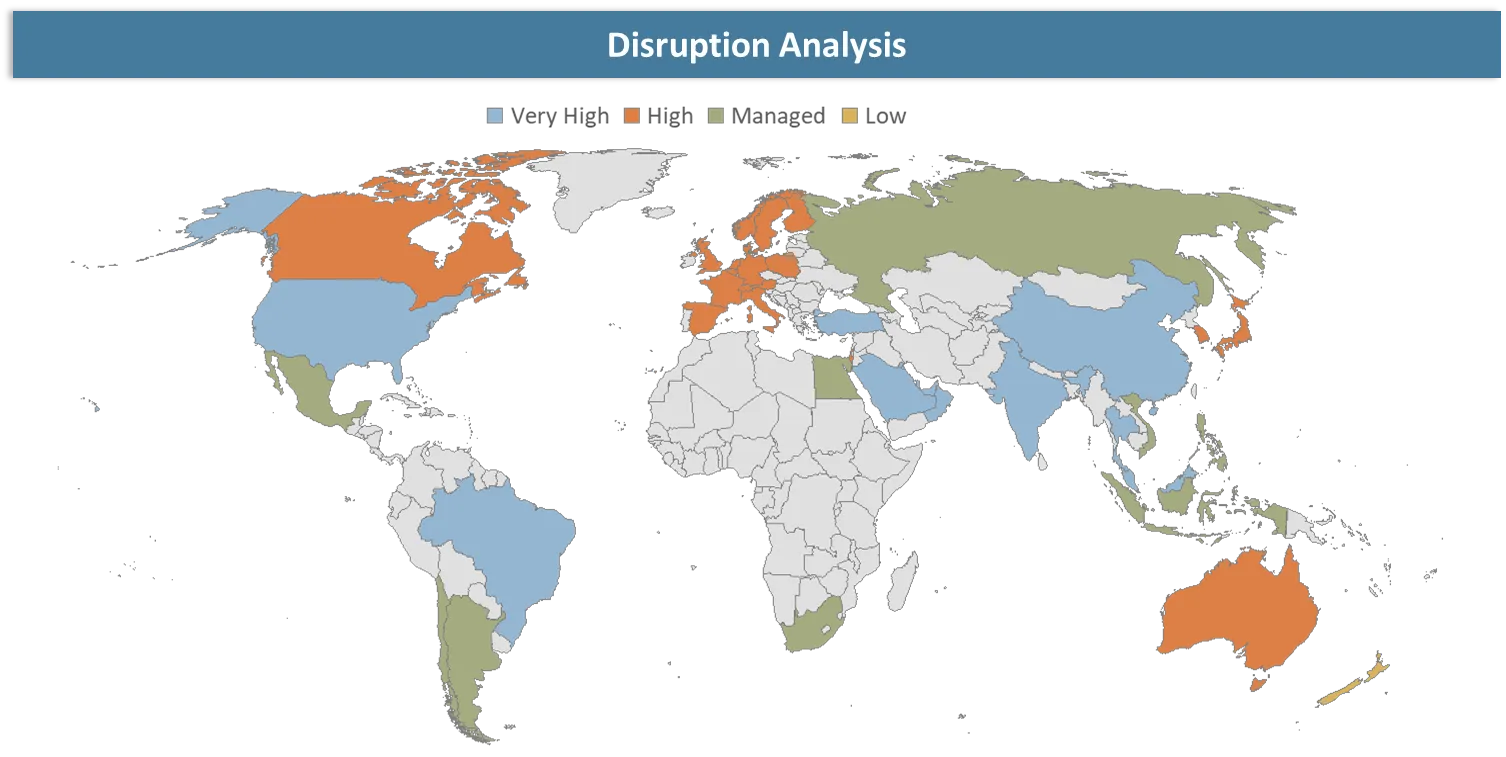
Shift from Dairy-Dependent Extraction to Precision Fermentation Reshaping the Lactoferrin Supply Chain
The disruption in the animal-free lactoferrin market is mainly attributed to the shift from traditional milk lactoferrin extraction methods to precision fermentation. Traditional sources of lactoferrin have a natural limitation in that the amount of lactoferrin present in milk is limited, whereby 1 liter of milk only contains about 100 mg of lactoferrin, as per information obtained from TurtleTree. This source of limitations is leading to the adoption of microbial-based production platforms that will produce lactoferrin without the need to use bovine milk. The LF+ platform of TurtleTree is an example that shows how this shift can happen, as it sees precision fermentation as a way to mass-produce lactoferrin and disrupt the traditional dairy-based supply chain.
The disruption was further hastened by regulatory validation in 2025 for the use of recombinant lactoferrin. According to the U.S. Food and Drug Administration (FDA), the recombinant bovine lactoferrin GRAS Notice GRN No. 1219 of TurtleTree had been concluded on May 7, 2025, where a “no questions” letter had been issued by the FDA. The ingredient is now approved for use in several applications, including chewing gum at up to 3%, powdered milk at up to 0.4%, nutritional beverages and protein powders at up to 0.04% - 0.25%, and non-dairy milk at up to 0.04%. The regulation is helping to hasten the disruption of the conventional lactoferrin supply by allowing precision fermentation alternatives to access more food and nutrition applications.
Animal-Free Lactoferrin Market BCG Matrix: Company Evaluation
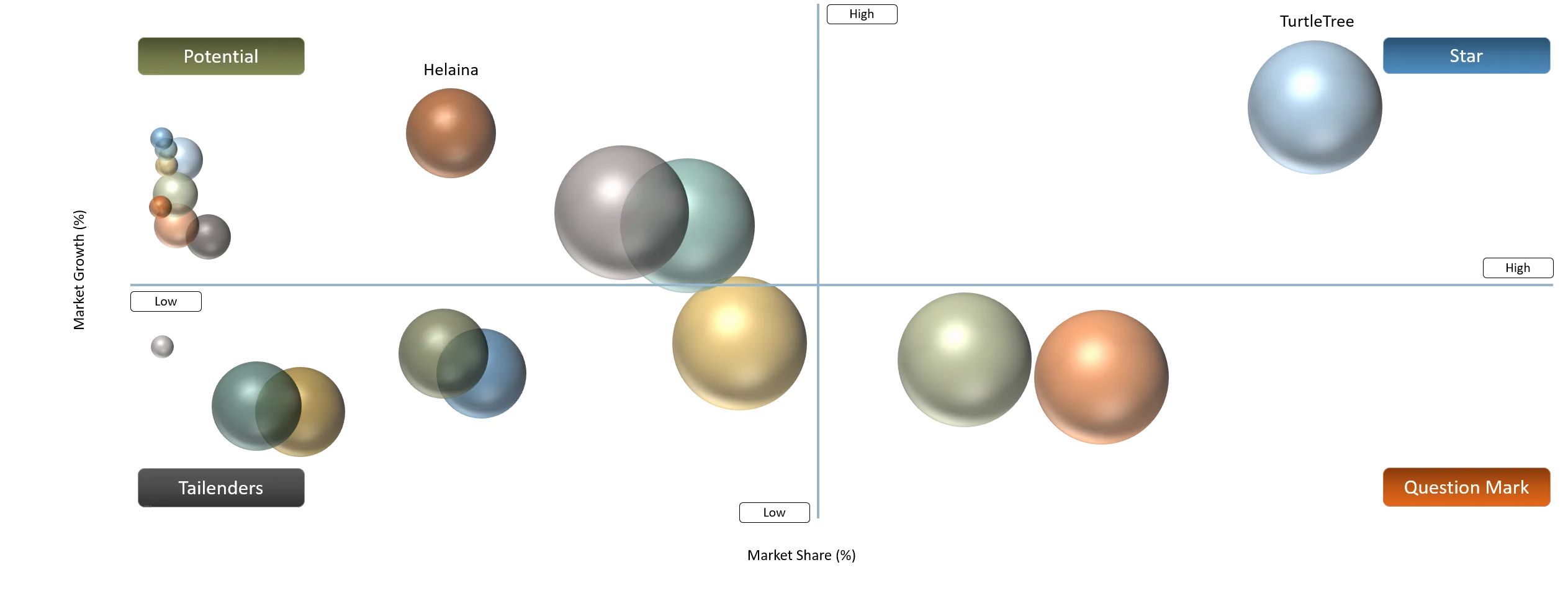
Stars include TurtleTree and All G, as both companies are positioned at the forefront of animal-free lactoferrin development and commercialization through precision fermentation. Their technology platforms, regulatory advancement, and focus on scalable production position them among the leading companies in the emerging market. Vivici, Eclipse Ingredients, and De Novo Foodlabs are placed in the Question Mark category, as both companies are actively developing and commercializing precision-fermented lactoferrin but remain in the early stages of establishing broad market penetration.
Helaina is categorized as a Potential company because of its strong focus on human milk proteins and advanced nutrition applications, particularly human lactoferrin and infant nutrition. The company has significant technological relevance within the sector, but its market position in animal-free lactoferrin remains dependent on continued commercial expansion and the scaling of specialized protein manufacturing capabilities. Armor Protéines is classified as a Tailender in the Animal-Free Lactoferrin Market, despite its established expertise in conventional dairy-derived lactoferrin and nutrition ingredients.
Animal-Free Lactoferrin Market Dynamics
Driver Impact Analysis
| Driver | Market Growth Impact (%) | Demand Concentration | Impacted Use Case | Strategic Impact |
Growing demand for functional nutrition products is driving the adoption of animal-free lactoferrin. | 30% | Demand is highly concentrated in dietary supplements, functional foods, and specialized nutrition products requiring bioactive ingredients. | Dietary supplements, functional foods and beverages, sports nutrition, women's health, and healthy ageing | Expands lactoferrin beyond conventional specialized nutrition and increases demand for scalable, high-purity animal-free ingredients. |
Increasing demand for advanced infant nutrition is boosting interest in bioidentical lactoferrin. | 25% | Demand is strongly concentrated among infant formula and early-life nutrition manufacturers seeking ingredients with functionality closer to human milk components. | Infant formula, early-life nutrition, pediatric nutrition, and specialized medical nutrition | Positions human-identical and recombinant lactoferrin as a strategic ingredient for narrowing the functional gap between conventional infant formula and human milk. |
Supply limitations and high extraction costs of conventional bovine lactoferrin are accelerating the shift toward scalable precision-f ermentation-based production. | 22% | Demand is concentrated among manufacturers facing supply constraints and requiring a more reliable and scalable source of lactoferrin. | Infant nutrition, medical nutrition, dietary supplements, and functional foods | Creates a structural opportunity for fermentation-based producers to establish independent supply chains with improved production consistency and availability. |
Rising consumer preference for animal-free and ethically produced ingredients is supporting demand for dairy-independent lactoferrin alternatives. | 10% | Demand is increasingly concentrated in premium nutrition and wellness categories targeting animal-free and sustainability-oriented consumers. | Plant-based foods and beverages, vegan supplements, wellness products, and sustainable nutrition | Strengthens product differentiation through animal-free, vegan-compatible, and dairy-independent positioning, particularly within premium nutrition categories. |
Advancements in precision fermentation technology are improving production scalability, purity, and commercial accessibility of animal-free lactoferrin. | 13% | Demand is concentrated among nutrition manufacturers seeking high-purity, consistently produced lactoferrin for large-scale product formulation. | Functional nutrition, clinical nutrition, infant nutrition, and specialized health formulations | Reduces technical barriers to commercialization and enables manufacturers to pursue broader application development, regulatory expansion, and industrial-scale production. |
Growing demand for functional nutrition products is driving the adoption of animal-free lactoferrin
The growing demand for functional nutrition products is accelerating the adoption of animal-free lactoferrin across infant formula, medical nutrition, and functional food applications. In January 2026, according to FoodBev Media, Agronomics invested an additional AUD 3 million (USD 2.15 million) in All G as part of a wider AUD 10 million (USD 7.16 million) funding round to support the commercial-scale production of precision-fermented lactoferrin. The investment highlights increasing industry confidence in lactoferrin as a high-value functional ingredient, particularly because conventional lactoferrin is extracted from cow's milk in small quantities, making supply constrained and expensive. Precision fermentation is therefore creating a scalable supply pathway to support expanding demand from functional nutrition manufacturers.
In parallel, the funding activity demonstrates the strategic shift toward expanding animal-free lactoferrin into broader nutrition markets. FoodBev Media reported that Agronomics' total exposure to All G reached approximately £8.9 million (USD 12.05 million), representing just under 5% of its reported net asset value, while the investment was structured as a 24-month convertible note carrying a 6% annual coupon. The capital is being directed toward commercial-scale production, regulatory submissions, intellectual property development, and expansion across Asia and Europe, supporting the transition of animal-free lactoferrin from a specialized biotechnology product toward wider use in functional foods and nutrition.
Restraint Impact Analysis
| Restraint | Drag on Market Growth (%) | Primary Impact Area | Impacted Use Case | Strategic Impact |
Complex and fragmented regulatory approval requirements across countries can delay the commercialization of animal- free lactoferrin products. | 30% | Regulatory approval and market entry | Infant nutrition, functional foods, dietary supplements, and medical nutrition | Delays multi-regional commercialization and requires companies to pursue separate regulatory submissions, increasing time-to-market and compliance costs. |
Consumer concerns regarding the safety and perceived “unnaturalness” of precision-fermented ingredients may restrict market acceptance. | 25% | Consumer acceptance and product adoption | Functional foods, dietary supplements, beverages, and infant nutrition | Requires transparent labeling, consumer education, and regulatory or healthcare endorsement to build trust and improve repeat purchasing. |
Limited large-scale manufacturing capacity and technological challenges in maintaining protein quality and functionality can constrain production expansion. | 28% | Manufacturing scale-up and product consistency | Infant formula, clinical nutrition, and high-purity dietary supplements | Makes access to specialized fermentation and downstream purification capacity a critical competitive requirement for achieving reliable commercial supply. |
Low consumer awareness and confusion surrounding “animal-free” and precision-fermented products can slow adoption. | 17% | Market awareness and product communication | Consumer supplements, functional foods, and wellness nutrition | Creates a need for clear terminology and targeted communication to differentiate animal-free lactoferrin from both conventional dairy-derived and plant-based ingredients. |
Complex and fragmented regulatory approval requirements across countries can delay the commercialization of animal-free lactoferrin products
One of the major restraints affecting the animal-free lactoferrin market is the fragmented regulatory environment governing precision-fermented and recombinant food proteins across different countries. In November 2025, according to Protein Production Technology International, the EU novel-food approval pathway is legally capped at 18 months, but approvals take an average of two and a half years and can extend to more than five years. The report also states that the European Food Safety Authority requires evidence from at least five independent production batches, compared with three batches in the U.S. and Singapore, in addition to shelf-life and food-matrix stability studies. These additional requirements can substantially increase the time and technical resources needed to commercialize animal-free lactoferrin across European markets.
Furthermore, significant differences in approval systems across countries can force animal-free lactoferrin manufacturers to prioritize selected markets rather than pursue simultaneous global commercialization. Protein Production Technology International reported that the U.S. GRAS process typically takes 10-12 months, while Singapore's assessments average nine months, compared with the EU's average approval period of two and a half years. The source further reported that China produces 65-90% of precision-fermentation amino acids and 50-100% of vitamins imported into the EU for animal feed, while nearly half of GRAS notifications filed with the U.S. FDA in 2025 for fermentation-derived ingredients originated from Chinese firms. These disparities demonstrate how regulatory delays can redirect companies, manufacturing investment, and commercialization activity toward faster approval jurisdictions, creating a significant barrier for animal-free lactoferrin producers seeking multi-regional market access.
Animal-Free Lactoferrin Market Segment Analysis
The global animal-free lactoferrin market is segmented based on product type, production technology, form, microbial production host, application, and region.
Precision Fermentation Dominating Animal-Free Lactoferrin Production Through Scalable and Dairy-Independent Manufacturing
The precision fermentation segment dominated the animal-free lactoferrin market, occupying 85% of the market share in 2025, because precision fermentation is more scalable than traditional milk extraction methods. With precision fermentation, microorganisms are genetically engineered to synthesize lactoferrin using manufacturing techniques as opposed to using conventional milk, where lactoferrin is extracted due to the lower protein concentration. In May 2025, according to FoodBev Media, Daisy Lab announced that it had developed a precision-fermentation yeast that could produce several grams of lactoferrin per liter, while traditional cow's milk contains just 0.02 to 0.2 grams per liter. Such an immense increase in the concentration of production highlights the reasons why precision fermentation is increasingly preferred in the production of lactoferrin.
Leadership in the segment is further bolstered by ongoing developments in terms of large-scale production capability for 2026. In May 2026, as per a Springer Nature publication, study published in The International Journal of Life Cycle Assessment modelled the industrial precision-fermentation system with an annual production capacity of about 251 tonnes of lactoferrin powder with 90% purity on the basis of a fermentation titre of 10 g/L reached in five days of fermentation. Also, the EU-funded HuMiLAF project successfully scaled up the production of precision-fermented human lactoferrin to 1,500 liters in 2026. This development adds further weight to the leadership of precision fermentation technology as it illustrates its ability to produce industrial quantities of animal-free lactoferrin.
Animal-Free Lactoferrin Market Geographical Penetration
Strong Commercialization and Regulatory Momentum Strengthening North America's Market Leadership
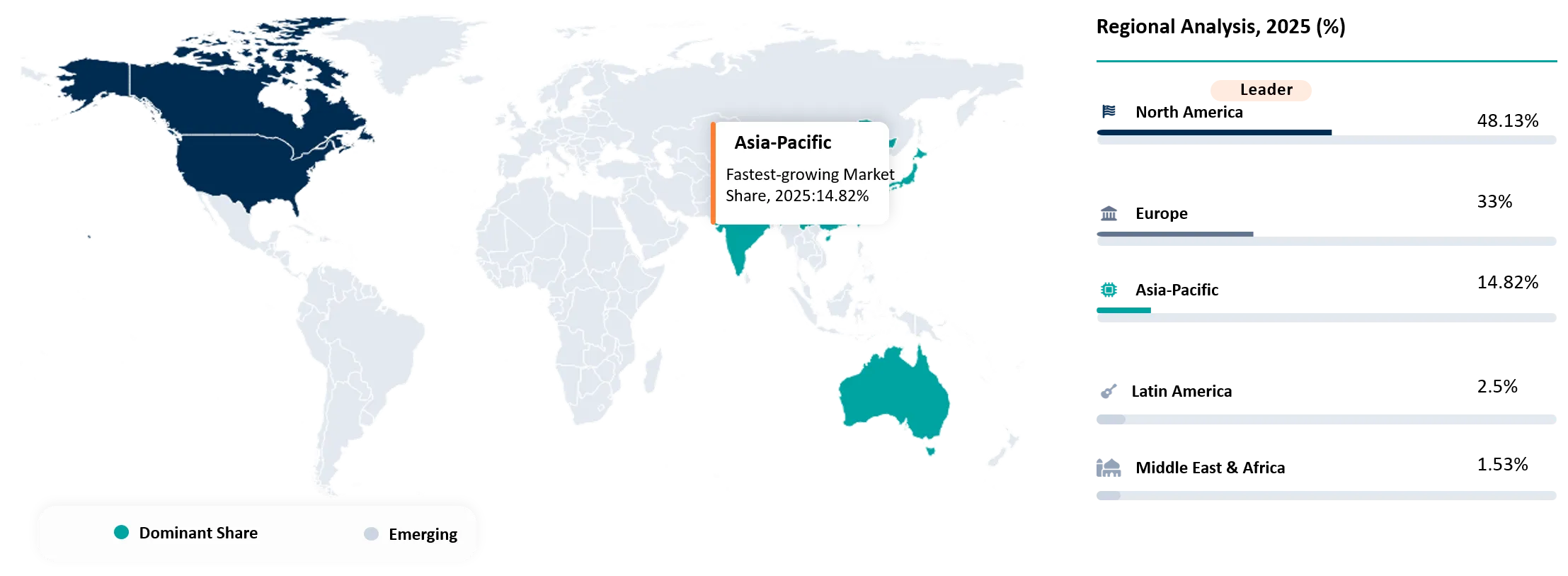
North America dominated the animal-free lactoferrin market with a 48.13% market share in 2025, supported by its concentration of precision-fermentation companies, advanced biotechnology infrastructure, and comparatively established commercialization pathways for novel food ingredients. The United States is emerging as a primary launch market for animal-free lactoferrin because regulatory clearances enable companies to move from pilot-scale development toward food and nutrition applications. This environment supports the expansion of lactoferrin into dietary supplements, functional foods, adult nutrition, and early-life nutrition, while the presence of specialized fermentation capabilities and nutrition ingredient partners strengthens the region's position within the global supply chain.
Strategic partnerships between precision-fermentation innovators and established biosolutions companies are accelerating the scale-up and commercialization of animal-free lactoferrin. In July 2026, Novonesis, a Denmark-headquartered global biosolutions company, partnered with TurtleTree, a Singapore-based precision-fermentation biotechnology company, to scale, manufacture, and commercialize TurtleTree's animal-free lactoferrin ingredient, LF+, for early-life nutrition and selected dietary supplement applications. The partnership combines TurtleTree's precision-fermentation technology with Novonesis' industrial-scale manufacturing and global commercialization capabilities, while Novonesis and 321Catalyst Ventures, the corporate venture capital arm of Japan's Mitsui Chemicals, also participated in an investment in TurtleTree.
U.S. Animal-Free Lactoferrin Market Trends
The U.S. holds a dominant position in the North America animal-free lactoferrin market due to its advanced precision-fermentation ecosystem, concentration of biotechnology innovators, and comparatively established regulatory pathway for novel food ingredients. The availability of specialized fermentation infrastructure, nutrition companies, and ingredient commercialization partners supports faster translation of recombinant lactoferrin from laboratory development to commercial applications.
Strategic collaborations between biotechnology innovators and established nutrition companies are accelerating the development of precision-fermented bioactive proteins. In June 2026, Helaina, a U.S.-based nutrition biotechnology company, entered into a multi-year strategic innovation collaboration with Nestlé, a Switzerland-based global food and beverage company, to advance the understanding and development of new bioactive proteins for early-life nutrition. The partnership combines Nestlé’s expertise in infant nutrition research and product innovation with Helaina’s precision-fermentation platform, with Helaina's first bioactive ingredient, effera human lactoferrin, serving as a key development platform. The source states that conventional bovine lactoferrin shares only approximately 70% homology with human lactoferrin, highlighting the potential advantages of Helaina's bioidentical precision-fermented lactoferrin for applications spanning early-life nutrition, immune health, gut health, and other life-stage nutrition segments.
Canada Animal-Free Lactoferrin Market Outlook
Canada is an emerging player in the North America animal-free lactoferrin market, supported by its developing biotechnology ecosystem, precision-fermentation capabilities, and growing investment in alternative dairy proteins. Canadian companies are increasingly developing microbial fermentation platforms that can support the production of high-value dairy proteins without conventional animal-based extraction. This capability is strategically relevant to animal-free lactoferrin because precision fermentation offers a scalable route to overcome the supply constraints associated with dairy-derived production.
The Government of Canada, PreFer Industries Ltd., a Canada-based for-profit biotechnology and molecular farming company, received a contribution of CAD 688,213 (USD 495,784) under Agriculture and Agri-Food Canada's AgriScience Program – Project Component. The funding, covering the period from April 2025 to March 2027, supports the project titled “Enhancing Soybean Value through Molecular Farming for Efficient Human Lactoferrin Production.” The project focuses on developing a method to produce high-value recombinant human lactoferrin in food-grade soybeans for nutraceutical and pharmaceutical applications, while creating value-added opportunities for Ontario soybean production and establishing an additional revenue stream for soybean growers.
Expanding Precision-Fermentation Investment and Commercial Partnerships Strengthening Asia-Pacific's Market Position
The Asia-Pacific animal-free lactoferrin market accounted for an estimated 14.82% market share in 2025, supported by expanding precision-fermentation capabilities, growing demand for advanced nutrition ingredients, and increasing investment in food biotechnology across countries including Australia, Japan, Singapore, China, and South Korea. The region is developing a stronger ecosystem for fermentation-derived proteins, supported by biotechnology companies, food manufacturers, research institutions, and ingredient commercialization partners.
Increasing investments and strategic manufacturing partnerships are accelerating the commercial-scale production of precision-fermented animal-free lactoferrin. In December 2025, All G, an Australia-based precision-fermentation biotechnology company, secured AUD 10 million (USD 6.6 million) through a convertible note funding round supported by new and existing investors, including Agronomics and Döhler Ventures, to accelerate commercial-scale manufacturing and the planned launch of its precision-fermented bovine lactoferrin. All G also formed a strategic joint venture with Armor Protéines, a France-based milk and whey ingredient supplier owned by Savencia, to manufacture and commercialize bovine lactoferrin and human milk proteins.
Japan Animal-Free Lactoferrin Market Trends
Japan is one of the major players in the Asia-Pacific animal-free lactoferrin market due to its established functional food and nutrition ingredient industry, advanced biotechnology capabilities, and strong demand for specialized health and healthy-ageing products. The country's mature regulatory environment and concentration of food, pharmaceutical, and biotechnology companies provide a favorable ecosystem for the commercialization of precision-fermented bioactive proteins.
The limited availability and high cost of conventionally sourced lactoferrin are encouraging companies to explore precision fermentation as a scalable alternative. In July 2025, PFerrinX26, also known as FerrinX Corp., a U.S.-based precision-fermentation company and joint venture between Earth First Food Ventures and De Novo Foodlabs, began seeking strategic industrial partners in Japan to support the expansion of its precision-fermented lactoferrin business across Asia. The company is targeting its first U.S. market launch in 2027 and identified Japan as a strategic market for future partnerships. According to the source, conventional lactoferrin is priced at approximately USD 650 per kg and only around 100–150 mg can be extracted from one liter of milk, highlighting the supply and cost challenges that precision fermentation could address.
Animal-Free Lactoferrin Market Competitive Landscape
- The market is characterized by three key participant groups: dedicated animal-free lactoferrin developers, precision-fermentation protein specialists, and established nutrition ingredient companies. TurtleTree and All G are focused on developing and commercializing fermentation-derived lactoferrin; Vivici and De Novo Foodlabs leverage biotechnology and precision-fermentation platforms to develop high-value bioactive proteins; while Helaina focuses on human milk proteins and specialized nutrition applications. Armor Protéines brings established expertise in dairy-derived bioactive ingredients and nutrition solutions, supporting the industry's transition toward alternative production technologies. This creates a technology-intensive competitive landscape where fermentation capabilities, protein functionality, regulatory expertise, and commercial partnerships determine competitive positioning.
- Key players include TurtleTree (Singapore), All G (Australia), Vivici (the Netherlands), De Novo Foodlabs (United States), Helaina (United States), Armor Protéines (France), and Eclipse Ingredients (Australia).
Key Developments
- May 2025: TurtleTree, a U.S.-based biotechnology company specializing in precision fermentation, became the first company to receive a U.S. Food and Drug Administration (FDA) “No Questions” letter for a precision-fermented lactoferrin ingredient, LF+.
- March 2026: Nestlé Health Science, a Switzerland-based global nutritional health and wellness company, and the Food & Nutrition Innovation Institute at the Friedman School of Nutrition Science and Policy, Tufts University, a U.S.-based academic nutrition and innovation organization, selected TurtleTree, a Singapore-based precision-fermentation biotechnology company, as one of six finalists in the Innovate Forward: Women’s Health Challenge.
- February 2026: PFerrinX, a U.S.-based precision-fermentation biotechnology company and joint venture between Earth First Food Ventures (EFFV) and De Novo Foodlabs, announced a technological advancement enabling precise control of iron saturation levels in its precision-fermented animal-free lactoferrin ingredient, NanoFerrin.
Key Procurement Priorities and Buyer Evaluation Criteria
- Organizations investing in animal-free lactoferrin increasingly select suppliers based on their ability to provide high-purity, functionally consistent lactoferrin with reliable and scalable production capacity independent of conventional dairy supply chains.
- Procurement decisions are increasingly influenced by the growth of precision fermentation, demand for specialized nutrition, expansion of functional foods, and the need for bioactive ingredients suitable for infant, clinical, and dietary supplement applications.
- Buyers evaluate factors such as protein purity, biological functionality, batch-to-batch consistency, microbial production safety, stability, solubility, and compatibility with specific food and nutrition formulations when selecting an animal-free lactoferrin supplier.
Why Choose DataM?
- Technological Innovations: Explores advancements in precision fermentation, recombinant protein expression, microbial host optimization, and downstream purification technologies that enable scalable production of high-purity animal-free lactoferrin.
- Product Performance & Market Positioning: Evaluates how manufacturers differentiate their lactoferrin offerings based on protein purity, biological functionality, production consistency, formulation compatibility, and suitability for specialized nutrition applications.
- Real-World Evidence: Highlights the adoption and commercialization potential of animal-free lactoferrin across infant and early-life nutrition, dietary supplements, functional foods and beverages, clinical nutrition, sports nutrition, and healthy-ageing products.
- Market Updates & Industry Changes: Tracks key developments, including regulatory approvals, product launches, precision-fermentation investments, manufacturing scale-up, strategic partnerships, and commercialization activities across major markets.
- Competitive Strategies: Analyzes how leading companies expand through proprietary microbial platforms, fermentation technology development, manufacturing partnerships, regulatory progression, and application-focused product strategies.
- Pricing & Market Access: Examines the factors influencing animal-free lactoferrin production economics, including fermentation efficiency, downstream processing requirements, protein purity, manufacturing scale, and access to nutrition ingredient distribution channels.
- Market Entry & Expansion: Identifies growth opportunities across functional nutrition, infant nutrition, medical nutrition, and dietary supplements, while outlining strategies involving regulatory market entry, production scale-up, regional partnerships, and application diversification.
Target Audience
- Animal-Free Lactoferrin Manufacturers and Precision-Fermentation Companies
- Food and Nutrition Ingredient Manufacturers
- Infant and Early-Life Nutrition Companies
- Dietary Supplement and Nutraceutical Companies
- Functional Food and Beverage Manufacturers
- Clinical and Medical Nutrition Companies
- Biotechnology and Synthetic Biology Companies


























































