


Aluminum Matrix Composites Market Size and Overview
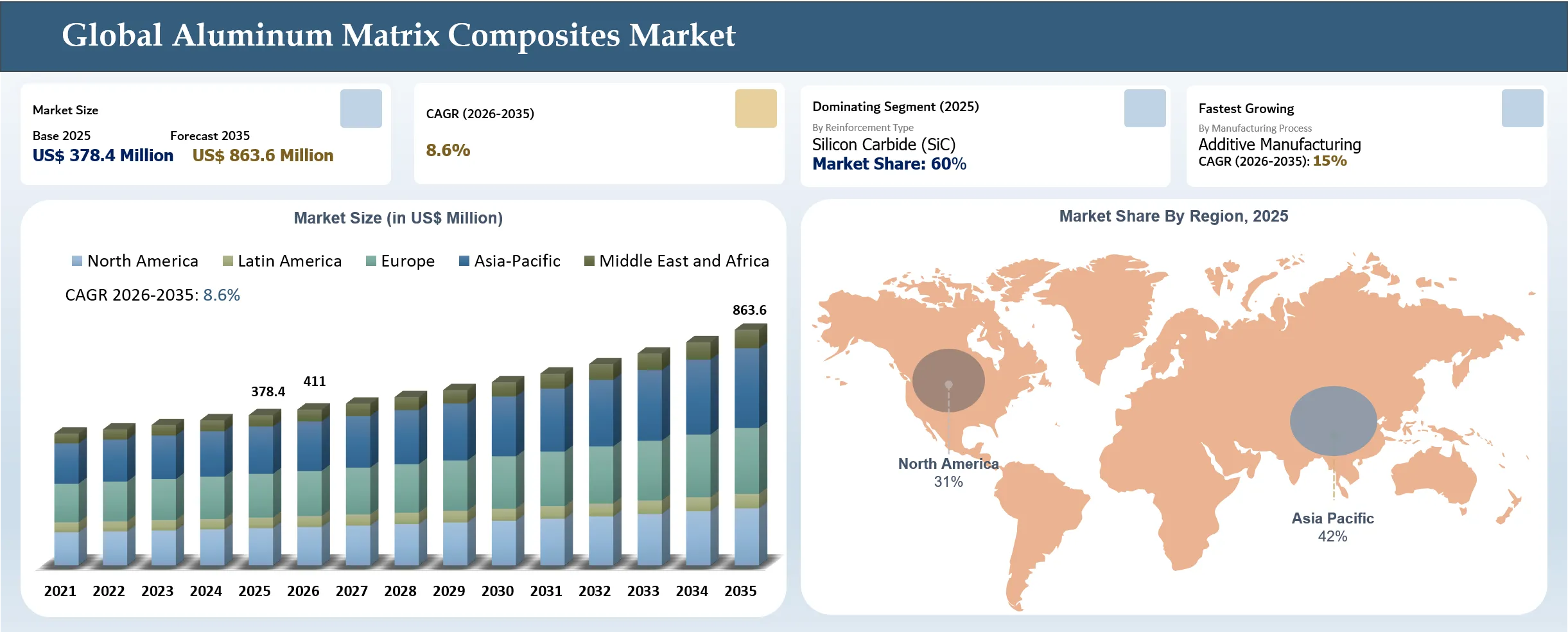
The global Aluminum Matrix Composites market reached USD 378.4 million in 2025 and is expected to reach USD 863.6 million by 2035, growing with a CAGR of 8.6% during the forecast period 2026-2035. The market is witnessing sustained growth due to increasing adoption of lightweight and high-strength engineering materials in aerospace, automotive, defense, and electronics industries, requiring excellent wear resistance, thermal conductivity, and fatigue properties. According to the Aluminum Association, North American aluminum demand reached 26.65 billion pounds in 2025, having increased by 0.8% from the previous year due to stable uses in transportation, industrial manufacturing, and electrical uses that generate demand for aluminum-based composites. Moreover, it is projected that by 2030, the content of aluminum used in North American light vehicles will stand at 556 pounds per vehicle, owing to vehicle lightweighting and electrification. Further developments in technologies such as powder metallurgy, squeeze casting, and additive manufacturing are contributing to commercialization efforts; however, processing costs and complexity pose major challenges.
The RS-770K launch reveals an increasing trend toward advanced aluminum matrix composites for use in additive manufacturing, which allows for the creation of lightweight materials that possess good mechanical properties. In February 2026, RUSAL, a Russia-based Aluminum Producer and Materials Manufacturer, announced the development of RS-770K, an aluminum matrix composite (metal matrix composite) that will be used for 3D printing. RS-770K is composed of an aluminum matrix reinforced with ceramic particles. Its tensile strength of 615 MPa is 30% stronger than the tensile strength of RUSAL’s most powerful aluminum powder alloy, RS-553.
Aluminum Matrix Composites Market Key Takeaways
- The Asia-Pacific region commanded the global AMC market in 2025 by securing a leading market share of approximately 42.0%. Within this region, China's GRINM Composites demonstrated massive scale by reporting an annual revenue of approximately USD 230 million (CNY 1.67 billion) in 2024.
- Silicon Carbide (SiC) reinforcements dominated the global market in 2025 by capturing a massive 60.0% of the total industry share. This leadership is further bolstered by vertical integration investments, such as onsemi targeting complete integration of its SiC production chain by the end of 2025.
- The global additive manufacturing industry generated USD 24.2 billion in revenue in 2025, growing 10.9% year over year. Out of this total, printing services represented 48% of the market, followed by system sales at 26%, materials at 20%, and software at 6%.
- In 2025, North American aluminum demand reached 26.65 billion pounds, marking a minor year-over-year increase of 0.8%. Additionally, the average aluminum content used in North American light vehicles is projected to rise to 556 pounds per vehicle by the year 2030.
Aluminum Matrix Composites Market Industry Trends and Strategic Insight
- Additive manufacturing is transforming AMC production, with powder-bed fusion, directed energy deposition, and cold spray technologies enabling complex geometries, improved reinforcement dispersion, and near-net-shape manufacturing for aerospace, automotive, and defense components while reducing material waste.
- Advanced interface engineering is becoming a key competitive differentiator, as manufacturers increasingly focus on in-situ reinforcement formation, nano-scale interface control, and optimized particle distribution to improve fatigue strength, wear resistance, and thermal stability without significantly increasing component weight.
- Aerospace manufacturers are increasing investment in lightweight metallic materials to improve fuel efficiency and reduce lifecycle emissions, creating long-term demand for aluminum matrix composites in structural, propulsion, and wear-intensive aircraft components alongside next-generation aluminum alloy development.
- Hybrid reinforcement systems are gaining commercial attention, combining silicon carbide, alumina, boron carbide, graphite, and carbon-based reinforcements within a single aluminum matrix to simultaneously enhance mechanical strength, thermal conductivity, impact resistance, and tribological performance.
- Manufacturing optimization is shifting from conventional casting toward precision composite processing, including powder metallurgy, squeeze casting, spray deposition, and additive manufacturing, to achieve superior reinforcement homogeneity and minimize interfacial defects in high-performance applications.
Aluminum Matrix Composites Market Scope
| Metrics | Details | |
| 2025 Market Size | USD 378.4 Million | |
| 2035 Projected Market Size | USD 863.6 Million | |
| CAGR (2026-2035) | 8.6% | |
| Largest Market | Asia Pacific | |
| Fastest Growing Market | Asia Pacific | |
| By Reinforcement Type | Silicon Carbide (SiC), Aluminum Oxide (Al₂O₃), Boron Carbide (B₄C), Carbon Fiber, Graphite, Others | |
| By Manufacturing Process | Stir Casting, Powder Metallurgy, Squeeze Casting, Liquid Metal Infiltration, Additive Manufacturing, Others | |
| By Product Form | Cast Components, Plates & Sheets, Rods & Bars, Powders, Billets, Extrusions, Others | |
| By End-Use | Aerospace & Defense, Automotive & Transportation, Electrical & Electronics, Industrial Machinery, Energy & Power, Marine, Others | |
| By Region | North America | U.S., Canada, Mexico |
| Europe | Germany, UK, France, Spain, Italy, Poland | |
| Asia-Pacific | China, India, Japan, Australia, South Korea, Indonesia, Malaysia | |
| Latin America | Brazil, Argentina | |
| Middle East and Africa | UAE, Saudi Arabia, South Africa, Israel, Türkiye | |
| Report Insights Covered | Competitive Landscape Analysis, Company Profile Analysis, Market Size, Share, Growth | |
Aluminum Matrix Composites Market Disruption Analysis
Rapid Commercialization of Metal Additive Manufacturing Reshaping Aluminum Matrix Composite Production
The disruption in the Aluminum Matrix Composites market is being fueled by the rapid commercialization of metal additive manufacturing technology, which is revolutionizing the manufacturing process of traditional composite materials through digitalization. The application of advanced manufacturing processes like LPBF and DED has made it possible to manufacture lightweight, near-net-shape AMC parts with complex designs and better material use compared to traditional casting methods. This is making the adoption of aluminum matrix composites faster across aerospace, defense, automotive, and other industries while motivating manufacturers to design products suitable for additive manufacturing processes.
According to ASTM International, the global additive manufacturing industry generated USD 24.2 billion in revenue in 2025, growing 10.9% year over year. The report also highlights that printing services accounted for 48% of the global AM market, followed by system sales and servicing (26%), materials (20%), and software (6%), indicating that the industry is transitioning from prototype development toward large-scale production. This rapid industrialization of additive manufacturing is accelerating the commercialization of aluminum matrix composites by enabling scalable production, minimizing material waste, and expanding the use of advanced aluminum-based materials in high-performance engineering applications.
Aluminum Matrix Composites Market BCG Matrix: Company Evaluation
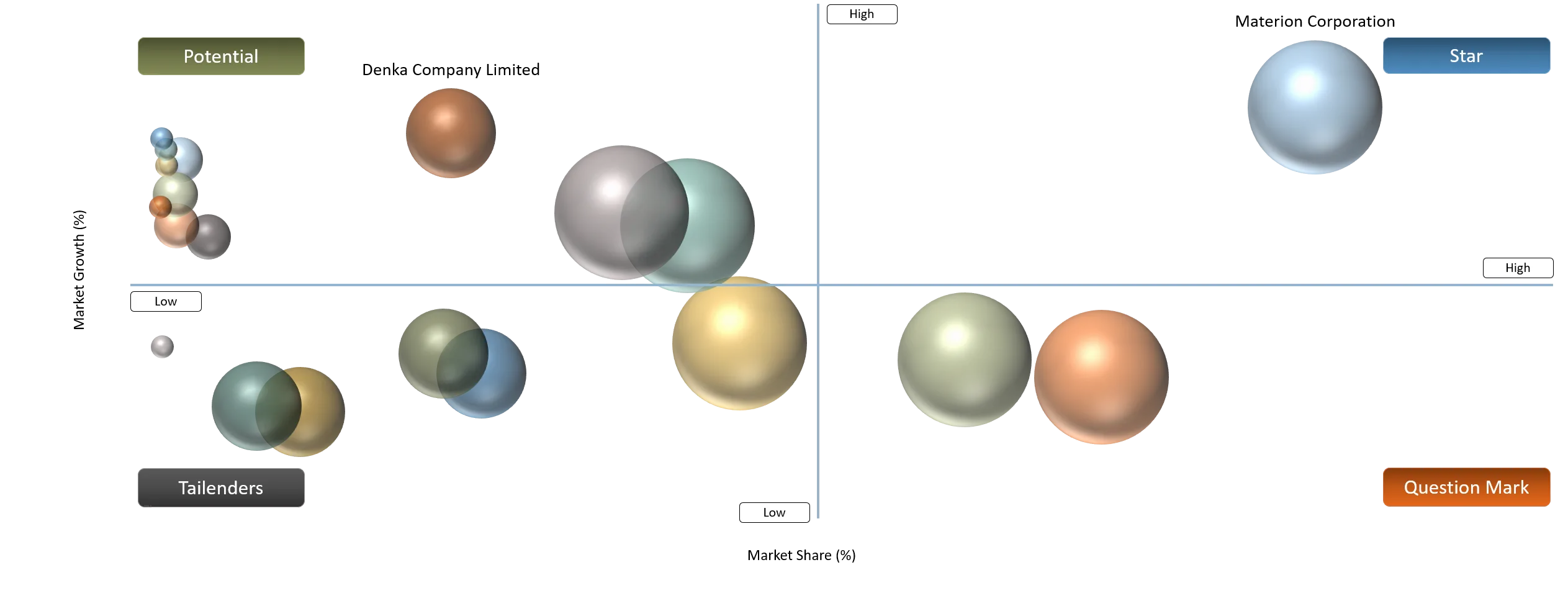
Stars include Materion Corporation and CPS Technologies Corporation because they possess strong commercialization capabilities in aluminum matrix composites, particularly aluminum-silicon carbide (AlSiC) materials for aerospace, defense, semiconductor packaging, and thermal management applications. Question Marks include DWA Aluminum Composites USA, Inc., Japan Fine Ceramics Co., Ltd., and GKN Powder Metallurgy because they have strong technical capabilities and are expanding their advanced composite manufacturing portfolios, but continue to compete in a relatively specialized market with limited large-scale commercialization compared with leading AMC suppliers.
The Potential category comprises Denka Company Limited, Thermal Transfer Composites LLC, and Ferrotec Holdings Corporation, which are benefiting from increasing demand for lightweight engineering materials, electronic thermal management, and industrial composites. Tailender includes 3M because its participation in aluminum matrix composites is limited relative to its broader advanced materials portfolio.
Aluminum Matrix Composites Market Dynamics
Driver Impact Analysis
| Driver | Market Growth Impact (%) | Demand Concentration | Impacted Use Case | Strategic Impact |
Rising demand for lightweight, high-strength materials in aerospace and defense is accelerating the adoption of aluminum matrix composites for structural and wear-critical components. | 34% | Very High | Aircraft structures, brake systems, armor components, satellite structures | Strengthens long-term demand through aircraft production, defense modernization, and lightweight structural applications. |
The growing requirement for high-performance thermal management materials in semiconductor packaging and power electronics is expanding the use of aluminum-silicon carbide (AlSiC) composites. | 26% | High | Heat sinks, semiconductor packages, power modules, RF devices | Expands AMC adoption in high-value electronics by improving thermal conductivity and dimensional stability. |
Advancements in additive manufacturing and powder metallurgy technologies are improving the commercial viability and design flexibility of aluminum matrix composite components. | 22% | Medium-High | Aerospace components, customized industrial parts, medical devices | Accelerates commercialization through near-net-shape manufacturing, material efficiency, and design optimization. |
Rising investments in advanced defense systems and military modernization programs are boosting demand for aluminum matrix composites in armor, aerospace structures, and precision engineering applications. | 19% | Medium | Military aircraft, armored vehicles, missile systems, defense electronics | Increases procurement opportunities for high-performance composite materials in strategic defense programs. |
Expanding industrial automation and high-speed machinery manufacturing are increasing the adoption of wear-resistant aluminum matrix composite components with superior fatigue performance. | 14% | Medium | Bearings, pistons, machine tools, industrial wear parts | Supports diversified demand across industrial manufacturing by extending component life and reducing maintenance costs. |
Rising demand for lightweight, high-strength materials in aerospace and defense is accelerating the adoption of aluminum matrix composites for structural and wear-critical components
The increasing preference for lightweight and strong materials in the aerospace and defense industries is one of the key factors that have been pushing the growth of the aluminum matrix composites market. The modern aircraft, spacecraft, and other defense equipment need materials that can offer low density along with high stiffness, wear resistance, fatigue strength, and thermal stability to enhance their operational efficiency. The aluminum matrix composites have started replacing aluminum alloys and heavy metals in various structural and wear-resistant applications in order to save weight while offering good mechanical properties. According to Airbus, the global aviation industry will require 43,400 new passenger and freighter aircraft by 2044, including 34,250 single-aisle and 9,170 widebody aircraft, reflecting sustained long-term demand for advanced lightweight materials.
The study highlights the growing emphasis on advanced hybrid reinforcement technologies to enhance the mechanical and tribological performance of aluminum matrix composites. In September 2025, Tribology – Materials (SAGE Journals) published a study that evaluated aluminum matrix composites reinforced with 0.5 wt.% carbon nanotubes (CNTs) and varying titanium nitride (TiN) nanoparticle contents (2 wt.%, 4 wt.%, and 6 wt.%). The study found that the composite containing 6 wt.% TiN + 0.5 wt.% CNTs delivered the highest hardness, superior wear resistance, and improved corrosion resistance, demonstrating the effectiveness of hybrid nanoparticle reinforcement for high-performance lightweight engineering applications such as aerospace, automotive, and defense.
Restraint Impact Analysis
| Restraint | Drag on Market Growth (%) | Primary Impact Area | Impacted Use Case | Strategic Impact |
Complex fabrication processes and reinforcement dispersion challenges increase production time and reduce manufacturing scalability. | 26% | Manufacturing & Process Scalability | Aerospace structural parts, automotive components, industrial wear parts | Increases production costs, lowers manufacturing yield, and delays large-scale commercialization. |
Limited machinability and high tool wear during component finishing increase overall production and maintenance costs. | 20% | Component Machining & Finishing | Brake rotors, pistons, engine components, precision engineering parts | Raises machining costs, shortens tool life, and limits cost competitiveness for high-volume production. |
Volatility in the supply and pricing of ceramic reinforcement materials such as silicon carbide (SiC), alumina (Al₂O₃), and boron carbide (B₄C) affects manufacturing economics. | 22% | Raw Material Supply Chain | SiC-reinforced AMCs, Al₂O₃-reinforced AMCs, defense-grade composites | Increases material procurement risk, compresses profit margins, and creates pricing uncertainty for manufacturers. |
Difficulties in recycling and recovering reinforcement materials constrain the circularity and sustainability of aluminum matrix composite products. | 16% | Recycling & Sustainability | End-of-life aerospace parts, automotive components, industrial composite waste | Limits circular economy adoption, increases lifecycle costs, and challenges compliance with sustainability objectives. |
Complex fabrication processes and reinforcement dispersion challenges increase production time and reduce manufacturing scalability
Commercialization of aluminum matrix composites (AMCs) on a wide scale is hindered by the intricacy involved in manufacturing AMCs, along with difficulties related to achieving uniform dispersion of reinforcement during manufacturing. Traditional manufacturing methods like stir casting, powder metallurgy, squeeze casting, and infiltration need careful handling of the distribution of the reinforcement, interfacial bonding, and solidification behavior for consistency in mechanical and thermal properties. Poor particle distribution, agglomeration, porosity, and poor matrix-reinforcement interface can decrease the reliability of components and cause rejections during manufacturing.
The findings underscore that manufacturing complexity and reinforcement dispersion remain key barriers to the large-scale commercialization of aluminum matrix composites. In May 2026, Springer Nature, published a study that examined the fabrication and performance of aluminum matrix composites, highlighting the challenges of achieving uniform reinforcement dispersion and defect-free processing. The study evaluated composites reinforced with silicon carbide (SiC) particles at 5 wt.%, 10 wt.%, and 15 wt.%, and found that while increasing SiC content improved hardness and wear resistance, higher reinforcement levels also increased the risk of particle agglomeration, porosity, and processing complexity, emphasizing the need for optimized fabrication techniques to enable scalable manufacturing.
Aluminum Matrix Composites Market Segment Analysis
The global Aluminum Matrix Composites market is segmented based on reinforcement type, manufacturing process, product form, end-use, and region.
Silicon Carbide (SiC) Reinforcements Lead Adoption Due to Superior Mechanical and Thermal Performance
The Silicon Carbide (SiC) segment dominated the Aluminum Matrix Composites (AMCs) Market, with a market share of around 60.0% in 2025, due to its unique properties that include high specific strength, wear resistance, stiffness, thermal conductivity, and low coefficient of thermal expansion. SiC reinforced aluminum composite materials have emerged as the most favored material for the manufacture of high-end products in the aerospace industry, automotive industry, defense sector, and semiconductor industries, as light weight along with dimensional stability is highly critical under such conditions. Unlike other reinforcement materials, silicon carbide has superior compatibility with aluminum matrix and thus remains the most commercially accepted reinforcement material.
The leadership of the segment is also aided by the fast growth of silicon carbide technology in advanced manufacturing segments. Furthermore, onsemi has stated that its complete vertical integration of the silicon carbide production chain would be achieved by the end of 2025, thereby boosting the SiC material supply for industrial and transportation sectors. The ongoing investments in SiC manufacturing capacities, along with the rising demand for light-weight engineering materials in aerospace, electric vehicles, and electronics, have been strengthening the leadership position of silicon carbide in the Aluminum Matrix Composites market.
Aluminum Matrix Composites Market Geographical Penetration
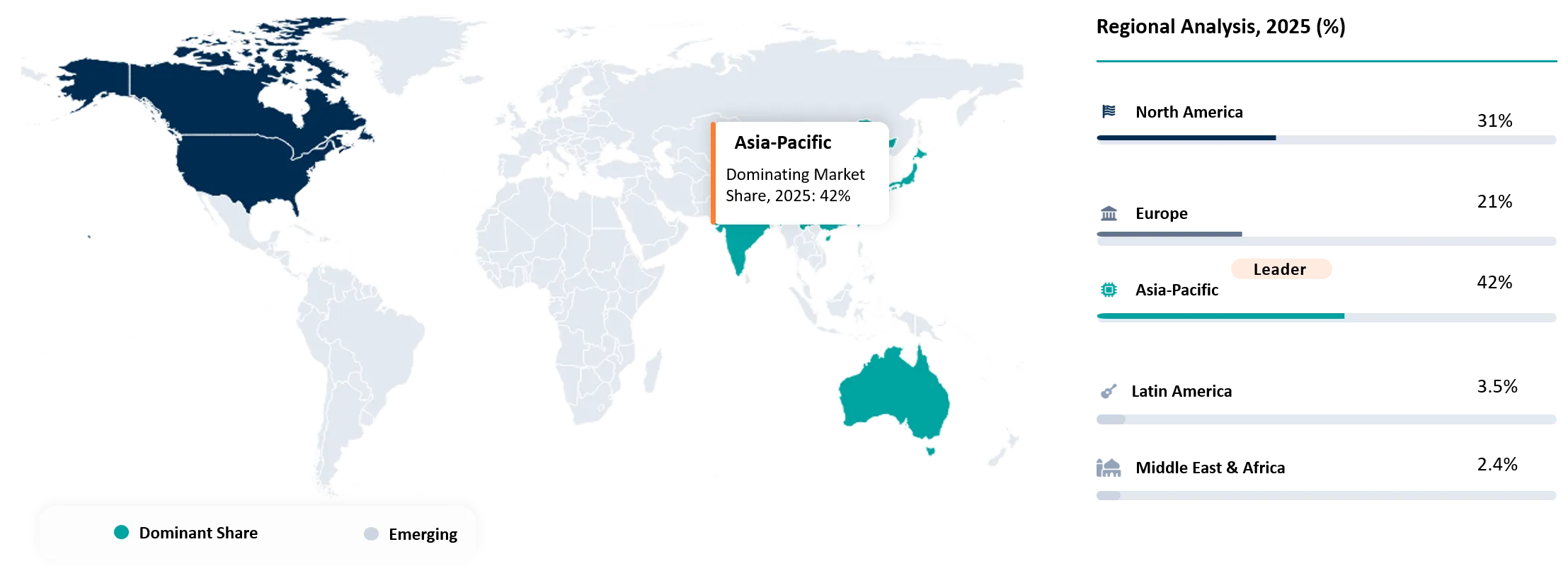
Strong Aerospace Manufacturing and Automotive Electrification Position Asia-Pacific as the Leading Aluminum Matrix Composites Market
The Asia-Pacific region dominated the Aluminum Matrix Composites market, with around 42.0% market share in 2025, due to its highly advanced aerospace manufacturing industry, along with the expansion of its automotive manufacturing industries, growth in its semiconductor industries, and investment in advanced materials. These countries have been increasingly using aluminum matrix composite materials in their aerospace and military industries, electronics thermal management, industrial machinery applications, and various other fields. The presence of aluminum processing industries, along with a highly developed manufacturing base and investments in engineering materials, makes APAC one of the largest producers and consumers of aluminum matrix composites.
In January 2025, the National Graphene Innovation Center (NGIC), a China-based national advanced materials research and innovation center, hosted a delegation from Fujian Nanping Aluminum Co., Ltd., a China-based aluminum manufacturing firm. Both NGIC and the firm explored the process of industrialization of aluminum that was reinforced with graphene for its high performance. NGIC runs its operation on a collaborative innovation platform, which has 30 core shareholders, along with the China Innovation Alliance of Graphene Industry (CGIA), which has more than 140 members.
China Aluminum Matrix Composites Market Trends
China holds the dominant position in the Asia-Pacific Aluminum Matrix Composites (AMCs) market owing to its well-established aluminum production industry, extensive automotive manufacturing base, rapidly expanding aerospace sector, and growing investments in advanced materials. The country's integrated value chain—from primary aluminum production to precision machining and component manufacturing—has accelerated the commercialization of aluminum matrix composites across aerospace, transportation, electronics, defense, and industrial applications. Strong domestic demand, coupled with continuous investments in high-performance engineering materials and advanced manufacturing technologies, has further strengthened China's leadership in the regional AMC market.
China continues to reinforce its dominance through sustained industrial expansion and material production. In December 2025, GRINM Composites Co., Ltd., a China-based Metal matrix composites manufacturer, successfully passed the IPO review for listing on the Shanghai Stock Exchange's Science and Technology Innovation Board (STAR Market). The company specializes in metal matrix composites, including aluminum matrix composite-related products, serving aerospace, defense, electronics, and semiconductor applications. According to its prospectus, GRINM Composites reported revenue of approximately CNY 1.67 billion (US$230 million) in 2024, highlighting its expanding role in China's advanced composite materials industry and supporting future capacity expansion through the planned public listing.
India Aluminum Matrix Composites Market Outlook
India is emerging as a significant growth hub in the Aluminum Matrix Composites (AMC) market in Asia Pacific owing to its expanding aerospace and defense manufacturing ecosystem, increasing lightweight material adoption in automotive applications, and strong government focus on indigenous advanced materials development. In recent years, India has accelerated the development and commercialization of aluminum-based composite materials for applications including defense components, automotive parts, aerospace structures, and engineering equipment. The demand for AMCs in India is increasing due to the country's push toward lightweighting, fuel efficiency improvement, and localization of high-performance materials under initiatives such as Make in India and Atmanirbhar Bharat.
The partnership highlights India's growing focus on developing a domestic ecosystem for advanced aerospace materials and lightweight aluminum solutions. In February 2026, Embraer S.A., a Brazil-based Aerospace aircraft manufacturer, and Hindalco Industries Limited, a India-based Aluminum producer and rolled products manufacturer, signed a Memorandum of Understanding (MoU) to explore potential opportunities for manufacturing aerospace-grade aluminum raw materials in India. The collaboration aims to strengthen India's aerospace supply chain under the Make in India initiative, supporting advanced lightweight aluminum applications. Embraer currently operates a fleet of 47 aircraft in India, including five VIP jets operated by the Indian government and three EMB 145 AEW “Netra” aircraft operated by the Indian Air Force.
Aluminum Matrix Composites Market Competitive Landscape
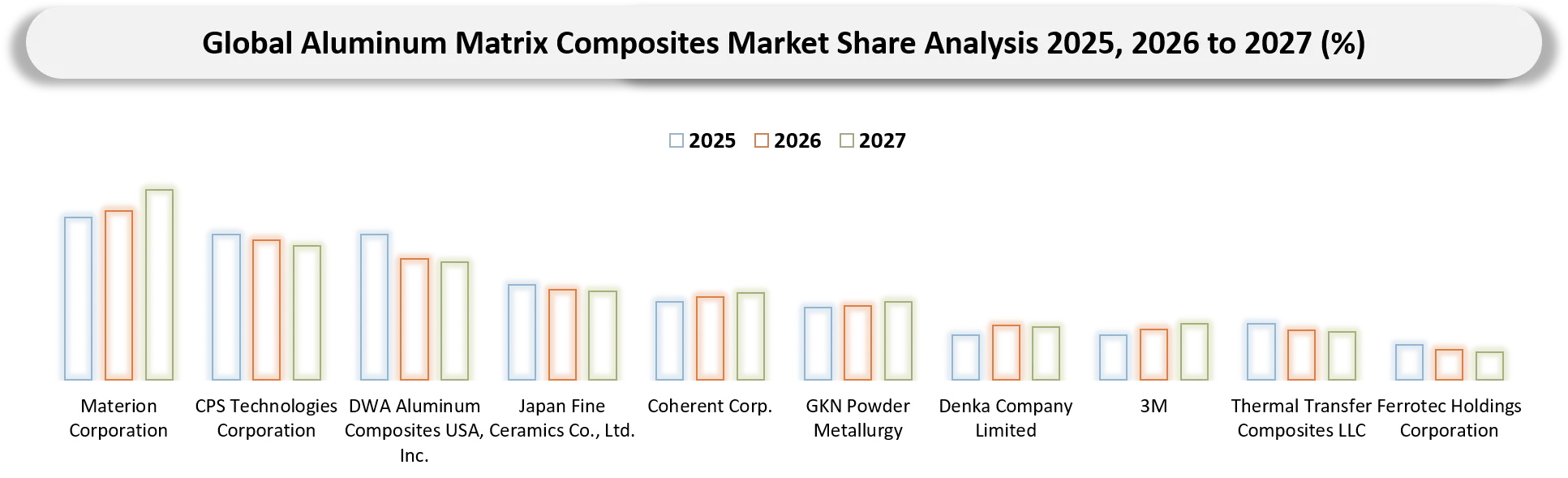
- The Aluminum Matrix Composites (AMC) market is characterized by a diverse competitive landscape comprising specialized AMC manufacturers, advanced materials companies, powder metallurgy providers, and thermal management solution suppliers. Leading players such as Materion Corporation, CPS Technologies Corporation, DWA Aluminum Composites USA Inc., and Japan Fine Ceramics Co., Ltd. focus on high-performance aluminum composite solutions for aerospace, defense, electronics, thermal management, and industrial applications. Companies including Coherent Corp., GKN Powder Metallurgy, Denka Company Limited, and Ferrotec Holdings Corporation strengthen the market through advanced manufacturing capabilities, metal matrix composite processing expertise, and integration of AMC materials into semiconductor, automotive, and energy-related applications. Meanwhile, 3M and Thermal Transfer Composites LLC compete through specialized composite technologies, thermal management materials, and engineered solutions for high-reliability applications. The market remains technology-driven, with competitiveness determined by material performance, reinforcement technology, manufacturing scalability, qualification capabilities, and customer partnerships across aerospace, automotive, defense, and electronics sectors.
- Key players in the Aluminum Matrix Composites market include Materion Corporation, CPS Technologies Corporation, DWA Aluminum Composites USA Inc., Japan Fine Ceramics Co., Ltd., Coherent Corp., GKN Powder Metallurgy, Denka Company Limited, 3M, Thermal Transfer Composites LLC, and Ferrotec Holdings Corporation.
Key Developments
- June 2025: Cymat Technologies Ltd., a Canada-based Advanced aluminum materials manufacturer, entered into a Letter of Intent (LOI) with Rio Tinto Alcan Inc., a Canada-based Aluminum producer and advanced materials supplier, to acquire proprietary aluminum metal matrix composite (MMC) technology, manufacturing know-how, and customer relationships.
- January 2025: Cymat Technologies Ltd., A Canada-based Advanced aluminum materials manufacturer, entered into a Joint Development Agreement (JDA) with a major Japanese trading and manufacturing company, a Japan-based Industrial trading and manufacturing company, to develop innovative lightweight automotive solutions for electric vehicle (EV) battery protection systems.
Key Procurement Priorities and Buyer Evaluation Criteria
- The procurement decision-making process is being influenced by the growing demand for lightweight materials, electric vehicle adoption, aerospace component optimization, semiconductor thermal management requirements, and defense modernization programs. Buyers are increasingly evaluating suppliers that can deliver customized AMC solutions capable of reducing component weight, improving energy efficiency, enhancing heat dissipation, and meeting stringent performance requirements for next-generation applications.
- Buyers evaluate factors such as mechanical strength, thermal conductivity, coefficient of thermal expansion (CTE), wear resistance, corrosion performance, material consistency, and long-term reliability when selecting Aluminum Matrix Composite suppliers. The ability of manufacturers to provide application-specific AMC grades, advanced reinforcement combinations (such as silicon carbide, graphite, and ceramic particles), and compliance with industry standards plays a critical role in supplier selection.
- The buyer selection process considers manufacturing capabilities, including powder metallurgy expertise, casting and infiltration technologies, near-net-shape production capabilities, quality control systems, and ability to support large-scale commercialization. Suppliers with strong R&D capabilities, rapid prototyping support, and experience in developing AMC components for high-value applications such as EV systems, aerospace structures, power electronics, and defense platforms gain competitive advantages.
- Procurement teams increasingly prioritize suppliers with integrated technical support, customization capabilities, supply chain reliability, and collaboration experience with OEMs and Tier-1 manufacturers. The ability to provide lightweight, high-performance composite solutions for emerging applications, including electric mobility, advanced semiconductor packaging, renewable energy systems, and high-temperature industrial equipment, is becoming a key differentiating factor in AMC supplier evaluation.
Why Choose DataM?
- Technological Innovations: Explores advancements in Aluminum Matrix Composites (AMC) technologies, including developments in aluminum-silicon carbide (AlSiC), aluminum-graphite, ceramic-reinforced composites, and advanced powder metallurgy processes, enabling improved strength-to-weight ratio, thermal management, wear resistance, and durability for aerospace, automotive, electronics, defense, and industrial applications.
- Product Performance & Market Positioning: Evaluates how different AMC manufacturers differentiate their solutions based on mechanical strength, thermal conductivity, coefficient of thermal expansion (CTE), corrosion resistance, lightweight performance, and manufacturing scalability. The analysis highlights how leading companies position AMC materials for high-value applications such as electric vehicle components, semiconductor heat sinks, aerospace structures, and defense systems.
- Real-World Evidence: Highlights real-world adoption of Aluminum Matrix Composites across automotive lightweighting, electric mobility, aerospace components, power electronics, and thermal management applications, demonstrating benefits such as reduced component weight, improved heat dissipation, enhanced fuel and energy efficiency, and extended operational performance.
- Market Updates & Industry Changes: Tracks key developments including new AMC material launches, manufacturing capacity expansions, research collaborations, strategic partnerships, and advancements in composite processing technologies across North America, Europe, and Asia Pacific. The report evaluates how increasing demand for lightweight and high-performance materials is reshaping advanced materials supply chains.
- Competitive Strategies: Analyzes how leading AMC companies expand through material innovation, application-specific product development, partnerships with automotive and aerospace OEMs, investments in advanced manufacturing capabilities, and integration of composite technologies to address rising demand for lightweight, durable, and thermally efficient materials.
- Pricing & Market Access: Explains pricing variations based on reinforcement type, manufacturing process, material composition, production volume, and application requirements. The analysis evaluates supply chain access through specialized AMC manufacturers, advanced materials suppliers, powder metallurgy companies, and component manufacturers supporting global adoption.
- Market Entry & Expansion: Identifies growth opportunities driven by electric vehicles, aerospace lightweighting, semiconductor thermal management, renewable energy systems, and defense modernization. The report outlines expansion strategies such as regional manufacturing investments, technology partnerships, customization capabilities, and industry-specific AMC solutions to strengthen global market presence.
Target Audience 2026
- Aluminum Matrix Composite Manufacturers & Advanced Material Companies
- Automotive & Electric Vehicle Manufacturers
- Aerospace & Defense Companies
- Semiconductor & Electronics Manufacturers
- Industrial Equipment & Engineering Companies
- Raw Material Suppliers & Composite Reinforcement Providers
- Research Institutes, Universities & Technology Developers


























































