


Aluminum-Lithium Alloys Market Size & Forecast 2035
The global Aluminum-Lithium Alloys market reached USD 2,370 million in 2025 and is expected to reach USD 4,325 million by 2035, growing with a CAGR of 6.2% during the forecast period 2026-2035. The market is gaining momentum due to the rising demand for light and strong structural materials for various uses in commercial, military, and space aviation sectors, since the weight reduction will increase fuel economy and payload capacity. Based on the report from the International Air Transport Association (IATA), the demand for passengers (RPK) rose by 5.3% in 2025 compared to last year, which has encouraged airliners to grow their fleet size, hence maintaining the production of airplanes. Also, Airbus delivered 793 commercial airplanes in 2025, as a result of the ongoing investments in advanced aircraft, which utilize aluminum-lithium alloys extensively in fuselages, wings, and cryogenics. Continuous developments in the field of alloy metallurgy and precision engineering have been further aiding product acceptance; nonetheless, the high cost of production and qualification standards of the aerospace industry are major barriers to wider acceptance.
The study shows how AI can considerably decrease both time and expenses related to the development of high-quality Aluminum-Lithium alloys. In June 2026, the Nature journal published a study that used a machine learning-based Multi-Objective Active Learning Optimization (MALO) technique for accelerating the development of Aluminum-Lithium alloys. The scientists have screened about 28 million alloys and conducted experiments with just 9 alloys, revealing the composition of the optimal Al-Li alloy with a strength of 266 MPa·cm³/g, elongation of 5%, and specific modulus of 30.5 GPa·cm³/g.
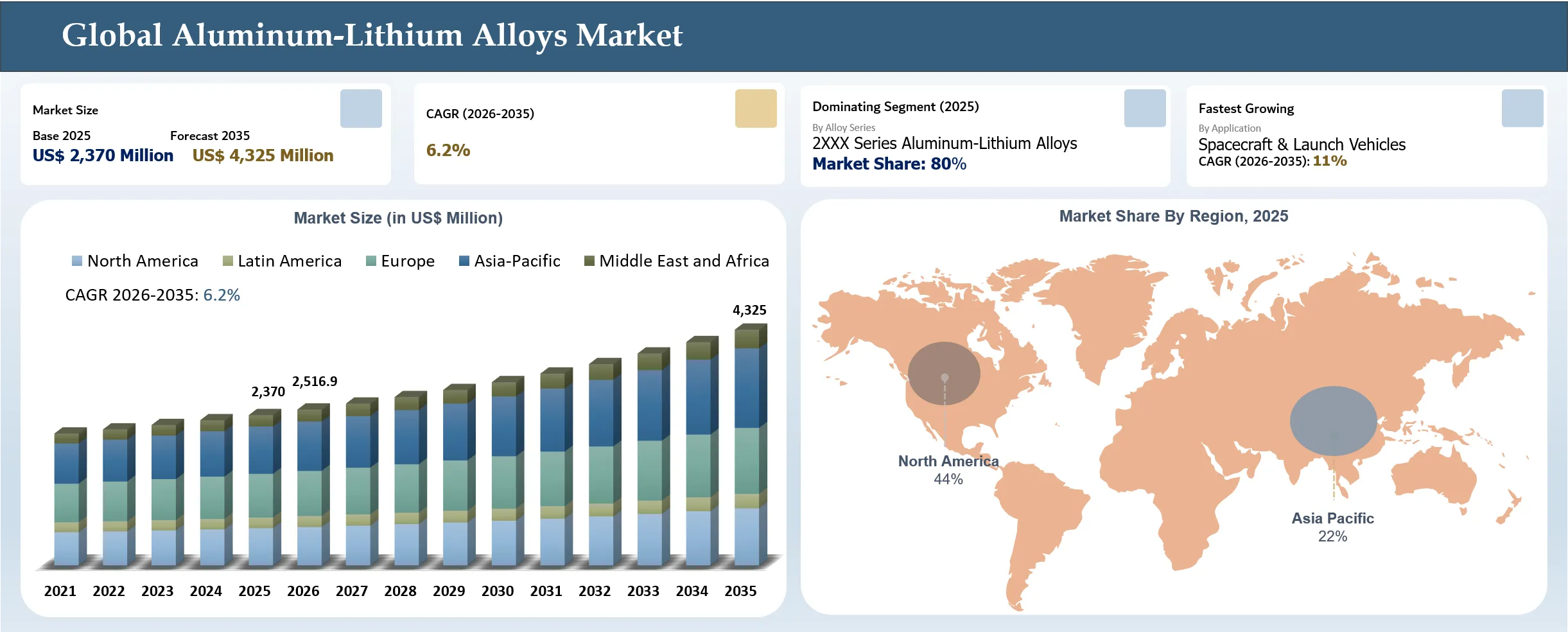
Aluminum-Lithium Alloys Market Key Takeaways
- North America led the global market by capturing a 44% regional market share in 2025. On a corporate level, Constellium SE commanded an estimated 19.5% share of the global aerospace aluminum-lithium products market.
- The 2XXX Series aluminum-lithium alloys dominated the sector by securing an 80% market share in 2025. This massive share is driven by high aerospace demand for lightweight structural grades like AA 2050 and AA 2060.
- The United States aerospace and defense industry generated USD 988.6 billion in total sales in 2025. This economic output contributed USD 500 billion in value, representing 1.6% of the nation's total GDP.
- Utilizing advanced aluminum alloys with friction stir welding successfully reduced aircraft wing structure weight by up to 20%. Meanwhile, overall aerospace aluminum usage is forecast to grow by 8% annually from 2024 through 2029.
Aluminum-Lithium Alloys Market Industry Trends and Strategic Insight
- Commercial aircraft production is reinforcing long-term demand for aluminum-lithium alloys. Rising aircraft build rates are increasing the procurement of lightweight structural materials for fuselage panels, wing structures, floor beams, and cryogenic fuel tanks.
- OEMs are prioritizing next-generation aluminum-lithium alloys over conventional aerospace aluminum grades. Manufacturers are adopting proprietary alloy families with lower density, higher stiffness, superior damage tolerance, and improved corrosion resistance to reduce structural weight while maintaining certification requirements.
- Advanced manufacturing technologies are expanding aluminum-lithium alloy applications. Aerospace manufacturers are integrating friction stir welding, precision extrusion, and additive manufacturing to reduce assembly complexity, improve structural efficiency, and manufacture lightweight components with lower material waste.
- Circular material strategies are becoming a competitive differentiator. Aircraft manufacturers and alloy producers are investing in closed-loop aluminum recycling systems to recover aerospace-grade aluminum scrap and remelt it into new high-performance alloys.
- Space programs continue to accelerate the adoption of aluminum-lithium alloys. Modern launch vehicles and cryogenic propellant tanks increasingly utilize Al-Li alloys because their lower density, higher fracture toughness, and superior cryogenic performance enable higher payload capacity and improved structural reliability.
Aluminum-Lithium Alloys Market Scope
| Metrics | Details | |
| 2025 Market Size | USD 2,370 Million | |
| 2035 Projected Market Size | USD 4,325 Million | |
| CAGR (2026-2035) | 6.2% | |
| Largest Market | North America | |
| Fastest Growing Market | Asia-Pacific | |
| By Alloy Series | 2XXX Series Aluminum-Lithium Alloys, 8XXX Series Aluminum-Lithium Alloys, Other Aluminum-Lithium Alloys | |
| By Product Form | Plates, Sheets, Extrusions, Forgings, Bars & Rods, Other Product Forms | |
| By Application | Aircraft Structures, Spacecraft & Launch Vehicles, Defense Equipment, Automotive Components, Rail Transportation, Marine Structures, Cryogenic Storage Tanks, Industrial Equipment, Others | |
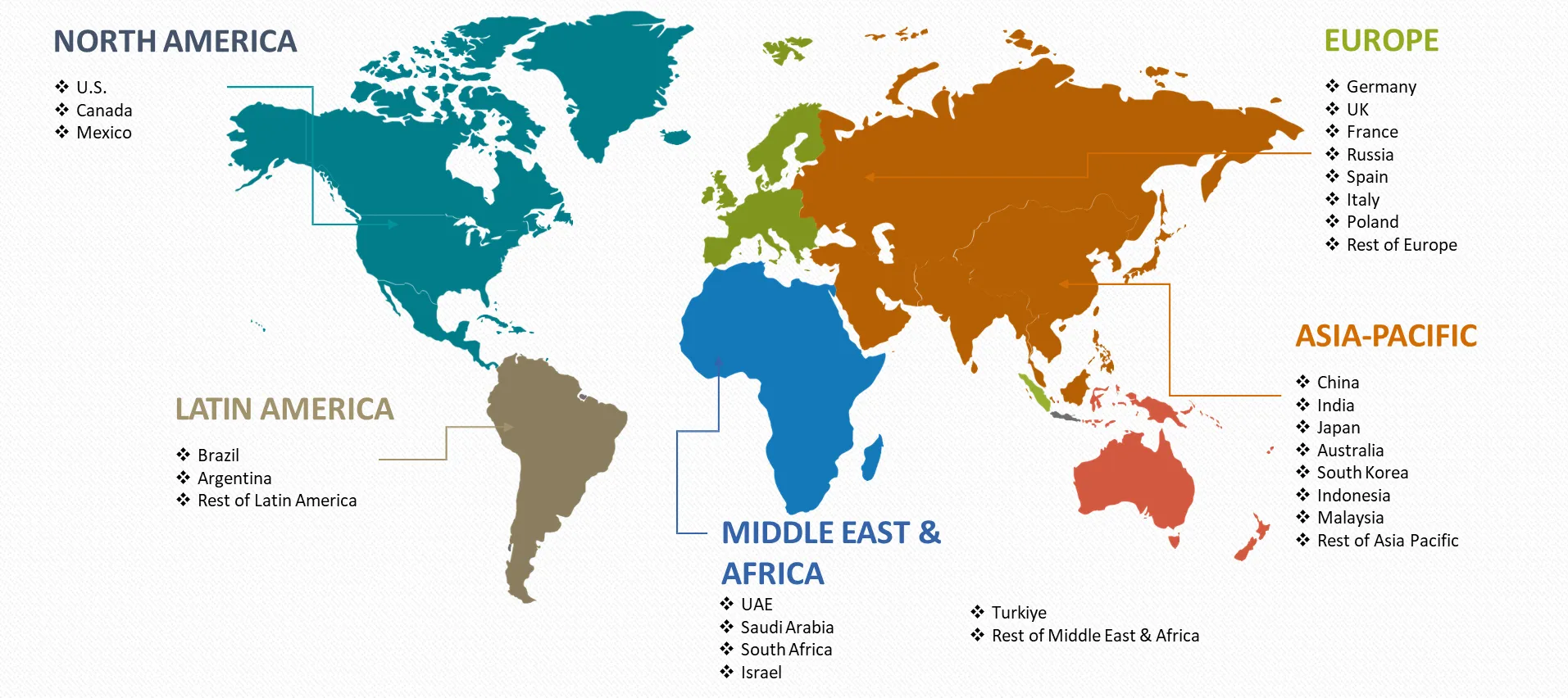
| By Region | North America | U.S., Canada, Mexico |
| Europe | Germany, UK, France, Spain, Italy, Poland | |
| Asia-Pacific | China, India, Japan, Australia, South Korea, Indonesia, Malaysia | |
| Latin America | Brazil, Argentina | |
| Middle East and Africa | UAE, Saudi Arabia, South Africa, Israel, Türkiye | |
| Report Insights Covered | Competitive Landscape Analysis, Company Profile Analysis, Market Size, Share, Growth | |
Aluminum-Lithium Alloys Market Disruption Analysis
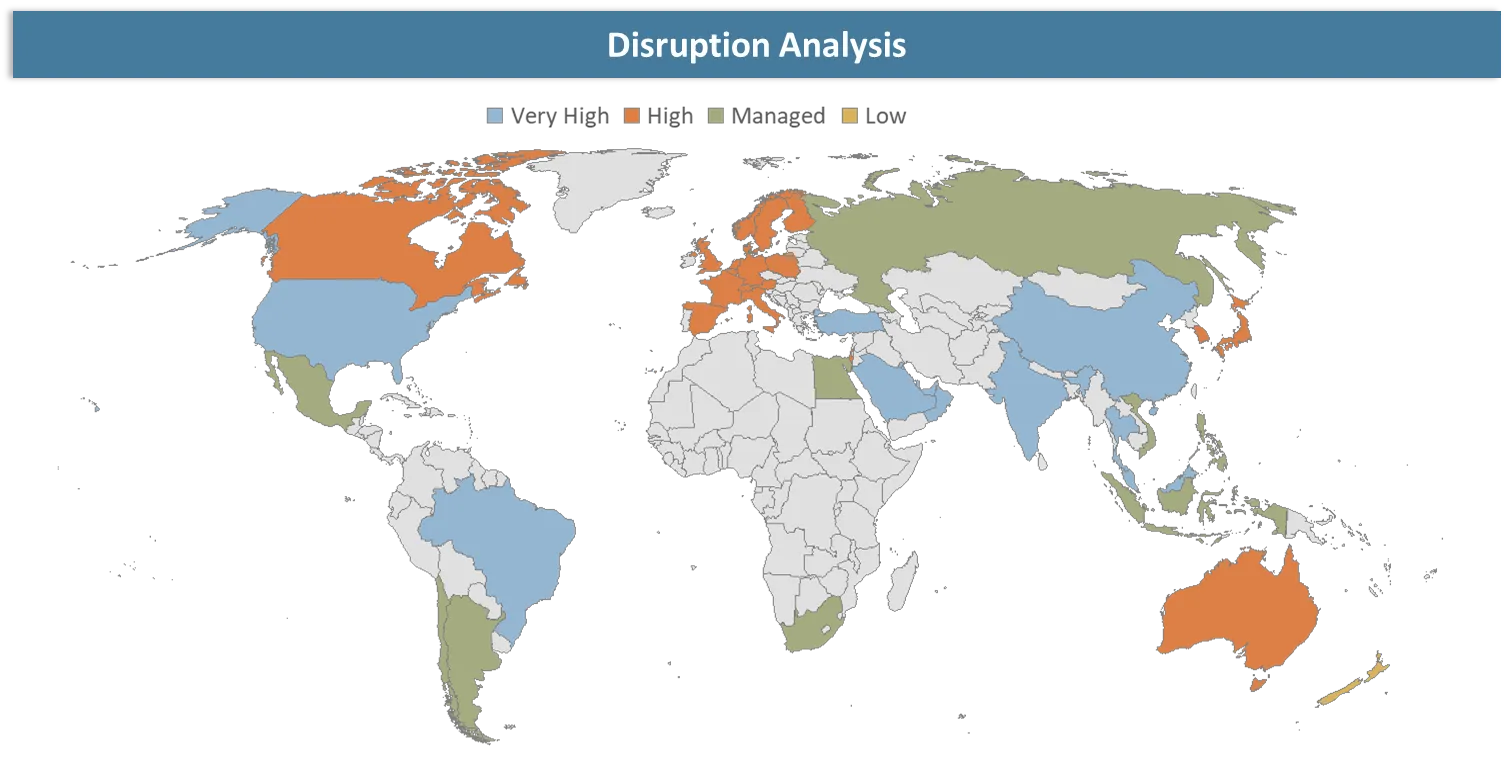
Increasing Adoption of Carbon Fiber Composites in Next-Generation Aircraft Reshaping Aluminum-Lithium Alloy Demand
The Aluminum-Lithium Alloys market is undergoing disruption as aircraft manufacturers are increasingly opting for carbon fiber reinforced polymers (CFRP) composites and thermoplastic composite materials when developing the next generation of commercial planes. The industry's efforts toward enhancing efficiency and reducing emissions will result in greater use of composite materials in the construction of airframes, thus shrinking the market size for aluminum-lithium alloys for certain applications in the fuselage and wings. Airbus is developing concepts for new airplanes made from advanced composite materials that exhibit greater efficiency, recyclability, and lightness.
On the other hand, manufacturers of aluminum-lithium alloys have also been developing new lightweight alloys, friction stir welding methods, and circular aluminum production in order to increase the competitiveness of metallic structures. In June 2025, Reuters stated, that Constellium managed to reduce the weight of aircraft wing structures by up to 20% through the application of advanced aluminum alloys with friction stir welding, whereas CRU expects the use of aerospace aluminum to increase by around 8% annually during 2024–2029 amid growing composite usage.
Aluminum-Lithium Alloys Market BCG Matrix: Company Evaluation

Stars include Constellium SE and Arconic Corporation, as they maintain strong positions in the aluminum-lithium alloys market through extensive aerospace-qualified product portfolios, long-term supply agreements with major aircraft manufacturers, and advanced manufacturing capabilities. Question Marks companies such as CHALCO Aluminum, Southwest Aluminum (SWA) Co., Ltd., and UACJ Corporation are rapidly expanding their aerospace aluminum and aluminum-lithium alloy capabilities to address increasing domestic aircraft production and defense requirements.
The Potential category includes Nanshan Aluminum Co., Ltd., KUMZ (Kamensk-Uralsky Metallurgical Works), and Aleris Corporation, which have strengthened their presence in aerospace rolled products and specialty aluminum materials but have relatively limited commercial aluminum-lithium alloy portfolios compared with leading manufacturers. The tailenders category includes Rio Tinto and Alcoa Corporation in the aluminum-lithium alloys market.
Aluminum-Lithium Alloys Market Dynamics
Driver Impact Analysis
| Driver | Market Growth Impact (%) | Demand Concentration | Impacted Use Case | Strategic Impact |
Rising commercial aircraft production and fleet modernization are accelerating demand for lightweight aluminum-lithium structural materials. | 40% | North America and Europe dominate due to major aircraft OEMs such as Airbus and Boeing; Asia-Pacific demand is increasing with expanding aircraft manufacturing and fleet growth. | Aircraft fuselage panels, wing structures, floor beams, stringers, and other lightweight airframe components. | Strengthens long-term supply agreements between aluminum-lithium alloy producers and aerospace manufacturers while increasing investment in aerospace-qualified alloy production capacity. |
Defense aircraft modernization and military aviation procurement are driving demand for high-strength, fatigue-resistant aluminum-lithium alloys. | 25% | North America, Europe, and Asia-Pacific account for major demand due to defense modernization programs and military aircraft upgrades. | Fighter aircraft structures, military transport aircraft, UAVs, missile systems, and defense aerospace components. | Encourages development of advanced Al-Li grades with improved fatigue resistance, ballistic performance, and structural durability for defense platforms. |
Advancements in aluminum-lithium alloy metallurgy and precision manufacturing technologies are expanding their application in next-generation aerospace platforms. | 20% | Concentrated in technologically advanced aerospace manufacturing hubs in North America, Europe, Japan, and China. | Advanced rolled products, extrusions, forgings, precision aerospace structures, and high-performance components. | Drives innovation in alloy chemistry, friction stir welding, and advanced forming technologies, improving competitiveness against composite materials. |
Growing demand for reusable launch vehicles and space transportation systems is supporting the use of aluminum-lithium alloys in lightweight cryogenic tanks and structural components. | 15% | North America leads due to commercial space programs, while China and Europe are increasing investments in launch vehicle technologies. | Cryogenic fuel tanks, rocket airframes, spacecraft structures, and launch vehicle components. | Expands Al-Li alloy applications beyond aviation and creates opportunities for specialized high-performance alloy development for repeated flight cycles. |
Increasing focus on reducing lifecycle carbon emissions in the aerospace industry is encouraging the adoption of lightweight aluminum-lithium materials to improve aircraft operating efficiency. | 15% | Global aerospace manufacturers and airlines are driving adoption, with strong demand from Europe and North America due to sustainability targets. | Fuel-efficient commercial aircraft structures, lightweight replacement components, and recyclable aerospace materials. | Supports the transition toward low-weight, low-emission aircraft designs and increases demand for recyclable aluminum-lithium alloy solutions. |
Rising commercial aircraft production and fleet modernization are accelerating demand for lightweight aluminum-lithium structural materials
The expansion of commercial aircraft production and long-term fleet renewal programs is significantly accelerating demand for aluminum-lithium alloys, as aircraft manufacturers increasingly prioritize lightweight structural materials to improve fuel efficiency, payload capacity, and lifecycle performance. According to Airbus, the aviation industry will require 43,420 new passenger and freighter aircraft between 2025 and 2044, including 34,250 single-aisle aircraft and 9,170 widebody aircraft. Furthermore, 44% of these deliveries (18,930 aircraft) will replace older, less fuel-efficient models, while the global in-service fleet is projected to nearly double from 24,730 aircraft at the end of 2024 to 49,210 aircraft by 2044.
The growing pipeline of aircraft production has been driving the need for lightweight, strong materials that enhance fuel efficiency and performance. In June 2026, as per Aerospace Global, the combined commercial aircraft backlogs of Airbus and Boeing had reached a record 16,683 aircraft in April 2026, which amounts to about 12 years of production at current manufacturing rates. It was further noted that there were 164 commercial aircraft orders in April 2026, marking a staggering rise of 763% on a year-over-year basis, with widebody aircraft orders rising by 840% compared with April 2025.
Restraint Impact Analysis
| Restraint | Drag on Market Growth (%) | Primary Impact Area | Impacted Use Case | Strategic Impact | ||
High production costs and complex alloy processing requirements are limiting the wider adoption of aluminum-lithium alloys across cost-sensitive applications. | 20% |
| Commercial aircraft structures, automotive lightweight components, and transportation applications | Restricts adoption beyond premium aerospace applications by increasing manufacturing costs and limiting substitution of conventional aluminum alloys. | ||
Competition from carbon fiber reinforced polymers and advanced composite materials is restricting aluminum-lithium alloy penetration in next-generation aircraft structures. | 15% | Material selection decisions in aerospace design | Aircraft fuselage sections, wings, tail structures, and space applications | Creates substitution pressure as composites offer higher weight reduction potential, forcing aluminum-lithium producers to focus on cost optimization and hybrid material solutions. | ||
Limited availability of specialized manufacturing facilities for aluminum-lithium processing is constraining global production scalability. | 12% | Production capacity, supplier ecosystem, and manufacturing scalability | Aerospace-grade sheets, plates, forgings, and structural components | Limits market expansion by restricting the number of qualified suppliers and increasing dependence on established aerospace material manufacturers. | ||
Limited recycling infrastructure for aerospace-grade aluminum-lithium alloys is restricting circular material adoption and lifecycle cost benefits. | 8% | Material recovery, sustainability, and lifecycle economics | Aircraft end-of-life recycling, aerospace component refurbishment, and circular manufacturing programs | Reduces sustainability advantages and delays adoption of closed-loop aluminum-lithium supply chains compared with conventional aluminum recycling streams. |
High production costs and complex alloy processing requirements are limiting the wider adoption of aluminum-lithium alloys across cost-sensitive applications
One of the factors that has restricted the usage of aluminum-lithium alloys is the increased cost incurred during the manufacture of the alloy through the processing of raw material, alloy development, and manufacturing. The aluminum-lithium alloys need special processes, such as special melting, casting, and heat treatment to ensure that the alloy has the desired low weight, high strength, and fatigue resistance. As compared to other aluminum alloys, the addition of lithium to aluminum makes the process more complicated owing to the requirement of special control of the alloy composition and oxidation, among others. In 2025, the aerospace industry maintained its preference for lightweight materials for future aircraft. However, the increased cost of production of aluminum-lithium alloys as compared to other aluminum alloys used in aerospace was still one of the limiting factors.
This study shows that developing high-performing Aluminum-Lithium alloys depends on accurate control of the composition of the alloys, heat treatment, and evolution of microstructure. In June 2026, the MDPI Materials journal published a study that established the influence of different aging treatments and evolution of T₁ (Al₂CuLi) precipitates on the mechanical and corrosion properties of 2060 Aluminum-Lithium alloy were evaluated. It was discovered that through the optimal T8 aging treatment process conducted at 150°C for 48 hours, 2060 Aluminum-Lithium alloys attained 521 MPa yield strength, 541 MPa ultimate tensile strength, and 11.1% elongation in the longitudinal direction, while achieving 486 MPa yield strength, 548 MPa tensile strength, and 12.2% elongation in the longitudinal direction.
Aluminum-Lithium Alloys Market Segment Analysis
The global Aluminum-Lithium Alloys market is segmented based on alloy series, product form, application, and region.
2XXX Series Aluminum-Lithium Alloys Dominating Due to High Adoption in Aerospace Structures and Lightweight Aircraft Components
The 2XXX Series Aluminum-Lithium Alloys segment is still considered dominant in the category of alloy series in the Aluminum-Lithium Alloys market and holds a market share of around 80% of market share in the year 2025 because of increasing demand from aerospace and defense industries for lightweight and highly strong materials. Alloys belonging to the 2XXX series include grades of AA 2050, AA 2055, AA 2060, and AA 2090 and are used in aircraft structure, fuselage, wings, and spacecraft applications.
The growing emphasis on fuel efficiency, carbon emission reduction, and next-generation aircraft development during 2025–2026 has accelerated the adoption of 2XXX Series Aluminum-Lithium Alloys as aerospace manufacturers continue replacing conventional aluminum alloys with advanced lightweight materials. Aircraft programs focused on improving payload capacity and operational efficiency are driving the integration of Al-Li alloys in critical structural components, where weight reduction directly contributes to lower fuel consumption and enhanced performance.
Aluminum-Lithium Alloys Market Geographical Penetration
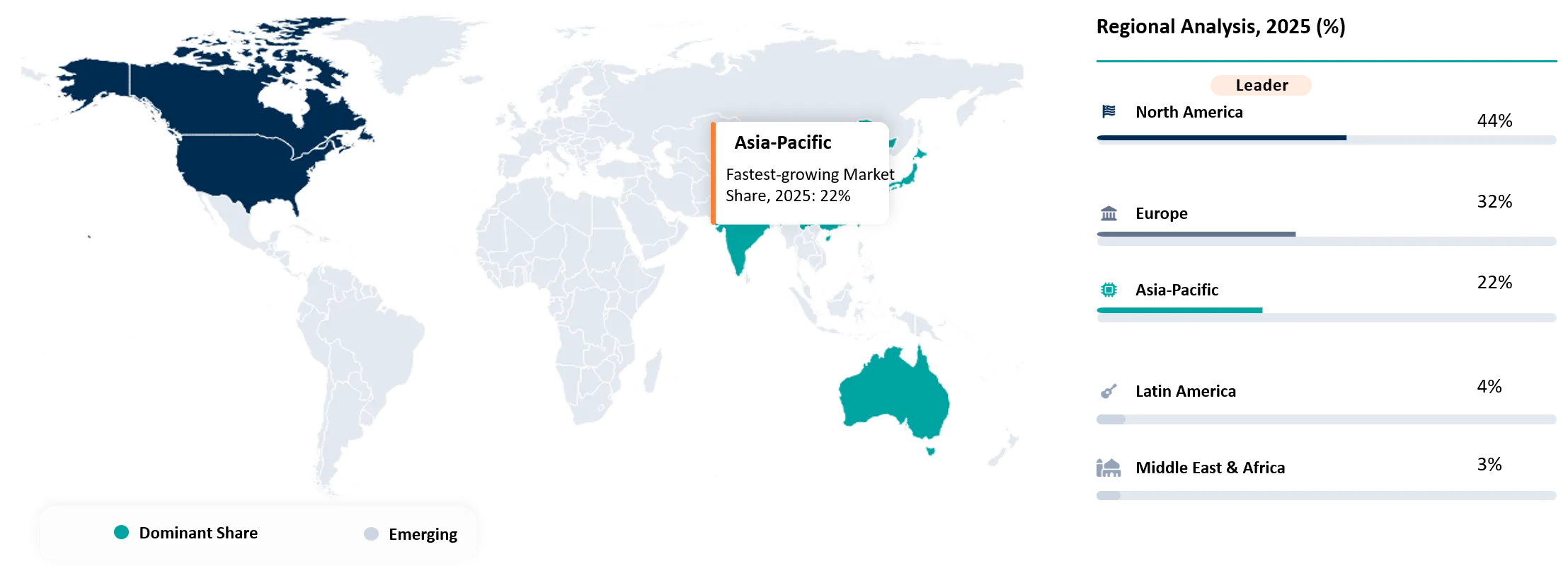
Aerospace Modernization and Lightweight Material Adoption Strengthening North America’s Dominance in the Aluminum-Lithium Alloys Market
The North America region dominates the Aluminum-Lithium Alloys Market, with a market share of about 44% in 2025, owing to the existing infrastructure in aerospace manufacturing and defense upgrades, alongside the high demand for light-weight structural materials in the region. This is because of the presence of large aircraft and defense manufacturers in the region who use aluminum-lithium alloys in aircraft and spacecraft fuselages and wings. According to the Aerospace Industries Association (AIA), the U.S. aerospace and defense industry generated US$988.6 billion in total sales in 2025, including US$506 billion in direct industry output and nearly US$453 billion from domestic supply chain activities. The industry also contributed US$500 billion in economic value, representing 1.6% of U.S. GDP, and supported more than 2.1 million jobs nationwide, highlighting the scale of aerospace manufacturing and defense activities driving material consumption.
The partnership highlights the growing commercialization of Aluminum-Lithium alloys in aerospace applications, supported by aircraft manufacturers’ focus on weight reduction and enhanced fuel efficiency. In September 2025, Constellium SE, a France-based advanced aluminum products manufacturer, the company extended its long-term partnership with Embraer S.A., a Brazil-based aerospace and defense aircraft manufacturer, to supply high-performance aluminum solutions, including Constellium’s Airware® aluminum-lithium (Al-Li) alloy technology. Under the agreement, Constellium will continue supporting Embraer’s Commercial Aviation, Executive Jets, and Defense & Security divisions through its aerospace manufacturing facilities in Issoire, France, and Ravenswood, West Virginia, USA.
U.S. Aluminum-Lithium Alloys Market Trends
The United States holds a dominant position in the North American Aluminum-Lithium Alloys Market due to its well-established aerospace and defense ecosystem, strong aircraft manufacturing base, and continuous adoption of lightweight advanced materials across commercial aviation, defense, and space applications. The presence of major aircraft manufacturers, defense companies, and aerospace material suppliers creates a strong demand environment for 2XXX Series Aluminum-Lithium Alloys, which are widely used in fuselage structures, wing components, launch vehicles, and military aircraft platforms.
This is an example of how important the use of Aluminum-Lithium alloys is to the U.S. space programs. In May 2025, Constellium SE, an advanced aluminum product producer based in France, hosted NASA representatives at its Ravenswood, West Virginia, USA, manufacturing center to honor the cooperation in the Artemis project. The company produces its own Airware® aluminum-lithium alloy products and advanced aluminum alloys used by NASA for the Space Launch System (SLS) rocket and Orion spacecraft projects.
Canada Aluminum-Lithium Alloys Market Outlook
Canada is becoming a significant growth contributor in the North American Aluminum-Lithium Alloys Market due to its expanding aerospace manufacturing ecosystem, strong aircraft component production capabilities, and increasing adoption of lightweight materials for next-generation aviation applications. The country’s aerospace industry supports demand for advanced aluminum alloys, including 2XXX Series Aluminum-Lithium Alloys, which are used in aircraft structures, fuselage components, and high-strength aerospace assemblies.
The expansion of Airbus A220 production in Canada strengthens the aerospace manufacturing ecosystem and increases the need for lightweight, high-performance structural materials. In June 2025, Global Affairs Canada, Airbus SE, a France-based aerospace and commercial aircraft manufacturer, and LOT Polish Airlines, a Poland-based commercial airline, announced a major aircraft acquisition agreement in June 2025 at the Paris Air Show. LOT placed a firm order for 40 Airbus A220 aircraft (20 A220-100 and 20 A220-300 models), with purchase rights for an additional 44 aircraft. The Airbus A220 program is manufactured in Mirabel, Québec, Canada, supporting Canada’s aerospace supply chain, where the program contributes to more than 4,500 Canadian aerospace jobs.
Aluminum-Lithium Alloys Market Competitive Landscape
- The Aluminum-Lithium Alloys Market is characterized by three major participant groups: integrated primary aluminum producers, aerospace-grade rolled and extruded product manufacturers, and specialized aluminum-lithium alloy suppliers serving commercial aviation, defense, and space programs. Companies such as Constellium SE, Arconic Corporation, Alcoa Corporation, Rio Tinto, CHALCO Aluminum, Southwest Aluminum (SWA), UACJ Corporation, and Nanshan Aluminum compete through aerospace material qualifications, long-term supply agreements with aircraft OEMs, advanced alloy development, and manufacturing capabilities. The market remains highly concentrated because aluminum-lithium alloys require proprietary metallurgy, stringent aerospace certifications, and significant capital investment. Constellium SE is estimated to hold around 19.5% of the global aerospace aluminum-lithium products market in 2025, supported by its strong presence in aerospace plates, sheets, and extrusions supplied to Airbus, Boeing, and other aerospace manufacturers. Similarly, Alcoa Corporation remains a leading supplier of high-performance aerospace aluminum products, while Rio Tinto continues expanding low-carbon aluminum offerings for aerospace applications. These companies compete on alloy performance, production capacity, sustainability initiatives, and long-term strategic partnerships with aerospace OEMs.
- Key players include Constellium SE, Arconic Corporation, Rio Tinto, Alcoa Corporation, CHALCO Aluminum, Southwest Aluminum (SWA) Co., Ltd., UACJ Corporation, and Nanshan Aluminum Co., Ltd.
Key Developments
- December 2025: Guangxi Nan Nan Aluminum Processing Co., Ltd., a China-based aluminum processing and advanced aluminum materials manufacturer, and Hunan InnoChina Advanced Materials Co., Ltd., a China-based advanced materials and aerospace alloy technology company, signed a strategic cooperation agreement to jointly develop and industrialize third-generation Aluminum-Lithium (Al-Li) alloys.
Key Procurement Priorities and Buyer Evaluation Criteria
- Organizations investing in Aluminum-Lithium Alloys prioritize suppliers that can consistently deliver aerospace-grade alloys with certified mechanical properties, superior strength-to-weight ratios, corrosion resistance, and compliance with stringent aerospace quality standards. Procurement decisions increasingly favor manufacturers with proven capabilities in producing qualified 2XXX Series Aluminum-Lithium Alloys for commercial aviation, defense, and space applications.
- Procurement strategies are increasingly influenced by the growing demand for fuel-efficient aircraft, defense modernization programs, reusable launch vehicles, and sustainable aerospace manufacturing. Buyers prefer suppliers that can support lightweight structural designs, maintain stable long-term supply agreements, and provide advanced alloy solutions that contribute to lower aircraft weight, reduced emissions, and improved operational performance.
- Buyers evaluate suppliers based on alloy consistency, fracture toughness, fatigue resistance, corrosion performance, dimensional stability, aerospace certifications (AS9100, NADCAP, ASTM, AMS specifications), and traceability across the manufacturing process. The ability to provide customized plates, sheets, extrusions, and forgings with tight quality tolerances is a critical procurement criterion.
Why Choose DataM?
- Technological Innovations: Explores advancements in next-generation aluminum-lithium alloy development, including improved 2XXX and 8XXX series compositions, advanced thermomechanical processing, additive manufacturing compatibility, and low-carbon aluminum production technologies that enhance strength-to-weight ratio, fatigue resistance, and corrosion performance for aerospace and defense applications.
- Product Performance & Market Positioning: Evaluates how leading manufacturers differentiate through alloy composition, mechanical performance, fracture toughness, weight reduction, and aerospace certifications, highlighting competitive positioning across commercial aviation, defense, space exploration, and high-performance industrial applications.
- Real-World Evidence: Highlights the adoption of aluminum-lithium alloys in commercial aircraft fuselage structures, wing assemblies, military aircraft, launch vehicles, and spacecraft, demonstrating measurable benefits such as reduced structural weight, improved fuel efficiency, increased payload capacity, and enhanced lifecycle performance.
- Market Updates & Industry Changes: Tracks major industry developments, including aircraft production expansion, aerospace material innovations, defense modernization programs, sustainability initiatives, low-carbon aluminum investments, and capacity expansions across North America, Europe, and Asia-Pacific that are shaping future demand for aluminum-lithium alloys.
- Competitive Strategies: Analyzes how leading companies expand through new alloy development, aerospace qualification programs, production capacity expansion, strategic partnerships with aircraft OEMs, recycling initiatives, and investments in sustainable aluminum manufacturing to strengthen their competitive position.
- Pricing & Market Access: Explains pricing dynamics based on lithium content, alloy grade, product form (plates, sheets, extrusions, forgings), aerospace qualification requirements, and raw material costs, while evaluating procurement channels through integrated aluminum producers, aerospace material suppliers, and authorized distribution networks.
- Market Entry & Expansion: Identifies growth opportunities driven by next-generation commercial aircraft, defense aircraft modernization, reusable space launch systems, urban air mobility, and sustainable aviation initiatives, while outlining successful expansion strategies including aerospace certifications, regional manufacturing investments, OEM collaborations, and advanced alloy innovation.
Target Audience
- Aerospace & Defense Manufacturers
- Aluminum-Lithium Alloy Manufacturers
- Primary Aluminum Producers & Smelters
- Aerospace Material Suppliers and Distributors
- Aircraft Structural Component Manufacturers
- Spacecraft and Launch Vehicle Manufacturers
- Commercial Aviation Companies


























































