

Allergy Care Market Size and Overview
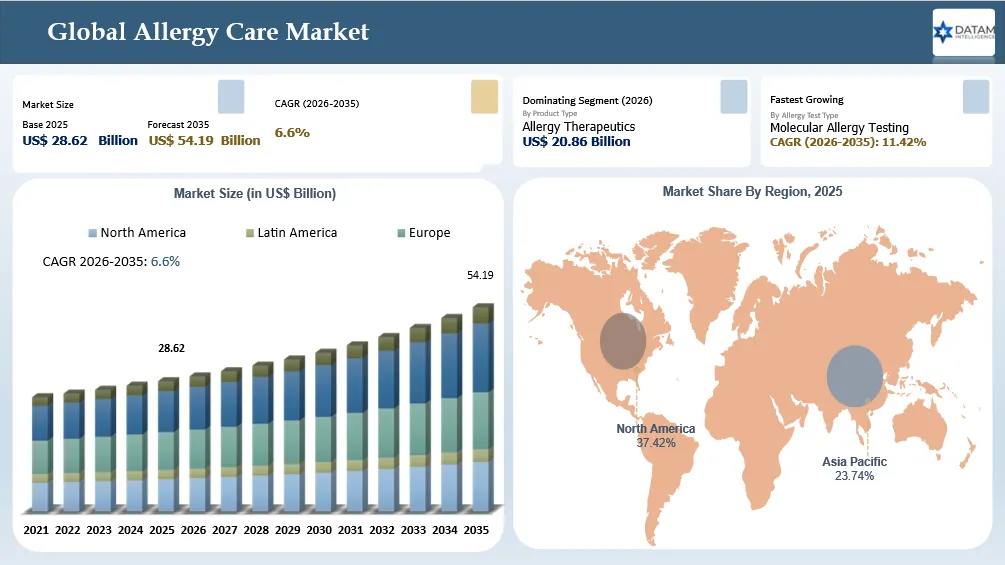
The Global Allergy Care Market reached US$ 28.62 billion in 2025 and is expected to reach US$ 54.19 billion by 2035, growing with a CAGR 6.6% during the forecast period 2026-2035. A major development reshaping the market is the shift toward needle-free emergency allergy treatment and biologic-based food allergy protection, which is changing how severe allergic reactions and food allergies are managed.
Traditionally, allergy care was largely centered on antihistamines, corticosteroids, nasal sprays and avoidance strategies. However, recent innovation is moving the market toward more advanced, patient-friendly and preventive treatment models. The emergence of nasal epinephrine products is reducing dependence on injectable formats, improving convenience for children, caregivers, schools and emergency settings. At the same time, biologic therapies are expanding the treatment pathway for patients with food allergies, allergic asthma, chronic urticaria and other immune-mediated allergic conditions.
This transition is creating stronger commercial opportunities across allergy therapeutics, diagnostics, immunotherapy, emergency response and home-based care. Companies are increasingly focusing on treatment adherence, pediatric usability, precision diagnostics, long-term desensitization and integrated allergy management. As a result, the market is expected to move from reactive symptom control toward personalized, preventive and outcome-driven allergy care.
Allergy Care Market Key Takeaways
- The Global Allergy Care Market was valued at US$ 28.62 billion in 2025 and is projected to reach US$ 54.19 billion by 2035.
- The market is expected to grow at a CAGR of 6.6% during the forecast period 2026–2035.
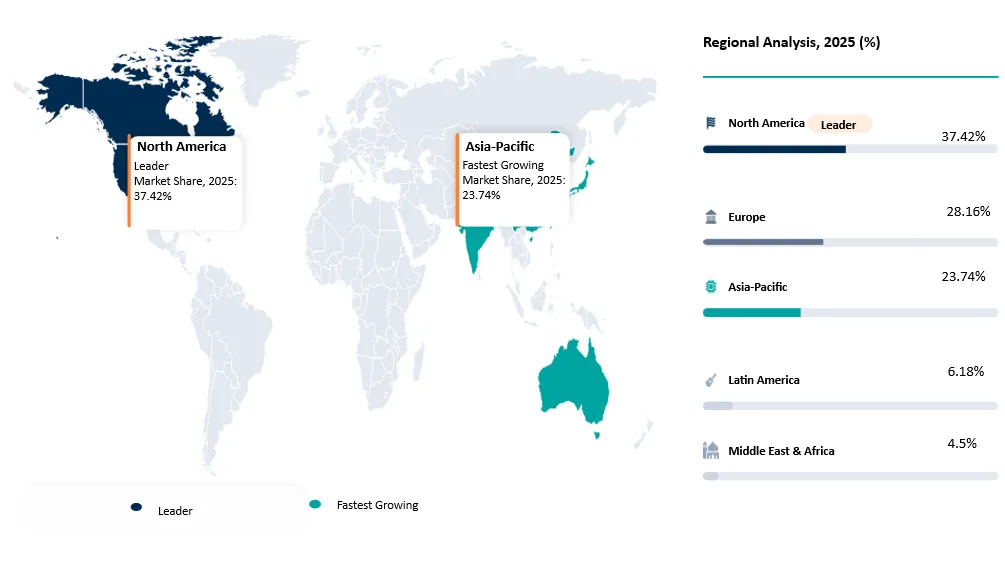
- North America held the highest market share at approximately 37.42% in 2026, supported by advanced allergy diagnostics, specialist-led care, biologics adoption and strong emergency allergy response infrastructure.
- Asia-Pacific is expected to be the fastest-growing region, driven by rising allergy awareness, urban pollution, pediatric allergy burden and improving diagnostic access.
- By product type, Allergy Therapeutics was the largest segment in 2026, valued at approximately US$ 20.86 billion.
- Molecular Allergy Testing is projected to be the fastest-growing allergy test type, supported by precision diagnostics, component-resolved testing and personalized allergy treatment planning.
- North America shows the highest innovation activity, led by biologics, food allergy therapies, needle-free epinephrine products, immunotherapy and advanced IgE-based diagnostics.
- North America has the largest end-user base across hospitals, allergy clinics, diagnostic laboratories , dermatology clinics, pulmonology clinics and home care settings.
- North America also has the highest competitive concentration, with strong presence of ALK, Thermo Fisher Scientific Inc., Siemens Healthineers AG, Sanofi, Regeneron Pharmaceuticals, Inc., Stallergenes Greer, Novartis AG, GSK, AstraZeneca plc and PerkinElmer.
Allergy Care Market Scope
| Metrics | Details | ||
| 2025 Market Size | US$ 28.62 Billion | ||
| 2035 Projected Market Size | US$ 54.19 Billion | ||
| CAGR (2026-2035) | 6.6% | ||
| Largest Market | North America | ||
| Fastest Growing Market | Asia-Pacific | ||
| By Product Type | Allergy Diagnostics, Allergy Therapeutics, Allergy Immunotherapy Products, Allergy Supportive Care Products, and Others | ||
| By Allergy Type | Respiratory Allergies, Food Allergies, Skin Allergies, Drug Allergies, Insect Sting Allergies, Occupational Allergies, and Others | ||
| By Allergy Therapeutics | Antihistamines, Corticosteroids, Decongestants, Leukotriene Inhibitors, Mast Cell Stabilizers, Epinephrine Products, Biologics, and Others | ||
| By Immunotherapy Type | Subcutaneous Immunotherapy, Sublingual Immunotherapy, Oral Immunotherapy, Epicutaneous Immunotherapy, and Others | ||
| By Route of Administration | Oral, Nasal, Topical, Injectable, Inhalation, Sublingual, Ophthalmic, and Others | ||
| By Application | Allergy Diagnosis and Screening, Acute Symptom Relief, Chronic Allergy Management, Long-Term Allergy Desensitization, Emergency Allergy Response, Preventive and Home-Based Allergy Care, and Others | ||
| By Patient Age Group | Pediatric, Adult, and Geriatric | ||
| By Gender | Male, and Female | ||
| By Care Setting | Hospitals, Allergy Clinics, ENT Clinics, Dermatology Clinics, Pulmonology Clinics, Diagnostic Laboratories, Home Care Settings, and Others | ||
| By Distribution Channel | Hospital Pharmacies, Retail Pharmacies, Online Pharmacies, Diagnostic Laboratories, Direct-to-Consumer Channels, and Others | ||
| By Allergy Test Type | Skin Prick Test, Patch Test, Intradermal Test, Specific IgE Blood Test, Total IgE Test, Component-Resolved Diagnostics, Molecular Allergy Testing, Provocation / Challenge Testing, and Others | ||
| By Region | North America | U.S., Canada, Mexico | |
| Europe | Germany, UK, France, Spain, Italy, Poland | ||
| Asia-Pacific | China, India, Japan, Australia, South Korea, Indonesia, Malaysia | ||
| Latin America | Brazil, Argentina | ||
| Middle East and Africa | UAE, Saudi Arabia, South Africa, Israel, Turkiye | ||
| Report Insights Covered | Competitive Landscape Analysis, Company Profile Analysis, Market Size, Share, Growth | ||
Disruption Analysis
Precision, Biologics and Digital Care Are Disrupting Traditional Allergy Management
Disruption in the Allergy Care Market is currently being driven by the shift from symptom-based treatments to precision allergy management. The previous standard of care within this market was characterized by the use of antihistamines, corticosteroids and allergy avoidance, however, modern developments have led the market to move towards molecular diagnostics, component-resolved testing, biologics and allergy modifying treatments such as immunotherapy.
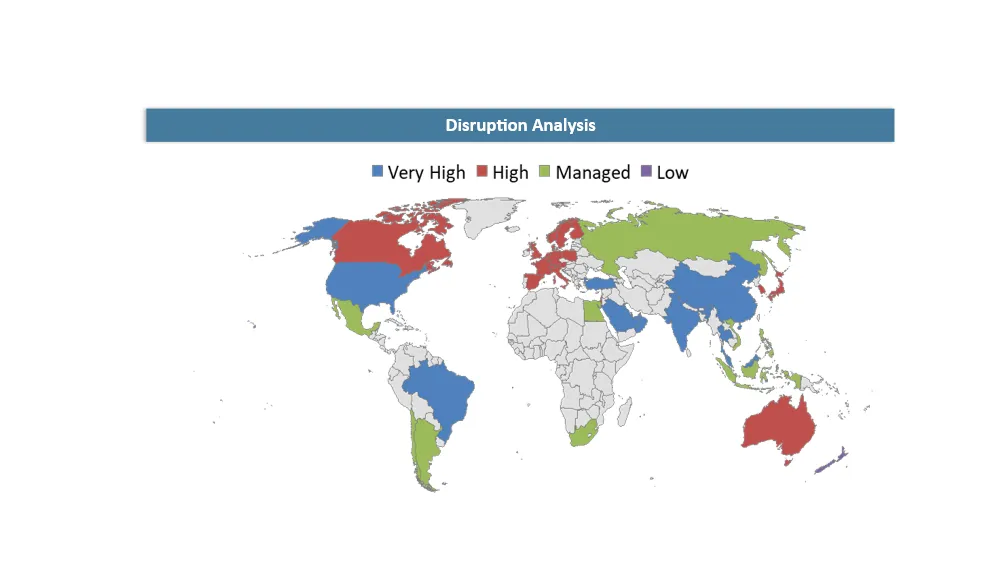
One of the biggest disruptions expected in the allergy care market is the shift towards more personalized immunotherapy and biologics to treat allergic conditions, particularly asthma, chronic urticaria, atopic dermatitis and food allergies. This is driving the market away from symptom management towards an intervention in immune response pathways. Simultaneously, innovations such as DTC allergy tests, home monitoring devices and digital allergy care platforms are disrupting the allergy care industry by allowing allergy treatment in the consumer, pharmacy and telemedicine spaces.
In addition, the high-risk areas of innovation within the food allergy care sector include emergency preparation, pediatric burden of disease, oral immunotherapies, epicutaneous methods and safe desensitization techniques. Companies operating in the allergy care market will need to ensure their competitive advantage is based on clinical differentiation, patient-centric care, ease of use, diagnostic precision and reimbursement capabilities.
BCG Matrix: Company Evaluation
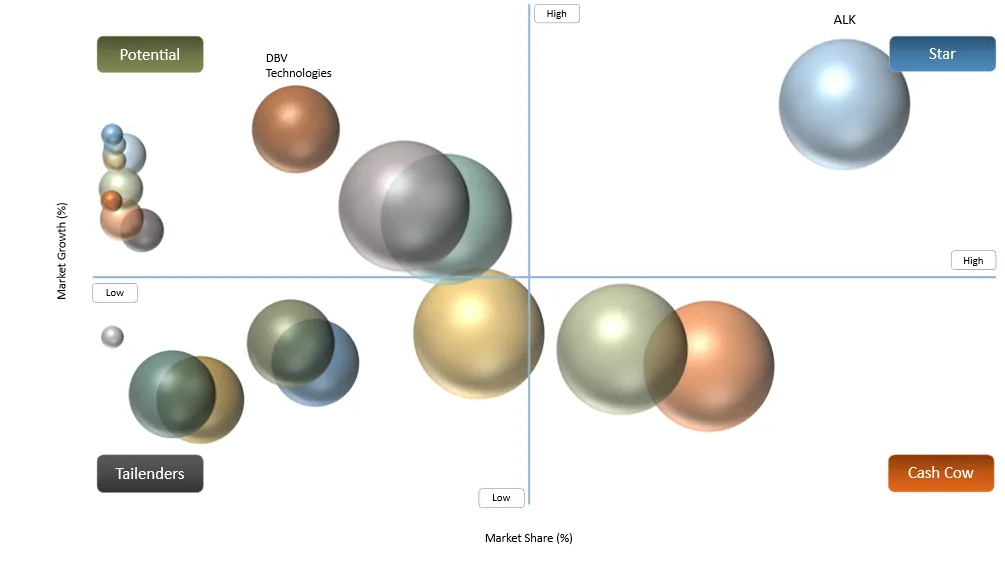
In the Allergy Care Market, ALK, Thermo Fisher Scientific Inc., Siemens Healthineers AG, Stallergenes Greer, bioMérieux and PerkinElmer can be termed as Stars since they possess high significance in allergies diagnostics, immunoassays, molecular diagnostic tools and immunotherapy-based treatment of allergies. The high level of growth for these players is attributed to the increasing demand for allergy diagnosis, IgE tests, component-based diagnostics and long-term desensitization therapy.
Sanofi, Regeneron Pharmaceuticals, Inc., Novartis AG, F. Hoffmann-La Roche Ltd, GSK plc and AstraZeneca plc can be labeled as Cash Cows/Strategic Leaders owing to their robust biologics portfolio, respiratory health expertise and proven capabilities for global commercialization. The potential of these players lies in addressing the demand for treating conditions like severe allergic asthma, chronic urticaria, atopic dermatitis and food allergies.
Allergy Therapeutics, HAL Allergy B.V., LETI Pharma and DBV Technologies can be considered as Question Marks/Emerging Growth Players owing to their strong focus on developing allergy immunotherapy drugs or food allergies. However, these players need further expansion to become globally significant.
Market Dynamics
Segmentation Analysis
The Global Allergy Care Market is segmented based on the product type, allergy type, allergy therapeutics, immunotherapy type, route of administration, application, patient age group, gender, care setting, distribution channel, allergy test type, and region/countries.
Geographical Penetration
Competitive Landscape
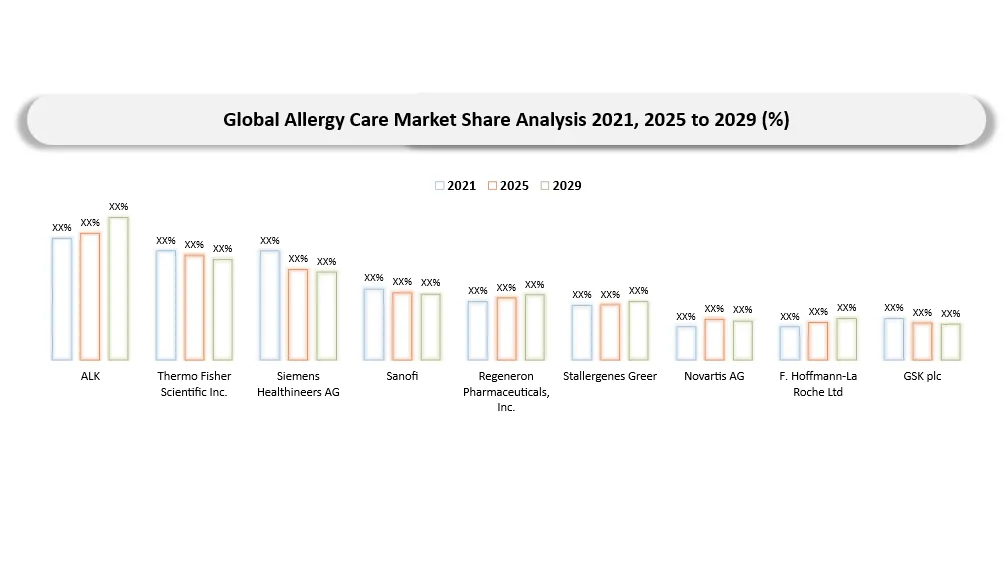
- The Allergy Care Market is transitioning from being a diverse symptom-management marketplace into a specialized, evidence-based healthcare network where the competition will be determined by accurate diagnostics, biological discoveries, immunotherapy advances, patient adherence assistance and specialist care channeling. Participants include international pharmaceutical companies, allergy-specific immunotherapies specialists and diagnostic platforms vendors, all competing along various stages of the allergy care value chain.
- Companies like ALK, Stallergenes Greer, Allergy Therapeutics, HAL Allergy B.V. and LETI Pharma hold a strong position in the allergy immunotherapy domain. Their main competency centers around the development of allergen extracts, subcutaneous immunotherapy and sublingual immunotherapy. Their strengths are in providing disease-modifying therapies, particularly for respiratory allergies like pollen, dust mite and grass allergy. These participants have potential to capitalize on the changing market dynamics towards long-term desensitization therapy rather than just symptom management.
- Key players on the diagnostic side of the allergy care market are Thermo Fisher Scientific Inc., Siemens Healthineers AG, bioMérieux and PerkinElmer. Their diagnostic platforms and solutions encompass allergy screenings, IgE testing, molecular diagnostic services and component resolved diagnostics. With the increasing necessity of identifying specific allergen prior to selecting the therapy, diagnostic vendors become highly strategic participants in the market.
- Big drug manufacturers like Sanofi, Regeneron Pharmaceuticals, Inc., Novartis AG, F. Hoffmann-La Roche Ltd, GSK plc and AstraZeneca plc will continue to dominate the premium category through biologic and immunopathway-based drugs. The competitive advantage of the big companies lies in their global clinical development abilities, their network of physicians, and their strong reimbursement position within respiratory, dermatology and immunology.
- DBV Technologies will bring an innovative angle to food allergy treatment and immunotherapy when unmet medical needs remain high. Looking ahead, competitive advantages will go to companies able to build a comprehensive approach to allergy management by linking diagnostics, therapy, immunotherapy, monitoring, rescue services and education.
Recent Developments
- March 2026: Novartis AG entered into an agreement to acquire Excellergy, Inc., adding Exl-111, a Phase 1, half-life extended, high-affinity anti-IgE antibody for IgE-driven diseases. The deal strengthens Novartis’ positioning in next-generation anti-IgE allergy innovation and food allergy care.
- March 2026: GSK completed the acquisition of RAPT Therapeutics, gaining global rights to ozureprubart, excluding mainland China, Macau, Taiwan and Hong Kong. The asset is a potentially best-in-class anti-IgE antibody being developed for prophylactic protection against food allergens.
- December 2025: DBV Technologies announced positive topline results from the Phase 3 VITESSE trial of VIASKIN Peanut Patch in peanut-allergic children aged 4 to 7 years. The development supports the potential of epicutaneous immunotherapy as a differentiated pediatric food allergy treatment approach.
- September 2025: Regeneron Pharmaceuticals, Inc. reported positive Phase 3 results for first-in-class antibody blockers targeting cat and birch allergies. Single-dose allergen-specific antibody blockers significantly reduced allergy symptoms versus placebo, supporting further Phase 3 development.
- March 2025: Celltrion USA received U.S. FDA approval for OMLYCLO as the first FDA-approved anti-IgE antibody biosimilar referencing XOLAIR. OMLYCLO is approved as interchangeable with the reference product for indications including allergic asthma, IgE-mediated food allergy and chronic spontaneous urticaria.
- March 2025: ARS Pharmaceuticals received U.S. FDA approval for neffy 1 mg, expanding the needle-free epinephrine nasal spray option to pediatric patients weighing 15 to 30 kg. This strengthened emergency allergy response access for younger children at risk of anaphylaxis.
- August 2024: ARS Pharmaceuticals, Inc. received U.S. FDA approval for neffy, the first nasal spray for emergency treatment of Type I allergic reactions, including anaphylaxis, in adults and pediatric patients weighing at least 30 kg. This introduced a needle-free alternative to injectable epinephrine products.
- February 2024: U.S. FDA approved XOLAIR as the first medication to reduce allergic reactions to more than one type of food after accidental exposure. This approval expanded the role of biologics in food allergy management for adults and children.
AI Impact Analysis
AI is anticipated to transform the Allergy Care Market through enhanced diagnostic precision and personalized treatment approaches, including patient stratification. Platforms powered by artificial intelligence can be used to analyze the results of IgE tests, molecular allergy profiles, patient history, seasonal exposures and patterns of symptoms, leading to improved accuracy and speed in diagnosing allergic reactions. Clinically, AI can assist doctors in distinguishing various allergies, such as respiratory allergies, food allergies, and skin allergies. The use of artificial intelligence in allergy therapeutics can assist with identifying appropriate patients to administer biologics and immunotherapy and provide long-term desensitization treatments. Predictive analysis and allergy monitoring applications will enable better preventive care and home treatments for allergies. AI will be helpful in developing drug pipelines, patient recruitment for clinical trials and generating real-world evidence among others, which is essential for the development of allergy treatments. Nevertheless, the effectiveness of AI technology in allergy care will require high-quality data, validation by regulatory authorities, physician acceptance and integration into laboratories, pharmacies and clinical operations
White Space Opportunities
According to DataM Intelligence, the Allergy Care Market offers promising white space opportunities outside the regular process of conducting market size assessments, particularly in situations where companies require actionable insights into diagnostics, therapeutics, immunotherapies and patient care pathways. The areas that DataM can assist in exploring white space include advanced allergy diagnostics, food allergies, pediatric allergies, biologics, needle-free emergency responses, and at-home allergies. The main value opportunity comes from being able to pinpoint the shift in demand from OTC symptom relief solutions to proper diagnosis, desensitization, preventative treatment, and personalization. In addition, DataM is able to provide clients with assistance in assessing white space opportunities on a per-country basis, analyzing competitors, monitoring pipelines, mapping diagnostic laboratories, evaluating prices, and analyzing patient access.
DMI Opinion
DataM Intelligence feels that the Allergy Care market is on the brink of transitioning from being a symptomatic relief-driven one to an ecosystem-based one where diagnostics play a critical role in the development and deployment of personalized care programs. The future success factor of Allergy Care products does not solely lie in their ability to deliver results in line with antihistamines and corticosteroids but rather in the extent to which these products integrate early allergy detection, advanced IgE tests, molecular diagnostics, biologic drugs, immunotherapy, emergency and at-home allergy treatments. Focus should be put on developing food allergy, pediatric allergy care, severe allergic asthma and allergy monitoring products in order to create high-margin products. There appears to be a lot of potential in DTC testing kits, digital tracking systems, needle-free epinephrine and desensitization treatments, but cost-effectiveness, reimbursement, specialist involvement and patient adherence will always be the major obstacles on the way.
Why this report matters in 2026?
The Allergy Care Market is entering a more structured and innovation-led phase in 2026 as rising allergy prevalence, food allergy awareness, respiratory allergy burden and pediatric allergy cases push healthcare systems beyond short-term symptom relief. Demand is shifting toward early diagnosis, advanced IgE testing, molecular diagnostics, biologics, immunotherapy and emergency allergy response products. This is transforming allergy care from a largely OTC-driven category into a more integrated healthcare market focused on diagnosis, long-term management, prevention and personalized treatment.
At the same time, allergy care companies are facing growing pressure to demonstrate clinical differentiation, affordability and patient convenience. Rapid progress in biologics, sublingual and oral immunotherapy, component-resolved diagnostics, needle-free epinephrine formats and digital allergy monitoring is reshaping competitive positioning across the market. Buyers, investors and healthcare stakeholders now require deeper visibility into diagnostic adoption, treatment pathways, reimbursement access, product pipelines, patient age groups, care settings and regional demand shifts to identify commercially attractive opportunities, reduce portfolio risk and build stronger allergy care strategies
Why Choose DataM?
- End-to-End Allergy Care Value Chain Coverage: DataM provides a complete view of the allergy care ecosystem, covering diagnostics, assays, kits, reagents, instruments, services, allergy test types, therapeutics, biologics, immunotherapy products, supportive care solutions, emergency response products and home-based care models.
- Diagnostic and Test-Level Intelligence: The study maps allergy diagnostics at a granular level, including skin prick tests, patch tests, intradermal tests, specific IgE tests, total IgE tests, molecular allergy testing and component-resolved diagnostics, helping clients identify where diagnostic adoption and lab-based demand are expanding.
- Therapy and Innovation Mapping: DataM tracks the transition from conventional symptom-relief products toward biologics, allergen immunotherapy, oral immunotherapy, epicutaneous therapy, needle-free epinephrine formats, AI-enabled allergy monitoring and personalized allergy management models.
- Patient and Care Pathway Analysis: The report evaluates allergy care demand across patient age groups, gender, hospitals, allergy clinics, diagnostic laboratories, ENT clinics, dermatology clinics, pulmonology clinics, home care settings and direct-to-consumer channels to support sharper market entry and product positioning decisions.
- Competitive Positioning of Major Companies: DataM benchmarks leading players such as ALK, Thermo Fisher Scientific Inc., Siemens Healthineers AG, Stallergenes Greer, bioMérieux, PerkinElmer, Sanofi, Regeneron Pharmaceuticals, Inc., Novartis AG, GSK plc, AstraZeneca plc and DBV Technologies based on product portfolio, diagnostic strength, pipeline focus, geographic presence and innovation strategy.
- White Space and Future Opportunity Identification: DataM helps clients identify high-potential opportunities across food allergy care, pediatric allergy management, personalized diagnostics, biologics, preventive allergy care, direct-to-consumer testing, emergency allergy response and emerging market access.
KEY PROCUREMENT PRIORITIES AND BUYER EVALUATION CRITERIA
- Organizations investing in the Allergy Care Market are increasingly selecting products and partners based on diagnostic accuracy, clinical reliability, patient convenience, safety profile, affordability and ability to support long-term allergy management across hospitals, allergy clinics, diagnostic laboratories and home care settings.
- Procurement strategies are being shaped by the shift from basic symptom-relief products toward advanced IgE testing, molecular diagnostics, biologics, immunotherapy, needle-free emergency allergy products and integrated allergy management solutions.
- Hospitals, diagnostic laboratories, allergy clinics, pharmacies and healthcare providers evaluate allergy care solutions based on test sensitivity and specificity, turnaround time, product availability, regulatory approvals, reimbursement coverage, ease of administration, patient adherence potential and compatibility with existing clinical workflows.
- For therapeutics and immunotherapy, buyers prioritize proven clinical outcomes, safety in pediatric and adult populations, dosing convenience, long-term efficacy, emergency-use readiness and the ability to address high-burden areas such as respiratory allergies, food allergies, allergic asthma and severe allergic reactions.
- For diagnostic products, procurement decisions depend on assay performance, reagent and kit availability, instrument compatibility, automation potential, laboratory scalability, service support and ability to support personalized allergy treatment planning.