


Air Insulated Switchgear Market Size & Forecast 2035
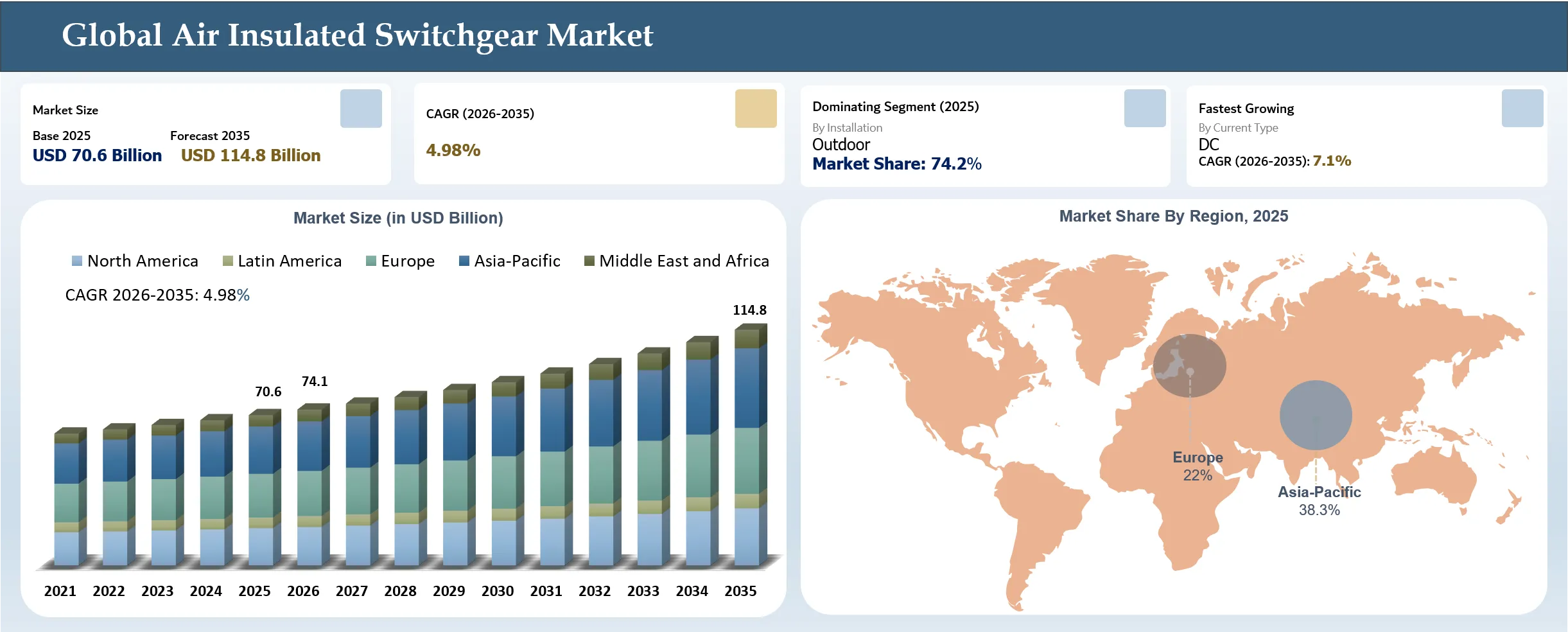
The global Air Insulated Switchgear market reached USD 70.6 billion in 2025 and is expected to reach USD 114.8 billion by 2035, growing with a CAGR of 4.98% during the forecast period 2026-2035. The market is growing continuously due to the increasing investments in the transmission and distribution infrastructure and the rise in electrification in the industrial, commercial, and utility sectors. As per International Energy Agency (IEA), there has been an increase in the global demand for electricity by 3.0% in 2025 and is projected to grow at an average annual rate of 3.6% from 2026 through 2030, owing to growing industries, electric vehicles, air conditioning, and data centers. At the same time, the International Renewable Energy Agency (IRENA) stated that the global capacity of renewables in 2025 had increased to 5,149 GW due to the record addition of 692 GW of new capacity in 2025, marking an annual increase of 15.5%, which has greatly increased the need for substations, interconnection equipment, and air-insulated switchgear. The market is being driven even more by digital substations, intelligent protection, and monitoring solutions. However, the higher installation size of AIS than that of GIS becomes a constraint for its installation in urban areas.
With increasing movement towards green grid infrastructure, there has been an increase in SF₆-free air-insulated switchgear technology adoption. In November 2025, according to the IT Brief, Schneider Electric, a France-based energy management and automation company, launched its new product GM AirSeT, an SF₆-free primary switchgear that works on the principle of pure air insulation for the utility industry, data centers, and industrial customers, which will help these companies comply with the changing regulations. This digitalized switchgear will help enhance the efficiency of these firms by cutting down the maintenance and downtime of the operations by up to 40% and 75%, respectively, and removing SF₆ greenhouse gas completely.
White-Space Opportunities for Air Insulated Switchgear through Grid Modernization and Transmission Infrastructure Investments
In March 2025, the UK energy regulator Ofgem introduced the Advanced Procurement Mechanism (APM), enabling early access to nearly £4 billion (approximately USD 5.1 billion) of infrastructure investment to accelerate electricity transmission network expansion and support the country’s net-zero transition. The investment is primarily focused on high-voltage transmission infrastructure, including the procurement of critical long-lead equipment such as switchgear, transformers, cables, and steel components required for new grid connections and network reinforcement. The highest investment opportunity is expected in electricity transmission system upgrades, where large-scale projects are being developed to connect renewable energy generation, particularly offshore wind farms, to demand centers. Additional investment areas include substation expansion and modernization, grid reinforcement, renewable energy integration infrastructure, and network capacity enhancement to accommodate increasing electrification from electric vehicles, heat pumps, and industrial decarbonization. The initiative creates significant opportunities for Air Insulated Switchgear (AIS) manufacturers as transmission and distribution operators require additional switching equipment for new substations and upgraded grid facilities. Other related investment areas include offshore wind grid connections, interconnection projects, smart grid infrastructure, and power network resilience programs, creating future demand for medium- and high-voltage switchgear solutions.
The investment is expected to benefit major grid infrastructure suppliers, electrical equipment manufacturers, and engineering companies involved in UK transmission expansion projects. Transmission operators such as National Grid, Scottish Power, and SSE are among the key beneficiaries as they undertake large-scale network development and equipment procurement activities. Switchgear and electrical equipment manufacturers including Siemens Energy, Hitachi Energy, Schneider Electric, GE Vernova, and Eaton are positioned to benefit through the supply of AIS, GIS, protection systems, and grid automation equipment. Engineering, procurement, and construction companies such as Jacobs, WSP Global, and Mott MacDonald may gain opportunities in project design, grid planning, and construction support. Cable and transmission infrastructure suppliers including Prysmian Group and Nexans are expected to benefit from increased demand for high-voltage transmission cables. Overall, Ofgem’s USD 5.1 billion early procurement initiative represents a strong white-space opportunity for the AIS market by accelerating substation development, transmission network expansion, and procurement of critical switching equipment required for the UK’s future electricity infrastructure.
Air Insulated Switchgear Market Strategic Takeaways
- The Asia-Pacific region led global demand in 2025 by capturing 38.31% of total market revenue. Overall, emerging market economies generated 80% of global electricity consumption in 2025, with China alone driving 58% of global consumption.
- Outdoor installations dominated the market structure in 2025, accounting for a 74.2% global market share. This sector is supported by forecasted renewable capacity expansions of nearly 4,600 GW through 2030, where utility-scale solar contributes roughly 80% of new additions.
- Global electricity demand increased by 3.0% in 2025 and is expected to grow at an average annual rate of 3.6% from 2026 to 2030. Furthermore, global renewable energy capacity reached 5,149 GW in 2025 due to a record addition of 692 GW, reflecting a 15.5% annual increase.
- The UK regulator Ofgem created an Advanced Procurement Mechanism giving early access to £4 billion (USD 5.1 billion) for transmission projects. In Ireland, a USD 4.1 billion budget was approved for 2026–2030, allocating USD 1.7 billion to ESB Networks and USD 2.3 billion to EirGrid to target 80% renewable electricity by 2030.
Air Insulated Switchgear Market Industry Trends and Strategic Insight
- Digital air-insulated switchgear is becoming the preferred procurement choice, with utilities increasingly specifying intelligent electronic devices (IEDs), IEC 61850 communication protocols, condition monitoring, and remote diagnostics to enable predictive maintenance and improve substation asset utilization.
- Grid modernization programs are shifting investment toward medium- and high-voltage AIS installations, as utilities replace aging substations with digitally integrated switchgear capable of supporting higher network reliability, automation, and renewable energy interconnections.
- AIS manufacturers are embedding IoT-enabled sensors and cloud-based asset management platforms that continuously monitor breaker health, temperature, partial discharge, and operating cycles, allowing utilities to transition from time-based maintenance to condition-based maintenance strategies.
- The expansion of renewable energy projects is increasing demand for modular outdoor AIS, particularly for solar, wind, and battery energy storage substations where ease of installation, lower lifecycle cost, and simplified maintenance are prioritized over compact footprint.
- Environmental regulations targeting SF₆ emissions are accelerating the development of vacuum-interruption and SF₆-free AIS technologies, enabling manufacturers to strengthen their portfolios while addressing utility decarbonization objectives and evolving environmental compliance requirements.
Air Insulated Switchgear Market Scope
| Metrics | Details | |
| 2025 Market Size | USD 70.6 Billion | |
| 2035 Projected Market Size | USD 114.8 Billion | |
| CAGR (2026-2035) | 4.98% | |
| Largest Market | Asia-Pacific | |
| Fastest Growing Market | Europe | |
| By Voltage | Low Voltage (LV), Medium Voltage (MV), High Voltage (HV) | |
| By Installation | Indoor, Outdoor | |
| By Current Type | AC (Alternating Current), DC (Direct Current) | |
| By Component | Circuit Breakers, Disconnectors & Isolators, Load Break Switches, Busbars, Instrument Transformers, Protection Relays & Control Systems, Others | |
| By End User | Utilities, Industrial, Commercial, Infrastructure, Renewable Energy, Oil & Gas, Mining, Others | |
| By Region | North America | U.S., Canada, Mexico |
| Europe | Germany, UK, France, Spain, Italy, Poland | |
| Asia-Pacific | China, India, Japan, Australia, South Korea, Indonesia, Malaysia | |
| Latin America | Brazil, Argentina | |
| Middle East and Africa | UAE, Saudi Arabia, South Africa, Israel, Türkiye | |
| Report Insights Covered | Competitive Landscape Analysis, Company Profile Analysis, Market Size, Share, Growth | |
Air Insulated Switchgear Market Disruption Analysis
Transition Toward SF₆-Free and Digital Switchgear Technologies Reshaping the Air Insulated Switchgear Market
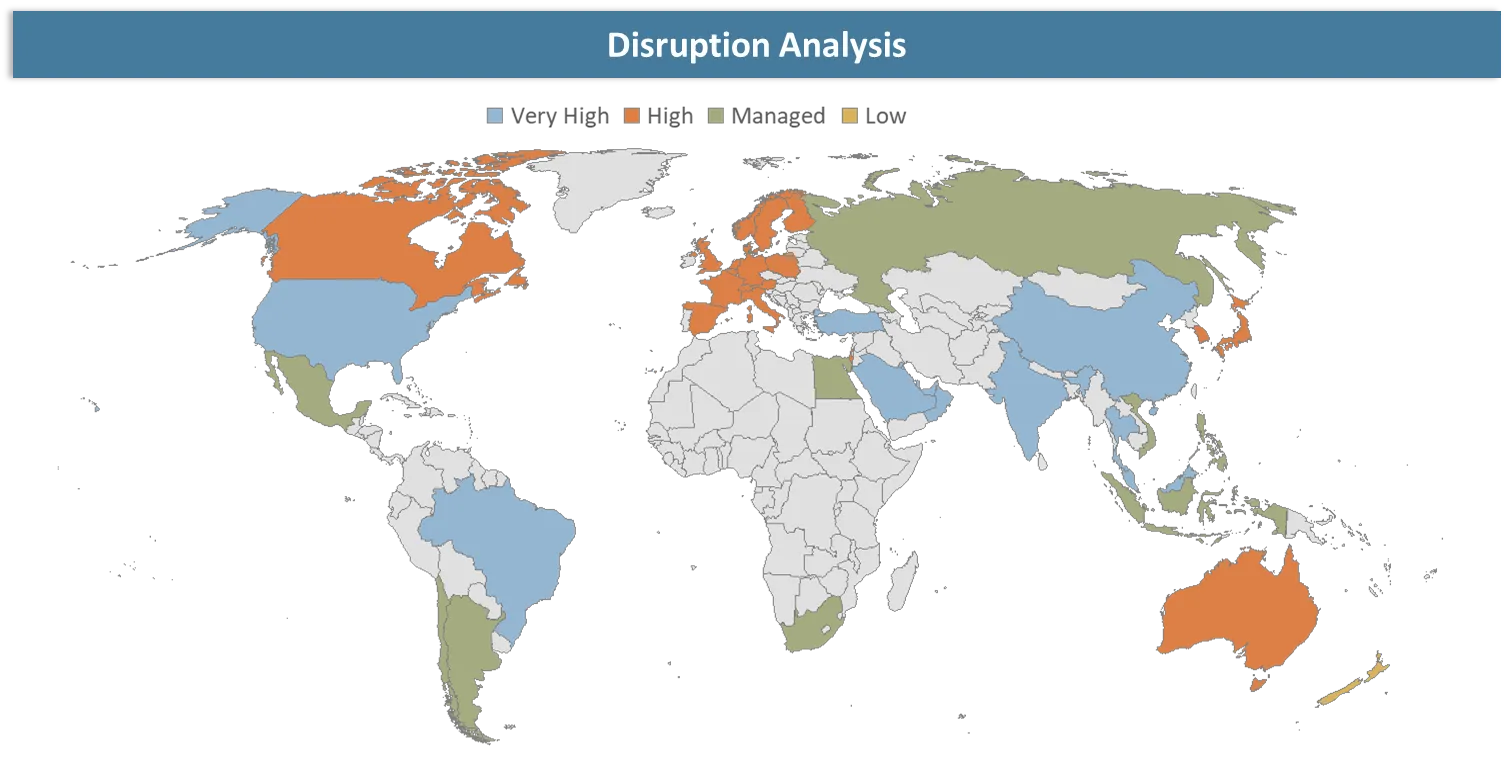
The disruption in the Air Insulated Switchgear (AIS) Market is mostly caused by the growing shift towards SF₆-free switchgear and digitization of substations. Utilities are increasingly shifting from traditional switchgear to smart AIS products, which feature digital protection relays, condition monitoring, remote diagnostics, and communication systems under IEC 61850 protocols, for increasing system reliability, visibility, and maintenance. Meanwhile, the tightening of environmental policies aimed at reducing greenhouse gas emissions is prompting utilities to turn to vacuum interrupters and SF₆-free medium voltage switchgear.
The regulatory environment is intensifying this shift. The European Union F-Gas Regulation (EU) 2024/573 bans the use of SF₆ for the production of new medium voltage switchgear rated 24 kV starting from January 2026, while the restriction extends to equipment rated up to 52 kV by 2030, and pushes utilities into investing in SF₆-free alternatives. Furthermore, Hitachi Energy won the world’s first 550 kV fully SF₆-free gas-insulated switchgear project in 2026, providing technology that cuts CO₂ equivalent emissions of the insulating gas down by 99% when compared to traditional SF₆-insulated switchgear. These innovations are changing the nature of the competition from manufacturing of traditional switchgear to green and digitally connected grid infrastructure.
Air Insulated Switchgear Market BCG Matrix: Company Evaluation

Stars include ABB, Siemens AG, Schneider Electric, and Hitachi Energy because they possess the strongest global market presence across low-, medium-, and high-voltage air-insulated switchgear portfolios and maintain extensive participation in utility transmission, substation modernization, and digital grid projects. These companies continue to strengthen their competitive position through investments in digital substations, IEC 61850-based automation, intelligent protection systems, condition monitoring, and SF₆-free switchgear technologies, enabling them to secure large-scale utility and industrial projects worldwide. Question Marks include GE Vernova, Mitsubishi Electric Corporation, Eaton Corporation, and Toshiba Energy Systems & Solutions.
The Potential category includes CHINT Group and Lucy Electric, which are rapidly strengthening their presence through cost-competitive medium-voltage air-insulated switchgear, expanding international distribution networks, and increasing participation in utility distribution and industrial electrification projects. Tailenders include Fuji Electric and Hyosung Heavy Industries, whose AIS businesses remain comparatively more focused on selected regional markets and specific industrial or utility applications.
Air Insulated Switchgear Market Dynamics
Driver Impact Analysis
| Driver | Market Growth Impact (%) | Demand Concentration | Impacted Use Case | Strategic Impact |
Rising investments in transmission and distribution infrastructure are increasing the deployment of air-insulated switchgear. | 36% | Utilities, Transmission & Distribution (T&D), Grid Operators | New substations, transmission corridors, distribution network expansion, grid modernization | Long-term utility investments and government grid expansion programs drive sustained AIS demand. |
Increasing solar, wind, and battery energy storage installations are creating demand for air-insulated switchgear. | 28% | Renewable energy developers, Independent Power Producers (IPPs), BESS projects | Solar farms, wind farms, battery energy storage systems (BESS), renewable substations | Renewable integration increases medium- and high-voltage switching requirements. |
Expansion of manufacturing facilities, commercial complexes, transportation infrastructure, and smart cities is accelerating the adoption of medium and high-voltage AIS. | 24% | Industrial, Commercial, Infrastructure, Smart Cities | Industrial plants, metro & rail systems, airports, commercial buildings, smart city distribution networks | Industrialization and urban infrastructure expansion generate continuous demand for reliable power distribution. |
Rising global electricity consumption is encouraging utilities to expand and reinforce power distribution networks using air-insulated switchgear. | 22% | Utilities, Distribution Companies (DISCOMs), Municipal Power Networks | Distribution substations, feeder expansion, urban and rural electrification | Growing electricity demand accelerates distribution network reinforcement and replacement of aging assets. |
Adoption of intelligent protection relays, digital monitoring, and substation automation is increasing the installation of advanced air-insulated switchgear. | 18% | Digital Utilities, Smart Grid Operators, Industrial Facilities | Digital substations, IEC 61850 automation, predictive maintenance, remote monitoring | Digitalization increases the value and adoption of advanced AIS solutions with intelligent monitoring and automation capabilities.
|
Rising investments in transmission and distribution infrastructure are increasing the deployment of air-insulated switchgear
Rising investment in transmission and distribution (T&D) grids is one of the primary factors that are driving the adoption of Air Insulated Switchgear (AIS). The governments and the utility sector are constantly working on the upgrading and expansion of electrical grids to fulfill rising power needs and incorporate renewable energy sources, thereby increasing the demand for medium- and high-voltage air-insulated switchgear. As a result of its cost efficiency and maintenance and operational reliability, AIS remains the preferred choice of equipment for outdoor substations and T&D systems where land is readily available.
There is a considerable increase in spending on electrical transmission and distribution systems as an effort to upgrade existing power grids and integrate renewable energy sources. In July 2025, according to the Department of Climate, Energy and the Environment (Government of Ireland), the Irish Government has provided a budget of USD 4.1 billion (€3.5 billion) in investments in the electricity infrastructure of the country for the period 2026–2030, which is the largest ever made for the development of the Irish electric power grid infrastructure. The budget is split between USD 1.7 billion (€1.5 billion) for ESB Networks and USD 2.3 billion (€2 billion) for EirGrid for increasing the grid capacity, as well as developing and modernizing its onshore and offshore transmission and distribution infrastructure, supporting grid resilience, renewable energy integration, and the country's target of achieving 80% renewable electricity by 2030. This huge grid development project will boost the requirement for high-voltage electrical equipment like AIS in the country.
Restraint Impact Analysis
| Restraint | Drag on Market Growth (%) | Primary Impact Area | Impacted Use Case | Strategic Impact |
The larger physical footprint of air-insulated switchgear restricts its deployment in urban substations and land-constrained infrastructure projects. | 10% | Urban substations & space-constrained installations
| Metro rail, airports, commercial districts, underground substations | Encourages adoption of compact switchgear technologies in land-limited projects, reducing AIS deployment opportunities. |
Growing adoption of compact GIS and hybrid switchgear in metropolitan and industrial applications is reducing the addressable market for conventional AIS. | 11% | Technology substitution | Urban transmission substations, industrial facilities, smart city projects | Intensifies competition from compact alternatives, particularly in high-value urban infrastructure projects. |
Fluctuations in raw material prices increase manufacturing costs and affect project profitability for AIS manufacturers. | 7% | Manufacturing & procurement costs | Utility procurement, EPC projects, industrial installations | Compresses manufacturer margins, increases bid prices, and delays procurement decisions during periods of commodity price volatility. |
Manufacturing high-voltage air insulated switchgear requires significant investment in production facilities, testing laboratories, and quality assurance systems, creating barriers for new entrants. | 6% | Manufacturing capacity & market entry
| High-voltage utility switchgear manufacturing | Limits entry of new manufacturers, reinforcing the dominance of established global players with certified production capabilities. |
The larger physical footprint of air-insulated switchgear restricts its deployment in urban substations and land-constrained infrastructure projects
One of the major restraints limiting the expansion of the Air Insulated Switchgear (AIS) Market is the large footprint required for installation in comparison to compact gas-insulated switchgear (GIS). In the case of air-insulated switchgear, air is used as the insulating material; therefore, larger electrical clearances and larger substation sizes are needed to provide sufficient spacing. For this reason, air-insulated switchgear is not applicable in areas with crowded cities, underground substations, commercial areas, transportation areas, and industries where there is no availability of space.
The significant land requirement associated with AIS switchgear continues to be a critical drawback in densely inhabited areas, where space availability is restricted and costly. In March 2026, according to EEPower, Gas-Insulated Substations (GIS) can reduce the required substation footprint by approximately 70-90% compared to traditional Air-Insulated Substations (AIS) that operate at the same voltage level and perform similar functions. According to the article, the reason why the size of AIS is much bigger is that the technology needs larger electrical clearance between energized parts since it uses air as an insulator. Therefore, GIS is a preferable alternative in the case of urban or indoor infrastructure installations, while AIS can be applied in rural areas where there is enough inexpensive land.
Air Insulated Switchgear Market Segment Analysis
The global Air Insulated Switchgear market is segmented based on voltage, installation, current type, component, end user, and region.
Large-Scale Grid Expansion and Utility Substation Deployment Driving Outdoor Installation Demand
The outdoor installation segment dominates the Air Insulated Switchgear (AIS) market with a global market share of 74.2% in 2025. This is attributed to the widespread use of outdoor substations in power grids, utility-scale renewable energy generation facilities, and industries. Outdoor AIS switchgear has become popular for applications at medium voltage and high voltage levels due to its economic benefits, easy maintenance, reliability, and capability to handle heavy electrical loads in outdoor conditions. Increased investments being made in modernizing power grids and expanding renewable energy sources will further drive the installation of outdoor air-insulated switchgear, thus making it the largest installation segment.
According to the International Energy Agency IEA’s ‘Renewables 2025’ report, the total capacity of global renewable electricity generation is expected to grow by around 4,600 GW in the period from 2025 through 2030, which will be almost double the additions in the period between 2019 and 2024, with utility-scale solar power responsible for almost 80% of these new capacity additions. The massive construction of utility-scale renewable energy projects is accompanied by large infrastructure works and outdoor substations, thus making outdoor air-insulated switchgear the most viable option for integration with the grid. Consequently, utilities across Asia-Pacific, North America and Europe are accelerating the deployment of outdoor AIS to support renewable energy integration and transmission network expansion, reinforcing the dominance of the outdoor installation segment.
Air Insulated Switchgear Market Geographical Penetration
Grid Modernization and Large-Scale Power Infrastructure Expansion Driving Asia-Pacific Leadership
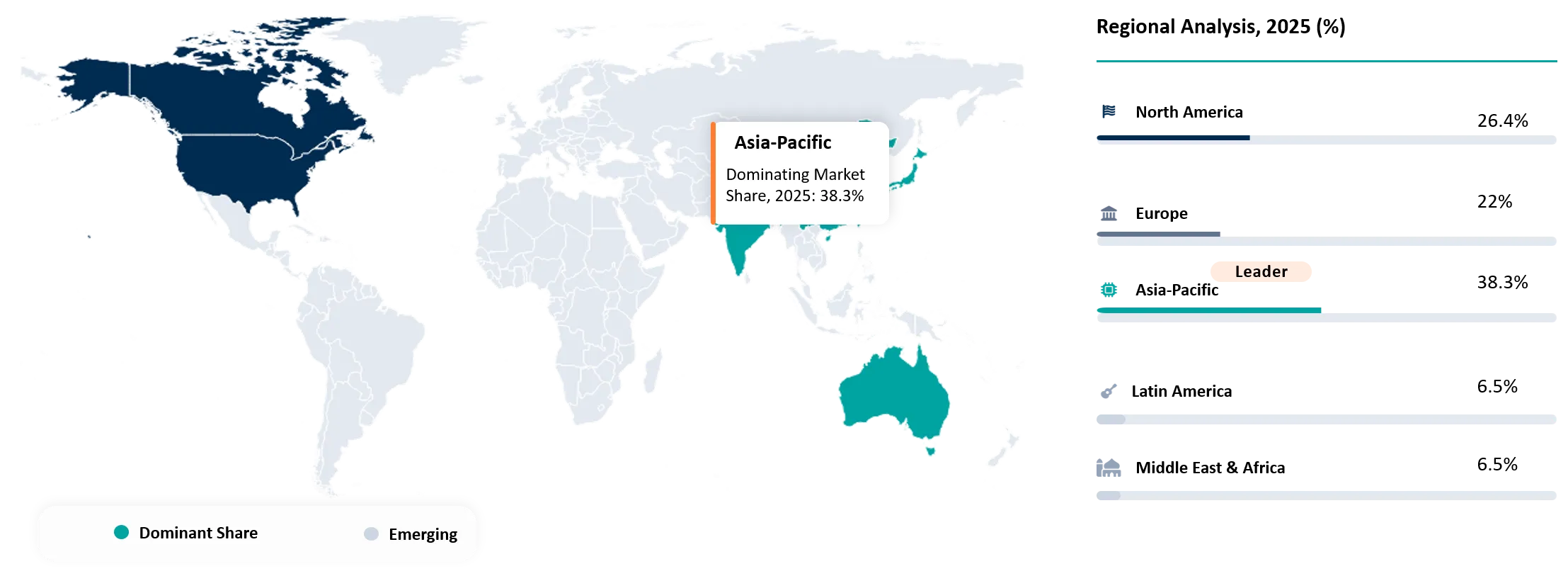
The Asia-Pacific region dominates the Air Insulated Switchgear Market, representing 38.31% of the market share in 2025. The dominance of the region in the market is attributed to huge investments in the development of power transmission and distribution, fast industrialization, and the increased adoption of renewable energy sources in China, India, Japan, and Southeast Asia. According to the International Energy Agency (IEA), emerging market and developing countries accounted for 80% of global electricity consumption in 2025, with 58% attributed to China. The increase in the usage of electricity results in the expansion of substations and transmission networks, leading to demand for AIS.
The strategic decision by ABB to invest in India augments the existing framework in India in terms of the manufacture of electrical equipment and helps meet the increasing need for modern infrastructure. In March 2026, ABB Ltd. announced an investment of approximately USD 75 million in India that will be channeled into manufacturing and R&D improvements in vital electrification, automation, and industrial sectors. The investment is focused on strengthening manufacturing capabilities in Bengaluru, Hyderabad, Nashik, and Vadodara, with the highest investment in Nashik (USD 22 million) geared towards boosting production of indoor and outdoor circuit breakers and manufacturing of vacuum interrupter capacity followed by Bengaluru (USD 35 million total in facilities) where the investments will go into manufacturing of electrification, power protection, converter, and advanced technology products.
China Air Insulated Switchgear Market Trends
China holds a dominant position in the Asia-Pacific Air Insulated Switchgear (AIS) market, owing to its well-established transmission and distribution network infrastructure, strong domestic electrical equipment manufacturing base, and constant investments being made towards upgrading the grids for accommodating the increasing renewable energy generation and demand for electricity. The country’s wide-ranging use of UHV transmission lines, substations, and smart grid projects has played a vital role in accelerating the penetration of air-insulated switchgear in the medium to high voltage range. In January 2026, according to Reuters, State Grid Corporation of China (SGCC) announced an investment of CNY 4 trillion (USD 574 billion) in the period from 2026 to 2030, marking a 40% increase from the previous five years. The company plans to invest an average of USD 111.2 billion (CNY 800 billion) per year, surpassing its record investment of USD 90.4 billion (CNY 650 billion) made in 2025, along with its plan to boost cross-province and cross-region power transmission by 30% over the level in 2025 by developing more high-voltage transmission and distribution networks.
Increasing Siemens Energy’s capacity for producing high-voltage switchgear in China helps improve the power infrastructure ecosystem in the area amid rising demand for sophisticated grid technology. In June 2025, Siemens Energy AG, a Germany-based energy technology and power infrastructure company, began constructing a new plant for its SHVS division – Siemens High Voltage Switchgear Ltd., which operates in Shanghai, China. The new plant will be situated in the Minhang Economic and Technological Development Zone of Shanghai, China, and the new plant area is expected to take about 3 hectares; it will go into operation in mid-2026. This facility is expected to function as a global production and R&D facility dedicated to developing gas-insulated metal-enclosed switchgear (GIS), which is environmentally friendly.
Japan Air Insulated Switchgear Market Outlook
Japan is one of the leading countries in the Asia-Pacific Air Insulated Switchgear (AIS) Market due to the consistent modernization of its transmission and distribution systems, electricity demand growth from semiconductor production and data centers, and robust investment in the grid in order to integrate renewable energy sources. Japan's sophisticated electrical equipment production environment and the refurbishment of old substations will further fuel the installation of medium and high voltage air-insulated switchgear. According to Reuters, the Organization for Cross-regional Coordination of Transmission Operators (OCCTO), Japan's electricity demand is expected to grow by 5.3% in the coming decade as a result of the growing number of AI data centers and semiconductor plants.
Strategic partnering by Vestas with Japanese electrical equipment vendors enhances the offshore wind energy value chain. In April 2025, Vestas Wind Systems A/S, a Denmark-based wind turbine manufacturing company, strengthened its collaboration with Japanese suppliers in the offshore wind energy supply chain. The company entered into a Memorandum of Understanding (MOU) with the Japanese electrical equipment, automation, and power systems company Mitsubishi Electric Corporation regarding the development and supply of domestic switchgear for offshore wind turbines designed for the global market and Japan’s Oga–Katagami–Akita City offshore wind energy project. Vestas also entered into a Letter of Intent with the Japanese company Fuji Electric Co., Ltd., an energy equipment, power electronics, and semiconductor manufacturer.
Grid Modernization and Utility Infrastructure Investments Strengthen North America’s Position
The North America market accounted for 26.45% of the global Air Insulated Switchgear (AIS) Market in 2025, driven by extensive investments in transmission and distribution infrastructure, replacement of aging substations, and increasing renewable energy integration across the United States and Canada. Rising electricity demand from data centers, manufacturing facilities, and electrification initiatives has accelerated utility spending on grid modernization projects requiring medium- and high-voltage air-insulated switchgear. Continued investment in resilient substations and transmission upgrades is expected to sustain the region's strong demand for air-insulated switchgear.
With the growing need for resilient power distribution infrastructure, data center investments, and grid modernization efforts, there is an increase in manufacturers’ production capacity of switchgear in North America. In November 2025, Schneider Electric SE, a France-based energy management and automation company, inaugurated its first manufacturing plant of more than 500,000 square feet in Mt. Juliet, Tennessee, in the U.S. This manufacturing facility is part of an expansion of two plants of Schneider Electric SE. While one has been operational since January 2019, the other is under development and is expected to be more than 540,000 square feet. The manufacturing facility produces AIS, GIS, and shielded solid insulation systems to meet the increased demands in North America.
U.S. Air Insulated Switchgear Market Trends
The U.S. is in a dominant position in the North American Air Insulated Switchgear (AIS) Market owing to its large-scale investments in transmission and distribution infrastructure, modernization of aging substations, and rapid growth in electricity demand from AI data centers, advanced manufacturing, and industrial electrification. The presence of leading utilities, established electrical equipment manufacturers, and supportive federal funding programs has accelerated the deployment of medium- and high-voltage air-insulated switchgear across utility, commercial, and industrial applications.
The rapid growth in AI data center expansion, grid infrastructure upgrades, and the electrification of industries has increased the need for medium voltage switchgear in the country. In April 2026, Eaton Corporation plc, an Ireland-based intelligent power management company, announced an investment of more than USD 30 million in establishing a new factory building with a floor area of 370,000 square feet in Bellevue, Nebraska, U.S. The plant will manufacture medium voltage AIS and GIS products, and production will start in the first half of 2027. This expansion will provide employment for over 200 people in the field of engineering and production to increase manufacturing capabilities in the United States due to growing demand from AI data centers, utilities, and industrial power distribution companies.
Air Insulated Switchgear Market Competitive Landscape
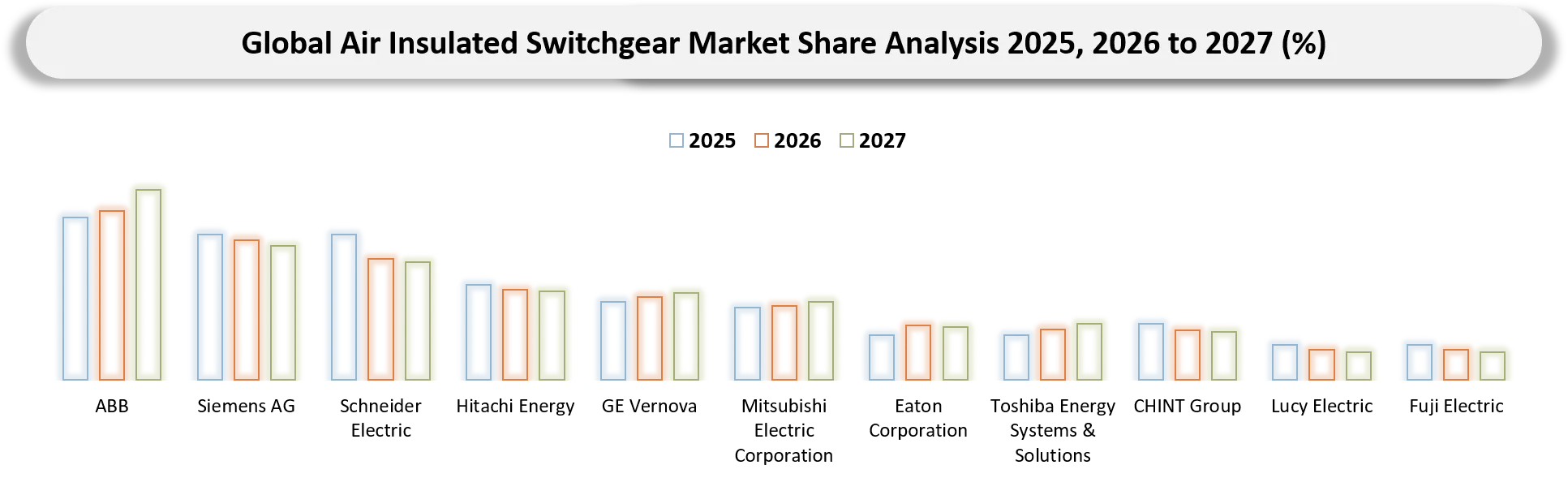
- The Air Insulated Switchgear (AIS) Market is characterized by three major participant groups: global power equipment manufacturers, grid infrastructure and transmission technology providers, and regional electrical equipment manufacturers. Companies such as ABB, Siemens AG, Schneider Electric, Hitachi Energy, GE Vernova, and Mitsubishi Electric Corporation dominate the market through comprehensive portfolios spanning medium- and high-voltage AIS, digital substations, protection & control systems, and grid automation solutions. Regional manufacturers including CHINT Group, Lucy Electric, Fuji Electric, Hyosung Heavy Industries, Toshiba Energy Systems & Solutions, and Eaton Corporation strengthen competition by offering localized manufacturing, customized switchgear solutions, and strong utility relationships across Asia-Pacific, Europe, the Middle East, and North America. The market remains moderately consolidated, with the top five manufacturers collectively accounting for an estimated 51.2% of the global Air Insulated Switchgear market revenue in 2025, driven by long-term utility contracts, technological capabilities, and global manufacturing footprints. Increasing investments in digital substations, renewable energy integration, and transmission expansion during 2025–2026 continue to intensify competition through product innovation and strategic partnerships.
- Key players include ABB, Siemens AG, Schneider Electric, Hitachi Energy, GE Vernova, Mitsubishi Electric Corporation, Eaton Corporation, Toshiba Energy Systems & Solutions, CHINT Group, Lucy Electric, Fuji Electric, and Hyosung Heavy Industries.
Key Developments
- May 2026: ABB Ltd., a Switzerland-based electrification and industrial automation company, announced an investment of USD 200 million over three years to expand its medium-voltage manufacturing capabilities across Europe.
- October 2025: CG Power & Industrial Solutions Ltd., an India-based electrical engineering and power equipment company and part of the Murugappa Group, announced an investment of approximately USD 89 million (₹748 crore) to establish a new greenfield switchgear manufacturing facility in Western India.
- July 2026: Siemens AG, a Germany-based technology and industrial automation company, announced an investment of USD 341 million (€300 million) to expand its electrical switchgear manufacturing capacity in Germany.
Key Procurement Priorities and Buyer Evaluation Criteria
- As organizations continue to make investments into the AIS market, they are becoming more selective of vendors who can provide them with highly dependable, compliant, cost-effective, and long-lasting switchgear that is also low on maintenance and suitable for digital substations and smart grid applications.
- Increasingly, procurement decisions are becoming more determined by the increasing use of renewable energy projects, grid upgrade activities, network expansion initiatives, industrial electrification activities, and digitally enabled power systems infrastructure. Buyers favor suppliers that can provide support for medium voltage and high voltage operations, and also ensure compatibility with intelligent protection systems.
- Buyers assess suppliers on electrical performance, ability to handle short circuit interruption, dielectric strength, safety in operation, resistance to the environment, conformity with IEC and IEEE standards, lifecycle cost of products, and the availability of digital monitoring and predictive maintenance capabilities. Performance in large-scale utility transmission and distribution applications is an important factor too.
Why Choose DataM?
- Grid Modernization & Technology Innovations: Explores advancements in air-insulated switchgear, including digital substations, intelligent protection and control systems, IoT-enabled condition monitoring, arc-resistant switchgear, and eco-efficient designs that enhance grid reliability, operational safety, and asset performance across transmission and distribution networks.
- Product Performance & Market Positioning: Evaluates how leading manufacturers differentiate their AIS portfolios based on voltage range, interrupting capacity, operational reliability, compact design, lifecycle cost, digital integration, and compliance with IEC and IEEE standards, highlighting competitive positioning across utility, industrial, commercial, and renewable energy applications.
- Real-World Evidence: Highlights the deployment of air-insulated switchgear in utility substations, renewable energy parks, industrial facilities, transportation infrastructure, data centers, and urban distribution networks, demonstrating improvements in grid stability, operational efficiency, power quality, and maintenance optimization.
- Market Updates & Industry Changes: Tracks key developments including grid modernization initiatives, transmission and distribution expansion projects, renewable energy integration, government funding programs, digital substation deployments, strategic partnerships, product launches, and manufacturing capacity expansions across Asia-Pacific, North America, Europe, the Middle East, and Latin America.
- Competitive Strategies: Analyzes how leading companies expand their market presence through product innovation, digital switchgear technologies, manufacturing expansion, strategic collaborations with utilities, mergers and acquisitions, localization strategies, and turnkey grid infrastructure solutions to address increasing electricity demand and renewable energy integration.
- Pricing & Market Access: Explains pricing variations based on voltage class, current rating, interrupting capacity, insulation configuration, digital monitoring capabilities, project complexity, and installation type, while evaluating procurement channels through EPC contractors, utilities, OEMs, distributors, and direct manufacturer partnerships.
- Market Entry & Expansion: Identifies growth opportunities driven by grid modernization, transmission infrastructure investments, renewable energy expansion, industrial electrification, smart city development, data center growth, and electrified transportation, while outlining strategies such as localized manufacturing, utility partnerships, digital product differentiation, and expansion into emerging power infrastructure markets.
Target Audience
- Electrical Equipment Manufacturers & Switchgear OEMs
- Power Utilities & Grid Operators
- Renewable Energy Developers
- Industrial & Manufacturing Companies
- Engineering, Procurement & Construction (EPC) Contractors
- Government Authorities & Energy Regulators
- Data Center & Digital Infrastructure Developers


























































