


AI-Enabled Clinical Decision Support Systems Market Size
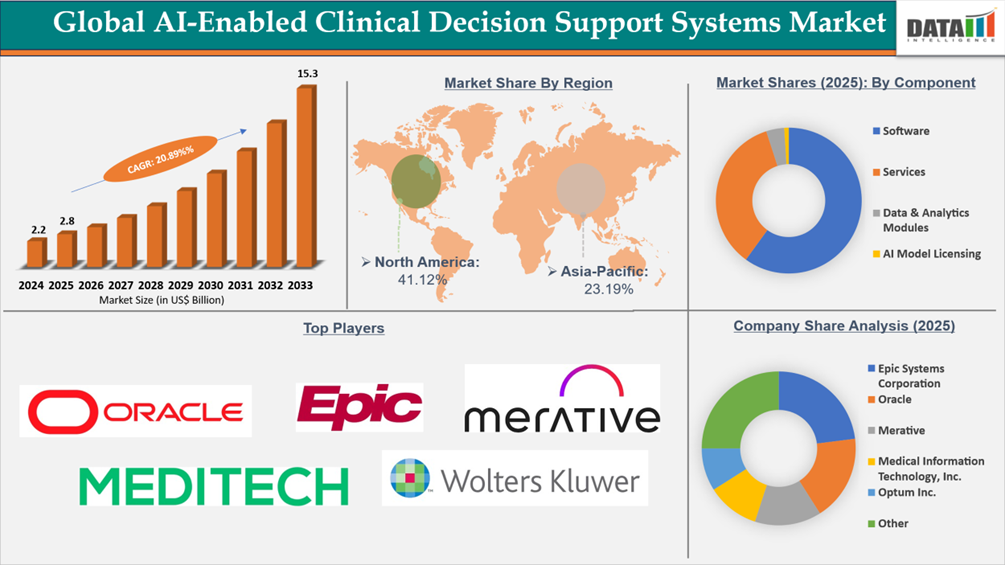
The AI-Enabled Clinical Decision Support Systems (AI-CDSS) Market reached US$2.2 Billion in 2024, rising to US$2.8 Billion in 2025 and is expected to reach US$15.3 Billion by 2033, growing at a CAGR of 20.89% from 2026 to 2033.
The worldwide AI-CDSS market is being driven by the growing need to improve clinical accuracy, minimize medical mistakes, and increase healthcare efficiency because of increased patient numbers and data complexity. Healthcare systems throughout the world are handling growing digital health records, imaging datasets, and real-time monitoring data, resulting in a high need for AI-powered technologies that can translate data into useful clinical insights.
The World Health Organization estimates that drug mistakes cost around US$42 billion per year worldwide, emphasizing the need for enhanced decision support technologies that might improve patient safety. Ouanes et al. (2024) conducted a systematic analysis of 26 clinical investigations and found that AI-CDSS considerably increased diagnosis accuracy, optimized treatment decisions, and reduced medical mistakes in real-world situations.
Value-based care, customized medicine, and outcome optimization are driving healthcare organizations to adopt AI-CDSS solutions as a key element of next-generation clinical workflows, which will maintain growth on a worldwide scale.
AI-Enabled Clinical Decision Support Systems Market Size and Future Outlook
- 2025 Market Size: US$2.8 Billion
- 2033 Market Forecast: US$15.3 Billion
- CAGR (2026–2033): 20.89%
- Dominating Market: North America
- Fastest Growing Market: Asia-Pacific
AI-Enabled Clinical Decision Support Systems Market Industry Trends and Strategic Insights
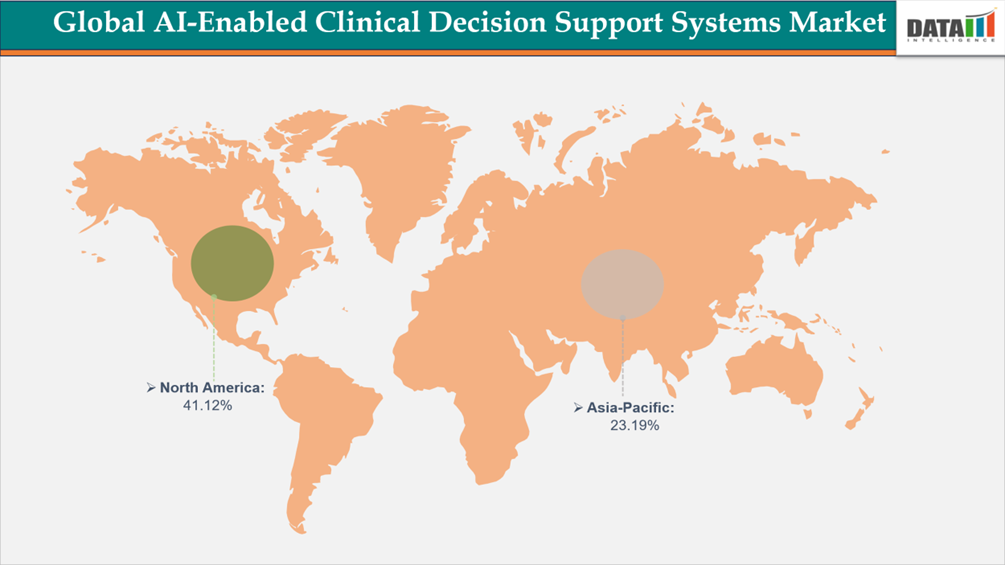
- North America leads the global AI-enabled clinical decision support systems market, capturing the largest revenue share of 41.12% in 2025.
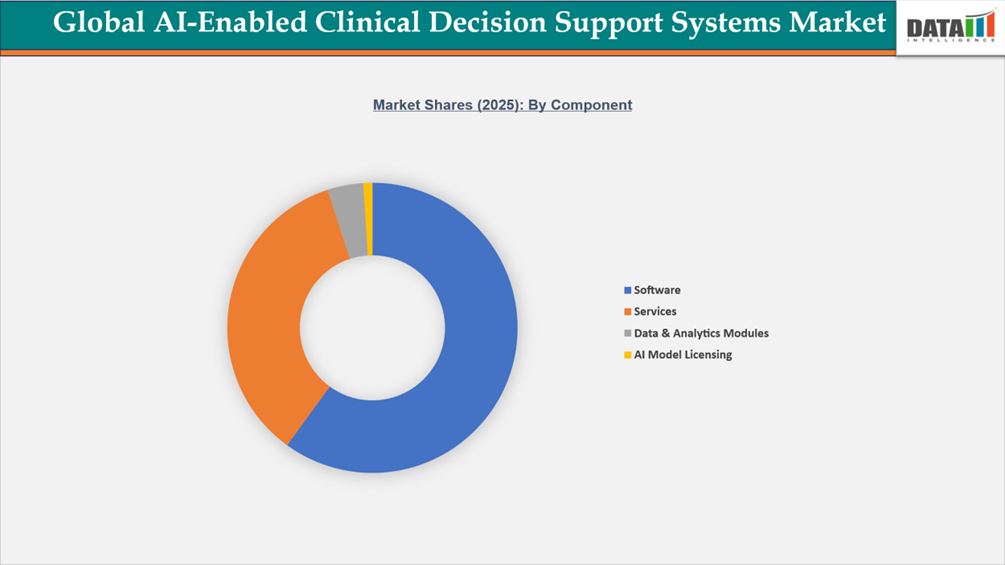
- By component, software led the global AI-enabled clinical decision support systems market, capturing the largest revenue share of 60% in 2025.
Key Takeaways
- Strong market growth: The market is expected to expand rapidly as hospitals and healthcare providers adopt AI tools for diagnosis, treatment planning, and workflow support.
- AI-CDSS is becoming workflow-focused: The biggest value is not just better predictions, but helping clinicians make faster, more consistent, evidence-based decisions.
- EHR integration is a key growth driver: AI-CDSS tools become more useful when connected with electronic health records, lab data, imaging, medication history, and patient-risk profiles.
- Diagnostic support is a major use case: AI can assist in identifying risks, flagging potential errors, supporting differential diagnosis, and improving clinical documentation.
- Trust and explainability matter: Healthcare adoption depends on transparent recommendations, clinician control, regulatory compliance, and clear accountability. The FDA has specific guidance on clinical decision support software oversight.
- Human oversight remains essential: Recent healthcare AI research emphasizes that AI performs best when it supports bounded clinical tasks and clinicians retain final responsibility.
Market Dynamics
Increasing Adoption of AI in Clinical Workflows
The increasing integration of artificial intelligence into clinical processes is a key driver of the worldwide AI-CDSS market. Healthcare practitioners are increasingly relying on AI-powered solutions to improve diagnosis accuracy, optimize treatment planning, and prevent medical mistakes. Integration with EHRs allows for real-time clinical insights, automatic alarms, and predictive risk assessments.
Hospitals and health systems are also implementing AI-enabled clinical decision support systems solutions to enhance operational efficiency, reduce clinician burden, and promote value-based care. AI systems' capacity to evaluate massive amounts of patient data and offer evidence-based recommendations is driving adoption in both developed and emerging healthcare markets.
Ouanes et al. (2024) performed a systematic review of 26 clinical studies and determined that AI-based clinical decision support systems markedly enhance diagnostic accuracy, refine treatment selection, and diminish medical errors, thus improving clinical decision-making and real-world care delivery outcomes.
Data Privacy and Cybersecurity Concerns
The broad adoption of AI-CDSS solutions is severely hampered by cybersecurity threats and data protection laws. Sensitive patient data, such as genetic information, imaging data, test results, and medical histories, is crucial to these systems. Concerns about data breaches, system vulnerabilities, and reputational hazards may cause healthcare providers to delay implementation, which would restrict market expansion in particular areas.
According to Tun et al. (2025), major barriers to AI-enabled clinical decision support systems adoption include algorithmic opacity, insufficient user training, ethical and medicolegal concerns, and limited system validation factors, which significantly undermine healthcare workers' trust and impede successful clinical integration.
Segmentation Analysis
The global AI-enabled clinical decision support systems market is segmented based on component, deployment mode, application, end user, technology type, clinical specialty, data source integration, business model and region.
Software Segment Leads the AI-Enabled Clinical Decision Support Systems Market
About 60% of the global AI-CDSS market's revenue in 2025 will come from the software sector, which leads the industry. The primary factor driving this dominant position is the crucial role played by AI-powered clinical platforms that easily interact with hospital information systems, diagnostic procedures, and Electronic Health Records (EHRs). AI-CDSS software is the key intelligence layer of decision support solutions, offering features like predictive risk scoring, diagnostic help, treatment pathway suggestions, pharmaceutical safety alerts and population health analytics. As healthcare organizations prioritize real-time, data-driven clinical decisions, the need for powerful AI algorithms incorporated in key software platforms has increased dramatically.
The fast spread of EHR integration further strengthens software's dominance. According to research published in the Journal of Medical Internet Research, over 75% of US hospitals would have deployed machine learning functions into their EHR systems by 2024, indicating a considerable institutional investment in AI-enabled decision tools. Because AI capabilities are generally offered via licensed or subscription-based software platforms, revenue concentration is highly skewed towards this market. Furthermore, the segment's market dominance is strengthened by recurring revenue streams from cloud-based installations, modular AI integrations, ongoing software upgrades, and algorithm changes that comply with regulations. In the upcoming years, the software sector is anticipated to sustain its dominant position and propel total market growth as AI models become increasingly complex and integrated into clinical workflows.
3 Fast Growing Use Cases for AI Enabled Clinical Decision Support Systems
Sepsis and Patient Deterioration Prediction
Sepsis and patient deterioration prediction is a fast growing use case because early intervention can prevent intensive care escalation and reduce mortality risk. AI enabled CDSS analyzes vital signs, lab values, medication history and clinical notes to detect risk patterns earlier than manual review. Hospitals are prioritizing this use case because emergency departments and inpatient units face high patient volumes. Growth will be strongest in health systems with integrated EHR data and real time monitoring capability. The market is moving toward continuously updated risk scores that support faster clinical response and better resource allocation.
Medication Safety and Drug Interaction Support
Medication safety is a high growth use case because hospitals face persistent risk from adverse drug events, dosing errors and drug interaction complexity. AI enabled CDSS improves prescribing decisions by analyzing patient history, lab results, allergies and medication combinations. Advanced systems reduce alert fatigue by ranking risks based on clinical relevance instead of generating broad warnings. Growth will be strongest in hospitals with high medication volumes and complex patient populations. The market is moving toward intelligent pharmacy linked decision support that improves dosing accuracy and supports safer prescribing across inpatient and outpatient care.
Oncology Treatment Decision Support
Oncology treatment decision support is expanding quickly because cancer care increasingly depends on biomarkers, genetic data, imaging findings and evolving treatment guidelines. AI enabled CDSS supports therapy selection by aligning patient profiles with evidence based pathways and clinical trial options. This use case is gaining importance as precision oncology becomes more complex. Growth will be strongest in cancer centers and large hospital networks with molecular testing programs. The market is moving toward integrated oncology platforms that combine clinical history, genomic results and treatment guidelines. Systems with transparent logic and guideline linkage will gain stronger physician trust.
Geographical Penetration
Largest Market
Demand for AI-Enabled Clinical Decision Support Systems Market in North America
Due to the extensive use of Electronic Health Records (EHRs) and sophisticated healthcare IT infrastructure, North America is the largest market for AI-CDSS. The smooth incorporation of AI technologies into clinical operations is made possible by high levels of hospital digitalization and interoperability.
Increased use of AI for risk prediction, diagnostic assistance, and pharmaceutical safety is being driven by a growing emphasis on value-based care, patient safety, and workflow efficiency. North America's leadership in the deployment of AI-CDSS is further supported by robust regulatory backing for innovations in digital health and ongoing investments in healthcare AI.
U.S. AI-Enabled Clinical Decision Support Systems Market Outlook
The market for AI-CDSS in North America is primarily expanding in the US due to robust innovation ecosystems and broad acceptance of digital health. As per the United States Office of the National Coordinator for Health IT (2024-2025), more than 85% of office-based physicians and over 96% of non-federal acute care hospitals employ certified EHR systems, allowing for seamless AI integration.
According to research published in the Journal of Medical Internet Research, nearly 75% of U.S. hospitals have incorporated machine learning features within EHR systems in 2024, while federal statistics reveal that 71% of hospitals are utilizing predictive AI models, up from 66% in 2023. The growing emphasis on value-based care, diagnostic accuracy, and workflow efficiency is driving high AI-CDSS demand across the area.
Canada AI-Enabled Clinical Decision Support Systems Market Trends
The AI-CDSS market in Canada is being driven by high digital health adoption and ongoing healthcare infrastructure modernization. According to a 2024 national survey performed by Canada Health Infoway and the Canadian Medical Association, approximately 95% of Canadian physicians utilize electronic records to write and retrieve patient clinical notes, suggesting a robust digital foundation that makes AI incorporation easier. The same poll found that roughly 7% of physicians were already utilizing artificial intelligence or machine learning technologies in clinical practice, up from 2% in 2021, suggesting considerable progress in AI usage.
Ongoing federal and provincial investments in interoperable health systems, along with rising demand for care efficiency and better patient outcomes, are hastening the adoption of AI-CDSS solutions in hospitals and primary care networks.
Fastest Growing Market:
Asia-Pacific Records the AI-Enabled Clinical Decision Support Systems Market
Asia-Pacific is the fastest-growing region in the worldwide AI-CDSS market, owing to rapid healthcare digitization, expanding hospital IT infrastructure, and national AI plans that promote clinical innovation. AI incorporation into clinical operations is being accelerated by increased adoption of electronic health records (EHRs) and investment in smart hospital programs.
Nguyen et al.'s 2025 systematic review, published in the Journal of Medical Internet Research, analyzed 27 studies conducted between 2020 and 2024 and found that AI-CDSS tools were being implemented more widely across Asia-Pacific hospitals, particularly in tertiary and urban centers, with growing clinician acceptance and institutional investment in diagnostic and risk prediction applications. These trends, along with increased chronic illness burdens and manpower restrictions, place the Asia-Pacific as the fastest-growing area in the worldwide AI-CDSS market.
India AI-Enabled Clinical Decision Support Systems Market Insights
The market for AI-CDSS in India is quickly rising, owing to growing digital health infrastructure and more clinician involvement with AI technologies. Thorakkattil et al. (2025) stated that AI-driven CDSS solutions in Indian healthcare settings are gaining popularity for improving clinical accuracy, reducing medical errors, and strengthening evidence-based decision-making, especially when integrated with Electronic Health Record (EHR) platforms.
According to a 2025 industry survey study, almost 40% of doctors in India reported utilizing AI tools in clinical practice, showing a considerable year-on-year growth and the rapid integration of AI applications, particularly decision support systems, into conventional workflows.
Government efforts such as the Ayushman Bharat Digital Mission and the establishment of national centers of excellence for AI in healthcare are improving the AI innovation ecosystem by supporting the integration of AI-CDSS into telemedicine platforms and hospital systems.
China AI-Enabled Clinical Decision Support Systems Market Growth
The market for AI-CDSS is growing quickly in China due to rising clinician use of AI technology and government digital health initiatives. 450 clinical doctors from 27 provinces participated in a survey study conducted by Zhang et al. in 2025 in China. The study found that performance expectancy, effort expectancy, and personal innovativeness all had a significant impact on physicians' intention to adopt AI-CDSS, indicating a growing readiness to incorporate AI-driven decision support into clinical practice.
China is positioned as a high-growth market for the deployment of AI-CDSS in the Asia-Pacific region due to its growing popularity among healthcare professionals and strengthening hospital digitalization.
Competitive Landscape
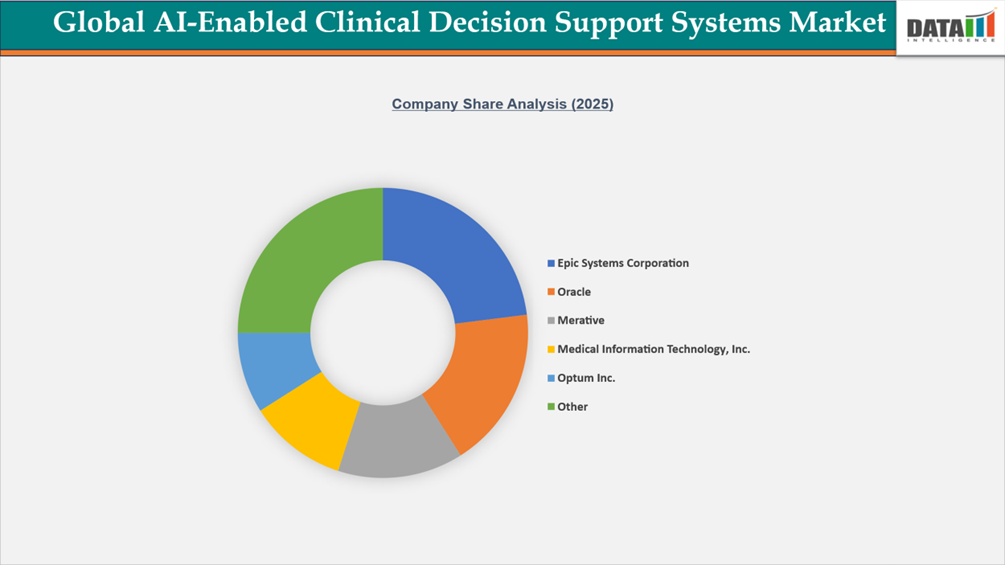
The Global AI-Enabled Clinical Decision Support Systems Market is fiercely competitive, with Epic Systems Corporation, Oracle, Merative, Medical Information Technology, Inc., Optum Inc., athenahealth, Inc., Siemens Healthineers AG, Wolters Kluwer N.V., GE HealthCare, and Veradigm LLC all actively advancing AI integration across clinical workflows. These organizations stand out with robust EHR connections, predictive analytics, cloud-based architectures, and evidence-based decision support systems.
Growing physician involvement with AI-enabled clinical decision support systems solutions fuels market momentum. A systematic analysis of 67 hospital-based studies, conducted by Nguyen et al. (2025), indicated that clinician adoption and sustained usage of clinical decision support systems improve when systems demonstrate great therapeutic value and smooth workflow integration. This demonstrates that providers who prioritize usability, interoperability, and organizational alignment are better positioned to improve uptake and long-term market penetration.
Healthcare systems are increasingly competing to provide clinically validated, workflow-embedded, and user-friendly AI solutions that enhance patient outcomes and strengthen provider confidence as they accelerate digital transformation and value-based care initiatives.
Key Developments
- At the HIMSS APAC 2025 conference, GuidelineX introduced its next-generation AI-native clinical decision support system, which is fully connected with hospital information systems. According to business statistics, the platform achieved 91% physician approval of AI-generated recommendations, 58% improvement in sepsis diagnosis, and an average of 18 hours earlier identification of acute kidney injury (AKI) across clinical deployments across Asia-Pacific.
- In June 2025, AESOP Technology announced a collaboration with Tungs' Taichung MetroHarbor Hospital in Taiwan to develop an AI-powered clinical decision support system (CDSS) that integrates real-world data (RWD) from sources such as electronic health records, insurance claims, and wearable devices to improve medication safety and clinical decision-making. During a year-long trial analyzing over 438,000 prescriptions, the system generated over 10,000 actionable recommendations and received nearly 60% physician acceptance, demonstrating improved precision, lower inappropriate medication risks, and better patient safety outcomes in real-world clinical settings.
Major Recent AI Enabled CDSS News
- In January 2026, FDA updated its Clinical Decision Support Software guidance and clarified how certain clinical decision support functions are reviewed. This directly affects AI enabled CDSS vendors because product classification, clinician review level, explainability and intended use now carry higher commercial importance.
- In June 2026, Mayo Clinic and Microsoft announced a healthcare AI collaboration focused on frontier models that can support clinical reasoning, earlier diagnosis and personalized treatment decisions. This signals that CDSS is moving toward enterprise grade clinical intelligence platforms with stronger data integration.
- In June 2026, Nvidia and Abridge partnered to build a healthcare specific AI model for clinical conversations and workflow support. This shows that CDSS is converging with ambient documentation, where real clinical context can strengthen decision support quality.
AI Enabled CDSS Clinical Workflow Integration Analysis
AI enabled CDSS adoption is moving from isolated alerts into embedded clinical workflow support. Hospitals are using AI to improve diagnosis accuracy, treatment planning, medication safety and patient risk identification. The strongest adoption occurs when CDSS tools are directly integrated with electronic health records and physician order entry systems. Standalone tools create low engagement because clinicians must leave their workflow to access recommendations. Integrated systems deliver higher value by generating real time alerts, risk scores and evidence based recommendations at the point of care. The most attractive deployments are in large hospitals and health systems with high patient volume and mature digital infrastructure. Clinical workflow integration will become the core adoption filter because AI recommendations must be timely, explainable and usable within daily decision making. Vendors with strong EHR connectivity and low alert fatigue will gain the strongest market position.
AI Enabled CDSS Specialty Use Case Prioritization Analysis
AI enabled CDSS demand is strongest in specialties where decision complexity and clinical risk are high. Oncology, cardiology, emergency care and infectious disease are becoming priority adoption areas because patient data volume is large and decisions require rapid interpretation. Oncology CDSS supports treatment pathway selection and biomarker based therapy alignment. Cardiology CDSS supports risk stratification, early deterioration detection and treatment escalation. Emergency care CDSS supports triage and time sensitive decision support. Infectious disease CDSS supports antimicrobial stewardship and sepsis identification. The market is shifting toward specialty specific systems because generic alerts have weaker clinical impact. Specialty focused CDSS platforms can deliver higher physician trust by using disease specific logic and validated clinical pathways. Growth will concentrate in areas where AI reduces decision burden and supports measurable outcome improvement.
Why is There a Lack of Physician Trust in AI Enabled CDSS?
Physician trust is the central adoption barrier in AI enabled CDSS. Clinicians will not rely on recommendations that lack clinical reasoning, source transparency or clear evidence linkage. Explainability is becoming a competitive requirement because hospitals need to understand why a recommendation was generated and how it fits patient history. Black box outputs create resistance in high risk clinical settings. Strong CDSS platforms show key data inputs, clinical logic, confidence levels and guideline alignment. Trust also depends on validation across diverse patient groups and real world care settings. Systems that reduce false alerts and demonstrate clinical relevance will achieve higher usage rates. Physician adoption will be strongest when AI supports judgment rather than replacing clinical authority. Market leaders will combine accurate prediction with clear reasoning and workflow friendly presentation.
AI Enabled CDSS Clinical Validation Analysis
AI enabled CDSS is moving into a more regulated and evidence demanding phase. Hospitals are placing greater weight on clinical validation, data governance, model monitoring and compliance readiness before deployment. Regulatory expectations are rising as CDSS tools influence diagnosis, medication decisions and treatment planning. Products that provide patient specific recommendations with limited clinician interpretation may face deeper scrutiny than tools offering reference support. Clinical validation is becoming essential across performance accuracy, bias control and safety outcomes. Real world evidence will gain importance as hospitals demand proof that systems improve care quality and reduce risk. Continuous model monitoring is also critical because AI performance can drift as patient populations and clinical practices change. Vendors with strong documentation, audit trails and governance frameworks will gain advantage. The market will increasingly favor clinically validated systems over experimental AI tools.
AI Enabled Clinical Decision Support System Hospital ROI Analysis
The economic case for AI enabled CDSS is built around reduced medical errors, faster decision making, improved care standardization and lower avoidable utilization. Hospitals gain value when CDSS reduces adverse drug events, supports early detection of clinical deterioration and improves treatment appropriateness. ROI is strongest in high volume care settings where small improvements in decision accuracy create large operational impact. Emergency departments, intensive care units and inpatient medicine are high value deployment zones because decision speed affects outcomes and resource use. CDSS also supports value based care by improving adherence to clinical pathways and reducing variation in treatment. The strongest financial returns will come from platforms that lower readmission risk and reduce unnecessary testing. Market adoption will accelerate as hospitals connect AI decision support with measurable quality scores and cost reduction goals.
AI Enabled CDSS Infrastructure Readiness Analysis
Data interoperability is a defining constraint in the AI enabled CDSS market. AI recommendations depend on clean, timely and complete clinical data from EHRs, laboratory systems, imaging platforms and pharmacy systems. Hospitals with fragmented data infrastructure face slower deployment because models cannot generate reliable recommendations without consistent inputs. Cloud based systems are gaining traction because they support scalable analytics and faster updates. On premise deployments remain relevant in hospitals with strict data control requirements. Interoperability standards and API connectivity are becoming critical buying criteria. The most advanced health systems are building unified data layers that allow CDSS tools to operate across departments. Market growth will be fastest where hospitals already have mature EHR adoption and digital governance. Data readiness will separate rapid adopters from facilities that remain stuck in pilot stage.
AI Enabled CDSS Investor White Space Analysis
Investor white space in AI enabled CDSS is strongest in specialty focused platforms, EHR integrated decision engines, real time risk prediction and clinical workflow automation. The most attractive assets have validated algorithms, hospital customer access and clear outcome evidence. Oncology and cardiology platforms are high value because treatment decisions are complex and reimbursement pressure is significant. Sepsis and deterioration prediction tools remain attractive because early intervention can reduce intensive care escalation. Partnerships with EHR vendors and hospital systems are becoming strategic because integration depth determines adoption. M and A activity will favor companies with proprietary clinical datasets, regulatory readiness and scalable deployment models. Investors will prioritize platforms that move beyond alerting into measurable care improvement. Strategic value will concentrate around companies that combine AI accuracy, explainability, clinical validation and enterprise workflow integration.
What You Get Compared with Competitors
| Dimension | Traditional Market Research | DataM Intelligence |
| Product | Static PDF reports covering broad healthcare AI trends with limited depth on CDSS workflows, clinical validation and EHR integration | Custom dashboards for AI enabled CDSS with interactive views across application, component, deployment mode, end user and region |
| Data Age | 6 to 12 months old with historical snapshots of healthcare AI adoption and limited updates on AI CDSS deployments | Living data with continuous updates on clinical AI adoption, regulatory shifts, product launches and hospital procurement activity |
| Engagement | One time transaction with limited follow up after delivery of market size, segmentation and company data | Continuous partnership with analyst support to track hospital adoption, vendor movement, investment activity and procurement triggers |
| Output | Raw market information with limited guidance on AI CDSS strategy and commercialization decisions | Actionable insights with clear recommendations for market entry, product positioning, hospital targeting and investment evaluation |
| Customization | One size fits all syndicated templates with limited tailoring for specialty use case, care setting, deployment model or regional readiness | Tailored solutions through DMI Insights and DMI Connect built around each client context with 81% of our clients choosing a customized solution |
| Market Depth | General coverage of healthcare AI with limited detail on sepsis prediction, medication safety, oncology support and EHR embedded decision tools | Focused intelligence on AI enabled CDSS across use cases, adoption maturity, ROI drivers and white space opportunities |
| Decision Support | Limited ability to compare applications, countries, vendors and procurement readiness in one view | Dashboard based comparison of country opportunity, clinical adoption, vendor positioning and investment attractiveness |
| Investor View | Limited insight into validation strength, clinical workflow moats, partnership models and acquisition potential | Investor focused tracking of specialty platforms, EHR integration depth, regulatory readiness and scalable hospital deployment opportunities |
| Retention | Low chance of re engagement once the report is delivered | Over 35% of our clients are repeat customers due to ongoing updates, customization and long term decision support |
What Sets This Global AI-Enabled Clinical Decision Support Systems Market Intelligence Report Apart
- Latest Data & Forecasts – Comprehensive and up-to-date market intelligence with forecasts through 2033, covering global demand by component, deployment mode, application, end use, with region-wise analysis across North America, Europe, Asia-Pacific, South America, and the Middle East & Africa.
- Regulatory Intelligence – In-depth assessment of global regulatory and compliance frameworks shaping AI-enabled CDSS deployment, including FDA digital health guidance, EU AI Act requirements, HIPAA and GDPR data protection standards, software-as-a-medical-device (SaMD) pathways, clinical validation requirements, algorithm transparency standards, and post-market monitoring obligations.
- Competitive Benchmarking – Structured benchmarking of leading healthcare IT and AI-CDSS vendors based on product portfolios, AI capabilities, EHR integration depth, interoperability standards (FHIR/HL7), geographic presence, strategic partnerships, innovation pipelines, and enterprise adoption footprint.
- Geographic & Emerging Market Coverage – Regional analysis highlighting digital health infrastructure maturity, EHR penetration rates, AI adoption in clinical workflows, reimbursement policies, and government digital health initiatives, with special focus on high-growth markets in Asia-Pacific, Latin America, and the Middle East.
- Actionable Strategies & Cost Dynamics – Strategic insights into AI model commercialization, subscription and SaaS pricing models, integration costs, cybersecurity investments, implementation barriers, clinician training requirements, and return-on-investment (ROI) metrics, supported by perspectives from healthcare CIOs, AI researchers, regulatory advisors, and digital health executives.


























































