
Adsorbents Market Size and Overview
The global adsorbents market reached US$ 5.16 billion in 2025 and is expected to reach US$ 9.11 billion by 2035, growing with a CAGR of 5.84% during the forecast period 2026-2035.
The global market for adsorbents is experiencing strong growth due to the rising requirement for better purification and separation techniques in water treatment, oil and gas, petrochemicals, industrial gases, pharmaceuticals as well as food and beverage and semiconductor production. The rise in demand for adsorbents is also benefiting from rigorous environmental laws aimed at curbing industrial pollution and improving water quality. Approximately 30–35% of total demand is due to the treatment of water and wastewater and 35–40% revenue of the total market comes from activated carbon indicating its widespread use in purification processes.
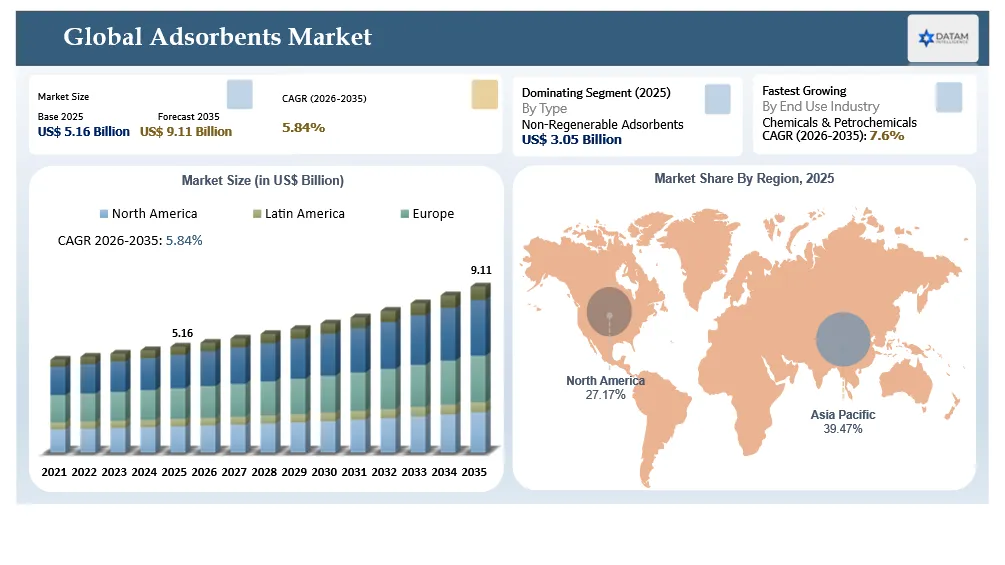
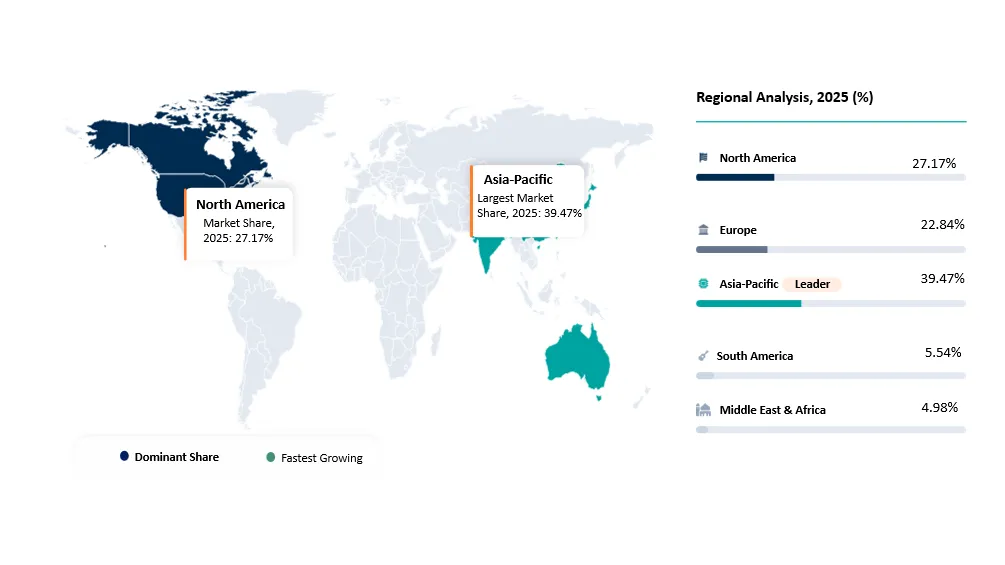
Technological developments in the market include the introduction of regenerative adsorbents for use in upcoming technologies, such as hydrogen purification, CCUS, LNG, industrial gas separation and PFAS. The APAC region consumes more than 40% of the adsorbents globally owing to their rapid industrialization, growing petrochemical industry and environmental infrastructure development in countries such as China, India, Japan and South Korea. Continued development of adsorption technology and investment in green manufacturing and application-oriented technology are likely to positively influence the market's future growth potential.
Adsorbents Market Key Takeaways
- The Water & Wastewater Treatment segment was responsible for 32.4% of the worldwide adsorbent market share in 2025 due to growing investments in PFAS elimination, industrial wastewater and municipal water purification equipment.
- The Regenerable Adsorbents segment is anticipated to grow at a CAGR of 7.8% in the forecast period 2026-2035 because of increasing use of molecular sieves, synthetic zeolites and activated alumina in hydrogen purification, LNG production and industrial gas separation processes.
- Asia-Pacific represented 39.47% share of the global adsorbents market in 2025, due to presence of countries like China, Japan and India because of fast-paced industrial growth, production of petrochemicals, increasing investment in water purification and semiconductors manufacturing.
- Activated Carbon held 38.6% share of the global market in 2025, due to high usage in the fields of water purification, air purification, food processing and other environmental applications.
- High-performance adsorbents enjoy an average premium price of 65% compared to ordinary activated carbon due to their greater adsorption efficiency, regenerability and use in more valuable processes like carbon capture, hydrogen purification and semiconductor fabrication.
Adsorbents Industry Trends and Strategic Insights
- Renewable adsorbent materials are being favored over classic single-use materials, with significant uptake of materials such as molecular sieves, synthetic zeolites, activated alumina in hydrogen purification, LNG processing, industrial gas separation and semiconductor manufacturing as a result of their extended service life and reduced cost of ownership.
- The water treatment sector is gaining momentum as the fastest-growing segment, owing to stricter regulations imposed on PFAS, heavy metals, pharmaceuticals and other emerging pollutants. Thus, demand for high-capacity activated carbon, polymeric adsorbents and specialty ion-exchange materials is is expected to increase.
- The development of clean energy and decarbonizing industry is presenting new sources of income as investments in hydrogen generation, carbon capture and storage (CCUS), renewable natural gas and sustainable aviation fuel lead to the growing need for advanced absorbents for CO₂ separation and purification.
- The competition is moving from commodity products to custom-tailored adsorbent applications, as producers develop materials that exhibit high levels of selectivity and better regeneration properties along with optimal pore structures suited to industrial applications.
- Strategic expansion is gradually turning its attention towards Asia-Pacific and the Middle East regions because of the fast-paced developments that have occurred in the production of petrochemicals, industrial gases, semiconductors and water supply systems.
Adsorbents Market Scope
| Metrics | Details | |
| 2025 Market Size | US$ 5.16 Billion | |
| 2035 Projected Market Size | US$ 9.11 Billion | |
| CAGR (2026-2035) | 5.84% | |
| Largest Market | North America | |
| Fastest Growing Market | Asia-Pacific | |
| By Type | Regenerable Adsorbents and Non-Regenerable Adsorbents | |
| By Form | Powder, Granules, Pellets, Beads, Extrudates, Sheets, Monoliths and Others | |
| By Nature | Natural Adsorbents and Synthetic Adsorbents | |
| By Pore Structure | Microporous Adsorbents, Mesoporous Adsorbents and Macroporous Adsorbents | |
| By Functionality | Physical Adsorbents (Physisorbents) and Chemical Adsorbents (Chemisorbents) | |
| By End Use Industry | Oil & Gas, Water & Wastewater Treatment, Chemicals & Petrochemicals, Power Generation, Food & Beverage, Pharmaceuticals, Healthcare, Automotive, Electronics & Semiconductors, Mining & Metallurgy, Environmental Services, Packaging Industry and Others | |
| By Distribution Channel | Direct Sales, Distributors & Dealers and Online Sales | |
| By Region | North America | U.S., Canada, Mexico |
| Europe | Germany, UK, France, Spain, Italy, Poland | |
| Asia-Pacific | China, India, Japan, Australia, South Korea, Indonesia, Malaysia, Singapore, Vietnam, Thailand, Philippines, Taiwan | |
| South America | Brazil, Argentina | |
| Middle East and Africa | UAE, Saudi Arabia, South Africa, Israel, Turkiye | |
| Report Insights Covered | Competitive Landscape Analysis, Company Profile Analysis, Market Size, Share, Growth | |
Why does this report matter in 2026?
The global adsorbents industry is at the cusp of an important growth period in 2026 as rising investments in applications such as water and wastewater treatments, hydrogen generation, CCS, LNG plants and semiconductor fabrication are propelling growth. In parallel to this, growing regulatory scrutiny of PFAS contamination, VOC emissions, mercury pollution and wastewater from industries are driving up the demand for advanced adsorbents like activated carbon, molecular sieves, synthesized zeolite and activated alumina.
The report offers actionable data about new demand centers, technology developments, competition, regional expansion prospects and end-use industry needs. It helps manufacturers, investors, distributors and end users understand which applications have good growth prospects and consider potential investments in the fast-growing market characterized by increased importance of sustainability, decarbonization of industry and purification technologies.
Adsorbents Market White Space & Investment Opportunities
- Investment in the commercialization of high-end adsorbents for PFAS remediation and the elimination of emerging contaminants is a promising area since cities and industries will have to develop their water treatment technologies to address the new requirements.
- Increasing the capacity of molecular sieve and synthetic zeolite production for hydrogen, LNG and industrial gases is an attractive field due to growing investments in hydrogen plants, natural gas processing units and air separation plants.
- The development of the latest generation of CO₂ adsorbents for CCUS applications is a valuable area because governments and heavy industries make large investments in the construction of decarbonization projects.
- Sustainable and regenerable adsorption technologies such as low energy-regeneration systems, biological activated carbon and reusable adsorbents will help companies achieve their ESG goals while cutting lifecycle costs for industries.
- Manufacturing operations in the regions of Asia-Pacific, Middle East and North America offer excellent growth prospects in order to cater to the increasing demand from sectors like petrochemicals, semiconductor fabrication, pharma, water purification and environmental cleanup.
Adsorbents Future Market Transformation
In the future, the global adsorbent market is forecasted to shift from being a commodity-based market of materials into a technology-oriented market of purification solutions based on the increasing demand for high-performance adsorbents that can be regenerated rather than on disposable products. Future expansion will depend on the development of new molecular sieves, synthetic zeolites, polymeric adsorbents and other porous materials that will demonstrate enhanced performance in terms of adsorption capacity, selectivity and reduced energy consumption.
The market will see a transformation through the use of digital process control, machine learning-powered adsorption system optimization and regenerative processes, allowing performance tracking and increased service life of the adsorbent material. Companies that are geared towards sustainable manufacturing, production capacity in certain regions, custom adsorption materials and alliances with industrial gas, water purification and renewable energy companies will have an edge due to the changing trend towards low-carbon and efficient purification technology.
Adsorbents Market Buyer Decision-Making Criteria
The selection of products in the adsorbents market is mainly influenced by their adsorbing capacity, selective nature, efficient regenerability and overall lifecycle cost but not their price alone. Customers in various industries like water treatment, oil and gas, industrial gases, semiconductors and pharma consider adsorbents on the basis of their capability of removing particular contaminants in an efficient and constant manner like PFAS, VOCs, CO₂, H₂S, mercury, humidity and heavy metal contamination amidst difficult operating environments.
Moreover, the importance of supplier reliability, technical assistance, product customization, lead time and sustainability is becoming an increasingly important factor in making purchasing decisions. Manufacturers capable of supplying customized adsorbents, long-term purchasing agreements, adsorbent regeneration and reliable product quality are most likely to win such strategic purchasing contracts.
Adsorbents Market Economic & Investment Analysis
Market players in the adsorbents industry can benefit from the continued investments in water and wastewater treatments, natural gas processing, LNG infrastructure, hydrogen manufacturing, semiconductor manufacturing and carbon capture processes, all of which necessitate the use of adsorbents. Asia-Pacific growth in industrialization, Middle East refinery and petrochemical upgrades and greater environmental compliance spending in North America and Europe are leading to stable long-term demand. Simultaneously, higher spending on PFAS cleanup and industrial emissions abatement is boosting the market potential for activated carbon, molecular sieves, zeolites and activated alumina.
When it comes to investments, the manufacturers are focusing more on expanding their capacities, adsorbent innovation and localizing their manufacturing in order to leverage the increasing demands and enhance supply chain stability. The focus for investments has been shifted towards regenerable adsorbents, carbon capture technologies and hydrogen purification technologies which hold better profit margins and future growth prospects. The companies which have diversified product range along with innovative adsorption technology and good technical services are projected to attract investments and become more competitive in the near future.
Adsorbents Investment Trends in the Market
- Production of molecular sieves, zeolites and activated carbon is being scaled up by producers in response to increasing demand generated from applications such as hydrogen purification, liquefied natural gas processing, gas separation and water treatment.
- Development is gaining momentum in advanced regenerable adsorbents that feature greater adsorptive capacity, shorter regeneration time and reduced energy usage, especially those used for carbon capture, hydrogen generation and high purity gases processing.
- More funding is being channeled into research & development of application-specific adsorbents for PFAS purification, volatile organic compound control, mercury capture, pharmaceuticals purification and semiconductor manufacturing.
- Increasing strategic investments in regional manufacturing operations and supply chain localization in the regions of Asia-Pacific, North America and Europe have been observed in order to minimize the dependency on imports, reduce lead times and make themselves resilient from raw materials and logistics disruption.
- Mergers & acquisitions and technology collaborations are on the rise in order to help companies build their specialty adsorbent portfolio and extend their reach in high-growth areas like clean hydrogen, carbon capture and water purification.
Strategic Indicators For Adsorbents Market
High Regulation Impact
The market for adsorbents is subject to significant influence from environmental and industrial regulations regarding air emissions, wastewater, water quality and gas purity. Regulations controlling interactions with particular contaminants, including PFAS, VOCs, mercury and sulfur compounds, arsenic and heavy metals, are resulting in the growing adoption of advanced adsorbents in various applications. The introduction of stricter standards for carbon capture, hydrogen production, semiconductor and food processing and pharmaceutical production is causing increases in the need for reliable molecular sieves, zeolites, activated carbon and activated alumina. With more tightening of regulations on a global scale, companies have started to invest in recyclable, process-specific and environmentally-friendly adsorbents that will meet their needs as well as regulatory requirements.
High Investment Activity
The adsorbents industry is experiencing intense investment trends owing to increased demand from the following sectors: hydrogen production, carbon capture and storage, semiconductors, industrial gas purification and water purification. Top players are ramping up their production of molecular sieves, activated carbon and specialty adsorbents in order to serve high growth industries. The Adsorbents & Additives division of Clariant AG recorded revenues of around CHF 987 million (US$1.2 billion) in 2025, indicating the economic importance of advanced purification products and their innovations.
In addition, firms such as Evonik Industries AG, Honeywell International Inc., Mitsubishi Chemical Group Corporation, Calgon Carbon Corporation and Jalon New Materials have made investments in advanced regenerable adsorbents that are suited to the purification of hydrogen, carbon capture, liquefied natural gas and semiconductor fabrication. More investment in clean energy infrastructure, decarbonization initiatives and advanced water treatment will provide many opportunities for growth in the adsorbents industry.
Supply Chain Disruption
The adsorbent industry is vulnerable to disruption in the supply chain since it relies on important raw materials including coal, coconut husk, silica, alumina, special polymers and rare chemical precursors utilized in producing activated carbon, molecular sieves, zeolites and activated alumina. Tensions between nations, trade restrictions, variations in mining activities and rising energy and transport prices can impede the supplies of the above materials, translate to longer lead time and higher manufacturing costs. The Asia-Pacific region, especially China, Japan and India has a considerable portion of global adsorbent production and raw material processing.
In addition, growing demands coming from industries with rapid growth such as hydrogen purification, liquefied natural gas processing, semiconductors, PFAS remediation and carbon capture are adding further pressure on production and logistics capabilities. To counteract these challenges, producers are engaging in raw materials diversification, setting up manufacturing operations in different regions, keeping reserves in stock and negotiating supply contracts with suppliers of the feedstocks. These efforts have proven to increase the resilience of the supply chain as well as to ensure steady supplies of high-quality adsorbents.
Pricing Volatility
The adsorbents industry suffers from substantial fluctuations in pricing owing to fluctuations in the cost of raw material such as coal, coconut shell, wood, alumina, silica and special chemicals, energy costs, freight and logistics costs. Activated carbon is the leading adsorbent in terms of trade volume; however, it shows a marked difference in pricing in various regions. For instance, in the fourth quarter of 2025, prices of activated carbon stood at about $2,154/MT in the USA, $2,635/MT in Germany, $1,988/MT in India and $1,631/MT in China.
The price fluctuations are additionally affected by the supply-demand mismatches and buying behavior in the water treatment applications, industrial gas purification and environmental applications. For instance, some companies increased their prices on coconut shell activated carbon products by 15 to 20% in 2025 due to rising raw material prices and shortages. The price trends will make manufacturers diversify their feedstocks, improve manufacturing processes and enter into supply contracts to minimize cost fluctuation risks.
Procurement Pressure
There is a moderate to high procurement challenge in the adsorbent market owing to the need for high-quality raw materials, including coconut shells, coal, wood, alumina, silica and special chemicals, which are procured from limited geographical locations. Procurement challenges are further exacerbated by the requirement of buyers within the water treatment, oil & gas, petrochemicals, semiconductor and pharmaceuticals industry segments for adsorption performance and quality certification.
The procurement teams are also faced with the challenge of ensuring that they acquire long-term contracts for the supplies to avoid the risk of prices of raw materials being volatile and hence interrupting their operations. On the other hand, the increase in the demand for sustainability is driving the procurement departments to look for adsorbents that are low on carbon, renewable and sustainably produced. Therefore, it would be easier for those manufacturers who have diversified supply sources.
New Technology Adoption
In the adsorbent market, there is fast technological development due to the use of engineered molecular sieves, high-silica zeolites, superior polymeric adsorbents and MOFs that aim at maximizing adsorption capabilities, enhancing selectivity and improving the process of regeneration. The next generation adsorbents are increasingly being used in hydrogen purification, carbon capture, LNG production, semiconductor manufacturing and the separation of high purity gases for which conventional adsorbents do not meet performance criteria. The manufacturers are also designing adsorbents for particular impurities like PFAS, mercury, VOCs and CO₂.
Concurrently, there has been an emergence of pressure swing adsorption (PSA), vacuum pressure swing adsorption (VPSA) and temperature swing adsorption (TSA) technology in industry, which is complemented by digital monitoring and predictive maintenance technology, for better use of the adsorbent and increasing its lifespan. This technology leads to decreased energy usage, improved regeneration capacity and reduction in operation expenses, thus facilitating a shift from traditional adsorbents to advanced adsorption solutions.
Regional Expansion Opportunity
The region of Asia-Pacific offers considerable potential for the adsorbents industry based on rapid industrialization, increased spending on water and wastewater treatment systems and an expansion of petrochemical and refining facilities in China, Japan, India and South Korea. In addition, the region is seeing significant inputs into the production of hydrogen and manufacturing of semiconductors.
Outside of the Asia-Pacific region, North America and the Middle East present lucrative options for expansion owing to the increased investments in CCS, LNG processing, clean hydrogen and decarbonization of industries. The strict environmental laws regarding PFAS reduction, VOC emissions and wastewater treatment in industrial units are driving the uptake of advanced adsorbents. The firms that increase their competencies in areas like hydrogen purification, PFAS remediation, carbon capture and semiconductor grade gas purification will be able to secure their positions in these areas due to an increasing demand for high-performance regenerable adsorbents in these regions.
Government Policy Support
Policies by governments have been playing an important part in generating demand for adsorbents because of their increasing involvement in regulating water quality, industrial emissions, hazardous waste and air pollution. Policies such as PFAS Drinking Water Standards set by the U.S. EPA, European Union’s Industrial Emissions Directive (IED), European Union’s Drinking Water Directive and China’s Action Plan for Water Pollution Prevention and Control have made it necessary for industries and municipal organizations to use advanced adsorption technology to clean pollutants like PFAS, VOCs, mercury, arsenic and heavy metals from their environments.
Moreover, the governments have been backing the market via investments and incentives related to carbon capture, hydrogen generation, decarbonization of industries and water recycling. The projects launched under the Bipartisan Infrastructure Law of the United States, the Green Deal of the EU, the Green Growth Strategy of Japan and the National Green Hydrogen Mission of India are leading to higher requirements for high-performing adsorbents that can be utilized for gas separation, hydrogen purification, CO2 removal and industrial gas drying purposes.
Pricing Intelligence
The prices of adsorbents are greatly influenced by product effectiveness and applications instead of being determined by market prices. The price of ordinary activated carbon that is used in municipal water treatment plants is estimated to be about US$1,600 to 2,700 per MT, while the cost of special adsorbents like molecular sieves, synthetic zeolites and highly purified activated alumina is around US$3,500 to 8,000 per MT due to higher adsorption capacity and high-value applications.
Companies are turning to value-based and contract-based pricing systems compared to the spot pricing system. Major industrial users in sectors such as oil & gas, industrial gases and petrochemicals usually purchase adsorbent under 1-3 year supply contracts, but customized products for carbon dioxide capture, ultra high purity gases and pharmaceuticals usually command a 15-30% price premium compared to regular commercial adsorbent grades. The pricing strategy allows the producers to sell their adsorbents at higher prices due to better selectivity, lower regeneration loss and better performance in crucial applications like CO₂ capture, hydrogen purification, PFAS elimination and separation of ultra-high purity gases. Those adsorbents that can perform well in conditions of high pressure and high temperatures in petrochemical and LNG processing applications can benefit more from the pricing strategy.
| HS Code | Reporter | Trade Flow | 2025 Trade Value | Interpretation |
380210 (Activated Carbon) | China | Exports | US$ 1.15 Billion | China remained the world's largest exporter of activated carbon, supported by extensive manufacturing capacity and strong demand from water treatment and industrial purification sectors. |
| 380210 | United States | Imports | US$ 540 Million | High import volumes reflect robust demand from municipal water treatment, food processing, pharmaceuticals and environmental remediation industries. |
| 380210 | Japan | Exports | US$ 245 Million | Japan maintained strong exports of high-performance activated carbon for semiconductor, healthcare and industrial gas purification applications. |
| 380210 | Germany | Imports | US$ 215 Million | Germany's imports were driven by stringent environmental regulations and demand from chemical processing, automotive and industrial air purification industries. |
Disruption Analysis of Adsorbents Market
The market for adsorbents is being transformed owing to the shift away from traditional non-reusable adsorption media towards high-performance reusable adsorbents, which provide increased service life and reduce total cost of ownership. Various industries including hydrogen production, liquefied natural gas production, semiconductor fabrication and industrial gas separation are shifting towards the use of molecular sieves, synthetic zeolites, activated alumina and polymeric adsorbents owing to their better selectivity, desiccation properties and contaminant adsorption capabilities than conventional adsorbents. At the same time, increasingly stringent rules for PFAS, mercury, VOCs, sulfur compounds and industrial emissions are increasing the shift away from traditional adsorbents towards industry-specific adsorbents.
Other significant market disruptions include the growing use of carbon capture technology, clean hydrogen generation plants and water recycling systems, thus generating new sources of demand for specialty adsorbents for CO2 capture, gas purification and contaminant removal applications. There is competition not only in terms of manufacturing adsorbers that possess improved capabilities in terms of capturing CO₂, higher regeneration cycles and greater tolerance to the heat and pressure of operations, but there is an increasing trend in terms of customized adsorbent systems developed for a particular process of an industry. It is evident that such approach implies cooperation between the manufacturers of adsorbents, industrial gases, EPC firms and companies specializing in water treatment.
Adsorbents Market BCG Matrix: Company Evaluation
STAR
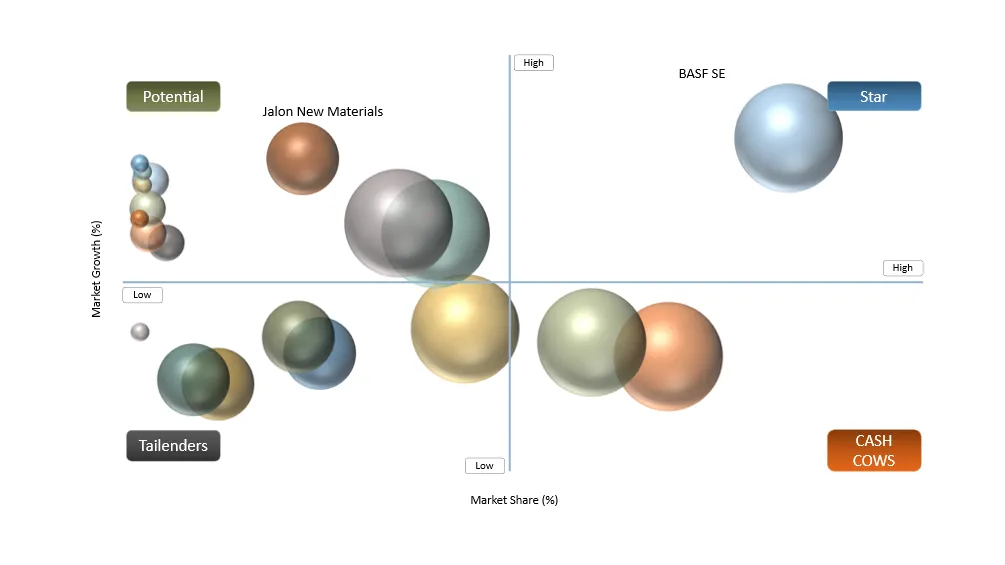
The BASF SE, Clariant AG, Evonik Industries AG, Honeywell International Inc. and Calgon Carbon Corporation are identified as Stars because of the strong presence in the market, well-developed manufacturing and marketing channels around the globe and portfolio that includes such products as activated carbon, molecular sieves, activated alumina, silica gel and other special adsorbents. The companies operate in highly prospective industries of water and wastewater treatment, natural gas processing, petrochemicals, hydrogen purification, pharmaceuticals and environmental remediation. The competitive edge is provided by active participation in innovations, expansions and sustainable development along with advanced production of high-efficiency adsorbents for capturing carbon dioxide, industrial gas separation and purification purposes.
POTENTIAL
Potential players include Jalon New Materials, Zeochem AG, Zeolyst International, Fuji Silysia Chemical Ltd. and Osaka Gas Chemicals Co., Ltd., which can be regarded as such owing to their unique knowledge about adsorption materials and increasing operations in the industrial sector. In particular, these companies are improving their market position by developing synthetic zeolites, molecular sieves, silica adsorbents and activated carbon technology that is applied in hydrogen purification, semiconductors, air separation, LNG treatment and CO2 capture. The growth of their capacity, expansion of distribution channels across the world and development of industry-specific adsorbent products are going to promote their market share growth.
Adsorbents Market Dynamics
Driver Impact Analysis
| Driver | Market Growth Impact (%) | Demand Concentration | Impacted Use Case | Strategic Impact |
Rising Demand for Water and Wastewater Treatment Technologies | 3.80% | High | Municipal water treatment, industrial wastewater treatment, PFAS and heavy metal removal | Accelerates investments in advanced adsorbents, expands treatment capacity and supports compliance with stringent environmental regulations. |
Expanding Use of Adsorbents in Gas Purification and Petrochemical Processing | 3.20% | High | Natural gas processing, LNG, hydrogen purification, refinery operations | Increases demand for molecular sieves, activated alumina and zeolites to improve gas quality and operational efficiency. |
Stringent Environmental Regulations on Industrial Emissions | 2.90% | Medium-High | Air pollution control, VOC removal, mercury removal, carbon capture | Encourages adoption of high-performance adsorption technologies to reduce emissions and meet regulatory standards. |
Growing Adoption of Carbon Capture and Clean Energy Technologies | 2.50% | Medium | Carbon capture, hydrogen production, renewable natural gas and biogas upgrading | Creates new growth opportunities for advanced adsorbents used in CO₂ separation, gas drying and clean energy infrastructure. |
Driver: Rising Demand for Water and Wastewater Treatment Technologies
Concerns regarding resources such as water and pollution caused by various industries has resulted in increased demand for the use of adsorbents in water and wastewater applications. For instance, activated carbon, zeolites, activated alumina and polymeric adsorbents are being increasingly used in industries and municipalities, to eliminate contaminants from water like heavy metals, PFAS, organic compounds, colours and pharmaceutical residues. Additionally, rising amount of funding in wastewater recycling and desalination projects are enhancing market growth further. As governments are taking steps towards imposing stricter standards towards water quality, use of advanced adsorption methods might be increased in both developed and developing economies.
Restraint Impact Analysis
| Restraint | Drag on Market Growth (%) | Primary Impact Area | Impacted Use Case | Strategic Impact |
High Production Costs and Energy-Intensive Manufacturing | 2.40% | Manufacturing Economics | Specialty adsorbents for gas purification and petrochemical processing | Encourages manufacturers to invest in cost-efficient production technologies and optimize manufacturing processes. |
Performance Degradation and Limited Regeneration Cycles | 1.90% | Operational Efficiency | Industrial gas drying, refining and wastewater treatment | Drives innovation in longer-lasting, regenerable adsorbents and advanced regeneration technologies. |
Volatility in Raw Material Prices | 1.60% | Supply Chain & Procurement | Activated carbon, silica gel, activated alumina and molecular sieve production | Promotes supplier diversification, strategic sourcing and development of alternative raw materials. |
Competition from Alternative Separation and Filtration Technologies | 1.30% | Technology Adoption | Water treatment, air purification and chemical separation | Encourages product differentiation, performance enhancement and expansion into high-value specialty applications. |
Restraint: High Production Costs and Limited Regeneration Efficiency
It is important to note that the production of adsorbents like molecular sieves, synthetic zeolites and activated alumina demands the use of some unique materials along with energy-consuming procedures, which makes the production process relatively expensive. Moreover, adsorbents slowly lose their adsorptive properties through regeneration cycles, whereas non-regenerable adsorbents need periodic replacement and hence cause higher operation costs for users. The changing cost levels of some of the raw materials such as coal, coconut shell, silica and alumina also pose financial burden on adsorbents.
Adsorbents Market Segmentation Analysis
The global adsorbents market is segmented based on type, form, nature, pore structure, functionality, end-use industry, distribution channel, and region.
By Type
Cost-Effective Adsorption Solutions Drove the Leadership of Non-Regenerable Adsorbents
The segment of Non-Regenerable Adsorbents held a share of about 59.0% in the worldwide adsorbents market in 2025 because of the wide-ranging applications of activated carbon in applications related to water purification, air purification, food & beverages, pharmaceuticals and emissions from industries. Activated carbon provides efficient absorption properties for organic impurities, volatile organic compounds (VOCs), odor removal, heavy metals and other kinds of impurities at an affordable price point and is available in various grades.
Dominance of the segment is also bolstered by the rising investments in water/wastewater treatment plants and environmental rules that regulate industrial emissions, as well as increasing need for pollution control technologies. Apart from activated carbon, activated charcoal and bleaching earth continue to be widely used for the purpose of environmental cleanup, chemicals processing and food purification. Their efficacy, availability and relatively affordable initial costs keep the segment on top of the adsorbent market worldwide.
By End Use Industry
Growing Demand for Industrial Purification Accelerates the Chemicals & Petrochemicals Segment
The segment of Chemicals and Petrochemicals is set to experience a significant rise at around 7.6% in CAGR from 2026 to 2035. This means this segment will be the most growing sector within the global adsorbents market. The factor responsible for this growth is demand for proper adsorbents in production of ethylene and propylene, ammonia and methanol production, solvent recovery, gas-drying and hydrocarbon purification. Molecular sieves, synthetic zeolites and activated alumina are used actively to get rid of moisture and sulfuric compounds from feedstock and streams used in production process.
Moreover, increased capacity building in petrochemicals, investments in hydrogen production, clean fuels, LNG, industrial gases and growth in the specialty chemicals market are creating huge opportunities for adsorbents manufacturers. The shift of the adsorbents industry towards energy-efficient and emission-free manufacturing process is also leading to an increase in the use of regenerative adsorbents which provide better service life, cost-effectiveness and performance in terms of regeneration. It can be concluded that during the forecast period, the Chemicals & Petrochemicals segment would emerge as the fastest growing end-user industry of the global adsorbents market.
Adsorbents Market Geographical Penetration
U.S. Adsorbents Market Landscape
There exists considerable demand for adsorbents in the U.S. because of industries such as oil and gas, water treatment, waste treatment, industrial gas processing, pharmaceutical and environmental remediation. Activated carbon, molecular sieves, activated alumina and other special adsorbents are being heavily used because of the regulation of pollutants such as PFAS, VOCs and heavy metals in waste water. Also, investments in hydrogen production, liquefied natural gas facilities, carbon capture and storage and semiconductor production have contributed to the emerging popularity of recyclables adsorbents. The strong presence of the major players and investments and developments of advanced purification technologies further boost the U.S. market for adsorbents.
Japan Adsorbents Market Outlook
Japan is technologically sophisticated in terms of being an adsorbent market because of the presence of petrochemicals, semiconductors, electronics, pharmaceuticals and industrial gases industries. Some of the commonly used adsorbents in Japan include molecular sieves, synthetic zeolites, silica gel and activated alumina, which are used in the processing of drying of gases, air separation, solvent recovery and high purity production. Investments in green hydrogen, energy-efficient manufacturing processes and industrial decarbonization are helping in the uptake of regenerable adsorbents. Innovation in adsorptive materials is aiding in developing advanced products for specialized industrial purposes.
China Adsorbents Market Trends
China is one of the leading markets for the consumption and production of adsorbents based on its robust chemical industry, petrochemical industry, refineries, water treatment and manufacturing industry. The fast-growing industries of wastewater treatment plants, natural gas treatment plants, hydrogen manufacturing plants and semiconductors manufacturing plants have increased the demand for activated carbon, molecular sieves, artificial zeolites and activated alumina. The government’s policies related to reduction of emissions from industrial activities, water purification and carbon neutrality have promoted the use of adsorption technology. At the same time, local manufacturers continue increasing their production capacity for high value regenerative adsorbents.
Adsorbents Market Competitive Landscape
- The market is moderately concentrated and the competitiveness is built on product efficacy, absorption capacity, regeneration process and product-specific solutions in the field of water purification, gas purification, petrochemicals, pharmaceuticals and environmental decontamination.
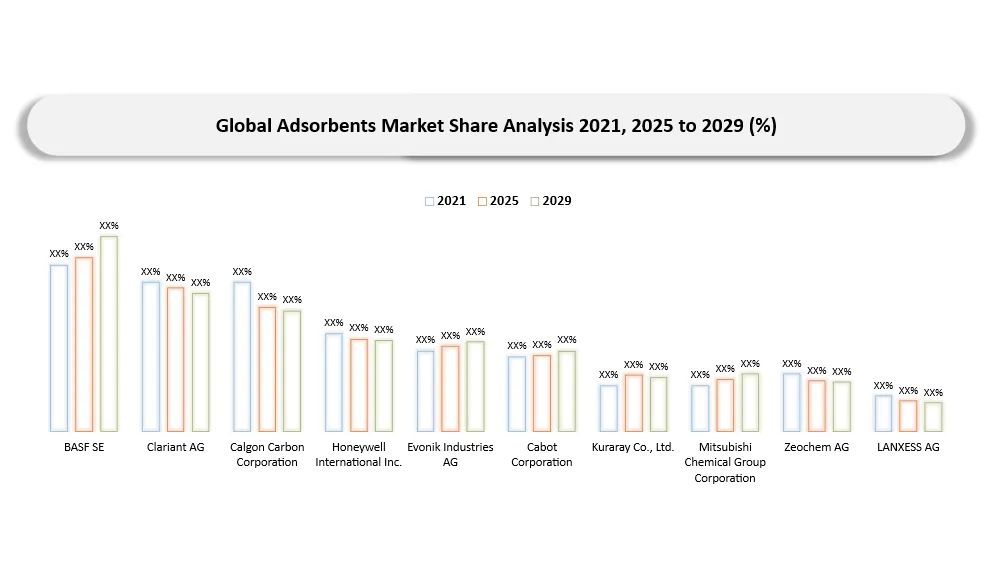
- Competing companies like BASF SE, Clariant AG, Evonik Industries AG, Calgon Carbon Corporation and Honeywell International Inc. stay competitive due to their wide range of products, worldwide presence and constant research and development activities in adsorption technology.
- Manufacturers are turning to regenerable adsorbents like molecular sieves, synthetic zeolites and activated alumina in response to the increasing demand for these products from hydrogen purification, LNG processing, carbon capture and semiconductors manufacturing.
- The strategies of strategic alliances, production capacities and product development targeting specific applications have taken priority with the collaboration of suppliers with industrial gas manufacturers, refinery industries, EPC companies and water treatment providers to win long-term agreements.
- Firms like Zeolyst International, Zeochem AG, Jalon New Materials, Kuraray Co., Ltd. and Mitsubishi Chemical Group Corporation are positioning themselves through increased production capacities and designing adsorbents of high performance for use in industrial gases separation, petrochemicals and clean energies production.
- The issues of sustainability, raw materials security and technology innovation have become differentiating factors with low carbon production processes, recycling of adsorbents and high selectivity materials being emphasized.
Key Companies
- BASF SE (Germany)
- Clariant AG (Switzerland)
- Arkema S.A. (France)
- Cabot Corporation (U.S.)
- Kuraray Co., Ltd. (Japan)
- LANXESS AG (Germany)
- Calgon Carbon Corporation (U.S.)
- Honeywell International Inc. (U.S.)
- Zeochem AG (Switzerland)
- Zeolyst International (U.S.)
- W. R. Grace & Co. (U.S.)
- Axens (France)
- Tosoh Corporation (Japan)
- Jacobi Carbons Group (Sweden)
- Ingevity Corporation (U.S.)
- Evonik Industries AG (Germany)
- Mitsubishi Chemical Group Corporation (Japan)
- Jalon New Materials (China)
- Osaka Gas Chemicals Co., Ltd. (Japan)
- Fuji Silysia Chemical Ltd. (Japan)
Adsorbents Market Major Pain Points
- The heavy reliance on high-energy consumption in the manufacturing process makes it expensive to manufacture activated carbon, molecular sieves, zeolites and activated alumina.
- Low regeneration performance and reduced adsorption capacity lower the lifespan of the adsorbent material making it costly for the consumer due to frequent replacement.
- The challenge in complying with stringent environmental standards for water and air pollution in the removal of PFAS, VOCs, mercury, sulfur species and CO₂.
- Uncertainty in price and sourcing problems arise as a result of volatility in supply chains involving critical raw materials including coal, coconut shell, alumina, silica and specialty chemicals.
- The increasing requirement for specialized adsorbents utilized in the purifying process of hydrogen, carbon dioxide, drinking water PFAS filtration, LNG and semiconductor-grade gas purification requires substantial investment in R&D and advanced material engineering.
- Competition among the low cost and regional manufacturers and other alternative purification technologies has been a major challenge to pricing and profitability.
Adsorbents Market Recent Developments
- April 2025: Clariant AG has shown growth in its Adsorbents & Additives unit for Q1 2025 and indicated that it will ramp up its local manufacturing in China to 70 percent by 2026 via setting up two more manufacturing units for regional supply of its specialty adsorbents.
- November 2025: Clariant AG announced that one new manufacturing line has become operative at its Daya Bay manufacturing plant in China. This is consistent with the company’s localization efforts and enhances the capability of producing its specialty chemical range, which includes the Adsorbents & Additives products.
- March 2025: The company Evonik Industries AG intensified its investments in innovative adsorbent technologies used for carbon capture, hydrogen purification and sustainable industrial separation technologies.
- April 2025: At the OGU 2025 event, Jalon New Materials launched custom designed molecular sieve systems for use in natural gas dehydration, PSA hydrogen production and petrochemical purification processes.
- May 2026: The Ecosil LE III series was launched by Clariant AG during the Metal China 2026 show and upgraded the company’s Zhenjiang Applications Center in China. The recently introduced Ecosil LE III series is a new addition to Clariant’s range of sustainable specialty material offerings.
Analyst View / Opinion on Adsorbents Market
- Consumption of activated carbon, molecular sieves and activated alumina will be boosted by the strict environmental regulations and investment in the creation of clean water facilities in the coming years, thus making water purification and gas purification for industries as the major drivers for the adsorbents market.
- Regenerable adsorbents are forecast to take a bigger market share, based on their increased lifespan, reduced cost of ownership and growing use in the purification of hydrogen, natural gas, air separation and CO2 removal processes.
- The Asia-Pacific region is forecast to retain its dominance in terms of production and consumption, owing to fast industrialization, growing petrochemical capacities, more municipal water treatments and robust manufacturing bases in China, Japan and India.
- Innovation in technology will increasingly distinguish market leaders, with their focus being on investing in molecular sieves and advanced zeolites, engineered activated carbons and high-performance porous materials which provide superior adsorption efficiency, selectivity and regeneration.
- Manufacturers who secure raw material supply, increase regional manufacturing capabilities and produce high-performance adsorbents will be better placed to exploit the increasing demand for environmental, renewable energy and industrial high-purity applications.
Adsorbents Market Target Audience
| INDUSTRY | WHO SHOULD BUY THIS REPORT? | REASON TO BUY THIS REPORT |
| Chemical & Specialty Materials | Adsorbent manufacturers, specialty chemical producers, raw material suppliers | Analyze market demand, technology advancements, product innovation and competitive positioning. |
| Oil & Gas & Petrochemicals | Refiners, natural gas processors, LNG operators, petrochemical companies | Evaluate adsorption technologies used in gas purification, dehydration, sulfur removal and hydrocarbon processing. |
| Water & Environmental Services | Municipal water authorities, wastewater treatment companies, environmental engineering firms | Assess opportunities in water purification, PFAS removal, heavy metal treatment and industrial wastewater remediation. |
| Industrial Gas & Energy | Industrial gas producers, hydrogen manufacturers, carbon capture developers, power utilities | Understand demand for adsorbents in gas separation, hydrogen purification, carbon capture and emission control. |
| Pharmaceuticals & Biotechnology | Pharmaceutical manufacturers, API producers, biopharmaceutical companies | Analyze applications in purification, chromatography, solvent recovery and moisture control. |
| Food & Beverage | Food processors, edible oil manufacturers, beverage companies | Identify opportunities in decolorization, purification, contaminant removal and product quality enhancement. |
| Electronics & Semiconductors | Semiconductor manufacturers, electronics component suppliers | Evaluate the use of high-performance adsorbents for ultra-high-purity gas purification and cleanroom moisture control. |
| Mining & Metallurgy | Mining companies, metal refiners, mineral processing firms | Assess adsorption technologies for metal recovery, impurity removal and mineral processing. |
| Industrial Equipment & Engineering | EPC contractors, process equipment manufacturers, filtration system integrators | Understand market opportunities for adsorption systems used in industrial processing and environmental applications. |
| Investment & Consulting | Private equity firms, venture capital firms, institutional investors, strategy consultants | Evaluate market size, competitive landscape, investment opportunities, M&A activity and long-term growth prospects. |
Why Choose DATAM?
- Data-Driven insights: Dive into detailed analyses with granular insights such as pricing, market shares and value chain evaluations, enriched by interviews with industry leaders and disruptors.
- Post-Purchase Support and Expert Analyst Consultations: As a valued client, gain direct access to our expert analysts for personalized advice and strategic guidance, tailored to your specific needs and challenges.
- White Papers and Case Studies: Benefit quarterly from our in-depth studies related to your purchased titles, tailored to refine your operational and marketing strategies for maximum impact.
- Annual Updates on Purchased Reports: As an existing customer, enjoy the privilege of annual updates to your reports, ensuring you stay abreast of the latest market insights and technological advancements. Terms and conditions apply.
- Specialized Focus on Emerging Markets: DataM differentiates itself by delivering in-depth, specialized insights specifically for emerging markets, rather than offering generalized geographic overviews. The approach equips our clients with a nuanced understanding and actionable intelligence that are essential for navigating and succeeding in high-growth regions.
- Value of DataM Reports: Our reports offer specialized insights tailored to the latest trends and specific business inquiries. The personalized approach provides a deeper, strategic perspective, ensuring you receive the precise information necessary to make informed decisions. The insights complement and go beyond what is typically available in generic databases.
What DATAM Uniquely Provides
- Detailed segmentation of the adsorbent market into regenerable and non-regenerable adsorbents, end use industry, product forms, pore type, functional groups and regional demand to pinpoint lucrative income streams.
- An in-depth study of the industrial demand in various sectors such as natural gas treatment, hydrogen purification, carbon capture, PFAS filtration, semiconductor fabrication, pharmaceutical purification and petrochemical processing.
- Analysis of competitive intelligence with regards to capacities, innovations, benchmarking of technologies and strategy of some major multinational manufacturers, considering their positioning vis-à-vis various adsorbent technologies.
- Insights on the workings of the supply chain, trade studies, sourcing of materials and pricing trends, providing stakeholders the ability to assess procurement and production considerations and opportunities.
- Insights on emerging adsorbent technologies like molecular sieves, engineered zeolites, polymers, activated carbon and other adsorbent technologies that will help in decarbonization.
Questions This Report Answers
- What types of regenerative and non-regenerative adsorbents will yield maximum income and what are the reasons behind the popularity of these adsorbents?
- How are growing demands for water purification, gas purification and carbon capture affecting the adsorbents market globally?
- Which end-use sectors such as oil and gas, chemicals and petrochemicals, water treatment, pharmaceuticals and electronics are showing the highest growth in terms of demand for advanced adsorbent materials?
- What changes are being brought about by advancements in molecular sieves, zeolites, activated carbon, activated alumina and polymeric adsorbents?
- Where are the areas and nations that are coming up as the key producers, consumers and exporters of adsorbents and what developments are enabling them?
- What kind of strategies like expansions, new products, sustainability measures and alliances are companies undertaking to bolster their standing in the global adsorbents industry?


























































