


Achondroplasia Market Size and Overview
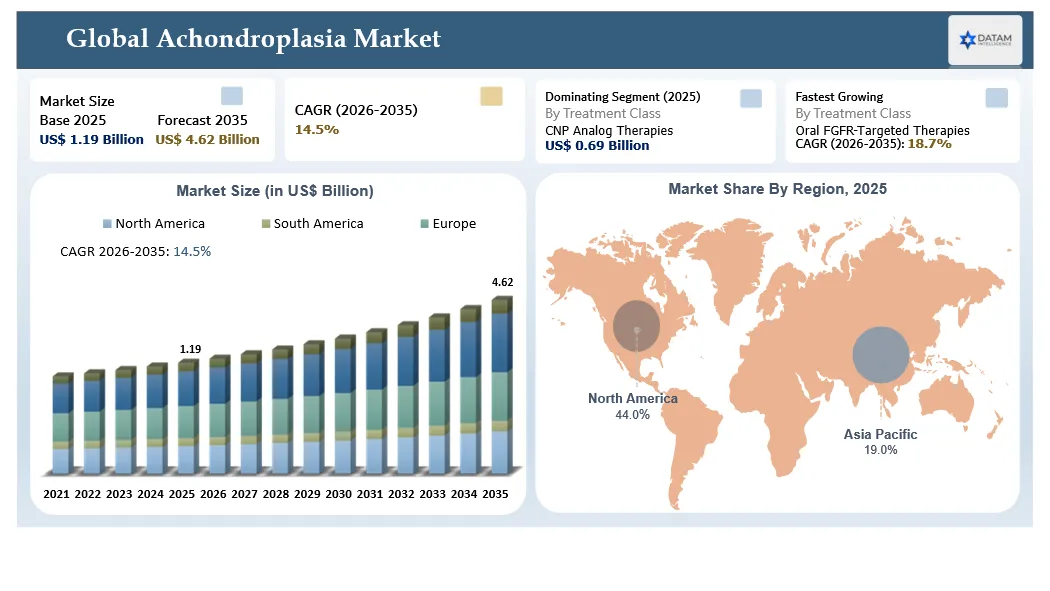
The global Achondroplasia market is estimated at US$ 1.19 billion in 2025 and is expected to reach US$ 4.62 billion by 2035, expanding at a CAGR of 14.5% during 2026-2035. The commercial landscape has moved from predominantly supportive and surgical care into a competitive disease-modifying therapy market. Daily vosoritide established the first major pharmaceutical category, while the 2026 U.S. approval of once-weekly navepegritide introduced a differentiated dosing option. Oral infigratinib is advancing toward regulatory submission and could create a third commercial mechanism centered on direct FGFR inhibition.
Achondroplasia affects an estimated 250,000 people globally, although diagnosis, registry capture and treatment access differ sharply by country. The addressable pharmaceutical population is concentrated among children with open epiphyses, but the broader care market includes orthopedic procedures, management of foramen magnum compression, spinal stenosis, sleep-disordered breathing, recurrent ear disease, obesity risk and functional limitations. Commercial opportunity therefore extends beyond height outcomes into long-term skeletal health, neurologic risk, mobility, quality of life and caregiver burden.
BioMarin reported 26% year-on-year growth for VOXZOGO during 2025 and commercial presence across 55 markets. Approximately 73% of 2025 revenue came from outside the U.S., showing that reimbursement and specialist access in Europe, Japan and other established rare-disease markets are central to market value. Ascendis Pharma received U.S. accelerated approval for YUVIWEL in February 2026 for children aged two years and older with open epiphyses, with commercial availability planned in the second quarter of 2026. BridgeBio has reported positive Phase 3 results for oral infigratinib and plans U.S. and European submissions during 2026.
The market through 2035 will be shaped by treatment convenience, evidence beyond annualized growth velocity, initiation in younger children, competitive contracting, switching, long-term functional outcomes and global access. Companies will need to demonstrate value across body proportionality, skeletal complications, daily functioning, safety, adherence and caregiver experience. The strongest commercial platforms will combine medicine, genetic confirmation, specialist education, reimbursement navigation, home delivery and long-term registry support.
| Metric | Details |
| 2025 Market Size | US$ 1.19 Billion |
| 2035 Projected Market Size | US$ 4.62 Billion |
| CAGR 2026-2035 | 14.5% |
| Largest Region | North America |
| Fastest Growing Region | Asia-Pacific |
| Largest Treatment Segment | CNP analog therapies |
| Fastest Growing Treatment Segment | Oral FGFR-targeted therapies |
| Largest Patient Segment | Children aged 5 to under 12 |
| Key Commercial Shift | Daily monotherapy to multi-product competition across daily, weekly and oral options |
Achondroplasia Market Key Takeaways
- The market is transitioning from a single branded disease-modifying therapy toward competition among daily injectable, weekly injectable and oral mechanisms.
- VOXZOGO generated 26% year-on-year revenue growth in 2025 and was commercialized across 55 markets, creating the first global commercial infrastructure dedicated to achondroplasia treatment.
- Markets outside the U.S. contributed approximately 73% of VOXZOGO revenue in 2025, underlining the importance of national reimbursement systems and established rare-disease centers.
- YUVIWEL received U.S. accelerated approval in February 2026 for children aged two years and older with open epiphyses and became the first once-weekly approved therapy for achondroplasia.
- Oral infigratinib achieved positive Phase 3 results and is positioned to challenge injectable therapies through convenience, direct FGFR3 pathway targeting and potential switching demand.
- Global prevalence is commonly estimated at around 250,000 people, but the commercially treated population remains much smaller because of age eligibility, diagnosis, referral and reimbursement constraints.
- Earlier initiation is becoming a major growth driver as labels expand toward younger children and specialist teams seek to influence skeletal development over a longer growth period.
- Long-term value assessment is moving beyond annualized growth velocity toward adult height, proportionality, arm span, complication burden, function and quality of life.
- Treatment adherence will become a stronger competitive factor as daily injections compete with once-weekly injection and oral dosing.
- White space remains substantial in adult disease management, low-resource diagnosis, digital monitoring, combination therapy and outcomes-based reimbursement.
Why Does This Report Matter in 2026?
The year 2026 marks a structural change in the achondroplasia treatment landscape. The U.S. market now has two approved CNP-based therapies with different dosing frequencies, while an oral FGFR inhibitor is moving toward submission. This creates a need for updated intelligence on patient segmentation, switching potential, payer contracting, specialist preference, age-based eligibility and launch sequencing. Earlier market studies centered on whether disease-modifying treatment would be adopted. The current question is how several products will divide the eligible patient pool and which evidence will influence prescribing after initial growth-velocity data.
The report matters for commercial planning because rare-disease growth depends on finding and supporting individual patients. Companies need country-level estimates of diagnosed children, treatment-ready centers, genetic confirmation, reimbursement pathways and time to therapy. Investors need to distinguish addressable prevalence from realistic treated prevalence. Providers need comparative evidence on administration burden, safety, growth, proportionality and functional outcomes. Payers need budget-impact analysis that includes treatment duration and avoided complication costs. These requirements make the market more complex than a simple prevalence multiplied by annual price calculation.
Achondroplasia Market White Space and Investment Opportunities
- Earlier diagnosis and referral platforms connecting prenatal findings, pediatricians, geneticists and specialist centers.
- Oral, monthly or implantable therapeutic platforms that reduce treatment burden while maintaining pathway control.
- Adult achondroplasia services focused on spinal stenosis, chronic pain, mobility, obesity, sleep apnea and orthopedic complications.
- Digital outcome tools measuring body proportions, mobility, sleep, pain, daily function and caregiver burden between clinic visits.
- Patient-support infrastructure for home administration, adherence, travel, reimbursement documentation and multilingual education.
- Genotype-confirmation and newborn referral pathways in emerging markets where clinical recognition is inconsistent.
- Outcome-based payer contracts linked to persistence, growth response, functional milestones and reduced complication utilization.
- Combination approaches that address growth and broader skeletal development through complementary biological pathways.
Achondroplasia Future Market Transformation
The market will transform from a single-product category into a choice-based treatment ecosystem. Daily injection, weekly injection and oral treatment will compete within overlapping age groups. Product selection will move from availability to a comparative assessment of efficacy, safety, convenience, age coverage and long-term evidence. The first wave of competition may expand the market by increasing diagnosis and awareness. The second wave will create switching, contracting and differentiated patient-service models.
Outcome measurement will broaden. Adult height will remain important, but proportionality, mobility, pain, sleep, neurologic complications and participation will gain weight. Digital tools may support continuous collection of patient-reported outcomes. Combination approaches could emerge if different pathways offer complementary benefit, although safety and pediatric development complexity are substantial. Adult care will also become a larger commercial and service opportunity as the treated pediatric population ages and adult complication burden receives more attention.
Achondroplasia Market Buyer Decision-Making Criteria
| Buyer | Primary Criteria | Commercial Implication |
| Pediatric endocrinologists | Growth response, safety, age label, dosing and evidence | Medical education and comparative data are critical. |
| Caregivers and patients | Administration burden, comfort, daily routine and expected outcomes | Convenience and patient support influence preference. |
| Payers | Budget impact, duration, evidence and eligibility | Contracting and outcome data drive access. |
| Specialty pharmacies | Distribution reliability, training and prior authorization | Service quality affects persistence. |
| Rare-disease centers | Multidisciplinary fit, monitoring and research support | Center partnerships strengthen adoption. |
| Investors | Differentiation, launch readiness, peak penetration and lifecycle | Pipeline quality must be assessed against a changing standard of care. |
Achondroplasia Market Economic and Investment Analysis
Achondroplasia has become one of the most commercially validated rare skeletal disease markets. VOXZOGO approached the billion-dollar annual revenue level during 2025, demonstrating that a concentrated pediatric population can support a large global franchise when treatment is chronic, diagnosis is recognizable and specialist networks are established. The entry of a weekly product and a potential oral product can expand the treated pool by increasing awareness, payer focus and patient choice, although competition may also create discounts and switching costs.
Investment is shifting toward differentiated convenience and broader clinical benefit. A product that requires less frequent administration can capture patients who struggle with daily injections. An oral therapy may attract injection-averse families and generate switching from established treatments. However, commercial success depends on comparative evidence, label breadth, safety, durability and payer positioning. High development costs remain concentrated in long pediatric trials, long-term follow-up and post-marketing evidence. Companies must plan for registries, pharmacovigilance and outcomes research that continue well after approval.
Strategic Indicators for the Achondroplasia Market
| Indicator | Market Interpretation | Strategic Implication |
| High regulatory impact | Approvals are often based on annualized growth velocity under accelerated pathways, followed by confirmatory evidence. | Build long-term data programs covering adult height, proportionality, function and complications. |
| High commercial concentration | A small number of therapies account for most pharmaceutical value. | Specialist relationships and patient support can materially influence share. |
| Rising competition | Daily, weekly and oral treatments are converging within the same pediatric pool. | Differentiate on convenience, evidence, safety, age coverage and service quality. |
| Access variability | Treatment availability differs by reimbursement system and specialist density. | Use country-specific launch sequencing and access partnerships. |
| Long treatment duration | Eligible children may remain on therapy until epiphyseal closure. | Persistence and adherence drive lifetime value and payer budget impact. |
| Evidence expansion | Stakeholders increasingly require outcomes beyond height velocity. | Integrate function, proportionality, complications and patient-reported outcomes. |
AI Impact Analysis of the Achondroplasia Market
AI can improve rare-disease identification by screening electronic health records, imaging reports and clinical notes for combinations associated with skeletal dysplasia. Ontology-based natural language processing and large language models can surface patients whose diagnosis is not captured in structured codes. In achondroplasia, the phenotype is often recognizable, but AI can still support referral, adult case finding and complication monitoring. Computer vision may assist standardized measurement of body proportions and growth-related features when validated for clinical use.
AI can also support trial recruitment, adherence prediction and outcome analysis. Small patient populations make efficient site selection and participant identification valuable. Machine learning can integrate growth, imaging, sleep, mobility and patient-reported data to identify response patterns. Commercial teams can use analytics to map referral gaps and predict reimbursement delays. AI must be deployed with privacy protection, bias control and clinical oversight because rare-disease datasets are small and identifiable.
Disruption Analysis of the Achondroplasia Market
Three disruptions define the market. The first is dosing disruption, with weekly injection and oral treatment challenging daily administration. The second is evidence disruption, where annualized growth velocity is supplemented by proportionality and functional outcomes. The third is access disruption, where genetic testing, digital referral and patient support expand the treated population. These changes shift advantage from first approval alone toward platform execution. Companies need superior evidence, convenient treatment and high-touch services. A product with strong efficacy but weak access support may underperform, while a convenient product without durable evidence may struggle to win specialists and payers.
Achondroplasia Market BCG Matrix: Company Evaluation
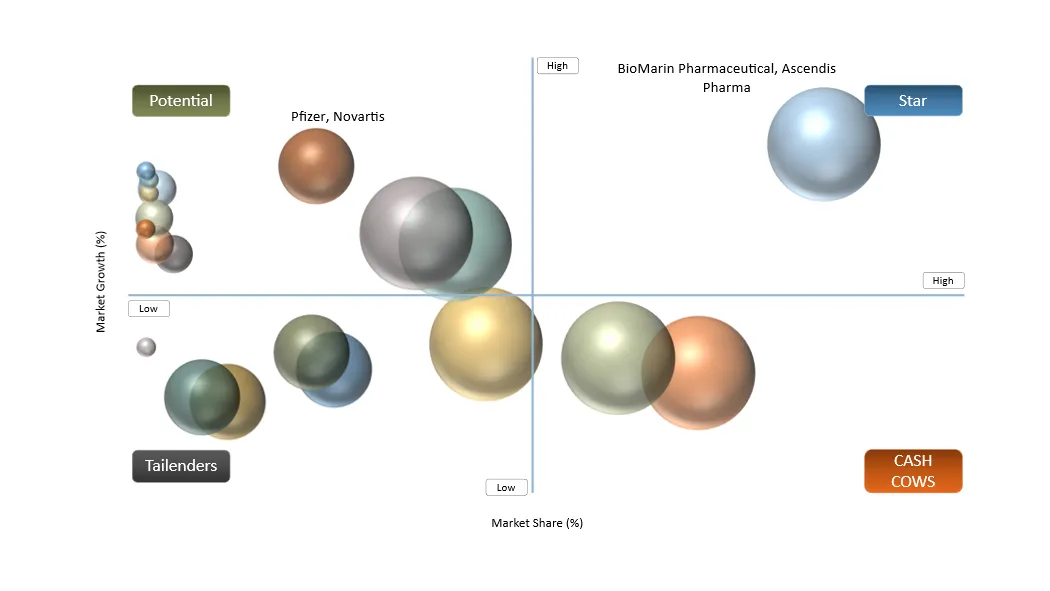
STAR
BioMarin Pharmaceutical, Ascendis Pharma, and BridgeBio Pharma have occupied the STAR category within the Achondroplasia Market due to their innovative approach towards treating patients using the disease modifying approach that targets the FGFR3 pathway. BioMarin holds the dominant position in this category because of the commercial success of the CNP analog therapy. Ascendis Pharma, on the other hand, has enhanced its position in the market by developing its long-acting therapeutic platform. The late-stage oral therapy pipeline of FGFR3 targeted therapies developed by BridgeBio Pharma also adds to its competitive advantage.
POTENTIAL
Pfizer, Novartis, Sanofi, Ipsen, Roche, Takeda, Ultragenyx, Alexion and AstraZeneca Rare Diseases, Amgen, Chugai Pharmaceutical, Regeneron, Kyowa Kirin, Ribomic, Silence Therapeutics, Arrowhead Pharmaceuticals and network diagnostic and care providers belong to the category of POTENTIAL. The advantages of these companies are their expertise in rare diseases, ability to develop biopharmaceuticals, RNA-based therapy platforms and increased investment in precision medicine. Some of these companies are directly or indirectly working in orphan drugs, genetic diseases and have collaborative relationships which will assist them in entering into the achondroplasia therapy market in future. There is an increasing focus on next generation FGFR3 inhibitors, RNA therapies, gene-based therapies and interdisciplinary patient care programs which provide great opportunities for these companies to establish themselves.
Achondroplasia Market Dynamics
Driver Impact Analysis
| Driver | Growth Impact | Demand Concentration | Strategic Impact |
Expansion of approved disease-modifying therapies | 29% | U.S., Europe, Japan and other reimbursed rare-disease markets | Creates new starts, switching and greater physician awareness. |
Earlier diagnosis and younger treatment initiation | 23% | Pediatric genetic and endocrine centers | Extends treatment duration and enlarges the eligible pool. |
Improved reimbursement and patient support | 19% | National health systems and commercial insurers | Converts diagnosed patients into treated patients. |
Convenience innovation across weekly and oral dosing | 17% | Families facing injection burden | Improves adoption, persistence and competitive differentiation. |
Evidence on proportionality and functional outcomes | 12% | Payers, clinicians and caregivers | Broadens the value case beyond linear growth. |
Driver: Expansion of Disease-Modifying Therapy Access
The strongest driver is the expansion of disease-modifying therapy from one global product to multiple mechanisms and dosing schedules. VOXZOGO established the commercial category and achieved 26% revenue growth in 2025 across 55 markets. Its international mix shows that demand can scale wherever diagnosis, specialist referral and reimbursement are aligned. YUVIWEL added a once-weekly alternative in 2026, creating a new choice for families and clinicians. BridgeBio’s oral infigratinib adds a potential third option focused on direct FGFR3 inhibition. Each new entrant increases education, genetic confirmation, center readiness and payer attention. This can enlarge the total treated population even as individual products compete for share.
The investment implication is that market growth will be driven by patient activation rather than prevalence alone. Companies will spend on specialist teams, genetic testing support, nurse education, home delivery and reimbursement navigation. Commercial programs that reduce time from diagnosis to treatment can create more value than broad consumer marketing. Product differentiation will need to be demonstrated in real-world adherence and outcomes because annualized growth velocity may become less decisive once several therapies show clinically meaningful improvement.
Driver: Earlier Diagnosis and Younger Treatment Initiation
Earlier diagnosis increases the period during which a child may be eligible for treatment and gives clinicians more time to influence skeletal development. Achondroplasia can often be suspected prenatally or recognized at birth through characteristic features, but access to genetic confirmation and specialist follow-up varies. The U.S. label expansion for vosoritide to all pediatric ages with open epiphyses and the two-year minimum age for YUVIWEL encourage referral during infancy and early childhood. BioMarin reported that the majority of new U.S. patient starts during the third quarter of 2025 came from children under two years of age, illustrating the commercial effect of younger-age access.
Earlier initiation also raises evidence expectations. Payers and families will ask whether treatment influences body proportionality, foramen magnum risk, sleep, ear disease, motor development or later orthopedic burden. Trials and registries need age-appropriate endpoints and long follow-up. Companies that build relationships with maternity hospitals, pediatricians, genetic counselors and skeletal dysplasia centers can identify patients sooner. Diagnostic laboratories and digital referral tools can participate in this value chain by reducing missed or delayed cases.
Restraint Impact Analysis
| Restraint | Drag on Growth | Primary Impact Area | Strategic Impact |
High therapy cost and budget impact | 25% | Public and commercial payer access | Delays reimbursement and increases prior authorization. |
Limited specialist and diagnostic access | 20% | Emerging markets and rural populations | Reduces diagnosis and treatment readiness. |
Long-term evidence uncertainty | 18% | Payer and clinician confidence | Creates demand for registries and confirmatory trials. |
Administration burden and adherence | 15% | Daily injectable treatment | Creates switching risk and missed doses. |
Small patient pools and trial complexity | 12% | Development timelines | Raises recruitment cost and dependence on global centers. |
Ethical and patient-preference considerations | 10% | Shared decision-making | Requires respectful, individualized communication. |
Restraint: High Therapy Cost and Reimbursement Complexity
Disease-modifying treatment is chronic and may continue for many years, creating a substantial lifetime budget impact for payers. Even when clinical benefit is accepted, reimbursement can be delayed by health technology assessment, price negotiation, prior authorization and proof of open epiphyses. Countries with national health systems may negotiate one product centrally, while fragmented insurance systems require plan-by-plan coverage. Competition can improve access through contracting, but it can also increase administrative complexity if payers require step therapy or preferred-product switching.
The restraint is strongest in countries without established orphan-drug budgets. Families may face travel, genetic testing and monitoring costs in addition to medicine access. Manufacturers need budget-impact models that reflect diagnosed pediatric populations rather than total prevalence. Outcome-based agreements, capped exposure and patient assistance can improve access. Evidence that treatment reduces future procedures or complication-related utilization could strengthen payer value arguments, although those outcomes require long follow-up.
Restraint: Limited Specialist Access and Long-Term Evidence Requirements
Achondroplasia care is multidisciplinary and often concentrated in a small number of skeletal dysplasia centers. Patients outside major cities may experience delayed referral, inconsistent monitoring and limited access to surgeons familiar with condition-specific anatomy. This constrains commercial uptake because treatment initiation and follow-up require specialist oversight. The burden is more pronounced in Asia, Latin America, the Middle East and Africa, where diagnosis may depend on clinical recognition and genetic confirmation may not be routinely funded.
Long-term evidence creates a second barrier. Initial approvals have relied on growth velocity, while stakeholders increasingly ask about adult height, body proportions, pain, mobility, neurologic complications and quality of life. The FDA accepted BioMarin’s 2026 supplemental application for full approval based on long-term data from three studies, with a target action date in February 2027. This demonstrates how confirmatory evidence remains central after accelerated approval. Market leaders will need sustained investment in registries, comparative studies and patient-reported outcomes.
Achondroplasia Market Segmentation Analysis
The market is segmented by treatment class, route of administration, patient age group, care pathway, distribution channel, payer type, end user and region. Each lens addresses a different commercial question. Treatment class defines mechanism and evidence. Route of administration influences preference and adherence. Age determines eligibility and treatment duration. Care pathway captures the broader medical burden. Distribution and payer segments explain how patients obtain therapy. End-user analysis identifies the specialist centers and support networks that control diagnosis, initiation and follow-up.
By Treatment Class: CNP Analog Therapies Lead, While Oral FGFR Inhibition Creates the Main Disruption
CNP analog therapies account for the largest share because VOXZOGO established widespread commercial use and YUVIWEL entered the U.S. market in 2026. These products counteract overactive FGFR3 signaling through the CNP pathway and are prescribed to increase linear growth in eligible children with open epiphyses. The segment benefits from validated biology, specialist familiarity and expanding long-term data. Daily vosoritide has the deepest global reimbursement footprint, while once-weekly navepegritide competes through sustained exposure and reduced injection frequency. Oral FGFR-targeted therapy is the fastest-growing prospective segment. Infigratinib directly inhibits FGFR signaling and produced positive Phase 3 results, including improved annualized growth velocity and proportionality. An oral option could broaden adoption among injection-averse families and create switching. Supportive pharmacology remains smaller and is used for associated symptoms rather than modifying the core pathway. Surgical care remains economically important because many patients require decompression, orthopedic correction or spinal procedures. Emerging gene and RNA approaches are longer-term opportunities but face high safety and delivery barriers in children.
By Route of Administration: Weekly and Oral Options Shift the Competitive Basis Toward Convenience
Daily subcutaneous administration remains the largest route because of VOXZOGO’s installed patient base. The model requires caregiver training, cold-chain distribution, injection supplies and adherence support. Daily administration provides regular exposure but places a continuous burden on children and families. Weekly subcutaneous therapy changes the service model by reducing injection events and creating a clear convenience message. YUVIWEL’s 2026 approval makes this route commercially relevant and may attract newly diagnosed patients or families considering switching. Oral therapy is the most disruptive route because it removes injection burden and can integrate with standard specialty pharmacy delivery. Its commercial advantage will depend on safety monitoring, food or dosing restrictions, adherence and comparative efficacy. Hospital-based procedures account for a separate market linked to decompression, limb reconstruction and orthopedic complications. Route selection will increasingly involve shared decision-making, with families balancing frequency, familiarity, safety, monitoring and long-term evidence.
By Patient Age Group: Younger Children Create the Largest Incremental Lifetime Opportunity
Children aged five to under twelve remain the largest treated group because diagnosis is established, growth plates are open and specialist management is well developed. This group formed the core of early pivotal trials and continues to generate substantial prescription volume. Children aged two to under five represent a rapidly expanding segment after label expansions and the approval of YUVIWEL from age two. Earlier initiation increases potential treatment years and may influence skeletal development over a longer period. Infants and children under two are strategically important because vosoritide is available for pediatric patients with open epiphyses in the U.S. and BioMarin reported strong new starts in this age range during 2025. Adolescents have a shorter remaining treatment window and require assessment of growth plate status. Adults are not the main disease-modifying pharmaceutical segment but represent a large unmet need for pain, spinal stenosis, mobility, sleep-disordered breathing and functional support.
By Care Pathway: Disease-Modifying Therapy Expands Within a Multidisciplinary Care Model
Disease-modifying treatment is the fastest-growing care pathway, but it does not replace multidisciplinary management. Children may require surveillance for foramen magnum compression, hydrocephalus, sleep apnea, recurrent otitis media, kyphosis, bowing and obesity. Orthopedic and neurosurgical care therefore remains a major expenditure pool. Respiratory and ENT management includes sleep studies, adenotonsillectomy, ventilation support and hearing services. Rehabilitation supports motor development, strength, adaptive function and participation. Genetic counseling helps families understand inheritance, recurrence and prenatal options. Commercial platforms that coordinate medicine with monitoring can improve outcomes and payer confidence. A fragmented model creates missed appointments and delayed intervention. Specialist centers that combine endocrinology, genetics, neurosurgery, orthopedics, ENT, pulmonology and rehabilitation will remain the main nodes of market access.
By Distribution Channel: Specialty Pharmacy and Direct-to-Patient Services Control Treatment Persistence
Specialty pharmacies dominate pharmaceutical distribution because products require benefits verification, prior authorization, cold-chain handling, training and refill management. Their role extends beyond dispensing into adherence monitoring, caregiver education and coordination with manufacturer hubs. Hospital pharmacies are important at treatment initiation and in national health systems where rare-disease centers control procurement. Direct-to-patient programs are expanding through home delivery, nursing support, digital reminders and reimbursement assistance. Retail channels have a limited role because of product complexity and restricted distribution. Distribution quality directly affects persistence. Missed shipments, insurance changes or inadequate training can interrupt treatment. Manufacturers therefore compete on service responsiveness, refill coordination and the ability to resolve payer barriers. As weekly and oral products enter, distribution models may become more differentiated, with oral therapy potentially requiring less injection training but continued monitoring and specialty management.
By Payer Type: National Health Systems and Commercial Insurers Apply Different Access Logic
Public payers and national health systems account for a large share of global value because rare-disease treatment is often centrally reimbursed. These systems may conduct health technology assessment, negotiate confidential discounts and designate specialist centers. Commercial insurance is more important in the U.S., where prior authorization, specialty pharmacy networks and plan formularies determine access. Self-pay is limited because annual therapy cost is high, though patient assistance can bridge coverage gaps. Payer evaluation increasingly includes treatment duration, age at initiation, growth response and long-term evidence. Competition may lead to preferred-product contracts, but forced switching can be sensitive in a pediatric rare disease. Manufacturers need payer-specific evidence packs, budget-impact models and real-world outcome collection. Countries with limited orphan-drug funding remain underpenetrated despite diagnosed need.
By End User: Pediatric Endocrinology and Rare-Disease Centers Remain the Commercial Gatekeepers
Pediatric endocrinology centers are the principal prescribers for growth-directed therapy, while genetic and skeletal dysplasia centers establish diagnosis and coordinate multidisciplinary care. Hospitals and surgical centers manage neurologic, orthopedic, respiratory and ENT complications. Home care and patient-support organizations provide administration training, adherence and family education. End-user concentration creates an efficient commercial model because a limited number of high-volume centers manage a large share of treated patients. It also creates vulnerability if centers face capacity constraints. Companies need medical education, referral mapping and treatment coordinators who understand local workflows. Digital telehealth can extend follow-up to patients living far from specialist centers, but physical assessment and imaging remain necessary. The most attractive partnership opportunities involve centers that maintain registries, participate in trials and support long-term outcomes research.
By Diagnosis Status: Confirmed and Treatment-Ready Patients Generate Immediate Value
The population can be segmented into diagnosed and treatment-ready patients, diagnosed but untreated patients, suspected patients awaiting confirmation and undiagnosed individuals. Treatment-ready patients have confirmed achondroplasia, open epiphyses, specialist oversight and payer eligibility. This group drives immediate revenue. Diagnosed but untreated patients may be delayed by reimbursement, family preference, age, access or evidence concerns. Suspected cases require clinical evaluation and genetic confirmation where the phenotype is uncertain. Undiagnosed patients are more common in low-resource settings and among adults whose records may not capture the condition accurately. Commercial growth depends on moving patients through these stages. Diagnostic partnerships, referral education and patient navigation can increase conversion without changing underlying prevalence.
By Treatment Status: New Starts, Switchers and Persistent Patients Require Different Commercial Strategies
New starts are influenced by age, diagnosis, specialist recommendation and payer approval. They represent the largest source of market expansion. Switchers become increasingly important as weekly and oral alternatives compete with daily injection. Switching decisions will depend on convenience, evidence, safety, caregiver preference and payer policy. Persistent patients generate stable recurring value but require reliable supply and support. Discontinuers may stop because of burden, adverse events, insufficient perceived benefit, growth plate closure or access loss. Commercial teams need separate strategies for each status. New starts require education and onboarding. Switchers require comparative evidence and transition protocols. Persistent patients require adherence support and long-term engagement. Real-world data can identify the main causes of interruption and guide service design.
By Evidence Requirement: Growth Velocity Remains Central, While Functional Outcomes Gain Weight
Annualized growth velocity is the established regulatory endpoint and supported accelerated approvals for VOXZOGO and YUVIWEL. As competition increases, clinicians and payers will look for additional differentiation. Body proportionality, arm span, sitting-height ratio, adult height, mobility, pain, sleep, neurologic complications and quality of life are gaining importance. BridgeBio reported statistically significant proportionality improvement in its Phase 3 program, while BioMarin’s full-approval submission includes long-term adult height and skeletal measures. Functional endpoints are harder to standardize because they vary by age and baseline burden. Companies that create validated outcome instruments and collect longitudinal data can strengthen reimbursement and clinical preference. Evidence generation will become a continuing commercial activity rather than a pre-approval requirement alone.
By Commercial Model: Product Revenue Is Being Combined with High-Touch Patient Services
The dominant model is chronic branded therapy supported by a manufacturer patient-services hub. Revenue comes from medicine, while competitive differentiation is created through benefits verification, training, adherence, home delivery and specialist education. Outcome-based agreements are emerging as payers seek budget predictability. Licensing and regional commercialization remain relevant in countries where local regulatory or distribution partners accelerate access. Diagnostic-service partnerships can improve patient identification. Digital platforms can support dosing reminders, outcomes tracking and telehealth. The model is moving toward integrated rare-disease management in which companies support the entire path from diagnosis through long-term treatment. This raises service cost but can improve persistence and protect share.
By Surgical and Procedural Need: Medical Therapy Does Not Eliminate the Existing Complication Market
Neurosurgical and orthopedic procedures remain essential for many patients. Foramen magnum decompression may be required in infancy or childhood, while spinal stenosis and lower-limb deformity can require later intervention. Limb-lengthening remains a complex and preference-sensitive option with significant rehabilitation needs. ENT procedures, sleep interventions and weight-management support also contribute to expenditure. Disease-modifying therapy may change future complication rates, but evidence is not yet sufficient to assume that procedures will disappear. This creates a dual market in which pharmaceutical growth occurs alongside continuing surgical demand. Providers and payers need long-term data to understand whether earlier treatment changes procedure frequency, timing or severity.
Achondroplasia Market Geographical Penetration
| Region | 2025 Share | Market Position | Primary Growth Factors |
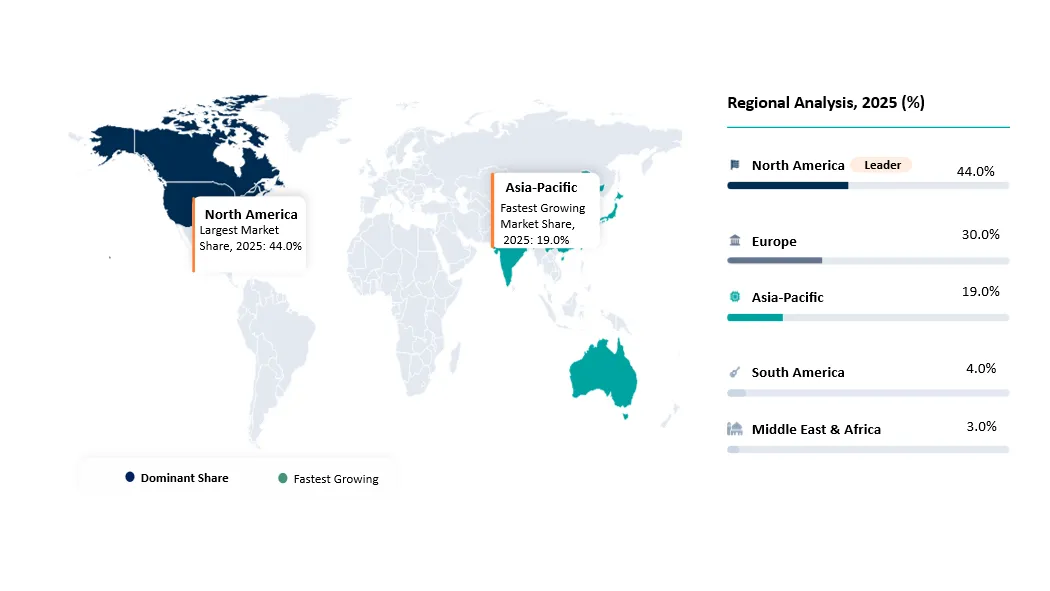
| North America | 44.0% | Largest | High therapy uptake, commercial insurance, specialist centers and early launches |
| Europe | 30.0% | Second largest | National reimbursement, rare-disease networks and broad international uptake |
| Asia-Pacific | 19.0% | Fastest growing | Japan access, China expansion, improving diagnosis and regional launches |
| South America | 4.0% | Emerging | Brazilian rare-disease centers and growing awareness |
| Middle East and Africa | 3.0% | Early-stage | GCC specialty care and unmet diagnostic need |
North America Achondroplasia Market Outlook
North America is the largest market because the U.S. combines early regulatory approval, specialist skeletal dysplasia centers, commercial insurance and high rare-disease spending. The region is also the first launch market for YUVIWEL and is expected to be an early market for oral infigratinib if approved. U.S. competition will center on formulary position, patient support and switching. Canada offers national and provincial reimbursement pathways but can have slower access. Mexico has a larger access gap and relies on urban specialty centers. The region will remain the main source of comparative real-world evidence and payer contracting innovation.
Europe Achondroplasia Market Outlook
Europe represents a large value pool because VOXZOGO uptake is established across multiple national systems and skeletal dysplasia networks are well developed. Germany, France, the UK, Italy and Spain are the major markets. National reimbursement creates broad access after approval but requires health technology assessment and price negotiation. The region is likely to evaluate weekly and oral alternatives through comparative clinical benefit and budget impact. Cross-border registries and European Reference Networks support evidence generation. Eastern Europe remains less penetrated because of budget and specialist constraints.
Asia-Pacific Achondroplasia Market Outlook
Asia-Pacific is the fastest-growing region. Japan has advanced rare-disease infrastructure and strong specialist adoption. China has a large potential patient pool but requires regulatory approval, local evidence and reimbursement development. Australia and South Korea have established orphan-drug pathways. India and Southeast Asia remain underdiagnosed and treatment access is limited, creating long-term opportunity for tiered pricing, diagnostic partnerships and local patient support. Regional growth will depend on genetic confirmation, physician education and local-language caregiver programs.
South America Achondroplasia Market Outlook
South America is led by Brazil, where major academic hospitals and rare-disease centers can support diagnosis and treatment. Public reimbursement is the main barrier because high-cost chronic therapy competes with other orphan-drug priorities. Argentina, Chile and Colombia offer smaller specialist markets. Manufacturers need local evidence, patient-organization engagement and reimbursement navigation. The near-term opportunity is concentrated in diagnosed pediatric patients within major cities, while broader expansion requires stronger referral networks.
Middle East and Africa Achondroplasia Market Outlook
The Middle East and Africa remain early-stage markets. The UAE, Saudi Arabia and Israel have the strongest ability to fund rare-disease therapies and attract specialist expertise. South Africa has academic centers but uneven reimbursement. Much of Africa faces underdiagnosis, limited genetic testing and low specialist density. Market development will depend on regional centers of excellence, telemedicine, genetic testing programs and access partnerships. GCC markets can become early adopters of new therapies, while broader African demand will grow more slowly.
| Country | Opportunity | Buyer-Intent Insight |
| U.S. | Largest treated population and first launch market | Formulary competition, switching and outcome-based contracting |
| Canada | Provincial reimbursement and specialist centers | Evidence-based access with longer review timelines |
| Germany | Strong orphan-drug market | National pricing and specialist-center adoption |
| France | Centralized rare-disease pathways | Negotiated access and registry evidence |
| UK | NHS specialist networks | Health technology assessment and budget impact |
| Japan | Advanced diagnosis and rare-disease reimbursement | High-value early adoption |
| China | Large underpenetrated patient pool | Local trials, approval and reimbursement |
| Brazil | Largest Latin American opportunity | Public access and urban center concentration |
| Saudi Arabia | High-value GCC opportunity | Center-of-excellence and government procurement |
| South Africa | Regional specialist base | Uneven insurance and diagnostic access |
Achondroplasia Market Competitive Landscape
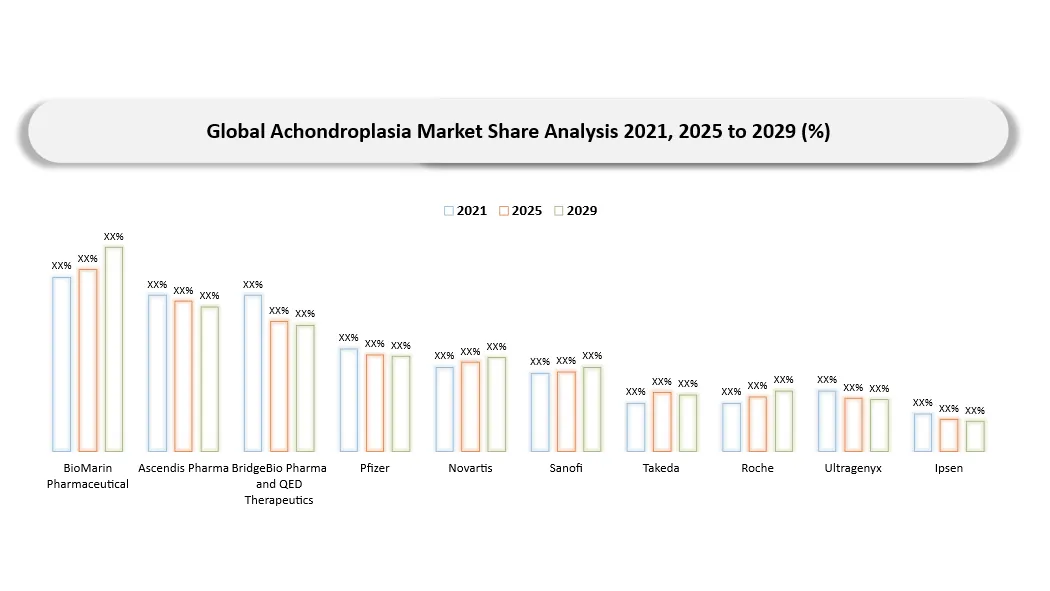
- BioMarin remains the commercial leader through VOXZOGO, broad geographic access and long-term evidence development.
- Ascendis Pharma entered the U.S. market with YUVIWEL in 2026, introducing once-weekly dosing and a differentiated CNP exposure profile.
- BridgeBio and QED Therapeutics are developing oral infigratinib, which could become the first approved oral disease-modifying therapy for achondroplasia.
- Competition will increasingly focus on age coverage, treatment burden, proportionality, adult-height evidence, safety and patient support.
- Rare-disease commercial infrastructure is a barrier because patient identification, reimbursement and specialist education require dedicated capabilities.
- Pipeline and platform companies may pursue licensing, regional partnerships or acquisition after proof of concept.
| Company/Platform | Position | Key Strategic Focus |
| BioMarin Pharmaceutical | Commercial leader | VOXZOGO expansion, full approval, long-term outcomes and global penetration |
| Ascendis Pharma | New commercial entrant | YUVIWEL launch, weekly dosing and TransCon platform |
| BridgeBio/QED | Late-stage challenger | Oral infigratinib, regulatory submissions and potential 2027 launch |
| Ribomic | Pipeline innovator | FGF pathway modulation and rare-disease development |
| Large rare-disease companies | Potential partners or acquirers | Regional commercialization, diagnostics and lifecycle expansion |
Key Companies
- BioMarin Pharmaceutical
- Ascendis Pharma
- BridgeBio Pharma and QED Therapeutics
- Pfizer
- Novartis
- Sanofi
- Ribomic
- Pfizer Rare Disease
- Ipsen
- Takeda
- Roche
- Ultragenyx
- Alexion and AstraZeneca Rare Disease
- Amgen
- Chugai Pharmaceutical
- Regeneron
- Kyowa Kirin
- Silence Therapeutics
- Arrowhead Pharmaceuticals
- Specialized Diagnostic and Care Networks
Achondroplasia Company Positioning
BioMarin Pharmaceutical
BioMarin is the established market leader through VOXZOGO. Its strategic advantages include first-mover status, a global rare-disease commercial network, broad reimbursement experience and the largest long-term evidence base. The company reported 26% VOXZOGO revenue growth in 2025 across 55 markets, with approximately 73% of revenue generated outside the U.S. Its current priorities include full approval, earlier-age penetration, long-term outcomes and defense against weekly and oral competition.
Ascendis Pharma
Ascendis Pharma entered the U.S. achondroplasia market with YUVIWEL in 2026. The once-weekly product uses the TransCon platform to provide sustained CNP exposure. Ascendis can leverage its pediatric endocrine infrastructure and experience with other rare endocrine products. Commercial execution will focus on rapid center activation, patient onboarding, payer access and a convenience message supported by clinical evidence.
BridgeBio Pharma and QED Therapeutics
BridgeBio and its QED Therapeutics affiliate are developing oral infigratinib. Positive Phase 3 results position the product as a potential first oral disease-modifying therapy. The main opportunity is to reduce injection burden and compete through direct FGFR3 inhibition. Regulatory submissions are planned during 2026, with a possible U.S. launch in 2027. The company must build a focused rare-disease commercial platform and comparative evidence strategy.
Ribomic
Ribomic represents a pipeline innovator exploring molecular approaches connected with growth-factor signaling. Its opportunity lies in mechanism differentiation and potential partnership after proof of concept. The main risks are clinical validation, pediatric safety and competition from established products.
Pfizer
Pfizer has substantial rare-disease development and commercialization capability. Although it is not a current commercial leader in achondroplasia, its experience in endocrinology, genetic disease and global market access makes it a potential partner, acquirer or future entrant.
Novartis
Novartis combines rare-disease, gene-therapy and global commercialization capabilities. Its relevance is strongest in platform technology, licensing and potential long-term genetic approaches rather than current market share.
Sanofi
Sanofi has a broad rare-disease portfolio and strong payer relationships. It may participate through partnership, acquisition, diagnostics or broader skeletal disease development.
Ipsen
Ipsen has expertise in endocrinology and rare disease, providing strategic relevance for regional commercialization, specialty care and potential lifecycle partnerships.
Takeda
Takeda has a large rare-disease infrastructure and experience with global patient support. It could participate through business development, regional access or adjacent complication management.
Ultragenyx
Ultragenyx specializes in rare genetic disease and has capabilities in clinical development, patient finding and commercial support. Its platform makes it a potential participant in future skeletal dysplasia innovation.
Alexion and AstraZeneca Rare Disease
Alexion provides global rare-disease commercialization and payer expertise. Its relevance lies in business development and high-touch patient management.
Amgen
Amgen has biologics manufacturing, bone biology and global commercialization capabilities. It could participate through future pathway innovation or partnership.
Chugai Pharmaceutical
Chugai has strong Japan-based biologics research and access. The company is relevant to Asia-Pacific commercialization and pathway-targeted innovation.
Regeneron
Regeneron has antibody and genetic-medicine platforms that may be relevant to future pathway modulation, though it is not a current commercial participant.
Kyowa Kirin
Kyowa Kirin has rare-disease and bone-metabolism expertise, making it a potential regional partner or future pipeline participant.
Silence Therapeutics
Silence Therapeutics provides RNA-silencing capabilities that could have long-term relevance if safe, tissue-targeted modulation of growth signaling becomes feasible.
Arrowhead Pharmaceuticals
Arrowhead has RNAi delivery and rare-disease development capabilities. Its relevance is long-term and depends on identifying a safe target and delivery strategy for pediatric skeletal disease.
Specialized Diagnostic and Care Networks
Diagnostic laboratories, skeletal dysplasia centers, specialty pharmacies and patient organizations are critical ecosystem participants. They identify patients, confirm diagnosis, coordinate multidisciplinary care and sustain treatment. These organizations may not own therapeutic products, but they influence market access, adherence and real-world evidence.
Achondroplasia Market Major Pain Points
- High chronic therapy cost and uncertainty around long-term budget impact.
- Uneven access to skeletal dysplasia specialists and genetic confirmation.
- Administration burden for pediatric patients and caregivers.
- Limited comparative evidence across approved and emerging therapies.
- Long follow-up required to demonstrate adult height and complication outcomes.
- Small clinical trial populations and global recruitment dependence.
- Ethical sensitivity around treatment goals and respectful communication.
- Persistent adult complications that are not directly addressed by pediatric growth therapies.
- Reimbursement delays in emerging markets and lower-income health systems.
- Need for multidisciplinary coordination across endocrinology, genetics, neurosurgery, orthopedics, ENT and rehabilitation.
Achondroplasia Market Recent Developments
- February 2026: The U.S. FDA granted accelerated approval to YUVIWEL, navepegritide, for children aged two years and older with achondroplasia and open epiphyses. The product became the first approved once-weekly therapy in the category.
- July 2026: The FDA accepted BioMarin’s supplemental application seeking traditional full approval for VOXZOGO, supported by long-term safety and efficacy data from three ongoing studies. The target action date is February 28, 2027.
- June 2026: BridgeBio reported publication of the Phase 3 PROPEL 3 study of oral infigratinib and stated plans for U.S. and European regulatory submissions during 2026, with a potential U.S. launch in 2027.
- Full-year 2025: BioMarin reported 26% year-on-year VOXZOGO revenue growth across 55 commercial markets. Markets outside the U.S. accounted for approximately 73% of product revenue.
- May and June 2026: Ascendis Pharma presented additional long-term and combination-program data for TransCon CNP at pediatric bone health meetings, supporting lifecycle expansion and post-approval evidence.
- 2025-2026: The competitive focus moved toward body proportionality, adult height and broader clinical outcomes as companies sought differentiation beyond annualized growth velocity.
Analyst View and Opinion
The achondroplasia market is positioned for sustained double-digit growth because treatment competition is expanding rather than simply dividing a fixed pool. New options increase physician education, family choice and payer attention. VOXZOGO will retain a major installed base and long-term evidence advantage. YUVIWEL can gain share through weekly dosing and Ascendis Pharma’s rare-endocrine commercial infrastructure. Oral infigratinib has the potential to create the most significant route-of-administration disruption if regulatory review confirms efficacy and safety.
The market will increasingly reward evidence that connects skeletal growth with meaningful function. Height velocity alone will become a threshold rather than a complete value proposition. Companies should invest in proportionality, mobility, pain, sleep, neurologic outcomes and caregiver burden. Earlier initiation offers substantial lifetime value, but it also raises the standard for pediatric safety and long-term follow-up. Geographic expansion will be strongest in Japan, China, South Korea, Australia and selected GCC countries, while broader emerging-market access will require pricing and diagnostic innovation.
Achondroplasia Market Target Audience
| Industry | Who Should Buy This Report? | Reason to Buy |
| Biopharmaceutical companies | Strategy, commercial, medical and market-access leaders | Assess patient opportunity, competition, launch sequencing and evidence needs. |
| Rare-disease investors | Private equity, venture capital and public-market investors | Evaluate pipeline differentiation, peak penetration and lifecycle risk. |
| Payers and HTA teams | Public payers, insurers and health economists | Understand budget impact, eligibility and outcome evidence. |
| Hospitals and specialist centers | Clinical leaders and service planners | Plan multidisciplinary capacity and patient pathways. |
| Specialty pharmacies | Operations and patient-services teams | Assess distribution, adherence and support requirements. |
| Diagnostic companies | Genetic labs and digital referral platforms | Identify diagnosis and patient-finding opportunities. |
| Patient-support providers | Nursing, telehealth and adherence platforms | Design services for daily, weekly and oral therapies. |
| Consultants and CROs | Market access, clinical and commercialization advisors | Support trial strategy, launch planning and regional expansion. |
Why Choose DATAM?
- Data-driven insights combining patient-based market sizing, product revenue analysis, treatment eligibility and country-specific access assumptions.
- Post-purchase analyst support for scenario testing, competitor tracking, payer strategy and regional opportunity assessment.
- White papers and case studies covering rare-disease patient finding, launch strategy, specialty pharmacy, adherence and outcomes-based access.
- Annual report updates reflecting regulatory decisions, new trial data, label expansion and competitive launch performance.
- Specialized coverage of emerging markets where diagnosis, reimbursement and referral infrastructure determine commercial feasibility.
- Tailored research through DMI Insights and DMI Connect for company-specific strategy, partner identification and custom patient-flow models.
What DATAM Uniquely Provides
- Detailed 2025-2035 forecasts by treatment class, route, age group, care pathway, distribution channel, payer, end user and region.
- Patient-flow modeling from total prevalence through diagnosis, eligibility, reimbursement, initiation, persistence and switching.
- Comparative analysis of daily CNP, weekly CNP and oral FGFR-targeted therapies.
- Country-level access analysis covering specialist density, reimbursement, diagnostics and commercial readiness.
- Buyer criteria across clinicians, caregivers, payers, specialty pharmacies and investors.
- Investment and white-space analysis across adult care, digital outcomes, diagnostics, adherence and emerging-market access.
Questions This Report Answers
- How will the achondroplasia market evolve from a single-product category into a competitive multi-product market through 2035?
- What is the realistic treated patient pool by age, diagnosis status, reimbursement and open-epiphysis eligibility?
- How will once-weekly and oral therapies affect new starts, adherence and switching?
- Which outcomes will matter most after annualized growth velocity becomes a common regulatory benchmark?
- Which countries offer the strongest near-term expansion opportunity?
- How should companies structure patient support, specialty distribution and reimbursement navigation?
- Where are the most attractive opportunities in adult care, diagnostics, digital outcomes and combination therapy?
- Which competitive capabilities will determine market share after 2027?


























































