


Tata Power Renewable Energy Commissions 72.5 MW Solar Project for Tata Steel in Rajasthan
Tata Power Renewable Energy Limited (TPREL) has commissioned a 72.5 MW captive solar power project for Tata Steel Limited at Kalasar in Bikaner, Rajasthan, marking another step toward industrial decarbonization and greater adoption of renewable electricity in India's energy-intensive sectors.
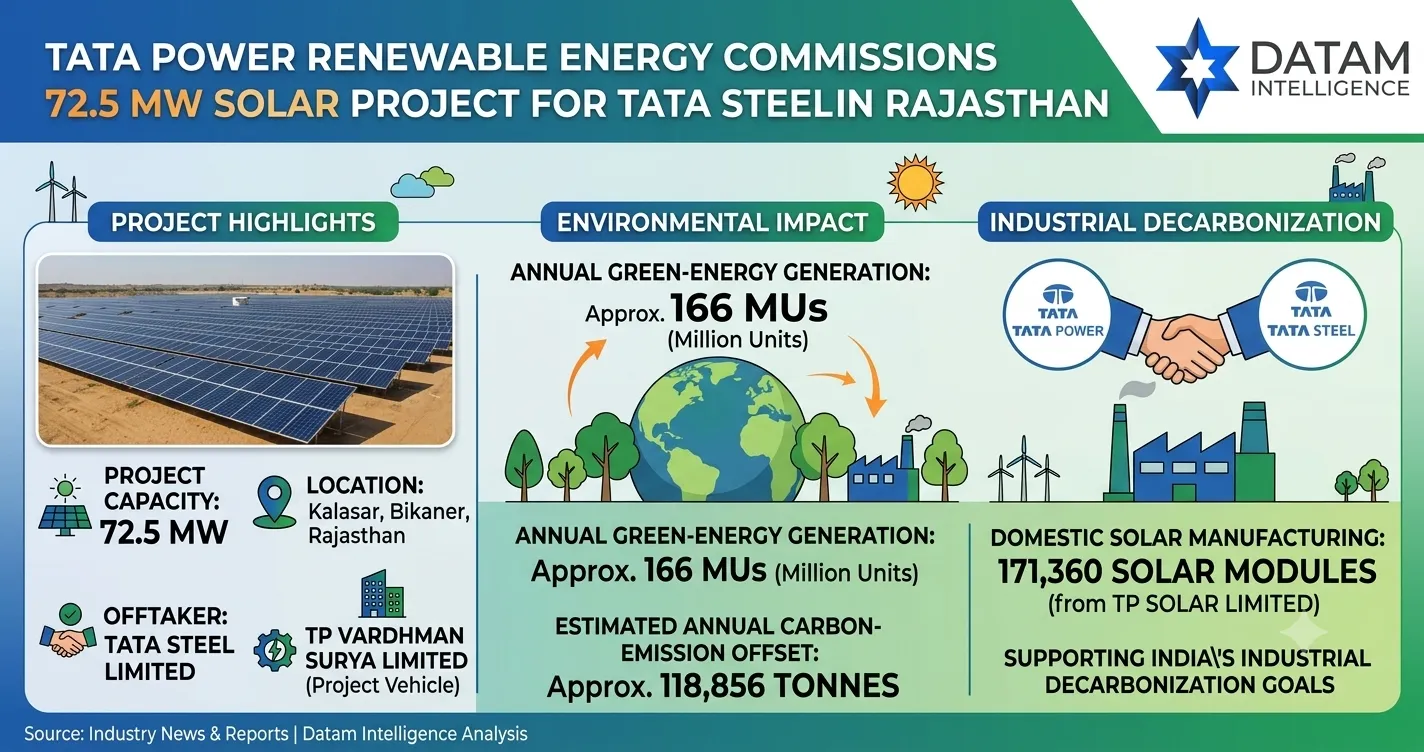
The project is expected to generate approximately 166 million units (MUs) of green electricity annually and offset around 118,856 tonnes of carbon emissions every year. The facility supplies renewable power to Tata Steel through TP Vardhman Surya Limited, a subsidiary of TPREL.
Explore the Renewable Energy Market Outlook Through 2035
Access renewable energy market size, growth forecasts, regional opportunities, technology trends, competitive intelligence and investment insights to make informed renewable energy decisions.
Request a Sample Report Today!
Tata Power's 72.5 MW Solar Project: Key Details
The captive solar installation has been developed at Kalasar, Bikaner, Rajasthan, specifically to support Tata Steel's renewable-energy and decarbonization objectives.
The project includes 171,360 solar modules manufactured by TP Solar Limited, linking Tata Power's renewable-energy generation and domestic solar manufacturing capabilities within the project ecosystem.
Project Highlights
- Project capacity: 72.5 MW
- Location: Kalasar, Bikaner, Rajasthan
- Offtaker: Tata Steel Limited
- Annual green-energy generation: Approximately 166 MUs
- Estimated annual carbon-emission offset: Approximately 118,856 tonnes
- Solar modules: 171,360
- Project vehicle: TP Vardhman Surya Limited
- Module manufacturer: TP Solar Limited
Why the Tata Steel Solar Project Matters
The commissioning demonstrates how large industrial companies can use captive renewable-energy projects to reduce dependence on conventional electricity sources while improving the sustainability profile of their operations.
For Tata Steel, renewable power is becoming an increasingly important component of its broader decarbonization strategy. The company's partnership with Tata Power Renewable Energy also extends beyond this project, with Tata Power previously announcing a larger renewable-energy arrangement involving Tata Steel.
The latest solar project therefore represents more than an individual capacity addition. It highlights the growing role of group captive renewable-energy models in India's industrial power market.
Captive Solar Power Gains Importance for Indian Industry
Captive renewable-energy projects allow energy-intensive businesses to secure dedicated clean electricity for their operations. This model can be particularly relevant for industries such as steel, chemicals, cement, automobiles and manufacturing, where electricity consumption is significant and decarbonization requirements are becoming more important.
The Tata Power-Tata Steel project illustrates how solar generation can be integrated into the electricity requirements of a major industrial consumer while contributing to emissions-reduction objectives.
India's expanding renewable-energy infrastructure is also creating opportunities for industrial companies to combine long-term power requirements with sustainability targets.
Tata Power Renewable Energy Expands Its Renewable Portfolio
With the commissioning of the project, TPREL's total utility-scale renewable portfolio has reached 12.3 GW, according to the company. Approximately 7 GW is operational, comprising around 5.7 GW of solar and 1.3 GW of wind capacity, while another 5.3 GW is under implementation.
The development follows another major Rajasthan milestone for TPREL. On August 24, 2026, the company announced the commissioning of a 190.5 MW solar Firm and Dispatchable Renewable Energy project at Kalasar, Bikaner, incorporating a 115 MWh battery energy storage system.
This concentration of renewable projects in Rajasthan reinforces the state's importance as a major hub for large-scale solar and hybrid renewable-energy development.
What the Project Means for Industrial Decarbonization
The project highlights three important trends shaping India's industrial energy transition.
First, captive renewable power is moving beyond small-scale corporate sustainability initiatives. Large industrial consumers are increasingly looking at dedicated renewable-energy assets as part of their long-term electricity strategy.
Second, solar power is becoming increasingly integrated with industrial decarbonization plans. The expected annual generation of 166 MUs from the Tata Steel project demonstrates the potential scale of renewable electricity that can be directed toward industrial consumption.
Third, domestic manufacturing is becoming part of the renewable-energy value chain. The use of modules manufactured by TP Solar Limited demonstrates the connection between renewable generation and India's expanding solar manufacturing ecosystem.
Outlook for Captive Renewable Energy in India
The commissioning of Tata Power's 72.5 MW captive solar project comes as Indian industries increasingly assess renewable electricity as a tool for managing energy costs, reducing emissions and meeting long-term sustainability objectives.
For renewable developers, captive and group-captive projects can provide access to large industrial electricity demand. For manufacturers, they can support progress toward emissions-reduction targets while diversifying the sources of electricity used across operations.
The Tata Power-Tata Steel project is therefore an important example of how renewable power generation, industrial electricity demand and corporate decarbonization strategies are converging in India's energy transition.
Key Takeaway
- 72.5 MW captive solar project: Tata Power Renewable Energy has commissioned the project for Tata Steel in Kalasar, Bikaner, Rajasthan.
- 166 million units annually: The project is expected to generate around 166 million units of green electricity every year.
- Lower carbon emissions: The project is expected to offset approximately 118,856 tonnes of carbon emissions annually.
- Supports Tata Steel's decarbonization: The project strengthens Tata Steel's transition toward greater renewable-energy consumption.
- Large-scale solar deployment: The project highlights the growing adoption of captive renewable power by energy-intensive industries.
- Domestic solar manufacturing: The project uses 171,360 solar modules manufactured by TP Solar Limited.
- Rajasthan's renewable-energy role: The project further strengthens Rajasthan's position as a major destination for large-scale solar development.
- Industrial clean-energy opportunity: The development demonstrates how captive renewable projects can support India's broader industrial decarbonization goals.
Related FAQs
What is the capacity of Tata Power's new solar project for Tata Steel?
Tata Power Renewable Energy has commissioned a 72.5 MW captive solar power project for Tata Steel in Rajasthan.
Where is Tata Power's 72.5 MW solar project located?
The project is located at Kalasar in Bikaner, Rajasthan.
How much electricity will the Tata Steel solar project generate?
The project is expected to generate approximately 166 million units of green energy annually.
How much carbon emissions will the solar project offset?
The project is expected to offset approximately 118,856 tonnes of carbon emissions annually.
Who developed the Tata Steel captive solar project?
The project was developed by Tata Power Renewable Energy Limited through TP Vardhman Surya Limited, a TPREL subsidiary.
How many solar modules are installed in the project?
The project uses 171,360 solar modules, manufactured by TP Solar Limited.
What is a captive solar power project?
A captive solar power project is a renewable-energy facility developed to supply electricity primarily to a designated industrial or commercial consumer, allowing the consumer to directly use renewable power for its operations.
Why is captive solar important for the steel industry?
Captive solar can help steel producers increase renewable electricity consumption, diversify their energy sources and support long-term decarbonization strategies.
What is Tata Power Renewable Energy's total renewable portfolio after the project?
TPREL said its total utility renewable portfolio has reached 12.3 GW, including operational and projects under implementation.
Is Tata Power working with Tata Steel on other renewable-energy projects?
Yes. Tata Power has previously announced arrangements involving Tata Steel for a much larger 966 MW solar-wind hybrid renewable-energy project, illustrating the broader renewable-energy relationship between the companies.
News source: https://www.tatapower.com/news-and-media/media-releases/tata-power-renewables-powers-tata-steel-s-decarbonization-journey-with-72-5-mw-captive-solar-project-in-rajasthap