


India Renewable Diesel Revolution: How Waste-Based Fuels Are Transforming the Future of Energy
India’s renewable diesel sector is emerging as a strategic clean energy opportunity as industries, policymakers, and investors focus on converting waste resources into low-carbon fuels. The growing adoption of renewable diesel technologies is supporting India’s goals of reducing fossil fuel dependency, strengthening energy security, and accelerating the transition toward sustainable transportation.
Explore the Future of Renewable Diesel Market Growth
Discover comprehensive insights on Renewable Diesel Market size, growth trends, competitive landscape, investment opportunities, feedstock analysis, and regional developments shaping the global renewable diesel industry.
India’s Shift Toward Renewable Diesel and Circular Energy Solutions
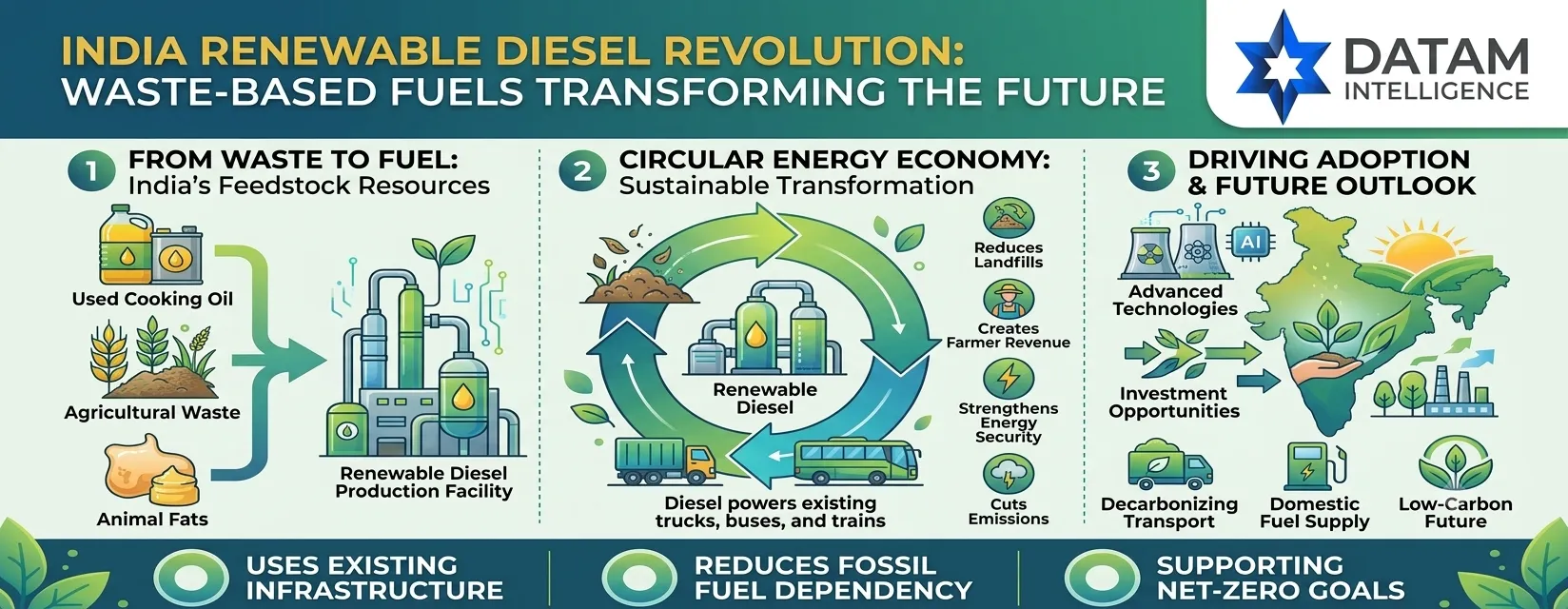
India’s energy landscape is undergoing a significant transformation as demand increases for cleaner alternatives to conventional petroleum-based fuels. Renewable diesel, produced from sustainable feedstocks such as used cooking oil, agricultural residues, animal fats, and other waste materials, is gaining attention as a scalable solution for reducing carbon emissions while utilizing existing fuel infrastructure.
Unlike traditional biodiesel, renewable diesel has chemical characteristics similar to petroleum diesel, allowing it to be integrated into existing diesel engines and distribution networks when produced according to required fuel specifications.
The development of renewable diesel aligns with India’s broader clean energy strategy by connecting waste management, renewable fuels, and industrial decarbonization into a single ecosystem.
Waste-to-Fuel Technology Creates New Energy Opportunities
India generates significant quantities of agricultural waste, food processing residues, and used cooking oil, creating a large potential feedstock base for renewable fuel production.
Previously considered waste challenges, these resources are increasingly being viewed as valuable energy assets. Converting waste materials into renewable diesel can help:
- Reduce landfill dependency
- Improve waste management efficiency
- Create additional revenue streams for farmers and waste collectors
- Support domestic fuel production
- Reduce exposure to crude oil price volatility
The waste-to-fuel model represents a major shift toward a circular economy approach, where waste materials become inputs for energy generation.
Renewable Diesel Strengthens India’s Energy Security
India remains heavily dependent on imported crude oil, making energy diversification a strategic priority. Renewable diesel production offers an opportunity to develop domestic fuel resources while supporting sustainability objectives.
Increasing renewable fuel capacity could help industries, logistics operators, and transportation companies access lower-carbon fuel alternatives without requiring major changes to existing infrastructure.
Growing investment in advanced biofuel technologies, feedstock collection networks, and processing facilities is expected to support the expansion of India’s renewable diesel ecosystem.
Technology Innovation Driving Renewable Diesel Adoption
Scaling renewable diesel production requires advanced processing capabilities, including:
- Feedstock pretreatment technologies
- Hydroprocessing systems
- Digital monitoring platforms
- Automated fuel quality management
- Efficient supply chain networks
Technology providers and energy companies are increasingly focusing on improving production efficiency, reducing operational costs, and expanding feedstock flexibility.
Government-backed initiatives supporting advanced biofuel development are also encouraging commercialization of next-generation renewable fuel technologies.
Investment Outlook for India Renewable Diesel Industry
The renewable diesel market presents significant opportunities for:
- Energy companies
- Biofuel producers
- Waste management firms
- Agricultural technology companies
- Infrastructure investors
- Sustainability-focused funds
Key investment areas include:
1. Renewable Fuel Production Facilities: Large-scale renewable diesel plants are expected to attract investment as demand increases for low-carbon fuels.
2. Feedstock Collection Infrastructure: Reliable supply chains for waste oils and agricultural residues will become critical for market expansion.
3. Advanced Processing Technologies: Innovations in refining and conversion technologies will determine production scalability.
4. Digital Energy Management Solutions: AI-powered monitoring, predictive maintenance, and automation will improve operational efficiency.
Industry Outlook: Renewable Diesel as a Future Clean Fuel Solution
Renewable diesel is positioned as an important component of India’s broader energy transition strategy. By combining waste management, renewable fuel production, and emissions reduction, the sector offers a pathway toward a more resilient and sustainable energy ecosystem.
As investment increases and technology improves, renewable diesel could become a critical contributor to India’s low-carbon transportation future while creating new economic opportunities across agriculture, manufacturing, and energy sectors.
Key Takeaways
- Renewable diesel is gaining importance in India’s clean energy transition.
- Waste-based feedstocks provide significant opportunities for domestic fuel production.
- Advanced biofuel technologies are accelerating commercial adoption.
- Renewable diesel can support energy security and emissions reduction goals.
- Investors are increasingly exploring renewable fuel infrastructure opportunities.
DataM Intelligence Expert Analyst View
According to DataM Intelligence analysis, renewable diesel is emerging as a strategic transition fuel that connects today’s conventional energy infrastructure with the future of low-carbon mobility. The market is gaining momentum as industries seek scalable decarbonization solutions that can reduce greenhouse gas emissions while leveraging existing fuel distribution networks and transportation systems.
DataM Intelligence highlights that advancements in waste-based feedstock utilization, renewable fuel processing technologies, and circular economy models are creating new growth opportunities for renewable diesel producers, energy companies, and investors. As governments and businesses accelerate clean energy adoption, renewable diesel is positioned as a critical component in achieving energy diversification, sustainability targets, and long-term fuel security.
Target Audience
- Energy & fuel companies
- Renewable energy investors
- Oil & gas executives
- Biofuel manufacturers
- Waste management companies
- Government policymakers
- Sustainability leaders
- Research analysts
- Clean technology startups