


Global EV Market Overview (2026 Outlook)
The BloombergNEF Electric Vehicle Outlook 2026 indicates that the global EV industry continues to grow, but at a more regionally uneven pace compared to previous years. While total volumes continue to rise, market dynamics are increasingly shaped by regional policy frameworks, cost competitiveness, and supply chain maturity.
Key Global Highlights:
- Global EV sales to reach 23.3 million units in 2026
- EVs to represent 27% of total passenger vehicle sales
- Overall growth of approximately 11% year-on-year
- Long-term trajectory remains strongly upward toward EV dominance by 2035
- Market expansion increasingly driven by Asia and emerging economies
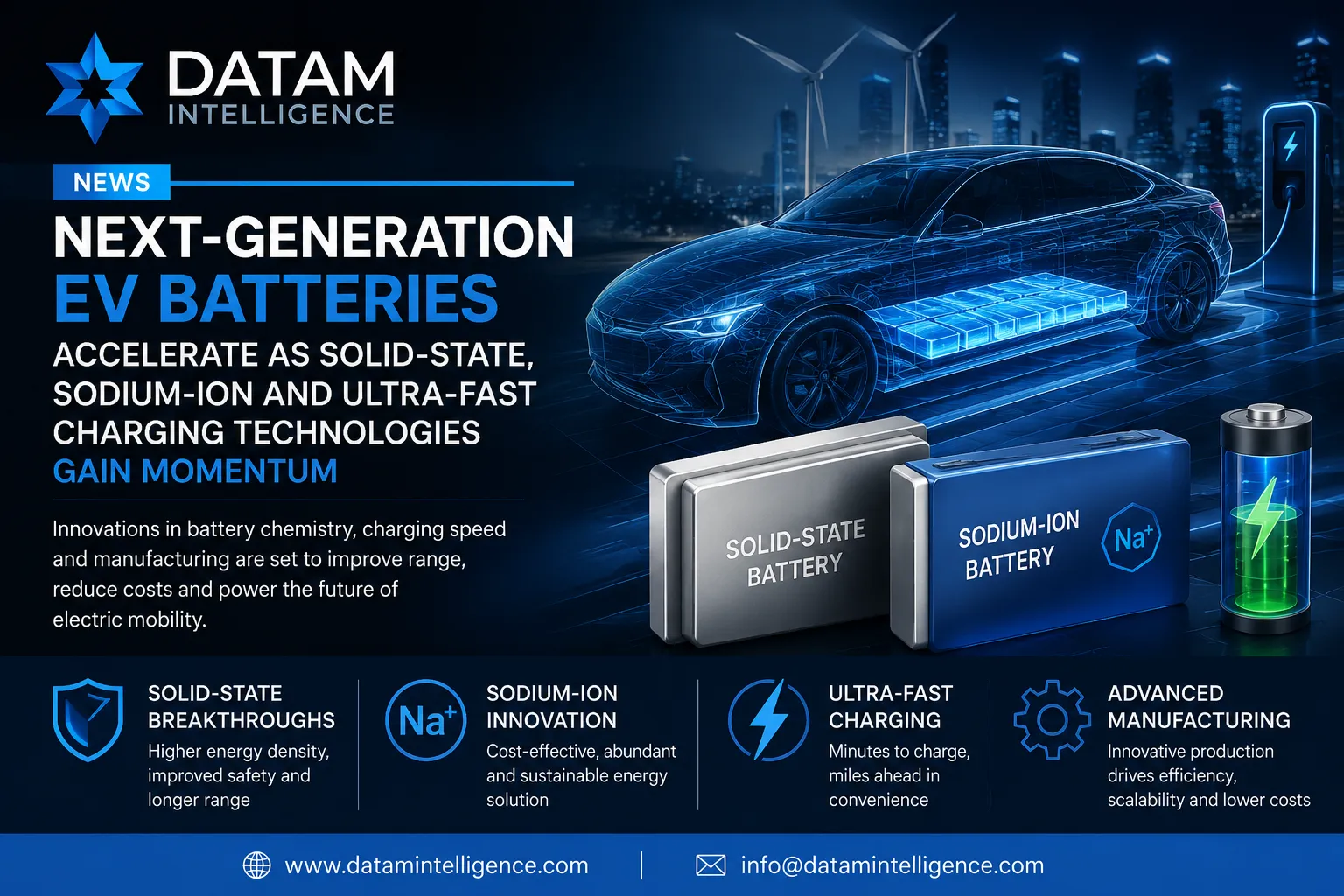
Electric Vehicle Market Report – Free Sample Download
Unlock deep insights into one of the fastest-growing industries shaping the future of mobility. The Electric Vehicle (EV) market is rapidly transforming global transportation with strong growth across EV adoption, charging infrastructure, battery innovation, and government-led sustainability initiatives.
Get access to data-driven insights including market size, growth forecasts, competitive landscape, key trends, and regional analysis across leading EV segments.
Download Your Free Sample Now
Stay ahead of the curve with exclusive intelligence on:
- Global & regional EV market trends
- Battery electric, hybrid & commercial EV segments
- Charging infrastructure expansion
- Policy impact & government incentives
- Key players shaping the EV ecosystem
Why Download the Sample Report?
✔ Gain a snapshot of full market research insights
✔ Understand high-growth opportunities in the EV sector
✔ Evaluate investment and business expansion potential
✔ Access trusted analysis from industry expertsGet Instant Access
Fill out the form and download your free sample report today to explore how the Electric Vehicle market is accelerating toward a sustainable future.
Buy Now Electric Market Report and Start your journey into EV market intelligence now
Regional Market Analysis
China: Continued Global EV Leadership
China remains the dominant force in the global EV market, both in production and consumption. The country continues to account for the largest share of global EV sales.
Key Highlights:
- Maintains largest share of global EV sales
- Driven by strong domestic manufacturing ecosystem
- Highly competitive EV pricing structure
- Strong presence of domestic EV brands
- Significant influence on global battery supply chains
Market Insight:
China’s scale advantage continues to define global EV pricing trends and supply chain competitiveness, particularly in lithium-ion battery production and export-driven EV markets.
Europe: Strong Growth Driven by Regulation
Europe is expected to remain one of the strongest growth regions in 2026, supported by aggressive decarbonization policies and regulatory mandates.
Key Drivers:
- Strict EU CO₂ emission regulations
- Expansion of EV charging infrastructure
- Increasing fleet electrification across corporate sectors
- Strong consumer adoption of mid- and premium-segment EVs
Market Insight:
Europe’s EV growth is primarily policy-driven, making it one of the most structurally stable EV markets globally.
United States: Growth Slowdown Continues
The United States is experiencing a relative slowdown in EV adoption compared to China and Europe.
Key Challenges:
- Reduction in federal EV incentives
- Regulatory uncertainty affecting investment decisions
- Rising affordability concerns for consumers
- Increasing competition from hybrid vehicles
Market Insight:
Despite long-term electrification goals, the U.S. market is currently facing structural headwinds that are moderating short-term growth.
Emerging Markets: Fastest-Growing Demand Region
Emerging economies are emerging as a critical growth engine for global EV expansion.
Key Growth Regions:
- Southeast Asia
- Latin America
- Parts of Africa and the Middle East
Growth Drivers:
- Increased availability of affordable EV imports
- Expansion of local assembly operations
- Government electrification programs
- Growth of ride-hailing and commercial EV fleets
Market Insight:
Emerging markets are expected to play a significantly larger role in global EV volume growth over the next decade.
Industry Trends Reshaping the Global Electric Vehicle Market
The global electric vehicle (EV) market industry is undergoing a significant structural transformation as it transitions from early-stage rapid expansion to a more mature, efficiency-driven phase. While adoption continues to grow across major regions, competitive dynamics, cost structures, and supply chain strategies are evolving rapidly. The following key trends are reshaping the industry landscape and redefining long-term competitiveness among global automakers and technology providers.
1. Continued Decline in Battery Costs Driving EV Affordability
One of the most influential forces shaping EV adoption remains the sustained decline in lithium-ion battery costs. Batteries account for a substantial share of total EV manufacturing costs, making them a critical determinant of vehicle pricing and consumer accessibility.
Key developments:
- Continuous improvements in battery chemistry, including higher energy density and reduced material intensity
- Scaling of gigafactory production leading to economies of scale
- Optimization of supply chains for key raw materials such as lithium, nickel, and cobalt
- Increasing adoption of cost-efficient chemistries like LFP (lithium iron phosphate) batteries
Market impact:
- EV price parity with internal combustion engine (ICE) vehicles is gradually improving in several segments
- Entry-level and mass-market EV adoption is accelerating, particularly in Asia and emerging economies
- Automakers are able to expand EV offerings without proportionally increasing capital expenditure
Strategic implication:
Battery cost deflation is expected to remain a foundational driver of EV penetration, particularly in price-sensitive markets where affordability determines adoption rates.
2. Supply Chain Localization and Regional Manufacturing Shift
The EV industry is witnessing a clear shift toward regionalized and localized supply chains, driven by geopolitical uncertainty, trade restrictions, and the need for operational resilience.
Key developments:
- Expansion of localized battery production facilities across North America, Europe, and Asia
- Government incentives promoting domestic manufacturing and “local content” requirements
- Diversification of critical raw material sourcing beyond traditional supply hubs
- Strategic partnerships between automakers, battery manufacturers, and raw material suppliers
Market impact:
- Reduced dependency on cross-border logistics and vulnerable supply corridors
- Improved supply chain stability and reduced production delays
- Increased capital investment in regional gigafactory ecosystems
Strategic implication:
Localization is becoming a competitive necessity rather than a strategic choice, as governments increasingly link EV incentives to domestic production capabilities.
3. Intensifying Competitive Pressure from Global and Chinese OEMs
Competition in the EV market is escalating rapidly, with Chinese manufacturers emerging as dominant price and scale leaders, significantly reshaping global market dynamics.
Key developments:
- Aggressive global expansion of Chinese EV brands into Europe, Southeast Asia, and Latin America
- Rapid product cycles and cost-efficient manufacturing models
- Strong integration of vertical supply chains, particularly in battery production
- Increased pricing pressure across mid-range and entry-level EV segments
Market impact:
- Traditional automakers face margin compression and loss of price competitiveness
- Accelerated product innovation cycles to maintain market relevance
- Greater emphasis on software, connectivity, and differentiated vehicle ecosystems
Strategic implication:
The competitive landscape is shifting from brand-driven differentiation to cost, scale, and supply chain efficiency leadership, forcing global OEMs to reassess long-term positioning strategies.
4. Transition from Volume Expansion to Profitability-Driven Growth
The EV industry is entering a new phase where strategic focus is shifting away from aggressive volume expansion toward sustainable profitability and operational efficiency.
Key developments:
- Reduction in EV subsidies and incentive programs in several mature markets
- Rising capital expenditure pressures from battery and manufacturing investments
- Increased focus on platform sharing and modular vehicle architectures
- Rationalization of product portfolios to prioritize high-margin segments
Market impact:
- Slower but more disciplined expansion strategies among major automakers
- Greater emphasis on cost optimization and supply chain efficiency
- Increased scrutiny from investors on EV business unit profitability
Strategic implication:
Profitability is becoming a central performance metric, with automakers prioritizing long-term financial sustainability over short-term market share gains.
Conclusion: Structural Rebalancing of the EV Industry
Collectively, these trends indicate that the global EV market is undergoing a structural rebalancing phase, characterized by:
- Lower production costs driven by battery innovation
- Increasing regionalization of manufacturing ecosystems
- Heightened global competition led by Chinese OEMs
- A strategic pivot toward profitability and capital efficiency
This transition marks a critical evolution in the EV industry, where success will increasingly depend on cost leadership, supply chain control, and scalable profitability models, rather than rapid expansion alone.
Structural Market Challenges
Despite strong growth, the EV industry continues to face several challenges:
- Uneven policy support across major economies
- Infrastructure gaps in developing regions
- Pricing pressure in entry-level EV segments
- Trade barriers and geopolitical risks
- Slower growth in mature automotive markets
Long-Term Outlook
According to BloombergNEF, the long-term EV market trajectory remains strong:
- EVs expected to account for over 50% of global passenger car sales by 2035
- Continued dominance of battery electric vehicles (BEVs)
- Rapid expansion across Asia, Latin America, and emerging economies
- Increasing global competition for manufacturing leadership
Analyst Insight
The 2026 outlook marks a critical transition for the global electric vehicle market industry. While total adoption continues to grow, the market is shifting from a phase of uniform expansion to a regionally fragmented growth model. China retains dominance, Europe strengthens regulatory-driven expansion, and emerging markets accelerate adoption, while the U.S. experiences a temporary slowdown.
This structural divergence is expected to redefine global automotive competitiveness over the next decade.
News source: https://about.bnef.com/insights/clean-transport/bloombergnefs-electric-vehicle-outlook-2026-global-ev-sales-set-for-another-record-breaking-year-but-growth-in-some-major-markets-slows/