


Introduction
Chevron and Microsoft have entered a landmark 20-year agreement to build a large-scale, natural gas-powered energy system in West Texas dedicated to supplying electricity for Microsoft’s AI data center campus. The project, known as Project Kilby, is expected to deliver approximately 2.7 gigawatts of dedicated power, making it one of the largest behind-the-meter energy developments ever built for artificial intelligence infrastructure.
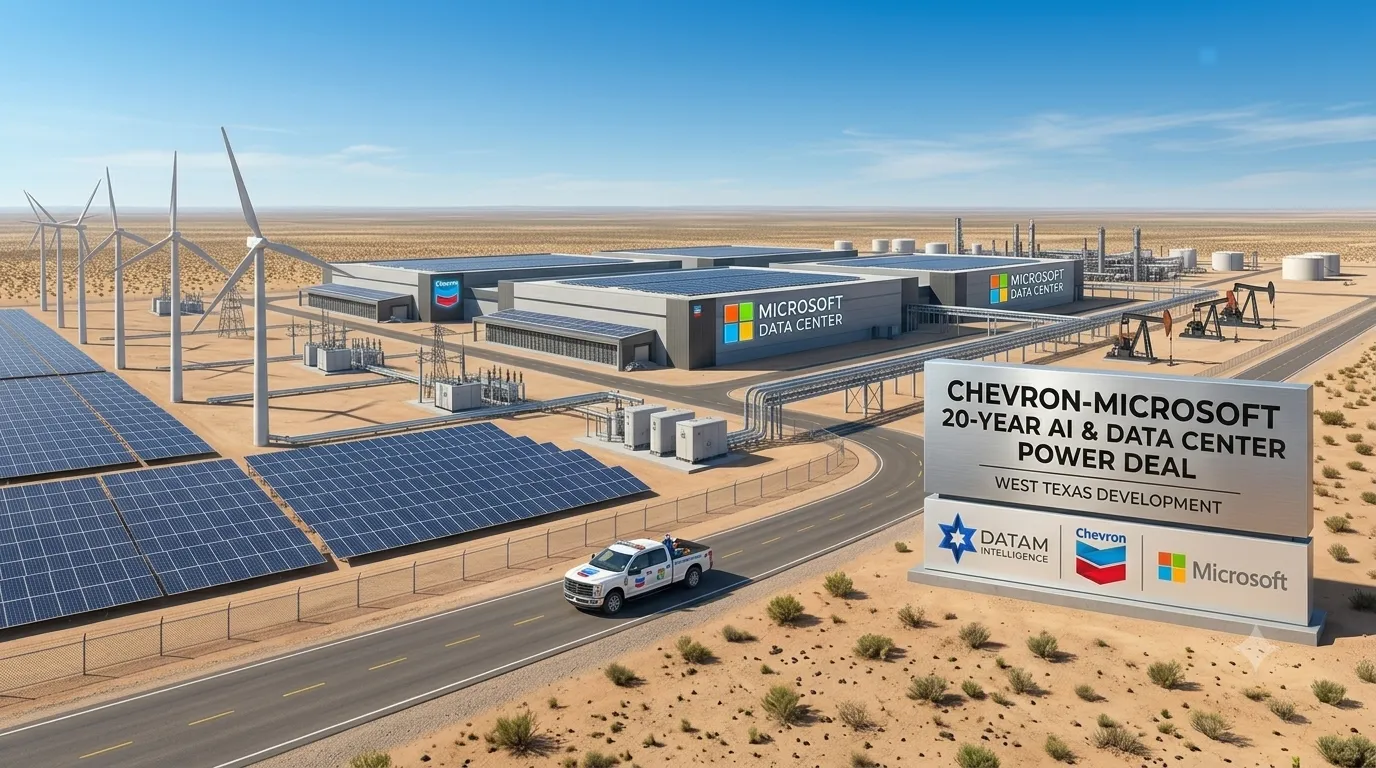
Chevron Moves Into AI Power Sector With Landmark Microsoft Deal
Chevron has signed a long-term strategic agreement with Microsoft to develop a dedicated energy infrastructure system that will power a next-generation artificial intelligence data center complex in West Texas. The agreement represents a major shift for the oil major as it expands beyond traditional hydrocarbon production into direct electricity generation for hyperscale technology customers.
The 20-year deal is centered on a co-located natural gas-fired power facility designed to deliver reliable, uninterrupted electricity directly to Microsoft’s AI operations without relying primarily on the regional Texas grid.
Explore AI Data Center Liquid Cooling Market research analysis report.
Project Kilby: A 2.7 GW AI Energy Megaproject
The initiative, internally referred to as Project Kilby, is being developed in partnership with investment firm Engine No. 1 and supported by advanced turbine technology providers including GE Vernova and Caterpillar’s Solar Turbines division.
Key Project Specifications:
- Total capacity: ~2.67–2.7 GW
- Duration: 20-year power purchase agreement
- Fuel source: Natural gas from Chevron’s Permian Basin production
- Technology: GE Vernova gas turbines + auxiliary turbine systems
- Location: West Texas (Pecos region)
- Operational model: Behind-the-meter, co-located generation
- Grid interaction: Limited initial reliance, potential future grid export
Once fully developed, the facility could supply electricity equivalent to powering nearly two million homes, underscoring the massive scale of energy required for modern AI systems.
Why Big Tech Is Locking Into Private Power Deals
The deal reflects a structural shift in how hyperscale cloud providers are responding to explosive AI energy demand.
1. AI Is Driving Unprecedented Power Consumption
Large-scale AI training and inference workloads require continuous, high-density computing clusters that significantly increase electricity demand compared to traditional cloud services.
2. U.S. Grid Constraints Are Slowing Expansion
Regions like Texas are experiencing congestion, interconnection delays, and transmission bottlenecks that make direct grid dependency less viable for hyperscalers.
3. Natural Gas Abundance in the Permian Basin
West Texas produces large volumes of natural gas, often facing pricing pressure due to pipeline constraints. This project monetizes that stranded resource by converting it into dedicated AI power supply.
4. Energy Security for AI Infrastructure
Microsoft gains long-term price stability and guaranteed power availability, critical for maintaining uptime in AI workloads.
Economic and Industrial Impact
The Chevron–Microsoft agreement is expected to have wide-ranging economic implications.
Projected Impacts:
- Multi-billion-dollar infrastructure investment over 5 - 7 years
- More than 6,000 construction jobs
- Hundreds of long-term operational jobs
- Over $10 billion in projected tax revenue (regional estimates)
- Significant boost to Permian Basin gas demand
Chevron positions the project as a new revenue stream that reduces exposure to oil price volatility, while Microsoft strengthens its long-term AI infrastructure capacity.
A New Model: “Energy + Data Center Integration”
Project Kilby represents a shift toward vertically integrated infrastructure where energy generation and computing are co-located.
This model includes:
- Direct power supply from generation to compute
- Reduced dependence on public grid systems
- Faster deployment timelines for AI infrastructure
- Greater control over energy costs and reliability
Industry analysts describe this as the emergence of “AI energy campuses” a hybrid of power plant and data center operating as a single system.
Sustainability and Transition Considerations
While the project is initially powered by natural gas, Chevron has indicated potential future integration of:
- Carbon capture and storage (CCUS)
- Renewable hybrid systems (solar + storage)
- Water reuse systems for cooling and operations
- Potential grid interconnection for surplus power sales
This positions the initiative within a transitional energy framework rather than a purely fossil-fuel model.
Market Significance
The Chevron–Microsoft deal highlights a broader industry trend:
- Oil & gas companies entering AI infrastructure markets
- Tech firms securing dedicated energy supply chains
- Rapid growth in “behind-the-meter” generation systems
- Expansion of hyperscale AI campuses in Texas and U.S. Southwest
Competitors such as ExxonMobil and NextEra Energy are also exploring similar AI-linked power projects, signaling a new competitive frontier between energy and technology sectors.
Strategic Outlook
The agreement signals a long-term structural transformation in global infrastructure development, where:
AI growth is no longer limited by compute hardware but by access to reliable electricity.
This convergence between energy production and digital infrastructure is expected to accelerate as AI adoption expands across enterprise, government, and consumer applications.
Conclusion
Chevron’s 20-year agreement with Microsoft marks a defining milestone in the evolution of AI infrastructure. By directly linking energy production with hyperscale computing demand, the Project Kilby initiative establishes a new blueprint for how future data centers will be powered, financed, and scaled.
As AI demand continues to surge globally, similar energy-backed infrastructure partnerships are expected to become a standard model across major technology hubs worldwide.
News source: https://www.wsj.com/tech/ai/spacex-strikes-6-billion-deal-with-ai-startup-for-data-center-space-85d3f72f