


Introduction: A Structural Growth Story in the Philippines Cement Market
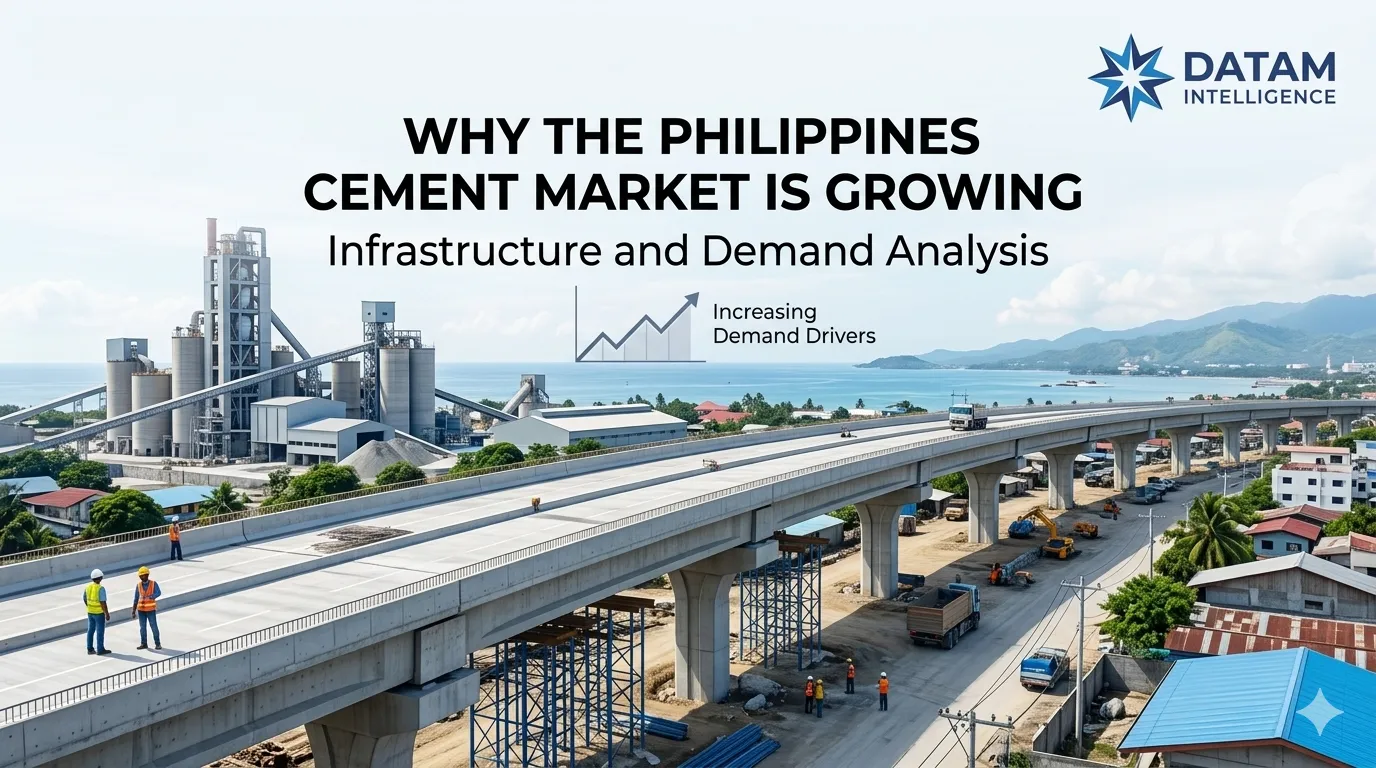
The Philippines cement market is undergoing a sustained growth phase supported by strong infrastructure investment, rapid urbanization, and government-led construction initiatives. Valued at approximately US$2.92 billion in 2025, the market is projected to reach US$3.44 billion by 2033, expanding at a CAGR of 4.84% during 2026 - 2033 .
Unlike cyclical construction booms in mature economies, the Philippines is experiencing structural demand expansion, where cement consumption is directly linked to long-term national development programs such as transportation corridors, flood control systems, housing projects, and industrial expansion.
This makes the Philippines cement industry a strategic focus area for investors, infrastructure developers, and building material manufacturers.
Download Free Sample Report
Get exclusive access to in-depth insights on the Philippines Cement Market, including market size, growth trends, segmentation, competitive landscape, and future outlook.
Discover key drivers such as rising infrastructure development, urbanization, and government construction initiatives shaping industry demand.
Download your free sample report now to explore detailed data, forecasts, and strategic insights before making a purchase decision.
Market Overview: Key Growth Indicators
The Philippines cement industry is characterized by:
- Strong infrastructure-led demand growth
- Government-backed construction pipelines
- Increasing urban housing requirements
- Rising industrial and logistics development
- Transition toward sustainable cement production
Industry forecasts show consistent expansion, with demand expected to grow around 4.5% - 4.8% annually through the decade .
At the same time, domestic consumption is closely tied to macroeconomic performance, particularly GDP growth and public infrastructure spending cycles.
Primary Growth Driver #1: Infrastructure Mega Projects
Infrastructure development is the single most important driver of cement demand in the Philippines.
Key Government Initiatives Fueling Demand
The government’s “Build Better More” infrastructure program continues to accelerate:
- National highway expansion projects
- Metro rail and urban transit systems
- Airport modernization programs
- Port development and logistics hubs
- Flood control and climate resilience infrastructure
Public construction projects have a direct multiplier effect on cement consumption, as large volumes are required for roads, bridges, and public utilities.
Market analysts confirm that infrastructure-led spending remains the core stabilizing factor for cement demand, even during periods of private sector slowdown .
Primary Growth Driver #2: Rapid Urbanization and Housing Demand
Urban migration is reshaping cement consumption patterns across the Philippines.
Key Demand Factors:
- Rising population density in Metro Manila and regional cities
- Government-led affordable housing programs
- Expansion of residential subdivisions
- Increased demand for mid-rise and high-rise developments
Housing construction represents a consistent, non-seasonal demand base, ensuring steady cement consumption even during infrastructure delays.
As urbanization accelerates, cement demand is shifting from purely government-led projects to a hybrid model of public + private residential growth.
Primary Growth Driver #3: Industrialization and Commercial Expansion
Beyond infrastructure and housing, industrial expansion is becoming a major cement demand pillar.
Key contributors include:
- Growth in manufacturing facilities
- Expansion of logistics and warehousing networks
- Retail and commercial real estate development
- Energy and utility infrastructure investments
The Philippines’ improving investment climate supported by regulatory reforms and foreign investment initiatives is expected to further increase industrial construction activity.
Market Dynamics: Supply, Imports, and Competitive Pressure
While demand is strong, the industry faces structural challenges:
1. Import Competition
Imported cement has historically pressured local producers, leading to policy interventions such as safeguard duties to protect domestic manufacturing.
2. Energy Cost Volatility
Cement production is energy-intensive, and high electricity and fuel costs remain a major margin pressure point.
3. Capacity Optimization
Producers are focusing on:
- Local clinker production
- Operational efficiency improvements
- Waste co-processing technologies
- Digital manufacturing upgrades
4. Decarbonization Pressure
Sustainability is becoming a key competitive differentiator as companies adopt:
- Low-carbon cement formulations
- Alternative fuels
- Carbon reduction technologies
Investment Outlook: Why Investors Are Paying Attention
The Philippines cement market is increasingly viewed as a strategic long-term investment opportunity rather than a purely cyclical construction material sector. This shift is driven by a combination of structural demand stability, macroeconomic alignment, and ongoing industry transformation, making the sector highly relevant for institutional investors, private equity firms, infrastructure funds, and strategic corporate players.
1. Stable Infrastructure Pipeline
One of the most compelling investment drivers is the Philippines’ consistent and government-backed infrastructure development agenda. Large-scale public spending under long-term national infrastructure programs ensures a steady and predictable pipeline of construction activity.
Projects such as highways, rail systems, airports, bridges, and urban development corridors create sustained baseline cement demand, reducing volatility typically seen in private construction cycles. This predictable demand structure enhances revenue visibility for cement manufacturers and strengthens investor confidence in long-term capacity planning and capital allocation.
2. GDP-Linked Growth Dynamics
Cement demand in the Philippines is strongly correlated with overall economic performance, particularly GDP growth, urban expansion, and industrial output. As a result, cement consumption acts as a real-time proxy indicator for construction and economic activity.
During periods of economic expansion, increased public infrastructure spending and private real estate development directly translate into higher cement utilization. This tight linkage to macroeconomic indicators makes the sector attractive for investors seeking exposure to real asset-backed growth tied to national development cycles.
3. Consolidation Opportunities in a Fragmented Market
The Philippines cement industry is gradually undergoing market restructuring and consolidation, creating significant strategic opportunities for both domestic and international investors.
Key areas of opportunity include:
- Strategic acquisitions of regional cement producers or distribution networks to expand market share and geographic coverage
- Capacity expansion investments to meet rising long-term demand and reduce reliance on imports
- Vertical integration strategies, including clinker production, logistics optimization, and raw material sourcing control
- Strengthening regional distribution networks to improve cost efficiency and market penetration across island regions
This consolidation trend is expected to improve economies of scale, enhance pricing power, and increase operational efficiency across the industry.
4. ESG-Driven Transformation and Green Cement Adoption
A major structural shift reshaping the investment landscape is the growing focus on Environmental, Social, and Governance (ESG) compliance within the construction materials sector.
The transition toward low-carbon cement, alternative fuels, and sustainable production technologies is opening new investment frontiers. Companies that invest early in green cement innovation and carbon reduction technologies are likely to gain long-term competitive advantages, including regulatory alignment and preferential access to infrastructure projects with sustainability mandates.
This ESG-driven transformation is also attracting impact investors and climate-focused funds, further expanding the capital base flowing into the sector.
Strategic Investment Perspective
Collectively, these factors position the Philippines cement market as a structurally attractive, policy-supported, and sustainability-aligned investment destination. The combination of infrastructure-led demand stability, macroeconomic correlation, industry consolidation potential, and ESG transformation creates a multi-dimensional growth story with both defensive and expansionary characteristics.
For investors, the sector offers not only cyclical upside during construction booms, but also long-term resilience driven by national development priorities and structural urbanization trends.
Competitive Landscape: Industry Realignment
Major cement producers in the Philippines are increasingly focusing on:
- Operational digitization
- Energy efficiency improvements
- Alternative fuel adoption
- Cost optimization strategies
- Expansion of distribution networks
The market is gradually shifting from volume-based competition to efficiency and sustainability-driven competition.
Future Outlook (2026 - 2033)
The outlook for the Philippines cement market remains positive and structurally stable, supported by:
- Continued government infrastructure expansion
- Strong housing demand pipeline
- Industrialization and FDI inflows
- Urban population growth
- Green construction transition
However, risks remain, including:
- Energy price volatility
- Import dependency
- Policy and regulatory changes
- Execution delays in public infrastructure projects
Overall, the market is expected to maintain steady mid-single-digit growth, reinforcing its position as one of Southeast Asia’s most resilient cement demand centers.
Conclusion: A Long-Term Structural Growth Market
The Philippines cement market is not driven by short-term cycles alone, it is a long-term infrastructure-led growth story.
With sustained government investment, rapid urbanization, and industrial expansion, cement demand is expected to remain strong through the next decade.
For investors, executives, and industry stakeholders, the Philippines represents:
- A stable construction growth market
- A policy-supported infrastructure economy
- A rising hub for sustainable cement innovation
As infrastructure ambition expands, cement will remain the foundation of the Philippines’ economic transformation.