


Introduction
Hydrogen is rapidly emerging as a cornerstone of the global clean energy transition. Governments, utility companies, and industrial manufacturers worldwide are investing billions of dollars in hydrogen production facilities, distribution networks, high-capacity storage systems, and fueling infrastructure to support net-zero decarbonization goals.
However, the scale-up of the hydrogen economy depends heavily on the specialized infrastructure materials used to safely manage this volatile gas. Among these materials, precision-engineered stainless steel tubes and fittings have become completely indispensable. Because hydrogen demands absolute structural integrity, the choice of piping specification is directly dictating project timelines and capital allocation for commercial-scale deployments worldwide.
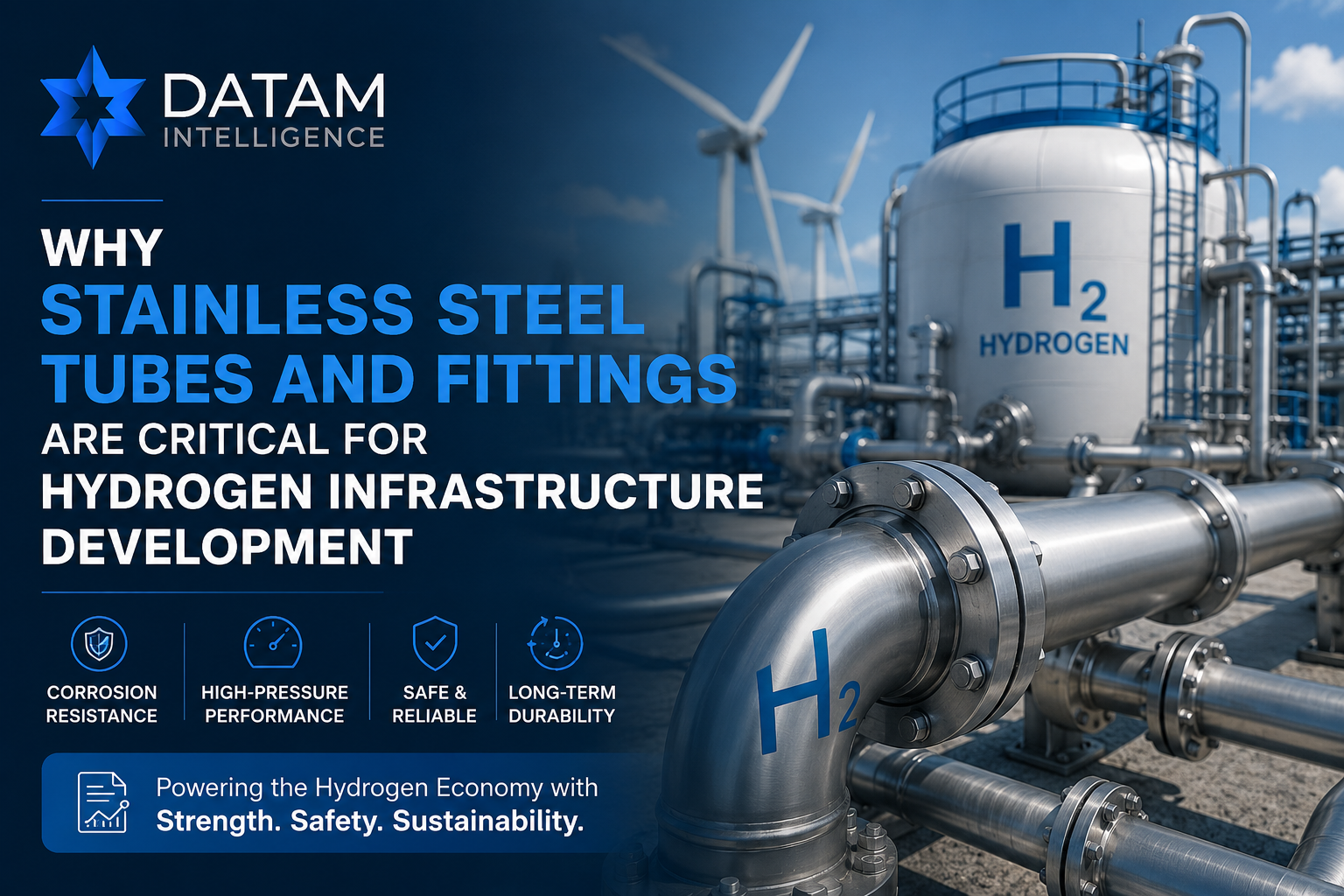
Why Are Stainless Steel Tubes and Fittings Important for Hydrogen Infrastructure?
Stainless steel tubes and fittings are critical for hydrogen infrastructure because they provide localized immunity to hydrogen embrittlement, exceptional high-pressure mechanical properties, and absolute zero-tolerance leak prevention.
While conventional gases can be handled with standard carbon steels, hydrogen's ultra-small atomic structure requires specialized austenitic or duplex stainless steel grades to ensure system integrity and prevent catastrophic structural failures across the supply chain.
The Unique Material Challenges of Hydrogen Transport
Unlike conventional methane or liquid fuels, hydrogen presents severe metallurgical challenges.
Because diatomic hydrogen (H2) molecules are infinitesimally small, they easily dissociate into atomic hydrogen (H) on metal surfaces under pressure. These tiny atoms diffuse directly into the interstitial lattice paths of surrounding metals. In lower-grade metals, this causes:
- Hydrogen Embrittlement (HE): A severe loss of material ductility and fracture toughness.
- Micro-fissures & Sub-surface Cracking: Internal structural degradation that propagates silently over time.
- High-Velocity Leakage Risks: Escape pathways through standard mechanical pipe joints and low-integrity welds.
To prevent these hazards, systems operating at typical hydrogen pressures (350 bar to 700) must utilize high-performance stainless steel that exhibits minimal hydrogen permeability.
Overcoming Hydrogen Piping Supply Sourcing Bottlenecks
Navigating the engineering trade-offs between heavy-walled seamless tubing, cold-drawn pipes, and specialized compression fittings requires granular supply chain data. Securing your procurement pipeline requires a clear view of Tier-1 manufacturer capacities, raw material alloy pricing forecasts, and regional trade regulations.
[Download a Free Sample PDF of the Global Stainless Steel Tubes & Fittings Market Report] to unlock full competitive profiling, product-level segmentation matrices, and comprehensive infrastructure demand forecasting through 2035.
Superior Metallurgy: Choosing the Right Stainless Steel Grade
Not all stainless steels are created equal when handling hydrogen. Industrial operators favor specific alloy compositions to ensure safety:
- Austenitic Stainless Steels (AISI 316/316L): Featuring a face-centered cubic (FCC) crystal structure, these alloys exhibit high nickel (minimum 10-14%) and chromium content. This specific atomic arrangement drastically lowers the hydrogen diffusion rate, preventing embrittlement even at extreme pressures.
- Duplex & Super Duplex Alloys: Increasingly deployed in large-scale offshore transport lines and carbon-capture integration loops due to their high tensile strength and superior pitting resistance in marine environments.
Critical Infrastructure Nodes Dependent on Stainless Steel
The integration of advanced stainless steel flow systems spans across three major nodes of the hydrogen economy:
1. Hydrogen Production & Electrolysis Plants
Green hydrogen production relies on massive industrial electrolyzers. These units require corrosion-resistant, high-purity piping networks to transport process water, aggressive electrolytes, and highly concentrated oxygen and hydrogen streams without introducing metallic ion contamination that could poison the electrolyzer catalyst stacks.
2. Safe Bulk Transportation & Storage Networks
Whether transported via high-pressure compressed gas trailers, liquid cryogenic systems operating at extreme sub-zero temperatures ($-253^\circ\text{C}$), or dedicated distribution networks, stainless steel seamless tubes provide the exact impact toughness and mechanical stability required to manage thermal contraction and pressure cycling.
3. High-Pressure Refueling Stations
Commercial hydrogen-powered heavy transport networks (trucks, buses, and rail) require dispensing systems operating at high pressures ($700\text{ bar}$). These environments mandate thick-walled seamless instrumentation tubing and two-ferrule compression fittings to ensure completely vibration-proof, leak-tight connections during rapid fueling sequences.
Regional Shifts and Supply Chain Dynamics
- Europe: Driven by ambitious green corridors and strict compliance mandates, European EPCs are heavily investing in certified, low-carbon steel components.
- North America: Clean energy infrastructure subsidies have triggered an aggressive deployment cycle for domestic hydrogen refueling corridors and production hubs.
- Asia-Pacific: Led by massive capital expenditure in China, Japan, and Australia, this region leads high-volume infrastructure component procurement.
Analyst Perspective
The convergence of aggressive hydrogen infrastructure investments and strict safety frameworks is driving a permanent market structural shift. Commodity-grade, low-specification welded piping is no longer viable for modern clean energy deployment.
Manufacturers, fabricators, and distributors who pivot their product lines toward high-nickel austenitic seamless tubes, advanced automated orbital welding compatibility, and certified precision fittings are positioned to capture dominant market volumes over the next decade.
Explore the Full Market Analysis
For comprehensive global market forecasts, regional capacity allocations, trade data matrices, competitive benchmarking, and supplier landscape analyses, explore DataM Intelligence's deep-dive industrial study:
Global Stainless Steel Tubes & Fittings Market Size, Share, and Forecast 2035