


Prebiotic ingredients are moving into a more commercially sophisticated phase. For years, the category was largely associated with fiber supplements, digestive-health yogurts and a familiar group of ingredients such as inulin and oligofructose. That foundation remains important, but it no longer captures the full opportunity. Food and beverage manufacturers are now using prebiotics to build low-sugar drinks, improve texture in dairy alternatives, add nutritional value to snacks and support targeted gut-health positioning. At the same time, ingredient companies are investing in human milk oligosaccharides, acacia fiber, galacto-oligosaccharides and new microbiome-active compounds.
Request Sample: https://www.datamintelligence.com/download-sample/prebiotic-ingredients-market
Prebiotics Are Becoming a Product-Development Platform
The most valuable prebiotic ingredients now deliver more than one outcome. Inulin and chicory-root fiber can support digestive-health and fiber claims, but they can also help reduce sugar, replace solids and improve mouthfeel. GOS can create a route to digestive-wellness dairy while enabling lower-lactose product concepts. Acacia fiber can be used where tolerance, solubility and formulation flexibility are important. HMOs are opening a premium early-life nutrition segment in which regulatory access, scientific evidence and manufacturing capability are all decisive.
This multifunctionality matters because functional-food buyers face several pressures at once. They need to improve nutrition while protecting consumer experience. They need to create differentiation without making a recipe too complicated. They need to respond to gut-health demand without positioning every product as a supplement. The winning ingredient suppliers will be those that can help a customer solve several formulation and commercial challenges together.
This trend is already visible in the expanding use of inulin, oligofructose and chicory-root fiber in snacks, beverages, sauces, seasonings and dairy alternatives. Prebiotic fibers are increasingly selected for their role in texture, satiety, sugar reduction and nutritional density, as well as their microbiome relevance. The result is a larger addressable market than conventional digestive-health products alone.
The Competitive Landscape Extends From Chicory to HMOs
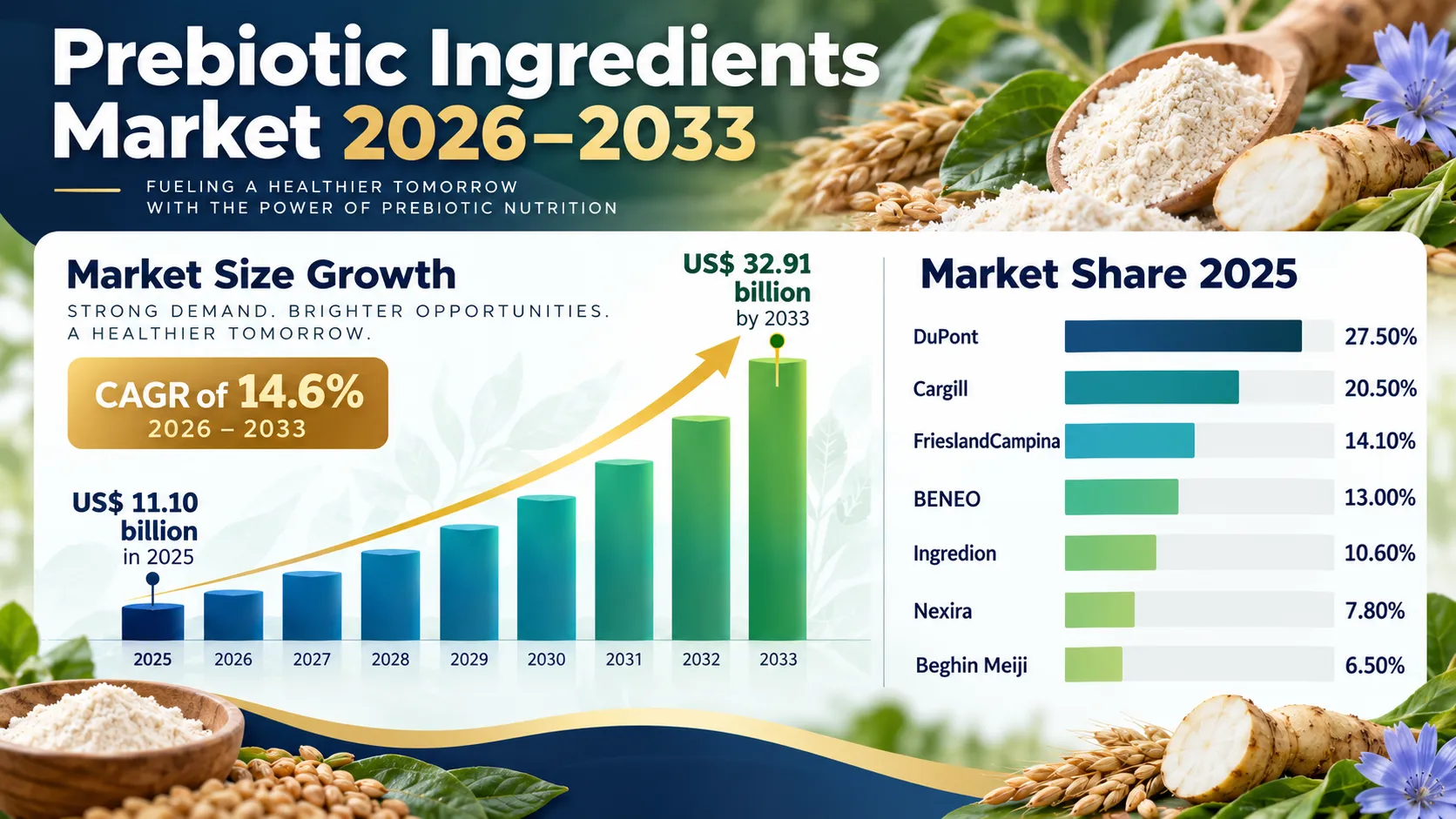
The prebiotic ingredients market contains several distinct competitive groups. BENEO, Sensus and Cosucra are central to the chicory-root fiber market, with inulin and oligofructose ingredients that are used across food, beverages and supplements. Their advantage comes from long-standing technical knowledge, established applications and the ability to translate prebiotic science into large-volume everyday products.
Ingredion, Tate & Lyle and Cargill compete through broader ingredient-system capabilities. Their opportunity is not limited to selling a fiber. They can combine fiber enrichment with sweetness, texture, cost management and product-development support. Ingredion’s work with soluble carrot fiber reflects growing interest in differentiated plant-based sources, while Tate & Lyle’s fiber-fortification strategy points to the scale available when prebiotics are embedded in familiar food and beverage categories.
IFF, Nexira, dsm-firmenich and FrieslandCampina Ingredients have strong positions in specialty microbiome solutions. IFF’s GOS formats and dairy-processing tools show how a prebiotic can be integrated directly into a manufacturing process. Nexira brings acacia fiber into digestive comfort, weight management and healthy-aging concepts. dsm-firmenich is extending HMO availability in early-life nutrition, where technical quality and local approvals are as important as consumer demand. FrieslandCampina Ingredients remains relevant through GOS applications in infant, pediatric and nutrition markets.
The commercial divide is therefore not simply between large and small suppliers. It is between suppliers selling a raw source of fiber and suppliers helping customers create a differentiated finished product. This is why application expertise, regulatory support and local technical service are becoming as valuable as ingredient supply.
New Sources Could Change How the Category Defines Prebiotics
Research into ColonX, a porcini mushroom β-glucan-based ingredient, illustrates the interest in non-traditional prebiotic sources. The reported in-vitro work found increased levels of beneficial Bifidobacterium after antibiotic exposure and changes in fermentation-related organic acids. The finding is promising, particularly because antibiotic recovery is an unmet consumer concern. Yet it also shows the importance of disciplined commercial interpretation: in-vivo studies are still needed before broad health claims can be justified.
For product developers, the opportunity is to watch for ingredients that offer a new story without abandoning evidence standards. Mushroom-derived β-glucans could create an appealing bridge between familiar natural-food cues and advanced microbiome positioning. But brands should avoid treating early-stage research as a ready-made claim platform. The strongest launches will be built around validated benefits, realistic dosage levels and clear regulatory review.
Request Customized Sample According to your Business Requirement: https://www.datamintelligence.com/customize/prebiotic-ingredients-market
GOS and HMOs Expand the High-Value Nutrition Opportunity
Galacto-oligosaccharides are gaining renewed attention because they fit multiple high-growth applications. Clasado Biosciences’ focus on Bimuno GOS at Fi Asia Indonesia highlights the role of Asia-Pacific in prebiotic innovation. GOS can be used across dietary supplements, functional beverages and dairy products, giving suppliers a flexible platform that can be adapted to different consumer needs and regional preferences.
IFF is advancing a more process-led GOS proposition for dairy. Its GOS syrup, powder formats and enzymatic tools allow manufacturers to increase prebiotic fiber while reducing lactose and sugar within existing dairy production processes. This is a meaningful commercial advantage. Instead of asking a customer to redesign a full recipe, the ingredient system can work with current manufacturing assets and support a more efficient path to market.
HMOs add a premium layer to the market. dsm-firmenich’s recent approvals for several HMO ingredients in China, Malaysia and Thailand demonstrate that regulatory access is a competitive weapon in early-life nutrition. The ability to offer fucosylated, sialylated and neutral-core HMOs gives manufacturers more flexibility to build differentiated blends. BENEO’s partnership with WACKER to launch 2’-fucosyllactose also shows that suppliers traditionally known for plant-based fibers are expanding their prebiotic portfolios into early-life nutrition.
Prebiotic Beverages Are Taking the Category Mainstream
PepsiCo’s consumer activation for Pepsi Prebiotic Cola reflects a wider shift: prebiotics are becoming visible in mainstream refreshment, not only in specialist nutrition channels. The significance is larger than one product launch. When an established beverage brand associates prebiotics with a familiar format and lower-sugar positioning, it helps reduce the consumer-education barrier for the category.
Beverages remain one of the most attractive and demanding applications. The formulation must meet expectations on flavor, sweetness, stability and price, while delivering an ingredient dose that is commercially meaningful. Fiber can influence viscosity, clarity and sweetness perception. Some formats require excellent solubility, while others can support more complex mouthfeel. Ingredient suppliers that can pair prebiotic science with beverage application knowledge will have a stronger route to brand partnerships.
Tate & Lyle’s goal of delivering 35 billion daily fiber-gap equivalent servings by 2030 reinforces the potential of mainstream fortification. The largest commercial opportunity may not be a premium standalone digestive product. It may be the quiet addition of prebiotic fiber into products consumers already purchase every day.
AI Could Make Prebiotics More Precise
The next frontier is not simply a larger selection of fibers. It is a better understanding of which fibers produce the most useful effects in particular microbial environments. Research highlighted by the Global Prebiotic Association shows how machine learning, Bayesian optimisation and robotic testing can be used to assess combinations of dietary fibers and bacterial species.
This has important implications for the market. Today, most products use broad digestive-health language and a general fiber strategy. Over time, AI-enabled research could support more precise ingredient selection based on the intended microbiome response, life stage, dietary pattern or health objective. It may help ingredient companies identify combinations that offer stronger performance at lower dosage levels or create better synbiotic concepts with selected probiotics.
The technology is still emerging, and responsible brands should not promise personalised microbiome outcomes before evidence supports them. Nevertheless, precision prebiotics could become a premium growth segment, especially in supplements, healthy aging, metabolic health and clinical nutrition.
What Buyers Should Ask Before Selecting a Prebiotic Supplier
Ingredient buyers should begin with the intended product, not the ingredient trend. Does the supplier offer evidence that fits the proposed claim? Is the required dose feasible in the final format? Can the ingredient remain stable through processing and shelf life? Does it create unwanted changes in taste, texture or digestive tolerance? These questions should be considered alongside price and availability.
Regulatory access is equally important. HMO ingredients, for example, may be commercially attractive but are subject to country-specific approvals. A supplier with an established regulatory dossier and local market access can shorten the product-development process significantly. For mainstream food and beverage launches, buyers should also assess whether the supplier can provide application trials, prototype support and guidance on nutrition and labeling requirements.
Supply resilience matters as well. Chicory, acacia, dairy-derived GOS and fermentation-derived HMOs have different sourcing, processing and geographic-risk profiles. A strong procurement strategy should identify secondary options, validate substitutes early and avoid tying a new product’s success to an ingredient that cannot be reliably scaled.
The Next Growth Phase Will Be Built on Functional Precision
The prebiotic ingredients market is moving from fiber quantity to functional precision. Traditional inulin, oligofructose and GOS will remain foundational because they are well understood and adaptable. However, growth will increasingly come from new ingredient sources, HMO expansion, beverage integration, formulation performance and better microbiome science.
For food and nutrition companies, the strategic opportunity is to treat prebiotics as a platform for product innovation rather than a single claim. The strongest products will combine an ingredient with evidence, a relevant format, a clear consumer need and a formulation that people want to consume again.
Read Complete Research Reprot: https://www.datamintelligence.com/research-report/prebiotic-ingredients-market