


Why packaging decisions in 2026 are shifting from material preference to total system economics
Executive View:
The economics of sustainable packaging are no longer moving in one direction. Fiber is winning where brand perception, curbside recyclability and regulatory simplicity matter. Flexible plastic remains the lowest cost and strongest performance option for many high barrier applications. Reuse models can beat single use economics when return loops are dense, containers are standardized and loss rates are controlled. The next competitive phase will be decided by packaging fit, recovery infrastructure, EPR exposure and the operating model behind each material choice.
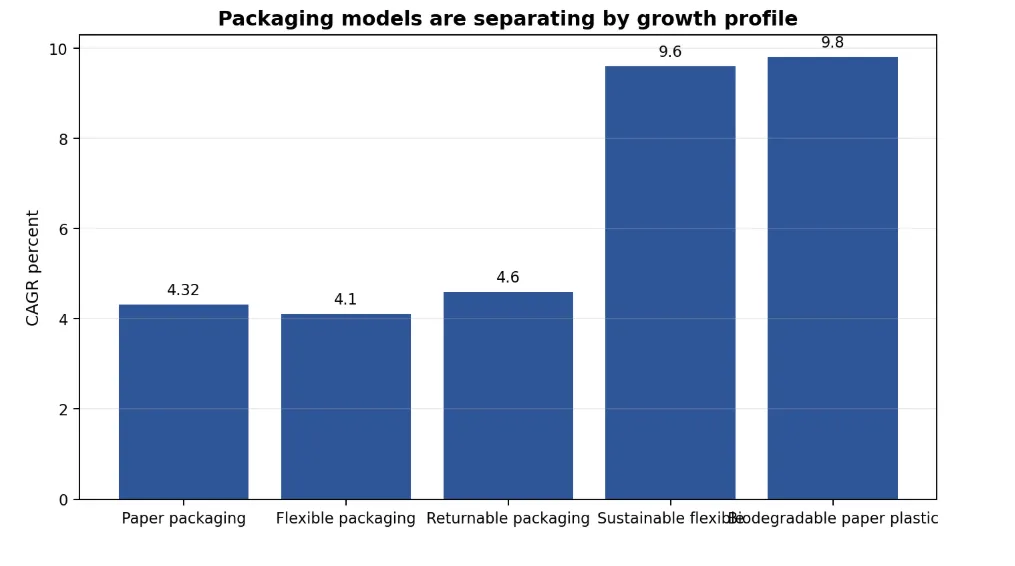
Packaging Economics Are Moving From Material Substitution to System Design
For many brand owners, the first wave of sustainable packaging was built around substitution. Plastic trays moved to fiber. Virgin resin moved to recycled content. Single use packs moved into early reuse pilots. That approach created visible sustainability progress and exposed a harder question for procurement, packaging engineering and finance teams. Which model actually works when full cost, performance, compliance and recovery are included in the same decision.
In 2026, the answer depends heavily on use case. Fiber based packaging can carry a strong consumer and retailer story, especially in dry goods, foodservice, e commerce and beauty secondary packaging. Flexible plastic remains difficult to replace in snacks, frozen foods, pet food, medical packaging and liquid pouches because it delivers strong barrier performance at low weight. Reuse has the clearest economic case in closed loop logistics, quick service foodservice, returnable transport packaging and high frequency retail models.
The strongest companies are therefore building packaging portfolios rather than choosing one universal solution. A premium beauty brand may use molded fiber inserts, lightweight flexible refill pouches and durable refillable containers in the same product family. A grocery retailer may use paperboard for shelf display, mono material flexible film for high barrier categories and reusable crates in the upstream supply chain.
Explore the DataM Flexible Packaging Market report to gain detailed insights into market size, competitive landscape, key suppliers and demand segmentation. Download a sample report to evaluate industry trends, growth opportunities and market dynamics.
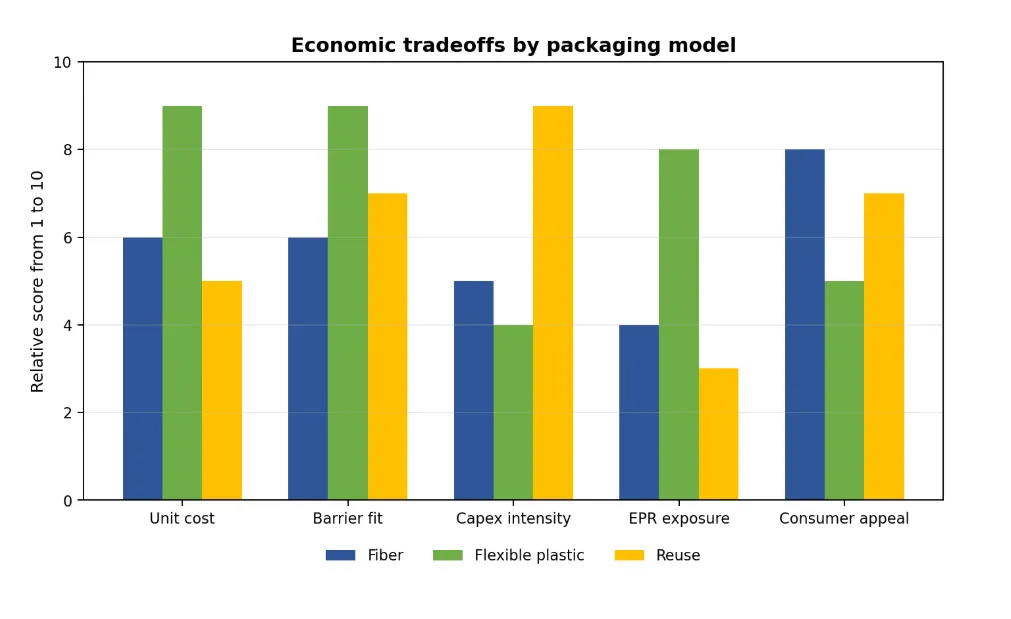
Fiber Wins When Recyclability and Brand Perception Carry Economic Value
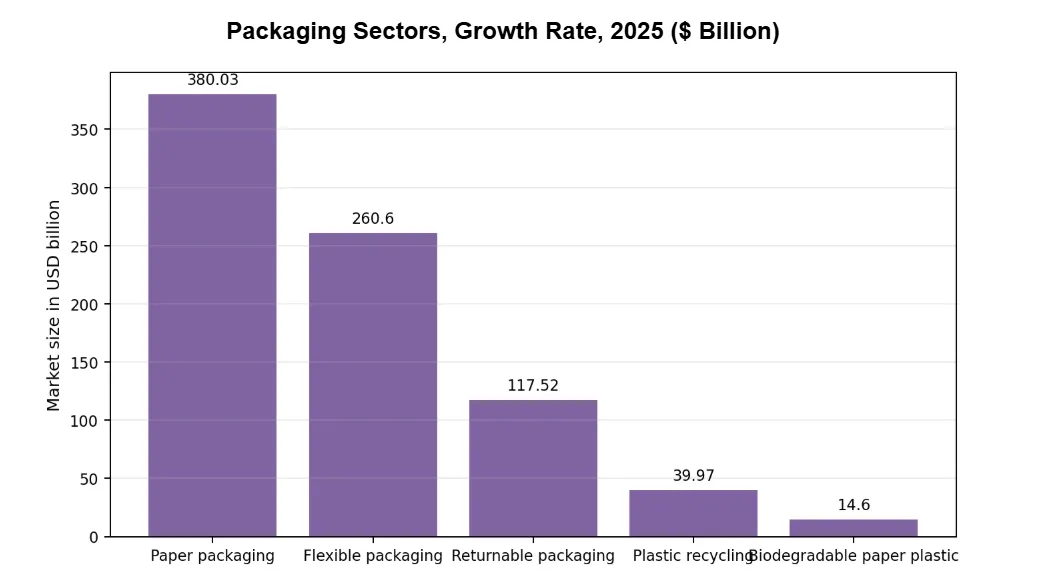
Fiber packaging is gaining ground because it connects with retailer sustainability mandates and consumer expectations. Paper packaging also benefits from familiar recycling systems in many markets. DataM Intelligence estimates the global paper packaging market reached US$ 380.03 billion in 2025 and is expected to reach US$ 532.73 billion by 2033, supported by demand from food, e commerce, personal care and consumer goods packaging.
Fiber economics are strongest when packaging has limited moisture, oxygen or grease barrier needs. Dry food, apparel, cosmetics, electronics protection and foodservice carryout are strong fit areas. Molded fiber, corrugated solutions, paperboard cartons and paper based mailers can also reduce plastic tax exposure in some markets.
The cost challenge begins when fiber needs coatings, liners or multilayer structures to match plastic performance. Barrier coatings can raise cost, complicate recycling and reduce the sustainability advantage if the package becomes difficult to process. Fiber is therefore most competitive when it uses simple material structures and solves an obvious consumer or compliance pain point.
Explore the DataM Paper Packaging Market report to gain comprehensive insights into market size, competitive landscape, key suppliers and demand segmentation. Download a sample report to evaluate market trends, growth opportunities and evolving packaging industry dynamics.
Flexible Plastic Keeps Its Advantage Where Performance and Weight Matter Most
Flexible plastic remains one of the most efficient packaging formats from a cost and logistics perspective. DataM Intelligence estimates the flexible packaging market will grow from US$ 260.6 billion in 2025 to US$ 345.6 billion by 2033 at a CAGR of 4.1 percent. Its position is based on low material use, strong barrier properties, low transport weight and high speed packaging line compatibility.
This explains why flexible formats remain resilient even as sustainability pressure rises. Snack packs, frozen food bags, pouches, sachets, pet food bags and medical packaging often need shelf life protection that fiber cannot deliver without added coatings or liners. Flexible plastic can also reduce food waste, which can carry higher value than packaging material substitution in some product categories.
The weakness is end of life. Multilayer films, mixed polymers and contaminated flexible packaging remain difficult to recycle at scale. This is why mono material PE and PP films, recycled content integration, chemical recycling partnerships and improved collection systems are becoming central to the next flexible packaging cycle.
Explore the DataM Sustainable Flexible Packaging Market report to uncover key insights into market size, emerging trends, competitive landscape, sustainability innovations and demand segmentation. Download a sample report to evaluate growth opportunities and industry dynamics.
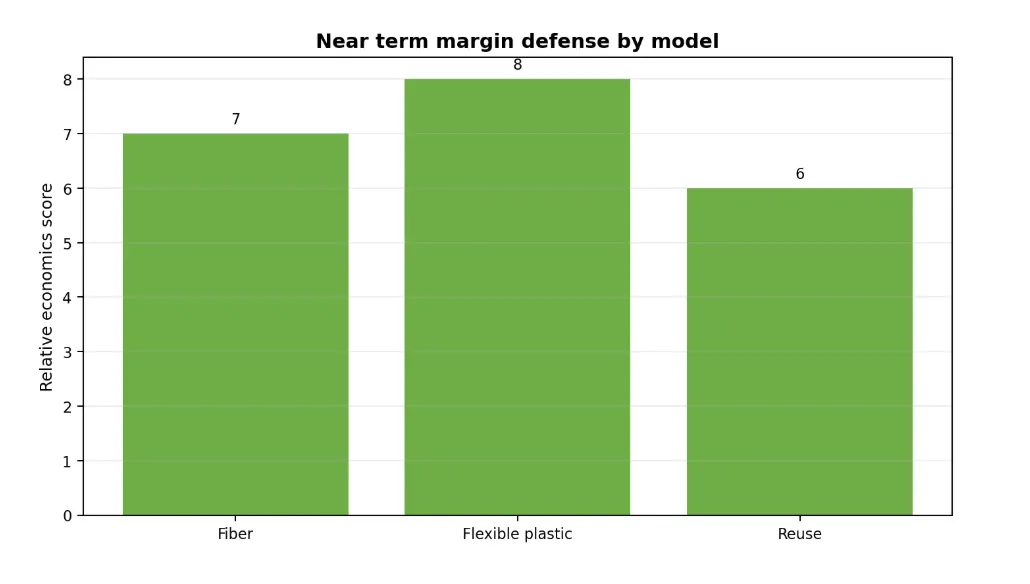
Reuse Economics Improve When the Loop Is Dense and Standardized
Reuse is the most system dependent model. It can reduce packaging waste and lower recurring material demand, and the economics depend on reverse logistics, washing, inspection, storage, customer behavior and asset loss. DataM Intelligence estimates the returnable packaging market was worth US$ 121.52 billion in 2025 and will reach US$ 192.42 billion by 2035, reflecting steady adoption in durable packaging pools and transport systems.
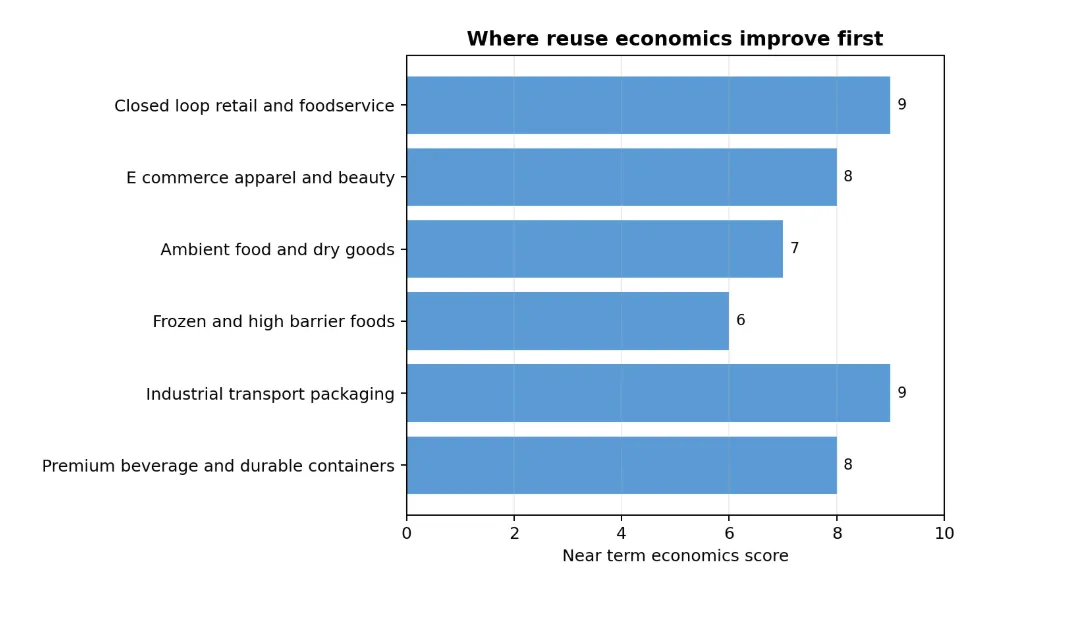
The best near term return is likely in business to business and controlled consumer settings. Returnable crates, pallets, kegs, intermediate bulk containers and durable totes already operate in repeat movement networks. Foodservice and retail reuse models can also work when stores have high visit frequency, standardized containers and simple deposit or account linked return systems.
The economics become weaker when products move through fragmented channels, return rates are low or cleaning routes are long. Reuse also faces a capex timing issue because brands must buy assets before savings build across multiple cycles. This makes utilization rate and loss control the key metrics for every reuse business case.
Explore the DataM Returnable Packaging Market report to gain in-depth insights into market size, supplier landscape, competitive developments and demand segmentation. Download a sample report to assess market trends, growth opportunities and the evolving dynamics of the returnable packaging industry.
Regulation Is Changing the Cost Equation Faster Than Material Prices Alone
Packaging economics are being reshaped by extended producer responsibility, recycled content rules, packaging waste fees and retailer scorecards. The Sustainable Packaging Coalition 2026 trends report highlights EPR compliance as an essential part of the current sustainable packaging landscape. These policy shifts make the lowest invoice cost less reliable as a decision metric because fees, collection obligations and reporting costs can change the true cost of ownership.
Fiber may benefit when packaging is widely recycled and simple to process. Flexible plastic may need design for recycling investments and stronger recycled content access. Reuse may benefit where policy supports return systems, while infrastructure and adoption remain essential. The outcome is a more complex economic model where packaging teams need to compare landed cost, fee exposure, operations cost and failure risk together.
This is especially important for food, beverage, beauty, healthcare and e commerce. These sectors face strong customer visibility and high packaging volumes. A format that looks expensive today can become more attractive if it avoids future fees, protects shelf life or supports compliance in a priority market.
Explore the DataM Biodegradable Paper and Plastic Packaging Market report to gain valuable insights into market size, industry trends, competitive landscape, sustainability innovations and demand segmentation. Download a sample report to evaluate growth opportunities and emerging market dynamics.
Where Each Model Offers the Best Economics
Fiber offers the best economics when recyclability, shelf presentation and consumer perception are important, and when barrier needs are moderate. It is strongest in dry food, takeaway packaging, cosmetics secondary packaging, apparel mailers and protective e commerce formats.
Flexible plastic offers the best economics when product protection, pack weight and machine compatibility carry the highest value. It is strongest in high barrier food, frozen products, pet food, pharmaceuticals, refill pouches and large volume consumer goods.
Reuse offers the best economics when the package can circulate many times with low loss and short return distances. It is strongest in industrial logistics, beverage crates, grocery delivery, foodservice systems and reusable transit packaging.
Packaging Sectors, Growth Rate, 2025 ($ Billion)
Investment Outlook for Packaging Suppliers and Brand Owners
The best investment opportunities are emerging in formats that solve both economics and sustainability. In fiber, the opportunity is in barrier coated paper, molded fiber, high strength lightweight board and automated forming systems. In flexible plastic, the opportunity is in mono material structures, recycled content films, high performance sealants and recycling compatible barrier layers.
In reuse, the opportunity sits in pooling platforms, durable container design, washing infrastructure, reverse logistics software and smart tracking. These are operating systems that decide whether a reuse model can scale beyond pilots.
The winning packaging companies will avoid a single material story and build application based economics. They will know when fiber is commercially stronger, when flexible plastic remains essential and when reuse creates a defensible system advantage. The next cycle of sustainable packaging will reward suppliers that can quantify total system cost and help customers meet performance, compliance and circularity targets at the same time.