


Agricultural Colorants & Fertilizer Supply Intelligence | 2026
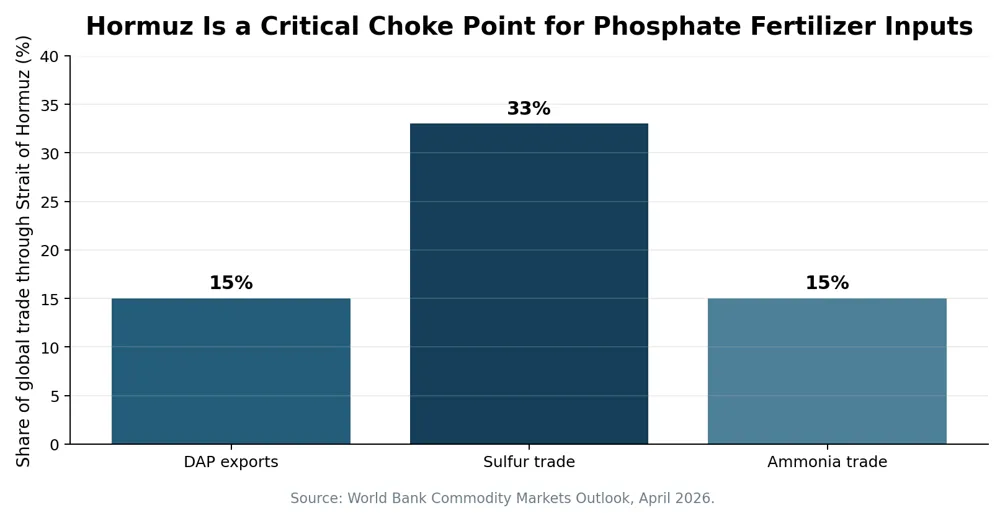
| SUPPLY SHOCK | Hormuz disruption exposed a structural weakness in fertilizer trade: about 15% of global DAP exports, one-third of sulfur trade and 15% of ammonia trade pass through the Strait. |
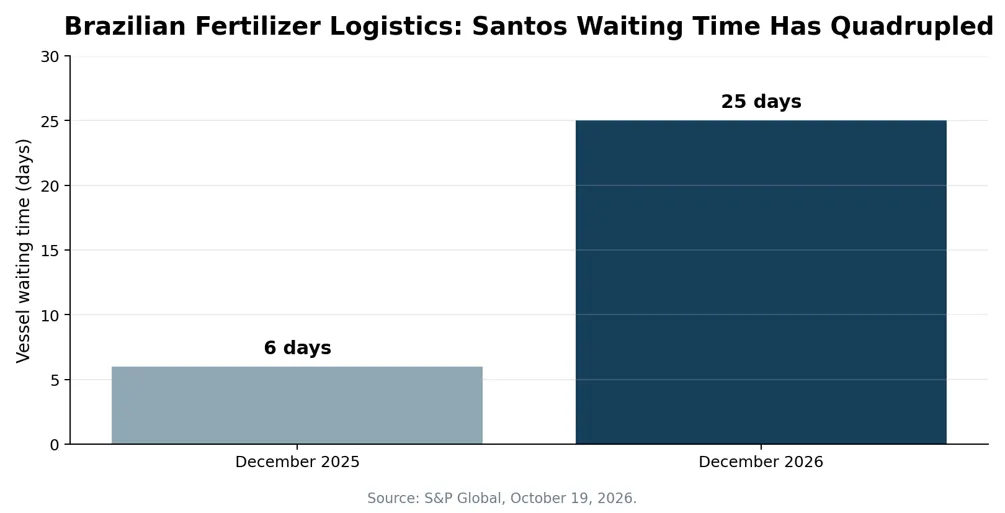
| LOGISTICS RISK | Even after the Q2 price spike eased, congestion remains severe. Santos fertilizer vessels faced around 25 days of waiting in December 2026 versus 6 days a year earlier. |
| COLORANT IMPACT | When fertilizer grades, plants, origin routes and coating systems change, colorant suppliers must requalify shade, dispersion, dosing and delivery reliability alongside the fertilizer formulation. |
The Fertilizer Shock Is Bigger Than a Fertilizer-Price Story
The Middle East shock exposed how concentrated the upstream feedstock chain remains. The World Bank estimates that nearly 15% of global DAP exports pass through the Strait of Hormuz. The same route carries about one-third of globally traded sulfur and roughly 15% of ammonia trade, both critical feedstocks for phosphate fertilizer production. A shipping disruption therefore hits finished fertilizer and its raw materials at the same time.
Request for Exclusive Sample: https://www.datamintelligence.com/download-sample/agricultural-colorants-market
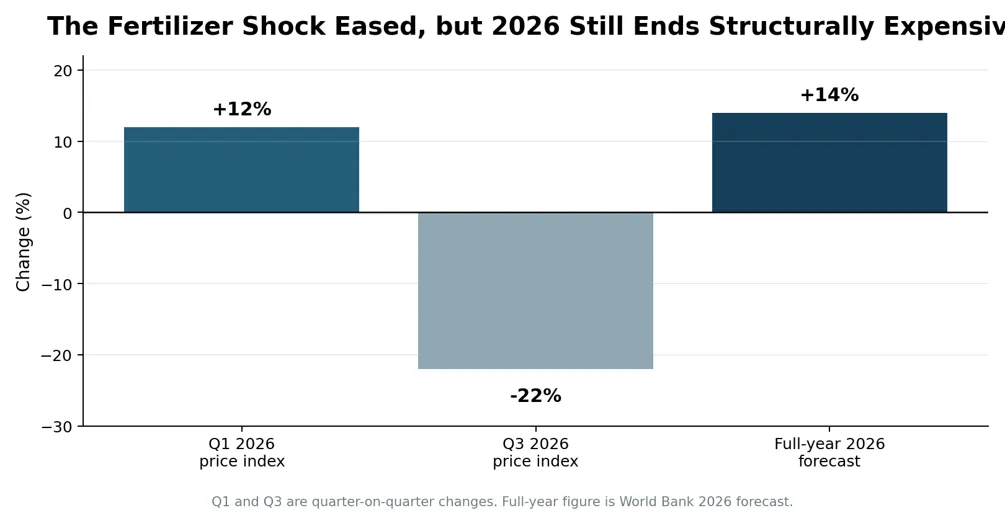
The acute shock did not remain at its spring peak. World Bank data show the fertilizer price index rose more than 12% quarter on quarter in Q1, then fell 22% in Q3 as shipping conditions improved and supply rerouted. Yet the Bank still expects fertilizer prices to average about 14% higher in 2026 than in 2025. For procurement teams, the message is not that every fertilizer input is still in crisis. It is that exposure to a single maritime route can still reprice production economics within weeks.
The Disruption Has Shifted From Ocean Choke Point to Regional Delivery Risk
By the second half of 2026, the pressure was increasingly visible in downstream logistics. At Brazil's Port of Santos, fertilizer vessels faced waiting times around 31 days in November. For December, market participants reported roughly 25 days of waiting compared with only 6 days a year earlier. Brazil's combined urea and ammonium sulfate imports were also down 21% year over year through September, partly reflecting elevated fertilizer prices and Middle East disruption.
India Shows How Governments Are Paying to Stabilize Fertilizer Availability
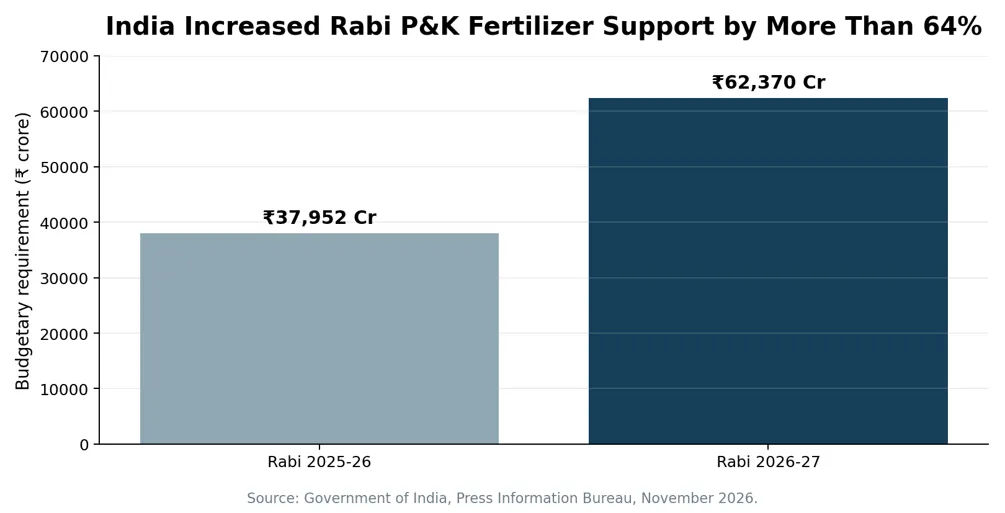
India's response demonstrates how large the cost of supply instability can become. On November 11, the government approved about ₹62,370 crore for Rabi 2026-27 P&K fertilizer support, more than 64% above the previous Rabi season. The package includes continued DAP support, subsidy for ammonium sulfate and a dedicated sulfur package for domestic sulfur and sulfuric-acid production. That is a direct policy response to elevated global fertilizer and input costs.
Why This Matters to Agricultural Colorants
Colorants are a small dosage input, but they sit directly inside fertilizer manufacturing and coating workflows. Industry technical literature places typical fertilizer colorant addition at roughly 0.05%-0.30% by weight. Their function goes well beyond appearance: they help distinguish nutrient grades, verify blend homogeneity, identify coated products, support anti-counterfeiting and indicate application coverage. Some coating systems also contribute to dust control and anti-caking performance.
That creates a hidden sourcing problem during fertilizer disruption. A producer that shifts DAP origin, changes NPK grade, qualifies a different coating oil, switches plants or reroutes supply can no longer treat the colorant as a generic SKU. Shade, carrier compatibility, dispersion, dosing system, storage stability and coating performance may need to be checked again. The commercial opportunity therefore moves toward suppliers that can provide fast samples, local stock, shorter minimum order quantities and technical support close to the blending or granulation plant.
Five Commercial Signals Colorant Suppliers Should Watch
| Signal | What it means | Colorant implication | Commercial action |
| DAP / NPK origin changes | Fertilizer producer switches feedstock or supplier geography | Shade and coating compatibility may need revalidation | Offer rapid lab samples and local technical support |
| Port or vessel delays | Imported fertilizer or additives arrive outside planting windows | Safety stock and delivery reliability become more important | Position local inventory and shorter replenishment cycles |
| Subsidy / grade substitution | Policy pushes SSP, MAP, TSP or ammonium sulfate alternatives | Different grades create new color coding and formulation needs | Map substitution programs before seasonal tenders |
| New blending location | Distributor localizes production closer to demand | Dosing systems and batch consistency must be requalified | Target blenders and regional formulators early |
| Supplier traceability review | Buyer wants lower geopolitical and origin risk | Documentation, batch consistency and origin transparency gain weight | Differentiate on traceability, QA and multi-site supply |
The Bigger Shift: Colorant Procurement Is Becoming a Supply-Chain Decision
For years, fertilizer colorants could be purchased primarily on shade, dosage and unit price. The 2026 fertilizer disruption changes that equation. Buyers increasingly need to know whether the supplier can support multiple fertilizer grades, keep stock near regional plants, document formulation consistency, qualify alternate carriers and respond quickly when raw-material origin changes.
This is why the strongest opportunity is not simply “more fertilizer means more colorant.” It is the fragmentation of fertilizer sourcing itself. More origin changes, grade substitutions and localized blending create more qualification events - and every qualification event creates an opening for a new colorant supplier, formulation or distribution partner.
What Buyers Need to Know Before the Next Planting Cycle
A market report becomes most useful when it moves beyond global demand totals and answers procurement questions directly: which fertilizer grades use colorants most heavily, where DAP/NPK supply is most exposed, which countries are localizing fertilizer production, which colorant chemistries are used by application, which suppliers hold local inventory, and how quickly alternate formulations can be qualified. That is why DataM moves beyond just a market report to a strategic document highlighting how and where your company needs to shift its focus.
Use the Agricultural Colorants report to map fertilizer applications, formulation shifts, regional supply risk, supplier positioning and alternative sourcing opportunities before the next procurement cycle. REQUEST THE
REPORT