


For years, the European Virtual Power Plant (VPP) market has developed in a step-by-step manner with renewable energy integration, participation by residential solar sources, and utility demand-response programs. VPPs are being treated as complementary balancing infrastructure for supporting wind and solar energy development. That arrangement is changing rapidly. In 2026, Europe's increased regulatory support for participation in distributed energy networks is fundamentally reshaping the VPP market across the continent. The market, once seen as niche for the renewable energy sector, is transforming into the cornerstone of Europe's future electricity architecture. This is more than renewable energy; the aim is to convert Europe's electricity grid into a decentralized, software-driven, AI-powered electricity infrastructure ecosystem capable of balancing millions of distributed energy assets in real time. The transition is radically reshaping the competitive landscape of the VPP market.
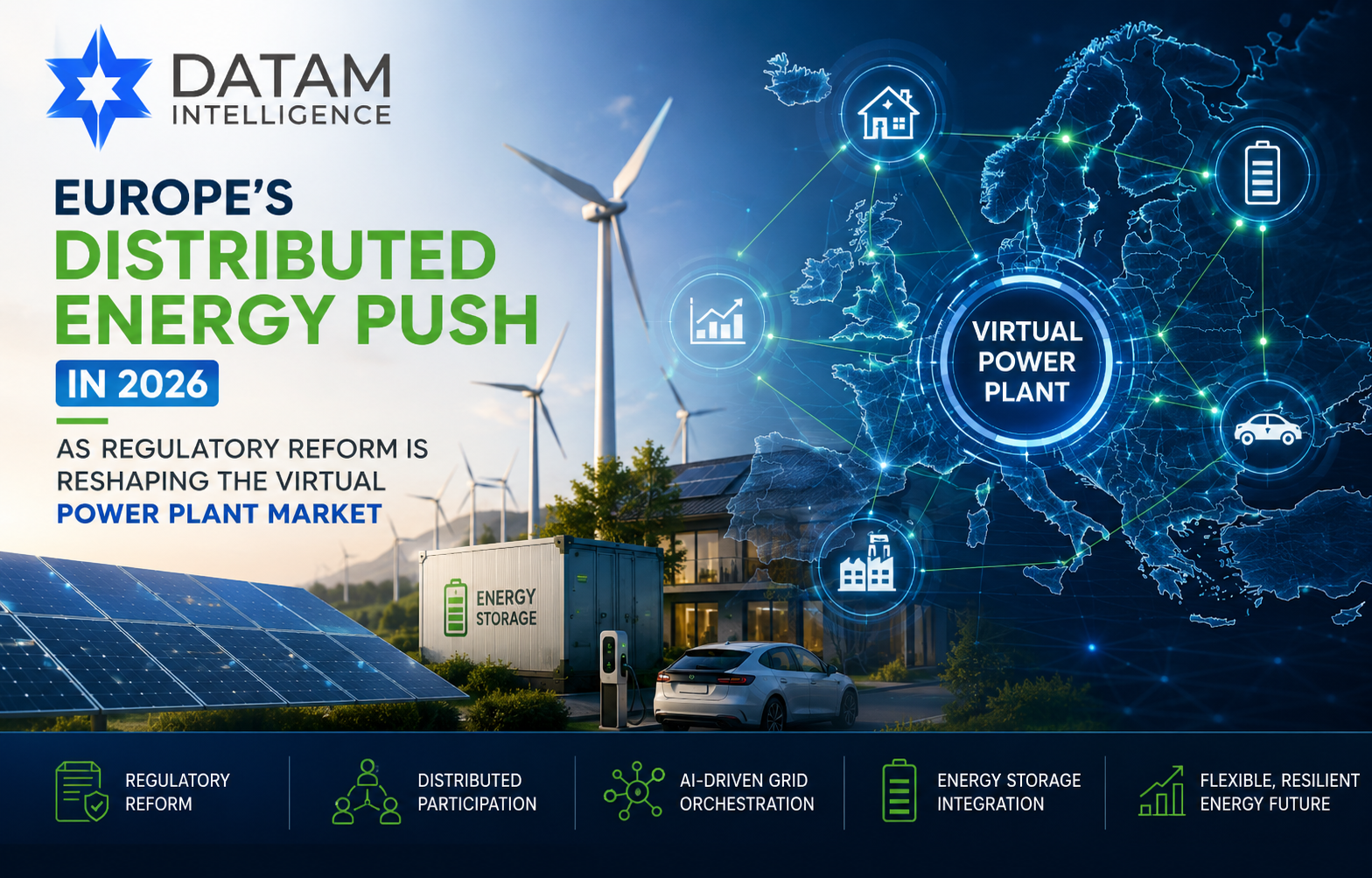
Why Europe is Pushing for Accelerated Distributed Energy Participation
Europe's regulatory drive is largely driven by the increased instability generated by renewable-heavy electricity systems. For the last five years, Europe's wind and solar generation grew rapidly. Notably, in 2025, wind and solar produced more electricity than fossil fuels for the first time in the EU. However, this success brought to light a new problem: Traditional centralized electricity grids were never designed for highly volatile renewable generation alongside distributed batteries, electric vehicles, dynamic electricity pricing, and volatile electricity flows. Electricity is now flowing bi-directionally in the grid, with households, batteries, EVs, and commercial entities actively participating in the energy markets. The regulators realized that conventional infrastructure is incapable of efficiently managing the new electricity system. The new system requires intelligent coordination infrastructure, which is where VPPs come into play.
EU Electricity Market Reform Changed the Direction of the VPP Market
One of the major shifts came with the EU electricity market reform package that took effect in 2024 and continued into 2025 and 2026. The reforms aim to improve grid resilience, reduce dependence on volatile fossil fuel prices, enhance renewable energy integration, and increase flexibility across Europe. The reforms also reinforce decentralized energy participation, local renewable energy trading, dynamic electricity pricing, long-term renewable energy contracts, integration of distributed energy storage, and flexible demand-response mechanisms. The trend intensified in October 2025 with the EU’s shift to 15-minute intervals for day-ahead electricity trading. While seemingly a technical change, it has a huge impact on VPPs. Shorter electricity trading intervals increase the value of fast-responding, flexible distributed energy assets capable of reacting to real-time grid conditions, including batteries, EVs, distributed energy storage networks and AI-driven demand response systems. This, in turn, boosts the economics of VPPs.
Why This Disruption is Fundamentally Altering the VPP Landscape
The regulatory transition in Europe is fundamentally changing the operation of VPPs. Previous generations of VPPs mainly aggregated rooftop solar sources and implemented basic peak demand reduction schemes. The new generation of VPPs is expected to be significantly different. Between 2026 and 2035, VPPs are projected to evolve into sophisticated grid orchestration systems capable of simultaneously managing a range of distributed resources, including batteries, vehicle-to-grid infrastructure, AI-based electricity forecasting, dynamic network pricing, industrial flexibility systems and real-time balancing markets. This evolution is already becoming evident in the increasing focus by researchers and grid operators on AI-based scheduling systems, risk-aware multi-market coordination and dynamic tariff optimization for distributed energy systems. Concurrently, Europe is raising technical standards for grid-forming battery systems, which will actively contribute to electricity grid stabilization instead of merely following grid conditions. This clearly indicates the future direction of the market: VPPs are no longer mere renewable energy aggregators, they are becoming operational infrastructure for electricity grid stability.
How VPP Companies Should Prepare Strategy for The Next Decade
To succeed over the next decade, companies will need to adapt to an increasingly software-intensive electricity market. Utilities will increasingly depend on AI-driven orchestration platforms to manage millions of distributed assets in real time. Battery storage is set to become a central component within VPP ecosystems, with distributed batteries, EV networks, and commercial storage systems playing a crucial role in grid flexibility and electricity market responsiveness.
Dynamic electricity pricing is expected to expand rapidly across Europe, requiring sophisticated optimization systems to instantly react to changing grid conditions and market signals. VPPs will become an integral part of national infrastructure planning rather than separate energy programs. Lastly, grid stability and electricity flexibility will become top strategic priorities as AI infrastructure, electrification, and renewable deployment continue their accelerated growth. This transition will revolutionize how electricity markets operate across Europe.
Roadmap and Timeline of Europe's Distributed Energy Transition
Mid 2020s: Flexibility Infrastructure Phase
Utilities will expand the implementation of AI-driven grid management systems, distributed battery coordination platforms, and dynamic demand response infrastructure. Electricity markets will focus on flexibility and real-time responsiveness. VPPs will begin shifting from renewable energy coordinators to grid balancing infrastructure.
Late 2020s: Rapid Expansion of Battery and EV Integration
Vehicle-to-grid systems, distributed battery storage, and smart charging infrastructure will be tightly integrated into electricity markets. EVs will increasingly be used as distributed grid assets to support balancing markets and flexibility programs. Dynamic electricity pricing will become common in most major European markets.
Early 2030s: AI-Driven Grid Orchestration Becomes Mainstream
VPPs will increasingly utilize AI-based optimization systems capable of forecasting electricity demand, renewable generation volatility, and grid congestion risks in real time. Distributed energy coordination will become largely automated. Traditional centralized balancing models will decline in importance as distributed flexibility markets mature.
Mid 2030s: Full Decentralization of Grid Infrastructure
Electricity systems across Europe will become significantly more decentralized and software-driven. Distributed generation sources, residential batteries, industrial flexibility systems, and EV infrastructure will participate directly in electricity markets on a large scale. VPPs will emerge as essential infrastructure for electricity balancing and grid stability.
Late 2030s: Complete Market Transformation
By 2035, Europe's electricity system will be fundamentally different from a decade prior. VPPs will be standard infrastructure in major electricity markets, with grid flexibility, distributed storage coordination, and AI-driven electricity orchestration being key pillars of Europe's energy economy. Companies that embrace distributed energy participation, intelligent grid software, and distributed flexibility systems early will lead the next era of energy infrastructure growth.
Europe's push for distributed energy participation represents more than a policy shift; it marks the start of a complete overhaul of electricity system operations. The traditional model of centralized generation and passive consumption is gradually giving way to decentralized, intelligent, and real-time electricity ecosystems. This transformation is redefining the fundamental purpose of virtual power plants. In 2026, VPP market leaders will be more than just aggregators; they will be the operating systems of the new electricity infrastructure.