


Direct Methanol Fuel Cell Market: Key Growth Drivers and Applications
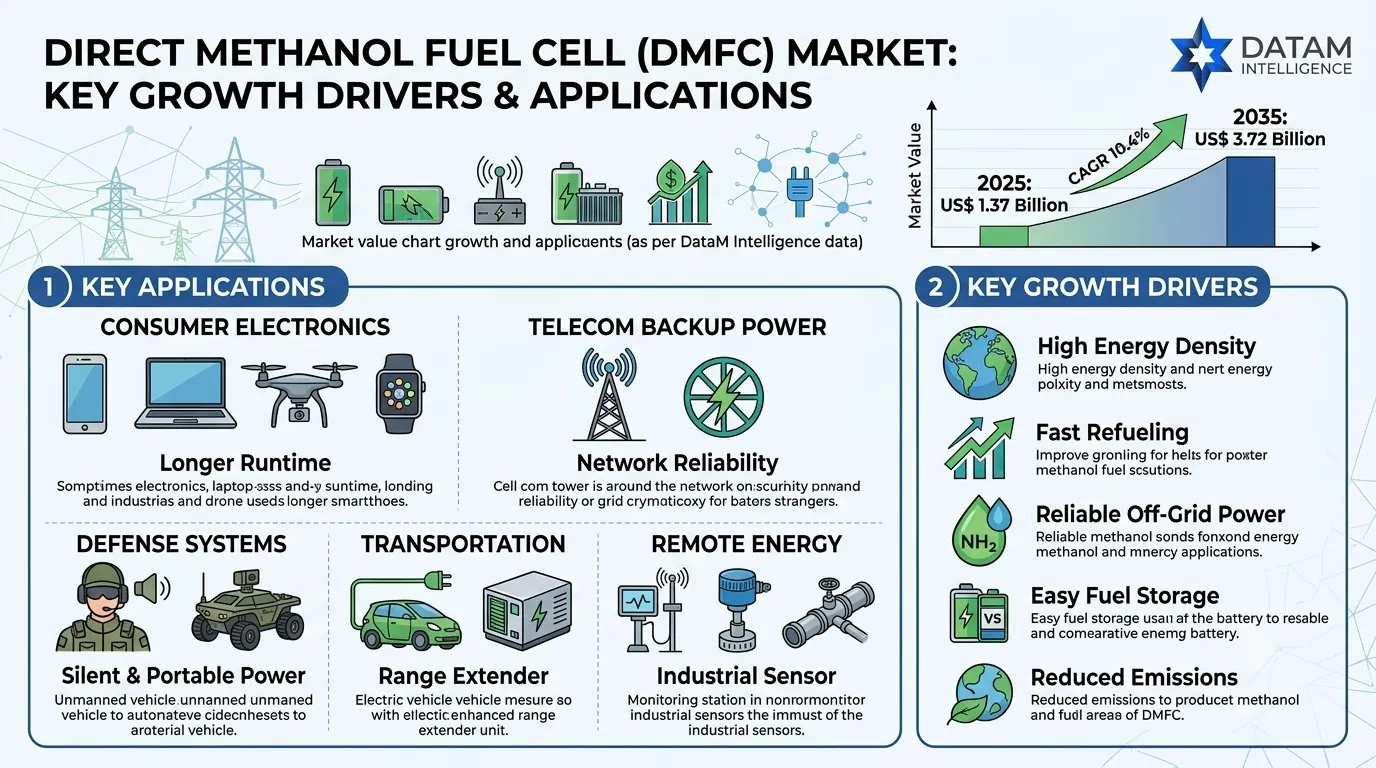
The Direct Methanol Fuel Cell (DMFC) market is witnessing rapid growth as industries look for reliable, low-emission, and portable energy solutions. According to DataM Intelligence, the global Direct Methanol Fuel Cell DMFC market was valued at US$ 1.37 billion in 2025 and is projected to reach US$ 3.72 billion by 2035, growing at a CAGR of 10.4% during 2026–2035.
DMFC technology converts chemical energy from liquid methanol directly into electricity, providing advantages such as high energy density, fast refueling, longer operational life, and reduced maintenance compared with conventional batteries. These benefits are driving adoption across consumer electronics, telecom backup power, defense systems, transportation, and remote energy applications.
Explore the Future of Direct Methanol Fuel Cell Technology
Understand market opportunities, emerging applications, regional growth trends, competitive analysis, and investment insights with DataM Intelligence's comprehensive Direct Methanol Fuel Cell Market Report.
Get access to:
✔ Market size and forecast analysis through 2035
✔ Key growth drivers and challenges
✔ Application and regional insights
✔ Competitive landscape analysis
✔ Emerging opportunities in clean energy technologiesRequest a Sample Report Today and Identify Growth Opportunities in the Evolving Fuel Cell Market.
Why Direct Methanol Fuel Cells Are Gaining Global Attention
The transition toward decentralized energy systems and carbon reduction goals has increased interest in fuel cell technologies. DMFCs offer several advantages over traditional battery technologies:
- High energy density for extended runtime
- Fast and simple refueling with liquid methanol
- Quiet operation with minimal emissions
- Reliable performance in remote environments
- Reduced dependence on electrical charging infrastructure
These characteristics make DMFCs particularly attractive for industries requiring uninterrupted power and operational flexibility.
1. Consumer Electronics and Portable Devices
The Largest Application Segment
Consumer electronics currently represent one of the most important growth drivers for the Direct Methanol Fuel Cell market. As smartphones, laptops, wearable devices, drones, and portable communication equipment become more power-intensive, traditional lithium-ion batteries increasingly struggle to meet runtime expectations.
DMFC technology addresses this challenge by enabling:
- Longer operational duration
- Compact system design
- Rapid cartridge replacement
- Reduced charging downtime
For users operating in field environments, emergency response situations, or remote locations, methanol fuel cells provide continuous power without requiring access to electrical grids. This capability positions DMFCs as a promising alternative for next-generation portable electronics.
Why are DMFCs used in consumer electronics?
Direct Methanol Fuel Cells offer higher energy density, longer runtime, and faster refueling than traditional rechargeable batteries, making them suitable for portable electronic devices requiring extended operational performance.
2. Telecom Backup Power Systems
Supporting Critical Communication Infrastructure
Telecommunication operators are increasingly deploying DMFC systems as backup power solutions for cellular towers, data transmission stations, and remote communication infrastructure.
Grid outages can severely impact network reliability, particularly in rural and disaster-prone regions. DMFCs provide a dependable alternative because they:
- Deliver long-duration backup power
- Require minimal maintenance
- Operate efficiently in remote locations
- Reduce diesel generator dependence
With global expansion of 5G networks and edge computing infrastructure, demand for reliable backup energy systems continues to rise, creating substantial opportunities for DMFC manufacturers.
3. Military and Defense Applications
Mission-Critical Energy for Modern Defense Operations
Defense organizations worldwide are investing in DMFC technology due to its unique operational advantages.
Military applications benefit from:
- Silent operation
- Low thermal signatures
- Lightweight fuel storage
- Extended mission endurance
- Reduced logistics burden
Soldiers carrying communication devices, surveillance equipment, sensors, and portable computing systems require reliable power sources during extended deployments. DMFCs help reduce the number of spare batteries needed while maintaining operational readiness. Additionally, unmanned systems, drones, and military installations are increasingly exploring methanol fuel cells for both primary and backup power.
How are direct methanol fuel cells used in defense?
Military organizations use DMFCs to power portable electronics, surveillance equipment, drones, and backup systems because they offer quiet operation, high energy density, lightweight fuel storage, and extended mission endurance.
4. Transportation and Mobility Solutions
Expanding Beyond Traditional Fuel Cells
While battery-electric vehicles dominate the clean transportation conversation, DMFC technology is emerging as a complementary solution in specific mobility applications.
Current developments focus on:
- Range-extender systems for electric vehicles
- Auxiliary power units (APUs)
- Marine applications
- Autonomous vehicles
- Commercial mobility solutions
By continuously recharging onboard batteries, DMFC systems can help extend operating range and reduce charging dependency. This capability is especially valuable in specialized transportation sectors where uptime and operational flexibility are critical.
5. Remote Monitoring and Off-Grid Power Generation
Enabling Reliable Energy in Challenging Locations
One of the fastest-growing DMFC applications is remote and off-grid power generation. Industries operating in isolated environments often face significant challenges in maintaining reliable energy access.
DMFC systems are increasingly used in:
- Environmental monitoring stations
- Industrial sensors
- Mining operations
- Pipeline monitoring systems
- Smart agriculture infrastructure
- Disaster recovery operations
Their ability to provide continuous power without frequent maintenance makes them particularly valuable in locations where battery replacement or diesel fuel delivery is expensive and logistically difficult. Research also highlights their potential to reduce emissions while maintaining operational reliability in remote industrial settings.
Key Market Trends Accelerating Adoption
Several macroeconomic and technology trends are fueling Direct Methanol Fuel Cell market growth:
Rising Demand for Energy Security
Businesses are prioritizing resilient power systems to minimize operational disruptions caused by grid failures.
Growth of Distributed Energy Infrastructure
Decentralized power generation is becoming increasingly important across industrial, telecom, and commercial sectors.
Expansion of Green Methanol Ecosystems
Growing investments in renewable methanol production are improving the sustainability profile of DMFC technology.
Advancements in Fuel Cell Efficiency
Innovations in catalysts, membranes, and fuel cell stack design are improving performance while reducing costs.
Key Benefits Fueling Direct Methanol Fuel Cell Market Growth
Direct Methanol Fuel Cells (DMFCs) are gaining traction across industries because they address many of the limitations associated with conventional batteries and hydrogen-based fuel cell systems. Their ability to directly convert liquid methanol into electricity provides a unique combination of portability, efficiency, and operational flexibility, making them particularly attractive for portable electronics, telecom infrastructure, defense applications, and remote power systems. As global demand for reliable and low-emission energy solutions increases, the advantages offered by DMFC technology are becoming a major factor driving market expansion.
1. High Energy Density Enables Longer Runtime
One of the biggest advantages of DMFCs is their high energy density compared to conventional rechargeable batteries. This allows devices and systems to operate for longer periods without frequent recharging, making DMFCs ideal for portable electronics, remote monitoring equipment, and military applications.
2. Fast and Convenient Refueling
Unlike batteries that require lengthy charging cycles, DMFC systems can be refueled within minutes by simply replacing or refilling methanol cartridges. This significantly reduces downtime and improves operational efficiency in mission-critical environments.
3. Easy Fuel Storage and Transportation
Methanol is a liquid fuel that can be stored, transported, and distributed using existing fuel infrastructure. Compared to compressed hydrogen, methanol offers easier handling, lower storage complexity, and greater practicality for commercial deployment.
4. Reliable Off-Grid and Backup Power Solution
DMFCs provide dependable power in remote and off-grid locations where access to electricity is limited. Their low maintenance requirements and long operating duration make them suitable for telecom towers, environmental monitoring stations, emergency response systems, and industrial assets.
5. Low Noise and Reduced Emissions
Compared with diesel generators, DMFC systems operate quietly and produce significantly lower emissions. This makes them attractive for defense operations, urban deployments, and environmentally sensitive locations where noise reduction and sustainability are critical considerations.
What are the benefits of Direct Methanol Fuel Cells (DMFCs)?
Direct Methanol Fuel Cells offer high energy density, rapid refueling, easy fuel storage, reliable off-grid power generation, low maintenance requirements, and reduced emissions. These advantages make DMFCs an attractive power solution for consumer electronics, telecommunications, defense systems, transportation, and remote industrial applications.
Future Outlook
The Direct Methanol Fuel Cell (DMFC) market is moving beyond early-stage deployments and progressing toward wider commercial adoption across multiple industries. As businesses and governments increasingly focus on clean energy transition, energy security, and reliable power solutions, DMFC technology is emerging as a practical alternative for applications requiring long-duration, portable, and efficient power generation. With its advantages such as high energy density, liquid fuel convenience, quick refueling capability, and low operational requirements, DMFCs are expected to play an important role in future energy systems.
According to DataM Intelligence, the global Direct Methanol Fuel Cell market is expected to witness significant growth through 2035, supported by rising demand across consumer electronics, telecommunications, defense, transportation, and remote power applications. Continuous advancements in fuel cell materials, catalyst technologies, system efficiency, and sustainable methanol production are expected to further improve the scalability and commercial potential of DMFC solutions.
Key Factors Shaping the Future Growth of DMFC Market:
- Expansion of Portable Power Applications: Increasing demand for lightweight and long-lasting power sources in consumer electronics, drones, wearable devices, and field equipment will create new growth opportunities for DMFC manufacturers.
- Growing Demand for Reliable Backup Power: Telecom networks, data centers, and critical infrastructure are increasingly adopting alternative power solutions to ensure uninterrupted operations during grid failures and remote deployments.
- Rising Adoption in Defense and Aerospace Applications: The need for silent, lightweight, and high-endurance power systems for communication devices, surveillance equipment, and unmanned systems is expected to support DMFC adoption.
- Advancements in Sustainable Methanol Production: The development of renewable and low-carbon methanol sources will enhance the environmental benefits of DMFC technology and support broader acceptance.
- Technological Improvements Enhancing Efficiency: Innovations in catalysts, membranes, and fuel cell stack designs are expected to improve performance, reduce costs, and accelerate commercial deployment.
- Increasing Focus on Decentralized Energy Solutions: The growing need for off-grid and distributed energy systems in remote industrial locations, smart infrastructure, and emergency response applications will further drive market opportunities.
Overall, the Direct Methanol Fuel Cell market is positioned for sustained growth as industries continue to prioritize cleaner, more flexible, and resilient energy solutions. With ongoing innovation and increasing investment in sustainable energy technologies, DMFCs are expected to become a valuable component of the future clean energy ecosystem.