


Low GWP Refrigerants Market Size and Overview
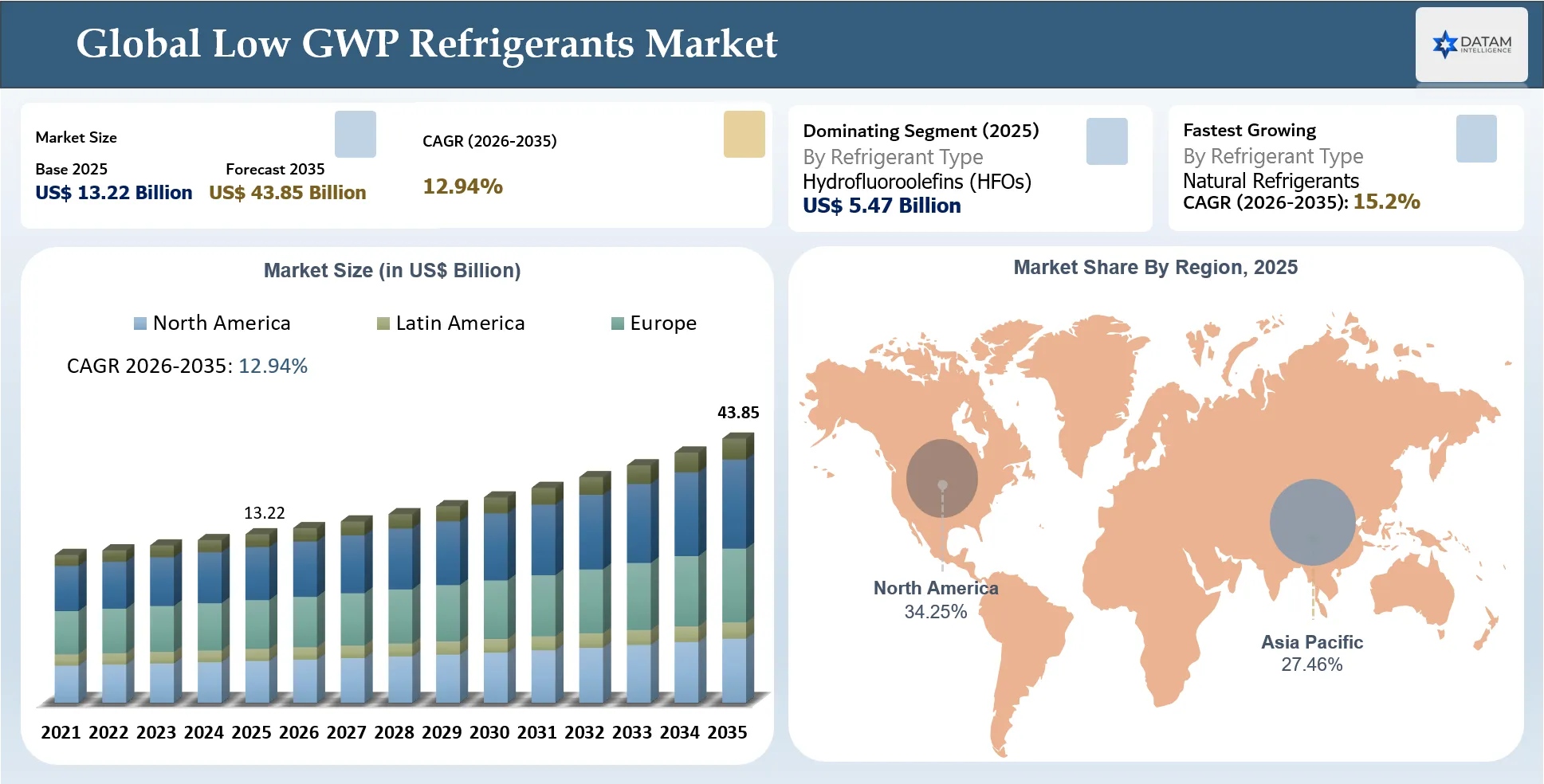
The global Low GWP Refrigerants Market reached US$ 13.22 billion in 2025 and is expected to reach US$ 43.85 billion by 2035, growing with a CAGR of 12.94% during the forecast period 2026-2035.
The worldwide market for Low GWP Refrigerants is growing at a rapid rate as people are shifting from conventional practices towards more sustainable cooling solutions in their respective countries. The low GWP refrigerant substitutes high-GWP hydrofluorocarbons (HFCs) as a part of stringent climatic policies, such as the Kigali amendment to the Montreal Protocol, the F-Gas policies and other national targets set to reduce emissions. They provide energy-efficient cooling solutions with minimal greenhouse gases emitted into the environment.
Innovations in technology have resulted in greater commercialization of hydrofluoroolefins (HFOs), natural refrigerants like carbon dioxide (R744), ammonia (R717) and hydrocarbons (R290 & R600a) along with innovative generation of refrigerants with low GWP. Refrigerants are being formulated that would not just be in accordance with the regulations but also offer better performance, reduce the amount of energy used and serve the sustainable purpose. The rise in the use of electric cars, development in cold chain logistics and HVAC installations is contributing to the growth in the market.
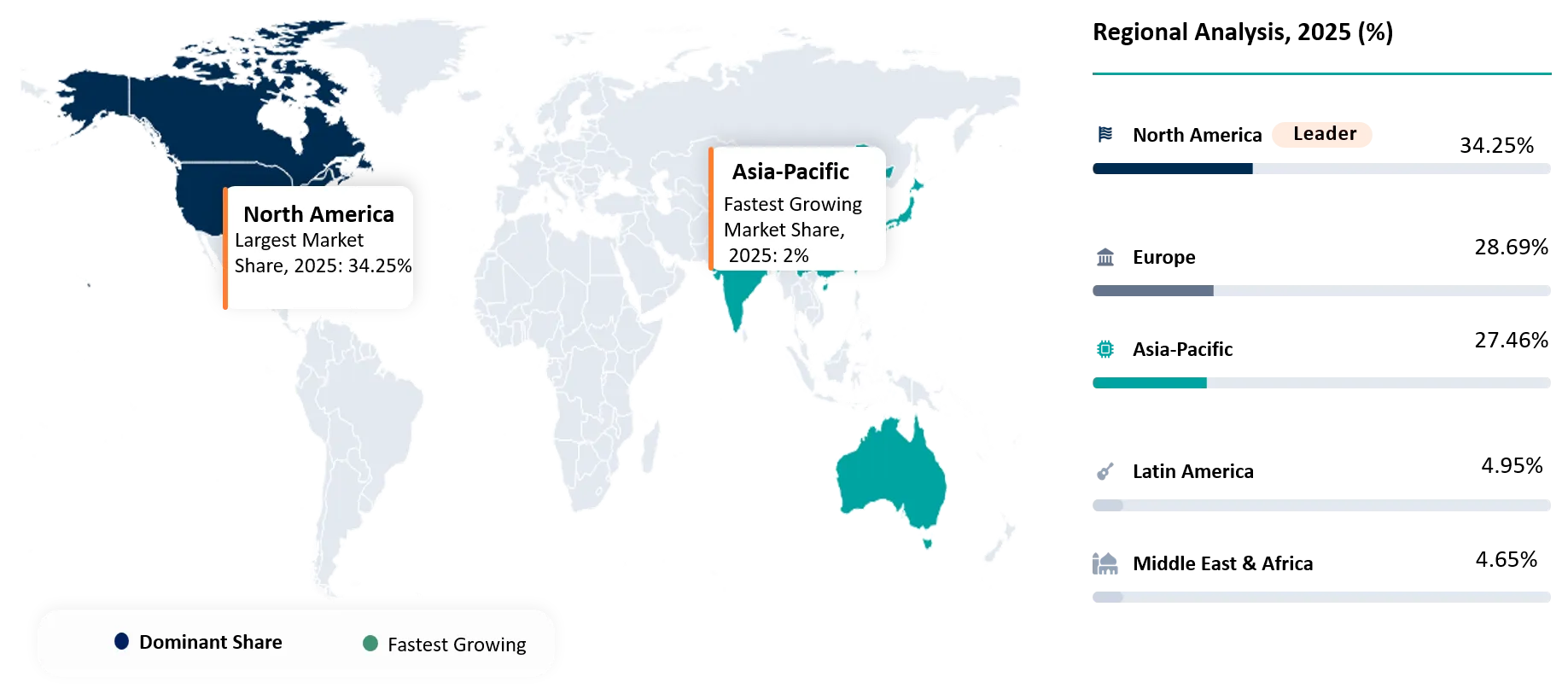
Europe stands out regionally in terms of the usage of low GWP refrigerants, owing to strict F-Gas legislation in the region and the usage of natural refrigerants. North America is experiencing consistent growth, backed by the regulations set out by EPA and the trend towards A2L refrigerants. On the other hand, the Asia-Pacific region is set to experience the fastest growth rate due to rapid urbanization, increased manufacturing, increasing demand for air conditioning and investments in refrigerants.
Low GWP Refrigerants Market Key Takeaways
- The worldwide Low GWP Refrigerants Market was estimated at US$ 13.22 Billion in 2025 and is anticipated to hit US$ 43.85 Billion by 2035, with a CAGR of 12.94% over the forecast period (2026–2035).
- Hydrofluoroolefins (HFOs) made up about 40% of the worldwide market in 2025, producing US$ 5.47 Billion, due to their extensive use in HVAC, vehicle air conditioning and commercial refrigeration sectors.
- Europe commanded the largest regional share of roughly 28% of the global market in 2025, bolstered by strict F-Gas regulations and early use of natural refrigerants, while Asia-Pacific represented about 27% and is anticipated to exhibit the quickest growth until 2035.
- Air Conditioning continued to be the dominant application segment, accounting for roughly 40% of overall market revenue in 2025, fueled by the rise in residential and commercial HVAC installations and the shift to environmentally friendly refrigerants.
- Natural Refrigerants are expected to grow at a CAGR of 15% from 2026 to 2035, driven by increased use of CO₂ (R744), ammonia (R717) and propane (R290) in industrial refrigeration, supermarkets and heat pump applications.
- In 2025, the Commercial sector accounted for approximately 45% of the worldwide market, indicating robust demand from supermarkets, retail establishments, hospitality venues, healthcare centers and office buildings implementing low-GWP HVAC and refrigeration systems.
Low GWP Refrigerants Market Industry Trends and Strategic Insights
- Shift towards HFOs and Natural Refrigerants at High Speed: Producers and consumers are using HFOs, carbon dioxide (R744), ammonia (R717) and hydrocarbons (R290/R600a) to replace HFCs with high global warming potential as a result of tough environment laws and sustainable development policies.
- Increase in Heat Pumps: Increase in heat pump applications in residences, business establishments and industries is creating high demand for low GWP refrigerants, especially in Europe and North America where building de-carbonization initiatives are gaining popularity.
- Cold Chain Infrastructure Growth: Demand for temperature-controlled storage and transportation of pharmaceutical products and food items will encourage the use of low GWP refrigerants globally.
- Energy Efficient and Long Term Performer Machines: HVAC and refrigeration systems that perform efficiently with low GWP refrigerants are designed by equipment manufacturers.
- Heightened Regulatory Compliance and Retrofits: Governments are enacting tougher refrigerant regulations, leading companies to modify current refrigeration and air-conditioning systems with compliant low GWP refrigerants while also investing in advanced equipment.
- Strategic Alliances and Product Development: Major refrigerant manufacturers, HVAC producers and component vendors are enhancing partnerships, increasing manufacturing capabilities and launching novel low GWP refrigerant mixtures to meet changing regulatory standards and various application demands.
Low GWP Refrigerants Market Scope
| Metrics | Details | |
| 2025 Market Size | US$ 13.22 Billion | |
| 2035 Projected Market Size | US$ 43.85Billion | |
| CAGR (2026-2035) | 12.94% | |
| Largest Market | North America | |
| Fastest Growing Market | Asia-Pacific | |
| By Refrigerant Type | Hydrofluoroolefins (HFOs), Natural Refrigerants, Low-GWP HFC/HFO Blends and Other Emerging Refrigerants | |
| By Product Type | Pure Refrigerants and Refrigerant Blends | |
| By Source | Virgin Refrigerants and Reclaimed Refrigerants | |
| By Purity | 99.0%–99.5%, 99.5%–99.9% and Above 99.9% | |
| By Global Warming Potential (GWP) | Ultra-Low GWP (Below 10), Very Low GWP (10–150) and Low GWP (151–750) | |
| By System Type | Direct Expansion (DX) Systems, Secondary Loop Systems and Cascade Systems | |
| By Installation Type | New Equipment (OEM), Retrofit Systems and Replacement Refrigerants | |
| By Application | Air Conditioning, Refrigeration, Heat Pumps and Others | |
| By Equipment Type | Air Conditioning Equipment, Refrigeration Equipment, Heat Pump Equipment and Others | |
| By End-Use Industry | Residential,Commercial, Industrial, Automotive, Cold Chain & Logistics, Agriculture, Marine, Aerospace and Others | |
| By Distribution Channel | Original Equipment Manufacturers (OEMs), Distributors & Wholesalers, Direct Sales, Aftermarket and Online Sales | |
| By Safety Classification (ASHRAE) | A1 (Non-Flammable, Lower Toxicity), A2L (Lower Flammability), A2 (Flammable), A3 (Higher Flammability), B2L (Lower Flammability, Higher Toxicity), B2 and B3 | |
| By Container Type | Disposable Cylinders, Refillable Cylinders, Bulk Tanks, ISO Tank Containers and Others | |
| By Region | North America | U.S., Canada, Mexico |
| Europe | Germany, UK, France, Spain, Italy, Poland | |
| Asia-Pacific | China, India, Japan, Australia, South Korea, Indonesia, Malaysia, Singapore, Vietnam, Thailand, Philippines, Taiwan | |
| South America | Brazil, Argentina | |
| Middle East and Africa | UAE, Saudi Arabia, South Africa, Israel, Turkiye | |
| Report Insights Covered | Competitive Landscape Analysis, Company Profile Analysis, Market Size, Share, Growth | |
Why does this report matter in 2026?
In the year 2026, the Low GWP Refrigerants Market is in its crucial stage since all the governments from around the world have started implementing the HFC phase down initiative under the Kigali amendment to the Montreal protocol in order to reduce the amount of greenhouse gas emissions through strict regulation. All the industries are fast moving towards green refrigerants due to new technological advances. Through this report, one will be able to know about the size of the market, the growth projections, technology advancements, regulatory changes, competitive analysis and investments in the market.
The report additionally offers strategic knowledge about possible opportunities in residential and commercial HVAC systems, industrial cooling, car air conditioning, freight refrigeration, heat pumps and cold chain logistics. It assesses the application of hydrocarbons such as hydrofluorocarbons (HFOs), natural refrigerants like carbon dioxide, ammonia and hydrocarbons in addition to the newly invented refrigerant blends that have low global warming potential (GWP). The report provides extensive segmentation, regional analysis, company assessment and future prospect of the market, which assists manufacturers, distributors, investors and tech suppliers in creating effective plans for growth, refining product offerings, improving compliance with law and maximizing the growing demand globally for eco-friendly cooling systems.
Low GWP Refrigerants Market White Space & Investment Opportunities
- Scaling-Up of Natural Refrigerant Systems: The growing need for R744, R717 and hydrocarbons in commercial and industrial refrigeration and heat pumps provides significant business prospects for technology and equipment suppliers.
- Development of HFOs and Low-GWP Blends Production: The rising need for HFOs and future refrigerant blends due to regulations opens up an area for production investment and formulations.
- Upgrading Existing HVAC&R Infrastructure: Millions of existing HVAC&R systems need upgradation to accommodate new, environmentally friendly refrigerants with lower GWP values, thus providing opportunities in the form of retrofits, compatible hardware components and refrigerants.
- Cold Chain and Data Center Cooling Growth: The growth of pharmaceutical logistics, cold chain for food, e-commerce warehouse logistics and hyperscale data centers is behind investments in highly efficient and low-emissions cooling technologies utilizing refrigerants with low GWP values.
- Penetration into Emerging Markets and Strategic Partnerships: There is a huge potential for the refrigerant suppliers in the markets of Asia-Pacific, Latin America, the Middle East and Africa because of high urbanization rates and development of infrastructure there.
Low GWP Refrigerants Future Market Transformation
The market for low GWP refrigerants is predicted to transform dramatically in the coming years as environmental regulations, decarbonization objectives and innovative technologies change the landscape of the cooling industry throughout the world. The replacement of high-GWP hydrofluorocarbon gases would hasten the introduction of products like hydrofluoroolefins and natural refrigerants while more widespread use of low GWP products could be expected in both the residential and commercial sectors. At the same time, the growing investments in heat pumps, smart HVAC systems, sustainable cold chain infrastructure and low energy consuming refrigeration technologies will open new doors for the development of the low GWP refrigerants market. It is believed that the processes of digital monitoring, leak detection and energy optimization enabled by AI technologies will increase the effectiveness of refrigerants, while innovative solutions and compliance with regulations will be brought about by cooperation efforts among refrigerant producers, devices constructors and the representatives of authorities.
Low GWP Refrigerants Market Buyer Decision-Making Criteria
A mix of regulatory compliance, operational efficiency, lifecycle costs and overall system long-term reliability is driving purchasing decisions in the Low GWP Refrigerants Market. End-users such as HVAC manufacturers, commercial building operators, cold chain companies, industrial plants, automobile OEMs and commercial refrigeration service technicians are on the lookout for refrigerants that not only meet the stringent and dynamic regulatory mandates, but also ensure efficient operation of their systems with desirable cooling output. In order to comply with The Kigali Amendment to The Montreal Protocol, F-Gas Regulations and national policies around phased down of HFC refrigerants, organizations in all end-user industries are opting for refrigerants with low or ultra-low Global Warming Potential (GWP) and minimal environmental impact.
Besides regulation requirements, buyers will consider factors such as compatibility with other machines both old and new, ease of installation of new machines, refrigerant classification in terms of safety levels (A1, A2L, A3, among others), availability of skilled service personnel, supply stability and total cost of ownership. Issues like the cost of the refrigerant at purchase, amount of energy used, costs of maintenance, rate of leakage, ability to recover or recycle the refrigerant and life span of the machine play an important role in making decisions.
Low GWP Refrigerants Market Economic & Investment Analysis
The Low GWP Refrigerants Market provides promising investment opportunities since global governments are making rapid progress in favor of climate-friendly refrigerants. The number of capital investments is growing in the sector of refrigerant manufacturing, HFO manufacturing, natural refrigerants, refrigerant mixtures and next-generation HVACR technology. Manufacturers are scaling up their production, establishing regional supply chains and conducting R&D for better refrigerant performance and energy efficiency.
Investments are highly lucrative in industries which are growing fast like heat pumps, refrigeration in commerce, industrial cooling, automobile air conditioning, cold chain for pharmaceuticals, food logistics and hyperscale data center cooling. Developing countries of Asia-Pacific, Latin America and the Middle East are increasingly making investments in the state-of-the-art HVAC systems and cold chain infrastructure, which is expected to drive continuous demand for low GWP refrigerants. Furthermore, the government incentive schemes for green buildings, efficient equipment and low carbon technologies along with the ESG initiatives of companies will drive market growth over the coming years. With tightening regulations and increasing demand for sustainable cooling, investments in low GWP refrigerants are likely to yield good results in terms of technological innovation, capacity expansion, retrofitting and environmentally friendly cooling solutions.
Low GWP Refrigerants Market Investment Trends
- Major chemical corporations are making investments in the construction and expansion of their production capacities for HFOs, natural refrigerants and low-GWP blends to cater to the increase in global demand due to HFC reduction policies.
- Research and development expenditures are growing for next-generation refrigerants that have extremely low GWP, better energy efficiency, improved safety features and are compatible with next-generation HVAC and refrigeration technologies.
- Money is being spent on building heat pumps, energy efficient HVAC systems and commercial refrigerators that work on low GWP refrigerants.
- Continuous development of the food processing industry, pharmaceutical supply chains, e-commerce warehouses and industrial cold chain storage facilities leads to the increased investments in low-emission refrigeration technologies based on natural refrigerants and advanced mixtures of refrigerants.
- Demand for cooling solutions in compliance with environmental regulations leads to numerous mergers, acquisitions, joint ventures and partnerships aimed at enriching refrigerant portfolios, improving distribution channels, developing manufacturing and accelerating commercialization processes.
Low-GWP Refrigerants Market Strategic Indicators
High Regulation Impact
The low GWP refrigerants segment is one of the most highly regulated markets within the chemicals and HVAC industries. The push to move from high-GWP HFCs as necessitated by international mandates like the Kigali Amendment to the Montreal Protocol, together with national and regional policies in Europe (F-Gases regulation), US (AIM Act), Japan, Canada, Australia and many developing economies have significantly changed the product portfolio in the market, fueling demand for low-GWP solutions, spurring commercialization of new solutions and mandating the entire industry to consider new solutions and business models. Therefore, regulatory compliance serves as the most critical driver of market growth over the coming years.
High Investment Activity
Investment activity continues to increase across the entire refrigerant value chain as companies gear up for burgeoning global demand. Top-tier chemical players are investing heavily to scale up HFO production sites, enhance fluorochemical production and to bring next generation refrigerant blends to market that are greener and more energy efficient. Substantial investments are also going into heat pump equipment, commercial and industrial refrigeration and cooling systems, refrigerant management and recycling capabilities and A2L compatible components. Venture and strategic investors continue to invest heavily in start-ups that focuses on energy-efficient cooling, thermal and refrigeration leakage detection and cooling solutions with a great degree of future prospect.
Supply Chain Disruption
While the supply chain of refrigerants has become more resilient in the post-pandemic period, there are a few key issues that persist. The manufacture of the feedstock used in the production of fluorochemicals is done only in a few countries and hence companies are exposed to geopolitical risk and raw material shortages. In addition, issues such as transportation costs and changes in the price of energy could impact the availability and delivery time of the refrigerants. Another issue is the supply demand imbalance caused by the rapid shift from traditional HFCs.
Pricing Volatility
The average price for low GWP refrigerants across the globe is different depending on the chemical nature of the refrigerant and supply/demand dynamics in the respective region. Natural refrigerants like CO₂ (R744) cost around $2-6/kg. Hydrocarbons like R290 have a price tag of $4-10/kg. HFOs such as R-1234yf and R-1234ze(E) are sold at much higher prices of $60-120/kg due to their complicated manufacturing process and patent licensing along with lesser production capability. Low-GWP mixtures such as R-454B and R-448A usually sell in the $18-45/kg range depending upon purity and producer.
Procurement Pressure
Procurement professionals within the HVAC industry, refrigeration industry, automotive industry and industrial industries are experiencing increasing pressure to find refrigerants which can meet not only the current but also future regulations. Procurement decisions are no longer made on the basis of price alone but also take into account environmental compliance, equipment compatibility, safety category, supplier stability, availability of the product, lifecycle cost and supply chain security. There is an increasing trend toward multi-sourcing, long term procurement contracts and lifecycle costing.
New Technology Adoption
There is quick adoption of technology as companies start using next-generation refrigerants and innovative cooling technologies that will have less environmental effect. Examples of refrigerants in use include HFOs, natural refrigerants like CO2 (R744), ammonia (R717), propane (R290), isobutane (R600a) and innovative low GWP refrigerant blends. This technology is currently being used in residential air conditioners, commercial refrigeration, industrial cooling and heat pumps. At the same time, digitalization is being done by using Internet of Things, AI-powered energy efficiency, predictive maintenance, intelligent leak detection and refrigerant management technologies.
Regional Expansion Opportunity
Among various regions for the Low GWP Refrigerants Market, Emerging Markets hold immense growth potential. Asia-Pacific region is foreseen to continue to be the fastest growing segment on account of rapid urbanization, swelling middle-class populations, enhanced AC penetration rates and massive investments into cold chain infrastructure in countries like China, India, Southeast Asian countries and South Korea where a burgeoning demand of the same exists for the residential, commercial and industrial sector. South America and the Middle East & Africa region are poised for accelerated growth on account of Food security drives, expanding Pharmaceutical cold chains, Infrastructure revamp and the enforcement of stringent regulations to reduce harmful chemicals and gases. The development of local manufacturing capabilities and robust distribution networks shall serve to be vital for achieving market leadership in this region.
Government Policy Support
The market is receiving ongoing encouragement from governments that continue to boost the pace of market growth. Governments around the world continue to use regulations to restrict high-GWP refrigerants while incentivising adoption of green refrigerants via loans, grants, tax incentives and energy efficiency schemes. The increasing uptake of green building certifications, energy performance minimum standards, refrigerant recovery regulations and climate action plans is also incentivising companies and consumers to shift toward low-GWP alternatives. The provision of public finance support to stimulate heat pump installation, green cold chain projects and efficient building retrofits also provides a solid framework for future market growth and de-risks manufacturers and tech providers’ investments.
Pricing Intelligence
The average selling price (ASP) of HFO refrigerant climbed about 8%–10% during the year 2025, whereas low-GWP HFC/HFO blends recorded an average increment of 7%–12% due to increased demands from the HVAC industry, limited production capacity and rapid switch from HGWPs. In contrast, the natural refrigerants like CO2 (R744) and ammonia (R717) have recorded stable prices with annual increments ranging between 2% and 4%, which could be attributed to their well-established supply chain and commodity production process. The premium HFO refrigerants still hold higher value compared to natural refrigerants due to their complicated production process, licensing of technology and limited production capacity around the world. The prices are anticipated to come down in future with the expansion in production capacity.
| HS Code | Reporter | Trade Flow | 2025 Trade Value | Interpretation |
| 290339 | China | Export | US$ 2.18 Billion | China maintains its position as the largest exporter of fluorinated refrigerants and fluorochemical intermediates due to its integrated manufacturing ecosystem, cost competitiveness and expanding global supply network. |
| 290339 | United States | Import | US$ 1.47 Billion | Import demand continues to rise as HVAC manufacturers and commercial refrigeration operators transition to compliant low-GWP refrigerants under the AIM Act and related environmental regulations. |
| 290339 | Germany | Import | US$ 0.89 Billion | Germany remains Europe's major import destination, supported by stringent F-Gas regulations, extensive industrial refrigeration activities and high demand for sustainable cooling technologies. |
| 290339 | Japan | Export | US$ 0.74 Billion | Japan exports premium specialty refrigerants and fluorochemical products, leveraging advanced manufacturing technologies, strong research capabilities and partnerships with global HVAC equipment manufacturers. |
Disruption Analysis of Low GWP Refrigerants Market
The market for Low GWP Refrigerants is currently witnessing a transformation driven by changes in regulations leading to a shift from high GWP hydrofluorocarbon (HFC) refrigerants towards HFOs, natural refrigerants and low GWP blends across the globe. The Kigali Amendment and other international and regional regulations including F-Gas Regulation of Europe and AIM Act of the U.S. have altered the market demand dynamics, equipment design and investments. HVAC & refrigeration companies are designing their systems in order to incorporate environmentally friendly refrigerants in addition to improved energy efficiency and safety. At the same time, the increasing use of heat pumps, cold chains, electric cars and energy efficient buildings is driving demand in various sectors.
The competitive environment is also changing as key chemical producers and HVAC equipment manufacturers develop innovations in refrigerants, increase manufacturing capabilities, recycle refrigerants and deploy digital cooling systems. The supply chain of these firms is increasingly regionalized to help deal with the problems related to shortages in raw materials, geopolitics and logistics issues, while strategic alliances and mergers will boost the speed of product development and business expansion. Those companies that are developing innovative refrigerants, implementing AI-based monitoring systems and deploying sustainable cooling solutions will gain competitive edge, while those that use traditional refrigerants will be increasingly under regulatory pressure.
Low GWP Refrigerants Market BCG Matrix: Company Evaluation
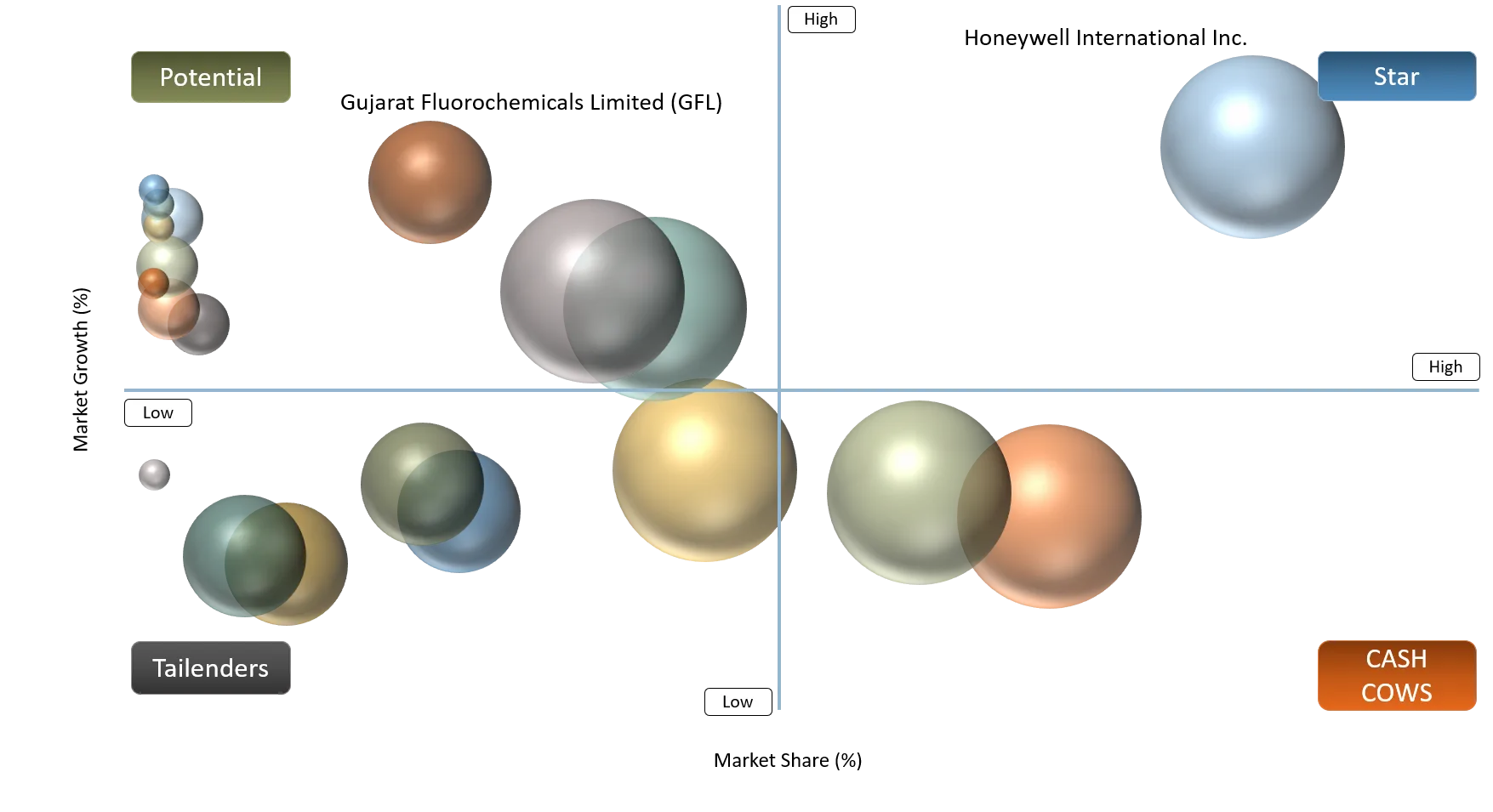
STAR
The STAR category consists of key established industry leaders that have significant global market shares, a broad range of low GWP refrigerant offerings, large manufacturing capabilities and ongoing commitments to research and development. Honeywell International Inc., The Chemours Company, Daikin Industries Ltd., Arkema S.A., Orbia Advance Corporation (Koura) and AGC Inc. are enabling market growth by commercializing HFOs, blended refrigerants and other innovative cooling solutions that comply with increasingly stringent environmental regulations. Their extensive distribution networks and established partnerships with HVAC and refrigeration OEMs along with ongoing investments in manufacturing capacities and products have helped them secure a leading position in the overall market transformation.
POTENTIAL
In the POTENTIAL segment, firms are making progress with regard to increasing their competitiveness in terms of growth of capacity, innovation and regional markets. Examples include Gujarat Fluorochemicals Limited (GFL), SRF Limited, Navin Fluorine International Limited, Dongyue Group Limited, Sinochem Holdings Corporation, A-Gas International, Climalife (Dehon Group), Tazzetti S.p.A., Harp International Ltd. and Shandong Yuean Chemical Industry Co., Ltd. The firms are increasingly investing in specialty fluorochemicals, recovery and recycling of refrigerants and sustainable refrigeration products. With continued demand for low GWP refrigerants around the world, it is clear that these firms will benefit immensely in terms of competitiveness.
Low GWP Refrigerants Market Dynamics
Driver Impact Analysis
| Driver | Market Growth Impact (%) | Demand Concentration | Impacted Use Case | Strategic Impact |
Stringent environmental regulations and global HFC phase-down initiatives | North America, Europe, Asia-Pacific | Residential & Commercial HVAC, Refrigeration | Accelerates replacement of high-GWP refrigerants, drives demand for HFOs and natural refrigerants and stimulates investment in compliant cooling technologies. | Stringent environmental regulations and global HFC phase-down initiatives |
Growing adoption of energy-efficient HVAC systems and heat pumps | Europe, North America, Japan, South Korea | Heat Pumps, Residential & Commercial Air Conditioning | Increases adoption of low GWP refrigerants in next-generation HVAC systems while supporting building decarbonization and energy-efficiency goals. | Growing adoption of energy-efficient HVAC systems and heat pumps |
Expansion of cold chain logistics and food & pharmaceutical refrigeration | Asia-Pacific, Latin America, Middle East & Africa | Cold Storage, Transport Refrigeration, Industrial Refrigeration | Creates sustained demand for environmentally friendly refrigerants in temperature-controlled logistics and industrial cooling infrastructure. | Expansion of cold chain logistics and food & pharmaceutical refrigeration |
Rising investments in sustainable buildings, data centers and industrial cooling | Global | Data Center Cooling, Commercial Buildings, Industrial Process Cooling | Encourages deployment of advanced low GWP refrigerants, smart cooling technologies and long-term infrastructure modernization aligned with ESG objectives. | Rising investments in sustainable buildings, data centers and industrial cooling |
Driver: Stringent Environmental Regulations and Global HFC Phase-Down
The predominant factor contributing to the growth of the low GWP refrigerants market is the enforcement of various stringent environmental policies by governments worldwide. The global concern regarding climate change and global warming as a result of green house gases emissions has motivated the governing bodies to implement policies for phase down of high-GWP HFCs, such as The Kigali Amendment to the Montreal Protocol, the EU F-Gas Regulation and the U.S. AIM Act. This is driving significant adoption of low-GWP refrigerants including HFOs, natural refrigerants and enhanced refrigerant blends in HVAC, refrigeration, automobile AC and industrial cooling equipment.
Restraint Impact Analysis
| Restraint | Drag on Market Growth (%) | Primary Impact Area | Impacted Use Case | Strategic Impact |
High retrofit and equipment conversion costs | 30% | Capital Investment | Existing HVAC & Refrigeration Systems | Slows replacement of legacy HFC systems, particularly among small and medium-sized businesses due to high upfront conversion expenses. |
Safety concerns and regulatory requirements for flammable refrigerants (A2L/A3) | 26% | Product Adoption & Compliance | Residential Air Conditioning, Commercial HVAC | Requires specialized equipment, technician training and enhanced safety measures, delaying adoption in certain applications and regions. |
Limited availability of skilled technicians and servicing infrastructure | 24% | Installation & Maintenance | Heat Pumps, Commercial Refrigeration, Industrial Cooling | Creates installation bottlenecks, increases maintenance costs and slows deployment of advanced low GWP refrigeration systems. |
Supply chain constraints and price volatility of advanced refrigerants | 20% | Procurement & Manufacturing | HVAC OEMs, Automotive Air Conditioning, Industrial Refrigeration | Fluctuating raw material costs, limited production capacity and supply uncertainties increase procurement risks and impact manufacturers' profit margins. |
Restraint: High Retrofit Costs and Safety Challenges
One of the largest growth impediments for the market remains the high cost of retrofitting old refrigeration and air-conditioning equipment with low GWP alternatives. Several alternatives to traditional high-GWP refrigerants require system modification, including new or specialized compressors, piping, valves and leak-detection systems. These require substantial capital investment to make their way into legacy equipment and can have serious impact on affordability, particularly for the many small-and medium sized enterprises that dominate refrigeration use. Furthermore, some of the most commonly used low GWP alternatives, such as some hydrocarbon based or A2L class refrigerants, exhibit a degree of flammability and require additional safety measures and specialized training to install correctly and comply with latest safety regulations.
Low GWP Refrigerants Market Segment Analysis
The global Low GWP Refrigerants Market is segmented based on the Refrigerant Type, Product Type, Source, Purity, Global Warming Potential (GWP), System Type, Installation Type, Application, Equipment Type, End-Use Industry, Distribution Channel, safety classification (ASHRAE), Container Type and Region.
By Refrigerant Type
Hydrofluoroolefins (HFOs) Dominate the Market
HFOs held the leading market share among all types due to the low Global Warming Potential of HFOs, high thermodynamic efficiency and compatibility with advanced HVAC and refrigeration units. R-1234yf and R-1234ze(E) refrigerants are becoming popular as alternatives to conventional HFCs used in automotive air conditioners, commercial refrigerators, chillers and other industrial coolants. They are gaining popularity owing to their capability of meeting the strict environmental regulations, including Kigali Amendment and regional F-Gas regulations. Investments made in the development of production capabilities of HFOs and manufacturers’ inclination towards sustainable refrigerants are expected to maintain their dominance over the forecast period.
By Application
Air Conditioning Accounts for the Largest Market Share
The Air Conditioning emerged as the biggest end-use segment of the Low GWP Refrigerants Market driven by the growing installation of residential, commercial, industrial and transportation air-conditioning systems across the globe. Urbanization trends, growing disposable income levels, rising temperatures around the globe, along with the growing construction industry have greatly increased the demand for energy-efficient air-conditioning systems based on low GWP refrigerants. Additionally, growing government initiatives that encourage the adoption of sustainable cooling solutions and the growing replacement of conventional refrigerants with low GWP refrigerants in new heating ventilation and air-conditioning equipment are helping drive the market.
Low GWP Refrigerants Market Geographical Penetration
U.S. Low GWP Refrigerants Market Landscape
U.S. Low GWP Refrigerants Market is witnessing significant growth due to the enforcement of the AIM Act that requires a reduction in the use and production of HFCs in a phase-down approach. With growing adoption of HFOs, A2L refrigerants and natural refrigerants in residential & commercial HVAC, supermarket, industrial refrigeration and automotive air conditioning applications, there are changing dynamics in the market. Growing investments towards energy efficient building construction, data centers, cold chain and heat pump installations are further driving the demand. Furthermore, there are increased investments being made by major refrigerants manufacturers and HVAC equipment providers into domestic manufacturing and next generation refrigerants technology development.
Japan Low GWP Refrigerants Market Outlook
As one of the leading global countries in innovation in low GWP refrigerant technology with support of the rigid environmental laws, advanced manufacturing facility and the focus on the high energy efficient technology, Japan rapidly adopted new and efficient technologies that have natural refrigerants such as carbon dioxide (CO2/R744) and Hydro fluoroolefins (HFOs) for commercial refrigeration, vending machines, heat pumps and other industrial refrigeration cooling. Japan companies invested in newer compressor, inverter driven technologies and environmentally safe refrigerants. Increased adoption of these technologies is estimated due to increasing demand for high efficiency, coolings system and innovative technologies over the projected timeline.
China Low GWP Refrigerants Market Trends
China, the world's largest fluorochemical and refrigerant manufacturer and exporter, is increasingly becoming a leader in the low GWP refrigerants market. Through substantial investments in large-scale manufacturing and favorable policy reforms, it has been rapidly growing its low GWP refrigerants sector. Driven by China's commitments to the Kigali Amendment, together with ongoing urbanization, booming air conditioner ownership rates, developing cold chain and burgeoning EV demand, the adoption of HFOs, natural refrigerants and novel refrigerant blends is poised for further acceleration. Chinese companies are making significant investments in enhancing production capacities, strengthening their R&D capabilities and bolstering export efforts to boost their competitive advantages. With the increasing adoption of environmentally friendly cooling solutions across residential, commercial and industrial applications, China will continue to be the leading production base for low GWP refrigerants and one of the fastest-growing consumer markets globally.
Low GWP Refrigerants Market Competitive Landscape
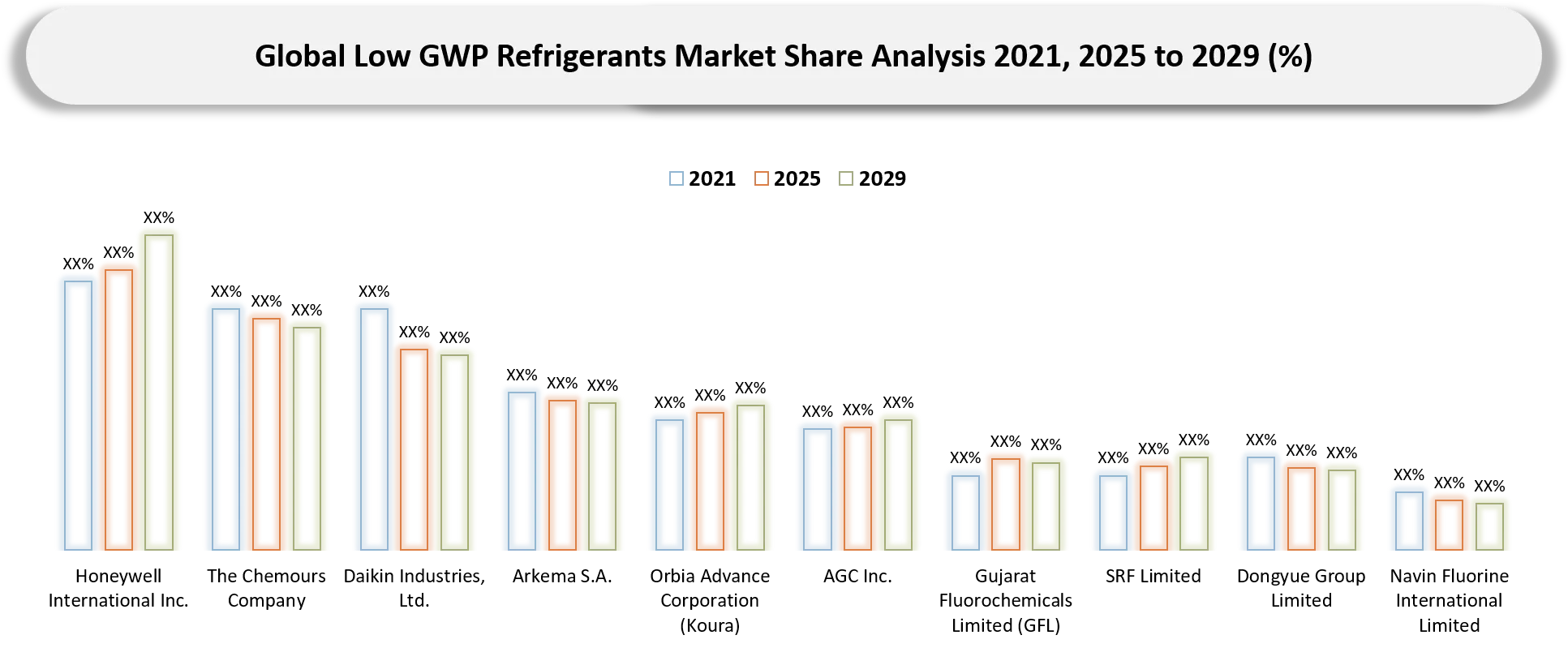
- Global Chemical Players Drive the Market: The market is controlled by multinationals like Honeywell, The Chemours Company, Daikin Industries, Arkema, Orbia (Koura) and AGC that utilize their R&D expertise, manufacturing base and distribution network to retain their leading positions in the market.
- Focus on Development of Innovative Products: Organizations are extensively investing in the innovation of HFO-based refrigerants, low GWP blends and natural refrigerants that will adhere to environmental laws while offering superior efficiency and performance.
- Capacity Addition and Regional Manufacturing: Major companies are increasing their capacity addition and forming regional manufacturing centers in North America, Europe and Asia-Pacific to satisfy the rising demands, build resilient supply chains and cut down their dependency on imports.
- Collaborations and Mergers & Acquisitions: Players in this market are entering into collaborations with HVAC OEMs, refrigeration equipment makers, distributors and technology companies to expand product offerings and also undertaking mergers and acquisitions.
- Competition Based on Sustainability and Compliance: Competitive advantage is being created through innovation in terms of GWP, energy efficiency, safety performance, lifecycle cost and regulatory requirements of the international environmental laws.
Low GWP Refrigerants Market Key Companies
- Honeywell International Inc.
- The Chemours Company
- Daikin Industries, Ltd.
- Arkema S.A.
- Orbia Advance Corporation (Koura)
- AGC Inc.
- Gujarat Fluorochemicals Limited (GFL)
- SRF Limited
- Dongyue Group Limited
- Navin Fluorine International Limited
Low GWP Refrigerants Market Major Pain Points
- Higher Retrofit and Upgrading Costs: Upgrading from existing conventional HFC-based refrigerant systems to low GWP refrigerants may require retrofitting or replacing entire systems, resulting in substantial initial capital outlay for end consumers.
- Safety Concerns: Low GWP refrigerants, especially those that are A2L and hydrocarbon refrigerants, pose a risk due to their flammability and therefore necessitate new equipment and trained personnel to handle such refrigerants during installation and routine maintenance.
- Logistical Constraints and Lack of Refrigerant Availability: Production issues associated with certain HFOs and advanced refrigerants, along with raw material scarcity and political tensions in some cases, could create logistical constraints with regard to procurement of the required refrigerants.
- Volatile Price and Higher Cost of Products: High cost of manufacturing, regulatory requirements and fluctuations in the cost of fluorochemical raw materials increase the cost of production and hence the prices of refrigerants.
- Labor Shortage: The growing use of next generation refrigerants has created a shortage of trained technicians that can install, maintain and work safely with low GWP refrigerants in refrigeration and HVAC systems.
Low GWP Refrigerants Market Recent Developments
- May 2025: Arkema S.A. enhanced the range of low GWP refrigerants by partnering with Honeywell to offer the next generation of HFO refrigerants.
- May 2025: Arkema S.A. released new Forane low GWP refrigerants like R-454B and R-513A, aimed at facilitating the process of regulatory compliance as well as improving the energy efficiency of refrigeration and air conditioning equipment.
- January 2026: Under the U.S. EPA’s Technology Transitions rule and the AIM Act, January 1, 2026, marked a key enforcement milestone. New industrial process chillers are now capped at a maximum GWP of 700, and remote condensing units in commercial refrigeration must use refrigerants with a GWP of 300 or less.
- July 2026: Through mid-2026, private equity firms took 39 of 77 major HVAC M&A deals. Institutional buyers are aggressively targeting regional commercial HVAC operators via platforms like Blackstone's AIR, PremiStar, and Service Logic.
- October 2025: Honeywell announced that it completed the previously announced spin-off of its Advanced Materials business, now operating as Solstice Advanced Materials. Solstic is a prominent line of HFO advanced materials and low-global-warming-potential (GWP) chemicals developed by Honeywell.
- March 2026: Chemours and Solstice Advanced Materials expanded their regional joint recycling and reclaiming programs across the EU and UK. This infrastructure ensures that HFO blends like R-448A (Solstice N40) and R-449A (Opteon XP40) can be captured and processed to support the 2026 circularity quotas.
Analyst View / Opinion on Low GWP Refrigerants Market
- Regulatory policies will continue to serve as the dominant growth drivers, with the Kigali Amendment, F-Gas regulations and national HFC phase-out strategies driving the worldwide adoption of low-GWP refrigerants.
- Natural refrigerants and HFO products will drive the majority of investments in the coming years, with emphasis on refrigerants that have low environmental impacts, high energy efficiency levels and compliance with future regulations.
- Heat pump systems, commercial refrigeration applications, cold chains and data center cooling will turn out to be the most promising high-growth market segments and offer huge potential for refrigerant suppliers and HVAC system manufacturers.
- Product innovation, capacity expansions and partnerships will be some of the major competition differentiators and will help companies grow their market shares and become more resilient to changes in the market environment.
- Asia-Pacific region will register the highest CAGR among all regions and will offer excellent opportunities to global players due to fast urbanization rates, HVAC systems installations, development of cold chains and favorable government policies.
Low GWP Refrigerants Market Target Audience
| INDUSTRY | WHO SHOULD BUY THIS REPORT? | REASON TO BUY THIS REPORT |
| Chemical Manufacturing | Refrigerant Manufacturers, Fluorochemical Producers | To identify market opportunities, technology trends, regulatory impacts and competitive strategies for expanding low GWP refrigerant portfolios. |
| HVAC & Refrigeration Equipment | HVAC OEMs, Refrigeration System Manufacturers | To develop refrigerant-compatible equipment, optimize product development and align with evolving environmental regulations. |
| Automotive | Automotive OEMs, Tier-1 Suppliers | To evaluate low GWP refrigerant adoption in vehicle air-conditioning systems and support compliance with global emission standards. |
| Cold Chain & Logistics | Cold Storage Operators, Logistics Companies | To assess future demand for sustainable refrigeration technologies and plan investments in environmentally compliant cold chain infrastructure. |
| Food & Beverage | Food Processing Companies, Supermarket Chains | To improve refrigeration efficiency, reduce operating costs and comply with refrigerant regulations while supporting sustainability goals. |
| Pharmaceuticals & Healthcare | Pharmaceutical Manufacturers, Vaccine Logistics Providers | To understand emerging cooling technologies for temperature-sensitive products and ensure regulatory compliance in cold storage operations. |
| Data Centers | Data Center Operators, Cloud Infrastructure Providers | To evaluate advanced cooling technologies using low GWP refrigerants for improving energy efficiency and reducing carbon emissions. |
| Construction & Real Estate | Green Building Developers, Facility Management Companies | To integrate sustainable HVAC solutions into commercial and residential buildings while meeting green building certification requirements. |
| Investment & Financial Services | Private Equity Firms, Venture Capitalists, Institutional Investors | To identify high-growth investment opportunities, emerging technologies and competitive dynamics in the low GWP refrigerants market. |
| Government & Regulatory Organizations | Environmental Agencies, Energy Policymakers, Standards Organizations | To formulate environmental policies, monitor refrigerant transitions, evaluate industry compliance and support national climate and energy-efficiency objectives. |
Why Choose DATAM?
- Data-Driven insights: Dive into detailed analyses with granular insights such as pricing, market shares and value chain evaluations, enriched by interviews with industry leaders and disruptors.
- Post-Purchase Support and Expert Analyst Consultations: As a valued client, gain direct access to our expert analysts for personalized advice and strategic guidance, tailored to your specific needs and challenges.
- White Papers and Case Studies: Benefit quarterly from our in-depth studies related to your purchased titles, tailored to refine your operational and marketing strategies for maximum impact.
- Annual Updates on Purchased Reports: As an existing customer, enjoy the privilege of annual updates to your reports, ensuring you stay abreast of the latest market insights and technological advancements. Terms and conditions apply.
- Specialized Focus on Emerging Markets: DataM differentiates itself by delivering in-depth, specialized insights specifically for emerging markets, rather than offering generalized geographic overviews. The approach equips our clients with a nuanced understanding and actionable intelligence that are essential for navigating and succeeding in high-growth regions.
- Value of DataM Reports: Our reports offer specialized insights tailored to the latest trends and specific business inquiries. The personalized approach provides a deeper, strategic perspective, ensuring you receive the precise information necessary to make informed decisions. The insights complement and go beyond what is typically available in generic databases.
What DATAM Uniquely Provides
- Thorough market insights include market size, projections, growth factors, limitations, opportunities, technological trends, competitive environment and in-depth segmentation by refrigerant types, uses, end-user sectors and geographical areas.
- Practical strategic insights comprising regulatory impact evaluation, AI influence assessment, disruption evaluation, investment patterns, pricing insights, trade analysis, BCG matrix, company performance comparison and potential growth prospects to facilitate informed business choices.
- Competitive research of top players with assessment of products, production capabilities, innovation know-how, corporate strategies such as M&A, partnerships and updates on the business operations.
- Global and regional analysis on demand patterns, government policies and market potential in North America, Europe, Asia-Pacific, Latin America and the Middle East & Africa.
- Reliable insights for companies in the industry so they can make wise decisions based on the gathered information and assessment on the possibilities for investment and growth potential of the market.
Questions This Report Answers
- What is the present market size, anticipated growth forecasts and main drivers influencing the global Low GWP Refrigerants Market up to 2035?
- Which types of refrigerants, applications, end-use sectors and geographic areas are anticipated to witness the greatest growth throughout the forecast period?
- In what ways are environmental rules, HFC reduction policies and technological innovations shaping market trends and competitive approaches?
- Who are the primary players in the market and what strategic moves, product developments, collaborations and funding are influencing the competitive environment?
- What key investment prospects, supply chain obstacles, pricing patterns and upcoming technological advancements should stakeholders evaluate when formulating strategic business choices?



























































