


Synthetic Biology Market Overview
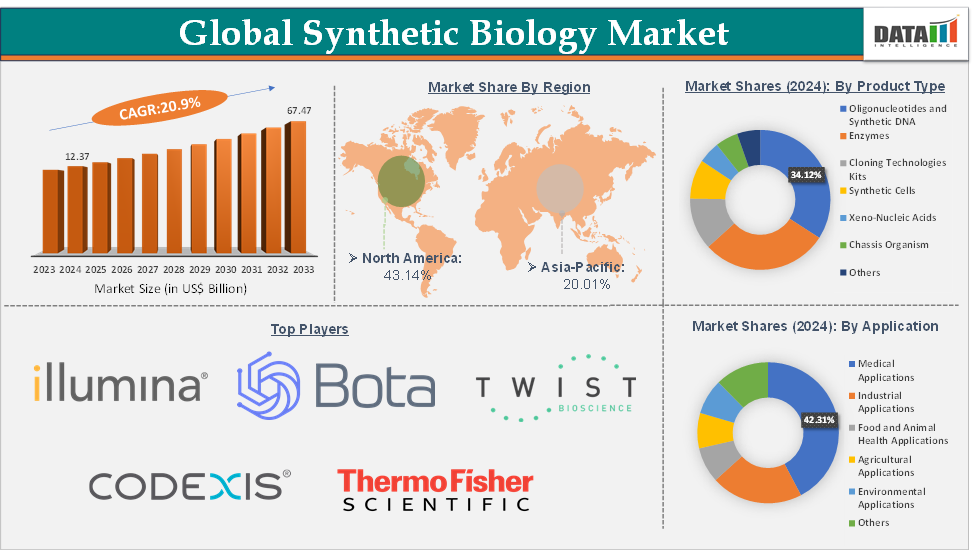
The global synthetic biology market size reached US$ 14.96 Billion in 2025 from US$ 12.37 Billion in 2024 and is expected to reach US$ 67.47 Billion by 2033, growing at a CAGR of 20.9% during the forecast period 2026-2033.
Synthetic Biology Market Overview
The synthetic biology market growth is driven by rising demand for sustainable bio-based solutions (biofuels, bioplastics, circular economy chemicals) and healthcare breakthroughs (vaccines, diagnostics, personalized medicine) are pushing synthetic biology into mainstream industries.
North America dominates the synthetic biology market with the largest revenue share of 43.14% in 2024.
The Asia Pacific is the fastest-growing region and is expected to grow at the fastest CAGR of 21.1% over the forecast period.
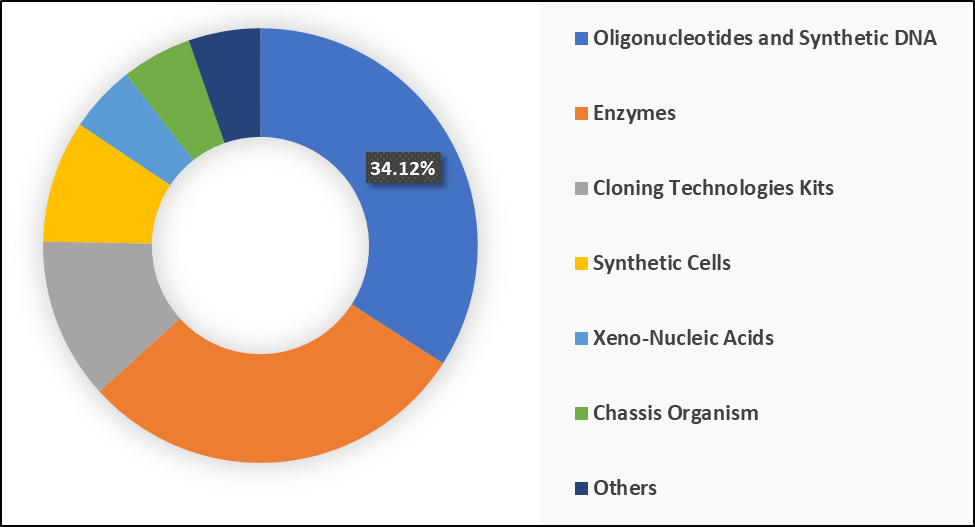
Based on product type, the oligonucleotides and synthetic DNA segment led the market with the largest revenue share of 34.12% in 2024.
Based on application, the medical applications segment is expected to lead the market with the largest revenue share of 42.31% in 2024.
The major market players in the synthetic biology market are Illumina, Inc., Merck KGaA, Thermo Fisher Scientific Inc., Bota Biosciences, Codexis, Inc., Twist Bioscience, Creative Biogene and Eurofins Genomics, among others
Synthetic Biology Market Executive Summary
Synthetic Biology Market Dynamics
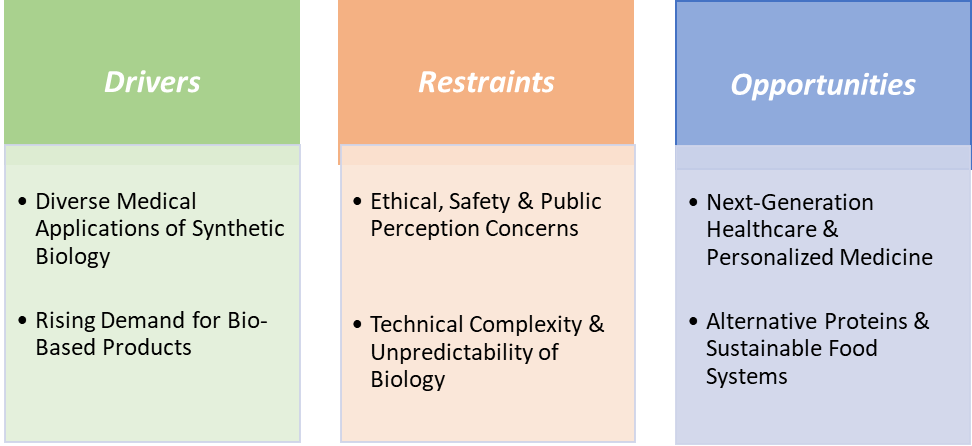
Drivers - Diverse medical applications of synthetic biology are significantly driving the synthetic biology market growth
The diverse medical applications of synthetic biology are significantly driving market growth by transforming how therapies, vaccines, diagnostics, and drug manufacturing are approached. Synthetic biology enables precision medicine through innovations like CRISPR Therapeutics’ exa-cel, approved in 2023 for sickle cell disease and beta-thalassemia, showcasing the real-world impact of engineered gene-editing therapies. Vaccine development has also been revolutionized, with Moderna’s mRNA platform, rooted in synthetic biology, enabling rapid vaccine design, as seen during the COVID-19 pandemic.
Meanwhile, advanced medical technologies like biohybrid microswimmers are being designed for targeted drug delivery to tumor sites, and Organovo’s 3D-printed human tissues are being adopted for disease modeling and preclinical drug testing, with its FXR program recently acquired by Eli Lilly in 2025. Collectively, these applications highlight how synthetic biology is expanding from lab research into real-world medical solutions, fueling investor confidence, accelerating commercialization, and driving sustained growth across the healthcare sector.
Restraints - Ethical, safety & public perception concerns are hampering the growth of the synthetic biology market
Ethical, safety, and public perception concerns are acting as major restraints on the growth of the synthetic biology market, as they directly influence regulatory decisions, investment confidence, and consumer adoption. A primary issue stems from biosafety risks, where the possibility of engineered organisms escaping into the environment raises fears of unintended ecological consequences. Similarly, biosecurity concerns, particularly the fear that synthetic biology tools could be misused to create harmful pathogens, have prompted governments to impose tighter oversight on DNA synthesis providers, increasing compliance burdens for legitimate companies.
Ethical debates also play a significant role, with critics questioning the morality of “creating synthetic life” and raising concerns about potential misuse of technologies like gene editing and minimal genomes. Public perception compounds these issues, such as consumer skepticism toward “lab-grown” or “synthetic” food products has slowed the rollout of innovations such as cultivated meat and animal-free dairy proteins, despite their environmental benefits.
Get a Free Sample PDF Of This Report
Synthetic Biology Market Segmentation Analysis
The global synthetic biology market is segmented based on product type, technology, application, end-user, and region.
Product Type: The oligonucleotides and synthetic DNA segment is dominating the synthetic biology market with a 34.12% share in 2024
Oligonucleotides and synthetic DNA remain dominant in the synthetic biology market, primarily as indispensable tools across research, diagnostics, and therapeutics. The reagents and consumables used in oligo workflows also dominate, bolstered by recurring purchase cycles and high demand in R&D and biotech applications. Recent breakthroughs in synthetic DNA products underscore this dominance.
For instance, in May 2025, Ribbon Bio GmbH, the DNA synthesis company, launched MiroSynth DNA, its first commercial product designed to meet the growing demand for complex and highly accurate synthetic DNA molecules. MiroSynth DNA is built on Ribbon’s proprietary algorithm-driven technology and precision enzymatic assembly process, delivering exceptional accuracy and performance for applications initially in biopharma, life sciences, and academic research.
Technological improvements continue the segment’s growth, for instance, Twist Bioscience introduced its “Express Genes” rapid gene synthesis service in late 2023, offering full-length gene constructs in just 5–7 business days, marrying the efficiency of gene synthesis with the precision required in synthetic biology applications. These developments illustrate that oligonucleotides and synthetic DNA are not just foundational, they're the fastest-evolving and highest-volume segments in synthetic biology, supported by continuous innovations in synthesis speed, fidelity, scale, and regulatory-grade production.
Application - The medical applications segment is dominating the synthetic biology market with a 54.21% share in 2024
The medical applications segment is dominating the synthetic biology market as it has become the largest and fastest-growing area of adoption, driven by its central role in drug discovery, precision medicine, vaccines, and advanced therapies. The segment is reflecting strong demand for genome editing, synthetic gene synthesis, and engineered biologics. This dominance is exemplified by breakthroughs such as CRISPR Therapeutics’ exa-cel, approved for sickle cell disease and beta-thalassemia, and Moderna’s mRNA vaccine platform, which relies heavily on synthetic biology to rapidly design and scale vaccines.
Synthetic biology is also enabling entirely new therapeutic categories and novel product launches. For instance, in May 2025, RootPath launched Megabase Spark, a quarterly initiative aimed at providing impactful but underfunded research projects with free synthetic DNA. Each quarter, RootPath will award up to 500,000 base pairs of its rBlocks synthetic DNA to selected researchers. RootPath is committed to giving away a total of 3 million base pairs by the end of 2026, helping to accelerate breakthrough discoveries in biotechnology, medicine, and life sciences. Collectively, these innovations show how medical applications are not only leveraging synthetic biology to address urgent global health challenges but also shaping the commercial landscape, cementing healthcare as the dominant and most influential segment within the synthetic biology market.
Synthetic Biology Regional Market Analysis
North America Synthetic Biology Market
North America remains one of the leading markets for synthetic biology due to its well-established biotechnology ecosystem, robust research infrastructure, strong venture capital funding, and extensive collaboration between academia, industry, and government agencies.
The United States leads the regional market through significant investments in biotechnology research, pharmaceutical innovation, synthetic genomics, and advanced healthcare applications. The presence of leading biotechnology companies, research institutions, and favorable funding programs continues to support technological advancement.
Major demand-generating industries include:
- Pharmaceuticals and Biotechnology
- Healthcare and Diagnostics
- Industrial Biotechnology
- Agriculture
- Food and Beverage
- Academic and Research Institutions
Asia-Pacific Synthetic Biology Market
Asia-Pacific is expected to register the fastest growth during the forecast period due to expanding biotechnology capabilities, increasing healthcare investments, government-supported life sciences initiatives, and rising research and development activities.
China remains one of the largest markets in the region, supported by strong investments in biotechnology innovation, genome research, industrial biomanufacturing, and precision medicine.
India is emerging as a major growth opportunity due to:
- Expansion of biotechnology research and innovation
- Growing pharmaceutical and biopharmaceutical manufacturing
- Increasing government support for biotechnology development
- Rising academic and industrial research collaborations
- Expanding applications in healthcare, agriculture, and industrial biotechnology
Japan, South Korea, Singapore, and other Asia-Pacific countries continue investing in advanced life science research, synthetic biology platforms, and sustainable bio-based manufacturing technologies.
Europe Synthetic Biology Market
Europe is witnessing steady market growth supported by strong biotechnology research capabilities, collaborative innovation programs, sustainability initiatives, and favorable regulatory frameworks for research and industrial biotechnology.
Germany, the United Kingdom, France, Switzerland, and the Netherlands remain key contributors due to their advanced research infrastructure, pharmaceutical industries, and investments in synthetic biology innovation.
The region is increasingly focusing on:
- Sustainable bio-based manufacturing
- Precision medicine and advanced therapeutics
- Industrial biotechnology innovation
- Agricultural biotechnology
- Circular bioeconomy and low-carbon production strategies
These initiatives continue to accelerate the adoption of synthetic biology technologies across multiple industrial sectors.
Latin America Synthetic Biology Market
Latin America is gradually strengthening its synthetic biology ecosystem through increasing biotechnology research, academic collaboration, and growing investments in healthcare and agricultural innovation.
Countries such as Brazil, Mexico, Argentina, and Chile are witnessing expanding applications of synthetic biology across pharmaceuticals, agriculture, industrial biotechnology, and environmental sustainability.
Increasing focus on biotechnology innovation and bio-based industrial development is expected to support long-term market expansion across the region.
Middle East & Africa Synthetic Biology Market
The Middle East & Africa region is experiencing gradual growth in synthetic biology, supported by expanding biotechnology research, healthcare modernization, and government initiatives to diversify knowledge-based economies.
Saudi Arabia and the United Arab Emirates are investing in biotechnology research, genomic medicine, healthcare innovation, and scientific infrastructure to strengthen life sciences capabilities.
Synthetic Biology Market Competitive Landscape
Top companies in the synthetic biology market include Illumina, Inc., Merck KGaA, Thermo Fisher Scientific Inc., Bota Biosciences, Codexis, Inc., Twist Bioscience, Creative Biogene, and Eurofins Genomics, among others.
Bota Biosciences: Bota Biosciences is a major market leader in synthetic biology. Camino is a recently launched service powered by Bota Bio’s cutting-edge synthetic biology technology platform. Bota Biosciences has deep scientific expertise and excels in discovering and optimizing enzymes, proteins, and peptides, with a particular emphasis on driving advancements in food and nutrition, alongside industrial and pharmaceutical applications. Bota Biosciences provides milligram quantities of enzymes, proteins, and peptides for early testing and can scale up to full manufacturing within collaborative projects. Recent launches showcase Bota’s ability to bring lab innovations directly to market.
Recent Developments of the Synthetic Biology Market
- In March 2026, Ginkgo Bioworks and Twist Bioscience advanced development of synthetic biology platforms, focusing on automated DNA synthesis, scalable bioengineering, and AI-driven organism design for industrial and healthcare applications.
- In February 2026, companies introduced AI-enabled bioengineering tools, improving genome design efficiency and accelerating the development of engineered cells and biomolecules.
- In January 2026, growing demand for biomanufacturing solutions boosted the adoption of synthetic biology across pharmaceuticals, agriculture, and sustainable materials industries globally.
- In November 2025, leading players such as Thermo Fisher Scientific, Merck KGaA, and Novozymes expanded R&D investments to enhance enzyme engineering, gene editing, and microbial production technologies.
- In October 2025, increasing focus on sustainable production and green chemicals encouraged the adoption of synthetic biology for biofuels, biodegradable materials, and alternative proteins.
- In September 2025, across regions including North America, Europe, and the Asia Pacific, rising investments in biotechnology and advancements in CRISPR and DNA sequencing accelerated the growth of the synthetic biology market.
Synthetic Biology Market Key Takeaways
- The increasing adoption of synthetic biology across healthcare, industrial biotechnology, agriculture, and environmental applications is emerging as a key industry trend, with organizations focusing on advanced gene engineering, automated DNA synthesis, and AI-enabled biological design to accelerate innovation and commercialization.
- North America maintains a leading position in the global synthetic biology market, supported by strong biotechnology research infrastructure, substantial investments in life sciences, the presence of leading synthetic biology companies, and increasing adoption across pharmaceutical, industrial, and academic research sectors.
- Asia-Pacific is projected to record significant growth, driven by expanding biotechnology ecosystems, increasing government funding for genomic research, rising biomanufacturing capabilities, and growing demand for sustainable bio-based products across healthcare, agriculture, and industrial applications.
- Growing demand for precision medicine, advanced therapeutics, synthetic vaccines, and cell and gene therapies is becoming a major factor accelerating the adoption of synthetic biology technologies across the global healthcare industry.
- The increasing use of engineered microorganisms and synthetic biological platforms for sustainable chemical production, renewable biofuels, alternative proteins, and biodegradable materials is strengthening the market's role in supporting the global bioeconomy.
- Industry participants are increasingly prioritizing investments in automated laboratory platforms, AI-driven biological engineering, scalable DNA synthesis technologies, and strategic research collaborations to enhance innovation, improve development efficiency, and expand commercial applications.
- Rising investments in genomic research, biopharmaceutical manufacturing, agricultural biotechnology, industrial fermentation, and sustainable bioprocessing technologies are creating significant opportunities for synthetic biology solution providers, technology developers, and research organizations worldwide.
Synthetic Biology Market Scope
Metrics | Details | |
CAGR | 20.9% | |
Market Size Available for Years | 2025-2033 | |
Estimation Forecast Period | 2026-2033 | |
Revenue Units | Value (US$ Bn) | |
Segments Covered | Product Type | Oligonucleotides and Synthetic DNA, Enzymes, Cloning Technologies Kits, Synthetic Cells, Xeno-Nucleic Acids, Chassis Organism and Others |
Technology | Genome Engineering, Sequencing, Bioinformatics, Cloning, Nanotechnology and Others | |
Application | Medical Applications, Industrial Applications, Food and Animal Health Applications, Agricultural Applications, Environmental Applications and Others | |
End-User | Pharmaceutical & Biotechnology Companies, Industrial & Chemical Companies, Food & Beverage Companies, Academic and Research Institutes and Others | |
Regions Covered | North America, Europe, Asia-Pacific, South America and the Middle East & Africa | |
The global synthetic biology market report delivers a detailed analysis with 64 key tables, more than 72 visually impactful figures, and 159 pages of expert insights, providing a complete view of the market landscape.
Why Choose DataM?
- Technological Innovations: Explores advancements in synthetic biology technologies, including CRISPR-based genome editing, DNA synthesis and sequencing platforms, automated biofoundries, cell-free synthetic biology systems, metabolic engineering, AI-enabled biological design, and computational protein engineering, enabling faster strain development, precision genetic modifications, scalable biomanufacturing, and accelerated product discovery across healthcare, agriculture, industrial biotechnology, and environmental applications.
- Product Performance & Market Positioning: Evaluates how leading companies differentiate synthetic biology platforms based on DNA assembly accuracy, gene editing precision, automation capabilities, scalability, turnaround time, bioinformatics integration, manufacturing efficiency, regulatory compliance, and end-to-end workflow support, highlighting competitive advantages across therapeutics, diagnostics, industrial enzymes, sustainable chemicals, agricultural biotechnology, and specialty ingredients.
- Real-World Evidence: Highlights the commercial adoption of synthetic biology across biopharmaceutical manufacturing, gene and cell therapy development, vaccine production, precision fermentation, engineered microorganisms for industrial manufacturing, sustainable food ingredients, crop improvement, and environmental remediation, demonstrating benefits such as improved production efficiency, reduced development timelines, lower manufacturing costs, enhanced product quality, and sustainable bio-based alternatives.
- Market Updates & Industry Changes: Tracks key developments such as advancements in genome engineering technologies, expansion of DNA synthesis and sequencing capabilities, AI-driven biological design platforms, precision fermentation investments, strategic collaborations between biotechnology and pharmaceutical companies, manufacturing capacity expansions, regulatory developments, and public-private research initiatives across North America, Europe, and Asia-Pacific supporting innovation in synthetic biology.
- Competitive Strategies: Analyzes how leading companies strengthen their market presence through proprietary platform development, strategic partnerships, mergers and acquisitions, investments in automated laboratory infrastructure, expansion of manufacturing capabilities, licensing agreements, research collaborations, and integrated software-enabled biological engineering solutions to accelerate commercialization across healthcare, agriculture, industrial biotechnology, food, and environmental sectors.
- Pricing & Market Access: Explains pricing variations based on technology platform, project complexity, DNA synthesis scale, sequencing requirements, automation level, manufacturing capacity, regulatory requirements, and application area, along with market access through biotechnology companies, contract research organizations (CROs), contract development and manufacturing organizations (CDMOs), academic research institutions, pharmaceutical companies, agricultural biotechnology firms, and industrial biotechnology providers.
- Market Entry & Expansion: Identifies growth opportunities driven by increasing demand for sustainable bio-based products, expanding applications in precision medicine, rising investments in biotechnology research, growing adoption of precision fermentation, advances in AI-enabled biological engineering, and supportive government funding initiatives, while outlining strategies such as technology platform innovation, strategic collaborations, regional manufacturing expansion, intellectual property development, and customized synthetic biology solutions for emerging commercial applications.
Target Audience
- Biotechnology Companies
- Pharmaceutical & Biopharmaceutical Companies
- Synthetic Biology Platform Developers
- DNA Synthesis & Gene Editing Technology Providers
- Contract Research Organizations (CROs)
- Contract Development & Manufacturing Organizations (CDMOs)





























































