


Polymer Processing Aid Market Size and Overview
The global Polymer Processing Aid market Size reached USD 1,412.9 million in 2025 and is expected to reach USD 2,413.4 million by 2035, growing with a CAGR of 5.5% during the forecast period 2026-2035. The market is experiencing steady growth, supported by increasing polymer production, rising demand for high-throughput extrusion processes, and an increasing need for manufacturing plastics without defects in the packaging industry, construction, agriculture, automotive, and consumer products industries. Polymer Processing Aids are essential additives that enhance the performance of melt flow, eliminate the occurrence of melt fractures and die deposits, and improve the surface finish. The growing demand for plastic usage globally will also ensure a continuous rise in the demand for PPAs. In terms of global plastics production, from 234 million tons in 2000 to 460 million tons in 2019, and with the projections of the OECD, plastics production and usage are expected to grow by 68%, that is, to reach 736 million tons by 2040. Such an increase in the volume of polymer processing will contribute to a growing trend towards the application of PPAs in order to optimize extrusion processes, minimize processing errors, and increase the speed of film, pipe, sheet, and molded plastics products manufacturing.
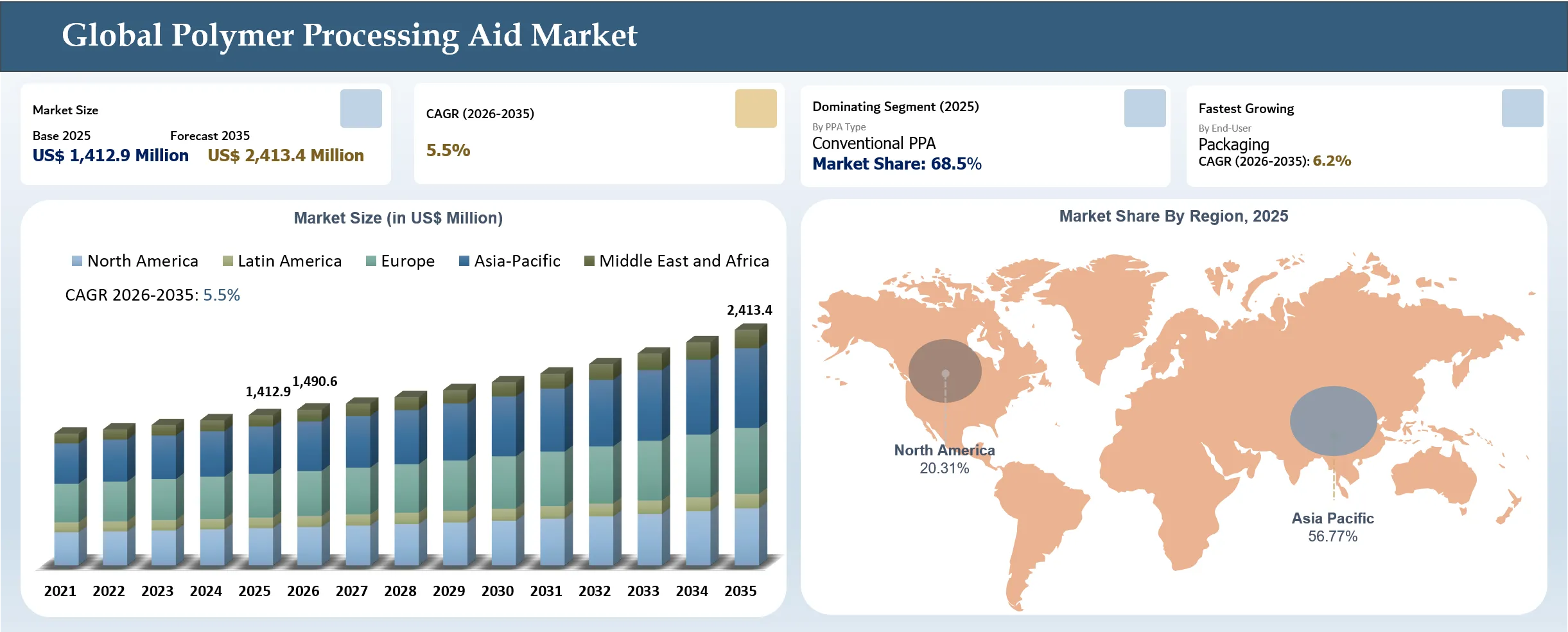
There is an increasing trend in the use of polymer processing technologies that are PFAS-free and compliant with regulations, hence boosting innovations in the polymer processing aid industry through the development of additive solutions that optimize processing efficiency. In September 2025, Dow launched DOWSIL™ 5-1050 Polymer Processing Aid (PPA), which is a fluoropolymer-free processing aid that has been created for blown and stretch film packaging. The unique formulation is intended to help minimize melt fracture, control die lip build-up, production scrap, and downtime, in addition to improving the surface finish of films without compromising EU food contact Regulation (EU) 10/2011 and U.S. FDA standards.
White-Space Opportunity for Advanced Polymer Manufacturing and Sustainable Materials
In July 2025, the U.S. National Science Foundation (NSF), in collaboration with industry partners through the NSF Center for Chemistry with Multinational Collaboration and Partnerships (Chem-COMP) program, committed USD 9.8 million to accelerate research on AI-enabled polymer manufacturing and advanced data analytics for next-generation polymer materials. The initiative includes USD 7.3 million in NSF funding and USD 2.5 million in cash and in-kind contributions from industry partners to support five multidisciplinary research teams. The primary investment focus is on artificial intelligence and machine learning for polymer discovery, polymer informatics, sustainable and recyclable polymer development, advanced manufacturing processes, and digital process optimization to improve manufacturing efficiency, reduce material waste, and accelerate commercialization of innovative polymer systems. Additional research areas include computational materials design, scalable polymer synthesis, predictive manufacturing models, and workforce development for AI-driven polymer engineering. Although the program does not directly fund polymer processing aid manufacturers, it creates a significant white-space opportunity by advancing polymer formulations that will require next-generation processing technologies to enable efficient large-scale production.
The initiative represents a long-term white-space opportunity for the Polymer Processing Aid market, as commercialization of recycled, bio-based, and high-performance polymers is expected to increase demand for next-generation processing aids that improve melt flow, minimize melt fracture, reduce die build-up, and enhance processing stability during extrusion and molding operations. While the NSF funding is awarded to research collaborations rather than commercial suppliers, leading polymer manufacturers and material technology companies such as Dow, BASF, ExxonMobil, LyondellBasell, SABIC, Covestro, and Arkema are well positioned to benefit from AI-driven polymer innovation through the commercialization of advanced polymer materials. Likewise, Polymer Processing Aid suppliers including Syensqo, Avient Corporation, Ampacet, Clariant, and Wacker Chemie are expected to gain indirect opportunities by developing sustainable and fluoropolymer-free processing aid technologies that enable efficient processing of emerging polymer formulations developed through these research programs.
Polymer Processing Aid Market Strategic Takeaways
- Asia-Pacific held the highest regional market share at 52.16% in 2025, which is projected to expand to 55.23% by 2032. North America followed as the second-largest region, valued at $291.42 million (21.76% share) in 2025 and growing to $444.96 million by 2032.
- The packaging end-user segment represents a dominant 44.59% market value share. Packaging is projected to grow to $999.66 million by 2032, expanding its value share to 48.93%.
- Polypropylene (PP) is forecasted to grow at a 6.0% CAGR in 2025. Engineered Plastics will experience the highest segment growth rate at a 6.8% CAGR, rising from $76.98 million to $128.72 million.
- The price of PFAS-Free PPA is projected to climb from $3.22/kg in 2024 to $3.51/kg in 2028, reaching $3.85/kg by 2032. In contrast, Conventional PPA pricing will increase modestly from $2.47/kg in 2024 to $2.57/kg in 2028 and $2.68/kg by 2032.
Polymer Processing Aid Market Industry Trends and Strategic Insight
- PFAS-free polymer processing aids are becoming the industry's primary innovation focus, as tightening global regulations and customer sustainability requirements accelerate the replacement of conventional fluoropolymer-based additives.
- Regulatory developments are reshaping product development strategies, particularly following the 2025 European Chemicals Agency (ECHA) PFAS restriction proposal under REACH, which has prompted polymer processors and additive suppliers to prioritize PFAS-free formulations for food-contact and packaging applications.
- Innovation in bio-based and non-fluorinated additives is emerging as a key competitive differentiator, with manufacturers developing renewable and low-toxicity processing aids capable of delivering melt fracture mitigation and improved surface quality.
- Emerging economies are becoming major growth centers for PPA consumption, supported by expanding polymer processing capacity across Asia-Pacific, Latin America, and Africa.
- Growing adoption of high-melt-strength polyethylene and polypropylene grades is increasing demand for advanced processing aids, as these materials require greater melt stability during high-speed extrusion and blown-film manufacturing.
Polymer Processing Aid Market Scope
| Metrics | Details | |
| 2025 Market Size | USD 1,412.9 Million | |
| 2035 Projected Market Size | USD 2,413.4 Million | |
| CAGR (2026-2035) | 5.5% | |
| Largest Market | Asia-Pacific | |
| Fastest Growing Market | Asia-Pacific | |
| By PPA Type | Conventional PPA, PFAS-Free PPA | |
| By Polymer Type | Polyethylene (PE), Polypropylene (PP), Polyvinyl Chloride (PVC), Engineered Plastics, Others | |
| By Form | Masterbatch, Powder / Granules, Liquid Dispersions, Others | |
| By Application | Blow Film & Cast Film, Sheet Extrusion, Pipe & Profile Extrusion, Injection Molding, Others | |
| By End-User | Packaging, Agriculture, Automotive, Construction, Consumer Goods, Others | |
| By Region | North America | U.S., Canada, Mexico |
| Europe | Germany, UK, France, Spain, Italy, Poland | |
| Asia-Pacific | China, India, Japan, Australia, South Korea, Indonesia, Malaysia | |
| Latin America | Brazil, Argentina | |
| Middle East and Africa | UAE, Saudi Arabia, South Africa, Israel, Türkiye | |
| Report Insights Covered | Competitive Landscape Analysis, Company Profile Analysis, Market Size, Share, Growth | |
Polymer Processing Aid Market Disruption Analysis
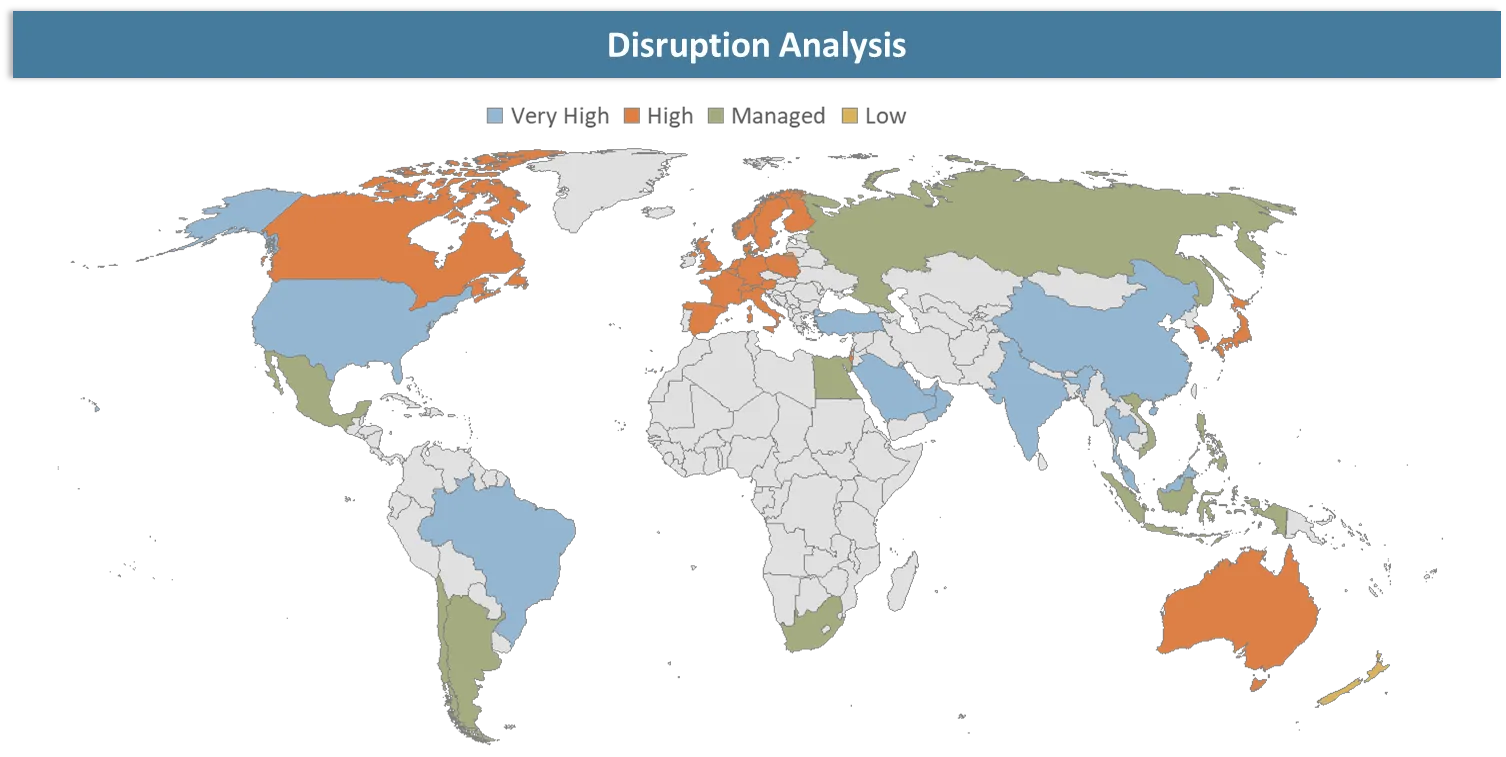
Shift Toward PFAS-Free Polymer Processing Aids Reshaping the Global Polymer Processing Aid Market
The Polymer Processing Aid Market is experiencing radical disruption through the rapid shift from traditional fluoropolymer and PFAS-based processing aids to PFAS-free processing aids. The tightening of environmental regulations and rising chemical safety standards are leading to changes that are forcing industry players to move from their old fluorinated products to sustainable non-fluorinated products. As per the ECHA proposal made in 2025 on behalf of PFAS under REACH, there might be restrictions and exemptions for a limited period of time for the PFAS-based processing aids used in food contact and packaging.
This disruption has also led to changes in technological development and supplier strategies. There has been a shift from cost-based competition in the market to compliance-based value creation, where PFAS-free PPAs command higher prices and are considered strategic risk mitigation tools as opposed to normal processing aids. This has affected the way in which raw materials have been sourced, increased research and development focus, provided differentiation among suppliers due to their PFAS-free technologies, and rapid adoption in various applications.
Polymer Processing Aid Market BCG Matrix: Company Evaluation
Stars include Dow Inc., Clariant AG, and Daikin Industries, Ltd. because these companies possess strong technological capabilities, established global distribution networks, and advanced portfolios in both conventional and PFAS-free polymer processing aids. They are leading the industry's transition toward sustainable processing technologies through continuous product innovation and early commercialization of non-fluorinated PPAs. Question Marks include Arkema Group, Avient Corporation, and Kaneka Corporation because they have strong specialty chemical expertise and continue expanding their presence in high-performance polymer additives.
Potential companies include SYENSQO, The Chemours Company, and Cargill, Incorporated. These companies possess significant material science capabilities and opportunities to benefit from growing demand for sustainable polymer additives. Tailenders include 3M Company because, although it remains a recognized specialty materials company, its participation in the Polymer Processing Aid market is comparatively limited relative to companies with broader dedicated PPA portfolios and ongoing investments in next-generation PFAS-free processing aid technologies.
Polymer Processing Aid Market Dynamics
Driver Impact Analysis
| Driver | Market Growth Impact (%) | Demand Concentration | Impacted Use Case | Strategic Impact |
Rising Adoption of High-Melt-Strength Polyolefins | 28% | High | Film extrusion, blown film, sheet extrusion, pipe manufacturing | Drives demand for advanced PPAs that improve melt stability, eliminate melt fracture, and increase extrusion throughput. |
Growth of Flexible and Rigid Packaging Industries | 32% | Very High | Blown film, cast film, multilayer packaging films | Expands consumption of processing aids that enhance surface finish, reduce die build-up, and improve production efficiency. |
Increasing Adoption of Lightweight Plastics Across Industries | 24% | High | Lightweight molded components, engineered plastic parts, profiles | Accelerates demand for processing aids compatible with engineering polymers and high-performance thermoplastics. |
Rising demand for sustainable and food-contact compliant polymer additives is encouraging investment in non-fluorinated PPA technologies. | 22% | High | Food-contact films, medical packaging, sustainable plastic products | Encourages innovation in fluorine-free processing aids, strengthening regulatory compliance and product differentiation. |
Growing emphasis on higher processing throughput and reduced manufacturing downtime is boosting the use of advanced polymer processing aids. | 30% | Very High | High-volume plastics manufacturing and continuous extrusion | Increases adoption of high-efficiency processing aids that improve productivity, reduce scrap generation, and lower operating costs. |
Rising Adoption of High-Melt-Strength Polyolefins
The adoption of high-melt-strength (HMS) polyolefins is accelerating globally as converters aim for lighter, stronger, and more process- stable plastic films and molded components. According to the American Chemistry Council (ACC), polyethylene and polypropylene together make up over 55% of total US plastic resin production, exceeding 65 million tonnes annually. This massive production base is increasingly shifting toward HMS grades because their enhanced melt elasticity supports high-speed extrusion, improved bubble stability, and downgauging, performance characteristics that demand greater use of polymer processing aids (PPAs) to prevent melt fracture and die-build-up. The Plastics Industry Association (PLASTICS) highlights that US plastics machinery operating rates rose above 82% in 2023–24, driven by demand for flexible packaging, agricultural films, and foams, segments where HMS PE and HMS PP are most used.
Higher throughput directly increases reliance on PPAs to maintain smooth flow and optical clarity at elevated shear rates. Additionally, European Plastics Converters (EuPC) reports continued growth in blown-film and thermoforming applications across the EU, where HMS polyolefins support circular-economy goals through downgauging and recyclability. These processes, however, show higher sensitivity to melt instabilities, further elevating PPA demand. Academic advancements add further momentum. Research published through organizations such as ACS (American Chemical Society) and the Ellen MacArthur Foundation shows increasing success in producing high-melt-strength recycled polyolefins, which inherently need PPAs due to wider viscosity variations.
Restraint Impact Analysis
| Restraint | Drag on Market Growth (%) | Primary Impact Area | Impacted Use Case | Strategic Impact |
Strict Limitations on Fluoropolymer Additives | 24% | Regulatory compliance and product reformulation | Film extrusion, pipe extrusion, wire & cable insulation | Accelerates transition to fluorine-free processing aids while increasing reformulation costs and qualification timelines. |
Volatility in Raw Material Prices | 20% | Manufacturing costs and supply chain stability | Polymer compounding, extrusion, injection molding | Compresses margins, creates pricing uncertainty, and affects long-term procurement strategies. |
Frequent changes in global chemical regulations are increasing uncertainty in product development and long-term investment decisions for additive manufacturers. | 22% | Product development, regulatory approval, and R&D investment | Development of new processing aid formulations and global commercialization | Delays commercialization, increases compliance costs, and slows investment in next-generation processing aid technologies. |
Performance consistency challenges of non-fluorinated processing aids in high-speed extrusion applications remain a barrier to wider market adoption. | 18% | High-speed extrusion performance and process stability | Blown film extrusion, cast film, multilayer packaging films | Slows replacement of fluoropolymer-based PPAs and requires continued innovation to achieve equivalent processing efficiency. |
Strict Limitations on Fluoropolymer Additives
Strict limitations on fluoropolymer additives are increasingly restraining growth in the global Polymer Processing Aid (PPA) market by disrupting established formulations and supply chains. Fluoropolymer- and PFAS-based PPAs have historically been favored for their high efficiency in melt fracture mitigation and die build-up control, particularly in polyolefin extrusion. For instance, the European Chemicals Agency advanced PFAS restriction proposals under REACH, signaling potential bans or time- limited derogations for PFAS-containing processing aids, especially in food-contact and packaging applications. These restrictions increase compliance costs and create uncertainty for polymer processors reliant on legacy PPA technologies. Transitioning to alternative, non-fluorinated PPAs often requires reformulation, process revalidation, and equipment adjustments, leading to temporary productivity losses.
Increased regulatory oversight of PFAS is redefining innovation focus within the polymer processing aid market. In April 2026, as per PatSnap Insights, growing PFAS regulations across the globe are prompting the shift toward fluoropolymer-free processing aids and innovations for PFAS alternatives. The report notes that the European Chemicals Agency (ECHA) universal PFAS restriction proposal includes over 4,700 PFAS compounds, which also include fluoropolymer processing aids. Meanwhile, non-fluorinated patent applications have been growing year over year since 2020 owing to higher investments in research and development in silicone polymers, organosilanes, polyolefin-based materials, and other PFAS-free products.
Polymer Processing Aid Market Segment Analysis
The global Polymer Processing Aid market is segmented based on PPA type, polymer type, form, application, end-user, and region.
Continued Dominance of Conventional Polymer Processing Aids Sustaining High-Volume Polymer Processing Operations
The Conventional PPA segment will continue to hold its dominance within the Polymer Processing Aid market and is expected to capture around 68.5% of the market in 2025. This is because of the well-established presence within polyethylene and polypropylene processing, wherein the use of processing aids based on fluoropolymers has been well-established as the norm within the industry for preventing melt fracture, die build-up, surface finish, and higher extrusion rates. The conventional PPAs continue to be the segment of choice for large-scale applications like blown film, cast film, pipes, and profiles due to their efficiency in processability and quality.
Increased use of plastic packaging products in Europe is increasing the need for more effective polymer processing techniques to improve manufacturing efficiency and quality of the products. According to the European Commission, plastic was the only packaging material in the EU to show growth from 2011 to 2025, having grown by 11% with 5.9 million tonnes of plastic packaging consumed in 2025, translating to about 14 kilograms per capita. Continuous growth in the production of plastic packaging, especially in flexible and rigid packaging applications, increases the demand for traditional polymer processing aids, which have a wide application in polyethylene and polypropylene film extrusion for improving melt flow and reducing die build-up.
Polymer Processing Aid Market Geographical Penetration
Asia-Pacific Market Leadership Driven by Expanding Plastic Processing Capacity and Packaging Applications
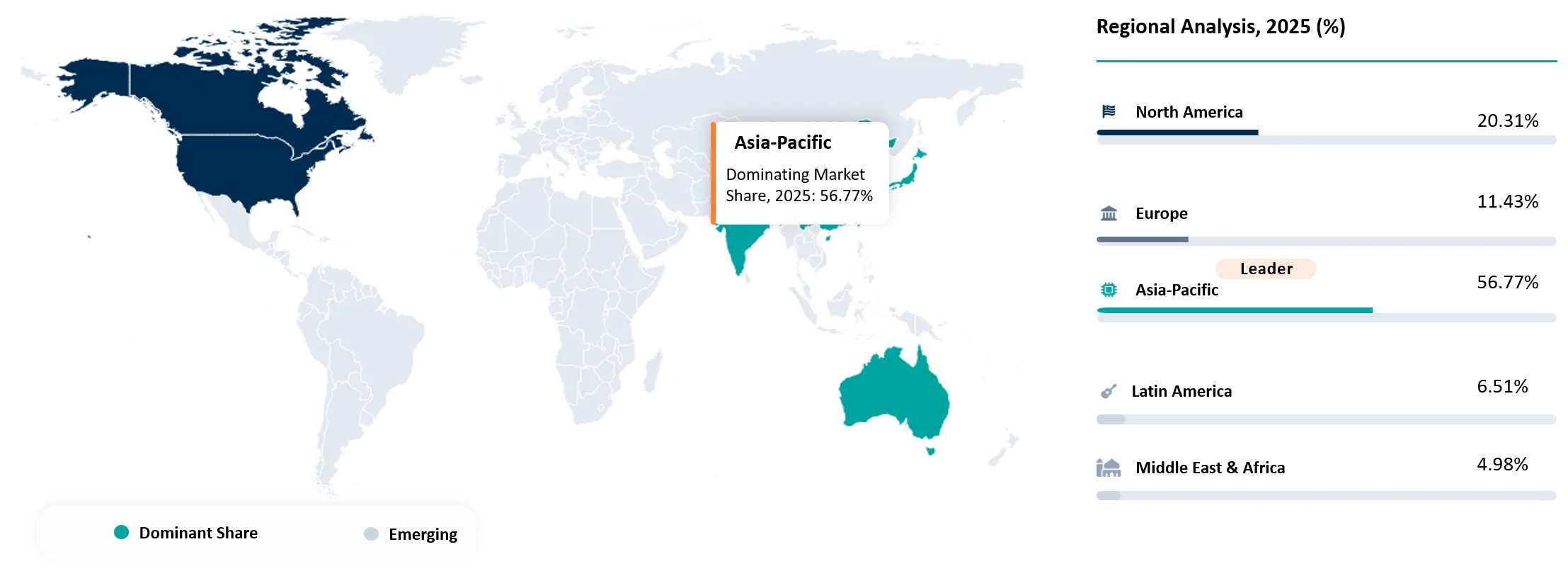
The Asia-Pacific region dominates the Polymer Processing Aid (PPA) Market, supported by the region’s strong position in plastic production, polymer processing, and high-volume packaging manufacturing. The presence of major polyethylene (PE) and polypropylene (PP) producers, growing flexible packaging consumption, and rapid expansion of film extrusion capacities across China, India, Japan, and Southeast Asian countries are driving the adoption of polymer processing aids. The region accounted for 56.77% of the global Polymer Processing Aid Market share in 2025, reflecting its strong manufacturing base and increasing demand for high-quality polymer films with improved melt flow, surface appearance, and extrusion efficiency.
Growing regulatory pressure on fluorinated additives and rising demand for sustainable plastic processing solutions are encouraging innovation in polymer processing aids across Asia-Pacific. In June 2025, Clariant launched its AddWorks™ PPA product line, a PFAS-free polymer processing aid range designed for polyolefin extrusion applications, with AddWorks PPA 122 G specifically targeted toward Greater China and Southeast Asia Pacific markets. The solution enhances extrusion efficiency, improves film surface quality, and supports sustainable packaging applications, creating new growth opportunities for polymer processing aid adoption in the region.
China Polymer Processing Aid Market Trends
China is dominating the Asia-Pacific Polymer Processing Aid Market due to its huge polymer manufacturing capability, vast plastic processing industries, and considerable presence in the production of polyethylene (PE) and polypropylene (PP). China is one of the biggest manufacturers and consumers of plastic material in the world, and the demand for Polymer Processing Aid arises from the need for better processing efficiency, melt fracture, and improvement of the polymer surface qualities used in packaging films, automotive parts, consumer goods, pipes, and other industries.
The Fluoropolymer Processing Aid Industry highlights the growing adoption of fluoropolymer-based processing aids in plastic extrusion applications, with the global market valued at USD 1.53 billion in 2024 and projected to reach USD 1.75 billion by 2029 at a CAGR of 2.7%. The study identifies polyethylene (PE) as the leading polymer segment in 2023, driven by demand from packaging, construction, and automotive applications, while blow film and cast film production remain key application areas. In China and the broader Asia-Pacific region, increasing demand for high-performance plastics and sustainable processing solutions is encouraging adoption of polymer processing aids.
India Polymer Processing Aid Market Outlook
India is the fastest-growing country in the Asia-Pacific Polymer Processing Aid Market due to increased plastic processing capacity, packaging requirements, and investments in polymer production capacity. Increased demand in the food packaging segment, e-commerce packaging segment, consumer goods segment, agricultural films segment, and other industrial segments has led to increased extrusion efficiency requirements, resulting in polymer processing aids' usage.
Increasing demand for better quality polymer solutions is driving innovation in the Indian plastics processing industry. In February 2026, Milliken & Company, a U.S.-based specialty chemicals and materials science company, showcased its next-generation polymer additive solutions at PLASTINDIA 2026 in New Delhi, India, highlighting India as a key growth market for advanced plastics technologies. The company introduced Millad ClearX 9000, a fifth-generation polypropylene (PP) clarifying agent designed to improve transparency, processing efficiency, and reduce additive loading, along with Hyperform HPN nucleating agents for enhancing PP performance in injection molding and thin-wall applications. Milliken also presented LeneX barrier additives for HDPE and LLDPE films, supporting lightweight and recyclable packaging solutions. The company stated that India’s polyolefin industry is experiencing significant capacity growth and rising demand, with the market transitioning from commodity grades toward premium polymer applications.
Japan Polymer Processing Aid Market Outlook
Japan holds a significant position in the Asia-Pacific Polymer Processing Aid Market due to its advanced chemical manufacturing ecosystem, strong presence of polyolefin producers, and increasing focus on sustainable polymer processing technologies. The country’s well-established petrochemical industry, including major producers of polypropylene (PP), polyethylene (PE), and specialty polymers, supports widespread adoption of Polymer Processing Aids across film extrusion, packaging, automotive, and industrial applications. Japan’s transition toward environmentally compliant polymer solutions is accelerating demand for PFAS-free processing aids, as manufacturers seek alternatives that improve melt flow, reduce melt fracture, minimize die build-up, and enhance extrusion efficiency.
Japan’s polyolefin industry is undergoing strategic consolidation to strengthen domestic polymer supply chains and improve competitiveness in advanced material production. In April 2026, Mitsui Chemicals, Inc., a Japan-based chemical manufacturer, Idemitsu Kosan Co., Ltd., a Japan-based energy and chemicals company, and Sumitomo Chemical Co., Ltd., a Japan-based diversified chemical company, received Japan Fair Trade Commission clearance for integrating Sumitomo Chemical’s polypropylene (PP) and linear low-density polyethylene (LLDPE) businesses into Prime Polymer Co., Ltd. The integration combines major polyolefin operations to strengthen Japan’s domestic polymer production competitiveness, with Prime Polymer’s production capacity expected to increase from 1.26 million tons/year to 1.59 million tons/year for polypropylene (PP) and from 0.55 million tons/year to 0.72 million tons/year for polyethylene (PE), while the combined business represented approximately JPY 387.3 billion in FY2024 net sales.
Regulatory-Driven Sustainable Polymer Processing and Advanced Manufacturing Expansion in North America
North America accounted for 20.31% of the global Polymer Processing Aid market in 2025, supported by a well-established polymer manufacturing industry. Increasing demand for polymer processing aids (PPAs) in North America is rooted in the extensive scale and complexity of plastics manufacturing in the United States and Canada, particularly in extrusion-intensive segments such as blown film, cast film, and sheet production. According to the US Bureau of Economic Analysis, the plastics and rubber products manufacturing sector (NAICS 326) contributes significantly to manufacturing output, with subnational GDP data showing annual output in many US states illustrating the material footprint of plastics conversion activity. Additionally, the US Census Bureau’s Monthly Value of Shipments data for plastics and rubber products manufacturers shows consistent monthly shipment values exceeding US$ 25 billion in 2024–2025, reflecting high production throughput across product categories. The manufacturing activities rely on PPAs for enhanced process stability, improved surface quality, reduced scrap, and consistent line speeds, functions that are especially critical in high-throughput extrusion processes. Flexible packaging, where film quality and extrusion performance are vital, is among the largest downstream drivers of PPA consumption in North America. The US Environmental Protection Agency (EPA) highlights that plastic containers and packaging make up one of the largest segments of plastic materials use by weight, indicating very high production volumes in applications such as food packaging, retail films, and industrial wraps. As converters pursue downgauging and tighter quality specifications, the role of PPAs in maintaining melt uniformity and minimizing surface defects becomes increasingly important for achieving economic and performance targets.
Amid these structural and regulatory drivers, several key product developments in non-fluorinated PPAs have emerged as important inflection points within the mid-2020s. On September 23, 2025, NOVA Chemicals announced the launch of polyethylene (PE) resin grades incorporating next- generation non-fluorinated polymer processing aids (NF-PPAs), such as in its SURPASS, SCLAIR, and NOVAPOL portfolios. These grades are designed to deliver processing performance on par with legacy fluoropolymer technology while helping converters manage evolving regulatory requirements in North America and abroad.
U.S. Polymer Processing Aid Market Trends
U.S. occupies a key place in the North American Polymer Processing Aid Market owing to its highly developed polymer production sector and thriving specialty chemical industry, alongside its investment in sustainable polymer processing technology. It should be noted that the country is among the leaders in terms of PFAS-free polymer processing aids development.
Growing industry efforts to commercialize PFAS-free processing technologies are accelerating innovation in polymer processing aids, enabling higher extrusion efficiency and supporting regulatory compliance across polyolefin film manufacturing. In December 2025, Avient Corporation, a U.S.-based specialty materials and polymer solutions company, partnered with Windmöller & Hölscher, a Germany-based manufacturer of film extrusion, printing, and converting equipment, to accelerate innovation in polymer processing aid (PPA) technologies for the polyolefin film industry. Under the collaboration, Windmöller & Hölscher serves as a proof-of-concept partner for validating Avient's Hiformer Non-PFAS Processing Aid, a liquid PPA designed as an alternative to conventional PTFE-based processing aids. The solution delivers accurate dosing, faster processing kinetics, reduced melt fracture, and lower die build-up, helping improve extrusion efficiency, film quality, and production uptime while supporting the industry's transition toward PFAS-free polymer processing technologies.
Polymer Processing Aid Market Competitive Landscape
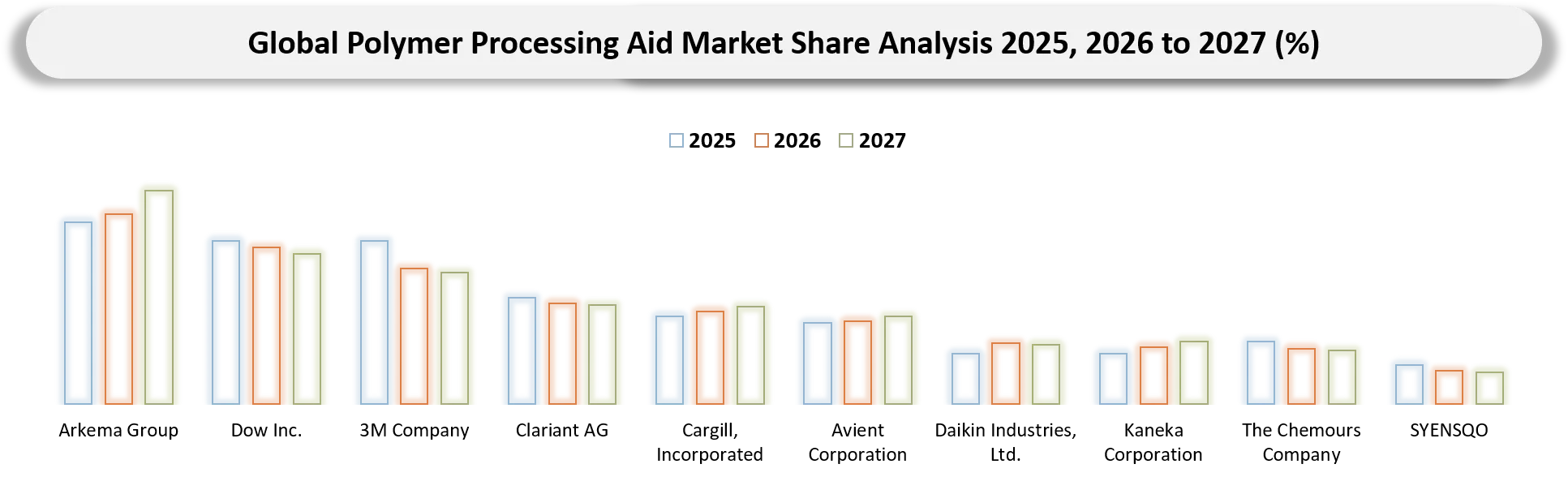
- The Polymer Processing Aid (PPA) Market is characterized by the presence of global specialty chemical manufacturers, fluoropolymer producers, and additive solution providers competing through product innovation, sustainable formulations, and application-specific polymer processing technologies. The market includes major participants such as Arkema Group, Dow Inc., 3M Company, Clariant AG, Cargill Incorporated, Avient Corporation, Daikin Industries Ltd., Kaneka Corporation, The Chemours Company, and SYENSQO, which focus on developing advanced processing aids for polyethylene (PE), polypropylene (PP), and other polymer applications. According to industry analysis, the market is moderately competitive, with leading companies maintaining strong positions through extensive product portfolios, global manufacturing capabilities, and long-term relationships with plastic converters and polymer producers. The competitive landscape is increasingly influenced by the shift toward high-performance, sustainable, and PFAS-free processing solutions, as manufacturers focus on improving extrusion efficiency, reducing melt fracture, and meeting evolving regulatory requirements. Companies such as Arkema Group, Daikin Industries, and The Chemours Company leverage fluoropolymer expertise, while Dow Inc., Clariant AG, Avient Corporation, and SYENSQO strengthen their positions through advanced additive technologies and sustainable polymer solutions.
- Key players include Arkema Group, Dow Inc., 3M Company, Clariant AG, Cargill Incorporated, Avient Corporation, Daikin Industries Ltd., Kaneka Corporation, The Chemours Company, and SYENSQO.
Key Developments
- December 2025: Arkema Group has announced a proposed divestment of its Plastic Additives business (including polymer processing aids) to focus on core growth areas. This move aims to streamline operations while maintaining supply continuity for customers in film extrusion and high-performance polymers.
- June 2025: Clariant’s AddWorks PPA range features innovative, PFAS-free polymer processing aids 101 FG and 122 G developed for sustainable polyolefin extrusion. These additives eliminate sharkskin defects and die build-up without silicones or fluoropolymers. They ensure food-contact compliance and support recyclability under EU regulations, maintaining high- quality film aesthetics and processing efficiency.
- October 2025: Cargill has introduced Incroflo P50, a bio-based, PFAS-free polymer processing aid for polyolefin extrusion. Composed of 86% bio-based material, it serves as a halogen-free replacement for fluorinated additives. It eliminates melt fracture, improves film clarity, and increases throughput in LLDPE applications at just 1,000 ppm.
- August 2025: ARGUS Additive Plastics GmbH, a Germany-based specialty additive masterbatch manufacturer, introduced its new ARGUMELT Processing Aid masterbatches for extrusion applications.
- December 2025: Avient Corporation, a U.S.-based specialized materials solutions provider, launched its Hiformer™ Non-PFAS Process Aid with Antioxidants (AO) in the Latin American market to support polyethylene (PE) and polypropylene (PP) film processing applications.
Key Procurement Priorities and Buyer Evaluation Criteria
- Companies that have opted to invest in the Polymer Processing Aid (PPA) Market are becoming more reliant on suppliers who can offer high-quality processing aids for better extrusion, melt fracture minimization, surface finishing, and reliable manufacturing of polymers such as polyethylene (PE), polypropylene (PP), and others.
- The procurement decision-making process is increasing demand for high-quality plastic packaging, lightweight polymer materials, recycling packaging, and the use of advanced extrusion technologies. The buyers today are preferring to go for those suppliers who are able to supply processing aids suitable for new polymer formulations and regulations, including PFAS-free alternatives.
- When selecting polymer processing aids manufacturers, customers consider many aspects like process efficiency improvement, compatibility of additives with various grades of polymers, defect reduction during extrusion, consistency, compliance with regulations, economy, and technical assistance. The capacity of manufacturers to offer tailor-made products for applications like flexible packaging films, agricultural films, pipes, automotive parts, and industrial plastics is gaining importance in the buying decision process.
Why Choose DataM?
- Technological Innovations: Explores advancements in polymer processing aid technologies, including the development of fluoropolymer-based and non-fluorinated processing aids, sustainable additive solutions, and high-performance formulations that improve melt flow, reduce melt fracture, enhance surface quality, and increase extrusion efficiency across polyethylene (PE), polypropylene (PP), and specialty polymer applications.
- Product Performance & Market Positioning: Evaluates how leading companies differentiate their polymer processing aid offerings based on processing efficiency, compatibility with different polymer grades, additive performance, regulatory compliance, and sustainability benefits, highlighting competitive strategies adopted by major suppliers across packaging, automotive, construction, and industrial plastic applications.
- Real-World Evidence: Highlights the adoption of polymer processing aids in flexible packaging films, blown films, agricultural films, pipes, wires and cables, and consumer product applications, demonstrating benefits such as improved production output, reduced processing defects, enhanced material quality, and optimized manufacturing efficiency.
- Market Updates & Industry Changes: Tracks key developments such as new product launches, sustainable processing aid innovations, PFAS-free technology advancements, capacity expansions, strategic collaborations, and regulatory changes influencing polymer additive adoption across Asia-Pacific, North America, and Europe.
- Competitive Strategies: Analyzes how leading companies such as Arkema Group, Dow Inc., Clariant AG, Avient Corporation, Daikin Industries Ltd., The Chemours Company, and SYENSQO expand through product innovation, sustainable solutions, application-specific formulations, partnerships, and global manufacturing expansion to strengthen their positions in the Polymer Processing Aid Market.
- Pricing & Market Access: Explains pricing variations based on polymer type compatibility, additive formulation complexity, performance characteristics, raw material costs, and application requirements, along with distribution access through specialty chemical suppliers, polymer manufacturers, and industrial additive channels supporting global customers.
- Market Entry & Expansion: Identifies growth opportunities driven by increasing plastic packaging demand, expansion of polymer processing industries, adoption of recyclable materials, and demand for high-efficiency extrusion technologies, while outlining strategies such as regional manufacturing expansion, sustainable product development, and customer-specific solutions to achieve market growth.
Target Audience 2026
- Polymer and Plastic Manufacturers
- Packaging Manufacturers and Converters
- Chemical and Specialty Additive Companies
- Petrochemical and Polymer Producers
- Automotive and Industrial Plastic Component Manufacturers
- Packaging Industry Stakeholders and Brand Owners
- Raw Material Suppliers and Chemical Distributors



























































